











5 Cost-Saving Secrets Your Pallet Supplier Won't Tell You: A Full Plastic Pallet Analysis (2026 Guide)

- What is a Reusable Plastic Pallet Cost Analysis?
- Key Takeaways: Quick Summary of Pallet TCO
- Secret 1: The 'Cost Per Trip' Reality Suppliers Hide
- Secret 2: Virgin vs. Recycled Resin Pricing Traps
- Secret 3: The Hidden Fees in Pallet Pooling Contracts
- Secret 4: Massive Freight Savings via Nestable Designs
- Secret 5: Preventative Savings from Automation and Hygiene
- Expert Tips: Common Mistakes When Buying Plastic Pallets
- Conclusion
- Are plastic pallets cheaper than wood in the long run?
- How do you calculate the ROI of reusable plastic pallets?
- What is the average lifespan of a reusable plastic pallet?
- Why is the upfront cost of plastic pallets so high?
- Do plastic pallets save money on shipping?
- What are the hidden costs of wood pallets?
- Is it better to rent or buy plastic pallets?
- How does IoT tracking reduce pallet costs?
What is a Reusable Plastic Pallet Cost Analysis?
A reusable plastic pallet cost analysis is a financial evaluation comparing the upfront price of plastic pallets against long-term operational savings. It calculates the Total Cost of Ownership (TCO) pallets by factoring in lifespan, cost per trip, maintenance reduction, freight savings, and end-of-life recycling value over traditional wood pallets.
When performing a comprehensive plastic vs wood pallet life cycle analysis, it becomes abundantly clear why modern, optimized supply chains are systematically moving away from traditional whitewood stringer platforms. While a standard wood pallet might look significantly cheaper on day one, analyzing the "how" and "why" reveals severe operational inefficiencies that bleed logistics budgets over time. A proper financial and operational cost analysis evaluates several critical areas:
- Extended Lifespan: High-quality plastic outlasts wood by a massive margin, frequently surviving over a decade in controlled warehouse environments.
- Maintenance Reduction: Plastic offers zero splinters, no protruding nails, and no broken boards, practically eliminating the need for dedicated repair teams.
- Freight Savings: Lightweight and nestable designs reduce fuel surcharges and allow for higher density on return truckloads.
- End-of-Life Value: Broken plastic pallets are not destined for a landfill; instead, they are ground down, melted, and repurposed, providing a cash-back salvage value.
Key Takeaways: Quick Summary of Pallet TCO
Pallet TCO is a comprehensive metric proving that the higher upfront cost of plastic is drastically offset by a 10x longer operational lifespan. By eliminating frequent replacements, machinery jams, and hidden repair fees, businesses secure a much lower overall expenditure.
Evaluating your warehouse logistics requires a clear, objective view of the operational benefits of reusable plastic packaging. Instead of focusing solely on the capital expenditure (CAPEX) of the initial purchase, supply chain managers must look at the long-term operational expenditure (OPEX). Here is a quick summary of the transformative benefits:
- Higher Upfront Costs, Lower Operational Costs: The initial invoice price is undeniably higher, but the actual cost per trip is drastically lower due to unparalleled durability.
- Freight and Fuel Efficiency: Nestable and lightweight plastic designs yield immediate freight and fuel savings by reducing dead weight on every single outbound and inbound shipment.
- Elimination of Hidden Expenses: Switching to plastic entirely eliminates the hidden, cascading costs of wood, such as constant repairs, facility sweeping for splinters, and product damage caused by rogue nails.
- Strategic Procurement: Choosing correctly in the pallet pooling vs buying debate heavily dictates your long-term return on investment (ROI) and overall logistics agility in 2026.
Secret 1: The 'Cost Per Trip' Reality Suppliers Hide
The true cost per trip is calculated by dividing the initial purchase price by the number of usable cycles a pallet completes before failure. While wood averages 5 to 10 trips, high-density plastic frequently exceeds 100 trips, making it mathematically superior.
Suppliers often aggressively push cheap whitewood stringer pallets, intentionally obscuring their 25% annual breakage rate and the massive labor costs required to sort and repair them. To truly understand your logistics spend and stop bleeding capital, you must implement an accurate cost per trip pallet calculation. Here is exactly why plastic chemically and structurally dominates traditional timber:
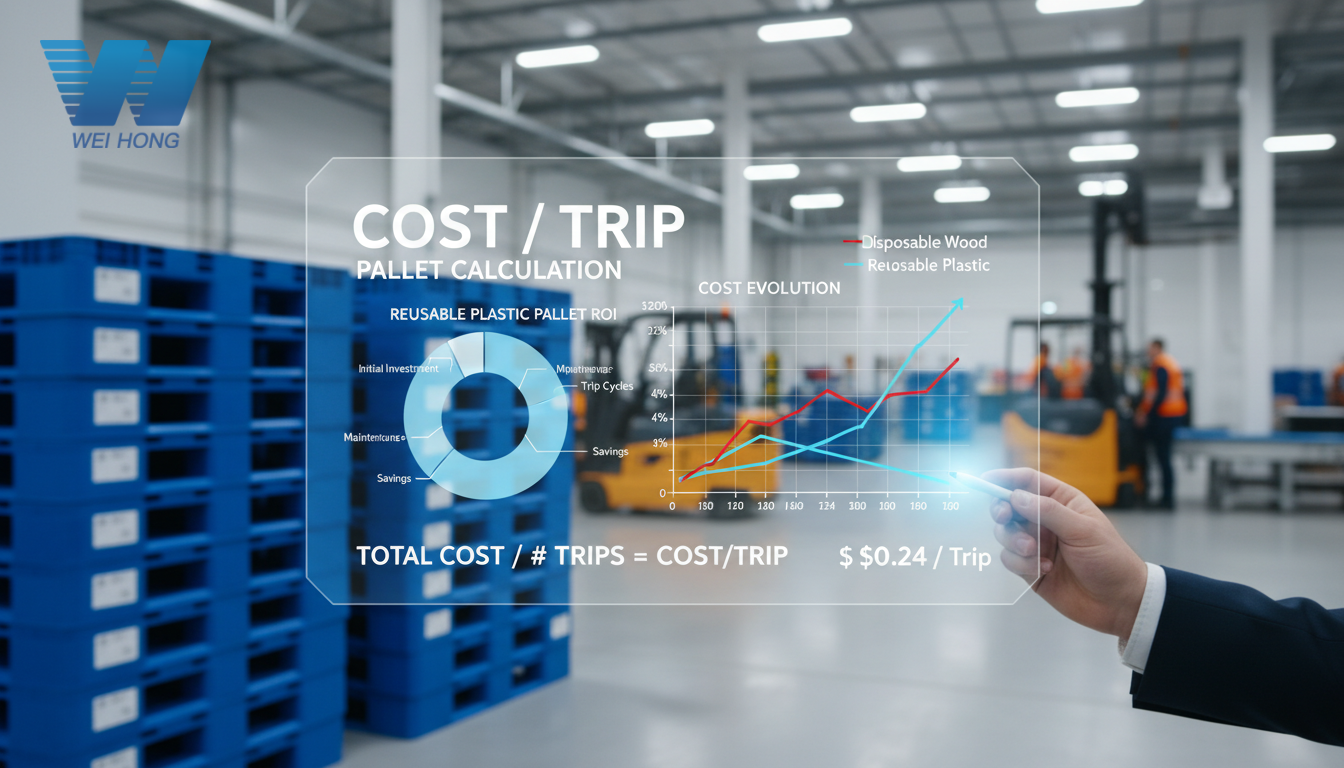
- Rigorous Durability Testing: As reported by Powder & Bulk Solids, data from the Virginia Tech Center for Packaging shows that in the FasTrack life-cycle sequence, plastic pallets dramatically outperform wood. In fact, specific models of plastic pallets completed an astonishing 400 cycles without failure, whereas the wood pallet's average failure occurred after just 11 cycles.
- Mathematical Dominance: The math is undeniable. If a $20 wood pallet lasts 5 trips, it costs $4.00 per trip. If a $60 heavy-duty plastic pallet lasts 120 trips, it costs just $0.50 per trip, delivering an immediate and highly scalable financial victory.
- Reduced Product Damage: Fewer broken boards and zero exposed nails mean your valuable inventory is significantly less likely to be punctured, dropped, or rejected by demanding retail partners.
Secret 2: Virgin vs. Recycled Resin Pricing Traps
Virgin resin pricing traps occur when suppliers push unnecessarily expensive new plastic pallets instead of equally capable recycled options. Recycled high-density polyethylene (HDPE) provides comparable durability for most standard supply chain loops at a fraction of the cost.
Not all plastic pallets are created equal, and failing to understand the underlying polymer science can cost you tens of thousands of dollars. You must understand the materials you are buying to avoid overspending on features your network does not actually require:
- Material Types and Margins: Suppliers naturally make higher profit margins on pristine Virgin Resin products. However, expertly engineered recycled resin is functionally identical for the vast majority of standard, non-hygienic supply chain loops.
- Strategic Price Differentials: Understanding the tightening price gap between global timber indexes and raw plastic resin costs helps savvy procurement buyers time their capital investments perfectly in 2026.
- Achieving Sustainability Goals: Utilizing recycled plastic pallets directly contributes to your company's ESG (Environmental, Social, and Governance) targets. It embraces the circular economy without sacrificing structural integrity or rackable load limits.
Secret 3: The Hidden Fees in Pallet Pooling Contracts
Pallet pooling contracts often contain hidden loss and damage fees that drastically inflate your operational expenses. While pooling is marketed as a hassle-free rental program, "shrinkage" penalties and constant administrative audits can quietly destroy your logistics budget.
When weighing pallet pooling vs buying, understanding the distinct architectural structure of your distribution network is paramount. A careful break-even analysis often reveals nasty surprises hidden in the fine print of rental agreements:
- Open-Loop Network Vulnerabilities: Leasing makes sense in fragmented open loops where recovery is impossible, but suppliers rarely disclose the true compounding cost of lost assets (shrinkage) which the customer must eventually pay for.
- Closed-Loop Dominance: Purchasing trackable plastic pallets outright for closed-loop systems (where you control both the outbound shipment and the inbound return) yields a significantly higher ROI than perpetual leasing.
- Contract Clarity and Negotiation: Always negotiate a hard cap on damage and loss fees before signing a new pooling contract, and strictly audit the supplier's platform quality standards.
Secret 4: Massive Freight Savings via Nestable Designs
Nestable designs create massive freight savings by allowing empty plastic pallets to stack securely inside one another. This spatial efficiency can reduce return-trip freight costs by up to 75% because they free up incredibly valuable truck space.
Every single ounce of dead weight costs you money in fuel surcharges and reduced payload capacity. When you utilize lightweight, nestable plastic designs, you unlock several major logistical advantages that directly boost your bottom line:
- Dead Weight Reduction: Heavy, water-logged wood pallets add unnecessary dead weight to every outbound shipment. Plastic maintains a perfectly consistent tare weight, regardless of warehouse humidity or rain.
- Reverse Logistics Efficiency: Nestable plastic pallets can fit hundreds more units on a single return Less-Than-Truckload (LTL) shipment compared to rigid, non-stacking wood pallets, drastically cutting reverse logistics expenses.
- Measurable Environmental Impact: Transitioning to these lightweight models directly contributes to an estimated 20% reduction in your transportation carbon footprint and diesel fuel expenditures over the course of a fiscal year.
Secret 5: Preventative Savings from Automation and Hygiene
Preventative savings are realized when structurally consistent plastic pallets prevent automated machinery jams and eliminate expensive pest control treatments. Their uniform dimensions, lack of debris, and easy cleanability make them perfect for modern logistics.
Automation is the undeniable future of high-speed warehousing, and traditional wood pallets simply cannot keep up with the precise, millimeter-specific tolerances required by modern robotic pickers, conveyor belts, and sensors.
- ASRS Compatibility: Wood pallets frequently jam automated storage and retrieval systems (ASRS) due to splintered boards, loose stringers, and rogue nails. These jams cause catastrophic, highly expensive facility downtime.
- Perfect Dimensional Consistency: Injection-molded plastic pallets offer perfect dimensional and weight consistency. Photoelectric sensors in automated facilities can read them effortlessly, ensuring seamless operation in high-volume, dark warehouses.
- International Shipping Compliance: As detailed on Wikipedia, plastic pallets are entirely exempt from the strict ISPM 15 regulations that govern raw timber. This critical exemption means plastic pallets do not require expensive, time-consuming heat treatments or toxic methyl bromide fumigation for international shipping, saving vast amounts of compliance costs and border delays.
Expert Tips: Common Mistakes When Buying Plastic Pallets
Overlooking a pallet's end-of-life recycling value and failing to integrate modern tracking technologies are massive procurement mistakes. Missing these factors will artificially inflate your perceived costs and significantly lower your reusable packaging ROI.
To ensure you get the absolute best financial return on your capital investment, supply chain directors must actively avoid these critical procurement errors:
- Overlooking End-of-Life Value: High-quality plastic pallets hold intrinsic material value. They can be sold back to manufacturers for regrind at the end of their usable life, which significantly lowers the final calculated TCO.
- Ignoring IoT Tracking Capabilities: Failing to integrate RFID tags, Bluetooth Low Energy (BLE) beacons, or GPS tracking directly into the pallet mold leads to unacceptably high asset loss rates, ultimately destroying your overall ROI in an open-loop supply chain.
- Buying the Wrong Load Capacity: Purchasing expensive edge-rackable, dynamic-load pallets for simple floor-stacking or static-load storage needs results in severe, unnecessary overspending. Always mathematically match the pallet's polymer engineering to your exact operational use case.
Conclusion
Conducting a comprehensive reusable plastic pallet cost analysis reveals that the true value of these assets lies far beyond their initial purchase price. This immense value is deeply rooted in an optimized cost per trip, incredible freight efficiency, and long-term structural durability that traditional timber simply cannot match. By understanding closely guarded supplier secrets—such as virgin resin pricing traps, hidden pooling shrinkage fees, and the preventative savings associated with automated facility uptime—supply chain leaders can achieve up to 30% logistics cost reductions. Stop losing critical operating capital on hidden pallet administrative expenses, automated machinery jams, and constantly broken wood. Contact us today to optimize your reusable packaging strategy.
Are plastic pallets cheaper than wood in the long run?
Yes, while plastic pallets have a higher initial purchase price, they are significantly cheaper in the long run. Their extreme durability lowers the 'cost per trip,' and they eliminate expenses related to wood pallet repairs, product damage, and frequent replacements.
How do you calculate the ROI of reusable plastic pallets?
To calculate ROI, determine the Total Cost of Ownership (TCO) by adding the initial cost, maintenance, and transport expenses, then subtract the end-of-life salvage value. Divide this by the expected number of trips to find the cost per trip, comparing it against your current wood pallet spend.
What is the average lifespan of a reusable plastic pallet?
A high-quality reusable plastic pallet typically lasts anywhere from 50 to over 250 trips in a closed-loop supply chain. In contrast, standard whitewood stringer pallets usually only last for 5 to 10 trips before requiring extensive repair or disposal.
Why is the upfront cost of plastic pallets so high?
The higher upfront cost is driven by the price of durable polymer resins (like HDPE or PP), the complex engineering required for high load capacities, and the expensive steel molds used during the injection molding manufacturing process.
Do plastic pallets save money on shipping?
Yes, plastic pallets are generally lighter than wood, which reduces overall freight weight and lowers fuel costs. Furthermore, nestable plastic designs allow more empty pallets to fit on a single return truck, drastically cutting reverse logistics expenses.
What are the hidden costs of wood pallets?
Hidden costs of wood pallets include frequent repair and sorting labor, product damage caused by protruding nails and splinters, facility cleaning costs due to wood dust, and the need for heat treatments (ISPM 15 compliance) for international shipping.
Is it better to rent or buy plastic pallets?
It depends on your supply chain model. Buying outright is highly cost-effective for closed-loop systems where you control the return of the pallets. Renting (pallet pooling) is often better for open-loop networks where tracking and retrieving owned pallets would be too difficult.
How does IoT tracking reduce pallet costs?
IoT tracking technologies, such as RFID tags or GPS trackers embedded in plastic pallets, provide real-time visibility. This drastically reduces asset loss ('shrinkage'), optimizes routing efficiency, and provides accurate data on pallet lifecycles to maximize ROI.
Plastic Pallet Recycling and Sustainability: ROI for Buyers
How to Choose the Right Plastic Pallet for Your Supply Chain
Tips for buy plastic pallet manufacturer from China
OEM/ODM plastic nesting boxes Manufacturers and Suppliers
About Collaboration
What takes to be a distributor of your plastic products?
After-Sales Service and Support
What warranty do your plastic pallets and boxes come with?
About Products
What materials are your prodcuts made of?
Logistics and Payment
How long does it take to ship to my country?
Average shipping time ranges from 7 days to 35 days. We will calculate for you when port of destination is confirmed.
What delivery terms do you support?
FOB term is our priority. Meanwhile, we accept also FCA, CFR, CIF, etc.
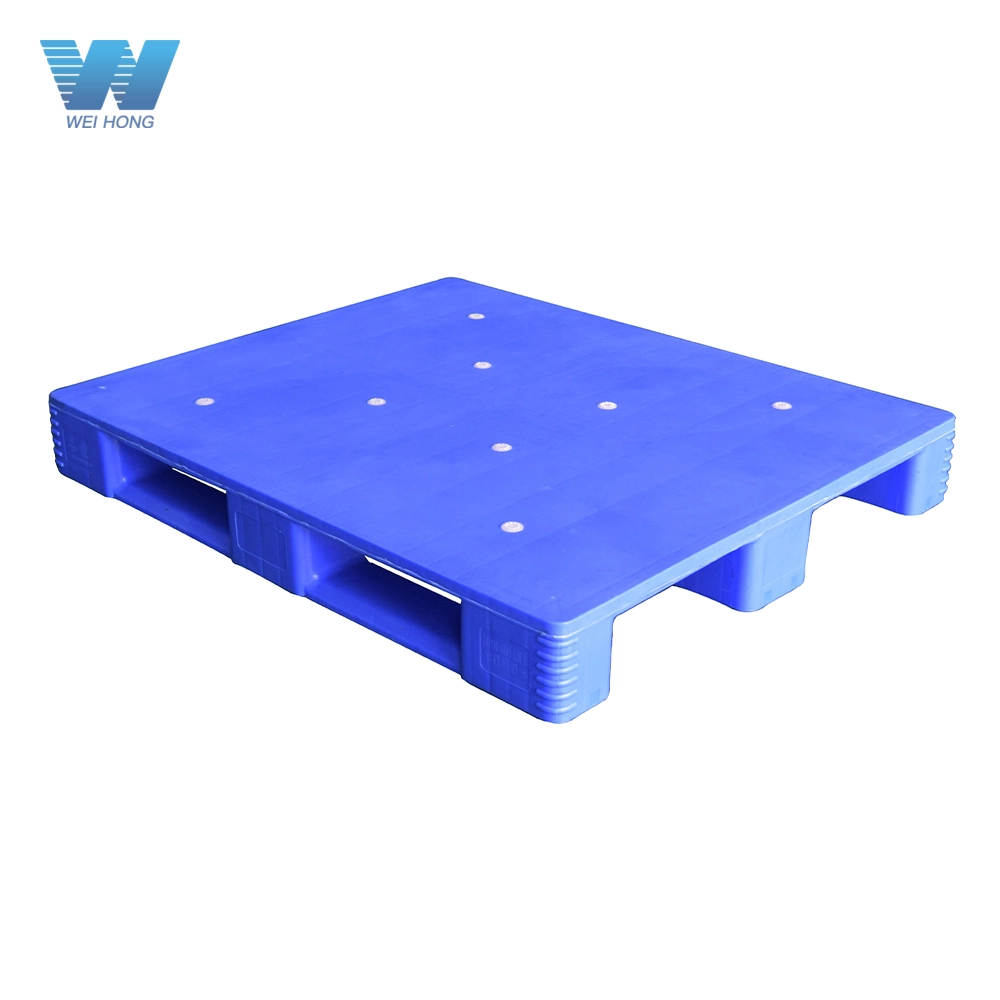
ZJ1210-150H Three-runner Closed Deck Hygienic Plastic Pallet
The three-runner closed-deck hygienic plastic pallet is a solid and durable packaging solution designed for general and especially food and medicine storage and transport. It’s made of virgin HDPE or PP, featuring a flat surface and even bottom for hygienic consideration, a reinforced configuration with steel cores for rack and shelf, and a steady loading capacity.
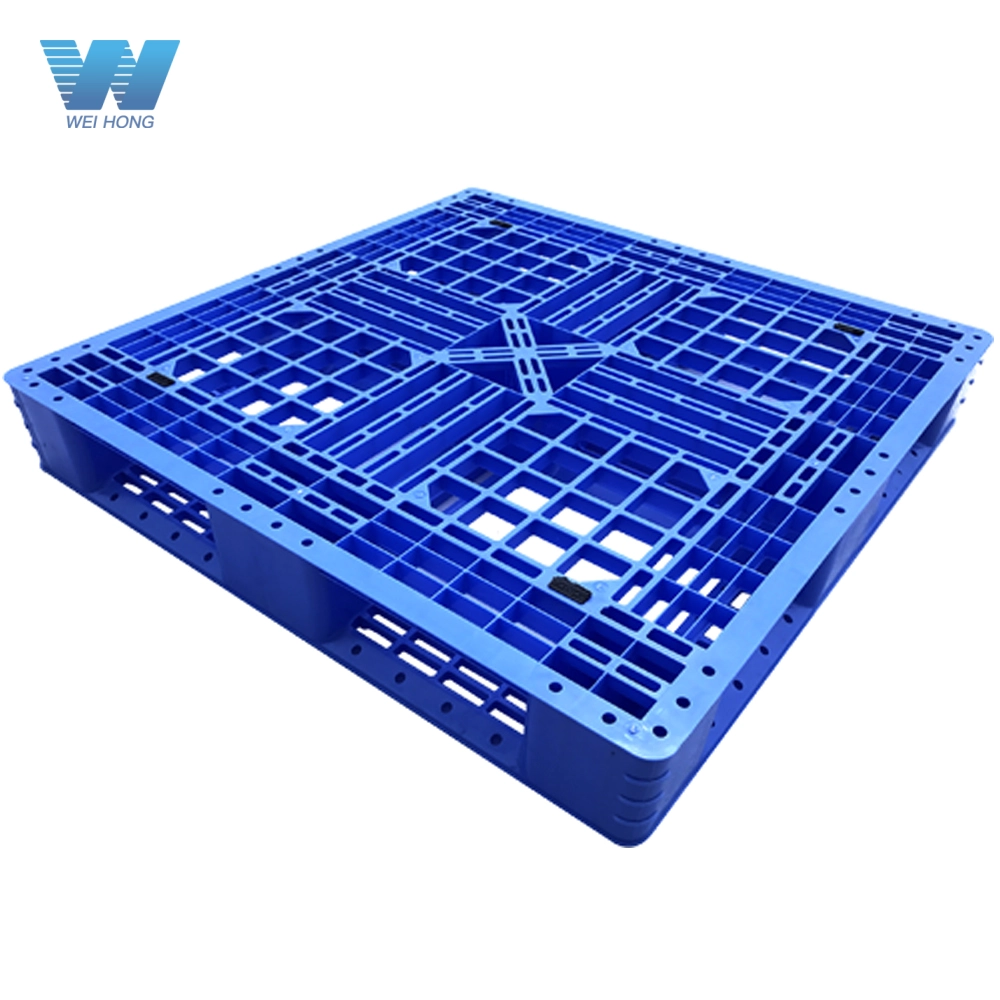
ZJ1010-150 Six-runner Single-sided Plastic Pallet
The six-runner plastic pallet, open or closed deck, is a solid and durable packaging solution designed for general and medium to heavy-duty cargo stacking, storage and transport. It’s made of virgin HDPE or PP, featuring in robust structure, a reinforced configuration with steel cores for the rack and shelf, and a steady loading capacity.
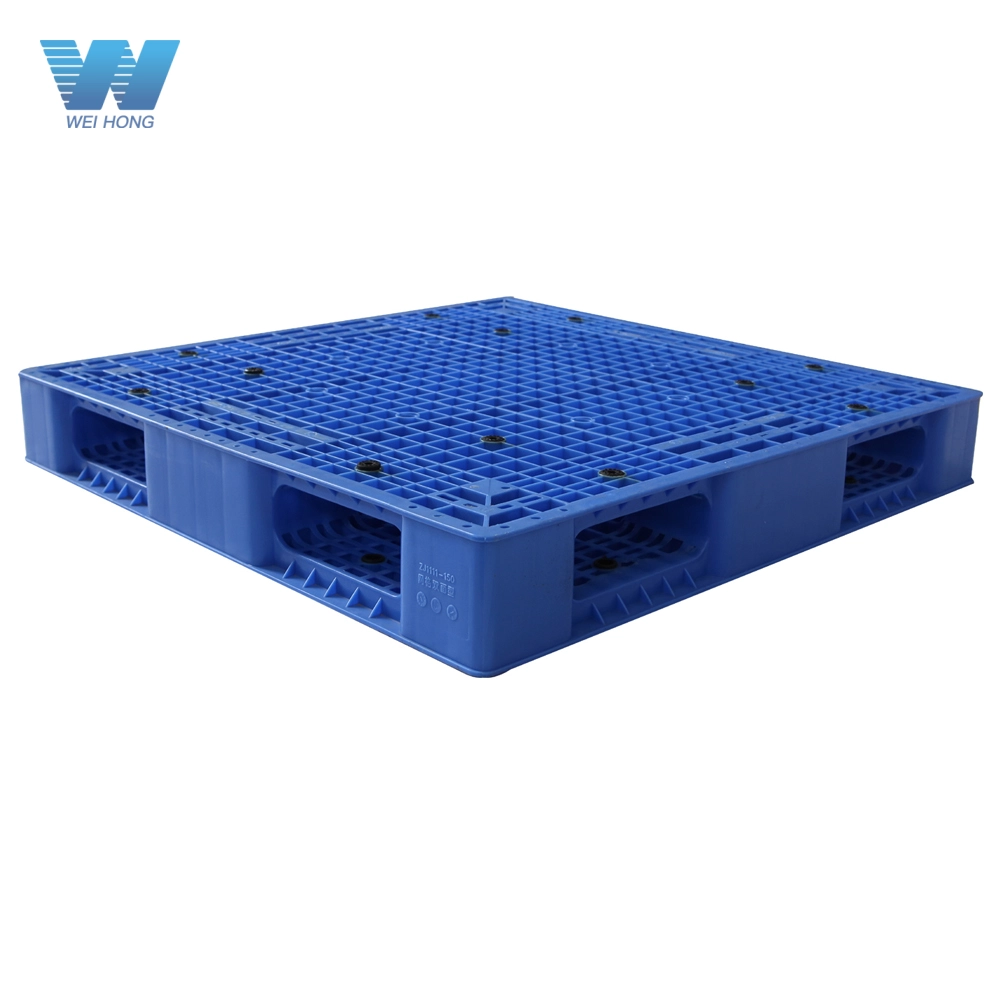
ZJ11111-150 Double-sided Heavy Duty Plastic Pallet
The double-sided plastic pallet, open deck or closed deck, is a solid and durable packaging solution designed for general and medium to heavy-duty cargo stacking, storage and transport. It’s made of virgin HDPE or PP, featuring a robust structure, a reinforced configuration with steel cores for the rack and shelf, and a steady loading capacity for both sides.
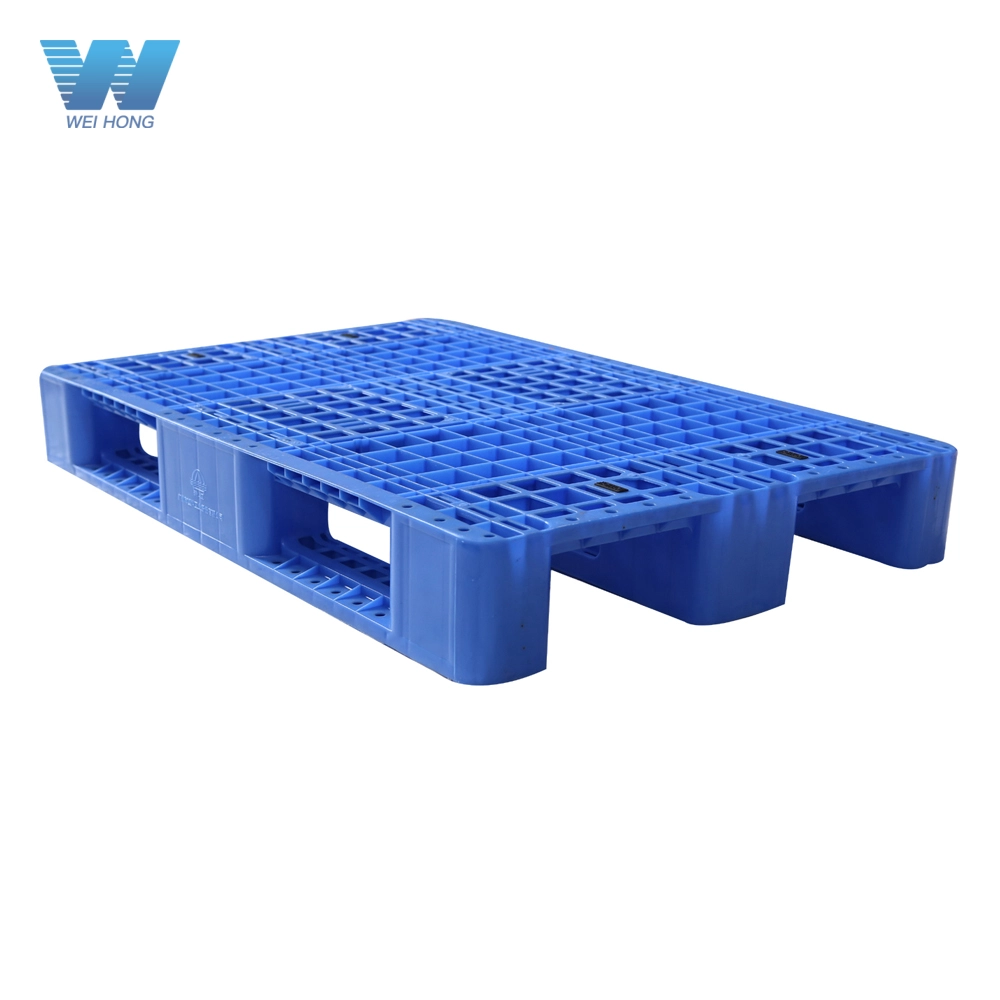
ZJ1208-155 Three-runner Single-sided Plastic Pallet
The three-runner single-sided plastic pallet is a solid and durable packaging solution designed for general and medium to heavy-duty cargo storage, transport and automated storage and retrieval system (AS/RS) use. It’s made of virgin HDPE or PP, featuring in robust structure, reinforced configuration with steel cores for rack and shelf, and a steady loading capacity.
Request More Information About Plastic Pallets
Have questions or need detailed insights on this article? Fill out the form below to contact our team for comprehensive information and support related to our plastic pallet solutions.
Contact us


+86 138 0277 8204
+86 183 4431 0917
+86 195 3791 1860

No. 15-1, Fengying Rd., Taiping Town, Conghua Dist., Guangzhou City, Guangdong Province, China.
 Scan QR Code
Weihong
Whatsapp: +8613802778204
Guangdong Weihong Plastic Technology Co., Ltd.
Scan QR Code
Whatsapp: +8619537911860
Scan QR Code