











7 Critical Mistakes in Plastic Pallet Load Testing (And How to Avoid Costly Damage)

- What Are Plastic Pallets Load Testing Standards?
- Executive Summary: Key Takeaways on Pallet Performance
- Mistake #1: Confusing Static, Dynamic, and Racking Load Limits
- Mistake #2: Ignoring the Differences Between ASTM D1185 and ISO 8611
- Mistake #3: Testing with Uniform Loads but Shipping Point Loads
- Mistake #4: Disregarding Temperature Cycles on Plastic Deflection
- Mistake #5: Failing to Perform Long-Term Durability and Fatigue Tests
- Mistake #6: Overlooking EUMOS 40509 Load Stability Regulations
- Mistake #7: Relying Solely on Computer Modeling Without Physical Proof
- The Real Cost of Poor Load Testing (2026 Safety Perspective)
- Conclusion
- How do you test a plastic pallet for load capacity?
- What is the difference between static and dynamic load ratings?
- What does ISO 8611 test in plastic pallets?
- How much weight can a standard plastic pallet hold?
- What is the ASTM D1185 standard for pallets?
- Why is pallet deflection important during load testing?
- How do temperature changes affect plastic pallet capacity?
- What happens if a plastic pallet fails a racking test?
What Are Plastic Pallets Load Testing Standards?
Plastic pallets load testing standards, such as ISO 8611 and ASTM D1185 testing, are standardized laboratory protocols designed to evaluate a pallet's safe working load using static compression, bending, and dynamic stress tests to prevent structural failure.
Understanding how a pallet bends, lifts, and compresses under heavy loads is the foundation of safe and predictable warehouse operations. These testing methodologies involve rigorous evaluations, including bottom deck bending tests, fork-tine support simulations, and edge-racking deflection measurements. By applying hydraulic pressure or dead loads, laboratory technicians can observe the precise moment a plastic unit begins to yield. This data is critical because it bridges the gap between theoretical manufacturing claims and real-world industrial environments.
The primary benefits of adhering to these rigorous load capacity protocols include:
- Ensuring global consistency and interoperability across complex international supply chains.
- Providing verifiable, empirical data on the stiffness, strength, and durability of plastic material.
- Allowing regulatory bodies to establish universal benchmarks that guarantee worker safety.
- Minimizing product damage and financial loss during high-stress transit conditions.
Executive Summary: Key Takeaways on Pallet Performance
Understanding load testing is critical to preventing catastrophic rack failures and product loss by establishing realistic safe working limits, differentiating load types, and maintaining rigorous compliance with global standards to save facilities thousands in replacement costs.
Warehouse managers and procurement specialists often face overwhelming choices when selecting material handling assets. The difference between a well-engineered unit and an untested alternative is vast. An improperly vetted pallet can lead to devastating consequences, including collapsed racking systems, destroyed inventory, and severe personnel injuries. By comprehensively understanding the nuances of laboratory evaluations, supply chain professionals can make informed, data-driven purchasing decisions that optimize long-term return on investment (ROI).
Before diving into the specific pitfalls, consider these foundational takeaways:
- Understanding structural limits is critical to preventing catastrophic failures in automated storage and retrieval systems (ASRS).
- Not all load limits are equal: differentiating between static, dynamic, and racking load capacities is non-negotiable for safe operations.
- Compliance with testing frameworks like ISO 8611 is not merely about passing a certification; it establishes realistic working loads.
- Avoiding the following seven mistakes can prevent localized plastic failure and costly safety penalties.
Mistake #1: Confusing Static, Dynamic, and Racking Load Limits
The most common failure point in load testing is mistakenly assuming a pallet's static weight limit applies to plastic pallet dynamic load limits during forklift movement or edge-supported racking applications, which require significantly lower capacities.
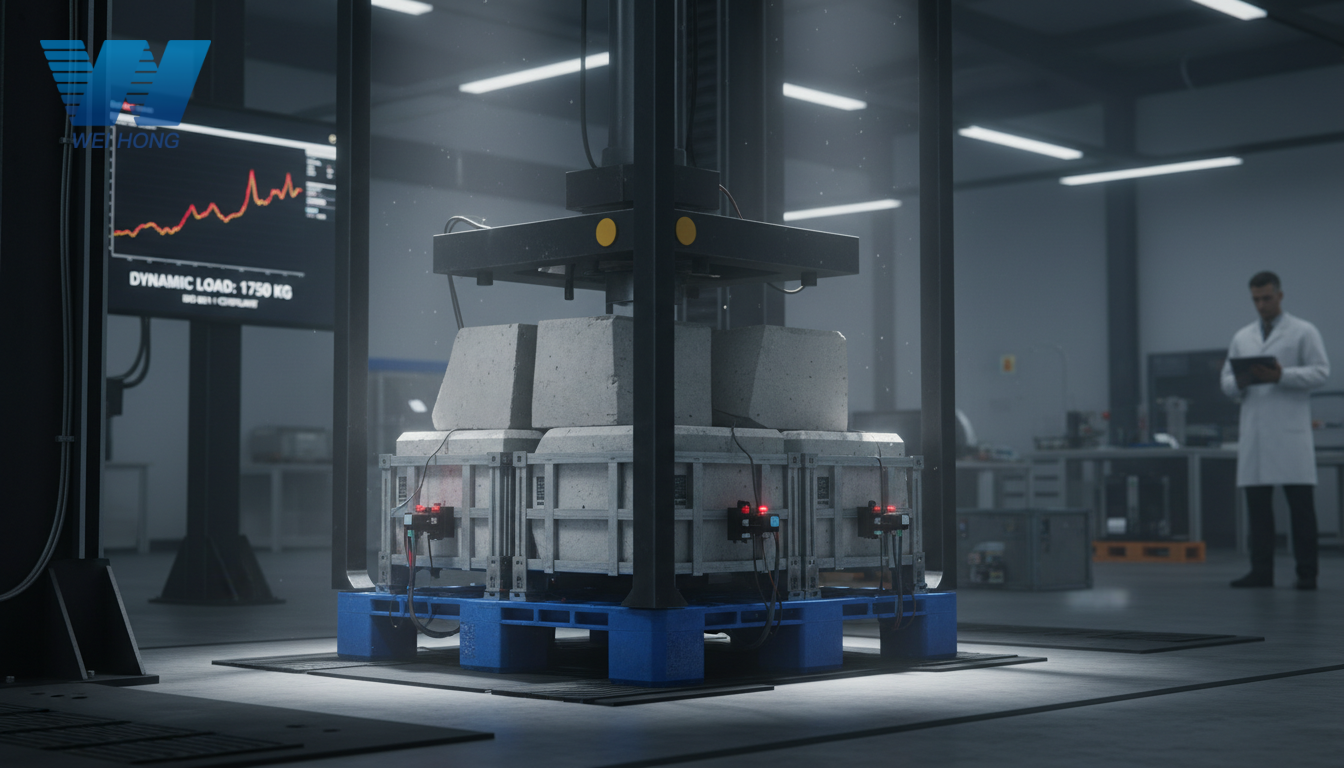
When buyers read a spec sheet, they often fixate on the highest number—typically the static capacity. However, the forces exerted on a plastic base change drastically depending on its support structure and movement. A pallet resting on a flat, solid concrete floor distributes weight perfectly, allowing it to hold massive loads. Conversely, when that same unit is lifted by a forklift, the weight shifts, inducing dynamic stress and vibration. The most extreme stress occurs during racking, where the unit must bridge a gap across two steel beams with zero center support, leading to maximum flex and bowing.
To avoid confusion and prevent operational disasters, buyers must understand these distinctions:
- Static load ratings apply only when pallets are resting securely on a flat, solid surface with zero movement.
- Dynamic load ratings account for the shifting forces, acceleration, and vibrations experienced during active transportation.
- Racking limits represent the lowest capacity, as the pallet must independently bridge a void across steel racking beams.
- Exceeding racking limits causes dangerous deflection, potentially causing the unit to slip off the beams and crash to the floor.
Mistake #2: Ignoring the Differences Between ASTM D1185 and ISO 8611
Treating all testing certifications as identical can lead to purchasing the wrong pallet, as ISO 8611 focuses globally on rigorous bottom deck bending, while ASTM D1185 is the primary United States framework for uniform load distribution.
Regional supply chain requirements dictate which certification standard provides the most relevant data. While both evaluate structural integrity, their methodologies differ significantly. For example, as reported by ASTM International, ASTM D1185 test methods cover the performance of pallets functioning as skids, bases, and platforms in materials handling and shipping within the United States. Conversely, the ISO framework is universally recognized and utilizes a distinct three-part standard that includes advanced airbag simulations and complex flexural tests to establish safe working loads internationally.
Selecting the appropriate standard ensures that your operational expectations align with laboratory realities. Consider the following factors:
- Assuming all certifications are equal often results in procuring pallets that fail under specific regional distribution stresses.
- ASTM D1185 focuses heavily on uniform load distribution, impact metrics, and localized physical durability tests in US supply chains.
- ISO 8611 is a globally recognized protocol that strictly tests bottom deck bending and racking span tolerances.
- Aligning your procurement strategy with the standard that matches your primary distribution network ensures maximum safety and compliance.
Mistake #3: Testing with Uniform Loads but Shipping Point Loads
Manufacturers frequently test pallets using evenly distributed weights to achieve maximum capacity, but real-world cargo often creates concentrated point loads that force immense stress onto specific deck areas, leading to localized plastic failure and safety risks.
In a controlled laboratory, technicians often use water bags or flexible air cushions to distribute pressure evenly across the entire surface of the plastic deck. This method yields the highest possible weight rating. However, industrial warehouses rarely ship perfectly distributed water bags. Instead, they ship heavy machinery components, oddly shaped automotive parts, and dense metal drums. These items concentrate their entire weight onto a few square inches of the plastic deck. This phenomenon, known as point loading, causes extreme stress on localized sections, which can punch through the plastic or snap internal reinforcements.
To protect your products from point load failures, adopt the following best practices:
- Recognize that testing with uniformly distributed weight produces idealized capacity numbers that rarely reflect heavy industrial shipping.
- Understand that cargo like metal castings or heavy equipment creates concentrated point loads that bypass the unit's overall structural strength.
- Point loading concentrates extreme force on small areas, frequently resulting in snapped stringers or localized deck puncturing.
- Expert Tip: Always mandate that your supplier tests pallets using the exact footprint, weight distribution, and packaging of your actual cargo.
Mistake #4: Disregarding Temperature Cycles on Plastic Deflection
Failing to account for temperature extremes compromises pallet deflection safety standards, as freezing environments cause high-density plastics to become shatter-prone, while high heat increases bowing and dangerous deflection when suspended in structural warehouse racking systems.
Thermoplastics such as High-Density Polyethylene (HDPE) and Polypropylene (PP) are highly sensitive to thermal fluctuations. A pallet tested at an ambient room temperature of 72°F (22°C) will behave completely differently when placed in a -20°F (-29°C) blast freezer or a 110°F (43°C) outdoor storage yard. Cold temperatures trigger molecular contraction, turning flexible plastic into a rigid but highly brittle material that can shatter upon forklift impact. Conversely, high heat softens the plastic polymer, drastically accelerating deflection rates and causing the pallet to bow dangerously under heavy inventory.
To mitigate environmental damage, testing protocols must incorporate rigorous thermal cycling:
- Plastic polymers change their physical properties drastically across temperature extremes, invalidating room-temperature test data.
- Freezing environments cause materials like HDPE and PP to become brittle, drastically reducing their impact resistance and durability.
- High-heat environments soften the plastic, which significantly increases structural deflection and bowing during edge-supported racking.
- Ensure that your laboratory testing protocols include dedicated thermal cycling to accurately reflect your facility's seasonal conditions.
Mistake #5: Failing to Perform Long-Term Durability and Fatigue Tests
Load capacity degrades over a pallet's lifecycle due to material fatigue, meaning a single successful test does not guarantee long-term rackable plastic pallet strength after years of forklift abuse, corner drops, and automated storage vibrations.
When a brand-new plastic unit rolls off the injection molding line, it possesses its maximum theoretical strength. However, material handling is a brutal process. Over months and years, the continuous stress of being lifted, dropped, dragged, and loaded causes microscopic fractures within the plastic polymer structure. This material fatigue slowly degrades the unit's actual working capacity. A pallet that safely holds 2,000 lbs in a rack on day one might only hold 1,500 lbs safely after three years of dynamic operational abuse.
To accurately gauge the long-term ROI and safety of your assets, consider these fatigue factors:
- Load capacity is not a static, permanent metric; it continually degrades due to polymer fatigue and mechanical stress.
- Passing a one-time ISO bending test on a brand-new unit does not predict performance after years of forklift damage.
- Organizations must incorporate dynamic reliability evaluations, including corner drop tests and multi-axis vibration simulations.
- Understanding the specific fatigue threshold prevents unexpected mid-air collapses in high-bay automated storage systems.
Mistake #6: Overlooking EUMOS 40509 Load Stability Regulations
A pallet may support heavy cargo, but if the unit load shifts during transit, it creates safety hazards; overlooking EUMOS 40509 load stability regulations ignores how the plastic deck integrates with stretch wrap and the product itself.
Structural strength is only one half of the safety equation; the other half is cargo stability. If the plastic base holds up but the boxes slide off during transportation, the result is still a catastrophic failure. Understanding the intricacies of load securement is critical to preventing cargo spills on highways and inside warehouses. Specifically, as reported by Smithers, EUMOS 40509 leverages lateral forces in a controlled laboratory environment to determine whether a given load is at risk of toppling in the event of sudden braking or wide turns.
To ensure complete unit load integrity, operations must evaluate the entire packaging ecosystem:
- A structurally sound pallet is useless if the combined unit load shifts or collapses during dynamic transit.
- EUMOS 40509 standards focus intensely on how the plastic base interacts with stretch wrap, strapping bands, and the cargo.
- Failing to account for the slip resistance and coefficient of friction on the plastic deck leads to cargo tipping.
- Testing for holistic cargo stability is equally as critical as testing the physical yield strength of the plastic injection.
Mistake #7: Relying Solely on Computer Modeling Without Physical Proof
Relying entirely on simulated data without conducting physical destruction tests leaves facilities vulnerable, as virtual models like Finite Element Analysis often fail to account for micro-defects in plastic injection or blow molding manufacturing processes.
In modern manufacturing, engineers use Finite Element Analysis (FEA) to simulate weight limits and optimize structural designs before creating physical molds. While software provides excellent baseline estimations, it cannot predict real-world manufacturing anomalies. In fact, as reported by Safe Load Testing Technologies, compliance with ISO 8611 utilizing physical compression testers is essential because modern load simulators address material variability that natural or recycled plastics exhibit, which computers often miss. Shrinkage, cooling warpage, and recycled material inconsistencies can only be discovered by physically breaking the product in a lab.
To protect your operations from theoretical errors, always demand physical proof:
- Finite Element Analysis (FEA) is highly useful for initial pallet design but should never act as the final certification.
- Virtual simulations cannot account for real-world micro-defects caused during the plastic injection or blow molding processes.
- Relying purely on computer-generated data without conducting physical destruction (proof) tests leaves companies legally liable.
- Always require manufacturers to provide certified, real-world laboratory testing data to substantiate their structural claims.
The Real Cost of Poor Load Testing (2026 Safety Perspective)
As warehouse automation and strict compliance regulations ramp up toward 2026, the cost of pallet failure multiplies, creating a domino effect where excessive deflection causes massive product loss, severe worker injury, and increased insurance penalties.
The logistics industry is undergoing a massive transformation. With the rapid deployment of robotics, automated guided vehicles (AGVs), and high-bay racking systems, the tolerance for pallet failure is approaching zero. In a traditional warehouse, a bowed pallet might simply be difficult to lift. In a highly automated facility, a deflecting pallet can jam a robotic retrieval system, shutting down entire distribution lines for hours. Furthermore, safety regulators and insurance companies are strictly scrutinizing load testing documentation following workplace accidents.
To future-proof your logistics network, recognize the compounding costs of poor testing:
- As supply chain automation and safety compliance laws intensify toward 2026, the financial impact of asset failure is multiplying.
- A single structural rack failure triggered by excessive pallet deflection can initiate a devastating domino effect of inventory loss.
- Utilizing uncertified or inadequately tested pallets directly increases insurance premiums and invites severe regulatory fines.
- Investing heavily in correctly vetted, load-tested assets mitigates long-term risk and ensures a drastically lower total cost of ownership.
Conclusion
Navigating plastic pallet load testing requires a clear understanding of dynamic forces, localized distribution, and environmental impacts; avoiding these critical mistakes ensures your pallets meet exact warehouse specifications to safeguard inventory and protect your personnel.
By systematically addressing these seven common errors—from misinterpreting specific ISO 8611 testing metrics to blindly trusting computer-generated load limits—you establish a resilient and secure material handling strategy. Proper load evaluation is not a one-time administrative hurdle; it is an ongoing commitment to operational excellence. When you accurately account for thermal shifts, point loading, and long-term material fatigue, you optimize your supply chain for safety, efficiency, and profitability. Contact us today for an expert consultation and customized testing analysis to ensure your supply chain meets all safety standards.
How do you test a plastic pallet for load capacity?
Testing involves standardized protocols like ISO 8611 or ASTM D1185 to verify safe operational limits. It includes applying weight using static compression machines, conducting bending tests for racking, and running vibration simulations for dynamic loads. Furthermore, physical destruction tests are also used to find the absolute breaking point of the plastic material.
What is the difference between static and dynamic load ratings?
Static load rating is the maximum weight a pallet can hold when resting securely on a solid, flat surface. In contrast, the dynamic load rating is the maximum weight the pallet can safely support while being moved, accelerated, or lifted by a forklift or pallet jack.
What does ISO 8611 test in plastic pallets?
ISO 8611 is a global standard that comprehensively evaluates a pallet's physical strength and structural integrity. It includes rigorous testing for bottom deck bending, wing pallet flex, overall stackability, and safe working load limits across various simulated handling conditions.
How much weight can a standard plastic pallet hold?
Capacities vary heavily by specific design and plastic material composition. Generally, heavy-duty plastic pallets can often hold up to 30,000 lbs in static loads, 4,000 to 5,000 lbs in dynamic loads, and up to 2,800 lbs in edge-supported racking scenarios.
What is the ASTM D1185 standard for pallets?
ASTM D1185 is a standard practice used primarily in the US for testing plastic pallets and related material handling structures. It provides specific guidelines for evaluating the structural performance, impact resistance, and long-term durability of pallets under strictly standardized testing conditions.
Why is pallet deflection important during load testing?
Deflection refers to how much a pallet bends or bows under heavy weight, especially when suspended in racking systems. If deflection exceeds safe limits (often around 1% to 2% of the span), the pallet could slip off the rack or permanently deform, causing catastrophic failure.
How do temperature changes affect plastic pallet capacity?
Extreme cold can make plastic materials highly brittle, significantly reducing their impact resistance and increasing the risk of shattering during handling. Conversely, high heat can soften the plastic, which increases deflection rates and significantly lowers the pallet's safe racking and dynamic capacities.
What happens if a plastic pallet fails a racking test?
If a pallet fails a racking test by breaking or exceeding acceptable deflection limits, it cannot be safely used in edge-supported racking systems. It must be downgraded to static or floor-stacking applications only, or redesigned with structural reinforcements like internal steel tubes.
How Heavy Duty Plastic Crates Improve Supply Chain Efficiency
Global Suppliers: How to Choose a Reliable Plastic Pallet Vendor
OEM/ODM mesh decks for pallet racking Manufacturers and Suppliers
Top 10 plastic shipping pallets Manufacturers and Supplier Brands
About Products
What is the minimun order quantity?
MOQ is usually 200pcs for each model. Less quantity is acceptable when there is stock.
Are your products compliant with EU/US food contact safety regulations?
Even though our plastic pallets or boxes are not food contact direct material, we adhere to the relative laws and regulations to use non-toxic raw material for our products.
After-Sales Service and Support
Who should I contact if quality issue is found when I receive the goods?
Please file complaint to the sales person you contacted for the order and your needs will be forwarded to our technical team for analysis.
Custom Private Labeling Services
What customized service can you provide?
We provide mold design, logo printing (silk screen printing or embossing), customized color and formula for our plastic products.
How long does it take to produce if I give you my design of pallet.
Mold producttion takes about 2 months from production to adjustment. Hence we recommend you to plan ahead of time.
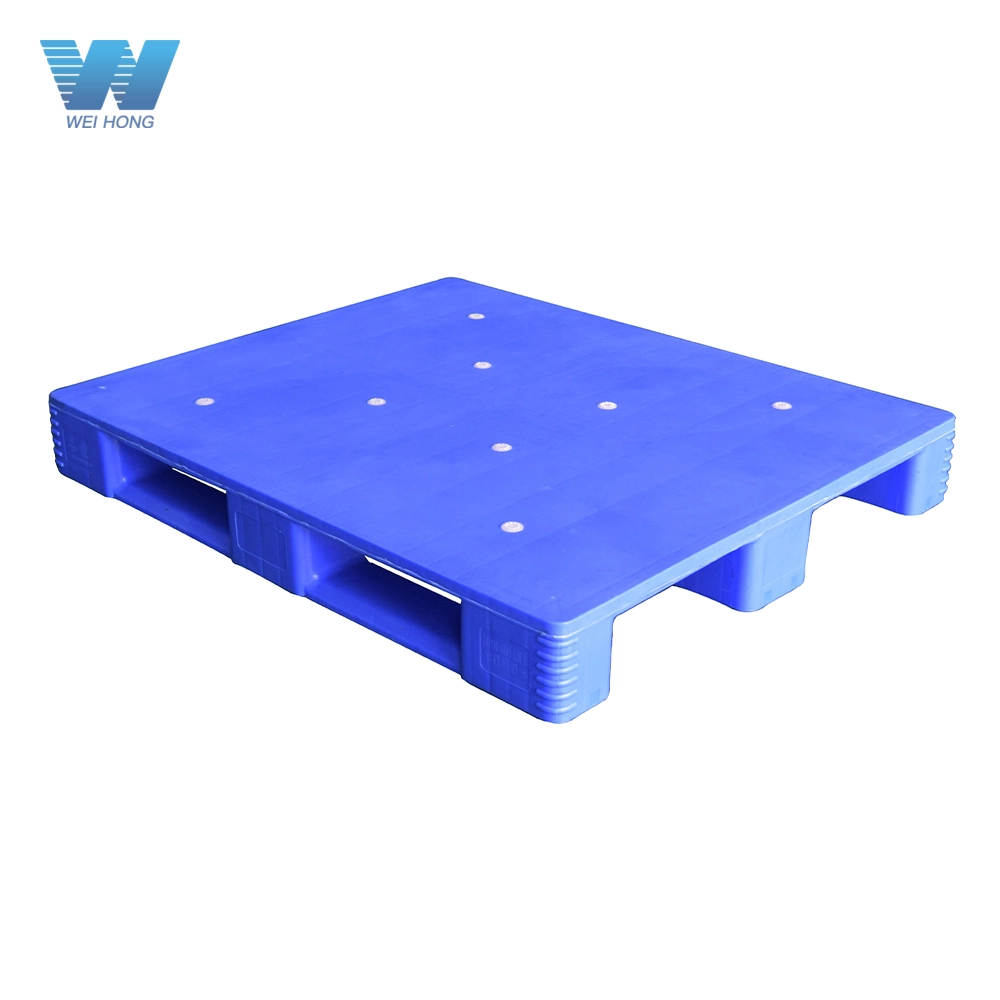
ZJ1210-150H Three-runner Closed Deck Hygienic Plastic Pallet
The three-runner closed-deck hygienic plastic pallet is a solid and durable packaging solution designed for general and especially food and medicine storage and transport. It’s made of virgin HDPE or PP, featuring a flat surface and even bottom for hygienic consideration, a reinforced configuration with steel cores for rack and shelf, and a steady loading capacity.
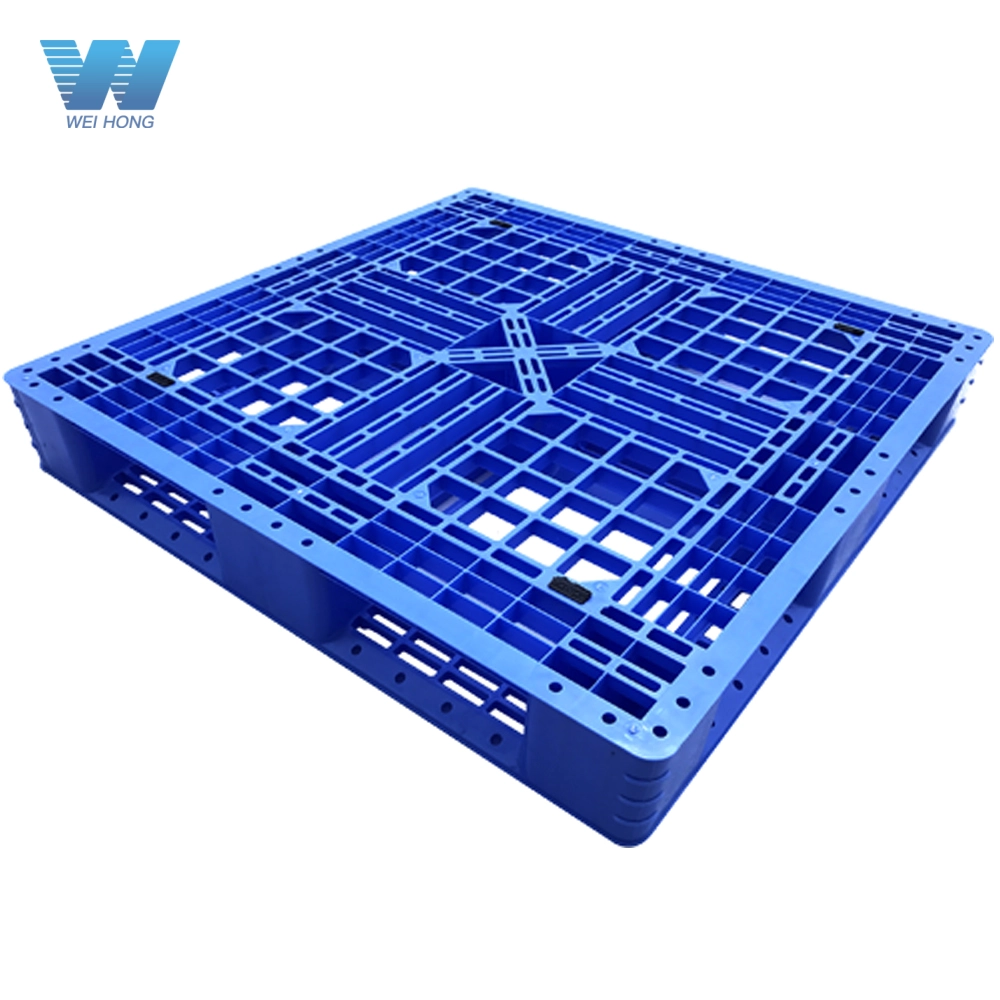
ZJ1010-150 Six-runner Single-sided Plastic Pallet
The six-runner plastic pallet, open or closed deck, is a solid and durable packaging solution designed for general and medium to heavy-duty cargo stacking, storage and transport. It’s made of virgin HDPE or PP, featuring in robust structure, a reinforced configuration with steel cores for the rack and shelf, and a steady loading capacity.
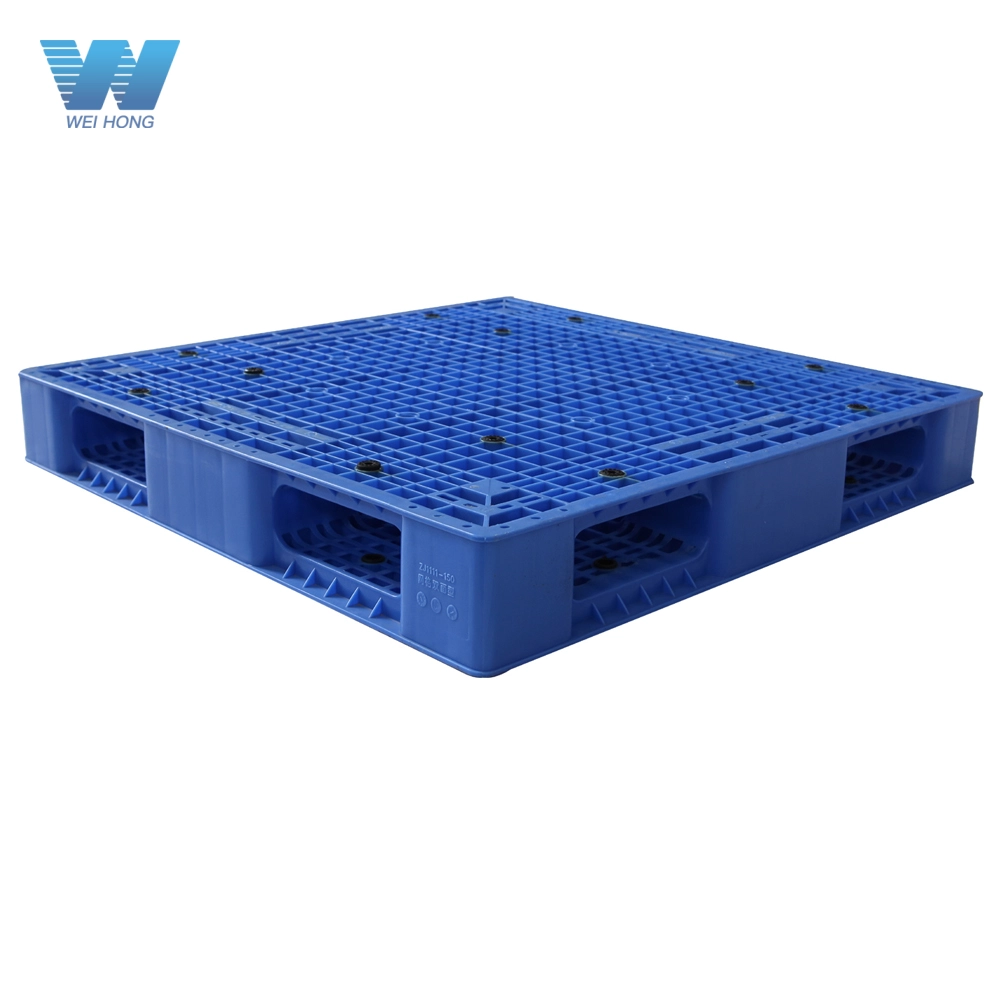
ZJ11111-150 Double-sided Heavy Duty Plastic Pallet
The double-sided plastic pallet, open deck or closed deck, is a solid and durable packaging solution designed for general and medium to heavy-duty cargo stacking, storage and transport. It’s made of virgin HDPE or PP, featuring a robust structure, a reinforced configuration with steel cores for the rack and shelf, and a steady loading capacity for both sides.
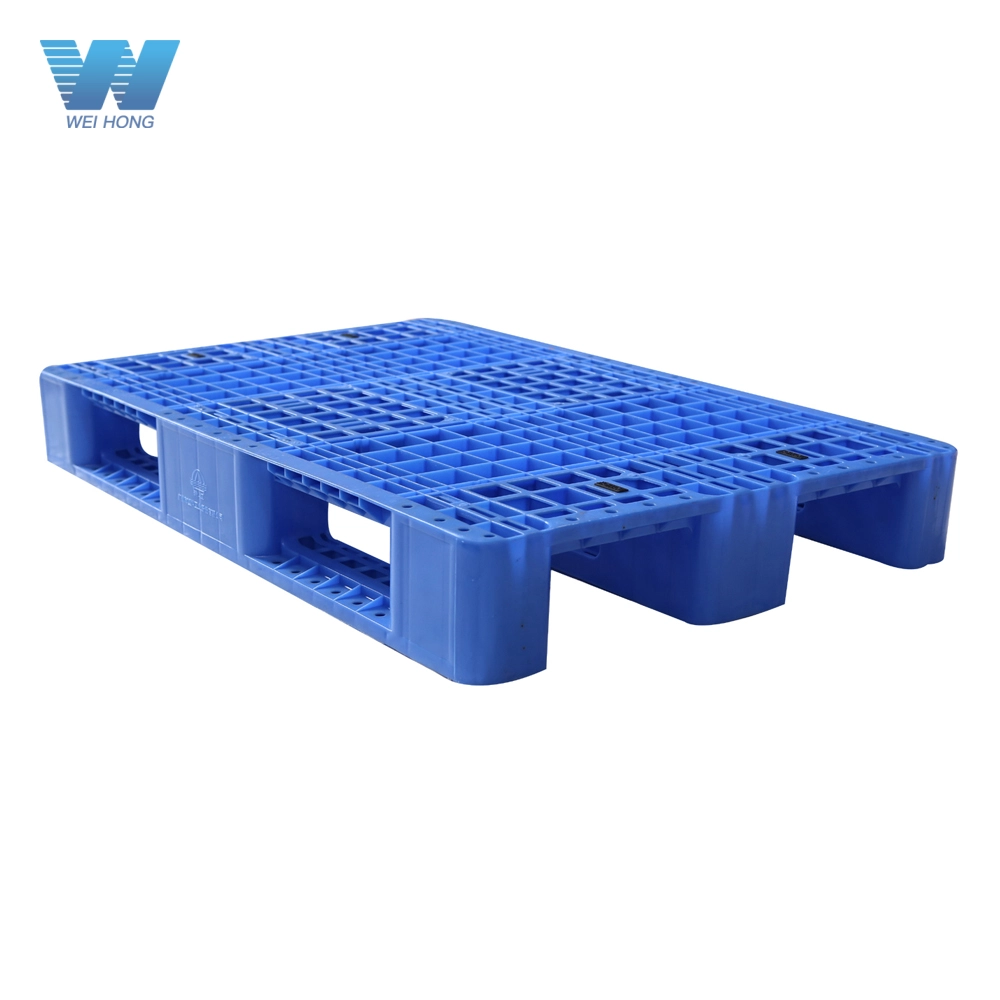
ZJ1208-155 Three-runner Single-sided Plastic Pallet
The three-runner single-sided plastic pallet is a solid and durable packaging solution designed for general and medium to heavy-duty cargo storage, transport and automated storage and retrieval system (AS/RS) use. It’s made of virgin HDPE or PP, featuring in robust structure, reinforced configuration with steel cores for rack and shelf, and a steady loading capacity.
Request More Information About Plastic Pallets
Have questions or need detailed insights on this article? Fill out the form below to contact our team for comprehensive information and support related to our plastic pallet solutions.
Contact us


+86 138 0277 8204
+86 183 4431 0917
+86 195 3791 1860

No. 15-1, Fengying Rd., Taiping Town, Conghua Dist., Guangzhou City, Guangdong Province, China.
 Scan QR Code
Weihong
Whatsapp: +8613802778204
Guangdong Weihong Plastic Technology Co., Ltd.
Scan QR Code
Whatsapp: +8619537911860
Scan QR Code