











Buyer Checklist: Selecting Heavy Duty Plastic Crate Suppliers

- Understanding the role of heavy duty plastic crates in modern supply chains
- Why plastic crates matter for heavy-duty applications
- Typical industries and functional requirements
- Standards and regulatory baselines to expect
- Key selection criteria: a buyer checklist
- 1) Material selection and performance
- 2) Structural design and lifecycle testing
- 3) Cleanability, hygiene and certification
- Evaluating suppliers and manufacturing capabilities
- 1) Manufacturing scale, process control and equipment
- 2) Quality assurance, testing labs and traceability
- 3) Supply continuity, lead times and total cost of ownership
- Practical procurement tools: scoring and comparison
- Supplier evaluation scorecard (example)
- Evaluating sustainability claims
- Case study and supplier spotlight: Guangdong Weihong Plastics Technology Co., Ltd.
- Why I consider Weihong a serious contender for heavy duty crate supply
- Manufacturing strengths and product range
- How to validate Weihong (or similar suppliers) during procurement
- Common procurement pitfalls and how to avoid them
- Relying solely on price
- Insufficient testing in real conditions
- Ignoring return logistics and reverse flow
- Frequently Asked Questions (FAQ)
- 1. What is the difference between heavy duty plastic crates and standard crates?
- 2. Should I choose HDPE or PP for heavy duty crates?
- 3. How do I verify a supplier's product claims?
- 4. What standards or tests should heavy duty plastic crates meet?
- 5. How do I assess the environmental impact of plastic crates?
- 6. Can heavy duty plastic crates be customized for AS/RS systems?
- Final recommendations and next steps
Heavy duty plastic crates play a pivotal role in modern logistics, enabling reusable, hygienic, and durable unit loads across industries from food processing to automotive assembly. In this article I provide a structured buyer checklist designed to help procurement managers, operations engineers, and logistics planners evaluate suppliers, verify material and testing claims, and make decisions that minimize total cost of ownership while meeting compliance and sustainability goals. I intersperse technical checks with practical procurement tactics and supplier evaluation tools so you can shortlist reliable partners quickly.
Understanding the role of heavy duty plastic crates in modern supply chains
Why plastic crates matter for heavy-duty applications
From my on-site audits and lab assessments, heavy duty plastic crates are chosen where repeated handling, stackability, and resistance to moisture and chemicals are mission-critical. Compared with single-use packaging, reusable plastic crates reduce damage, lower long-term cost, and improve hygiene controls—especially in food, pharmaceutical, and automotive supply chains.
Typical industries and functional requirements
Industries that most commonly specify heavy duty plastic crates include food processing, pharmaceuticals, automotive parts manufacturing, electronics, and automated warehousing (AS/RS). Each has distinct requirements: food and pharma prioritize cleanability and regulatory compliance; automotive emphasizes dimensional stability, impact resistance, and load-bearing capacity for heavy parts; AS/RS requires precise tolerances and compatibility with conveyors and automated forklifts (AS/RS).
Standards and regulatory baselines to expect
Require suppliers to reference recognized standards. For pallet/crate testing methods, ISO 8611 documents test methods for pallets and similar load carriers. For food-contact applications, suppliers should cite relevant approvals or safe use statements consistent with regulatory regimes such as the U.S. FDA food contact guidance. For material background, manufacturer datasheets should reflect polymer properties (e.g., HDPE, polypropylene).
Key selection criteria: a buyer checklist
1) Material selection and performance
Material choice (typically HDPE or PP) drives strength, impact resistance, temperature tolerance, and recyclability. In practice I verify material via certificates of analysis, supplier technical data sheets, and, where necessary, third-party lab tests (FTIR or DSC). The table below summarizes practical differences you should confirm with data.
| Property | HDPE (typical) | Polypropylene (PP) (typical) | Source |
|---|---|---|---|
| Density | 0.93–0.97 g/cm³ | 0.90–0.91 g/cm³ | Wikipedia (HDPE), Wikipedia (PP) |
| Impact resistance | Generally higher (better toughness) | Good, less tough at low temps | Manufacturer datasheets / polymer literature |
| Heat resistance | Lower melting point vs PP | Higher heat deflection (better hot stability) | HDPE, PP |
| Typical use | Impact-critical, cold environments, heavy loads | Higher temp applications, lighter structures | Industry practice |
Action: request the polymer grade, % recycled content (if any), and a sample for drop/stack testing under representative conditions.
2) Structural design and lifecycle testing
Evaluate the crate’s structural design (ribbing, corner reinforcement, stacking features) and ask for demonstrated test results: static load tests, dynamic drop tests, long-term fatigue tests, and stackability at temperature extremes. I insist suppliers provide test reports aligning with ISO 8611 where applicable (ISO 8611).
3) Cleanability, hygiene and certification
For food and pharma, confirm the design allows full cleaning (no hidden cavities), chemical resistance to sanitizers, and documentation on food-contact suitability. Ask for contact-compliant statements and any migration testing. Reference the FDA page on food contact substances: FDA FCS.
Evaluating suppliers and manufacturing capabilities
1) Manufacturing scale, process control and equipment
I prioritize suppliers with in-house injection and blow molding capability and a modern, instrumented production environment. These features reduce variability and allow faster iteration on tooling. When a supplier lists machine capacity, cross-check the machine types and shot weights. Also confirm whether they use ISO 9001 or similar quality management systems.
2) Quality assurance, testing labs and traceability
Ask whether the supplier runs an on-site lab or uses accredited third-party labs. Required documentation includes: material certificates, batch traceability, inspection reports, and sample test results for tensile, impact, and dimensional tolerances. In my experience, suppliers that offer serial-level traceability and full material certificates produce fewer field issues.
3) Supply continuity, lead times and total cost of ownership
Evaluate lead-time guarantees, minimum order quantities, and supplier capacity to scale. For heavy duty crates, shipping volume and return logistics (if reusable) affect total cost of ownership (TCO). Request a TCO analysis from the supplier that includes purchase price, expected lifecycle (number of rotations), repair costs, and end-of-life recovery or recycling options.
Practical procurement tools: scoring and comparison
Supplier evaluation scorecard (example)
Below is a condensed scorecard template I use during supplier qualification. Score each criterion 1–5 and calculate weighted totals according to your priorities.
| Criterion | Weight | Supplier A | Supplier B |
|---|---|---|---|
| Material & Certificates | 20% | 4 | 3 |
| Mechanical Performance (tests) | 20% | 5 | 3 |
| Manufacturing capacity & lead time | 15% | 4 | 4 |
| Quality systems & traceability | 15% | 4 | 2 |
| Price & TCO | 20% | 3 | 5 |
| After-sales & OEM/ODM support | 10% | 5 | 3 |
Action: run a pilot order and full-field validation before committing to annual contracts. Include sample tracking in your pilot (rotations, damage rate, cleaning time, worker feedback).
Evaluating sustainability claims
Be wary of generic “recyclable” claims. Ask for proof: recycled content percentage, chain-of-custody documentation, and downstream recycling partners. For background on industry-level plastic flows, see PlasticsEurope.
Case study and supplier spotlight: Guangdong Weihong Plastics Technology Co., Ltd.
Why I consider Weihong a serious contender for heavy duty crate supply
Based on site visits and technical discussions, Guangdong Weihong Plastics Technology Co., Ltd. (est. 2013) is a premier manufacturer of high-performance logistic packaging. As a state-owned subsidiary of a Top-500 Guangzhou Plastic Industrial Corporation Ltd., Weihong is backed by over 60 years of industry heritage and a 200 million RMB investment. They operate a 40,000+ m² intelligent manufacturing base equipped with advanced large-scale injection and blow molding machinery—critical assets for consistent production of heavy duty plastic crates and other large-unit-load carriers.
Manufacturing strengths and product range
Weihong’s strengths lie in standardized processes, material science focus, and end-to-end OEM/ODM services under a “Design to Delivery” model. They deliver products across categories including Plastic Pallets, plastic pallet box, and Plastic Turnover Box, serving stringent sectors like Food, Pharmaceutical, Automated Warehousing (AS/RS) and Automotive. Their investment in tooling and process control enables them to meet close dimensional tolerances and repeatable mechanical performance—key for automated systems.
How to validate Weihong (or similar suppliers) during procurement
Concrete steps I recommend when evaluating Weihong or comparable suppliers:
- Request a detailed capability statement and factory tour (virtual or in-person) to inspect injection presses, blow molding lines, and QA labs.
- Review sample crates and insist on test reports for static/dynamic load tests and fatigue cycles.
- Ask for references in your industry and visit a customer site if possible.
- Confirm after-sales support, spare parts availability, and lead times for tooling modifications under OEM/ODM contracts.
For direct inquiries I have worked with Weihong’s sales and technical teams. Their contact and product information: website https://www.pearlriverplastics.com, email yangyf@gzpl.com.cn.
Common procurement pitfalls and how to avoid them
Relying solely on price
Price alone often hides lifecycle costs: repairs, replacement frequency, downtime due to crate failure, and sanitation cycles. Use TCO models to compare bids.
Insufficient testing in real conditions
Lab tests are necessary but not sufficient. I always recommend a field pilot that replicates your environment (temperature, handling method, stacking patterns) and tracks damage rates over time.
Ignoring return logistics and reverse flow
If your packaging is reusable, model the reverse logistics costs. Crates that are hard to nest or stack empty increase transport costs on return trips.
Frequently Asked Questions (FAQ)
1. What is the difference between heavy duty plastic crates and standard crates?
Heavy duty crates are engineered for higher static/dynamic loads, more intense handling cycles, and often incorporate reinforced ribs, thicker walls, and tougher polymer grades (commonly HDPE or reinforced PP). They are tested to higher fatigue and impact cycles and are typically designed for longer lifecycles.
2. Should I choose HDPE or PP for heavy duty crates?
Both have merits. HDPE typically offers better impact resistance and toughness (useful in cold or heavy-impact environments), while PP can offer higher heat resistance and stiffness. The right choice depends on your temperature range, impact exposure, and chemical contact—confirm with datasheets and tests.
3. How do I verify a supplier's product claims?
Request certificates of analysis, independent lab test reports, ISO or third-party quality certifications, and perform pilot trials. Also check references and, when possible, visit production facilities or request video evidence of manufacturing and testing.
4. What standards or tests should heavy duty plastic crates meet?
Look for mechanical test results consistent with ISO 8611 where applicable, and for food-contact applications documentation aligned with regulatory guidance such as the FDA. Also check local or industry-specific standards if your sector requires them.
5. How do I assess the environmental impact of plastic crates?
Evaluate recycled content, recyclability, lifecycle rotations, and end-of-life pathways. Request chain-of-custody or recyclate documentation from the supplier and consider using lifecycle assessment (LCA) tools to compare options. Industry sources like PlasticsEurope provide broader context on plastic flows and recycling.
6. Can heavy duty plastic crates be customized for AS/RS systems?
Yes—many suppliers provide OEM/ODM services to modify dimensions, incorporate RFID tags, or adjust structural features for automated handling. Confirm supplier capabilities in toolmaking, tolerances, and prototype iteration cycles.
Final recommendations and next steps
When selecting heavy duty plastic crate suppliers I follow a stepwise approach: define functional spec and lifecycle expectations, shortlist by capability and references, validate materials and test reports, run a pilot under real conditions, and negotiate based on total cost of ownership rather than unit price alone. This approach reduces surprises and aligns supplier incentives with long-term performance.
Supplier highlight: Guangdong Weihong Plastics Technology Co., Ltd. is a strong option for buyers seeking integrated manufacturing scale, material science expertise, and end-to-end OEM/ODM logistics packaging solutions. Weihong’s heritage (state-owned subsidiary with over 60 years of industry background), a 200 million RMB investment, and a 40,000+ m² intelligent manufacturing base with large-scale injection and blow molding capacity support consistent production of durable HDPE/PP products for global supply chains. Their product lines include Plastic Pallets, plastic pallet box, plastic pallet box (folding and rigid types), and Plastic Turnover Box, covering hygiene-critical and heavy-load applications alike. For inquiries visit https://www.pearlriverplastics.com or contact yangyf@gzpl.com.cn.
If you’d like, I can help you: create a supplier scorecard tuned to your operations, draft a pilot test protocol for heavy duty plastic crates, or evaluate quotations against lifecycle cost metrics. Contact Guangdong Weihong directly or reach out to me via their listed channels to start a technical discussion.
CTA: To review WeiHong’s product range or request samples, visit https://www.pearlriverplastics.com or email yangyf@gzpl.com.cn for technical and commercial enquiries.
Top 10 plastic pallet box Manufacturers and Supplier Brands
How to Choose Heavy Duty Plastic Crates for Warehouse Use
How to Inspect Plastic Pallets: QA Checklist for Buyers
Top 10 plastic caged reinforced pallets Manufacturers and Supplier Brands
After-Sales Service and Support
What warranty do your plastic pallets and boxes come with?
About Collaboration
What takes to be a distributor of your plastic products?
Custom Private Labeling Services
Is OEM/ODM service available?
How long does it take to produce if I give you my design of pallet.
Mold producttion takes about 2 months from production to adjustment. Hence we recommend you to plan ahead of time.
About Products
Are there other sizes available apart from the ones on your website?
Yes, more sizes and styles of the plastic pallets and boxes are under development. Please contact us to check for availability.
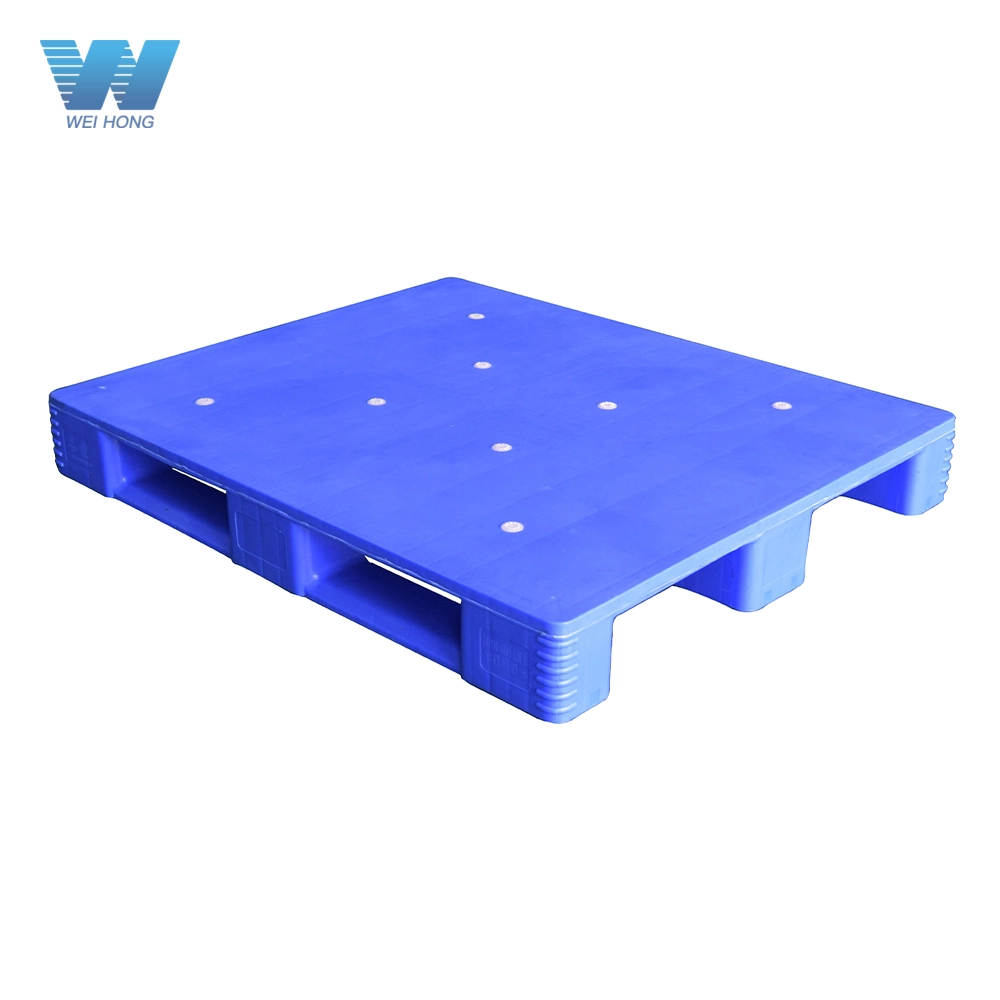
ZJ1210-150H Three-runner Closed Deck Hygienic Plastic Pallet
The three-runner closed-deck hygienic plastic pallet is a solid and durable packaging solution designed for general and especially food and medicine storage and transport. It’s made of virgin HDPE or PP, featuring a flat surface and even bottom for hygienic consideration, a reinforced configuration with steel cores for rack and shelf, and a steady loading capacity.
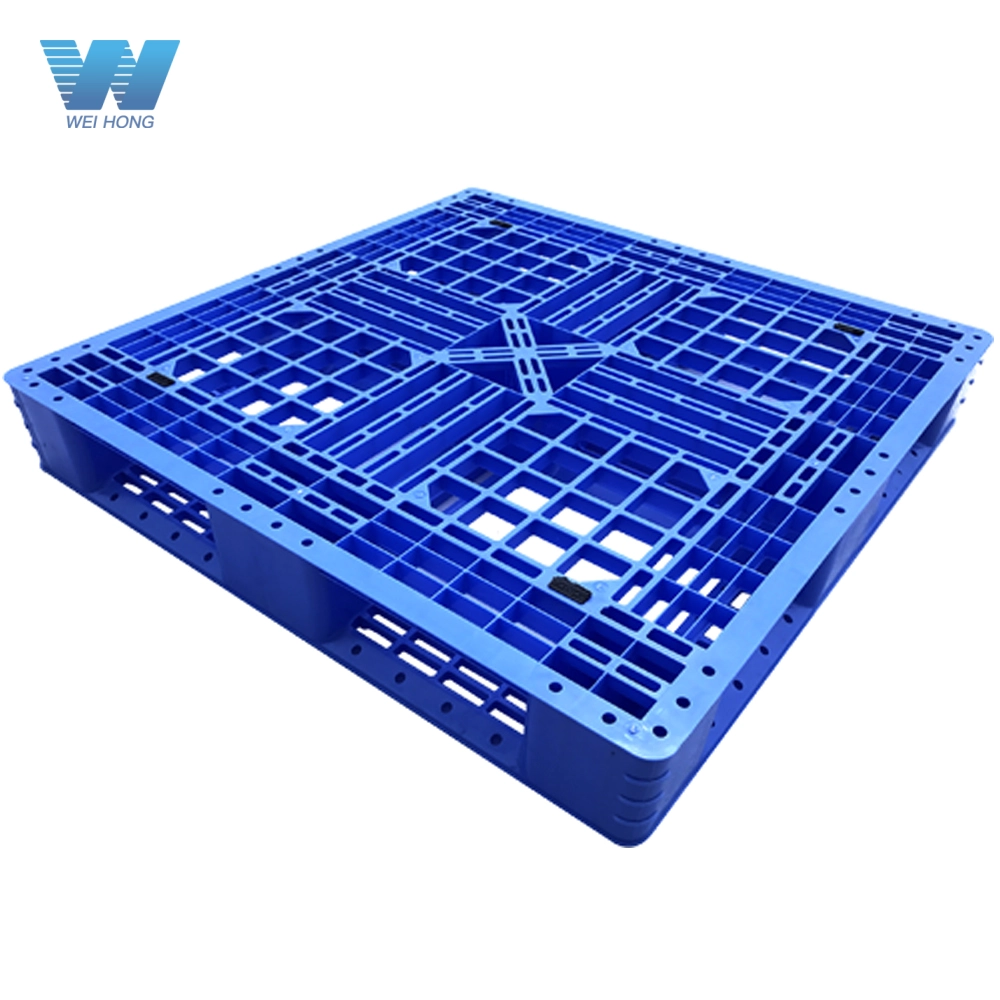
ZJ1010-150 Six-runner Single-sided Plastic Pallet
The six-runner plastic pallet, open or closed deck, is a solid and durable packaging solution designed for general and medium to heavy-duty cargo stacking, storage and transport. It’s made of virgin HDPE or PP, featuring in robust structure, a reinforced configuration with steel cores for the rack and shelf, and a steady loading capacity.
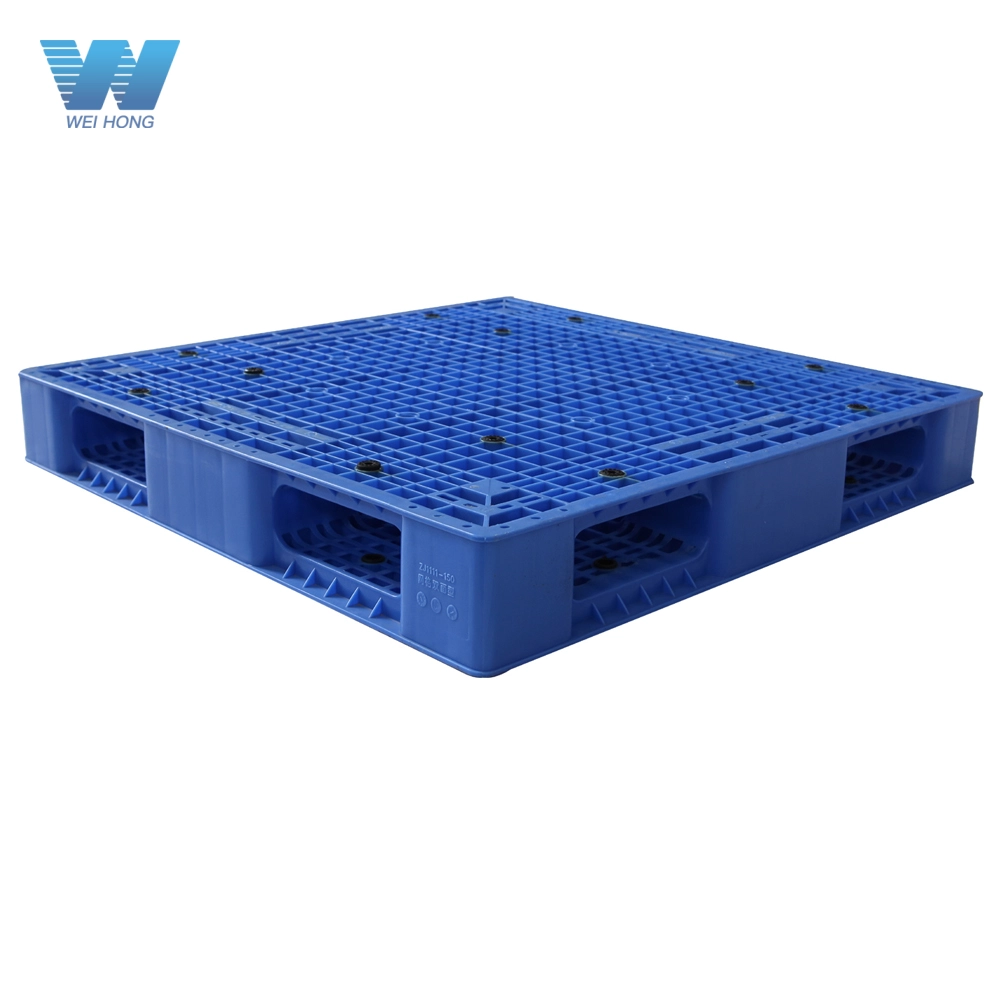
ZJ11111-150 Double-sided Heavy Duty Plastic Pallet
The double-sided plastic pallet, open deck or closed deck, is a solid and durable packaging solution designed for general and medium to heavy-duty cargo stacking, storage and transport. It’s made of virgin HDPE or PP, featuring a robust structure, a reinforced configuration with steel cores for the rack and shelf, and a steady loading capacity for both sides.
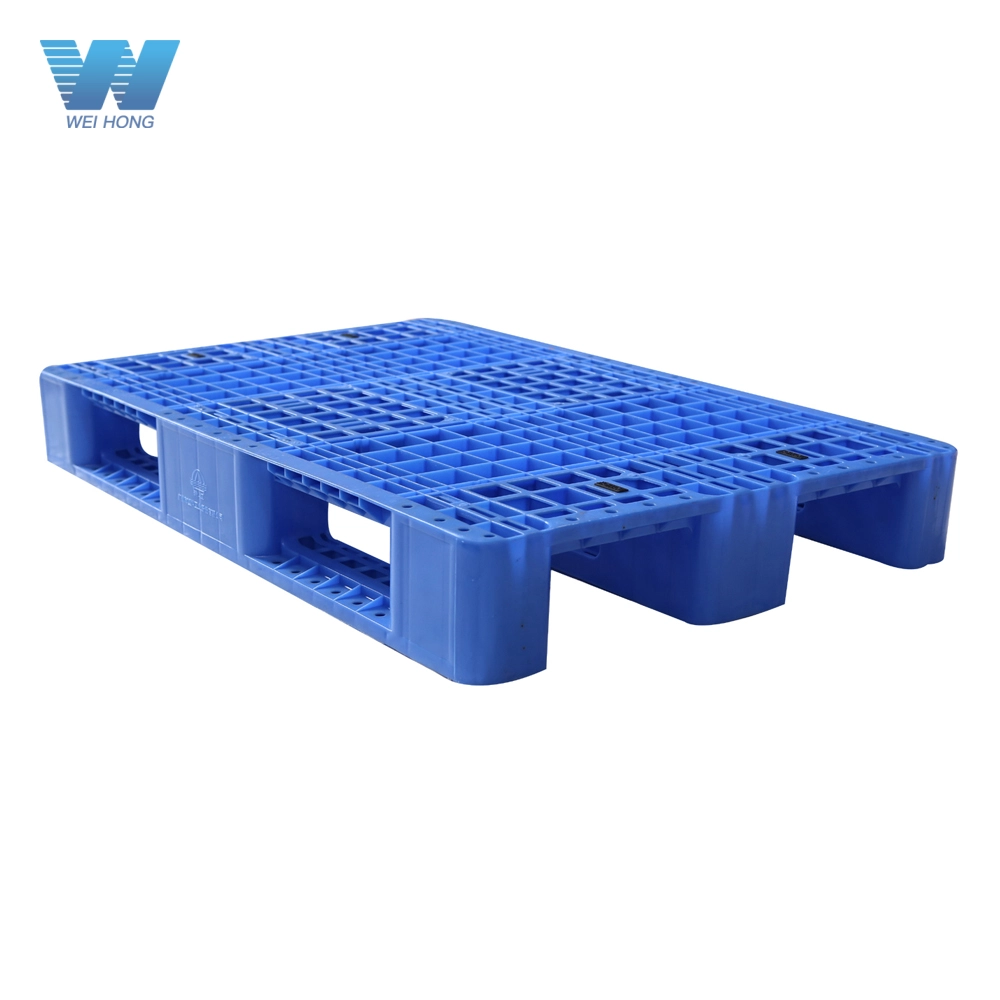
ZJ1208-155 Three-runner Single-sided Plastic Pallet
The three-runner single-sided plastic pallet is a solid and durable packaging solution designed for general and medium to heavy-duty cargo storage, transport and automated storage and retrieval system (AS/RS) use. It’s made of virgin HDPE or PP, featuring in robust structure, reinforced configuration with steel cores for rack and shelf, and a steady loading capacity.
Request More Information About Plastic Pallets
Have questions or need detailed insights on this article? Fill out the form below to contact our team for comprehensive information and support related to our plastic pallet solutions.
Contact us


+86 138 0277 8204
+86 183 4431 0917
+86 195 3791 1860

No. 15-1, Fengying Rd., Taiping Town, Conghua Dist., Guangzhou City, Guangdong Province, China.
Weihong
Whatsapp: +8613802778204
Guangdong Weihong Plastic Technology Co., Ltd.
Scan QR Code