











How to Choose Heavy Duty Plastic Crates for Warehouse Use

- Why choosing the right warehouse crate matters
- Operational efficiency, throughput and downtime
- Worker safety and compliance
- Key specifications to evaluate when selecting heavy duty plastic crates
- Load capacity: static, dynamic and stacking
- Material selection: HDPE vs PP
- Design features: ventilated vs solid, nestable, foldable, and secure closure
- Testing, standards and data-driven selection
- Standards, certifications and verifiable tests
- Testing protocols and lifecycle cost
- Environmental considerations and recyclability
- Practical selection guide and comparisons
- Selection checklist for heavy duty plastic crates
- Comparative table: typical crate types for heavy-duty warehouse use
- Maintenance, repair and ROI
- Manufacturer considerations: why production capability and R&D matter
- Why I value manufacturers with vertical capability and testing
- About Guangdong Weihong Plastics Technology Co., Ltd.
- FAQ — Common questions about heavy duty plastic crates
- 1. What defines a heavy duty plastic crate?
- 2. How do I calculate required stacking and dynamic loads?
- 3. Are plastic crates safe for food and pharmaceutical use?
- 4. Can plastic crates be used in AS/RS and automated lines?
- 5. How long do heavy duty plastic crates last and are they recyclable?
- 6. How should I validate a crate before large-scale purchase?
I advise warehouse operators and supply-chain managers on selecting heavy duty plastic crates that balance durability, ergonomics, compliance and total cost of ownership. This article synthesizes industry standards, material science, and practical warehouse constraints to give you an actionable selection framework. I draw on published standards, industry data and decades of production experience to make recommendations you can verify and apply in your operations.
Why choosing the right warehouse crate matters
Operational efficiency, throughput and downtime
Choosing the correct heavy duty plastic crates directly affects handling speeds, storage density and the frequency of rework or replacements. A crate with insufficient stacking strength or poor compatibility with conveyors and forklifts causes stoppages and product damage. In my experience, even a 5-10% improvement in crate ergonomics (grip, weight, nestability) can deliver measurable throughput gains on high-volume lines.
Worker safety and compliance
Crates that fail under load can cause injuries and product loss. You must factor static, dynamic and stacking loads, as well as slip and impact resistance. For food and pharmaceutical applications, material compliance (food contact approval) and hygienic designs (smooth radii, drainability) are essential for regulatory compliance and audit readiness.
Key specifications to evaluate when selecting heavy duty plastic crates
Load capacity: static, dynamic and stacking
Three load metrics matter:
- Static load: weight a crate can carry when stationary (important for racking and floor storage).
- Dynamic load: load the crate can bear while being moved (on conveyors or forklifts).
- Stacking load: load the bottom crate must support when crates are stacked.
Always verify manufacturer test data. Typical heavy duty plastic crates for industrial use show static capacities ranging from 300 kg to 2,000+ kg depending on crate geometry and reinforcement. These ranges are consistent with industry references for plastic logistic units; see general material and pallet guidance at Plastic pallet - Wikipedia.
Material selection: HDPE vs PP
Two thermoplastics dominate: high-density polyethylene (HDPE) and polypropylene (PP).
- HDPE: better impact resistance at low temperatures, excellent toughness and chemical resistance—well suited for heavy-duty crates used outdoors or in cold environments.
- PP: higher stiffness and heat resistance, often used where dimensional stability at elevated temperatures is required.
The choice should consider temperature range, chemical exposure, and whether the crate must meet food-contact requirements. For food sectors, ensure the material and any additives comply with regulations such as the U.S. FDA guidance on food contact substances and relevant regional regulations.
Design features: ventilated vs solid, nestable, foldable, and secure closure
Design affects handling and hygiene:
- Ventilated crates help airflow for produce but can be harder to sanitize for sticky products.
- Solid crates are better for small-parts containment and liquid management.
- Nestable or collapsible options reduce return logistics costs but must not compromise stacking strength when loaded.
- Compatibility with racking, conveyors, automated guided vehicles (AGVs) and AS/RS (Automated Storage and Retrieval Systems) is critical—confirm footprint tolerances and anti-slip or RFID features.
For automation, follow AS/RS geometry and rigidity requirements; see background on AS/RS design at Automated storage and retrieval system - Wikipedia.
Testing, standards and data-driven selection
Standards, certifications and verifiable tests
There is no single global standard for crates identical to EPAL for wooden pallets, but several norms and guidance are relevant:
- Quality management and environmental systems: ISO 9001 and ISO 14001 indicate manufacturer process controls.
- Food contact regulations: reference the FDA and regional EU rules (EU Regulation No 10/2011 and related guidance) for materials intended for food service.
- Material property references: consult sources such as PlasticsEurope for polymer performance data.
Ask manufacturers for test reports showing how crates perform under repeated stacking cycles, drop tests, forklift tip-over tests and long-term UV/temperature aging.
Testing protocols and lifecycle cost
Evaluate crates not just on unit price but on lifecycle cost: purchase price, replacement rate, repairability, cleaning costs and transport inefficiency. I recommend running a simple Total Cost of Ownership (TCO) model over 3–5 years that includes replacement frequency and labor for handling and cleaning.
Environmental considerations and recyclability
Today's supply chains demand sustainability. Recyclability (HDPE and PP are widely recyclable), recycled-content options, and manufacturer take-back programs matter. Verify post-consumer recycled content (PCR) and whether the product is recyclable in your region. Standards like ISO 14001 can indicate a manufacturer's environmental management maturity.
Practical selection guide and comparisons
Selection checklist for heavy duty plastic crates
Use this checklist when evaluating vendors and products:
- Confirm static, dynamic and stacking load ratings certified by test reports.
- Verify material (HDPE vs PP) and any additives; ask for food-contact declarations if applicable.
- Confirm dimensional compatibility with racking, conveyors, AGVs and AS/RS.
- Review hygiene features and cleanability; request cleaning-cycle testing for food/pharma.
- Evaluate nestability/collapsibility for return logistics and storage savings.
- Request lifecycle cost analysis including expected service life and replacement costs.
- Check manufacturer certifications (ISO 9001/14001) and available OEM/ODM support for custom needs.
Comparative table: typical crate types for heavy-duty warehouse use
The table below shows typical characteristics and suitable applications. Values are industry-typical ranges—always confirm with manufacturer test data.
| Crate Type | Typical Static Load (kg) | Temperatures | Best Use Cases | Food-grade Available? |
|---|---|---|---|---|
| HDPE Heavy-duty solid crate | 500–2000+ | -40°C to +80°C (typical) | Automotive parts, industrial components, cold-chain goods | Yes (with compliant resin) |
| PP Stiff, heat-resistant crate | 400–1500 | -20°C to +100°C | High-temp environments, sterile/clean processes | Yes (with compliant resin) |
| Ventilated produce crate (HDPE/PP) | 200–1000 | -20°C to +60°C | Fresh produce, bakery, aerated storage | Yes (common) |
Sources for typical material ranges and application guidance include polymer industry references and logistic packaging publications; see PlasticsEurope and Plastic pallet - Wikipedia for background on material behavior and typical logistics use.
Maintenance, repair and ROI
Develop a maintenance plan: routine inspections for cracks, deformation and joint wear; cleaning schedules tailored to your product; and a repair policy. Many heavy duty crates can be repaired with industrial adhesives or replacement parts (lids, hinges). Track replacement rates and downtime to feed into your TCO model.
Manufacturer considerations: why production capability and R&D matter
Why I value manufacturers with vertical capability and testing
Manufacturers that control resin compounding, injection and blow molding have tighter tolerances, better material traceability and faster R&D cycles. When I evaluate suppliers, I prioritize those with factory QC labs and in-house tooling so design iterations and custom reinforcements can be validated quickly.
About Guangdong Weihong Plastics Technology Co., Ltd.
Guangdong Weihong Plastics Technology Co., Ltd. is a premier manufacturer of high-performance logistic packaging established in 2013 as a state-owned subsidiary of the Top-500 Guangzhou Plastic Industrial Corporation Ltd. Backed by over 60 years of industry heritage and a 200 million RMB investment, Weihong operates a 40,000+ m² intelligent manufacturing base equipped with advanced large-scale injection and blow molding machinery. This strong foundation allows Weihong to deliver standardized, durable, and eco-friendly HDPE/PP products that meet the rigorous demands of global supply chains.
Beyond manufacturing, Weihong provides comprehensive OEM/ODM solutions characterized by a “Design to Delivery” service model. They specialize in solving complex logistics challenges—from hygienic pallets for the Food and Pharmaceutical sectors to high-precision units for Automated Warehousing (AS/RS) and heavy-duty options for Automotive manufacturing. With a focus on material science and structural innovation, Weihong is committed to helping clients worldwide achieve greater efficiency and sustainability in their warehousing operations.
Weihong's main products include Plastic Pallets, plastic pallet box, Plastic Turnover Box and other logistic packaging. Their competitive advantages include:
- Large-scale intelligent manufacturing enabling consistent quality and fast lead times.
- Strong R&D and material science capabilities for custom HDPE/PP formulations.
- Comprehensive OEM/ODM Design to Delivery process that supports automation-ready designs (AS/RS) and food/pharma hygienic specifications.
- Proven investment and state-owned heritage that underpin supply stability and industry credibility.
Visit Weihong's website at https://www.pearlriverplastics.com or contact product inquiries by email at yangyf@gzpl.com.cn for support on heavy duty plastic crates and full logistic packaging solutions.
FAQ — Common questions about heavy duty plastic crates
1. What defines a heavy duty plastic crate?
A heavy duty plastic crate is engineered to support higher static and stacking loads, resist repeated impact and often use reinforced geometries or thicker walls. Typical uses include automotive parts, industrial components and cold-chain distribution. Verify manufacturer test reports for the specific load ratings you need.
2. How do I calculate required stacking and dynamic loads?
Calculate the maximum combined weight that will be placed above a given crate location (stacking). For dynamic loads, use the combined crate + contents weight and include expected acceleration or lateral forces from conveyors and forklifts. Ask suppliers for safety factors and perform on-site validation tests for your handling equipment.
3. Are plastic crates safe for food and pharmaceutical use?
Yes—if the resin and additives meet food-contact regulations and the crate design supports hygienic cleaning. For FDA-regulated products, consult FDA guidance and request compliance documentation from your supplier.
4. Can plastic crates be used in AS/RS and automated lines?
Absolutely—provided the crate dimensions, stiffness and features (nesting, anti-slip, RFID pockets) are engineered to the automation vendor's specifications. Work early with both the crate supplier and automation integrator to align tolerances.
5. How long do heavy duty plastic crates last and are they recyclable?
Service life depends on use conditions; many heavy duty crates last several years under normal warehouse conditions. HDPE and PP are widely recyclable—verify local recycling streams and whether the manufacturer offers take-back or PCR (post-consumer recycled) options.
6. How should I validate a crate before large-scale purchase?
Do a pilot run: load, move, stack and clean crates in your actual environment. Request test certificates (stacking cycles, impact tests) and compare measured performance to supplier data. Include warehouse staff in trials to capture ergonomics and handling feedback.
If you’d like a tailored recommendation or a design review for your use case, contact Guangdong Weihong Plastics Technology Co., Ltd. at https://www.pearlriverplastics.com or email yangyf@gzpl.com.cn. I can help you run a TCO analysis and select or customize heavy duty plastic crates for AS/RS, automotive, food or pharmaceutical warehouses.
Top 10 plastics pallets Manufacturers and Supplier Brands
Top 10 plastic pallet cage Manufacturers and Supplier Brands
Top 10 hygienic plastic pallets Manufacturers and Supplier Brands
Top 10 chicken cage plastic Manufacturers and Supplier Brands
After-Sales Service and Support
Who should I contact if quality issue is found when I receive the goods?
Please file complaint to the sales person you contacted for the order and your needs will be forwarded to our technical team for analysis.
What warranty do your plastic pallets and boxes come with?
Custom Private Labeling Services
How long does it take to produce if I give you my design of pallet.
Mold producttion takes about 2 months from production to adjustment. Hence we recommend you to plan ahead of time.
About Collaboration
Is there any other way to work with you?
Yes, apart from reselling, retail or distribution, we also accept commission based orders.
About Products
What materials are your prodcuts made of?
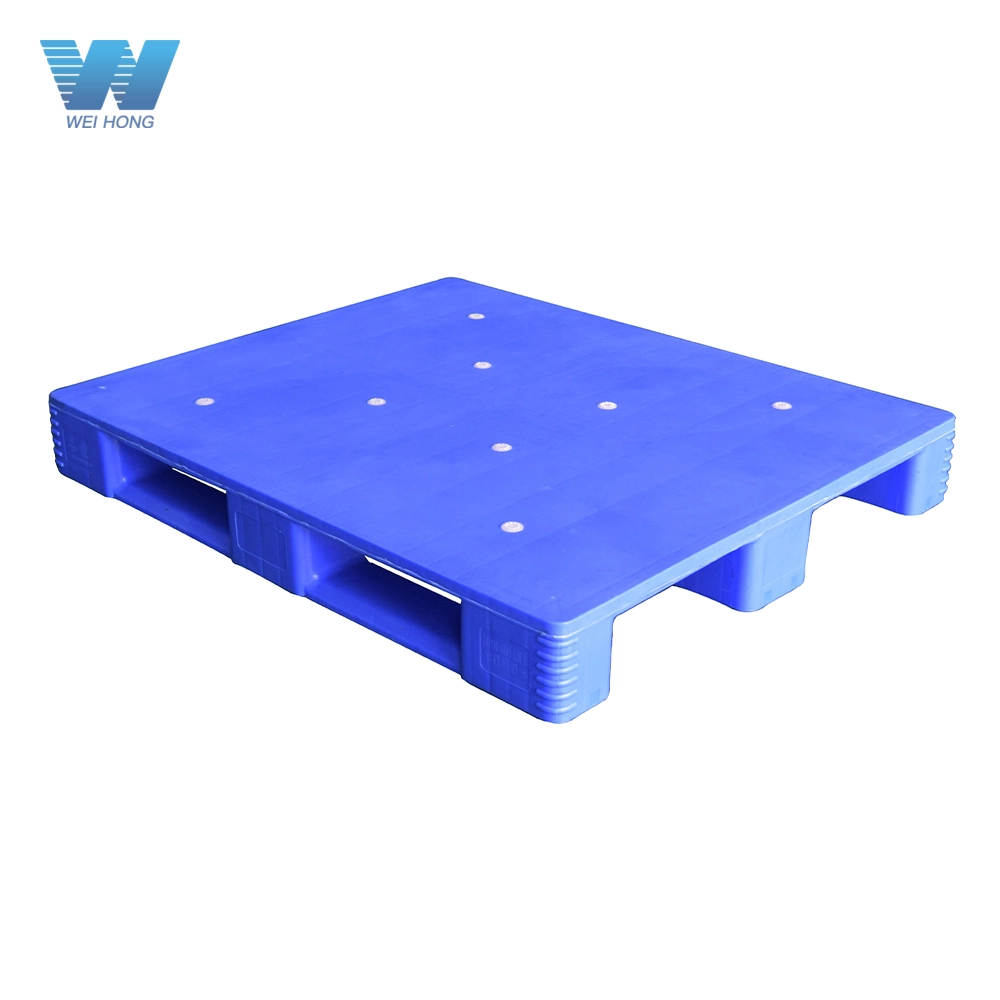
ZJ1210-150H Three-runner Closed Deck Hygienic Plastic Pallet
The three-runner closed-deck hygienic plastic pallet is a solid and durable packaging solution designed for general and especially food and medicine storage and transport. It’s made of virgin HDPE or PP, featuring a flat surface and even bottom for hygienic consideration, a reinforced configuration with steel cores for rack and shelf, and a steady loading capacity.
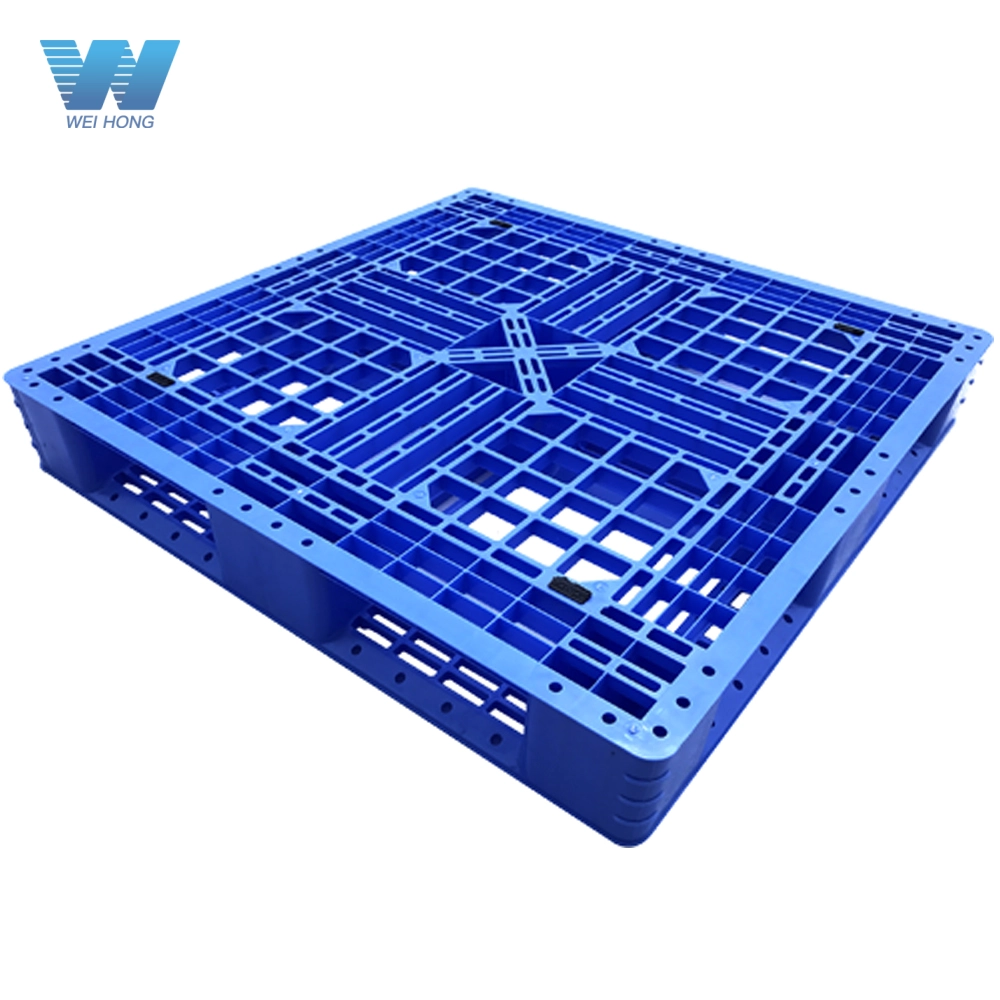
ZJ1010-150 Six-runner Single-sided Plastic Pallet
The six-runner plastic pallet, open or closed deck, is a solid and durable packaging solution designed for general and medium to heavy-duty cargo stacking, storage and transport. It’s made of virgin HDPE or PP, featuring in robust structure, a reinforced configuration with steel cores for the rack and shelf, and a steady loading capacity.
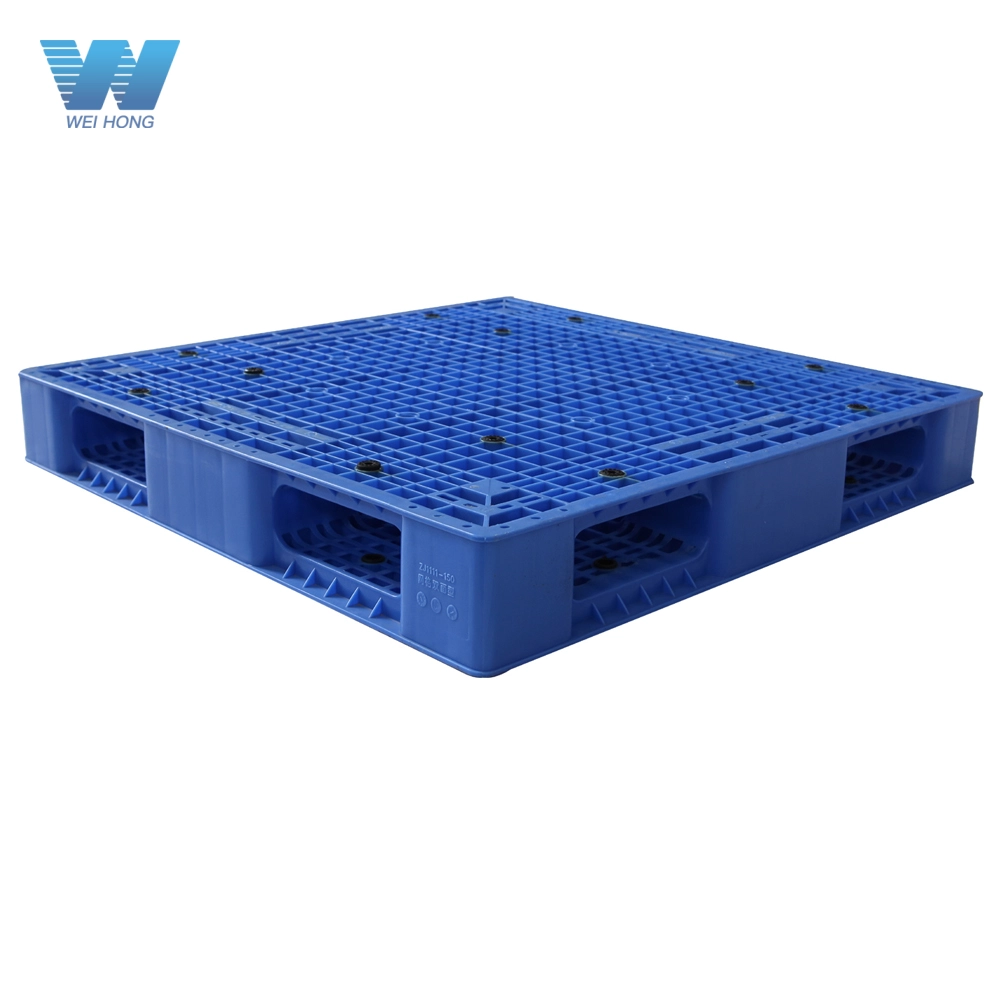
ZJ11111-150 Double-sided Heavy Duty Plastic Pallet
The double-sided plastic pallet, open deck or closed deck, is a solid and durable packaging solution designed for general and medium to heavy-duty cargo stacking, storage and transport. It’s made of virgin HDPE or PP, featuring a robust structure, a reinforced configuration with steel cores for the rack and shelf, and a steady loading capacity for both sides.
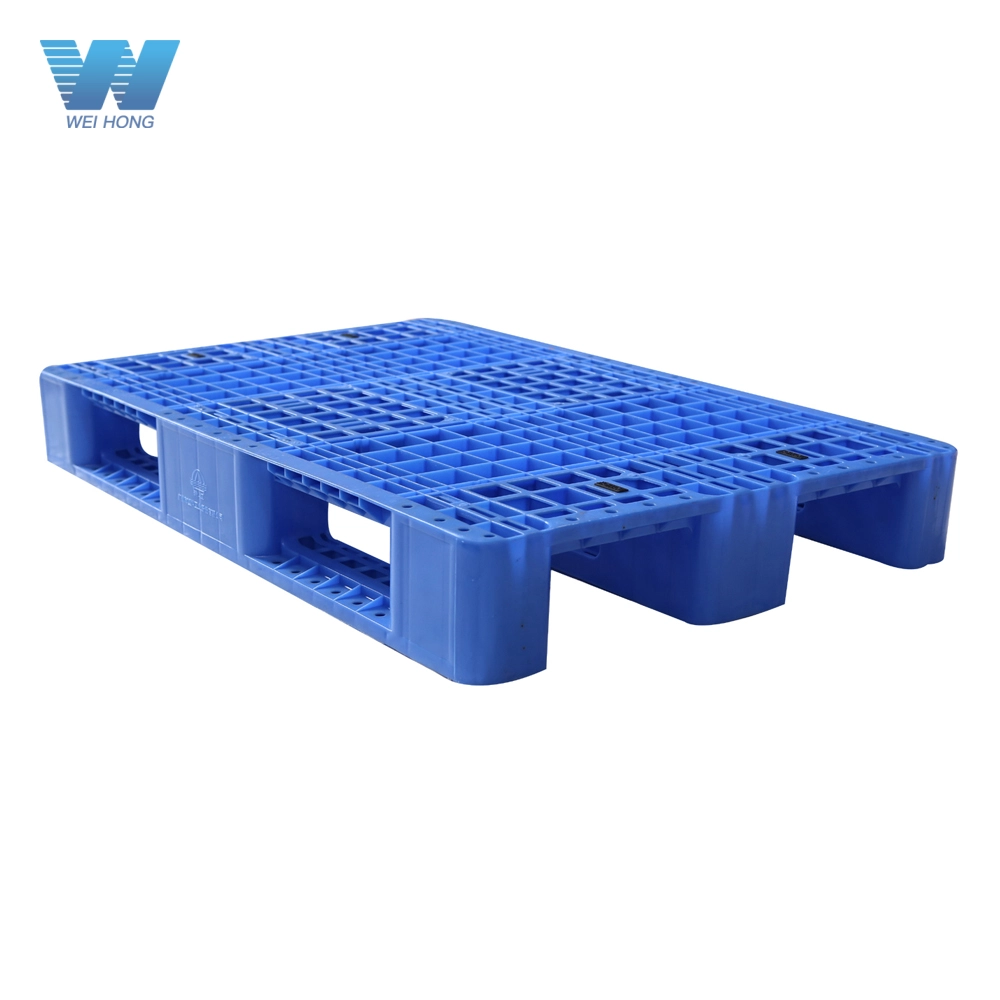
ZJ1208-155 Three-runner Single-sided Plastic Pallet
The three-runner single-sided plastic pallet is a solid and durable packaging solution designed for general and medium to heavy-duty cargo storage, transport and automated storage and retrieval system (AS/RS) use. It’s made of virgin HDPE or PP, featuring in robust structure, reinforced configuration with steel cores for rack and shelf, and a steady loading capacity.
Request More Information About Plastic Pallets
Have questions or need detailed insights on this article? Fill out the form below to contact our team for comprehensive information and support related to our plastic pallet solutions.
Contact us


+86 138 0277 8204
+86 183 4431 0917
+86 195 3791 1860

No. 15-1, Fengying Rd., Taiping Town, Conghua Dist., Guangzhou City, Guangdong Province, China.
Weihong
Whatsapp: +8613802778204
Guangdong Weihong Plastic Technology Co., Ltd.
Scan QR Code