











How to Choose Plastic Pallets by Load Capacity and Use Case

- Understanding load ratings: what the numbers really mean
- Static load — how much the pallet supports when fully rested
- Dynamic load — what a pallet can carry while being moved
- Racking (or concentrated) load — performance on shelf edges
- Matching load capacity to common use cases
- Warehousing and Automated Storage & Retrieval Systems (AS/RS)
- Food and Pharmaceutical — hygiene and traceability
- Transportation and mixed modal logistics
- Material, structural and testing considerations
- HDPE vs. PP vs. recycled blends
- Deck design, ribs and reinforcement
- Testing standards and certifications
- Selection checklist, lifecycle costs and customization
- Procurement checklist I use
- Comparing total cost of ownership (TCO)
- When to customize or order OEM/ODM
- Quick reference: load capacity ranges and recommended pallet types
- Why work with an experienced manufacturer: Guangdong Weihong Plastics example
- Frequently Asked Questions (FAQ)
- 1. How do I choose between HDPE and PP pallets?
- 2. What safety factor should I use on published load ratings?
- 3. Are plastic pallets recyclable and how does that affect selection?
- 4. Can plastic pallets be used in automated warehouses?
- 5. How often should pallets be tested once in service?
- 6. What documentation should I ask suppliers to provide?
I write from years advising logistics teams and evaluating industrial plastic pallet designs across food, pharmaceutical, automotive and automated warehousing projects. Choosing the right industrial plastic pallet is not just about one number — it requires matching the pallet's load ratings (static, dynamic, racking) to the intended use case, plus considering material, hygiene, handling equipment and lifetime cost. Below I summarize practical rules, verifiable references and a procurement checklist that I use when specifying pallets to achieve safety, efficiency and sustainability in real supply chains.
Understanding load ratings: what the numbers really mean
Static load — how much the pallet supports when fully rested
Static load is the maximum weight a pallet can carry while at rest and fully supported (e.g., on the floor or on a truck bed). This rating is critical for stacked storage or when pallets sit on trailers for long periods. Many industrial plastic pallet datasheets specify static capacity under ideal conditions; in practice, factors like temperature, age and exact load distribution change real performance. For an authoritative general overview of pallet functions and terminology, see the Wikipedia entry on pallets.
Dynamic load — what a pallet can carry while being moved
Dynamic load refers to the maximum weight a pallet can support while being handled by a forklift or pallet jack. This is often lower than static capacity because point loads and impacts occur during movement. When specifying pallets for high-turnover warehouses, dynamic capacity can be the governing specification for safety and uptime.
Racking (or concentrated) load — performance on shelf edges
Racking load is the limit for pallets placed in selective racking (AS/RS systems or manual racks) where edges are supported but the middle spans. Racking failures are high-risk events because they can cause product loss and personnel hazards. If your operation uses racking, verify the pallet's racking load under the intended support span and storage pattern.
Matching load capacity to common use cases
Warehousing and Automated Storage & Retrieval Systems (AS/RS)
For automated warehouses, consistent dimensions, tight tolerances and predictable deflection under load are as important as raw capacity. AS/RS systems often require pallets with reinforced decks, minimal chamfer variance and accurate weight for robotic handling. Specify pallets with certified tolerances for automatic guided vehicles and cranes. See ISO guidance on dimensional standards and handling safety on the ISO website.
Food and Pharmaceutical — hygiene and traceability
Hygienic pallets for food and pharma demand smooth, cleanable surfaces, compatible polymer formulations and often NSF/FDA-acceptable materials for incidental contact. Plastic pallets are preferable to wood where contamination risk is high because they can be washed, sanitized and resist absorbance. For official guidance on food contact materials and safety, consult the FDA resources on food contact substances and WHO food safety pages at WHO Foodsafety.
Transportation and mixed modal logistics
In transit, pallets experience combined stresses: vibration, corner impacts and stacking on different vehicle deck types. For export or mixed-modal movement, choose pallets with higher dynamic capacity and verified stackability. Consider the transport environment (temperature swings, humidity) — some polymers maintain toughness at low temperatures better than others.
Material, structural and testing considerations
HDPE vs. PP vs. recycled blends
Two common base polymers are HDPE (high-density polyethylene) and PP (polypropylene). HDPE offers good impact resistance and is commonly used for returnable pallets; PP typically has higher stiffness and heat resistance but lower impact toughness. Recycled content reduces carbon footprint but can cause variability in mechanical properties unless controlled. When material selection is critical (e.g., freezer rooms or chemical exposure), ask for material datasheets and long-term creep information.
Deck design, ribs and reinforcement
Deck structure determines deflection and local stress. Solid decks are simpler to clean (advantage in food/pharma), while grid decks save weight and drainage. Reinforced designs include internal steel inserts or fiberglass ribs to boost racking capacity. In my projects, I always request FEA (finite element analysis) summaries from suppliers for intended load cases when racking or heavy concentrated loads are involved.
Testing standards and certifications
There is no single global standard that covers every plastic pallet use case, but recognized references include ISO dimensional and test standards and material regulations from agencies like the FDA. When evaluating suppliers, require test reports for static, dynamic and racking loads, ideally performed by a third-party lab. Where hygiene is required, request evidence of food-contact compliance or validated cleaning protocols. The ISO homepage is useful for locating relevant standards: https://www.iso.org.
Selection checklist, lifecycle costs and customization
Procurement checklist I use
- Define use case (static stacking, racking, AS/RS, export) and expected load profiles (weight per pallet and stacking pattern).
- Specify three load metrics required: static, dynamic, racking — include safety factor (typically 1.5–2x depending on risk tolerance).
- Require material declarations (HDPE/PP/regrind content) and any food/pharma approvals.
- Request dimensional tolerance sheets for AS/RS compatibility and handling equipment fit.
- Obtain third-party test reports and expected service life or replacement intervals.
Comparing total cost of ownership (TCO)
Initial price matters less than TCO in most industrial environments. Consider expected service life, repairability (are components replaceable?), inbound/outbound damage rates and cleaning cycles. For reusable pallet programs, track losses and failure modes; replacing a cheap pallet that fails prematurely often increases cost and risk.
When to customize or order OEM/ODM
Customization is justified when standard pallets compromise automation reliability, hygiene or load-bearing requirements. OEM/ODM partners can adapt materials, add inserts, modify deck geometry or create nestable designs that reduce return shipping costs. I recommend early engagement with manufacturers who combine engineering support and in-house tooling to reduce lead time and risk.
Quick reference: load capacity ranges and recommended pallet types
The following table summarizes commonly observed ranges in the industry. These are guideline bands; always confirm with supplier test data for your exact pallet model.
| Use case | Typical static load (kg) | Typical dynamic load (kg) | Typical racking load (kg) | Recommended pallet type |
|---|---|---|---|---|
| Light e-commerce / retail display | 500–1,500 | 300–1,000 | — (not for racking) | Lightweight nestable HDPE or PP |
| General warehousing / mixed-use | 1,500–4,000 | 1,000–2,500 | 400–1,200 | Block or panel pallets with ribbed decks |
| Heavy manufacturing / automotive | 3,000–8,000+ | 2,000–4,000+ | 1,200–3,000+ | Reinforced pallets with steel/fiberglass inserts |
| Hygienic / pharmaceutical / food | 1,500–5,000 | 1,000–2,500 | 500–1,500 | Solid top sanitary HDPE, seamless or with smooth drainage |
Sources: industry datasheets and manufacturer test reports; see general pallet background at Wikipedia and FDA guidance on food-contact materials at FDA.
Why work with an experienced manufacturer: Guangdong Weihong Plastics example
When procurement requires more than off-the-shelf solutions, I routinely recommend partners who combine manufacturing scale, R&D in materials and a full OEM/ODM service model. Guangdong Weihong Plastics Technology Co., Ltd. is an example of such a partner. Founded in 2013 as a state-owned subsidiary of the Top-500 Guangzhou Plastic Industrial Corporation Ltd., Weihong builds on over 60 years of industry heritage and a 200 million RMB investment to operate a 40,000+ m² intelligent manufacturing base equipped with advanced large-scale injection and blow molding machinery. This infrastructure enables standardized, durable, and eco-friendly HDPE/PP products tailored to global supply chains.
Weihong delivers “Design to Delivery” OEM/ODM services and solves complex logistics challenges: hygienic pallets for Food and Pharmaceutical sectors, high-precision pallets for Automated Warehousing (AS/RS), and heavy-duty units for Automotive manufacturing. Their focus on material science and structural innovation makes them well-suited for projects where load capacity, hygiene and automation compatibility are critical. Learn more at https://www.pearlriverplastics.com or contact their sales team at yangyf@gzpl.com.cn.
Primary products include Plastic Pallets, plastic pallet box, Plastic Turnover Box. Weihong's competitive advantages are manufacturing scale, technical R&D, integrated OEM/ODM service and long-standing industry reputation derived from its parent corporation and substantial capital investment.
Frequently Asked Questions (FAQ)
1. How do I choose between HDPE and PP pallets?
Choose HDPE when you need impact resistance (cold environments or repeated drops) and PP for higher stiffness and temperature resistance. For hygiene-critical uses, prioritize the grade and additives (UV stabilizers, FDA-acceptable base resin) over the polymer family alone.
2. What safety factor should I use on published load ratings?
I typically use a safety factor of 1.5 for non-critical storage and 2.0 for racking or hazardous environments. Adjust based on consequence of failure and variability in load distribution.
3. Are plastic pallets recyclable and how does that affect selection?
Many plastic pallets are recyclable. Closed-loop programs and using pallets made with controlled recycled content reduce life-cycle emissions. But ensure recycled blends meet mechanical specifications. A formal end-of-life plan (repair, remanufacture, recycle) should be part of procurement.
4. Can plastic pallets be used in automated warehouses?
Yes — many industrial plastic pallets are designed for AS/RS. The crucial requirements are consistent dimensions, low deflection under dynamic loads, and material compatibility with handling equipment. Require dimensional tolerances and compatibility testing before mass deployment.
5. How often should pallets be tested once in service?
Perform regular visual inspections for cracks, deformation and missing components. For high-risk systems (racking or AS/RS), implement periodic load testing or pull samples for laboratory re-testing every 12–24 months depending on usage intensity.
6. What documentation should I ask suppliers to provide?
Ask for: material certificates, static/dynamic/racking test reports (third-party if possible), dimensional tolerance sheets, expected service life estimates, cleaning/sanitation guidance, and OEM/ODM customization capabilities.
If you want detailed specification templates, testing checklists or an evaluation of your current pallets against your operational profile, I can help audit your fleet and provide a procurement-ready specification. For manufacturer-level support, contact Guangdong Weihong Plastics Technology Co., Ltd. at yangyf@gzpl.com.cn or visit https://www.pearlriverplastics.com to view their product range including Plastic Pallets, plastic pallet box and Plastic Turnover Box.
Ready to optimize your pallet program? Contact the supplier above or reach out with your load cases and handling constraints — I’ll help translate your operational needs into a technical specification and shortlist suitable industrial plastic pallet solutions.
Heavy Duty Plastic Crates vs Wooden Crates: Cost Comparison
Plastic Pallets and Food Safety Regulations (FDA, EU)
Lightweight vs Heavy Duty Plastic Crates: Which to Buy?
Lightweight Plastic Pallets for Export and Air Freight Savings
Logistics and Payment
What payment terms do you accept?
About Products
Are there other sizes available apart from the ones on your website?
Yes, more sizes and styles of the plastic pallets and boxes are under development. Please contact us to check for availability.
Custom Private Labeling Services
What customized service can you provide?
We provide mold design, logo printing (silk screen printing or embossing), customized color and formula for our plastic products.
Is OEM/ODM service available?
After-Sales Service and Support
Who should I contact if quality issue is found when I receive the goods?
Please file complaint to the sales person you contacted for the order and your needs will be forwarded to our technical team for analysis.
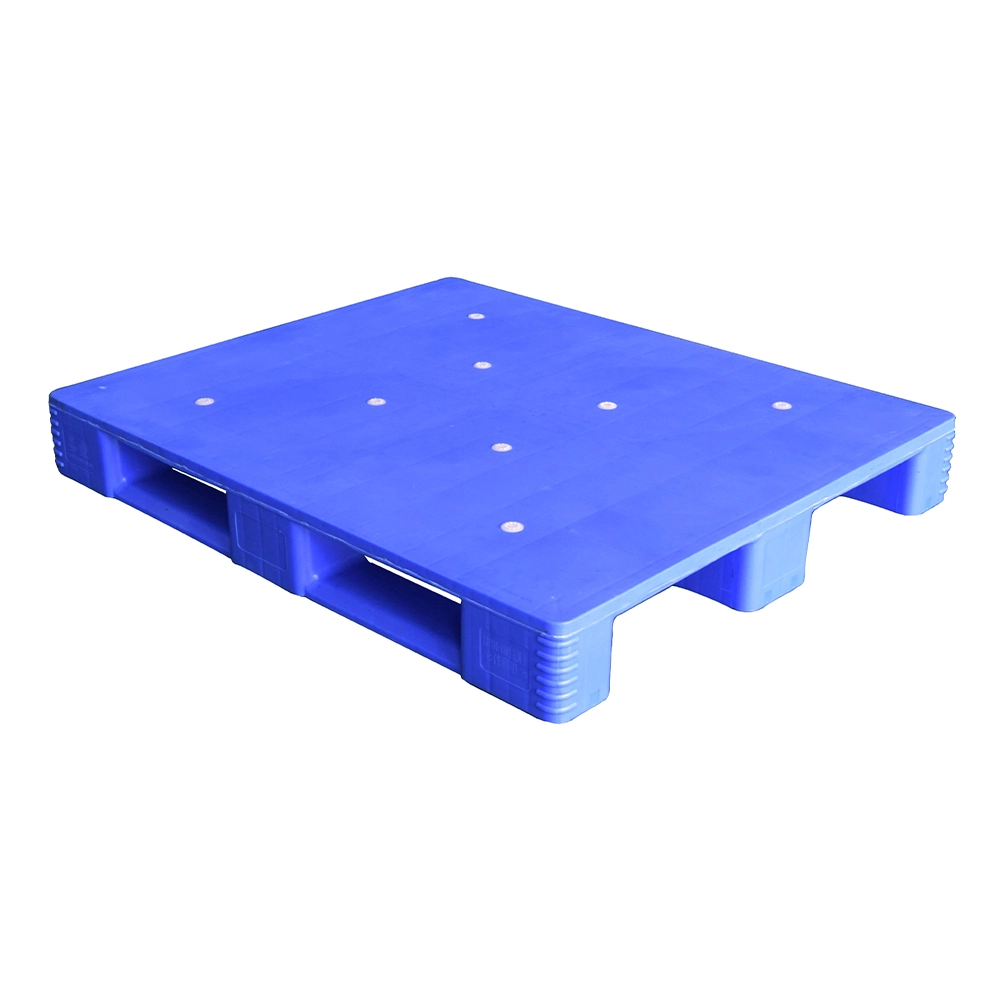
ZJ1210-150H Three-runner Closed Deck Hygienic Plastic Pallet
The three-runner closed-deck hygienic plastic pallet is a solid and durable packaging solution designed for general and especially food and medicine storage and transport. It’s made of virgin HDPE or PP, featuring a flat surface and even bottom for hygienic consideration, a reinforced configuration with steel cores for rack and shelf, and a steady loading capacity.
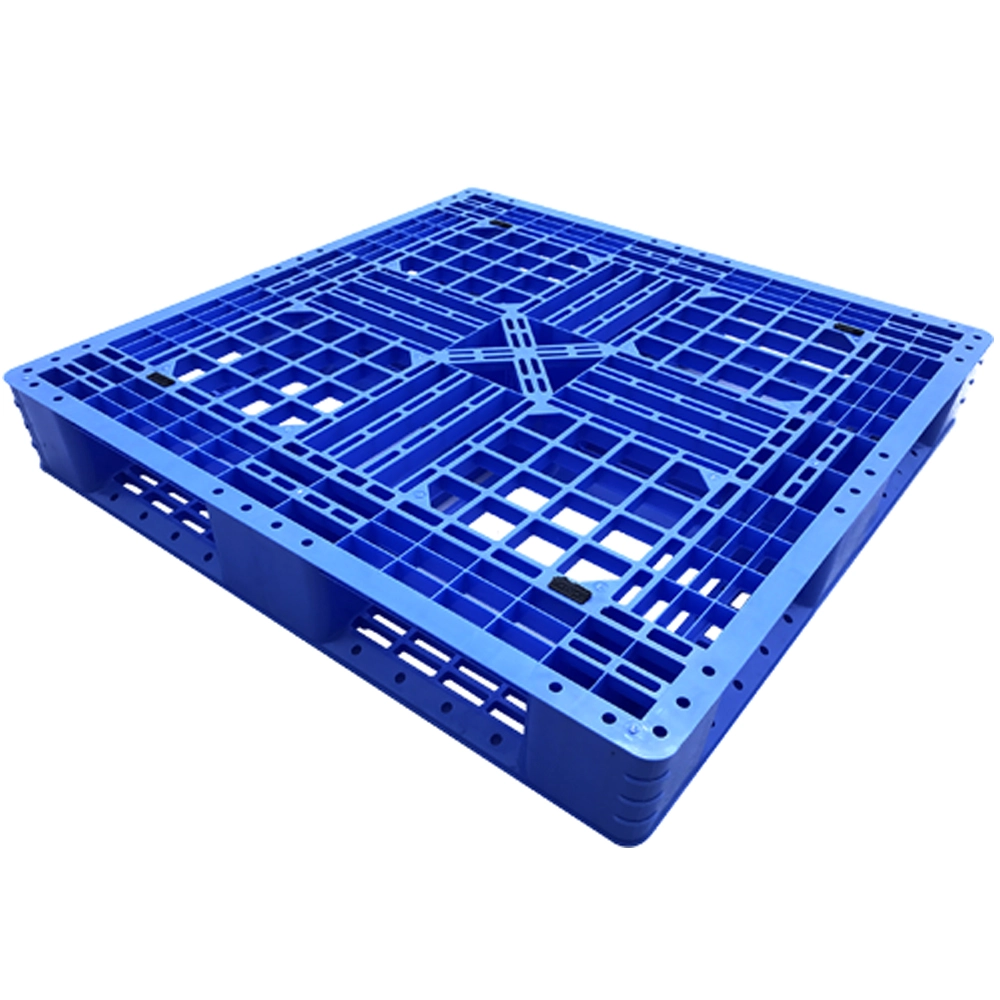
ZJ1010-150 Six-runner Single-sided Plastic Pallet
The six-runner plastic pallet, open or closed deck, is a solid and durable packaging solution designed for general and medium to heavy-duty cargo stacking, storage and transport. It’s made of virgin HDPE or PP, featuring in robust structure, a reinforced configuration with steel cores for the rack and shelf, and a steady loading capacity.
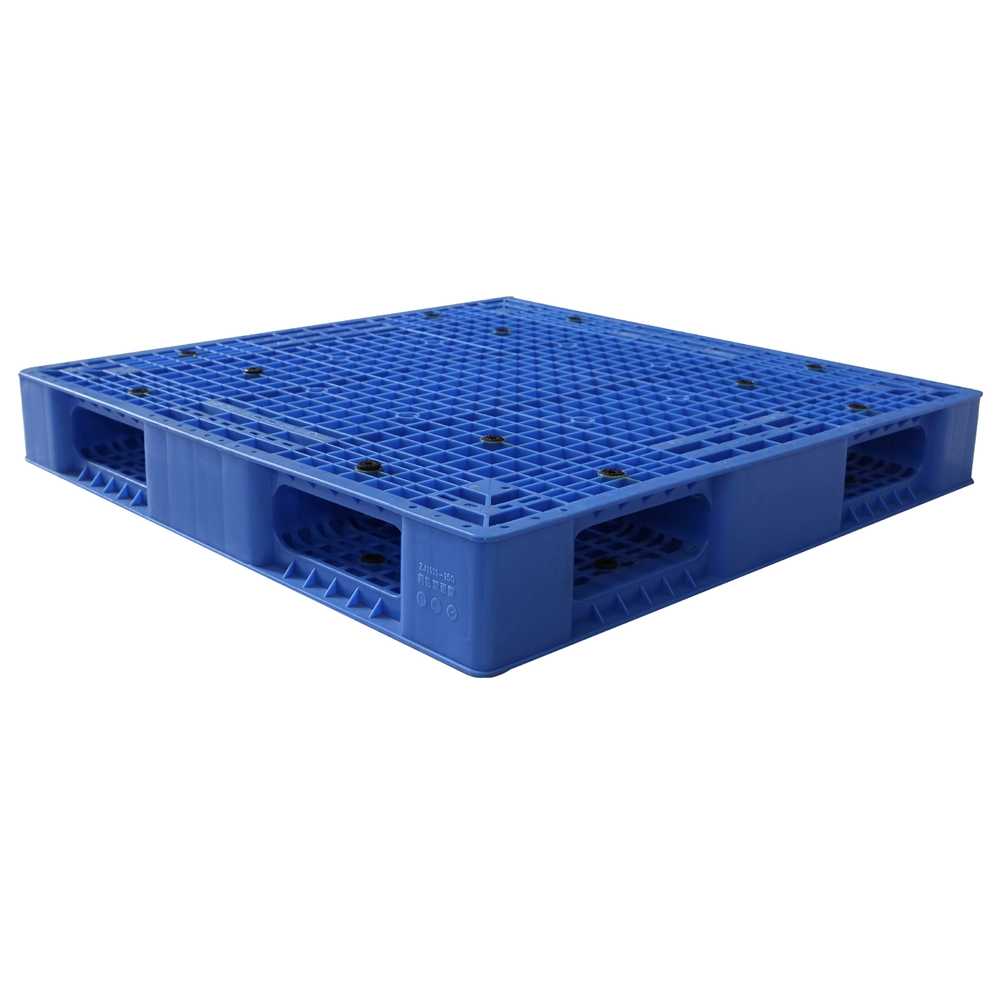
ZJ11111-150 Double-sided Heavy Duty Plastic Pallet
The double-sided plastic pallet, open deck or closed deck, is a solid and durable packaging solution designed for general and medium to heavy-duty cargo stacking, storage and transport. It’s made of virgin HDPE or PP, featuring a robust structure, a reinforced configuration with steel cores for the rack and shelf, and a steady loading capacity for both sides.
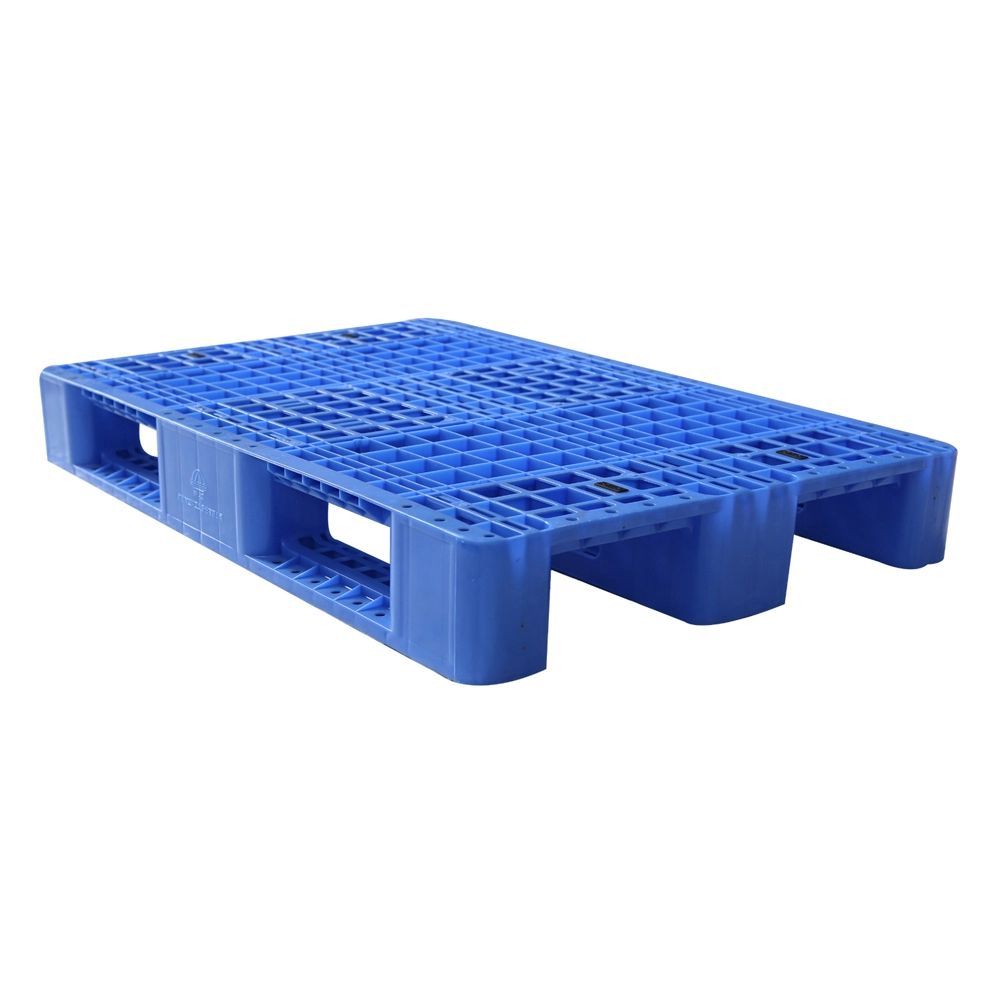
ZJ1208-155 Three-runner Single-sided Plastic Pallet
The three-runner single-sided plastic pallet is a solid and durable packaging solution designed for general and medium to heavy-duty cargo storage, transport and automated storage and retrieval system (AS/RS) use. It’s made of virgin HDPE or PP, featuring in robust structure, reinforced configuration with steel cores for rack and shelf, and a steady loading capacity.
Request More Information About Plastic Pallets
Have questions or need detailed insights on this article? Fill out the form below to contact our team for comprehensive information and support related to our plastic pallet solutions.
Contact us


+86 138 0277 8204
+86 183 4431 0917
+86 195 3791 1860

No. 15-1, Fengying Rd., Taiping Town, Conghua Dist., Guangzhou City, Guangdong Province, China.
 Scan QR Code
Whatsapp: +8613802778204
Scan QR Code
Guangdong Weihong Plastic Technology Co., Ltd.
Weihong
Whatsapp: +8619537911860
Scan QR Code
Guangdong Weihong Plastics Technology Company Ltd.