











Choosing the Right Plastic Pallet Dimensions: How to Optimize Your Supply Chain & Save Costs

- What Are Standard Plastic Pallet Dimensions?
- Key Takeaways for Supply Chain Optimization
- Standard Pallet Sizes by Region: GMA, ISO, and EPAL
- How to Measure a Plastic Pallet Correctly
- Critical Factors When Choosing Pallet Dimensions
- Optimizing Your Supply Chain: Space & Cost Savings
- Expert Tips and Common Sizing Mistakes
- Future Trends in Pallet Standardization (2026 and Beyond)
- Conclusion
- Are plastic pallets the same size as wood pallets?
- What is the most common plastic pallet size in the US?
- How tall is a standard plastic pallet?
- What are European standard pallet dimensions (Euro Pallet)?
- How much weight can a standard 48x40 plastic pallet hold?
- How many standard pallets fit in a 40ft shipping container?
- What does it mean if a plastic pallet is 'nestable'?
- Are plastic pallets ISPM 15 exempt?
Selecting the exact right platform size for your shipping and warehousing operations is no longer just a basic procurement task; it is a critical logistical strategy. With global trade becoming increasingly complex and expensive, using improper packaging sizes can result in wasted container space, shattered merchandise, and severe disruptions in automated facilities. This comprehensive guide details everything you need to know about navigating regional sizing standards, avoiding common measurement mistakes, and leveraging the correct footprint to drive long-term return on investment.
What Are Standard Plastic Pallet Dimensions?
Standard plastic pallet dimensions vary globally, but the most common in North America is the 48-inch by 40-inch configuration known as GMA pallet dimensions, while international logistics rely on specialized metrics like 1200mm by 800mm and ISO standards.
The lack of a single, universal size means that companies must align their choices with their specific geographic markets and logistical networks. Understanding the exact footprint of your pallets ensures seamless integration into modern infrastructure. Standardized dimensions allow automated warehouses, modular racking systems, and standard shipping containers to function without friction or mechanical jams.
- North American Dominance: The 48-inch by 40-inch standard is universally recognized in the US, making it ideal for retail, grocery, and fast-moving consumer goods.
- European Standards: The widely adopted Euro pallet sizes measure 1200x800mm, heavily optimized for European train and truck transport networks.
- Operational Synergy: Standardization minimizes product damage, streamlines daily loading processes, and maximizes overall space utilization in extremely tight warehouse constraints.
Key Takeaways for Supply Chain Optimization
True supply chain optimization requires standardizing your packaging footprints to maximize shipping trailer cube efficiency, prevent dangerous product overhang, and ensure absolute warehouse safety by adhering to strict static, dynamic, and racking load capacities.
Achieving a leaner, more profitable supply chain isn't just about raw speed; it's about making the absolute best use of spatial geometry. When your physical pallets perfectly match your storage hardware and transport vehicles, you eliminate wasted air and drastically reduce your shipping costs per unit.
- Trailer Cube Optimization: Standardization directly reduces freight costs by fully maximizing your trailer's cubic capacity, allowing for tightly packed rows of inventory.
- Footprint Matching: Aligning pallet footprints with specific industries (such as pharmaceutical or heavy beverage) prevents load overhang and disastrous stretch-wrap failures.
- Load Capacity Tracking: Thoroughly understanding the differences between static, dynamic, and racking plastic pallet weight capacity is absolutely crucial to prevent major warehouse accidents.
- Global Compliance: Adopting globally recognized measurements, such as ISO standard pallets, guarantees seamless integration into international shipping lanes without the need for manual repalletization.
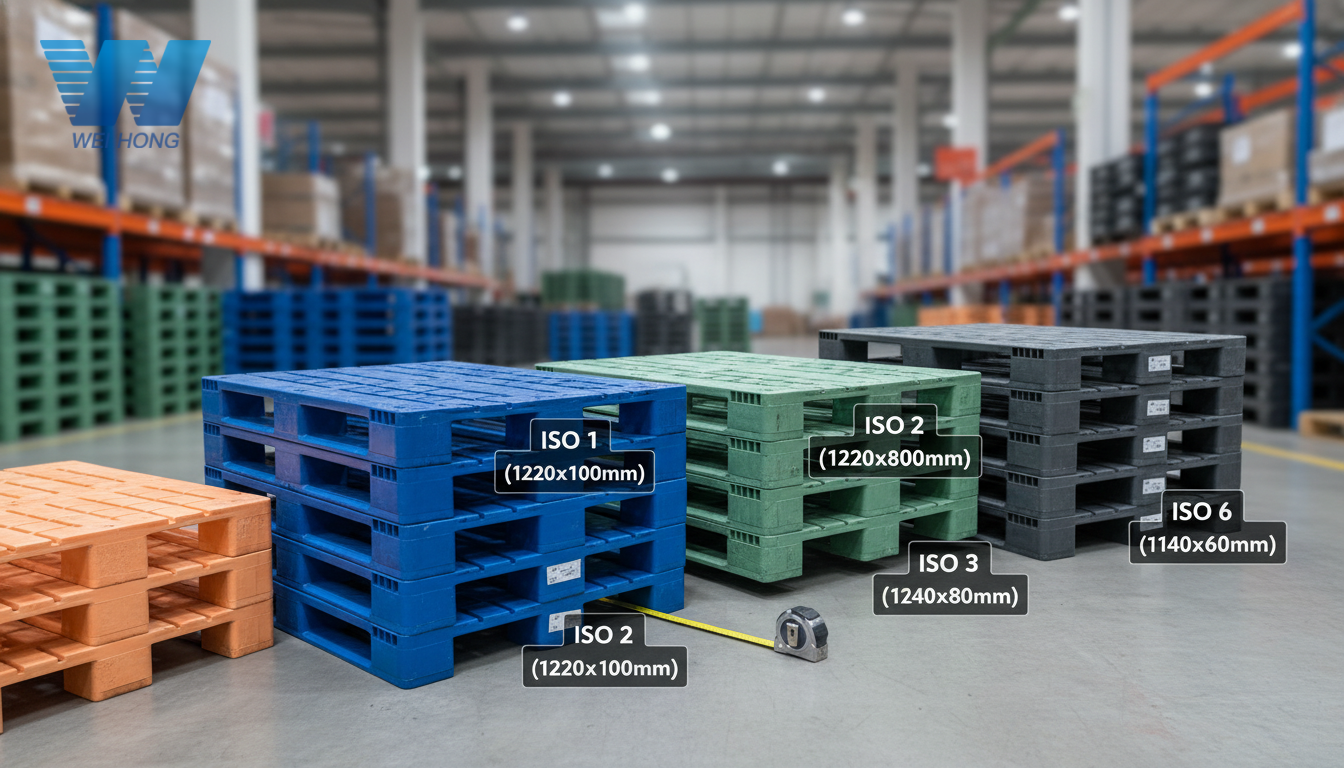
Standard Pallet Sizes by Region: GMA, ISO, and EPAL
Standard pallet sizes are strictly governed by regional authorities; North America defaults to the 48x40 inch footprint, Europe mandates 1200x800mm Euro pallet sizes, and international sea freight relies on six distinct dimensions recognized globally as ISO standard pallets.
If your business regularly ships internationally, understanding these critical regional disparities is essential to avoiding massive repalletization fees at foreign customs checkpoints or third-party distribution centers. By strategically planning your initial shipments around the destination country's preferred standard, you eliminate unnecessary touches and transit delays. For instance, maintaining standardized dimensions is incredibly important to ensure compliance and consistency across the food and beverage sectors, as reported by Kamps Pallets.
- North America (GMA): The 48x40 standard thoroughly dominates the United States retail and grocery sectors, providing a highly predictable base for bulk shipments.
- Europe (EPAL / Euro Pallet): The 1200x800mm and slightly larger 1200x1000mm dimensions are legally required for traversing many centralized EU logistics networks.
- Global (ISO 6780): The International Organization for Standardization formally recognizes six distinct pallet dimensions specifically designed to streamline international air and ocean freight.
- Asia and Australia: Regional standard dimensions include the 1100x1100mm and 1165x1165mm sizes, built perfectly for packing into standard sea containers moving through Pacific trade routes.
How to Measure a Plastic Pallet Correctly
To measure a plastic pallet correctly, you must always measure the primary stringer length first, followed by the perpendicular deck board width, and finally factor in the overall external height for proper warehouse racking clearance.
Precision is paramount when dealing with durable goods. A miscalculation of a mere half-inch can render a plastic pallet completely incompatible with a robotic handling system or prevent a truck trailer door from closing safely. Ensuring accurate physical measurements from day one prevents highly costly supply chain bottlenecks.
- Length vs. Width Rules: Always document the stringer (or primary support) length first, followed by the perpendicular deck board width.
- Height Considerations: The total height must be scrutinized for strict automated clearance limits and for safely double-stacking heavy loads in enclosed trailers.
- Fork Opening Dimensions: Guarantee true compatibility with your existing material handling equipment by measuring the precise width and height of the fork entry openings.
- Footprint vs. Usable Space: Pay close attention to functional geometry; account for any protective lip edges or deep nesting features that might artificially reduce the actual usable space for your specific product boxes.
Critical Factors When Choosing Pallet Dimensions
When selecting your ideal platform size, you must strictly evaluate warehouse robotics compatibility, racking system safety constraints, maximum plastic pallet weight capacity thresholds, and the structural density differences between high-density polyethylene and polypropylene materials.
A modern plastic pallet is no longer just a passive platform; it is a highly engineered piece of the active supply chain ecosystem. In particular, flawless integration with robotics demands perfect dimensional stability. Because an automated storage and retrieval system consists of a variety of computer-controlled methods for automatically placing and retrieving loads from defined storage locations, as reported by Wikipedia, physical uniformity is mandatory.
- Warehouse Automation (ASRS): Robotic systems and rapid conveyors demand incredibly strict dimensional tolerances, and any unexpected bowing or deviation can cause massive facility-wide jams.
- Racking Systems Integration: Understand the stark differences between edge-rackable pallets and standard floor-loaded designs, as precise physical dimensions dictate exactly how safely a load rests on open steel beams.
- Load Capacity Limits: Always differentiate carefully between dynamic (moving) limits, static (stationary) limits, and the crucial racking (suspended) limits to prevent fatal structural failures.
- Material Density Impacts: The specific choice between high-density polyethylene (HDPE) and polypropylene (PP) drastically impacts the unit's dead weight, overall durability, and long-term dimensional stability under heavy industrial loads.
Optimizing Your Supply Chain: Space & Cost Savings
Carefully matching your pallet dimensions directly dictates your trailer cube optimization, allowing you to maximize global container payloads, reduce reverse logistics costs through nestable designs, and ultimately lower your overall Total Cost of Ownership.
The hidden financial implications of utilizing a mismatched pallet footprint are staggering. Every single inch of wasted air space in a shipping container translates directly to lost corporate profit margins. By actively treating your pallet dimensions as a core strategic asset rather than an afterthought, you unlock compound cost savings across the entire lifecycle of the load.
- Trailer Cube Optimization: Your exact pallet dimensions dictate whether you can legally utilize advanced loading techniques like pinwheeling or straight-loading within standard 53-foot highway trailers.
- Air vs. Ocean Freight Payloads: Selecting fully optimized dimensions ensures you are mathematically maximizing payloads within standard 20-foot and 40-foot shipping containers without paying premium rates for "shipped air."
- Nesting vs. Stacking Efficiencies: Utilizing nestable plastic pallets drastically reduces the overall height of empty returnable packaging, slashing reverse logistics transport and facility storage costs.
- Total Cost of Ownership (TCO): Supply chain managers can quickly calculate a strong Return on Investment (ROI) based on the plastic pallet's extended working lifespan, the elimination of wood-splinter related injuries, and significantly reduced transit product damage.
Expert Tips and Common Sizing Mistakes
The most critical dimensional sizing mistake is ignoring load overhang, which can instantly compromise corrugated box strength by up to thirty percent and lead to catastrophic inventory collapse during fast-paced forklift transport.
Even highly seasoned logistics managers can occasionally make basic geometric errors when calculating complex load constraints. To maximize both facility safety and bottom-line profitability, it is absolutely essential to follow industry best practices and learn from common warehousing failures.
- Mistake 1: Permitting Pallet Overhang: When heavy boxes sit outside the pallet's engineered edge, it compromises the packaging's natural compression strength by up to 30 percent, leading directly to crushed goods.
- Mistake 2: Ignoring Dynamic Deflection: Failing to account for how much a loaded plastic pallet might bow or sag when suspended on warehouse racking systems can make exact dimensional tracking inaccurate and dangerous.
- Expert Tip 1: Always Test Samples: Always request physical sample pallets to run rigorous real-world testing through your specific stretch wrappers and automated conveyors before ever committing to a massive bulk order.
- Expert Tip 2: Align with Carriers: Align your chosen internal platform dimensions perfectly with your primary third-party logistics provider's requirements to actively avoid punitive dimensional weight freight surcharges.
Future Trends in Pallet Standardization (2026 and Beyond)
The rapid evolution of supply chain automation 2026 will demand flawless dimensional pallet standardization to seamlessly support AI-driven micro-fulfillment centers, autonomous mobile robot navigation, and fully embedded real-time Internet of Things tracking sensors.
As global logistics networks become exponentially smarter and far less reliant on manual human labor, the physical assets continuously moving through them must rapidly adapt. In the coming years, advanced warehouse automation technologies are expected to heavily feature robotic depalletizing and AI-enabled vision inspection, as reported by Automate-X. The humble plastic pallet is swiftly evolving into a highly intelligent, fully trackable node within a broader interconnected logistics network.
- RFID and IoT Integration: Forward-thinking supply chains are already adopting embedded RFID tags and robust IoT sensors placed seamlessly inside the plastic molds without altering standard dimensional footprints.
- Strict Automation Constraints: Next-generation, AI-driven micro-fulfillment centers rolling out in 2026 will enforce incredibly strict physical dimensional tolerances to absolutely guarantee zero mechanical downtime.
- Custom Modular Designs: Industry analysts predict a massive rise in custom-molded, industry-specific dimensions that still perfectly conform geometrically to modular ISO container sizes.
- Sustainability Mandates: Heavy legislative pushes worldwide for measurable environmental sustainability will continually drive the rapid adoption of lighter, structurally sound, and dimensionally identical plastic alternatives to traditional single-use wood.
Conclusion
Choosing the right plastic pallet dimensions is a highly strategic logistics decision that heavily impacts your freight costs, warehouse automation safety, and your brand's overall global supply chain efficiency. Taking the time to properly evaluate your physical handling requirements prevents catastrophic workflow bottlenecks down the line.
Whether you firmly rely on the robust North American 48x40 GMA standard to service retail outlets, or you require specialized, globally compliant ISO sizes for deep-sea export, proper physical sizing remains the ultimate foundation of logistics optimization. By treating your pallets as long-term assets, you safeguard your inventory and protect your profit margins. Contact us today to consult with our specialists and optimize your plastic pallet dimension strategy.
Are plastic pallets the same size as wood pallets?
Yes, standard plastic pallets are manufactured to match the exact dimensions of standard wood pallets, such as the widely recognized 48x40 inch GMA footprint. However, plastic pallets often have much tighter dimensional tolerances and maintain highly consistent heights because they do not warp, splinter, or absorb atmospheric moisture over time.
What is the most common plastic pallet size in the US?
The most common size utilized in the United States is 48 inches long by 40 inches wide (48x40). This is formally known as the Grocery Manufacturers Association (GMA) standard and currently accounts for well over 30% of all pallets used across North America.
How tall is a standard plastic pallet?
The standard height of a heavy-duty plastic pallet typically ranges between 5.5 inches and 6.5 inches. Overall height is a highly critical dimension for warehouse racking system compatibility, ensuring proper forklift blade access, and actively maximizing vertical storage space in tight shipping trailers.
What are European standard pallet dimensions (Euro Pallet)?
The primary standard Euro Pallet (known as EPAL 1) measures precisely 1200mm in length by 800mm in width. There is also a widely used alternative EPAL 2 and EPAL 3 standard that measures 1200mm by 1000mm, heavily optimized for transporting bulk heavy industrial loads.
How much weight can a standard 48x40 plastic pallet hold?
Weight capacities naturally vary by specific structural design, but a premium heavy-duty 48x40 plastic pallet can typically hold up to 30,000 lbs of static (stationary) weight. Dynamic (moving) load capacities usually max out around 4,000 to 5,000 lbs, while critical racking (suspended) limits are generally engineered between 1,500 and 2,800 lbs.
How many standard pallets fit in a 40ft shipping container?
A standard 40-foot intermodal shipping container can typically hold 20 to 21 standard North American (48x40) pallets if they are loaded straight inside. Conversely, if you are using the slightly narrower European standard size (1200x800mm), a 40-foot container can safely accommodate up to 24 to 25 pallets.
What does it mean if a plastic pallet is 'nestable'?
Nestable plastic pallets uniquely feature hollow 'feet' or legs that smoothly allow the pallets to drop and stack securely inside one another when completely empty. This brilliant geometric design significantly reduces the overall height of an idle stack, saving up to 75% of valuable floor space during storage and drastically reducing return shipping costs.
Are plastic pallets ISPM 15 exempt?
Yes, plastic pallets are fully and globally exempt from strict ISPM 15 regulations, which legally require raw wood packaging materials to be aggressively heat-treated or chemically fumigated to kill invasive pests. Because solid plastic simply cannot harbor hidden pests or burrowing insects, these pallets will never be held up or delayed at international customs for ISPM 15 compliance checks.
Top 10 virgin PP plastic pallet Manufacturers and Supplier Brands
Plastic Pallet Case Studies: Real Savings in Logistics
Top 10 plastic industrial pallet Manufacturers and Supplier Brands
7 Critical Mistakes in Plastic Pallet Load Testing (And How to Avoid Costly Damage)
About Collaboration
Is there any other way to work with you?
Yes, apart from reselling, retail or distribution, we also accept commission based orders.
Custom Private Labeling Services
Is OEM/ODM service available?
Logistics and Payment
How long does it take to ship to my country?
Average shipping time ranges from 7 days to 35 days. We will calculate for you when port of destination is confirmed.
About Products
What materials are your prodcuts made of?
Are your products compliant with EU/US food contact safety regulations?
Even though our plastic pallets or boxes are not food contact direct material, we adhere to the relative laws and regulations to use non-toxic raw material for our products.
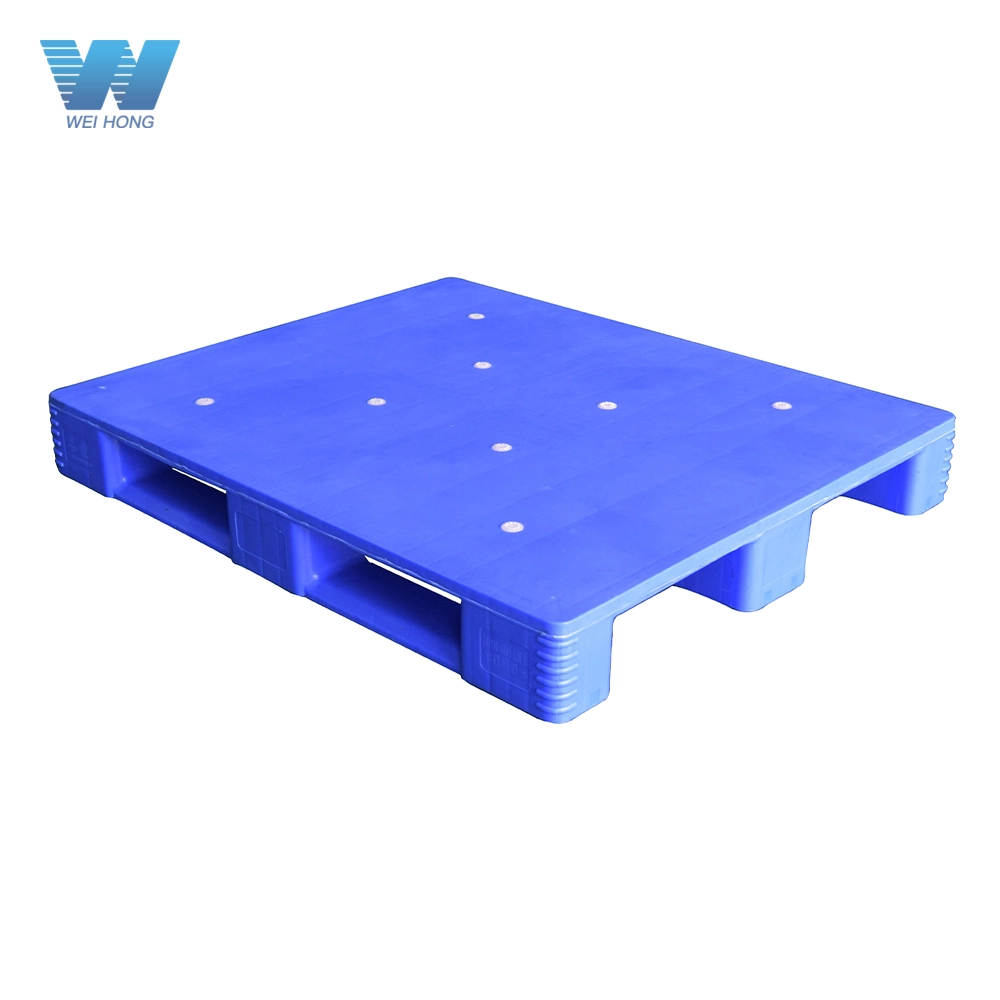
ZJ1210-150H Three-runner Closed Deck Hygienic Plastic Pallet
The three-runner closed-deck hygienic plastic pallet is a solid and durable packaging solution designed for general and especially food and medicine storage and transport. It’s made of virgin HDPE or PP, featuring a flat surface and even bottom for hygienic consideration, a reinforced configuration with steel cores for rack and shelf, and a steady loading capacity.
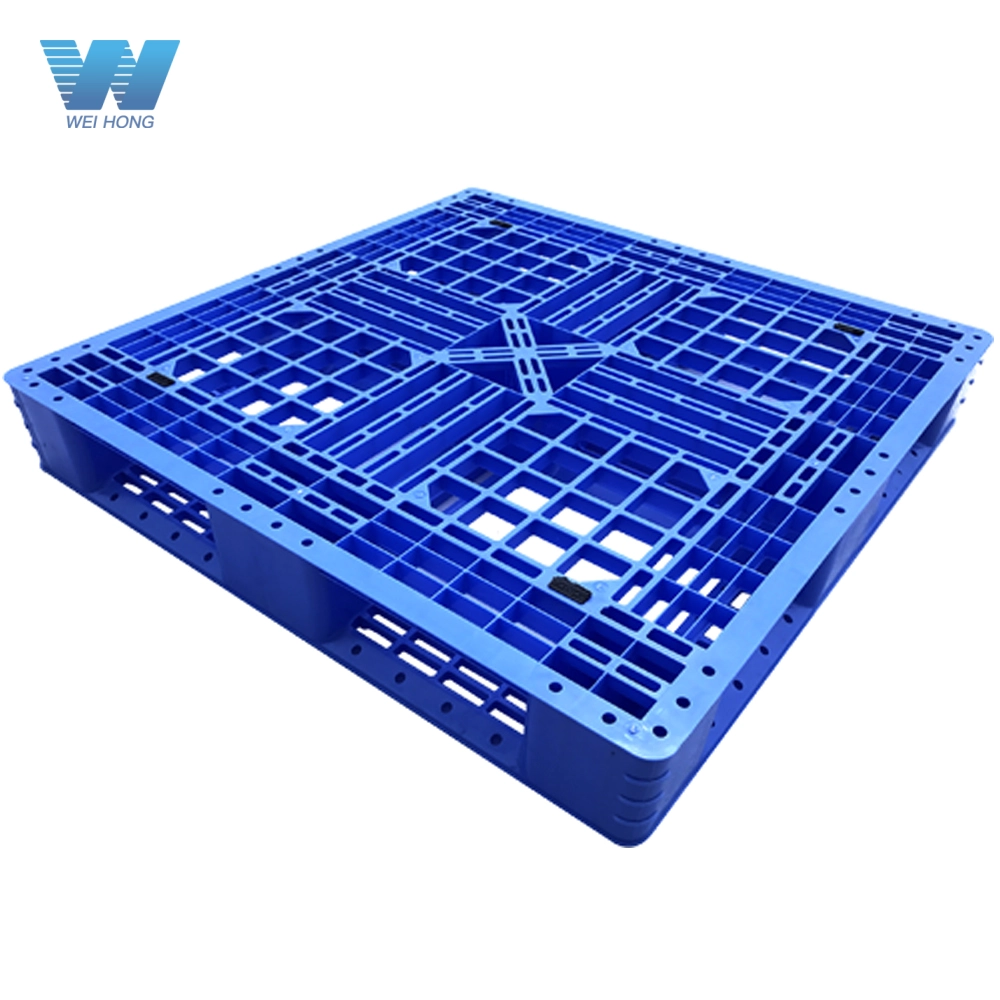
ZJ1010-150 Six-runner Single-sided Plastic Pallet
The six-runner plastic pallet, open or closed deck, is a solid and durable packaging solution designed for general and medium to heavy-duty cargo stacking, storage and transport. It’s made of virgin HDPE or PP, featuring in robust structure, a reinforced configuration with steel cores for the rack and shelf, and a steady loading capacity.
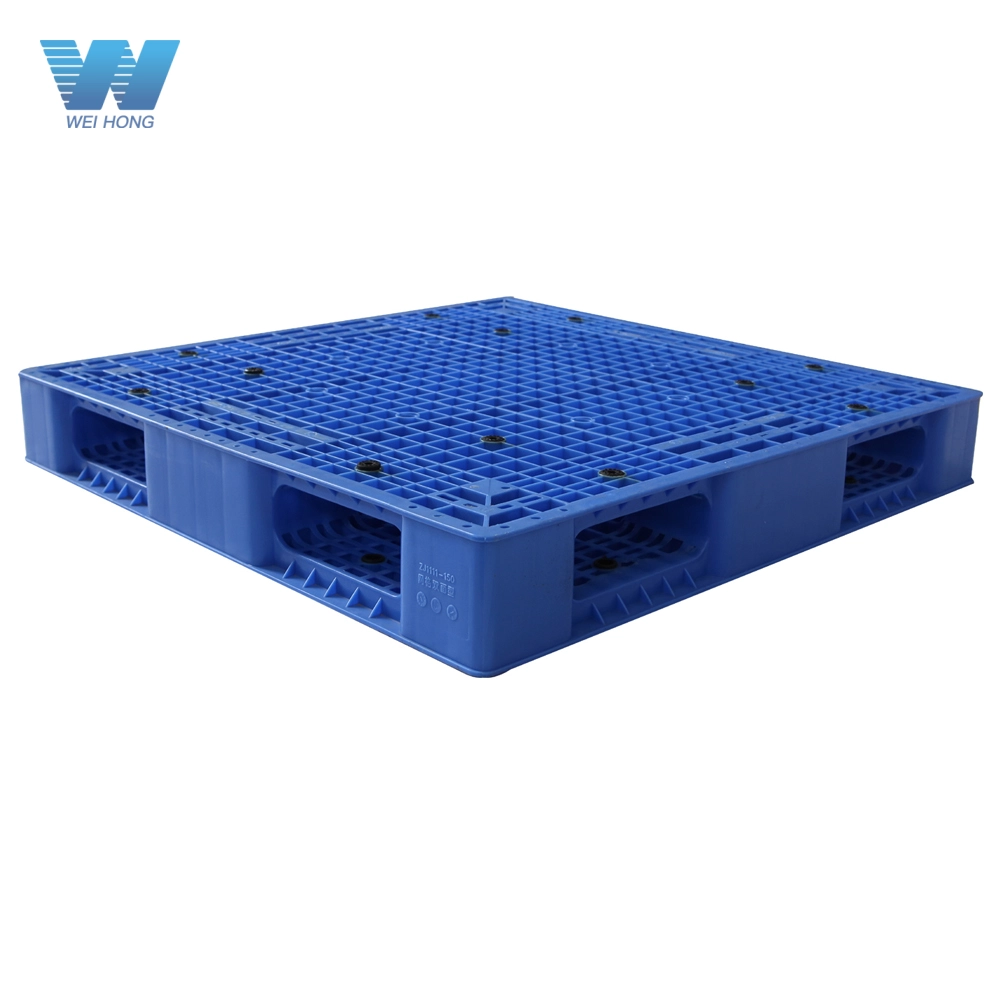
ZJ11111-150 Double-sided Heavy Duty Plastic Pallet
The double-sided plastic pallet, open deck or closed deck, is a solid and durable packaging solution designed for general and medium to heavy-duty cargo stacking, storage and transport. It’s made of virgin HDPE or PP, featuring a robust structure, a reinforced configuration with steel cores for the rack and shelf, and a steady loading capacity for both sides.
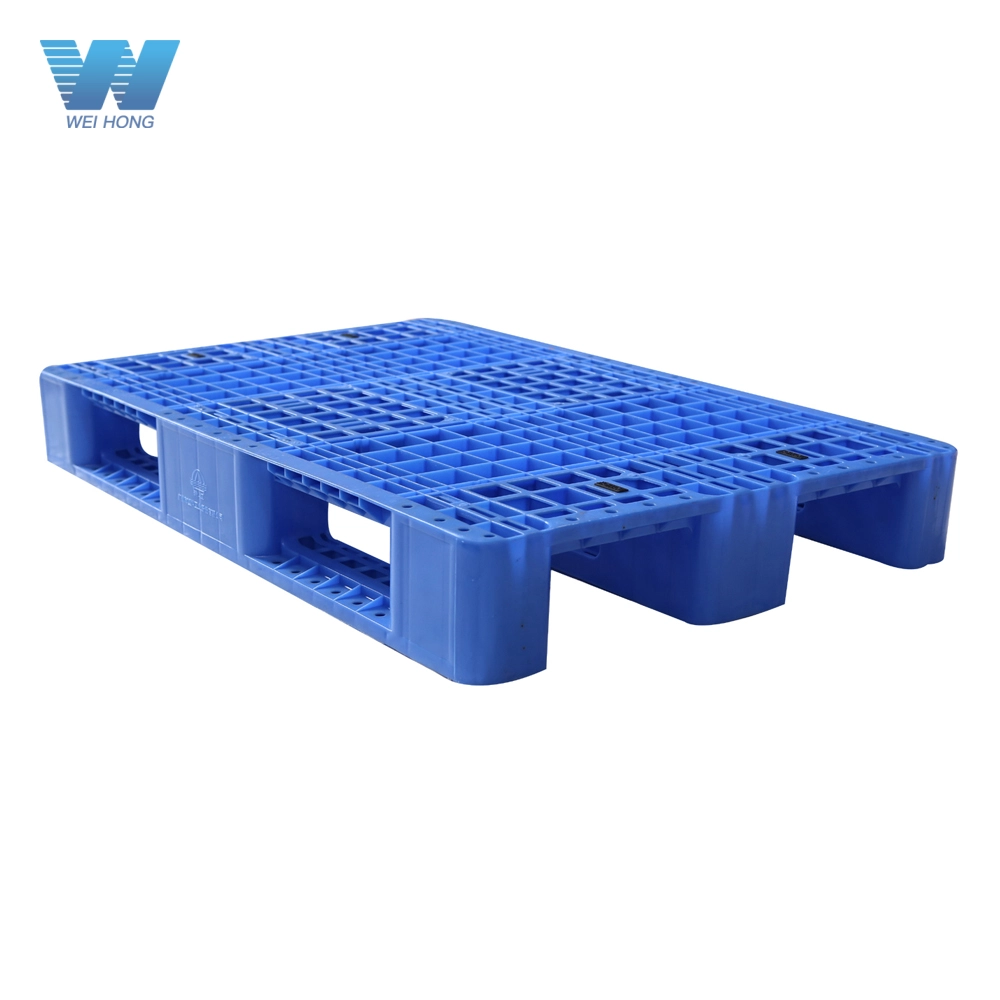
ZJ1208-155 Three-runner Single-sided Plastic Pallet
The three-runner single-sided plastic pallet is a solid and durable packaging solution designed for general and medium to heavy-duty cargo storage, transport and automated storage and retrieval system (AS/RS) use. It’s made of virgin HDPE or PP, featuring in robust structure, reinforced configuration with steel cores for rack and shelf, and a steady loading capacity.
Request More Information About Plastic Pallets
Have questions or need detailed insights on this article? Fill out the form below to contact our team for comprehensive information and support related to our plastic pallet solutions.
Contact us


+86 138 0277 8204
+86 183 4431 0917
+86 195 3791 1860

No. 15-1, Fengying Rd., Taiping Town, Conghua Dist., Guangzhou City, Guangdong Province, China.
 Scan QR Code
Weihong
Whatsapp: +8613802778204
Guangdong Weihong Plastic Technology Co., Ltd.
Scan QR Code
Whatsapp: +8619537911860
Scan QR Code