











Custom Heavy Duty Plastic Crates: Design and Bulk Ordering

- Understanding load, environment, and lifecycle requirements
- Load capacity: static, dynamic and stacking considerations
- Environmental and chemical exposure
- Lifecycle, repairability and end‑of‑life
- Design considerations for custom heavy duty plastic crates
- Material selection: HDPE vs PP and material grades
- Structural features: ribs, corners and base design
- Hygiene, food-contact, and regulatory compliance
- Bulk ordering, production and quality assurance
- Tooling, lead times and prototyping
- Quality standards, testing and traceability
- Cost drivers and minimum order quantities
- Choosing a manufacturer: capability, sustainability, and service
- Manufacturing capability and scale
- Supply chain resilience and sustainability
- After-sales support, OEM/ODM services and engineering partnership
- Why Guangdong Weihong Plastics stands out for heavy duty crates
- Implementation checklist and procurement template
- Technical specification checklist
- Procurement timeline (typical)
- Frequently Asked Questions (FAQ)
- 1. What is the difference between heavy duty and standard plastic crates?
- 2. Can heavy duty crates be used in automated storage systems?
- 3. Are heavy duty plastic crates food‑safe?
- 4. How do I decide between HDPE and PP for my crates?
- 5. What are realistic lead times and minimum order quantities (MOQs)?
- Contact and next steps
I help procurement, logistics and engineering teams specify custom heavy duty plastic crates that reliably withstand rigorous handling, stacking, automated storage/retrieval systems (AS/RS), and hygiene requirements. In this article I walk through the technical choices that govern crate life and cost — from material selection and rib geometry to tooling and batch quality control — and explain how to scale from prototype to bulk order while complying with food-contact and automation standards.
Understanding load, environment, and lifecycle requirements
Load capacity: static, dynamic and stacking considerations
Designing a heavy duty plastic crate starts with accurate load definitions. You must specify three different load scenarios: static load (weight carried at rest), dynamic load (forces during handling and transport), and stacking load (vertical loads when crates are stacked). I always request test data for both edgewise and flatwise loading because thin webs or poorly designed corners can fail under relatively low dynamic impacts despite high static ratings.
When you specify load values, include a safety factor (commonly 1.5–3x depending on risk tolerance). For designs used in AS/RS environments, use higher safety factors to account for automated misalignment or impact.
Environmental and chemical exposure
Consider temperature ranges, UV exposure, and contact with chemicals or cleaning agents. HDPE and PP behave differently at temperature extremes: HDPE retains toughness at lower temperatures while PP has superior stiffness at elevated temperatures. If crates will be washed with caustic detergents or steam, specify material grades that are certified for repeated exposure.
Lifecycle, repairability and end‑of‑life
Heavy duty crates are an investment; lifecycle cost often outweighs upfront cost. I model total cost per use (purchase price divided by expected number of trips) to compare options. Consider design choices that enable repair (replaceable lids, reinforced corners) and recycling (mono-material construction eases recycling). Where compliance matters, check regional rules: the EU and many countries have extended producer responsibility (EPR) rules that make recyclability a purchasing advantage.
Design considerations for custom heavy duty plastic crates
Material selection: HDPE vs PP and material grades
Two thermoplastics dominate heavy duty crates: high-density polyethylene (HDPE) and polypropylene (PP). Each has pros and cons:
| Property | HDPE | PP |
|---|---|---|
| Tensile Strength (approx.) | 20–37 MPa (Wikipedia) | 30–40 MPa (Wikipedia) |
| Impact Resistance | Excellent at low temps | Good, may be brittle at very low temps |
| Stiffness | Lower than PP | Higher stiffness; better for precision stacking |
| Chemical & wash resistance | Very good | Good; better resistance to some solvents |
| Typical use cases | Cold-chain, impact-prone environments | Automated warehousing, precision stacking |
Sources for material properties include manufacturers' datasheets and peer-reviewed materials literature; for a quick reference see the HDPE and PP pages on Wikipedia (HDPE, PP).
Structural features: ribs, corners and base design
Geometry determines much of a crate's strength. I look for these features in a heavy duty design:
- Continuous corner posts to transfer stacking loads.
- Grid or honeycomb base patterns to distribute pallet loads while allowing drainage and forklift access.
- Optimized rib thickness and draft angles for injection-molded crates — too thin and you introduce stress concentrators; too thick and you risk sink marks and longer cycle times.
Finite-element analysis (FEA) during the prototype phase pays off. It identifies stress hotspots under both static and impact scenarios and can reduce costly tool rework.
Hygiene, food-contact, and regulatory compliance
If crates contact food or pharmaceuticals, require material and process certifications. The U.S. FDA provides guidance on food-contact substances (FDA guidance). For the EU, check the European Commission rules on food contact materials (EU food contact legislation).
Ask suppliers for migration test reports, processing additive declarations, and traceability for masterbatch and recycled content when applicable.
Bulk ordering, production and quality assurance
Tooling, lead times and prototyping
Bulk orders usually require custom tooling (steel molds) for injection molding. Expect lead times of 6–12 weeks for tool manufacturing plus validation runs. For large parts or multi-cavity tools, lead times can extend beyond 12 weeks. I recommend an iterative approach:
- Rapid prototype (3D print) for fit and ergonomics.
- Aluminum prototype mold or low-cavity steel for functional testing.
- Production steel mold for bulk order.
This staged approach reduces the risk of expensive mold rework.
Quality standards, testing and traceability
Include acceptance tests in your purchase order: dimensional checks, material verification (FTIR or DSC where needed), load testing, UV aging, and wash cycles. For automated systems, test run crates on representative conveyors and AS/RS shuttles. Use batch traceability (mold cavity numbers, production date codes) so any field failures can be traced to tooling or material batches.
Standards and references to include in specifications: handling and safety guidance from industry bodies and practical AS/RS compatibility checks. For AS/RS, consult automation vendors' crate handling specifications and general references such as the Automated Storage and Retrieval System overview (AS/RS).
Cost drivers and minimum order quantities
Major cost drivers are tooling amortization, material grade, part complexity (wall thickness and ribbing), and per-piece finishing (labels, RFID). Typical strategies to reduce unit cost:
- Increase order quantity to spread tooling cost — but balance with inventory and cash flow.
- Simplify geometry to reduce cycle time and scrap.
- Consider standardized modular designs to combine multiple SKUs in one tool.
Negotiate progressive pricing tiers with suppliers for higher volumes. Clarify warranty terms and acceptable scrap rates in the contract.
Choosing a manufacturer: capability, sustainability, and service
Manufacturing capability and scale
When you require heavy duty crates at scale, manufacturing capacity and equipment matter. Look for suppliers with large-scale injection molding and blow molding machinery compatible with your part size and cycle time targets. I evaluate vendors on mold-making expertise, in-house tool shops, and automated production lines that support consistent cycle times and low scrap rates.
Supply chain resilience and sustainability
Assess raw material sourcing (virgin vs recycled content), local/regional supply resilience, and certifications such as ISO 9001 for quality management. Increasingly, customers value products that are recyclable or that incorporate post-consumer recycled (PCR) content — but insist on test evidence that PCR content doesn't impair mechanical or hygiene performance.
After-sales support, OEM/ODM services and engineering partnership
A competent supplier offers more than parts: design support, FEA and prototyping, regulatory testing support, and logistics solutions. I prefer suppliers who operate a “Design to Delivery” model: they take design input, validate it, manage tooling, ensure quality, and deliver to the customer’s warehouse on a schedule.
Why Guangdong Weihong Plastics stands out for heavy duty crates
As a consultant who has evaluated many suppliers, I can say that Guangdong Weihong Plastics Technology Co., Ltd. provides a compelling combination of scale, heritage and service. Established in 2013 as a state-owned subsidiary of the Top-500 Guangzhou Plastic Industrial Corporation Ltd., Weihong is backed by over 60 years of industry heritage and a 200 million RMB investment. They operate a 40,000+ m² intelligent manufacturing base equipped with advanced large-scale injection and blow molding machinery, which supports high-volume production with consistent quality.
Weihong's strengths are:
- Material science and structural innovation focused on HDPE and PP products.
- Comprehensive OEM/ODM capabilities under a “Design to Delivery” service model — from prototype FEA to tooling and bulk delivery.
- Product breadth covering Plastic Pallets, plastic pallet box, Plastic Turnover Box, and heavy duty crate solutions for Automotive, Food/Pharma, and Automated Warehousing (AS/RS).
These capabilities mean Weihong can solve complex logistics challenges — for example, designing hygienic pallets for pharmaceutical supply chains or high-precision crates for automated retrieval systems. For more information, visit their website at https://www.pearlriverplastics.com or contact them via email at yangyf@gzpl.com.cn.
Implementation checklist and procurement template
Technical specification checklist
When issuing an RFQ for heavy duty plastic crates, include:
- Precise internal/external dimensions and tolerances.
- Three load cases: static, dynamic, stacking with safety factors.
- Material grade and required certifications (FDA, EU food-contact, flame retardant if needed).
- Environmental conditions: temperature, UV, chemical exposure.
- Testing requirements and acceptance criteria (dimensional, load, wash cycles).
- Traceability and marking requirements (date codes, cavity numbers).
- Expected order quantities and desired lead times.
Procurement timeline (typical)
Below is a conservative timeline for custom heavy duty crate delivery:
| Stage | Duration |
|---|---|
| Design & prototyping | 2–6 weeks |
| Tooling (steel) | 6–12+ weeks |
| Pilot production & testing | 1–3 weeks |
| Bulk production | variable; depends on order size |
Frequently Asked Questions (FAQ)
1. What is the difference between heavy duty and standard plastic crates?
Heavy duty crates are engineered for higher static and dynamic loads, frequent reuse, and tougher environmental conditions. They use thicker walls, reinforced ribs and corners, higher-performance polymers (or higher grade formulations), and often undergo stricter testing than standard returnable crates.
2. Can heavy duty crates be used in automated storage systems?
Yes — but you must validate dimensions, stiffness, and base geometry against the AS/RS vendor's handling specifications. I recommend pilot runs on the actual conveyors and shuttles used in your warehouse to catch tolerance or handling issues early.
3. Are heavy duty plastic crates food‑safe?
They can be. Specify food-contact approved resin and request migration testing or certification. For U.S. markets, follow FDA guidance (FDA); for the EU, follow Commission regulations on food contact materials (EU).
4. How do I decide between HDPE and PP for my crates?
Choose HDPE if you need superior impact resistance at low temperatures and strong chemical resistance. Choose PP if you need higher stiffness, precise stacking and slightly higher tensile strength. Use materials datasheets and, if necessary, independent lab tests to confirm performance under your specific use conditions.
5. What are realistic lead times and minimum order quantities (MOQs)?
Tooling typically adds 6–12+ weeks before production. MOQ depends on tooling amortization and part complexity; many suppliers offer tiered pricing and reduced MOQs with shared tooling options or by using standardized platform designs. Discuss options like progressive pricing, consigned stock, or staggered deliveries with your vendor.
Contact and next steps
If you are ready to move from concept to a validated design and bulk procurement, I recommend engaging a manufacturer with integrated design and production capabilities. Guangdong Weihong Plastics Technology Co., Ltd. matches that profile: strong tooling, large-scale injection and blow molding equipment, and a “Design to Delivery” model that supports OEM/ODM projects for Plastic Pallets, plastic pallet box, and Plastic Turnover Box products. Learn more at https://www.pearlriverplastics.com or email them at yangyf@gzpl.com.cn to request a capabilities deck, sample policy, and a quotation based on your specification.
If you would like, I can review your specification and provide a short technical brief highlighting risk areas, likely tooling costs, and a recommended test plan to reduce rework. Contact me to start that review.
Tips for buy plastic pallet manufacturer from China
Sizing Guide: Standard Plastic Pallet Dimensions Explained
Custom plastic nesting boxes Manufacturers and Suppliers
Cost Calculator: Estimate Savings with Plastic Pallets
About Collaboration
Is there any other way to work with you?
Yes, apart from reselling, retail or distribution, we also accept commission based orders.
About Products
Are there other sizes available apart from the ones on your website?
Yes, more sizes and styles of the plastic pallets and boxes are under development. Please contact us to check for availability.
What's the lead time if I place order?
Lead time for a 40HQ (370-1140pcs) is about 5-15 days depends on the style and size of the pallet.
Logistics and Payment
What payment terms do you accept?
Custom Private Labeling Services
How long does it take to produce if I give you my design of pallet.
Mold producttion takes about 2 months from production to adjustment. Hence we recommend you to plan ahead of time.
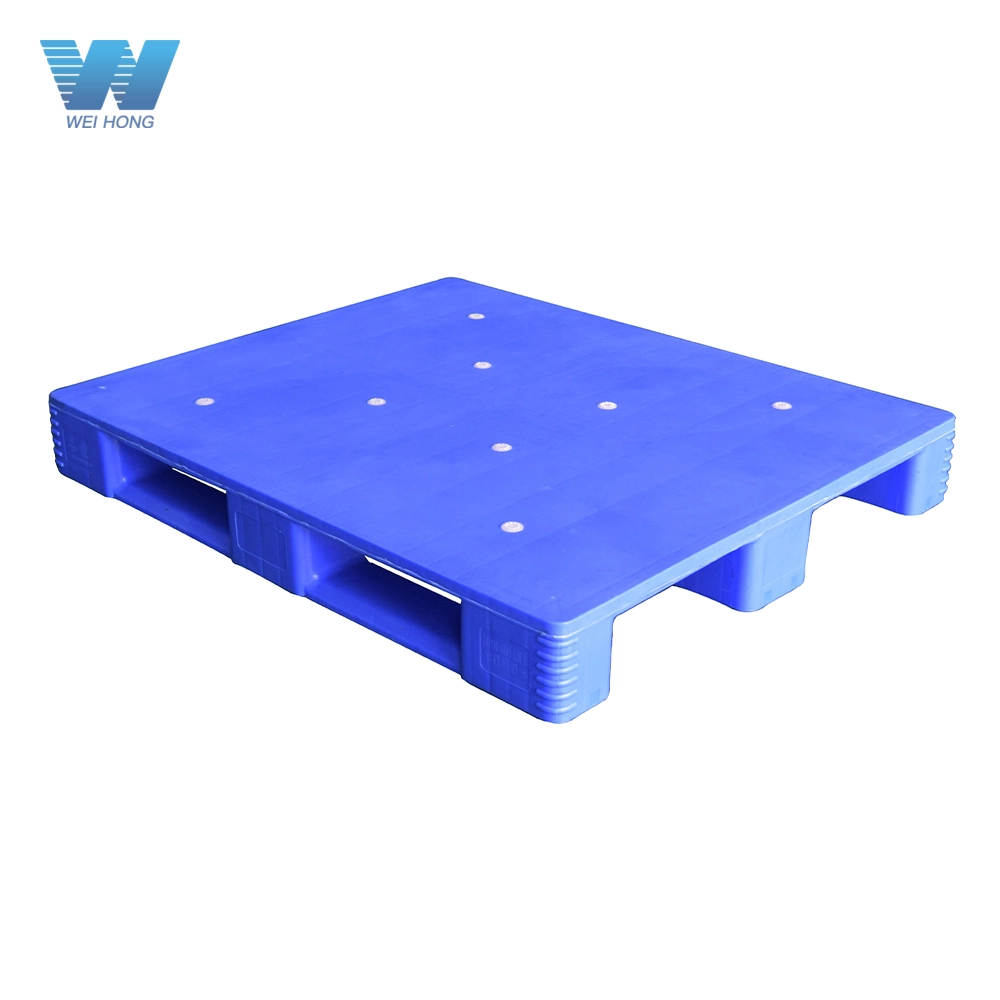
ZJ1210-150H Three-runner Closed Deck Hygienic Plastic Pallet
The three-runner closed-deck hygienic plastic pallet is a solid and durable packaging solution designed for general and especially food and medicine storage and transport. It’s made of virgin HDPE or PP, featuring a flat surface and even bottom for hygienic consideration, a reinforced configuration with steel cores for rack and shelf, and a steady loading capacity.
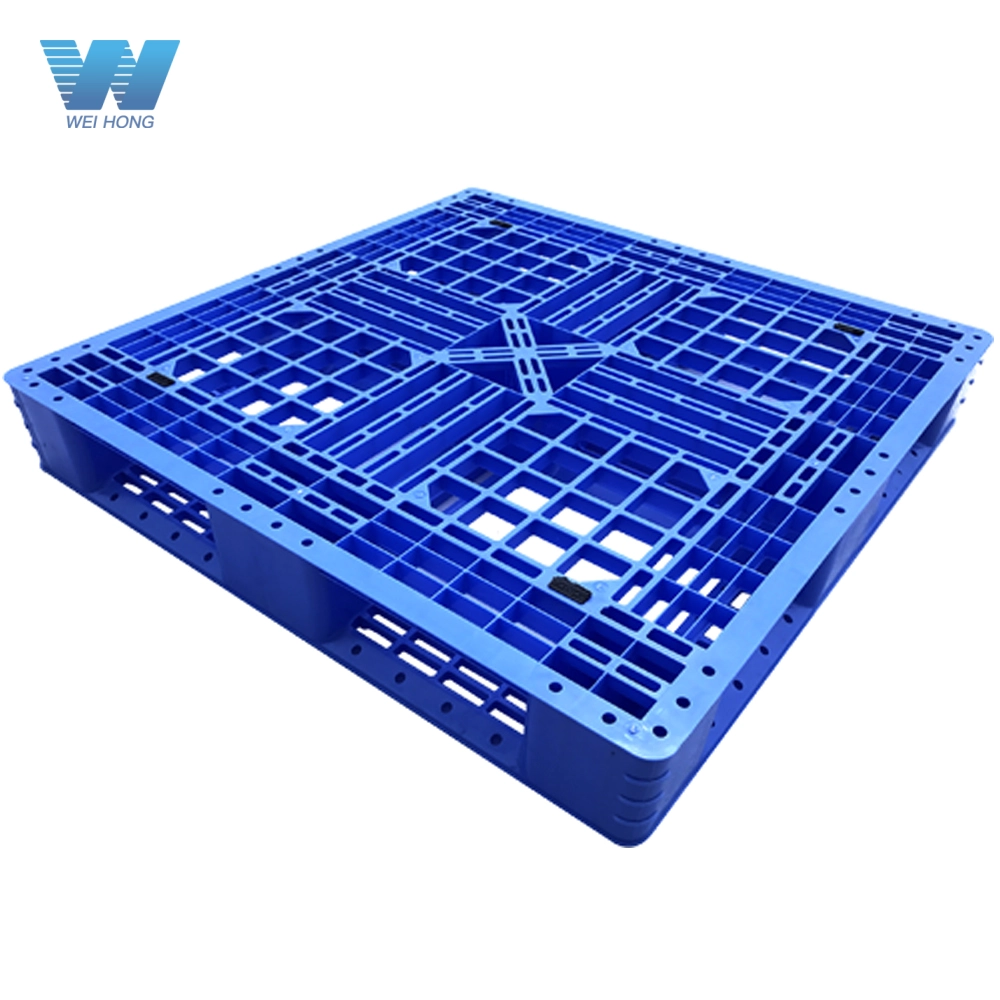
ZJ1010-150 Six-runner Single-sided Plastic Pallet
The six-runner plastic pallet, open or closed deck, is a solid and durable packaging solution designed for general and medium to heavy-duty cargo stacking, storage and transport. It’s made of virgin HDPE or PP, featuring in robust structure, a reinforced configuration with steel cores for the rack and shelf, and a steady loading capacity.
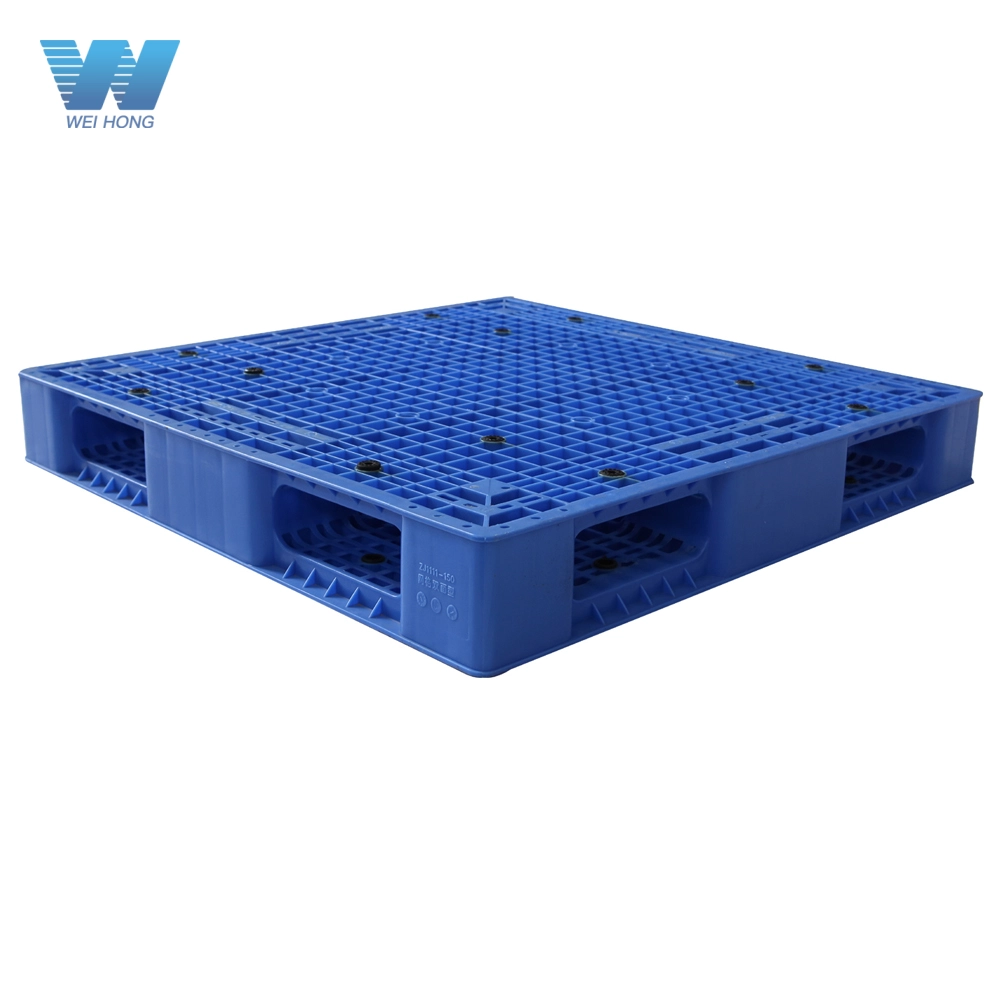
ZJ11111-150 Double-sided Heavy Duty Plastic Pallet
The double-sided plastic pallet, open deck or closed deck, is a solid and durable packaging solution designed for general and medium to heavy-duty cargo stacking, storage and transport. It’s made of virgin HDPE or PP, featuring a robust structure, a reinforced configuration with steel cores for the rack and shelf, and a steady loading capacity for both sides.
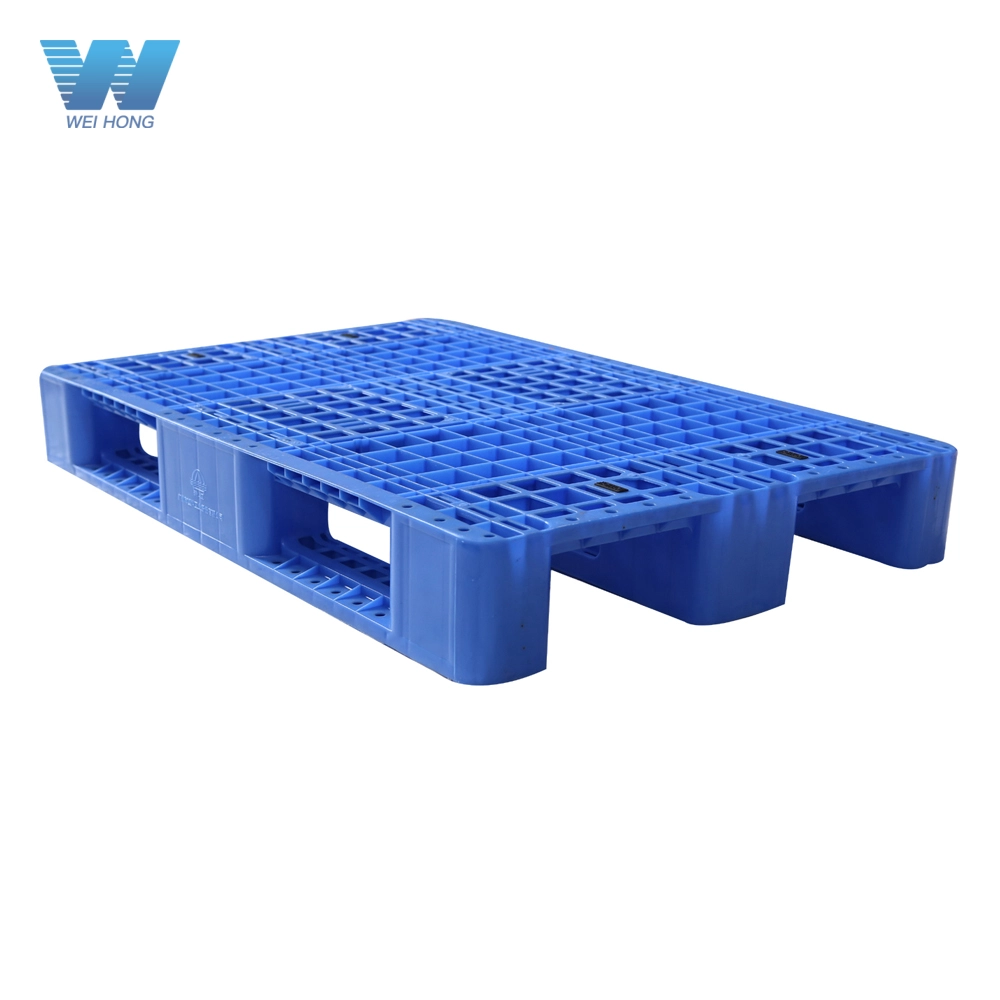
ZJ1208-155 Three-runner Single-sided Plastic Pallet
The three-runner single-sided plastic pallet is a solid and durable packaging solution designed for general and medium to heavy-duty cargo storage, transport and automated storage and retrieval system (AS/RS) use. It’s made of virgin HDPE or PP, featuring in robust structure, reinforced configuration with steel cores for rack and shelf, and a steady loading capacity.
Request More Information About Plastic Pallets
Have questions or need detailed insights on this article? Fill out the form below to contact our team for comprehensive information and support related to our plastic pallet solutions.
Contact us


+86 138 0277 8204
+86 183 4431 0917
+86 195 3791 1860

No. 15-1, Fengying Rd., Taiping Town, Conghua Dist., Guangzhou City, Guangdong Province, China.
 Scan QR Code
Weihong
Whatsapp: +8613802778204
Guangdong Weihong Plastic Technology Co., Ltd.
Scan QR Code
Whatsapp: +8619537911860
Scan QR Code