











Custom plastic nesting boxes Manufacturers and Suppliers

- Why nesting solutions matter in modern logistics
- Space efficiency and transport savings
- Hygiene, durability and lifecycle value
- Compatibility with automated logistics
- Design and material considerations for custom plastic nesting boxes
- Choosing the right resin: HDPE vs PP
- Structural design: wall thickness, ribs and nesting geometry
- Hygiene and surface finish
- Manufacturing, standards and quality assurance
- Injection and blow molding capabilities
- Applicable standards and traceability
- Quality control and end-to-end traceability
- Sourcing, cost drivers and supplier selection
- Cost drivers and total cost of ownership
- Supplier capabilities to evaluate
- Sustainability, recycling and end-of-life
- Practical deployment: case examples, testing and integration
- Case: food distribution and hygiene controls
- Case: automotive parts and heavy-duty reuse cycles
- Testing checklist before fleet deployment
- Frequently Asked Questions (FAQs)
- Q: What is the difference between nesting boxes and stacking containers?
- Q: How long do plastic nesting boxes last?
- Q: Can nesting boxes be customized for AS/RS and RFID tracking?
- Q: Are plastic nesting boxes recyclable?
- Conclusion
Guangdong Weihong Plastics Technology Co., Ltd., headquartered in Guangzhou, Guangdong Province, China, manufactures high-performance custom plastic nesting boxes for global logistics and automated warehousing. Leveraging a 40,000+ m² intelligent manufacturing base and advanced injection and blow molding lines, Weihong produces hygienic HDPE and PP nesting containers that reduce transport costs, save warehouse space, and meet food/pharma sanitation and AS/RS integration needs.
Why nesting solutions matter in modern logistics
Space efficiency and transport savings
Plastic nesting boxes are designed so empty units can nest or stack inside one another, reducing return-trip volume by up to 70–80% compared with non-nesting rigid crates. That compactness lowers containerized shipping costs, reduces required truck trips, and optimizes trailer and warehouse cubic utilization—especially valuable for multi-modal supply chains.
Hygiene, durability and lifecycle value
Manufactured from hygienic, non-porous polymers such as HDPE and PP, plastic nesting boxes resist contamination and are easier to clean than wood or corrugated equivalents—critical for food and pharmaceutical supply chains. Durable thermoplastics typically last multiple years in reuse cycles, improving total cost of ownership despite a higher upfront price. For hygiene guidance in food retail and handling, see the FDA Food Code: FDA Food Code.
Compatibility with automated logistics
Modern automated storage and retrieval systems (AS/RS) require consistent, predictable unit geometry and strength tolerances. Well-designed nesting boxes can be adapted for racking, conveyors and robotic handling, supporting high-throughput AS/RS environments. For AS/RS integration principles, see material handling references at MHI: MHI - AS/RS.
Design and material considerations for custom plastic nesting boxes
Choosing the right resin: HDPE vs PP
HDPE and PP are the most common resins for nesting boxes. Key contrasts:
| Property | HDPE | PP |
|---|---|---|
| Density | ~0.94–0.97 g/cm³ | ~0.90–0.91 g/cm³ |
| Impact resistance (low temp) | Excellent | Good |
| Chemical resistance | Strong | Very good |
| Stiffness | Moderate | Higher stiffness |
| Common uses | Rugged, cold environments, heavy-duty returnables | Food-grade trays, lightweight nesting containers |
Both materials can be tailored with additives for UV resistance, antistatic properties, or FDA-compliant grades for food contact. Choosing depends on impact needs, temperature exposure, and weight targets.
Structural design: wall thickness, ribs and nesting geometry
Effective nesting box design balances structural strength with nesting depth. Ribs, internal bosses and corner reinforcement deliver load-bearing capacity while minimizing material. Draft angles and controlled taper determine nesting clearance to avoid jamming; a typical working clearance is 2–5 mm depending on size and resin shrinkage. Prototyping via FEA and mold trials ensures reliable nesting/un-nesting behavior in real operations.
Hygiene and surface finish
Food and pharma customers require smooth internal surfaces with drain channels and no dirt traps. HDPE and PP can be textured or polished; ultrasonic welding and rounded corners eliminate seams where bacteria can accumulate. Where sterilization or high-pressure washdown is required, confirm temperature limits of the resin and use reinforced designs to resist deformation.
Manufacturing, standards and quality assurance
Injection and blow molding capabilities
Large-scale injection molding (for solid walls and structural elements) and blow molding (for hollow geometries) are commonly used. Guangdong Weihong operates large injection and blow molding machinery enabling consistent shot weights, tight dimensional tolerances and fast cycle times suitable for mass production of nesting boxes and returnable packaging systems.
Applicable standards and traceability
While specific nesting boxes aren't governed by a single global standard, relevant guidance includes general pallet and packaging testing standards and food-contact regulations. For general reference on plastic pallets and similar systems, see the consolidated overview at Wikipedia: Plastic pallet (Wikipedia). For environmental and packaging waste policy that impacts material selection and end-of-life handling, review the EU packaging and waste guidance: EU Packaging Waste.
Quality control and end-to-end traceability
Best-in-class suppliers implement ISO-aligned quality systems, trace resin lots, maintain process control charts (SPC) and perform routine mechanical testing (compression, stacking, impact). Weihong's “Design to Delivery” OEM/ODM model includes prototype validation, pilot runs and measurement reports to ensure consistent fit-for-purpose nesting performance.
Sourcing, cost drivers and supplier selection
Cost drivers and total cost of ownership
Key cost drivers include resin choice and price volatility, tool/mold costs, cycle time, and logistics. While plastic nesting boxes have higher initial tooling costs than disposable packaging, their reuse cycles deliver lower cost per trip over time. Consider expected return cycles, average trip length, and cleaning/handling costs when calculating TCO.
Supplier capabilities to evaluate
When selecting a manufacturer/supplier, evaluate:
- Production capacity and equipment (injection and blow molding tonnage)
- Engineering support for CAD/FEA and rapid prototyping
- Quality systems and traceability processes
- Experience with AS/RS and robotics integration
- Food and pharma hygiene certifications and compliant material grades
Guangdong Weihong Plastics brings more than 60 years of industry heritage via its parent group and a RMB 200 million facility investment, offering large-scale production and integrated OEM/ODM services to meet these buyer criteria.
Sustainability, recycling and end-of-life
Design for recyclability includes using single-resin constructions, avoiding mixed materials and using recyclable HDPE/PP grades. Public data and policy trends emphasize circularity for plastics—see EPA plastics data and EU packaging policy for context: EPA Plastics Data and EU Packaging Waste. Reclaimed resin can be integrated into secondary components, reducing virgin resin consumption and lifecycle emissions.
Practical deployment: case examples, testing and integration
Case: food distribution and hygiene controls
Food distributors switching to HDPE nesting boxes typically see easier washdown operations and reduced product damage vs corrugated boxes. Design features like drain channels and stack vents speed drying and reduce microbial risks. Ensure material meets food-contact grade requirements and that wash protocols align with FDA Food Code guidance: FDA Food Code.
Case: automotive parts and heavy-duty reuse cycles
Automotive supply chains require high load-bearing performance and resistance to oils/greases. Heavier-gauge HDPE with reinforced ribs and tailored closures supports part protection across multiple assembly lines. Nesting geometries save return-trip volume from assembly plants back to tier suppliers.
Testing checklist before fleet deployment
- Stack/compression testing under expected static loads (simulate stacking in storage and transport)
- Impact and drop testing for distribution handling
- Nesting/un-nesting cycle tests to simulate return operations
- Washdown and chemical resistance testing for hygiene regimes
- AS/RS pick-and-place trials if automated systems will handle the boxes
Frequently Asked Questions (FAQs)
Q: What is the difference between nesting boxes and stacking containers?
A: Nesting boxes fit inside each other when empty to minimize return volume; stacking containers sit flat on top of each other and are intended to remain stacked when full. Many logistics programs use a mix: nesting for returns, stacking for storage.
Q: How long do plastic nesting boxes last?
A: Lifespan depends on material, load cycles, handling and environment. In typical industrial reuse cycles, HDPE or PP nesting boxes can last several years and hundreds to thousands of trips. Proper use and maintenance extend life and optimize TCO.
Q: Can nesting boxes be customized for AS/RS and RFID tracking?
A: Yes. Custom geometries, RFID pockets, barcode windows and reinforced bases for robotic gripping can be incorporated during design. Confirm indexing points and tolerance windows to ensure reliable automation handling.
Q: Are plastic nesting boxes recyclable?
A: Most HDPE and PP boxes are recyclable by resin type if collected and processed correctly. Designing single-resin products and working with recycling partners improves circularity. For broader plastics data, review EPA guidance: EPA Plastics Data.
Conclusion
Custom plastic nesting boxes deliver measurable benefits—reduced logistics costs, improved hygiene, and better compatibility with automated systems—when designed and manufactured to match use-case requirements. Selecting the right resin, optimizing nesting geometry, and validating performance through testing and pilot runs are essential steps. Guangdong Weihong Plastics Technology Co., Ltd. combines large-scale molding capability, “Design to Delivery” OEM/ODM services, and industry experience to develop fit-for-purpose nesting solutions for food, pharmaceutical, automotive and AS/RS environments. For integration guidance and a tailored quote, contact Weihong at yangyf@gzpl.com.cn.
Contact us to discuss custom nesting box design and production for your logistics needs: yangyf@gzpl.com.cn.
References and further reading: Plastic pallet (Wikipedia); FDA Food Code; MHI - AS/RS; EPA Plastics Data; EU Packaging Waste.
Top 10 heavy duty plastic pallets Manufacturers and Supplier Brands
Top 10 hygienic plastic pallets Manufacturers and Supplier Brands
Top 10 plastic pallet box Manufacturers and Supplier Brands
OEM/ODM plastic chicken transport cage Manufacturers and Suppliers
About Collaboration
What takes to be a distributor of your plastic products?
Do you have exclusive distributor in my country?
We currently have one or two exclusive distributors. Please tell me to where you would like to import out plastic pallets and boxes to check for it.
Logistics and Payment
What delivery terms do you support?
FOB term is our priority. Meanwhile, we accept also FCA, CFR, CIF, etc.
Custom Private Labeling Services
Is OEM/ODM service available?
About Products
What is the minimun order quantity?
MOQ is usually 200pcs for each model. Less quantity is acceptable when there is stock.
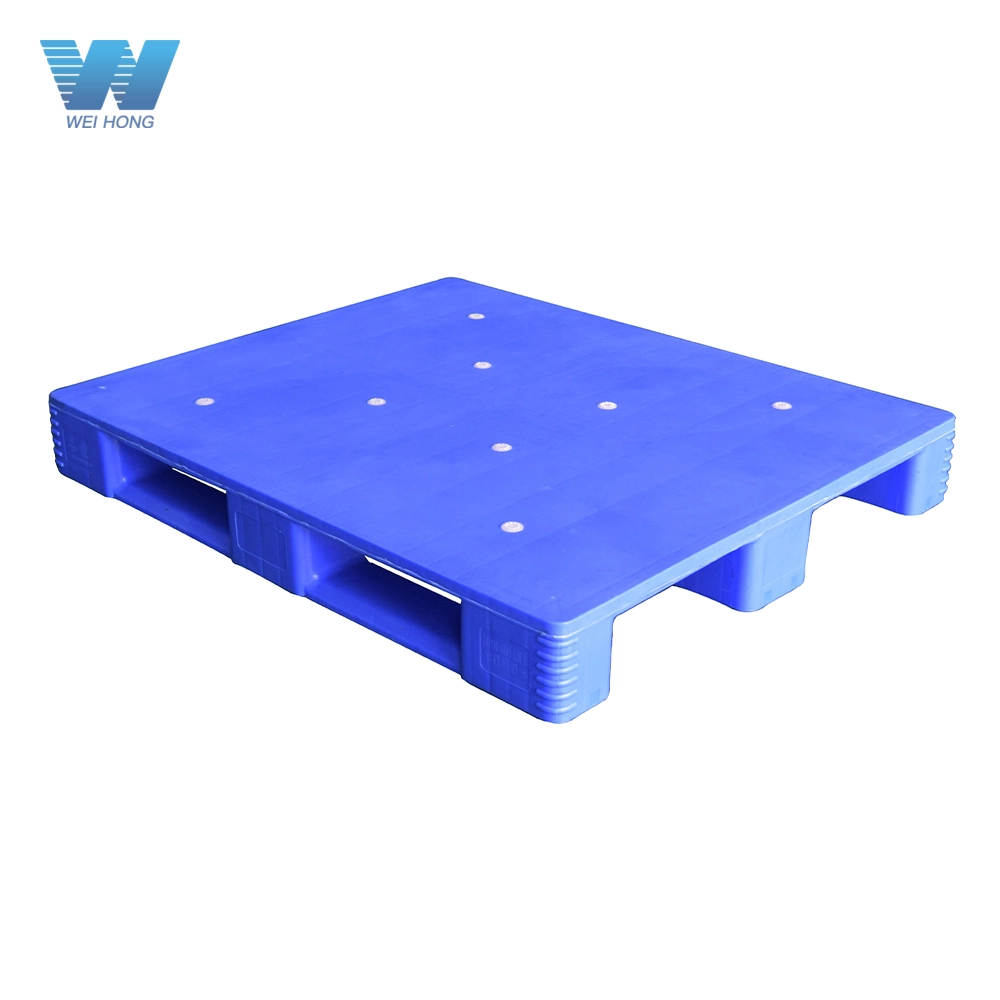
ZJ1210-150H Three-runner Closed Deck Hygienic Plastic Pallet
The three-runner closed-deck hygienic plastic pallet is a solid and durable packaging solution designed for general and especially food and medicine storage and transport. It’s made of virgin HDPE or PP, featuring a flat surface and even bottom for hygienic consideration, a reinforced configuration with steel cores for rack and shelf, and a steady loading capacity.
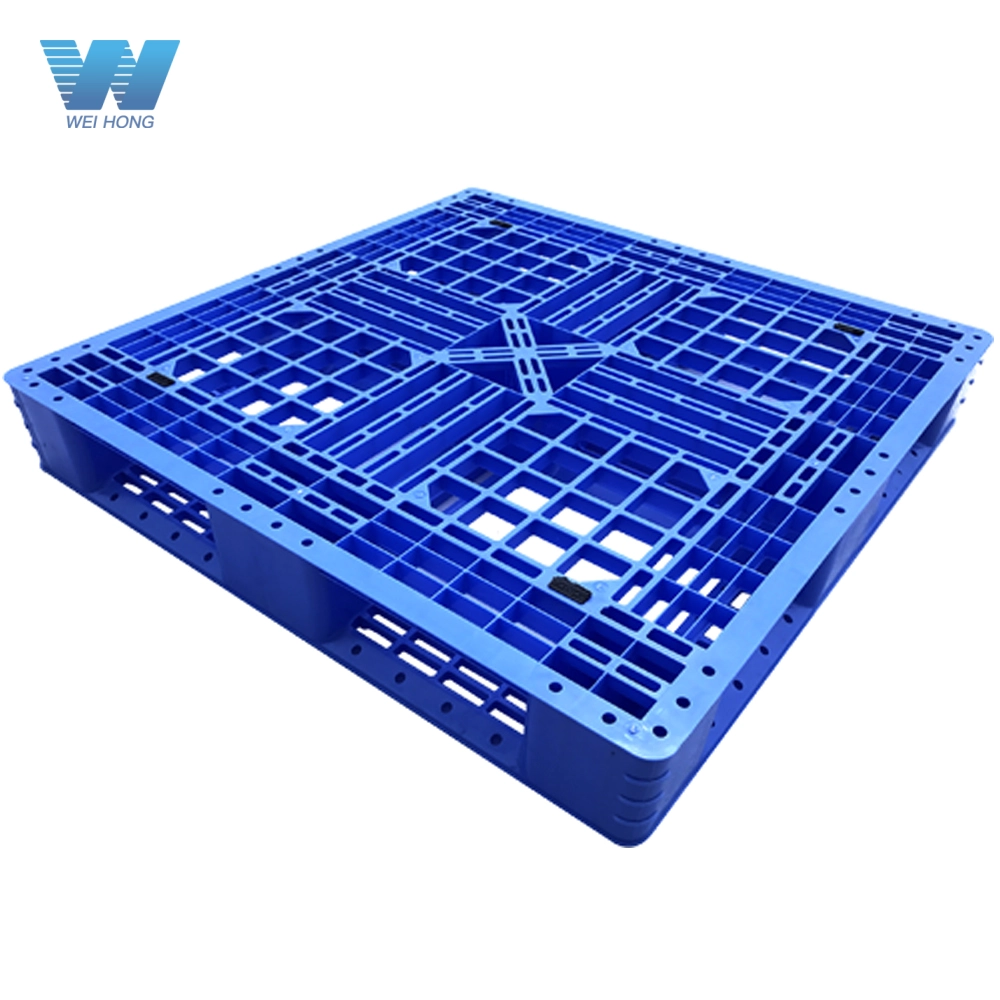
ZJ1010-150 Six-runner Single-sided Plastic Pallet
The six-runner plastic pallet, open or closed deck, is a solid and durable packaging solution designed for general and medium to heavy-duty cargo stacking, storage and transport. It’s made of virgin HDPE or PP, featuring in robust structure, a reinforced configuration with steel cores for the rack and shelf, and a steady loading capacity.
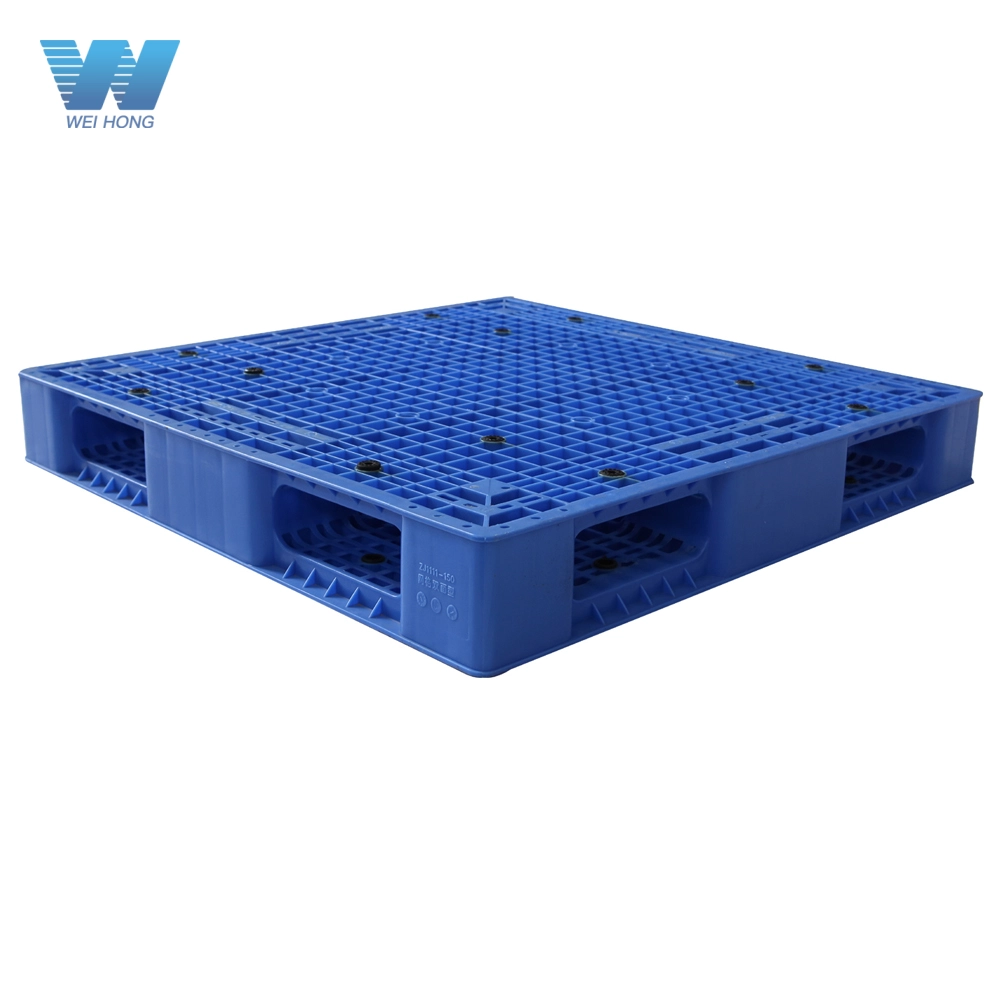
ZJ11111-150 Double-sided Heavy Duty Plastic Pallet
The double-sided plastic pallet, open deck or closed deck, is a solid and durable packaging solution designed for general and medium to heavy-duty cargo stacking, storage and transport. It’s made of virgin HDPE or PP, featuring a robust structure, a reinforced configuration with steel cores for the rack and shelf, and a steady loading capacity for both sides.
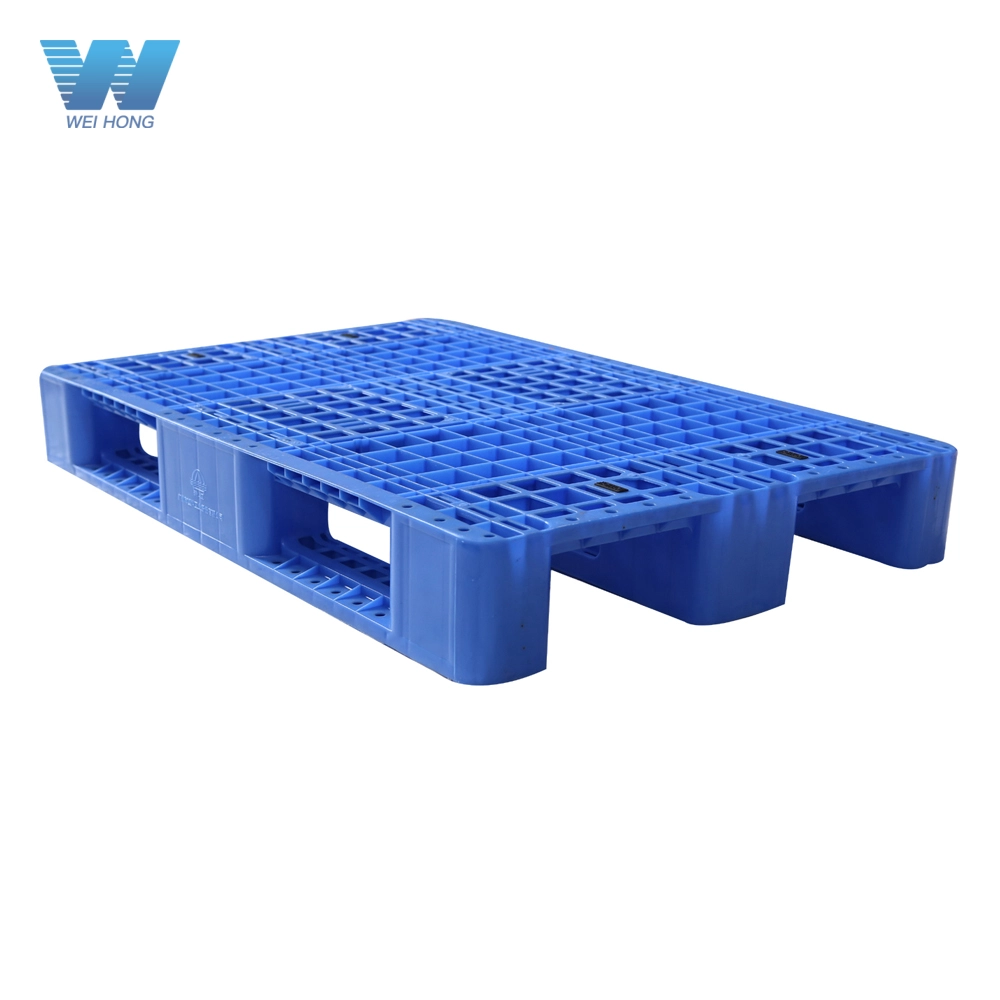
ZJ1208-155 Three-runner Single-sided Plastic Pallet
The three-runner single-sided plastic pallet is a solid and durable packaging solution designed for general and medium to heavy-duty cargo storage, transport and automated storage and retrieval system (AS/RS) use. It’s made of virgin HDPE or PP, featuring in robust structure, reinforced configuration with steel cores for rack and shelf, and a steady loading capacity.
Request More Information About Plastic Pallets
Have questions or need detailed insights on this article? Fill out the form below to contact our team for comprehensive information and support related to our plastic pallet solutions.
Contact us


+86 138 0277 8204
+86 183 4431 0917
+86 195 3791 1860

No. 15-1, Fengying Rd., Taiping Town, Conghua Dist., Guangzhou City, Guangdong Province, China.
Weihong
Whatsapp: +8613802778204
Guangdong Weihong Plastic Technology Co., Ltd.
Scan QR Code