











Custom Plastic Pallets: Design, Materials and Lead Times

- Why customization matters in pallet design
- Understanding load profiles and use cases
- Warehouse, transport and automation constraints
- Regulatory, hygiene and sustainability drivers
- Material choices: HDPE, PP and recycled options
- Mechanical properties and durability
- Chemical resistance and food contact
- Cost, lifecycle and environmental tradeoffs
- Manufacturing methods and design implications
- Injection molding vs blow molding vs thermoforming
- Tooling, tolerances and repeatability
- Secondary features: inserts, RFID, and anti-slip
- Lead times, cost drivers and how I reduce time-to-market
- Typical lead-time breakdown
- Strategies to shorten lead times
- Quality testing and standards you should require
- Practical checklist before you order custom pallets
- Technical specification checklist
- Acceptance and testing plan
- Commercial terms to clarify
- Why choose Guangdong Weihong Plastics Technology Co., Ltd. for custom plastic pallet projects
- FAQ
- 1. How long does it take to get a custom plastic pallet from design to first delivery?
- 2. Which is better: HDPE or PP for my pallet?
- 3. Can recycled plastic be used for heavy-duty pallets?
- 4. What testing standards should I request from suppliers?
- 5. How can I reduce tooling costs for small runs?
- 6. Do plastic pallets present problems with RFID?
I have spent years advising manufacturers, logistics teams and supply-chain engineers on plastic pallet selection and customization. In this article I summarize what matters most when you commission custom plastic pallets: how design objectives map to material and process choices, which standards and tests you should require, and realistic lead-time expectations that reflect tooling, validation and production. This opening summary is optimized for indexing so regional buyers and procurement systems can match requirements for plastic pallet supply quickly.
Why customization matters in pallet design
Understanding load profiles and use cases
When I design a pallet, the first question I ask is: what is the unit load? Static, dynamic and racking loads are different requirements. Static load is what the pallet must hold at rest (e.g., storage stacks), dynamic load covers handling (forklift pickup, conveyor transit), and racking load defines performance in selective pallet racking. A mis-specified pallet can survive warehouse handling but fail in a racking scenario—so provide designers with expected maximum loads, support spacing and average pack geometry.
Warehouse, transport and automation constraints
Pallets interact with handling equipment, automated storage and retrieval systems (AS/RS), conveyors and trucks. Clearance, entry/exit geometry and RFID/read zone locations must be designed in. For automated warehouses I typically specify strict dimensional tolerances, integrated anti-slip features and precise runner/rib geometry so the pallet engages with AS/RS shuttles reliably.
Regulatory, hygiene and sustainability drivers
Food, pharmaceutical and medical customers often need hygienic pallets with smooth, drainable surfaces and compatible food-contact materials. Regulatory frameworks I reference include the FDA guidance on food-contact materials (FDA – Food Contact Substances) and the EU plastics-in-food regulation (EU Regulation 10/2011). Sustainability goals push buyers toward recycled-content HDPE/PP or closed-loop reuse programs—these affect material selection and cost.
Material choices: HDPE, PP and recycled options
Mechanical properties and durability
HDPE and polypropylene (PP) are the two dominant polymers for plastic pallets. In my experience, HDPE is preferred for heavy-duty, impact-resistant applications because of its toughness and low-temperature performance; PP offers higher rigidity and chemical resistance at elevated temperatures. Recycled HDPE/PP can be cost-effective and sustainable but may show reduced impact strength or color variability; if you specify recycled content, require mechanical property certificates and sample testing.
Chemical resistance and food contact
PP has better resistance to repeated hot-dishwashing and some solvents, making it a common choice for hygienic pallets used in food and pharma. For any pallet that contacts food, demand documentation of food-contact compliance: FDA or EU approvals where relevant. I also recommend specifying cleaning protocols and compatibility with your disinfectants.
Cost, lifecycle and environmental tradeoffs
Material choice affects both upfront cost and lifecycle costs. HDPE usually costs slightly more than PP per kilogram but can yield longer service life under impact-heavy cycles, reducing total cost of ownership. Recycled materials lower embodied carbon and cost but can require conservative safety factors in design. Table 1 summarizes typical differences I use during material selection discussions.
| Property | HDPE | PP | Recycled HDPE/PP |
|---|---|---|---|
| Toughness / Impact | High | Moderate | Variable (depends on source) |
| Rigidity | Moderate | Higher | Reduced |
| Temperature resistance | Good (low temp) | Better at elevated temp | Variable |
| Food-contact suitability | Yes (with certification) | Yes (with certification) | Possible (requires testing) |
| Typical applications | Heavy-duty, outdoor, rough handling | Hygienic, stackable, high-temperature washdown | Cost-sensitive, sustainable supply chains |
Manufacturing methods and design implications
Injection molding vs blow molding vs thermoforming
Selecting a process depends on geometry, part count and volume. Injection molding is the most common for high-precision, high-volume pallets and allows ribs, feet and complex top-deck patterns in one shot. Blow molding or extrusion blow molding can produce hollow pallets that are lighter and economical for medium volumes. Thermoforming suits very large, simple flat pallets but offers limited structural complexity. I choose processes based on tradeoffs among strength, weight, tooling cost and lead time.
Tooling, tolerances and repeatability
Tooling is the primary upfront cost driver for custom pallets. A steel injection mold can cost from several thousand to six figures USD depending on cavities and complexity. Tolerances required for AS/RS or racking integration increase tooling precision and cost. I work closely with toolmakers to define critical dimensions—support points, runner thickness and RFID pockets—so first articles meet the spec and reduce iteration cycles.
Secondary features: inserts, RFID, and anti-slip
Design choices often include brass or stainless inserts for forklift wear points, integrated RFID pockets or molded-in anti-slip textures. If you need metal inserts, design for overmolding or post-mold press-in inserts. For RFID and sensors, specify placement early so antenna performance is predictable. I always validate RFID read-rates in the final pallet stack, not just on a single pallet.
Lead times, cost drivers and how I reduce time-to-market
Typical lead-time breakdown
Based on projects I have managed, typical lead-time components for custom injection-molded pallets are:
- Design and engineering: 1–3 weeks (with clear load data)
- Tooling (steel mold): 4–10 weeks depending on complexity
- Sample production and testing: 1–3 weeks
- Production runs: 2–6 weeks depending on order size and capacity
Table 2 provides rough ranges that I use for project planning.
| Item | Small order (prototype) | Medium order (1k–5k pcs) | Large order (>5k pcs) |
|---|---|---|---|
| Design & Engineering | 1–2 weeks | 1–3 weeks | 2–4 weeks |
| Tooling lead time | 4–8 weeks (soft aluminum mold) | 6–10 weeks (steel mold) | 8–14 weeks (multi-cavity) |
| Sample validation & testing | 1–2 weeks | 1–3 weeks | 2–4 weeks |
| Mass production | 1–2 weeks | 2–5 weeks | 4–12 weeks |
Strategies to shorten lead times
From my experience the fastest ways to reduce time-to-market are:
- Use existing standard molds or modify a proven design rather than starting from scratch.
- Accept a soft-tool prototype (aluminum) for initial validation while steel tooling is prepared.
- Provide complete load, environment and handling data up front to cut iterative cycles.
- Choose a manufacturer with in-house tooling and multiple injection presses to avoid cross-factory coordination delays.
Quality testing and standards you should require
Insist on structural testing and certificates. Common, verifiable references include industry testing methods and consensus standards; a good public primer on pallet types and considerations is available at the Pallet Wikipedia page (Wikipedia – Pallet). For food contact and material safety refer to the FDA guidance (FDA – Food Contact Substances) and the EU plastics-in-food rules (EU Regulation 10/2011).
Practical checklist before you order custom pallets
Technical specification checklist
Provide these to suppliers to avoid delays: required static/dynamic/racking loads, deck dimensions, entry type (4-way/2-way), automation constraints, cleaning and washdown requirements, target lifespan, preferred material (HDPE/PP/recycled) and any regulatory requirements (FDA/EU/ISO references).
Acceptance and testing plan
Include first-article inspection, drop/impact tests, dimension verification and RFID/read performance tests if relevant. Put acceptance criteria in the purchase order to prevent ambiguity.
Commercial terms to clarify
Negotiate tooling ownership, sample allowances, warranties (typical: 12 months against manufacturing defects), and logistics (EXW/FOB/CIF). Clarify lead times for repeat orders and minimum order quantities for production molds.
Why choose Guangdong Weihong Plastics Technology Co., Ltd. for custom plastic pallet projects
As a consultant I evaluate partners on manufacturing depth, material science capability, and supply-chain reliability. Guangdong Weihong Plastics Technology Co., Ltd. (Weihong) stands out in several respects. Established in 2013 as a state-owned subsidiary of the Top-500 Guangzhou Plastic Industrial Corporation Ltd., Weihong builds on over 60 years of industry heritage and benefits from a 200 million RMB investment. Their intelligent manufacturing base exceeds 40,000 m² and includes advanced large-scale injection and blow molding machines—this vertical integration shortens lead times and reduces coordination risk.
Weihong focuses on high-performance logistic packaging and offers standardized, durable and eco-friendly HDPE/PP products that meet demanding global supply chain requirements. Their Design to Delivery OEM/ODM model is practical: they combine engineering support (load and AS/RS compatibility), in-house tooling, and production capacity so I can deliver validated pallets with fewer vendor handoffs. Weihong's portfolio spans hygienic pallets for Food and Pharmaceutical sectors, precision pallets for Automated Warehousing (AS/RS), heavy-duty units for Automotive manufacturing, as well as complementary products like plastic pallet boxes and Plastic Turnover Boxes.
For project enquiries you can review their capabilities at their website https://www.pearlriverplastics.com or contact them directly by email at yangyf@gzpl.com.cn. In my projects, suppliers with Weihong's combination of capital investment, machine scale and material expertise significantly reduce design iteration risk and improve on-time delivery.
FAQ
1. How long does it take to get a custom plastic pallet from design to first delivery?
Typical timelines range from 8 to 20 weeks. Rapid prototypes with aluminum soft-tools can compress the validation phase to 6–10 weeks, while full steel-mold production is commonly 12–20 weeks depending on complexity and order size.
2. Which is better: HDPE or PP for my pallet?
There is no single answer. Choose HDPE for impact resistance and low-temperature performance; choose PP for higher stiffness and better hot-wash/dryer resistance. If food contact is required, verify FDA or EU compliance for the specific formulation.
3. Can recycled plastic be used for heavy-duty pallets?
Yes, recycled HDPE/PP can be used, but mechanical properties vary by batch. If you require recycled content, mandate property certificates and run impact and fatigue tests on representative samples.
4. What testing standards should I request from suppliers?
Request first-article dimension checks, load-deflection testing, drop/impact tests and any industry-specific tests (e.g., racking load tests). For food-contact pallets ask for compliance documentation referencing the FDA or EU Regulation 10/2011.
5. How can I reduce tooling costs for small runs?
Options include modifying a standard mold, using aluminum soft-tooling for small batches, or ordering a simpler geometry that supports efficient molding. Discuss options with your OEM/ODM early—Weihong's in-house tooling capabilities often allow practical compromises.
6. Do plastic pallets present problems with RFID?
Plastic is RF-friendly compared to metal, but pallet stacks and nearby metal affect read rates. Specify antenna placement and test read performance in final stacking configurations. Design-in RFID pockets and maintain consistent material thickness near the tag.
If you want tailored advice for your application or a quotation, I recommend contacting Guangdong Weihong Plastics Technology Co., Ltd. directly. Visit https://www.pearlriverplastics.com or email yangyf@gzpl.com.cn to request samples, technical datasheets or a Design to Delivery proposal. I can also help review specifications or test plans—reach out if you want hands-on consulting for pallet selection and qualification.
Heavy-Duty Plastic Pallets: Load Capacity and Racking Safety
Pharmaceutical Plastic Pallets: Compliance and Cleanroom Use
Plastic Pallet Recycling and Sustainability: ROI for Buyers
Top 10 plastic reusable pallets Manufacturers and Supplier Brands
After-Sales Service and Support
What warranty do your plastic pallets and boxes come with?
Who should I contact if quality issue is found when I receive the goods?
Please file complaint to the sales person you contacted for the order and your needs will be forwarded to our technical team for analysis.
About Collaboration
Do you have exclusive distributor in my country?
We currently have one or two exclusive distributors. Please tell me to where you would like to import out plastic pallets and boxes to check for it.
What takes to be a distributor of your plastic products?
About Products
Are there other sizes available apart from the ones on your website?
Yes, more sizes and styles of the plastic pallets and boxes are under development. Please contact us to check for availability.
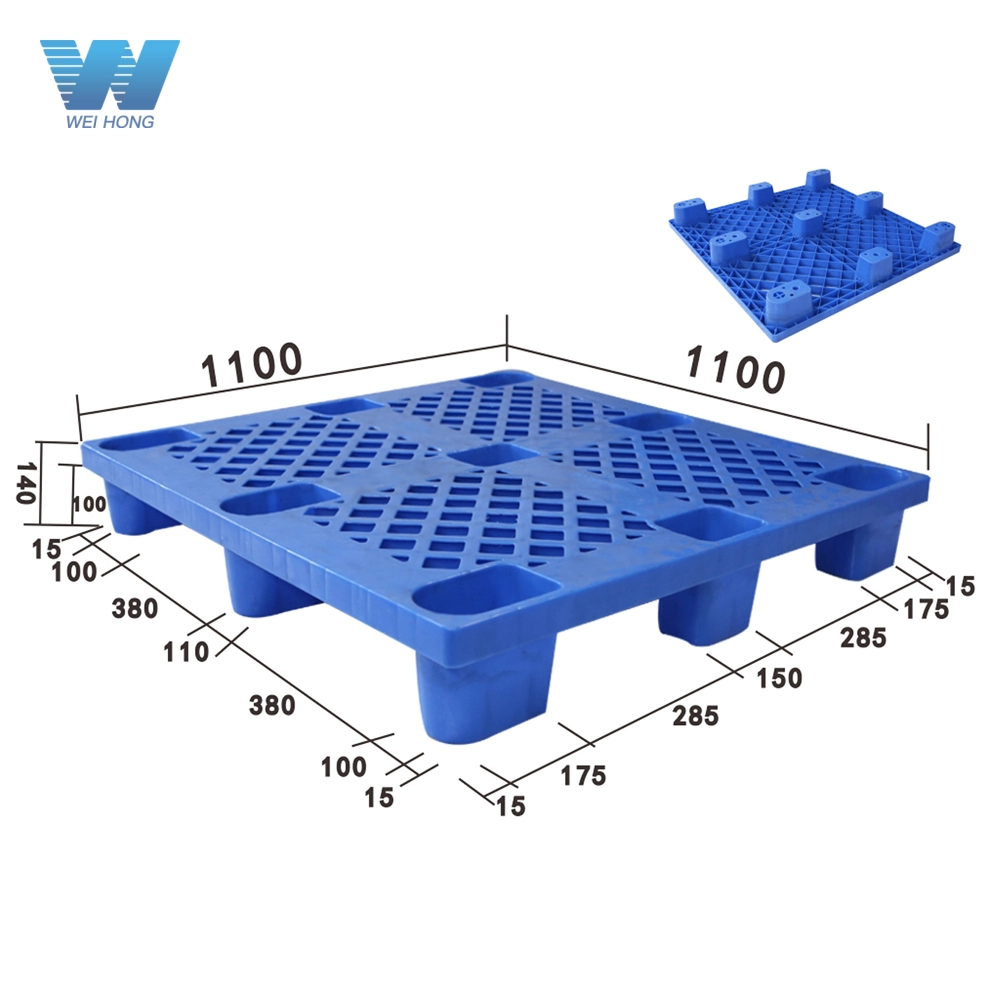
ZJ1111-140 Light-weight Nine-leg Nestable Plastic Pallet
The lightweight nine-leg nestable plastic pallet is an innovative and stylish packaging solution designed for general cargo storage and transport. It’s made of virgin HDPE or PP, featuring in space-saving due to its nine hollow feet design for nesting and cost-effectiveness.
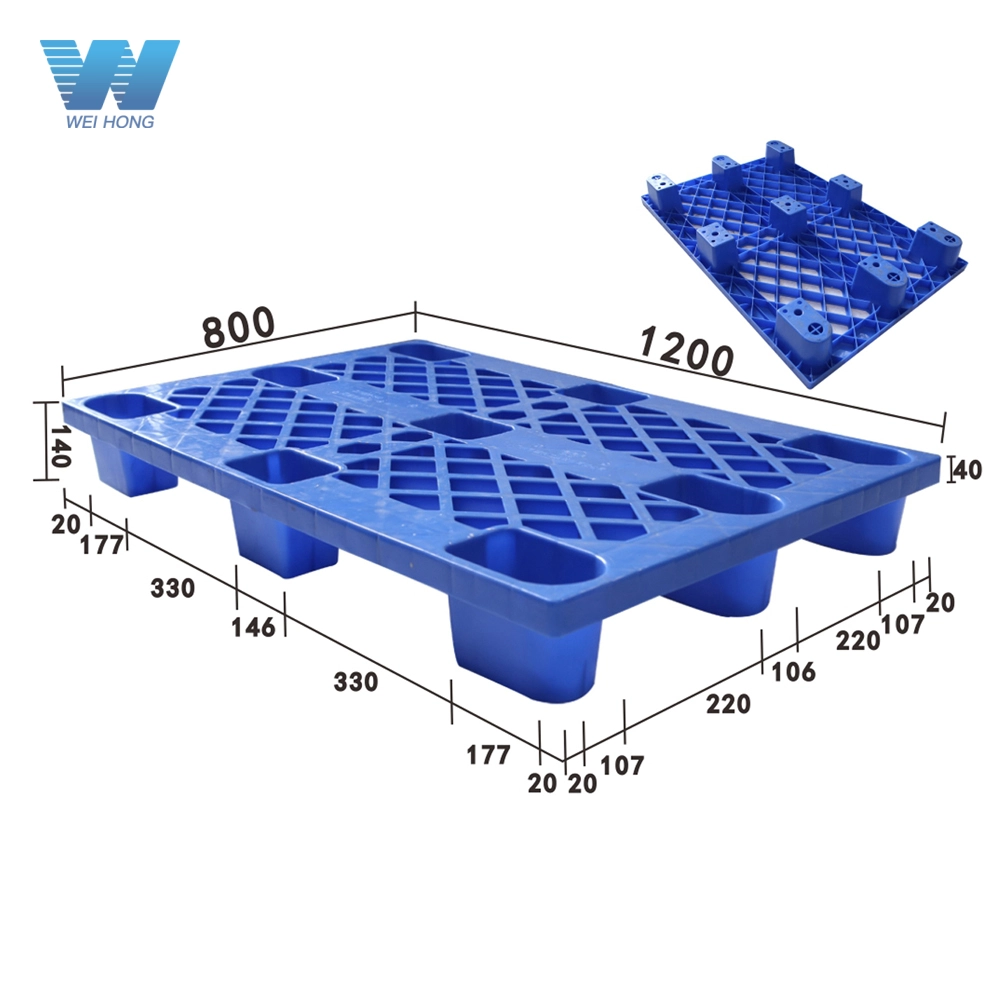
ZJ1208-140 Light-weight Nine-leg Nestable Plastic Pallet
The lightweight nine-leg nestable plastic pallet is an innovative and stylish packaging solution designed for general cargo storage and transport. It’s made of virgin HDPE or PP, featuring in space-saving due to its nine hollow feet design for nesting and cost-effectiveness.
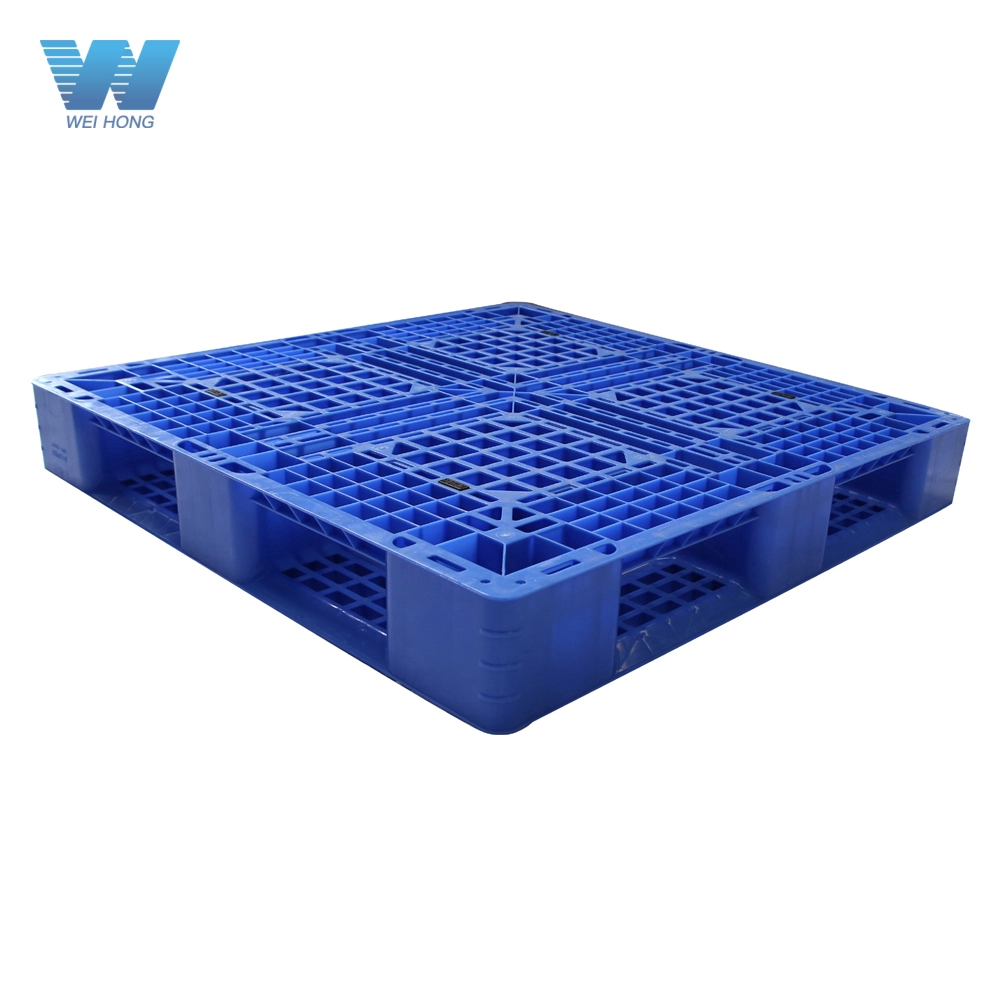
ZJ1111-150L Six-runner Single-sided Plastic Pallet
The six-runner plastic pallet, open or closed deck, is a solid and durable packaging solution designed for general and medium to heavy-duty cargo stacking, storage and transport. It’s made of virgin HDPE or PP, featuring in robust structure, a reinforced configuration with steel cores for the rack and shelf, and a steady loading capacity.
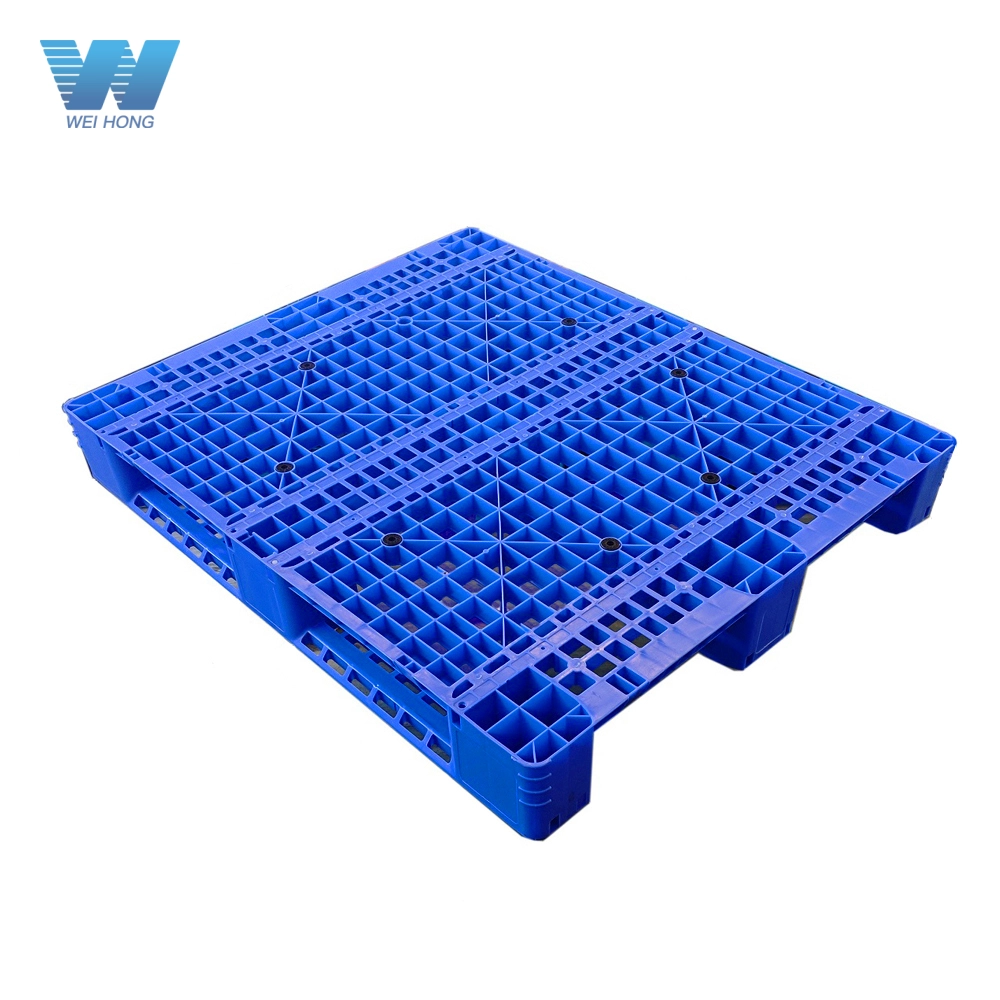
ZJ1210-150A Three-runner Single-sided Plastic Pallet
The three-runner single-sided plastic pallet is a solid and durable packaging solution designed for general and medium to heavy-duty cargo storage, transport and automated storage and retrieval system (AS/RS) use. It’s made of virgin HDPE or PP, featuring in robust structure, reinforced configuration with steel cores for rack and shelf, and a steady loading capacity.
Request More Information About Plastic Pallets
Have questions or need detailed insights on this article? Fill out the form below to contact our team for comprehensive information and support related to our plastic pallet solutions.
Contact us


+86 138 0277 8204
+86 183 4431 0917
+86 195 3791 1860

No. 15-1, Fengying Rd., Taiping Town, Conghua Dist., Guangzhou City, Guangdong Province, China.
Weihong
Whatsapp: +8613802778204
Guangdong Weihong Plastic Technology Co., Ltd.
Scan QR Code