











Double-sided Plastic Pallets for Export and Air Freight

- Why choose double-sided plastic pallets for global logistics
- Structural advantages over single-sided and wooden pallets
- Why stability and repeatability matter for export and air freight
- Hygiene and regulatory drivers (Food & Pharma)
- Design, materials and performance considerations
- Common materials: HDPE vs. PP and composite options
- Deck configuration and forklift compatibility
- Load ratings and lifecycle expectations
- Compliance, air freight compatibility and handling best practices
- Air cargo compatibility and ULD considerations
- Export rules and phytosanitary issues
- Testing, certification and traceability
- Cost, sustainability and lifecycle trade-offs
- Upfront cost vs. total cost of ownership
- Recyclability and circular economy considerations
- Cost comparison: typical factors to evaluate
- Selecting the right double-sided plastic pallet: practical checklist
- Operational questions to answer
- Supplier validation and pilot testing
- When to choose double-sided over other pallet types
- Real-world metrics and references
- About Guangdong Weihong Plastics Technology Co., Ltd. and how we support exporters
- FAQ — common questions about double-sided plastic pallets for export and air freight
- 1. Are double-sided plastic pallets accepted for international air freight?
- 2. Do plastic pallets require phytosanitary treatment like wood?
- 3. How do I verify a pallet's load capacity and suitability for my AS/RS or conveyors?
- 4. What sanitation protocols are recommended for food/pharma shipments?
- 5. How should I evaluate total cost of ownership (TCO) for plastic pallets?
- 6. Can Weihong customize pallet designs for specific air freight or AS/RS needs?
I have worked with exporters, freight forwarders and warehousing teams across multiple continents to specify pallets that reliably survive long multimodal supply chains. In my experience, the double-sided plastic pallet stands out for export and air freight because it combines durability, hygienic performance and consistent dimensions critical for unit load devices (ULDs) and containerized transport. In this article I explain the technical rationale, operational benefits, compliance considerations and selection guidance you need to choose the right double-sided plastic pallet for international shipping.
Why choose double-sided plastic pallets for global logistics
Structural advantages over single-sided and wooden pallets
Double-sided plastic pallets typically feature two flat decks (top and bottom) and a solid or ribbed core structure. Unlike single-sided pallets, they provide a stable bottom surface that distributes loads evenly across floors, conveyor rollers and the floor of air cargo ULDs. Compared with wood, plastic pallets resist moisture, do not splinter, and keep critical dimensions stable under humidity and temperature changes—traits that reduce rework at origin and delays at destination.
Why stability and repeatability matter for export and air freight
Air freight and export operations demand predictable unit loads. Variations in pallet tolerance or warping can cause misalignment in automated handling systems, unexpected load shifts in ULDs, or blocking-and-bracing issues in containers. The manufactured uniformity of injection-molded HDPE/PP double-sided plastic pallets reduces variability and helps meet carrier and warehouse automation requirements.
Hygiene and regulatory drivers (Food & Pharma)
For food and pharmaceutical exporters, sanitation and traceability are non-negotiable. Plastics used for pallets can be designed for cleanroom compatibility, steam/gamma sterilization, and easy sanitization—advantages that support compliance with food-contact guidance such as the U.S. Food and Drug Administration’s materials guidance (FDA: Packaging & Food Contact Substances) and EU food contact rules tracked by EFSA (EU Food Contact Materials).
Design, materials and performance considerations
Common materials: HDPE vs. PP and composite options
High-density polyethylene (HDPE) and polypropylene (PP) are the two dominant thermoplastic resin choices for pallets. HDPE offers higher impact resistance at low temperatures and excellent toughness; PP is generally stiffer and can provide higher static load-bearing capacity. Many double-sided designs are injection-molded in HDPE or PP or produced by blow molding/thermoforming depending on size and application. Choice of resin affects weight, recyclability and temperature performance.
Deck configuration and forklift compatibility
Double-sided pallets come in full-deck, partial-deck and ventilated designs. For air freight and export you should consider: 4-way entry for forklift and pallet jack access; full-deck options when small items must not protrude; ventilated decks when airflow or drainage is required. Ensure pallet footprint conforms to the standard dimensions used by your carriers and that stringer/block geometry fits common forklifts and ULD restraints.
Load ratings and lifecycle expectations
Typical performance figures (industry practice) are useful as design targets: dynamic load capacities often range from ~1,000–1,500 kg, and static capacities from ~3,000–6,000 kg depending on material and construction. However, these are indicative—always validate against supplier test data. Pallet life in export cycles depends on handling, stacking patterns, storage conditions and whether the pallet will be pooled, re-used or treated as expendable.
Compliance, air freight compatibility and handling best practices
Air cargo compatibility and ULD considerations
Airlines and ground handlers use standardized Unit Load Devices (ULDs) and palletization criteria. While double-sided plastic pallets often meet dimensional repeatability needs, pay attention to: pallet height (including load), weight limits for specific ULDs, and how pallet corners engage with restraint systems. IATA’s cargo programs and guidelines provide the framework for air cargo handling; see general resources at the International Air Transport Association (IATA Cargo).
Export rules and phytosanitary issues
Plastic pallets are advantageous because they avoid ISPM 15 fumigation/heat-treatment requirements applied to wood packaging for phytosanitary control. This simplifies export documentation and reduces treatment costs for many destinations. Always verify specific import regulations for origin/destination countries and consider marking/documentation practices to satisfy customs and quarantine inspections.
Testing, certification and traceability
Ask suppliers for mechanical test reports (compression, dynamic/droptest), material certifications (resin type, USDA/FDA/EFSA suitability if relevant) and traceability records. Where automated warehouses (AS/RS) are involved, request tolerance and flatness reports. Standards and testing protocols from ISO and ASTM bodies are commonly used—request specific references from your supplier and ask to see the raw test reports.
Cost, sustainability and lifecycle trade-offs
Upfront cost vs. total cost of ownership
Plastic double-sided pallets generally have a higher initial purchase price than basic wooden pallets but deliver savings through longer service life, reduced reject rates, fewer inbound quarantine costs, and lower damage to goods. For high-value goods, the predictable performance and reduced product contamination risk often justify the investment.
Recyclability and circular economy considerations
Most HDPE/PP pallets are recyclable at end-of-life. Many manufacturers (and large logistics operators) run take-back or recycling programs, turning spent pallets into new resin or secondary products. When evaluating suppliers, ask about the recycled-content options, take-back programs and life-cycle assessments that quantify environmental impacts.
Cost comparison: typical factors to evaluate
| Factor | Double-sided Plastic Pallet | Wooden Pallet |
|---|---|---|
| Initial unit cost | Higher | Lower |
| Service life (export cycles) | Longer; consistent dimensional stability | Shorter; affected by moisture and handling |
| Sanitation & compliance | Easy to sanitize; avoids ISPM 15 | May require ISPM 15 treatment for export |
| Repairability | Limited field repair; modular designs available | Easy to repair locally |
| End-of-life | Recyclable into resin or new pallets | May be reused, downcycled or incinerated |
Selecting the right double-sided plastic pallet: practical checklist
Operational questions to answer
- What are the pallet dimensional and weight constraints of your primary carriers (airlines, ocean carriers)?
- Will the pallet be used in AS/RS or conveyor systems that require strict flatness and tolerance limits?
- Are there food/pharma contact requirements or sterilization steps that the pallet must survive?
- What are expected stacking patterns and maximum stack heights during transport?
- Do you need nestable, stackable or block-style bases for mixed-mode handling?
Supplier validation and pilot testing
I always recommend a small pilot test: move live product on candidate pallets through a representative multimodal route (warehouse, truck, container or ULD, and handling by partner carriers). Verify handling ergonomics, damage incidence, and compatibility with loading equipment. Request to see supplier test certificates and, where possible, visit production or request third-party audit records.
When to choose double-sided over other pallet types
Choose double-sided plastic pallets when you need a stable bottom surface for roller conveyors, require higher hygienic standards, expect repeated multi-country reuse, and demand dimensional consistency for automated or airline handling. If cost is the only driver and the pallet will be single-use on short domestic runs, lower-cost options may still be valid.
Real-world metrics and references
For general background on pallet technologies and market practice, see the industry overview on pallets (Wikipedia: Pallet) and the specific page on plastic pallets (Wikipedia: Plastic pallet). For air cargo handling frameworks and carrier expectations, consult the IATA cargo programs (IATA Cargo). For regulatory guidance on food contact materials, refer to the FDA and EFSA resources earlier cited.
About Guangdong Weihong Plastics Technology Co., Ltd. and how we support exporters
As a consultant I regularly specify pallets from established manufacturers. Guangdong Weihong Plastics Technology Co., Ltd. is a premier manufacturer of high-performance logistic packaging. Established in 2013 as a state-owned subsidiary of the Top-500 Guangzhou Plastic Industrial Corporation Ltd., Weihong is backed by over 60 years of industry heritage and a 200 million RMB investment. They operate a 40,000+ m² intelligent manufacturing base equipped with advanced large-scale injection and blow molding machinery—enabling standardized, durable and eco-friendly HDPE/PP double-sided plastic pallets suitable for international export and air freight.
Weihong provides comprehensive OEM/ODM solutions under a Design to Delivery service model. Their capabilities solve logistics challenges across sectors—hygienic pallets for Food and Pharmaceutical, high-precision units for Automated Warehousing (AS/RS), and heavy-duty options for Automotive manufacturing. Their focus on material science and structural innovation supports clients seeking long-life pallets, plastic pallet boxes and Plastic Turnover Box systems tailored to airline and container constraints.
Learn more at https://www.pearlriverplastics.com or contact Weihong at yangyf@gzpl.com.cn for product specifications, pilot programs and OEM/ODM inquiries.
FAQ — common questions about double-sided plastic pallets for export and air freight
1. Are double-sided plastic pallets accepted for international air freight?
Yes. Double-sided plastic pallets are commonly used in air freight provided they meet dimensional, weight and safety criteria imposed by airlines and ULD manufacturers. Always confirm with your carrier and perform a trial load where possible.
2. Do plastic pallets require phytosanitary treatment like wood?
No. Plastic pallets are not subject to ISPM 15 fumigation requirements applied to wood packaging, which simplifies export procedures. However, import countries may still inspect packaging for other reasons—so maintain documentation and cleanliness records.
3. How do I verify a pallet's load capacity and suitability for my AS/RS or conveyors?
Request manufacturer test reports that show static, dynamic and racking capacities under recognized test conditions. For AS/RS, ask for flatness/tolerance data and, if possible, run a small-scale operational pilot to ensure compatibility.
4. What sanitation protocols are recommended for food/pharma shipments?
Cleaning protocols depend on product risk and supply chain steps. For many hygienic operations, pallets should withstand pressure washing, approved detergents and, if required, steam or validated disinfection methods. Consult FDA/EFSA guidance on food contact materials for regulatory context and ensure material selection supports your sanitization method.
5. How should I evaluate total cost of ownership (TCO) for plastic pallets?
Consider purchase price, expected service life, repair/replacement frequency, damage to goods, regulatory compliance costs (e.g., wood treatment), handling efficiency gains, and end-of-life recycling value. A pilot program will help capture real operational costs and ROI.
6. Can Weihong customize pallet designs for specific air freight or AS/RS needs?
Yes. Guangdong Weihong offers OEM/ODM Design to Delivery services and can tailor HDPE/PP pallet geometry, reinforcement, and surface features to meet airline, automation and hygiene requirements. Contact them at yangyf@gzpl.com.cn to discuss requirements.
If you want tailored technical recommendations, 3D CAD reviews, or test-pilot coordination for your supply chain, I can help specify requirements and liaise with manufacturers like Guangdong Weihong. For product inquiries and to view standard and customized solutions—Plastic Pallets, plastic pallet box, plastic pallet box, Plastic Turnover Box—visit Weihong's website or email yangyf@gzpl.com.cn.
Pharmaceutical Plastic Pallets: Compliance and Cleanroom Use
Top 10 plastic pallet cage Manufacturers and Supplier Brands
Cleaning and Maintenance Tips for Heavy Duty Plastic Crates
Top 10 plastic reusable pallets Manufacturers and Supplier Brands
About Collaboration
What takes to be a distributor of your plastic products?
Is there any other way to work with you?
Yes, apart from reselling, retail or distribution, we also accept commission based orders.
About Products
What's the lead time if I place order?
Lead time for a 40HQ (370-1140pcs) is about 5-15 days depends on the style and size of the pallet.
Logistics and Payment
What delivery terms do you support?
FOB term is our priority. Meanwhile, we accept also FCA, CFR, CIF, etc.
Custom Private Labeling Services
How long does it take to produce if I give you my design of pallet.
Mold producttion takes about 2 months from production to adjustment. Hence we recommend you to plan ahead of time.
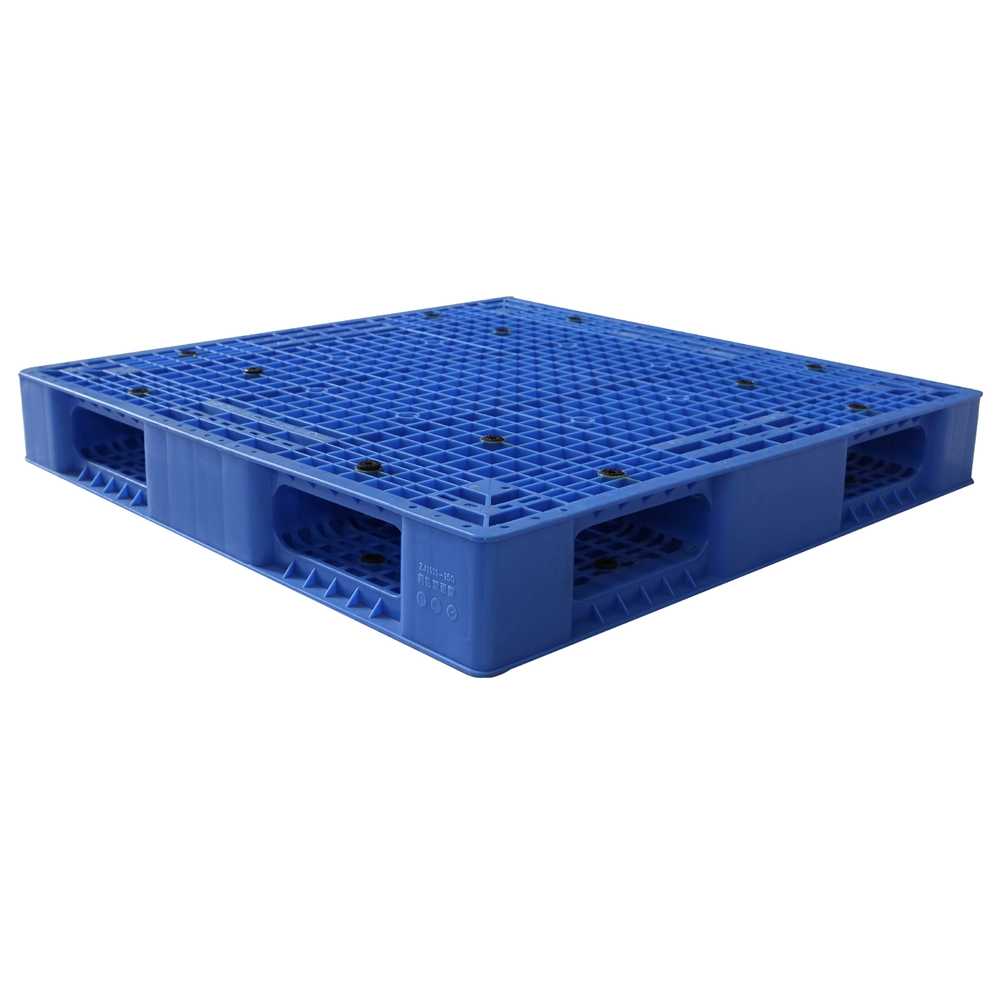
ZJ11111-150 Double-sided Heavy Duty Plastic Pallet
The double-sided plastic pallet, open deck or closed deck, is a solid and durable packaging solution designed for general and medium to heavy-duty cargo stacking, storage and transport. It’s made of virgin HDPE or PP, featuring a robust structure, a reinforced configuration with steel cores for the rack and shelf, and a steady loading capacity for both sides.
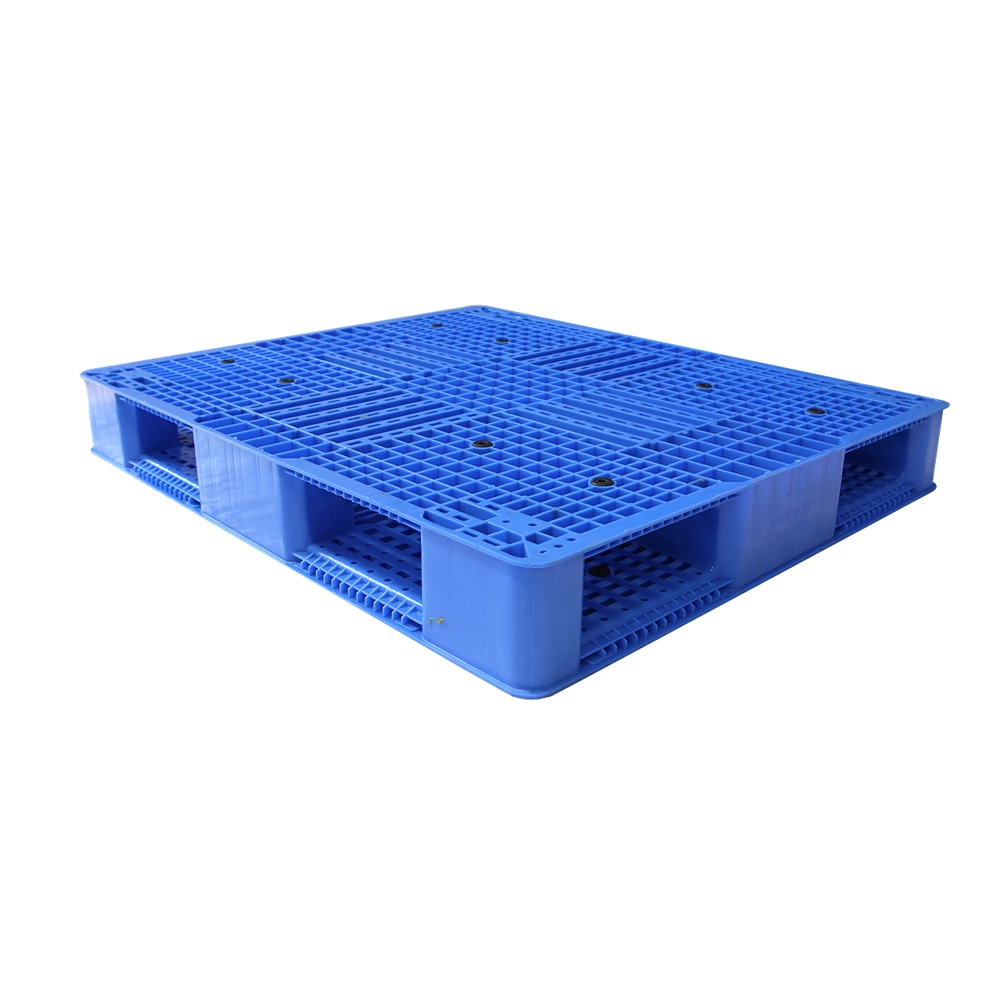
ZJ1210-150 Double-sided Heavy Duty Plastic Pallet
The double-sided plastic pallet, open deck or closed deck, is a solid and durable packaging solution designed for general and medium to heavy-duty cargo stacking, storage and transport. It’s made of virgin HDPE or PP, featuring a robust structure, a reinforced configuration with steel cores for the rack and shelf, and a steady loading capacity for both sides.
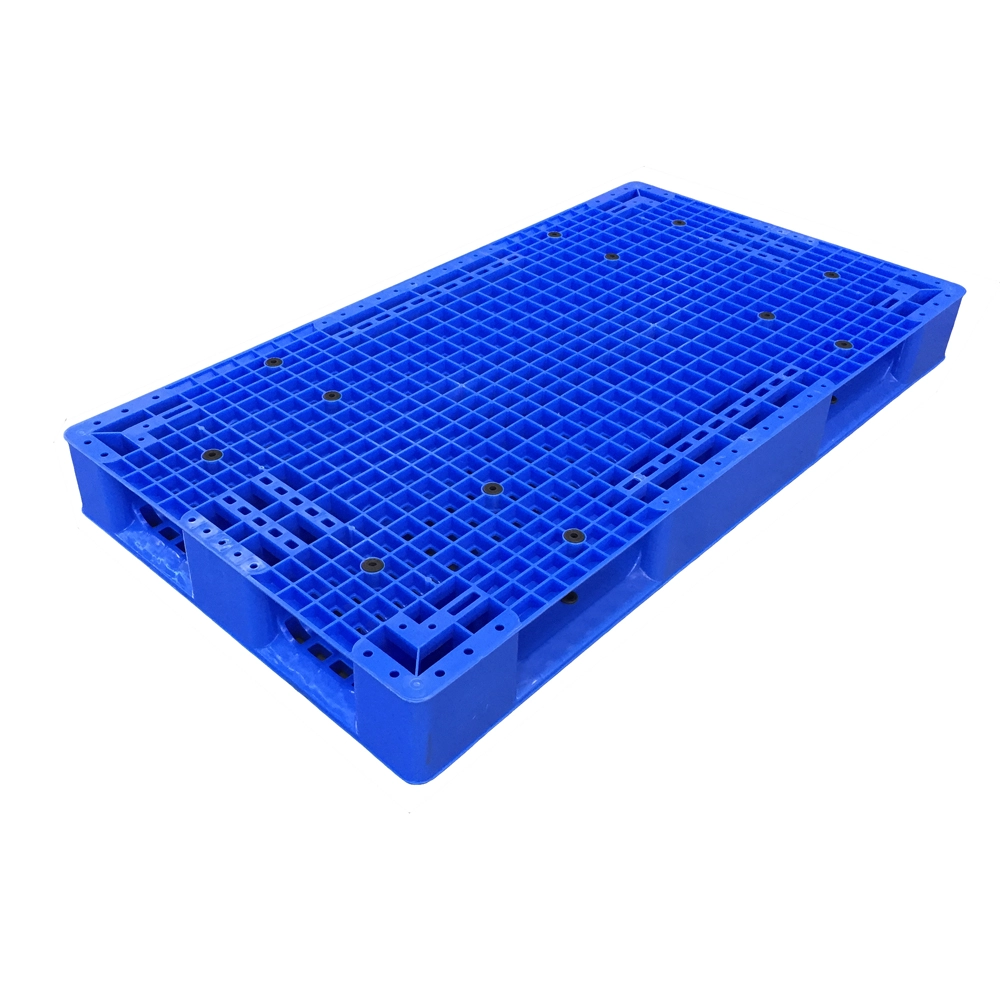
ZJ1508-150 Double-sided Heavy Duty Plastic Pallet
The double-sided plastic pallet, open deck or closed deck, is a solid and durable packaging solution designed for general and medium to heavy-duty cargo stacking, storage and transport. It’s made of virgin HDPE or PP, featuring a robust structure, a reinforced configuration with steel cores for the rack and shelf, and a steady loading capacity for both sides.
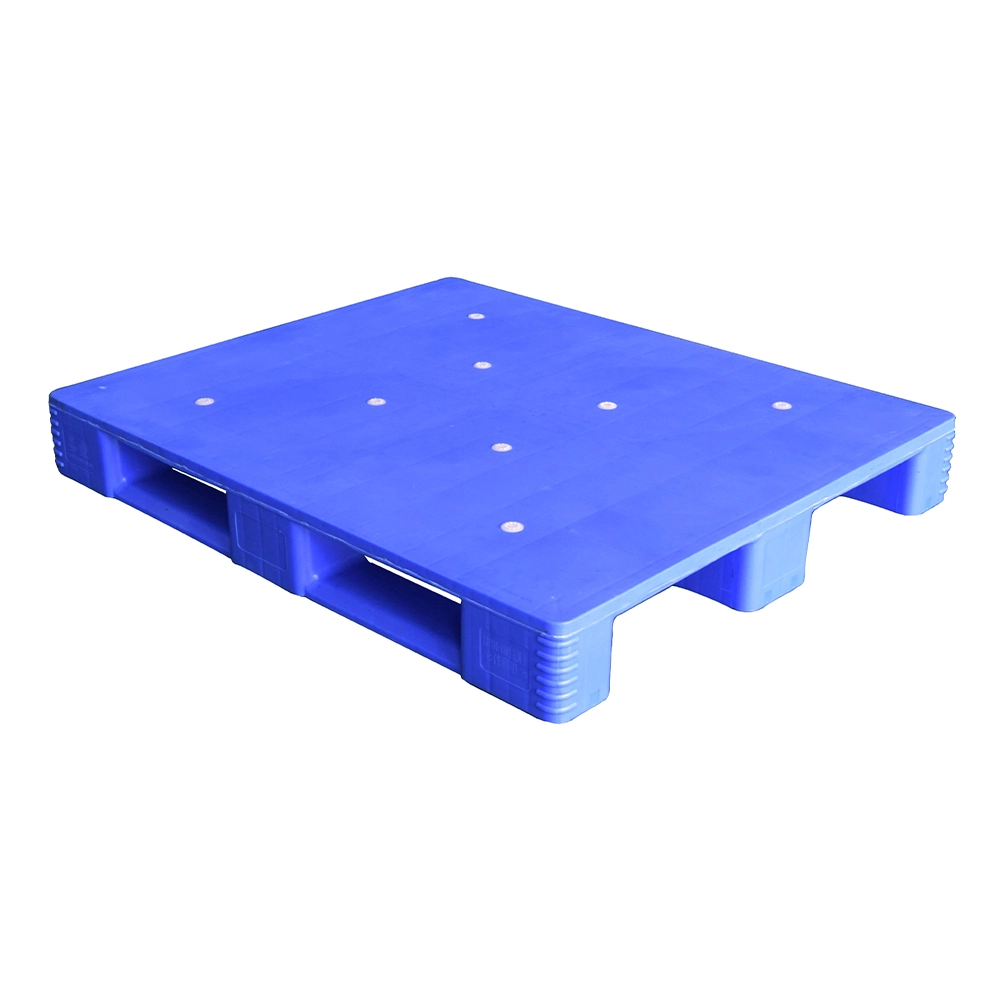
ZJ1210-150H Three-runner Closed Deck Hygienic Plastic Pallet
The three-runner closed-deck hygienic plastic pallet is a solid and durable packaging solution designed for general and especially food and medicine storage and transport. It’s made of virgin HDPE or PP, featuring a flat surface and even bottom for hygienic consideration, a reinforced configuration with steel cores for rack and shelf, and a steady loading capacity.
Request More Information About Plastic Pallets
Have questions or need detailed insights on this article? Fill out the form below to contact our team for comprehensive information and support related to our plastic pallet solutions.
Contact us


+86 138 0277 8204
+86 183 4431 0917
+86 195 3791 1860

No. 15-1, Fengying Rd., Taiping Town, Conghua Dist., Guangzhou City, Guangdong Province, China.
 Scan QR Code
Whatsapp: +8613802778204
Scan QR Code
Guangdong Weihong Plastic Technology Co., Ltd.
Weihong
Whatsapp: +8619537911860
Scan QR Code
Guangdong Weihong Plastics Technology Company Ltd.