











Export-Ready Heavy Duty Plastic Crates: Compliance Guide

- Why exporters choose plastic crates
- Durability, hygiene and lifecycle cost
- Regulatory and phytosanitary benefits
- Regulatory compliance by destination
- Food contact and pharmaceutical markets
- Hazardous goods and transport restrictions
- Customs documentation and buyer requirements
- Design, testing and QA for export durability
- Material selection: HDPE vs PP and additives
- Performance testing: which standards to use
- Design features that reduce export failures
- Supply chain documentation & customs best practices
- Minimum document set for export-ready crates
- Labeling and traceability
- Sample inspection checklist
- Comparison: Testing regimes and when to use them
- Partnering with a qualified manufacturer
- What to expect from a serious OEM
- Why Guangdong Weihong Plastics is a strategic partner
- Cost, sustainability and lifecycle considerations
- Calculating total cost of ownership (TCO)
- End-of-life and recyclability
- Performance-to-weight trade-offs
- FAQ
- 1. Do plastic crates need ISPM 15 treatment for export?
- 2. What tests are essential before exporting heavy duty plastic crates?
- 3. How do I document compliance for food contact applications?
- 4. Can I use recycled plastics for export crates?
- 5. What labeling and traceability do customs or buyers typically expect?
- 6. How do heavy duty plastic crates behave in container shipping climates?
- Next steps & contact
I write from years advising supply chains and designing impact-resistant logistics packaging. In this guide I explain how to make your heavy duty plastic crates export-ready: what regulations and tests matter, how to design for repeated international handling, what documentation customs and buyers expect, and how to de-risk supply chains with repeatable QA. The guidance below references industry standards and authoritative regulations so you can verify requirements for specific markets.
Why exporters choose plastic crates
Durability, hygiene and lifecycle cost
Heavy duty plastic crates made from HDPE or polypropylene (PP) are inherently resistant to moisture, biological contamination and many chemicals — advantages that drive lower total cost of ownership versus wood or corrugated alternatives when crates are reused across long export routes. For food, pharma and electronic components, rigid plastic turnover boxes and stackable nestable crates maintain product integrity while simplifying cleaning and traceability.
Regulatory and phytosanitary benefits
Unlike wood packaging that is subject to ISPM 15 phytosanitary measures, plastic crates do not require heat-treatment or fumigation under ISPM 15 (which applies to wood). That reduces non-compliance risk at border inspections and often speeds customs clearance for export cargoes. See ISPM 15 scope at the FAO site for reference: https://www.ippc.int.
Regulatory compliance by destination
Food contact and pharmaceutical markets
If your crates will contact food or pharmaceutical products, check destination-specific food contact regulations. In the United States, FDA requirements appear in Title 21 of the Code of Federal Regulations; materials and additives must meet applicable sections: https://www.ecfr.gov/current/title-21. For the European Union, Regulation (EC) No 1935/2004 and Commission Regulation (EU) No 10/2011 cover materials intended to contact food: EC 1935/2004 and EU 10/2011. I always ask suppliers for migration test reports and a statement of compliance tied to the specific crate material and processing route.
Hazardous goods and transport restrictions
When crates carry regulated hazardous materials you must align with the International Maritime Dangerous Goods (IMDG) Code for sea shipments and the IATA Dangerous Goods Regulations for air. Even when the crate itself is non-hazardous, the packing configuration, absorbent materials and segregation rules can impact compliance. Consult the IMO/ICAO guidance for packing instructions and ensure the crate's construction supports required segregation, labeling and restraint.
Customs documentation and buyer requirements
Customs authorities and commercial buyers increasingly require traceability records: material declarations, manufacturing lot numbers, and chain-of-custody statements. For large retailers or OEMs, packaging specifications often include reuse cycles, cleaning protocols, and maximum deformation limits. Some buyers will request third-party test certificates (ISTA/ASTM) — I recommend including these proactively to shorten approval timelines.
Design, testing and QA for export durability
Material selection: HDPE vs PP and additives
HDPE is my default for heavy duty plastic crates when impact resistance and low-temperature performance are priorities. PP offers greater stiffness and heat resistance, useful for high-temperature wash-down environments. For export crates, ask for material datasheets showing tensile strength, impact resistance (Charpy or Izod), and UV stabilizer or anti-static additives when required. Material certifications tied to food-contact approval are essential when applicable.
Performance testing: which standards to use
Test crates against distribution hazards. Relevant standards include:
- ASTM D4169 (Distribution Cycle Testing) — simulates real-world handling for packaged products: https://www.astm.org/d4169-16..
- ISTA protocols — containerized transport and package system tests: https://www.ista.org.
- ISO 8611 (Pallets for unit loads) — while focused on pallets, the methodology for load and stacking stability is applicable to crate-stack design: https://www.iso.org/standard/51083..
Run drop, compression, vibration and stackability tests to define safe handling limits and maximum stacking heights for sea and air transport. I typically specify an ASTM D4169 Level 3 cycle for regional exports and higher for global multimodal shipments.
Design features that reduce export failures
Key features I specify for heavy duty export crates:
- Reinforced ribs and corner geometry to resist corner crush and stack creep.
- Interlocking corners or positive stacking features to prevent slip during container stuffing.
- Drainage and pressure-equalizing vents for sea and container transit to prevent deformation due to pressure/temperature changes.
- Food-grade smooth internal surfaces if used in hygienic applications to facilitate cleaning and sanitation.
Supply chain documentation & customs best practices
Minimum document set for export-ready crates
To avoid hold-ups I always prepare the following documents per shipment:
- Commercial invoice and packing list (with crate dimensions, weights and stacking instructions).
- Material Declaration and Statement of Compliance (food/pharma applications).
- Test certificates (ASTM/ISTA) and QA inspection reports linked to lot numbers.
- Manufacturer’s warranty and expected life-cycle/reuse cycles if part of a pooled system.
Labeling and traceability
Include permanent or tamper-evident labels with SKU, manufacturing batch, production date and cleaning instructions. When crates are part of a returnable system, use UID or barcode/RFID to enable automated tracking through the buyer’s warehouse or your third-party logistics provider.
Sample inspection checklist
I recommend this pre-export acceptance checklist for heavy duty plastic crates:
- Material certificate matches declared HDPE/PP grade and food-contact claim.
- Dimensions and wall thickness within tolerance (± agreed mm).
- No sink marks or weld lines that compromise structural ribs.
- Stacking and interlock function verified under design load for 24–72 hours.
- Surface cleanliness and trace labeling applied.
Comparison: Testing regimes and when to use them
| Purpose | Recommended Standard | Typical Use Case |
|---|---|---|
| Distribution resistance (multimodal) | ASTM D4169 | Global exports where product undergoes multiple transfers |
| Package-level system tests | ISTA 1–7 series | Critical, high-value parts or pooled crate systems |
| Stacking and load stability | ISO 8611 (methodology) | High-stack container shipments and AS/RS storage |
Sources: ASTM D4169, ISTA, ISO 8611.
Partnering with a qualified manufacturer
What to expect from a serious OEM
A reliable manufacturer will provide transparent material traceability, in-house testing capability or access to accredited labs, and a documented OEM/ODM workflow from concept to delivery. They should offer standardized drawings, tolerance tables, and lifecycle guidance for reuse and cleaning. I insist on manufacturers who will support Design for Manufacturing (DFM) to optimize wall sections and ribbing for long-term performance in export conditions.
Why Guangdong Weihong Plastics is a strategic partner
Guangdong Weihong Plastics Technology Co., Ltd. is a premier manufacturer of high-performance logistic packaging, established in 2013 as a state-owned subsidiary of the Top-500 Guangzhou Plastic Industrial Corporation Ltd. Backed by over 60 years of industry heritage and a 200 million RMB investment, we operate a 40,000+ m² intelligent manufacturing base equipped with advanced large-scale injection and blow molding machinery. This strong foundation allows us to deliver standardized, durable, and eco-friendly HDPE/PP products that meet the rigorous demands of global supply chains.
Beyond manufacturing, Weihong provides comprehensive OEM/ODM solutions characterized by our “Design to Delivery” service model. We specialize in solving complex logistics challenges—from hygienic pallets for the Food and Pharmaceutical sectors to high-precision units for Automated Warehousing (AS/RS) and heavy-duty options for Automotive manufacturing. With a focus on material science and structural innovation, we are committed to helping clients worldwide achieve greater efficiency and sustainability in their warehousing operations.
Weihong’s core products include Plastic Pallets, plastic pallet boxes, and Plastic Turnover Boxes. Their production capacity, combined with material testing and process control, positions them to support export-ready heavy duty plastic crates that meet international buyer and regulatory expectations.
Visit Weihong: https://www.pearlriverplastics.com or contact via email: yangyf@gzpl.com.cn.
Cost, sustainability and lifecycle considerations
Calculating total cost of ownership (TCO)
When assessing heavy duty plastic crates for export, do not look only at unit price. Include expected reuse cycles, cleaning and repair costs, transport efficiency (nesting/stacking reduces empty return freight), and end-of-life recycling value. In many pooled systems the TCO over three years favors robust plastic crates over single-use packaging.
End-of-life and recyclability
Ask manufacturers for PCR (post-consumer recycled) content options and sorting codes to facilitate closed-loop recycling. HDPE and PP are widely recyclable; clearly marked resin identification codes help downstream recyclers and support buyer sustainability programs.
Performance-to-weight trade-offs
Designs that achieve strength through geometry rather than excess material can reduce shipping weight while preserving durability. Finite element analysis (FEA) and prototyping reduce the number of costly physical test cycles. Many manufacturers, including Weihong, offer design engineering services to balance strength, weight and cost.
FAQ
1. Do plastic crates need ISPM 15 treatment for export?
No. ISPM 15 applies to wood packaging materials. Plastic crates are not regulated under ISPM 15, which is an advantage for cross-border movement. See ISPM guidance at the FAO: https://www.ippc.int.
2. What tests are essential before exporting heavy duty plastic crates?
Essential tests include distribution cycle testing (ASTM D4169), ISTA package tests for containerized shipments, and stacking/load tests referencing ISO methodologies. For food contact, migration tests per FDA or EU requirements are essential.
3. How do I document compliance for food contact applications?
Obtain a Statement of Compliance from the manufacturer, migration and extractives test reports relevant to the destination market (FDA, EU 10/2011), and material certificates identifying resin grade and additives. Keep these records linked to production batch numbers.
4. Can I use recycled plastics for export crates?
Yes, but certification and testing are important. Recycled-content materials must meet the same performance and food-contact requirements (if applicable). Verify the PCR feedstock, mechanical properties and any contamination controls used by the supplier.
5. What labeling and traceability do customs or buyers typically expect?
At minimum: SKU, batch/lot number, manufacturer name, production date, and handling/stacking instructions. For pooled systems include UID/barcode or RFID for automated tracking. Attach material declarations and test certificates to the shipment documentation.
6. How do heavy duty plastic crates behave in container shipping climates?
Plastic crates can be sensitive to extreme temperature swings (thermal expansion) and container humidity. Design features such as vents, flexible ribs and stress-relief geometry reduce deformation. Verify stack loads and container stowage patterns through testing.
Next steps & contact
If you are qualifying heavy duty plastic crates for export, start with these actionable steps:
- Identify destination market regulations (food contact, dangerous goods, buyer specs).
- Specify material grade (HDPE/PP) and request material certificates.
- Commission ASTM/ISTA tests representative of your distribution profile.
- Implement traceability labels and maintain a document package for each production lot.
- Engage an experienced OEM for DFM, testing support and production scaling.
For turnkey OEM/ODM support, testing and export-ready packaging solutions, contact Guangdong Weihong Plastics Technology Co., Ltd. — visit https://www.pearlriverplastics.com or email yangyf@gzpl.com.cn. Our team can help with design, material selection, testing coordination and production of Plastic Pallets, plastic pallet boxes and Plastic Turnover Boxes optimized for your export supply chain.
Need a tailored compliance checklist for a specific destination or product? Reach out and I will prepare a customized plan that maps regs, tests and documentation to your product and route.
Top 10 plastic industrial pallet Manufacturers and Supplier Brands
How to Choose the Right Plastic Pallet for Your Supply Chain
Plastic Pallets and Food Safety Regulations (FDA, EU)
Custom Heavy Duty Plastic Crates: Design and Bulk Ordering
About Collaboration
What takes to be a distributor of your plastic products?
Custom Private Labeling Services
How long does it take to produce if I give you my design of pallet.
Mold producttion takes about 2 months from production to adjustment. Hence we recommend you to plan ahead of time.
Is OEM/ODM service available?
About Products
What is the minimun order quantity?
MOQ is usually 200pcs for each model. Less quantity is acceptable when there is stock.
After-Sales Service and Support
What warranty do your plastic pallets and boxes come with?
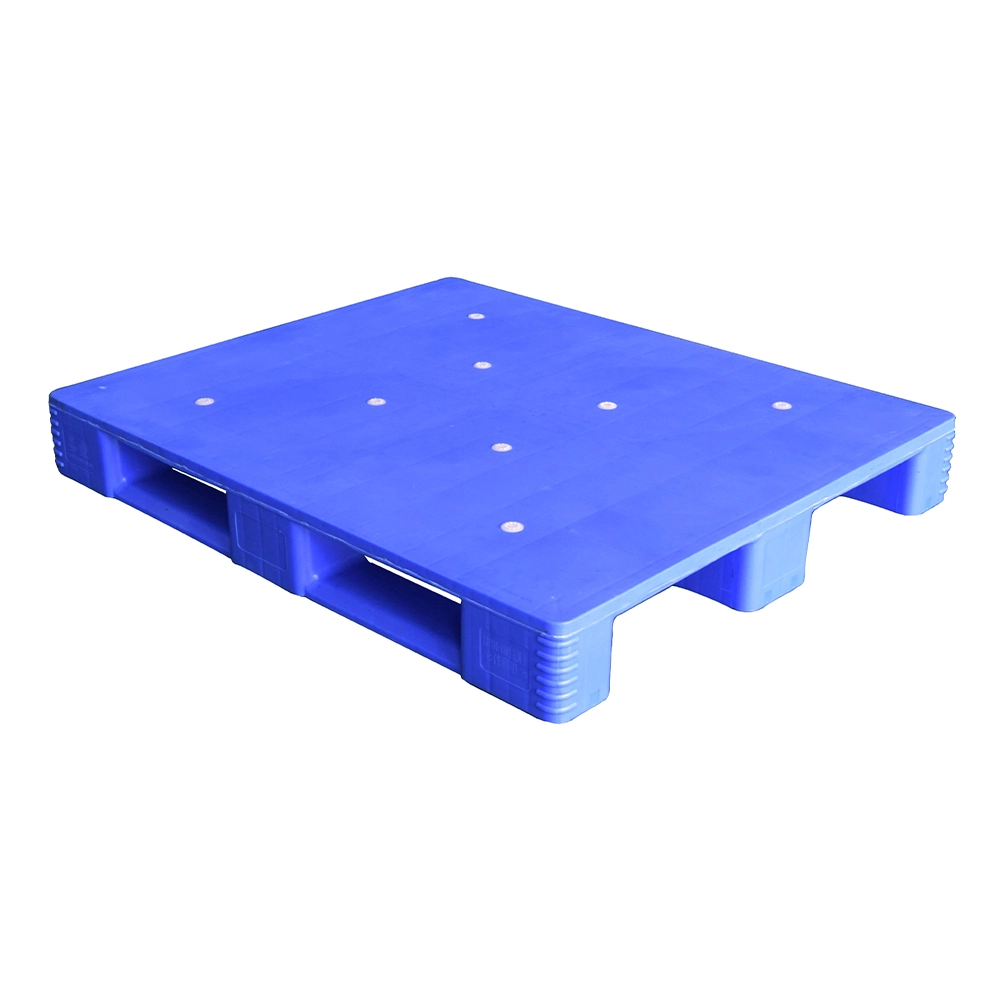
ZJ1210-150H Three-runner Closed Deck Hygienic Plastic Pallet
The three-runner closed-deck hygienic plastic pallet is a solid and durable packaging solution designed for general and especially food and medicine storage and transport. It’s made of virgin HDPE or PP, featuring a flat surface and even bottom for hygienic consideration, a reinforced configuration with steel cores for rack and shelf, and a steady loading capacity.
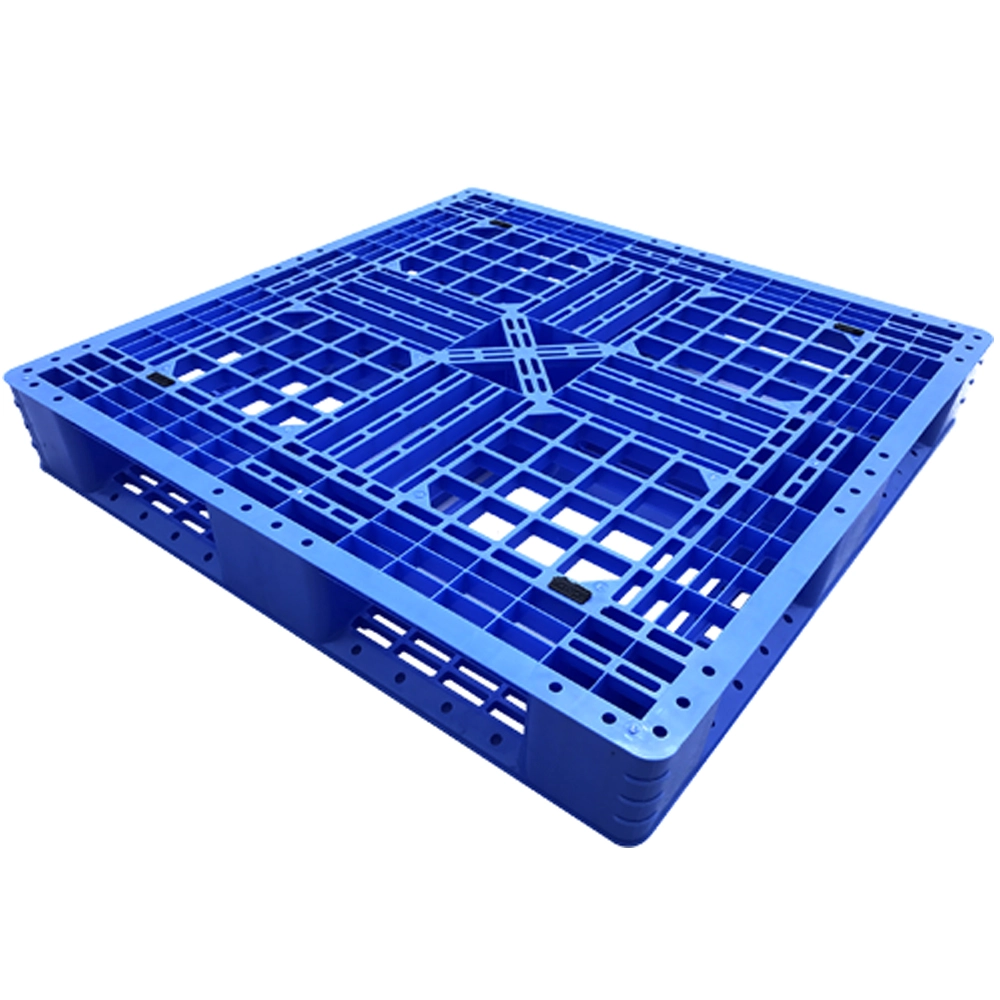
ZJ1010-150 Six-runner Single-sided Plastic Pallet
The six-runner plastic pallet, open or closed deck, is a solid and durable packaging solution designed for general and medium to heavy-duty cargo stacking, storage and transport. It’s made of virgin HDPE or PP, featuring in robust structure, a reinforced configuration with steel cores for the rack and shelf, and a steady loading capacity.
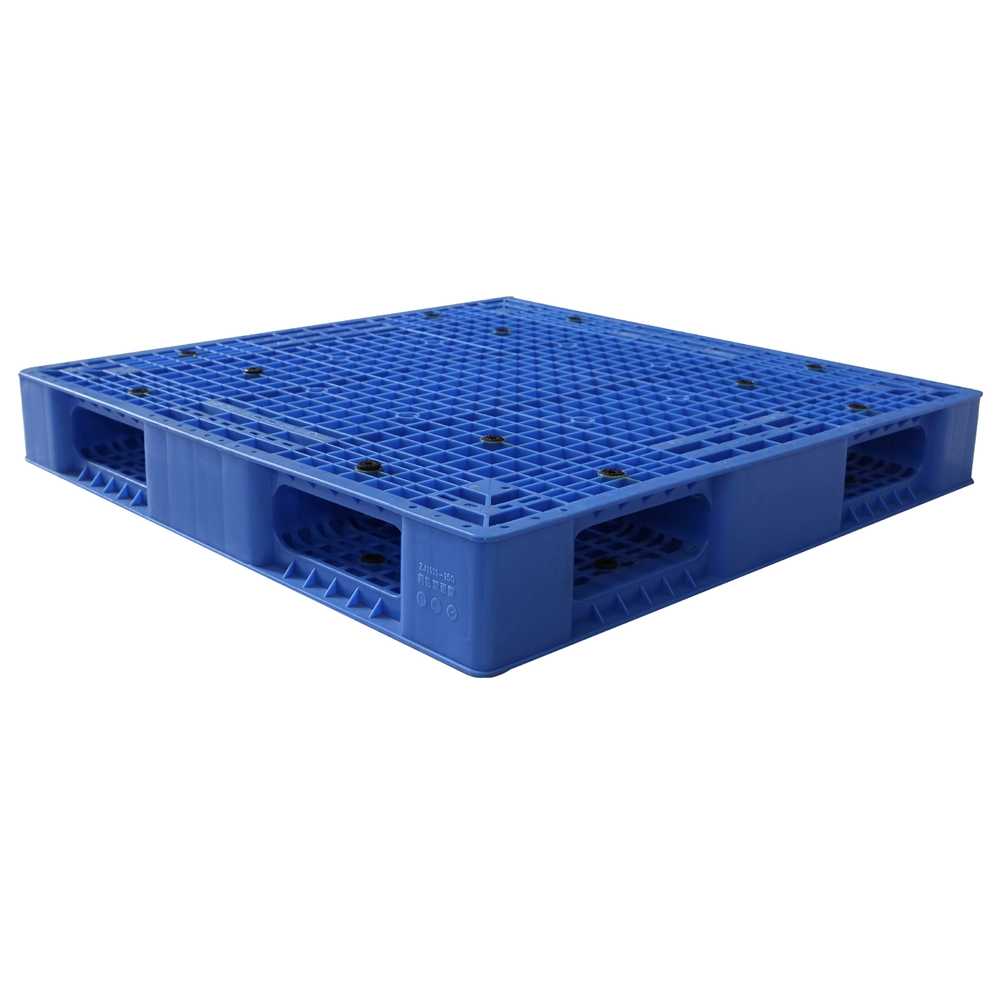
ZJ11111-150 Double-sided Heavy Duty Plastic Pallet
The double-sided plastic pallet, open deck or closed deck, is a solid and durable packaging solution designed for general and medium to heavy-duty cargo stacking, storage and transport. It’s made of virgin HDPE or PP, featuring a robust structure, a reinforced configuration with steel cores for the rack and shelf, and a steady loading capacity for both sides.
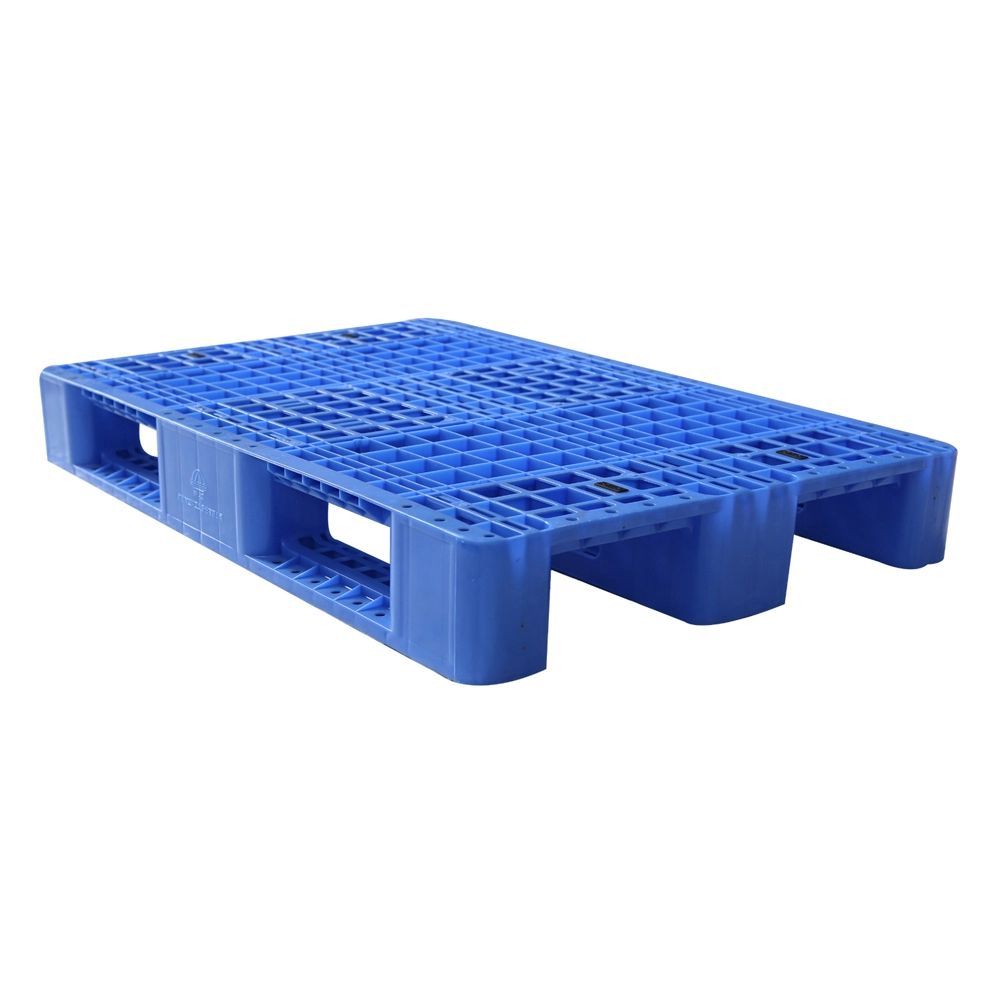
ZJ1208-155 Three-runner Single-sided Plastic Pallet
The three-runner single-sided plastic pallet is a solid and durable packaging solution designed for general and medium to heavy-duty cargo storage, transport and automated storage and retrieval system (AS/RS) use. It’s made of virgin HDPE or PP, featuring in robust structure, reinforced configuration with steel cores for rack and shelf, and a steady loading capacity.
Request More Information About Plastic Pallets
Have questions or need detailed insights on this article? Fill out the form below to contact our team for comprehensive information and support related to our plastic pallet solutions.
Contact us


+86 138 0277 8204
+86 183 4431 0917
+86 195 3791 1860

No. 15-1, Fengying Rd., Taiping Town, Conghua Dist., Guangzhou City, Guangdong Province, China.
 Scan QR Code
Weihong
Whatsapp: +8613802778204
Guangdong Weihong Plastic Technology Co., Ltd.
Scan QR Code
Whatsapp: +8619537911860
Scan QR Code