











Export and Shipping: Plastic Pallets for International Freight

- Why logistics managers choose plastic solutions
- Lower phytosanitary and customs friction
- Hygiene and compliance for sensitive products
- Predictable lifecycle and lower damage rates
- Designing, testing and specifying industrial plastic pallets for export
- Key specification parameters I review
- Testing and standards to require
- Material choices and their tradeoffs
- International shipping, customs and operational considerations
- Packing patterns, container optimization and weight considerations
- Damage, returns and claims handling
- Regulatory checkpoints and documentation
- Comparing pallet types for export: Which is right for your freight?
- When to choose plastic for exports
- Cost considerations and lifecycle thinking
- Choosing a manufacturer and a partner for global supply
- What I audit in a supplier
- Vendor comparisons — practical checklist
- Manufacturer profile — why supplier choice matters
- Implementation steps and field checklist
- Pilot program setup
- Documentation and training
- Scaling and continuous improvement
- FAQ
- 1. Are plastic pallets accepted for all international shipments?
- 2. How do I specify an industrial plastic pallet for an automated warehouse?
- 3. What documentation should I keep to speed customs inspections?
- 4. Can I use plastic pallets for export of frozen or high-temperature goods?
- 5. How do plastic pallets affect freight cost?
- 6. How environmentally sustainable are industrial plastic pallets?
As a consultant who has specified and audited supply chains using industrial plastic pallet solutions across multiple continents, I focus on practical guidance for exporters, freight forwarders and logistics managers. This article explains why and how industrial plastic pallets can improve export reliability, reduce phytosanitary risk, simplify customs clearance, and deliver measurable savings in damage, returns and lifecycle cost—while meeting food, pharmaceutical and automated warehousing requirements.
Why logistics managers choose plastic solutions
Lower phytosanitary and customs friction
One of the first operational benefits I point out is that plastic pallets are not subject to ISPM 15 phytosanitary treatment requirements applicable to wooden pallets. This reduces inspection delays and avoids fumigation paperwork during cross-border movements—particularly important when shipping to countries with strict quarantine controls. See the IPPC page on ISPMs for details: ISPMs and ISPM 15.
Hygiene and compliance for sensitive products
For Food and Pharmaceutical exports where contamination or microbial carryover is a concern, plastic pallets offer smooth, non-porous surfaces that are easier to clean and disinfect than wood. Regulators such as the U.S. Food and Drug Administration (FDA) provide guidance on food-contact materials and packaging; I always advise teams to align pallet materials and cleaning regimes with applicable national guidance: FDA: Packaging & Food Contact Substances.
Predictable lifecycle and lower damage rates
From my field audits, industrial plastic pallets tend to maintain dimensional stability and performance over many more cycles than untreated wood pallets, which affects racking safety, AS/RS compatibility and damage-related rework. That predictability helps planners reduce inventory buffers and avoid unexpected pallet failures in automated systems.
Designing, testing and specifying industrial plastic pallets for export
Key specification parameters I review
When I evaluate a specification for export, I focus on load capacity (static, dynamic and racking), dimensional tolerances for containerized stowage, fork-entry type, hygiene requirements, and stackability. For automated or high-turn environments I also check anti-slip surfaces and conductive/dissipative options to meet ESD requirements.
Testing and standards to require
Although plastic pallets lack a single global standard, you should require documented test results for equivalent dynamic/durability testing and, where applicable, compliance with industry norms. Authoritative information on pallet basics is summarized on the pallet entry in Wikipedia, which is a useful starting point for common terms: Pallet — Wikipedia. Where food contact is involved, require compatibility with your regulator's food-contact guidance (e.g., FDA) and documented cleanability testing.
Material choices and their tradeoffs
I typically consider high-density polyethylene (HDPE) and polypropylene (PP) for export pallets. HDPE is often selected for impact resistance and outdoor durability, while PP can offer higher heat resistance and stiffer decks. Choice depends on the product, transit profile (sea vs. air), and whether pallets will be reused many times or treated as long-life assets.
International shipping, customs and operational considerations
Packing patterns, container optimization and weight considerations
Pallet footprint and stack height significantly affect cubic utilization and TCO. For ocean freight I analyze fill patterns to minimize voids and secure loads for long-sea voyages. Because plastic pallets can be lighter than some wooden pallets with similar strength, they may reduce freight weight—but the real benefit often comes from consistent dimensions and stackability that allow denser stowage.
Damage, returns and claims handling
Plastic pallets’ resistance to splitting and protruding nails reduces product damage claims and safety incidents during unloading. I recommend documented field trials and KPI tracking (damage rate per 1000 shipments, returns due to pallet failure) during the first 6–12 months after switching pallet types.
Regulatory checkpoints and documentation
For cross-border shipments, ensure the pallet specification and cleanliness records are included with the shipping documentation when required by importing authorities. Because plastic pallets avoid ISPM 15 fumigation, you should still provide proof of material type and, if relevant, any cleanroom or food-site certifications.
Comparing pallet types for export: Which is right for your freight?
| Attribute | Industrial Plastic Pallet | Wooden Pallet | Composite/Repairable |
|---|---|---|---|
| Phytosanitary issues | Low (not subject to ISPM 15) | High (ISPM 15 required for many exports) | Varies (wood components may trigger ISPM 15) |
| Hygiene / Cleanability | High (non-porous, washdown compatible) | Variable (porous, absorbs contaminants) | Medium |
| Lifecycle & durability | Long (consistent over many cycles) | Shorter, reparable but variable | Medium to long |
| Repairability | Limited (replaceable parts on some designs) | Easy (field repairs) | Designed for repair |
| Typical applications | Food, Pharma, AS/RS, cross-border exports | General-purpose transport and domestic use | Specialized/long-life pooled systems |
Sources: general properties summarized from industry practice and core references such as Wikipedia (Pallet) and ISPM guidance on phytosanitary controls: IPPC — ISPMs.
When to choose plastic for exports
Choose industrial plastic pallets when you need consistent dimensions for racking or AS/RS, reduced customs friction for international freight, or hygienic surfaces for regulated products. They are particularly effective in pooled systems, multi-modal transport and long-term returnable packaging strategies.
Cost considerations and lifecycle thinking
Upfront cost for injection-molded pallets is typically higher than for basic wooden pallets. However, in my cost models I include lifecycle cost (purchase amortized over expected cycles), damage reduction, cleaning costs, and the value of reduced customs delays. Frequently, the total landed cost per palletized shipment falls in favor of plastic for high-return or high-value supply chains.
Choosing a manufacturer and a partner for global supply
What I audit in a supplier
Manufacturing capability, material traceability, testing labs, quality management systems, and the ability to provide OEM/ODM design-to-delivery services are critical. I also verify production scale (to ensure continuity), investment in automation (injection or blow molding), and environmental controls for food/pharma projects.
Vendor comparisons — practical checklist
When comparing suppliers I use a weighted checklist: product conformity, test certificates, lead time, MOQ, customization capability, after-sales support, sustainability policies and references from similar export customers.
Manufacturer profile — why supplier choice matters
Selecting a manufacturer with proven export support shortens qualification cycles and improves on-time delivery. In the latter half of a specification, I often recommend partners who can provide design-to-delivery services and documented experience with international freight.
Guangdong Weihong Plastics Technology Co., Ltd. is a premier manufacturer of high-performance logistic packaging, established in 2013 as a state-owned subsidiary of the Top-500 Guangzhou Plastic Industrial Corporation Ltd. Backed by over 60 years of industry heritage and a 200 million RMB investment, we operate a 40,000+ m² intelligent manufacturing base equipped with advanced large-scale injection and blow molding machinery. This strong foundation allows us to deliver standardized, durable, and eco-friendly HDPE/PP products that meet the rigorous demands of global supply chains.
Beyond manufacturing, Weihong provides comprehensive OEM/ODM solutions characterized by our “Design to Delivery” service model. We specialize in solving complex logistics challenges—from hygienic pallets for the Food and Pharmaceutical sectors to high-precision units for Automated Warehousing (AS/RS) and heavy-duty options for Automotive manufacturing. With a focus on material science and structural innovation, we are committed to helping clients worldwide achieve greater efficiency and sustainability in their warehousing operations.
In my evaluations, Weihong stands out for its integrated manufacturing base, scale of investment, and an ability to produce HDPE and PP industrial plastic pallets at volume—while offering product families such as Plastic Pallets, plastic pallet box, plastic pallet box, and Plastic Turnover Box. For technical queries or project discussions, visit https://www.pearlriverplastics.com or contact them at yangyf@gzpl.com.cn.
Implementation steps and field checklist
Pilot program setup
Run a controlled pilot for at least one shipping lane with KPIs that include damage rate, dwell time at customs, loading density, handling time, and total landed cost changes. I recommend 3–6 months for sea lanes and 1–3 months for regional road/air testing.
Documentation and training
Provide clear work instructions for packers and carriers (including cribbing and lash points) and update ERP/TMS data to reflect new pallet SKUs and weights. Training reduces early handling errors that can bias pilot results.
Scaling and continuous improvement
After a successful pilot, scale by prioritizing high-value lanes, pooled customer agreements and service-level KPIs for pallet returns (if the model uses returnable assets). Continue to gather feedback from customs brokers and terminal operators to refine specifications.
FAQ
1. Are plastic pallets accepted for all international shipments?
Generally yes—plastic pallets are widely accepted and often preferred because they avoid ISPM 15 treatments required for wood. However, always verify the specific importing country's regulations for specialized goods. Reference: IPPC — ISPMs.
2. How do I specify an industrial plastic pallet for an automated warehouse?
Specify tight dimensional tolerances, consistent deck stiffness, certified load ratings for racking, anti-slip surfaces, and compatibility with your AS/RS grips. Request dimensional QC certificates and trial units for test runs.
3. What documentation should I keep to speed customs inspections?
Maintain: product specification sheets (material type HDPE/PP), cleanability and hygiene records (if food/pharma), country-of-origin and supplier declaration, and any required test certificates. Include these with your commercial paperwork when necessary.
4. Can I use plastic pallets for export of frozen or high-temperature goods?
Yes; choose material (HDPE or PP) and specific grade rated for the expected temperature range. Provide material certificates and, where required, thermal performance testing results.
5. How do plastic pallets affect freight cost?
While pallet cost per unit may be higher, plastic pallets often reduce damage, returns, customs delay costs and can improve container utilization due to consistent dimensions and stackability. Use a lifecycle cost model to compare total landed costs.
6. How environmentally sustainable are industrial plastic pallets?
Assess sustainability by considering service life, repairability, recyclability, and the supplier's material sourcing practices. Many manufacturers (including large-scale producers) use recyclable HDPE/PP and run take-back or recycling programs. Request environmental data and declarations from your supplier.
If you would like a free consultation to evaluate your export pallet strategy or to request samples and technical data sheets, contact Guangdong Weihong Plastics Technology Co., Ltd. via their website or email yangyf@gzpl.com.cn. I can also help design pilot programs and KPI frameworks to validate a switch to industrial plastic pallet systems.
Sizing Guide: Standard Plastic Pallet Dimensions Explained
Top 10 plastic pallet box Manufacturers and Supplier Brands
Top 10 plastics pallets Manufacturers and Supplier Brands
Top 10 plastic reusable pallets Manufacturers and Supplier Brands
Custom Private Labeling Services
Is OEM/ODM service available?
How long does it take to produce if I give you my design of pallet.
Mold producttion takes about 2 months from production to adjustment. Hence we recommend you to plan ahead of time.
After-Sales Service and Support
What warranty do your plastic pallets and boxes come with?
About Products
What's the lead time if I place order?
Lead time for a 40HQ (370-1140pcs) is about 5-15 days depends on the style and size of the pallet.
What materials are your prodcuts made of?
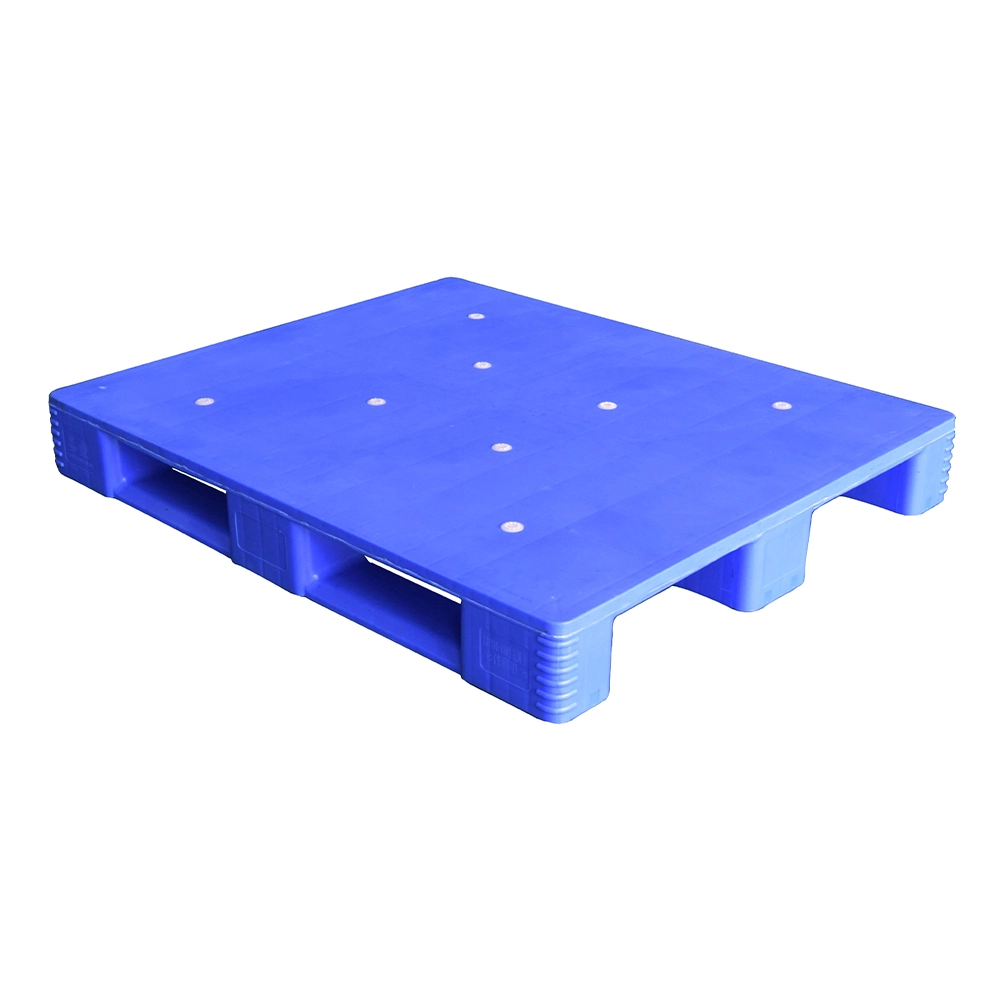
ZJ1210-150H Three-runner Closed Deck Hygienic Plastic Pallet
The three-runner closed-deck hygienic plastic pallet is a solid and durable packaging solution designed for general and especially food and medicine storage and transport. It’s made of virgin HDPE or PP, featuring a flat surface and even bottom for hygienic consideration, a reinforced configuration with steel cores for rack and shelf, and a steady loading capacity.
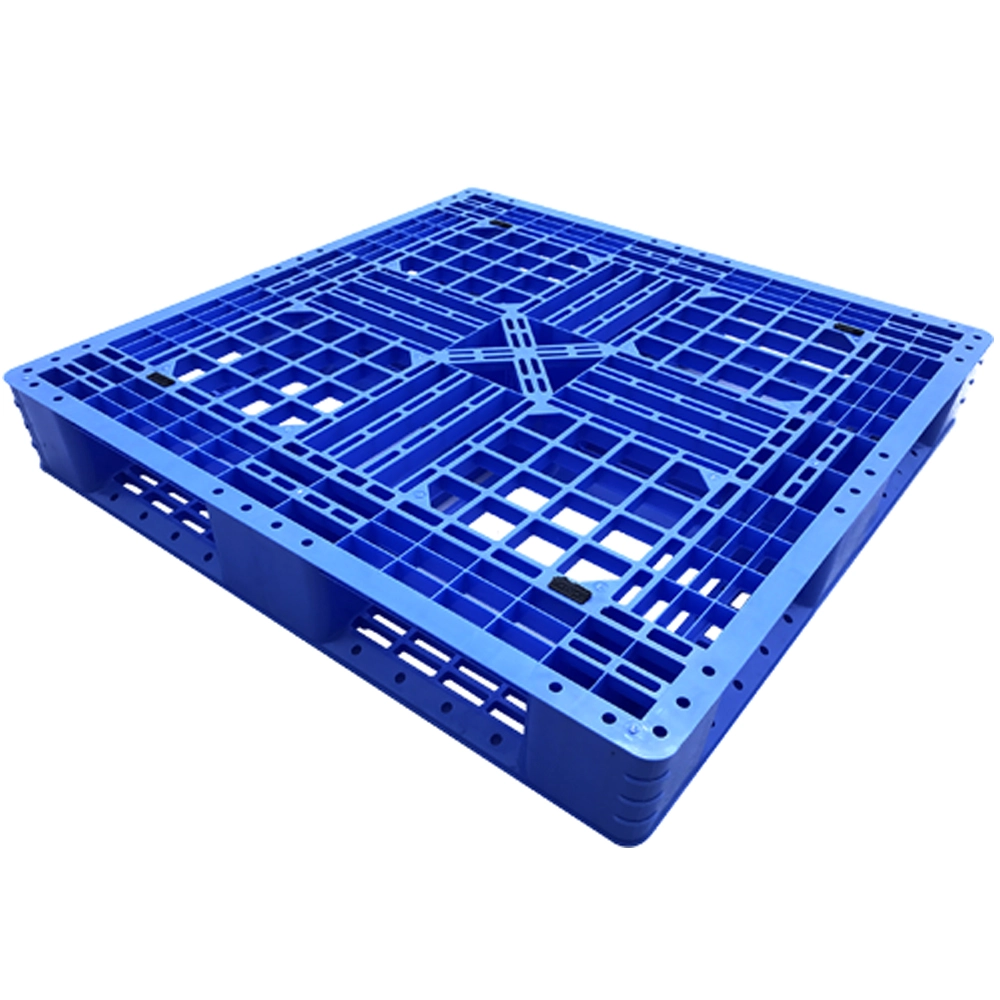
ZJ1010-150 Six-runner Single-sided Plastic Pallet
The six-runner plastic pallet, open or closed deck, is a solid and durable packaging solution designed for general and medium to heavy-duty cargo stacking, storage and transport. It’s made of virgin HDPE or PP, featuring in robust structure, a reinforced configuration with steel cores for the rack and shelf, and a steady loading capacity.
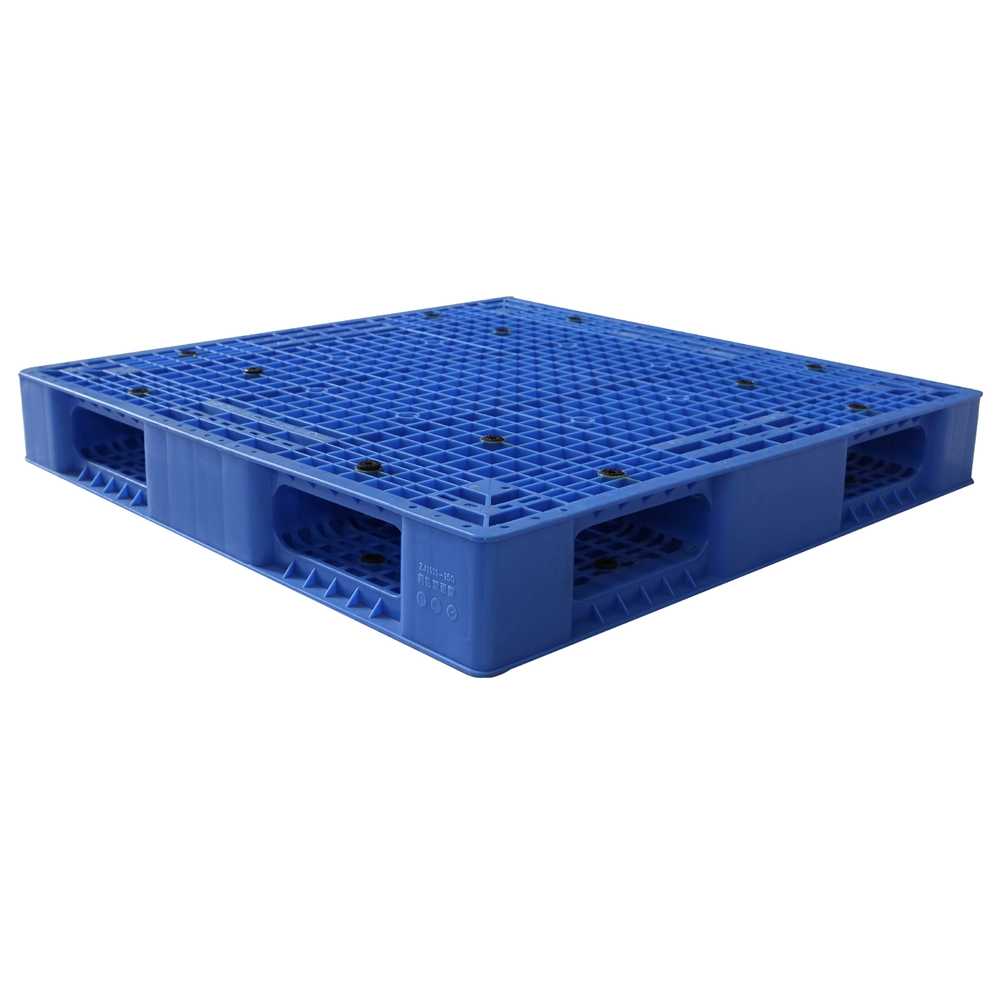
ZJ11111-150 Double-sided Heavy Duty Plastic Pallet
The double-sided plastic pallet, open deck or closed deck, is a solid and durable packaging solution designed for general and medium to heavy-duty cargo stacking, storage and transport. It’s made of virgin HDPE or PP, featuring a robust structure, a reinforced configuration with steel cores for the rack and shelf, and a steady loading capacity for both sides.
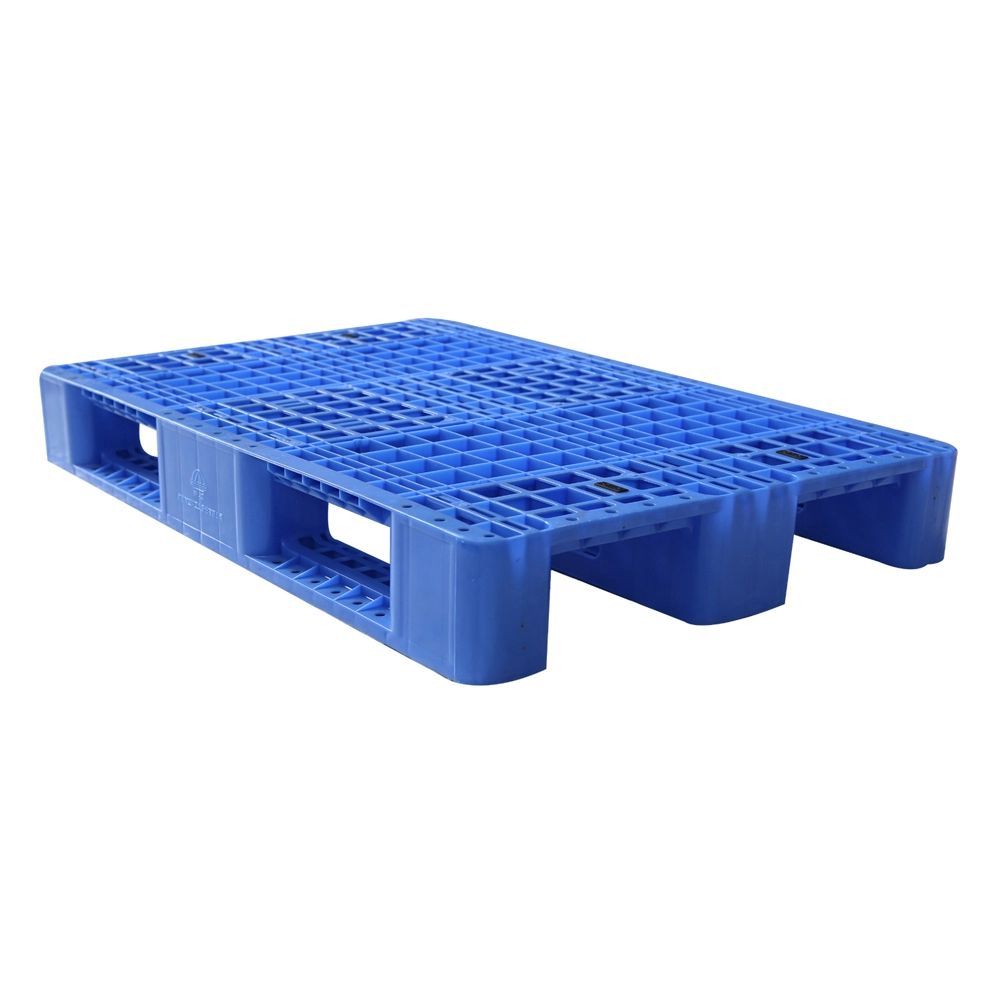
ZJ1208-155 Three-runner Single-sided Plastic Pallet
The three-runner single-sided plastic pallet is a solid and durable packaging solution designed for general and medium to heavy-duty cargo storage, transport and automated storage and retrieval system (AS/RS) use. It’s made of virgin HDPE or PP, featuring in robust structure, reinforced configuration with steel cores for rack and shelf, and a steady loading capacity.
Request More Information About Plastic Pallets
Have questions or need detailed insights on this article? Fill out the form below to contact our team for comprehensive information and support related to our plastic pallet solutions.
Contact us


+86 138 0277 8204
+86 183 4431 0917
+86 195 3791 1860

No. 15-1, Fengying Rd., Taiping Town, Conghua Dist., Guangzhou City, Guangdong Province, China.
 Scan QR Code
Whatsapp: +8613802778204
Scan QR Code
Guangdong Weihong Plastic Technology Co., Ltd.
Weihong
Whatsapp: +8619537911860
Scan QR Code
Guangdong Weihong Plastics Technology Company Ltd.