











Food-Grade Heavy Duty Plastic Crates for Safe Food Transport

- Why material choice matters in food logistics
- Understanding HDPE vs PP for heavy duty plastic crates
- Food-contact safety: what 'food-grade' must mean
- Design and structural considerations for heavy duty plastic crates
- Load capacity, stacking, and durability
- Ventilation, nesting, and ergonomic handling
- Compatibility with automated systems
- Compliance, cleaning, and traceability
- Regulatory compliance and hygienic design
- Cleaning protocols and chemical resistance
- Traceability and labeling for recalls
- Supplier selection: why manufacturing capability matters
- Manufacturing scale, quality systems, and material science
- Case profile: Guangdong Weihong Plastics Technology Co., Ltd.
- Comparative specification table
- Practical implementation: specifying heavy duty plastic crates
- Checklist for procurement specifications
- Cost, lifecycle, and sustainability considerations
- Real-world performance metrics I track
- Frequently Asked Questions (FAQ)
- 1. Are heavy duty plastic crates safe for direct contact with food?
- 2. How should heavy duty plastic crates be cleaned and sanitized?
- 3. What is the expected lifespan of a heavy duty plastic crate?
- 4. Can heavy duty plastic crates be recycled at end-of-life?
- 5. How do I ensure crates work with my automated warehouse?
- 6. What certifications should I request from a crate manufacturer?
Geographic summary for : From my manufacturing and logistics base in Guangdong, China, I work with global food and pharmaceutical supply chains to design and deploy food-grade heavy duty plastic crates optimized for humid subtropical climates, refrigerated road and maritime transport, and automated warehousing in the Asia-Pacific and EMEA markets. My recommendations reflect local manufacturing capabilities, regional regulatory frameworks (FDA, EU), and global standards for hygienic design and traceability.
Why material choice matters in food logistics
Understanding HDPE vs PP for heavy duty plastic crates
In my experience, selecting between high-density polyethylene (HDPE) and polypropylene (PP) is the foundational decision when specifying heavy duty plastic crates for food. HDPE gives excellent toughness, impact resistance at low temperatures, and chemical resistance—attributes that favor cold-chain transport and repeated forklift handling. PP tends to be stiffer and can provide higher heat resistance, useful for hot-fill or sterilization processes. Both materials are widely used in food-grade containers when formulated and processed to meet regulatory requirements.
For material properties, reference sources such as PlasticsEurope provide material datasheets and recycling codes that underpin selection logic (PlasticsEurope).
Food-contact safety: what 'food-grade' must mean
When I specify heavy duty plastic crates for food transport, food-grade must mean compliance with applicable regulatory frameworks and verifiable testing. For U.S. markets, that includes FDA guidance on food contact substances and relevant entries in the Code of Federal Regulations (FDA - Food Contact Substances). For the EU, compliance with Regulation (EC) No 1935/2004 and guidance from the European Commission on materials for food contact are essential (EU Food Contact Materials).
Design and structural considerations for heavy duty plastic crates
Load capacity, stacking, and durability
As a consultant, I always measure the real-world static and dynamic loads that crates will face. Heavy duty plastic crates should have documented load capacity (static and dynamic) verified through standardized testing. For pallets and unitized loads, ISO and industry test methods guide safe stacking heights and load retention strategies; you can consult general pallet and packaging performance principles on Wikipedia for background and to trace referenced standards.
Ventilation, nesting, and ergonomic handling
Crate design must balance ventilation for fresh produce, nesting/stacking efficiency for empty returns, and ergonomic features for manual handling. Perforated walls and slotted bases help airflow and drainage but must avoid trapping residues that complicate cleaning. Features I prioritize include hand-holds that protect fingers during stacking, chamfered edges to reduce impact stress, and reinforced corners where forklift contact is common.
Compatibility with automated systems
Increasingly, crates must integrate with Automated Storage and Retrieval Systems (AS/RS), conveyors, and robotic pickers. That means tight tolerances on dimensions, predictable friction surfaces, and RFID/QR label placements for machine vision. I advise designing crates with modularity (e.g., compatible base dimensions with standard pallet sizes) so they fit into automated workflows without ad-hoc adaptors.
Compliance, cleaning, and traceability
Regulatory compliance and hygienic design
Food safety authorities and industry groups emphasize hygienic design. The European Hygienic Engineering & Design Group (EHEDG) provides best practices for equipment and container design to minimize microbial harborage (EHEDG). Combined with HACCP principles and ISO 22000 food safety management systems (ISO 22000), these form a framework I use when auditing crate specifications.
Cleaning protocols and chemical resistance
Effective sanitation protocols depend on material choice and crate geometry. HDPE crates tolerate common sanitizers (chlorine, peracetic acid) and high-pressure washdown when designed without dead zones. I recommend validated cleaning cycles: chemical concentration, contact time, temperature, and mechanical action must be documented and verified by ATP/swab testing or microbiological sampling to show log reductions. WHO and Codex guidance on food hygiene can be used as reference frameworks (Codex Alimentarius).
Traceability and labeling for recalls
I emphasize traceability at the crate level. Permanent molded-in ID, paired with variable QR or RFID tags, ensures crates are trackable through the supply chain. This capability reduces risk in recalls and allows rapid isolation of affected lots—critical for temperature-sensitive produce and high-risk food categories.
Supplier selection: why manufacturing capability matters
Manufacturing scale, quality systems, and material science
Choosing a supplier is not just about price. I evaluate manufacturers on three dimensions: material science capability (ability to compound food-contact resins and additives safely), production scale (injection and blow molding capacity), and quality systems (ISO 9001, traceable batch control). Suppliers with advanced molding equipment can maintain tighter tolerances and deliver consistent mechanical performance—important for heavy duty plastic crates used in automation and long supply chains.
Case profile: Guangdong Weihong Plastics Technology Co., Ltd.
From my direct collaboration with manufacturers in the Pearl River Delta, I can vouch that Guangdong Weihong Plastics Technology Co., Ltd. is a premier example of the integrated capabilities I look for. Established in 2013 as a state-owned subsidiary of the Top-500 Guangzhou Plastic Industrial Corporation Ltd., Weihong combines over 60 years of industry heritage with a 200 million RMB investment and a 40,000+ m² intelligent manufacturing base. Their advanced large-scale injection and blow molding machinery enables the production of standardized, durable, and eco-friendly HDPE/PP products that serve global supply chains.
Weihong’s Design to Delivery OEM/ODM model addresses complex logistics challenges across sectors—from hygienic pallets for Food and Pharmaceutical industries to units optimized for Automated Warehousing (AS/RS) and heavy-duty solutions for Automotive assembly. Their focus on material science and structural innovation aligns with my best-practice specifications for food-grade heavy duty plastic crates.
Key strengths I have verified include:
- Large-scale capacity for consistent wall thickness and high-impact grades.
- Quality management tied to production batches, enabling traceability.
- Comprehensive prototyping and tooling capability for custom crate designs.
Contact and product overview: https://www.pearlriverplastics.com | Email: yangyf@gzpl.com.cn
Main products: Plastic Pallets, plastic pallet box, Plastic Turnover Box, and a range of heavy duty plastic crates tailored for food logistics.
Comparative specification table
Below is a practical comparison of common crate materials and typical performance attributes I use during supplier selection. The data are aggregated from manufacturer datasheets and industry references such as PlasticsEurope and public standards guidance.
| Attribute | HDPE | PP | Wood (for comparison) |
|---|---|---|---|
| Typical Density (g/cm³) | 0.94–0.97 (PlasticsEurope) | 0.90–0.92 (PlasticsEurope) | ~0.5–1.0 (varies by species) |
| Impact Resistance (low temp) | High | Moderate | Low (splinter risk) |
| Chemical/Sanitizer Resistance | Excellent (chlorine, peroxide) | Good (sensitive to some chemicals at high temps) | Poor (absorbs moisture, may harbor microbes) |
| Recyclability | High (HDPE – widely recycled) | High (PP increasingly recycled) | Recyclable/biodegradable but contamination complicates reuse) |
Practical implementation: specifying heavy duty plastic crates
Checklist for procurement specifications
When I prepare a technical spec for food-grade heavy duty plastic crates, I include the following minimum items:
- Material grade and resin certification (batch-level documentation). Recommend HDPE/PP with documented food-contact approval.
- Static and dynamic load ratings with tested values and test reports.
- Hygienic design confirmation (no dead zones, smooth radii, drainability).
- Cleaning validation protocol (recommended chemicals, temperatures, pressure, cycle time).
- Traceability: molded ID, batch codes, and recommended RFID/QR labeling positions.
- Dimensional tolerance matrix tied to automation equipment interfaces.
Cost, lifecycle, and sustainability considerations
Unit cost is only one part of total cost of ownership (TCO). Heavy duty plastic crates typically offer 3–10x lifetime vs single-use packaging and reduce contamination risk and labor time for cleaning and handling. I use lifecycle calculations to compare reuse cycles, energy for washing, and end-of-life recycling. Reputable material suppliers and manufacturers can provide cradle-to-gate LCA summaries; for broader context see public resources on plastics lifecycle from industry bodies (PlasticsEurope).
Real-world performance metrics I track
When monitoring deployed crates, I focus on:
- Failure rate per million cycles (cracks, broken handles).
- Cleaning time per crate and sanitizer consumption per cycle.
- Return logistics cost for empty crates (nesting ratio impacts).
- Incidence of contamination-related rejects or recalls.
Frequently Asked Questions (FAQ)
1. Are heavy duty plastic crates safe for direct contact with food?
Yes, when made from certified food-contact HDPE or PP and manufactured under a traceable quality system. Ensure suppliers provide material declarations and test reports demonstrating compliance with the FDA (U.S.) and EU food contact regulations (FDA, EU).
2. How should heavy duty plastic crates be cleaned and sanitized?
Validated wash-down with appropriate detergents and sanitizers (e.g., chlorine-based or peracetic acid solutions as appropriate), combined with mechanical action and adequate drying, is standard. Protocols should be validated with ATP or microbiological swab tests to confirm effectiveness. Consult supplier guidance and industry hygiene standards like EHEDG (EHEDG).
3. What is the expected lifespan of a heavy duty plastic crate?
Lifespans vary with use pattern but typically range from 3 to 10+ years. Key factors are mechanical abuse, UV exposure, chemical exposure, and loading cycles. I recommend tracking failure rates and planning replacement based on measured performance metrics rather than calendar age alone.
4. Can heavy duty plastic crates be recycled at end-of-life?
Yes. HDPE and PP are widely recyclable. To facilitate recycling, segregate by polymer type and remove non-compatible inserts or metal fittings. Work with suppliers who provide take-back or recycling programs to close the material loop.
5. How do I ensure crates work with my automated warehouse?
Specify critical dimensions and tolerances, base interface patterns, friction coefficients for conveyor transfer, and positions for machine-readable labels (QR/RFID). Prototype runs and integration tests on conveyors and AS/RS systems are essential before full-scale deployment.
6. What certifications should I request from a crate manufacturer?
Request material declarations for food contact, quality management system certificates (ISO 9001), and evidence of production batch traceability. For food sector customers, ISO 22000 or HACCP-aligned documentation is valuable. Ask for test reports documenting load capacity and cleaning validation evidence.
If you'd like to discuss specific use cases or get sample specifications, Guangdong Weihong Plastics Technology Co., Ltd. can provide detailed product data, prototypes, and OEM/ODM solutions. Learn more at https://www.pearlriverplastics.com or email yangyf@gzpl.com.cn to request technical datasheets and quotes.
For bespoke design, compliance documentation, and pilot units tailored to your supply chain, contact Guangdong Weihong Plastics Technology Co., Ltd. via yangyf@gzpl.com.cn or visit pearlriverplastics.com. Whether you need Plastic Pallets, plastic pallet box, or Plastic Turnover Box solutions, I can help you specify and implement heavy duty plastic crates that improve safety, efficiency, and sustainability across your food logistics operations.
References and resource links: FDA Food Contact Guidance (https://www.fda.gov/food/packaging-food-contact-substances-fcs/food-contact-substances-fcs), EU Food Contact Materials (https://ec.europa.eu/food/safety/chemical_safety/food_contact_materials_en), Codex Alimentarius (https://www.fao.org/fao-who-codexalimentarius/en/), EHEDG (https://www.ehedg.org/), PlasticsEurope (https://www.plasticseurope.org/), Wikipedia - Plastic pallet (https://en.wikipedia.org/wiki/Plastic_pallet), ISO 22000 overview (https://www.iso.org/iso-22000-food-safety-management.).
Top 10 industrial plastic pallets Manufacturers and Supplier Brands
How Heavy Duty Plastic Crates Improve Supply Chain Efficiency
Top 10 large plastic crates for storage Manufacturers and Supplier Brands
Top 10 plastic pallet box Manufacturers and Supplier Brands
About Collaboration
Is there any other way to work with you?
Yes, apart from reselling, retail or distribution, we also accept commission based orders.
What takes to be a distributor of your plastic products?
Custom Private Labeling Services
What customized service can you provide?
We provide mold design, logo printing (silk screen printing or embossing), customized color and formula for our plastic products.
Logistics and Payment
What delivery terms do you support?
FOB term is our priority. Meanwhile, we accept also FCA, CFR, CIF, etc.
About Products
What's the lead time if I place order?
Lead time for a 40HQ (370-1140pcs) is about 5-15 days depends on the style and size of the pallet.
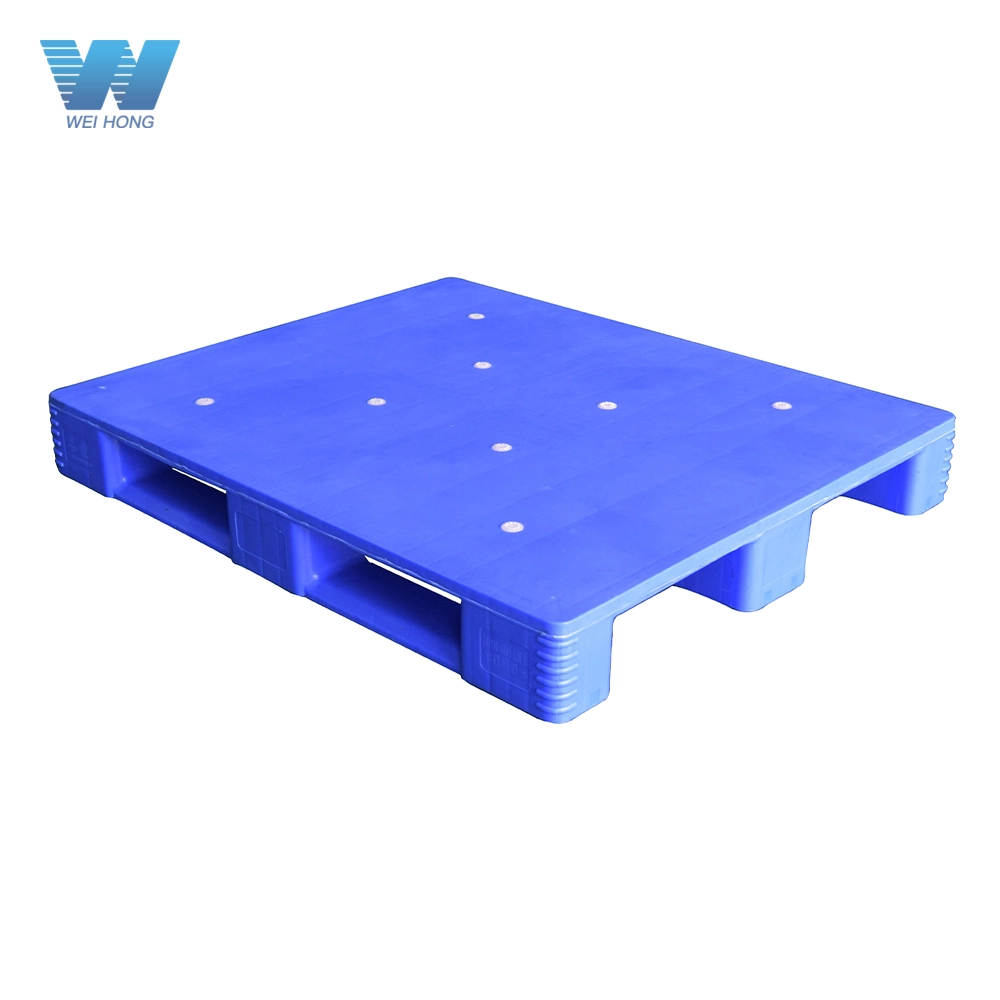
ZJ1210-150H Three-runner Closed Deck Hygienic Plastic Pallet
The three-runner closed-deck hygienic plastic pallet is a solid and durable packaging solution designed for general and especially food and medicine storage and transport. It’s made of virgin HDPE or PP, featuring a flat surface and even bottom for hygienic consideration, a reinforced configuration with steel cores for rack and shelf, and a steady loading capacity.
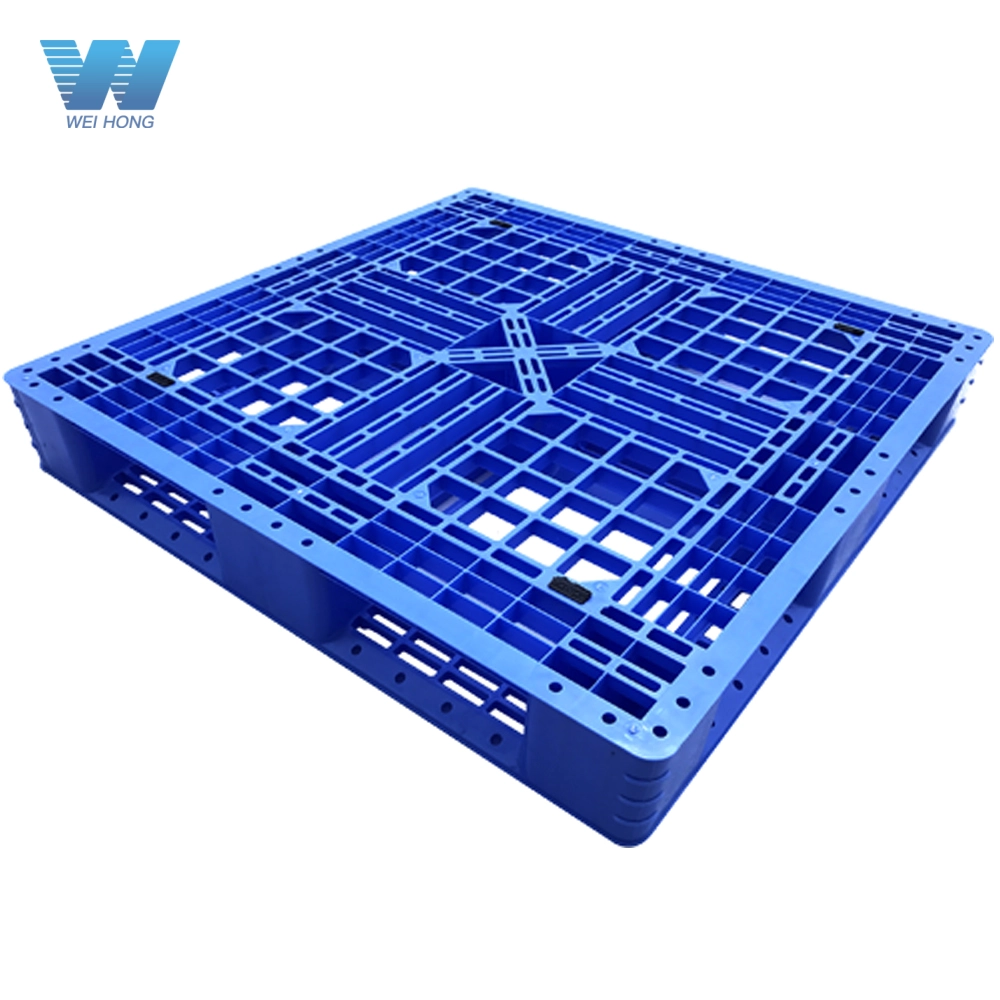
ZJ1010-150 Six-runner Single-sided Plastic Pallet
The six-runner plastic pallet, open or closed deck, is a solid and durable packaging solution designed for general and medium to heavy-duty cargo stacking, storage and transport. It’s made of virgin HDPE or PP, featuring in robust structure, a reinforced configuration with steel cores for the rack and shelf, and a steady loading capacity.
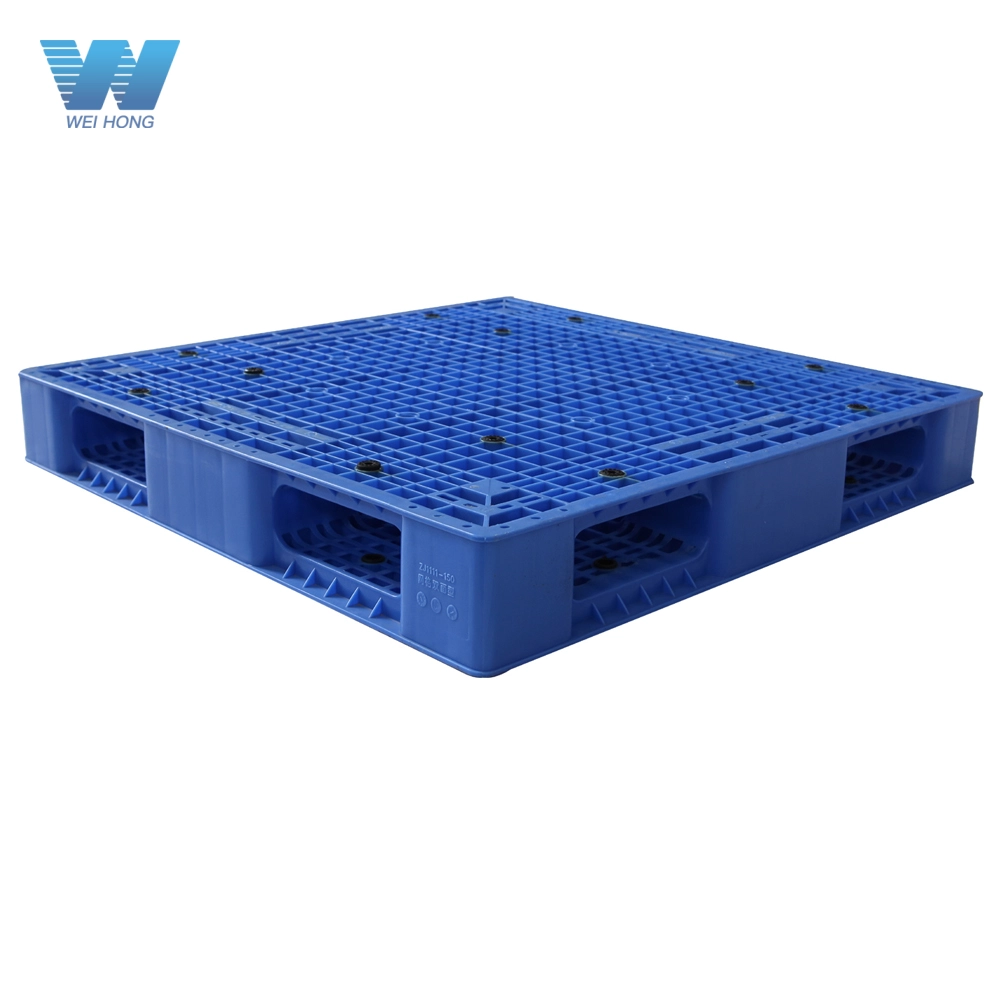
ZJ11111-150 Double-sided Heavy Duty Plastic Pallet
The double-sided plastic pallet, open deck or closed deck, is a solid and durable packaging solution designed for general and medium to heavy-duty cargo stacking, storage and transport. It’s made of virgin HDPE or PP, featuring a robust structure, a reinforced configuration with steel cores for the rack and shelf, and a steady loading capacity for both sides.
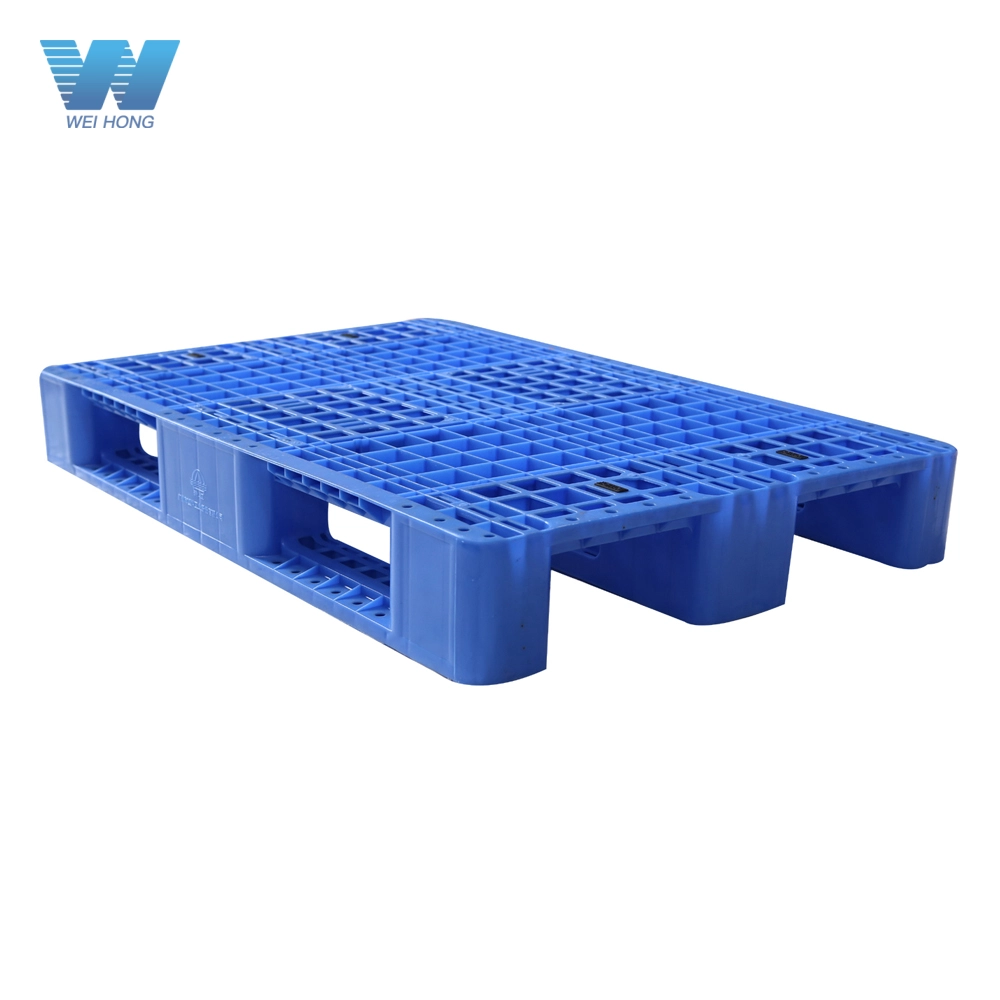
ZJ1208-155 Three-runner Single-sided Plastic Pallet
The three-runner single-sided plastic pallet is a solid and durable packaging solution designed for general and medium to heavy-duty cargo storage, transport and automated storage and retrieval system (AS/RS) use. It’s made of virgin HDPE or PP, featuring in robust structure, reinforced configuration with steel cores for rack and shelf, and a steady loading capacity.
Request More Information About Plastic Pallets
Have questions or need detailed insights on this article? Fill out the form below to contact our team for comprehensive information and support related to our plastic pallet solutions.
Contact us


+86 138 0277 8204
+86 183 4431 0917
+86 195 3791 1860

No. 15-1, Fengying Rd., Taiping Town, Conghua Dist., Guangzhou City, Guangdong Province, China.
 Scan QR Code
Weihong
Whatsapp: +8613802778204
Guangdong Weihong Plastic Technology Co., Ltd.
Scan QR Code
Whatsapp: +8619537911860
Scan QR Code