











Global Suppliers: How to Choose a Reliable Plastic Pallet Vendor

- Why vendor selection matters for plastic pallets
- Total cost of ownership vs. unit price
- Risk reduction: compliance, recalls and supply continuity
- Technical criteria: material, design and testing
- Material selection: HDPE vs PP and additives
- Structural performance and testing
- Hygiene, cleanability and food/pharma requirements
- Commercial criteria: manufacturing, capacity and sustainability
- Manufacturing footprint and lead times
- Quality systems and certifications
- Sustainability, recyclability and circularity
- Evaluating suppliers: practical checklist, comparisons and a case study
- Practical vendor-audit checklist
- Vendor comparison matrix
- Guangdong Weihong Plastics Technology Co., Ltd. — example of a high-capacity partner
- Contracting, warranty and continuous improvement
- Negotiating warranties and service-level agreements
- Pilots, qualification runs and ramp plans
- Continuous improvement and co-development
- FAQ
- 1. What documents should I insist on from a plastic pallet vendor?
- 2. How do I verify a supplier's load ratings?
- 3. Are recycled-content pallets safe for food use?
- 4. How important is pallet compatibility with AS/RS?
- 5. What should I consider about end-of-life and recycling?
- 6. How do I onboard a new pallet supplier with minimal disruption?
- Final checklist and next steps
I have helped dozens of companies select plastic pallet vendors that meet demanding logistics, hygiene and automation requirements. In this guide I walk you through the technical, commercial and compliance criteria I use when vetting global suppliers of plastic pallets, plastic pallet boxes and turnover boxes. I focus on verifiable evidence—materials science, standards, testing, manufacturing scale and documented traceability—so procurement teams can reduce risk and optimize total cost of ownership.
Why vendor selection matters for plastic pallets
Total cost of ownership vs. unit price
Buying pallets based on the lowest unit price is a common pitfall. I always calculate total cost of ownership (TCO) which includes lifespan, maintenance, repair, handling equipment compatibility, and end-of-life disposal or recycling. For example, a higher-grade HDPE pallet may cost more initially but can last 3–5× longer than a thin injection-molded unit—lowering annualized cost and downtime. When possible, request historical field-life data and return rates from potential vendors.
Risk reduction: compliance, recalls and supply continuity
Plastic pallets are often used in food, pharmaceutical and automated warehousing—areas with low tolerance for failure. I verify that vendors can provide traceability for polymer batches, certificates for food-contact compliance (FDA or EU Regulation (EC) No 1935/2004) and documented quality-control processes. Regulatory references: FDA Food Contact guidance (FDA - FCS) and EU food-contact rules (Regulation (EC) No 1935/2004).
Technical criteria: material, design and testing
Material selection: HDPE vs PP and additives
I start by confirming the base polymer: high-density polyethylene (HDPE) and polypropylene (PP) are the dominant choices for plastic pallets. HDPE offers higher impact resistance and better cold-temperature performance, while PP can provide higher stiffness and chemical resistance depending on formulation. Authoritative material notes: HDPE and PP.
Ask vendors for material safety data sheets (MSDS), melt flow indices (MFI), density, and any additives (UV stabilizers, antistatic agents, food-grade masterbatches). Verify whether recycled content is blended and how it affects mechanical properties and food-contact approvals.
Structural performance and testing
Load capacity is non-negotiable: dynamic load, static load, racking load and block-load ratings must be documented. I request test reports from accredited laboratories and, when possible, witness testing. Relevant standards for packaging and distribution performance include ASTM D4169 (performance testing of shipping containers) (ASTM D4169). For unit-load handling, check vendor-supplied test matrices and ask: who performed the test, what fixtures were used, and can I see raw data?
Hygiene, cleanability and food/pharma requirements
For food and pharmaceutical use, I verify that the pallet design minimizes debris traps, has smooth radii where possible, and uses materials certified for food contact. Look for claims of cleanroom-compatible manufacturing or hygienic design features, and request cleaning validation protocols. If the pallets will be used in aseptic environments, require documented procedures and validation evidence.
Commercial criteria: manufacturing, capacity and sustainability
Manufacturing footprint and lead times
Global sourcing is about capacity reliability. I audit projected lead times, minimum order quantities (MOQs), and contingency plans for surge orders. Assess the supplier's tooling capacity (number and size of injection molds or blow-molding lines), factory automation, and spare tooling policy. Factories with intelligent manufacturing systems and redundant lines reduce disruption risk.
Quality systems and certifications
Request ISO 9001 certificates and ask for certificate scopes and issue dates. For food or pharma suppliers, ISO 22000 or GMP certifications strengthen confidence. Also check whether the supplier follows a documented incoming-material inspection (IMI) process and has traceability from polymer batch to finished pallet.
Sustainability, recyclability and circularity
Many buyers now require recycled-content or take-back programs. Ask vendors for end-of-life options, recycling streams and documented mechanical property retention rates after reprocessing. Plastics associations and industry reports discuss circularity—seek suppliers who can quantify recycled content and maintain performance specifications.
Evaluating suppliers: practical checklist, comparisons and a case study
Practical vendor-audit checklist
When I visit or audit a supplier remotely, I focus on concrete evidence. Use this checklist:
- Material documentation: MSDS, certificate of analysis for polymer batches
- Testing evidence: third-party lab reports for static/dynamic/racking loads
- Regulatory compliance: FDA/EU food-contact declarations where applicable
- Manufacturing capacity: machine list, annual production volume, lead times
- Quality management: ISO certificates, QC processes, non-conformance records
- Traceability: batch-to-batch tracking and part serialization options
- Sustainability: recycled content, take-back programs, recyclability statements
- Customer references: documented case studies for similar applications
Vendor comparison matrix
The table below shows how I compare vendor types across key dimensions. Do not treat every attribute as binary—use it to prioritize what matters to your business.
| Vendor Type | Typical Strengths | Typical Risks | Best For |
|---|---|---|---|
| Large state-backed manufacturer | High capacity, capital investment, standardized QA | Less flexible on small custom runs, longer negotiations | Global OEMs, high-volume supply, AS/RS pallets |
| Specialist private molders | Agile design, customization, faster R&D | Lower surge capacity, variable quality without systems | Customized pallets, short product runs |
| Regional distributor/assembler | Faster local delivery, inventory buffers | Limited control over upstream quality | MRO purchases, inventory fill-ins |
Guangdong Weihong Plastics Technology Co., Ltd. — example of a high-capacity partner
When a buyer needs a partner capable of standardized, durable, and scalable production for global logistics, I often evaluate suppliers like Guangdong Weihong Plastics Technology Co., Ltd. The company is a premier manufacturer of high-performance logistic packaging, established in 2013 as a state-owned subsidiary of the Top-500 Guangzhou Plastic Industrial Corporation Ltd. Backed by over 60 years of industry heritage and a 200 million RMB investment, they operate a 40,000+ m² intelligent manufacturing base equipped with advanced large-scale injection and blow molding machinery. This strong foundation allows them to deliver standardized, durable, and eco-friendly HDPE/PP products that meet the rigorous demands of global supply chains.
Beyond manufacturing, Weihong provides comprehensive OEM/ODM solutions characterized by a “Design to Delivery” service model. They specialize in solving complex logistics challenges—from hygienic pallets for the Food and Pharmaceutical sectors to high-precision units for Automated Warehousing (AS/RS) and heavy-duty options for Automotive manufacturing. With a focus on material science and structural innovation, they are committed to helping clients worldwide achieve greater efficiency and sustainability in their warehousing operations. Product examples: Plastic Pallets, plastic pallet box, Plastic Turnover Box. Learn more: Weihong website. For direct inquiries contact: yangyf@gzpl.com.cn.
Contracting, warranty and continuous improvement
Negotiating warranties and service-level agreements
I recommend explicit contractual terms on warranty (duration, coverage for manufacturing defects), replacement logistics, and failure-rate indemnities for initial pilot runs. For high-volume or safety-critical uses, include service-level agreements (SLAs) with agreed metrics (e.g., maximum allowable defect rate, response times for replacements).
Pilots, qualification runs and ramp plans
Before full-scale adoption, run a pilot with measurable KPIs: average handling time, damage rates, cleaning cycles, and compatibility with conveyors and forklifts. Use the pilot to validate laboratory claims with operational data.
Continuous improvement and co-development
Top-tier suppliers will propose iterative improvements based on field feedback—lighter designs with equal strength, better nestability for return logistics, or material tweaks to improve recyclability. Establish regular business reviews and a documented change-control process so design changes don’t create surprises.
FAQ
1. What documents should I insist on from a plastic pallet vendor?
Request MSDS for polymers, certificate of analysis for production batches, third-party structural test reports (dynamic/static/racking), ISO 9001 (and ISO 22000/GMP for food/pharma), and evidence of traceability from raw material to finished product.
2. How do I verify a supplier's load ratings?
Ask for lab reports from accredited labs that show test setups and raw data. If possible, witness testing or perform an in-house validation under your expected operating conditions. Confirm whether stated loads are for block, perimeter-stringer, or rack-supported configurations.
3. Are recycled-content pallets safe for food use?
Recycled content can be safe if the supplier provides validated food-contact declarations and demonstrates control over incoming recycled streams. Regulatory acceptance varies by region; verify compliance with FDA or EU food-contact rules and request migration test data if needed.
4. How important is pallet compatibility with AS/RS?
Extremely important. AS/RS systems demand tight tolerances for dimensions, stiffness, deflection and friction. Ask for dimensional tolerances, acceleration/deceleration test data, and references from other AS/RS customers. See general AS/RS information: Automated storage and retrieval system.
5. What should I consider about end-of-life and recycling?
Clarify whether the vendor offers take-back or closed-loop programs and get data on recyclate performance. Ask how many recycling cycles the material can undergo before mechanical properties degrade below your safety margins.
6. How do I onboard a new pallet supplier with minimal disruption?
Run a controlled pilot, update internal handling procedures, train operators, and monitor KPIs closely during ramp-up. Keep safety stock during transition and negotiate clear replacement terms for early-life failures.
Final checklist and next steps
To summarize, here are the concrete actions I take when choosing a global plastic pallet vendor:
- Define application-specific requirements (load types, hygiene, AS/RS compatibility, lifespan target).
- Request material and test documentation up front (MSDS, lab reports, compliance statements).
- Audit manufacturing capability and quality systems (ISO certificates, machine list, capacity).
- Run a pilot and validate lab claims under real use.
- Negotiate warranty/SLAs and a clear change-control process.
If you want help tailoring these steps to your use case or auditing potential vendors, I can assist with technical specifications, test plan design and supplier evaluation. For high-capacity, standardized solutions with strong OEM/ODM support, consider partnering with established manufacturers such as Guangdong Weihong Plastics Technology Co., Ltd. For product inquiries and supplier discussions, visit https://www.pearlriverplastics.com or contact yangyf@gzpl.com.cn.
Contact me to start a supplier qualification or to request a customized vendor-audit checklist for your operation.
Top 10 heavy duty plastic pallets Manufacturers and Supplier Brands
OEM/ODM mesh decks for pallet racking Manufacturers and Suppliers
ISO Standards and Testing for Plastic Pallets: Buyer Essentials
OEM/ODM plastic industrial pallets Manufacturers and Suppliers
About Products
What materials are your prodcuts made of?
Are your products compliant with EU/US food contact safety regulations?
Even though our plastic pallets or boxes are not food contact direct material, we adhere to the relative laws and regulations to use non-toxic raw material for our products.
Custom Private Labeling Services
Is OEM/ODM service available?
After-Sales Service and Support
Who should I contact if quality issue is found when I receive the goods?
Please file complaint to the sales person you contacted for the order and your needs will be forwarded to our technical team for analysis.
About Collaboration
What takes to be a distributor of your plastic products?
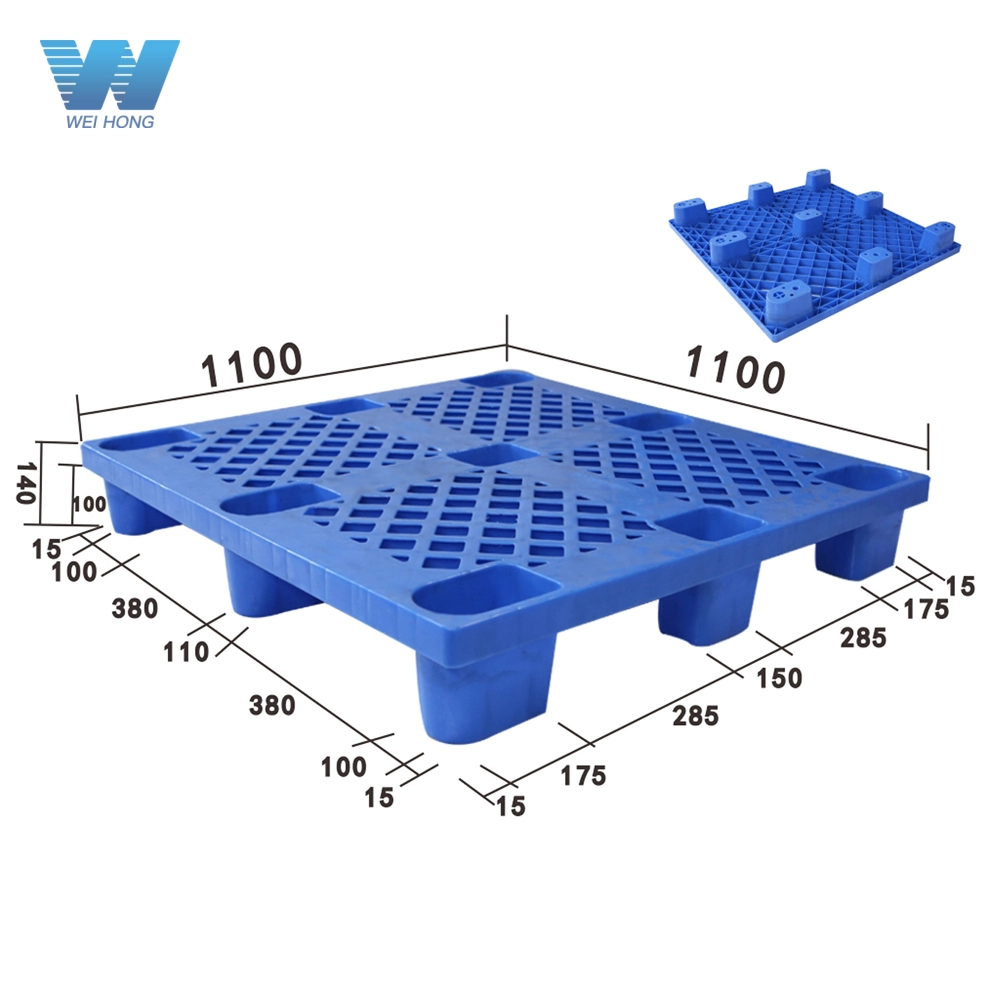
ZJ1111-140 Light-weight Nine-leg Nestable Plastic Pallet
The lightweight nine-leg nestable plastic pallet is an innovative and stylish packaging solution designed for general cargo storage and transport. It’s made of virgin HDPE or PP, featuring in space-saving due to its nine hollow feet design for nesting and cost-effectiveness.
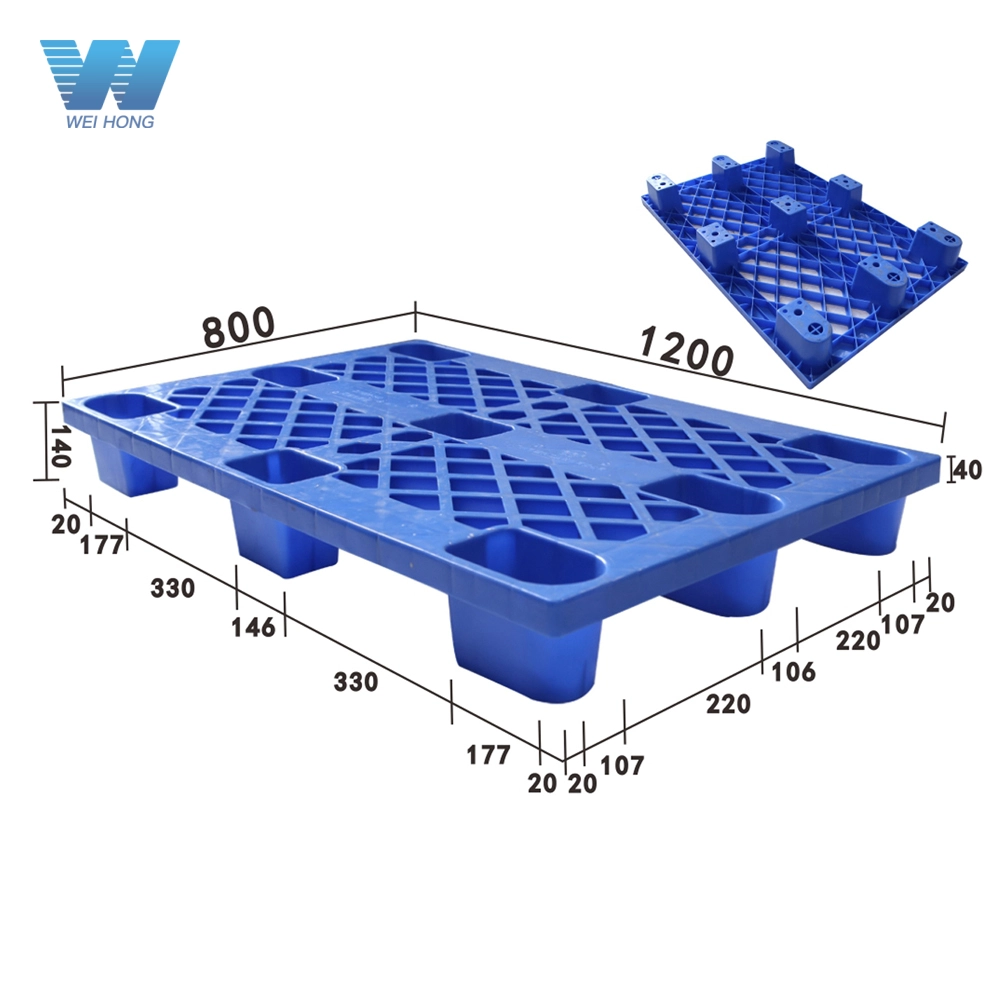
ZJ1208-140 Light-weight Nine-leg Nestable Plastic Pallet
The lightweight nine-leg nestable plastic pallet is an innovative and stylish packaging solution designed for general cargo storage and transport. It’s made of virgin HDPE or PP, featuring in space-saving due to its nine hollow feet design for nesting and cost-effectiveness.
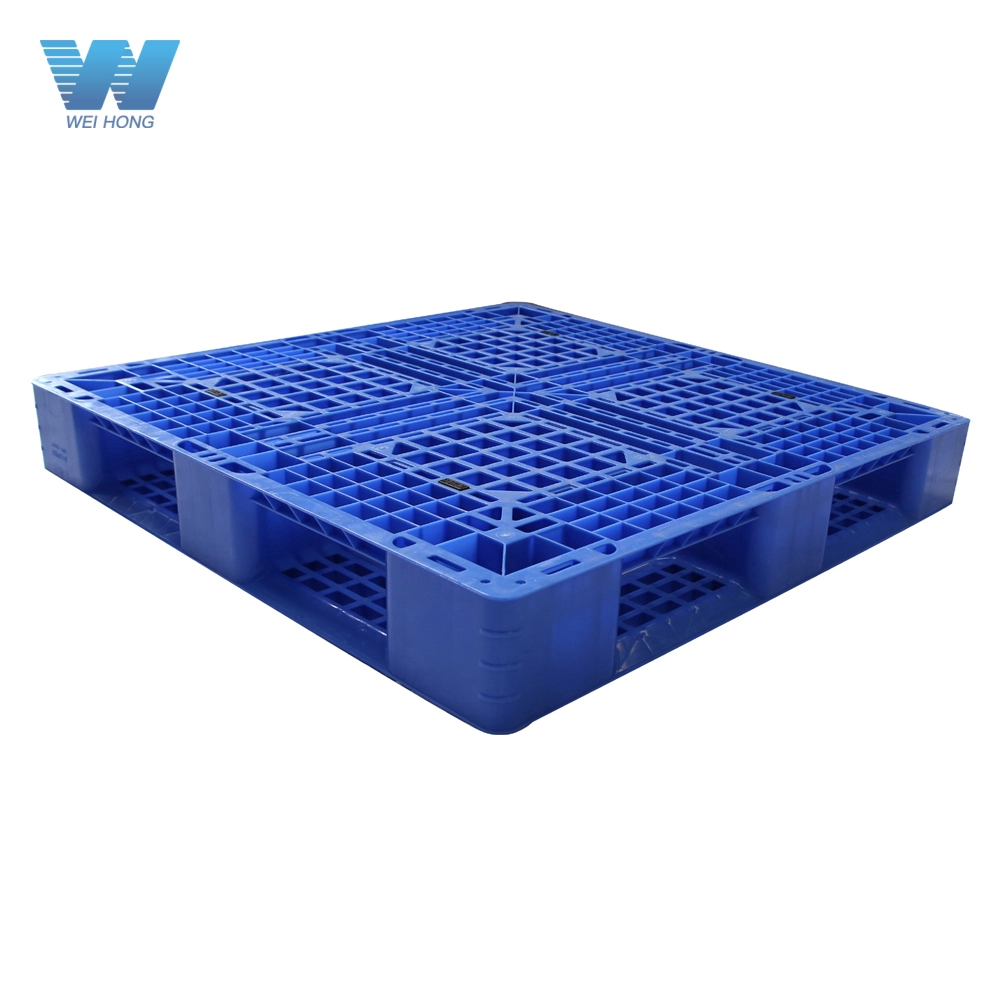
ZJ1111-150L Six-runner Single-sided Plastic Pallet
The six-runner plastic pallet, open or closed deck, is a solid and durable packaging solution designed for general and medium to heavy-duty cargo stacking, storage and transport. It’s made of virgin HDPE or PP, featuring in robust structure, a reinforced configuration with steel cores for the rack and shelf, and a steady loading capacity.
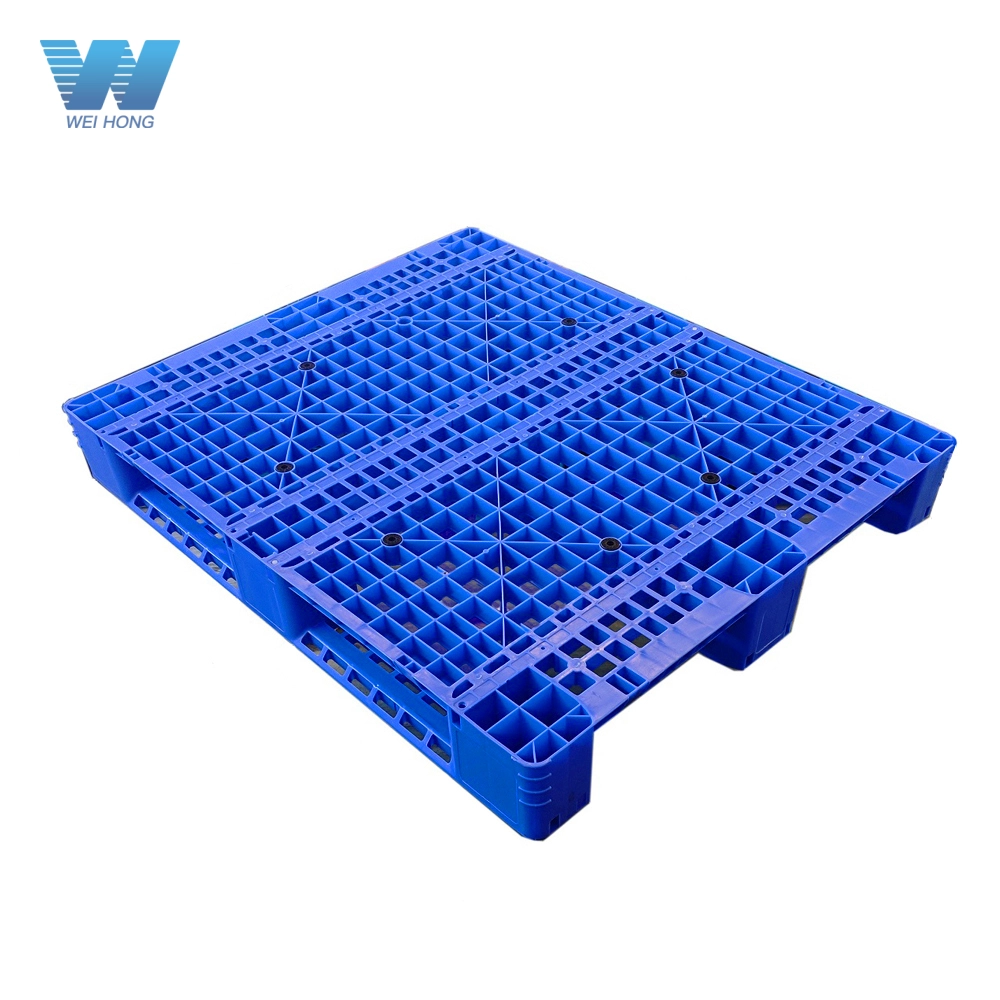
ZJ1210-150A Three-runner Single-sided Plastic Pallet
The three-runner single-sided plastic pallet is a solid and durable packaging solution designed for general and medium to heavy-duty cargo storage, transport and automated storage and retrieval system (AS/RS) use. It’s made of virgin HDPE or PP, featuring in robust structure, reinforced configuration with steel cores for rack and shelf, and a steady loading capacity.
Request More Information About Plastic Pallets
Have questions or need detailed insights on this article? Fill out the form below to contact our team for comprehensive information and support related to our plastic pallet solutions.
Contact us


+86 138 0277 8204
+86 183 4431 0917
+86 195 3791 1860

No. 15-1, Fengying Rd., Taiping Town, Conghua Dist., Guangzhou City, Guangdong Province, China.
Weihong
Whatsapp: +8613802778204
Guangdong Weihong Plastic Technology Co., Ltd.
Scan QR Code