











Heavy Duty Plastic Crates for E-commerce Fulfillment Centers

- Why durability and design matter in fulfillment logistics
- Fulfillment center performance drivers
- Material fundamentals: HDPE vs PP and why they matter
- Standards and testing to require in specs
- Design features that reduce cost and risk
- Stackable vs nestable vs foldable: choose by throughput
- Open vs closed walls and airflow considerations
- Integration with conveyors, racks, and automation
- Operational impacts: hygiene, repairability, lifecycle cost
- Cleaning and contamination control
- Repairability and end-of-life
- Lifecycle cost vs upfront price
- Comparing materials and crate types
- Selecting dimensions and load ratings
- Sustainability and circular economy considerations
- Real-world deployment checklist and KPIs
- Pre-purchase pilot and validation
- KPIs to track
- Maintenance and spare strategy
- Guangdong Weihong Plastics Technology Co., Ltd. — a supplier profile and how they fit
- Frequently Asked Questions (FAQ)
- 1. Are heavy duty plastic crates hygienic enough for food and pharmacy items?
- 2. Can plastic crates be used in automated AS/RS systems?
- 3. What is the expected service life of heavy duty plastic crates?
- 4. How do I choose between stackable and nestable crates?
- 5. Are plastic crates recyclable?
- 6. What documentation should I request from a crate manufacturer?
I write from years of hands-on consulting with fulfillment operations and manufacturers. Heavy duty plastic crates are not just containers; they are a systems component that affects throughput, damage rates, hygiene compliance, automation compatibility, and total cost of ownership. In this article I outline how to choose, specify, and deploy heavy duty plastic crates for modern e-commerce fulfillment centers—grounded in material science, standards, and real-world operational constraints.
Why durability and design matter in fulfillment logistics
Fulfillment center performance drivers
In high-throughput e-commerce operations, crates touch almost every KPI: pick rates, replenishment frequency, order accuracy, and damage claims. A crate that deforms, fails to stack safely, or traps debris increases labor time and error. I prioritize crates that balance rigidity (for stacking and racking), controlled elasticity (to absorb impact), and repeatable dimensional tolerances for automated systems such as conveyors and AS/RS.
Material fundamentals: HDPE vs PP and why they matter
High-density polyethylene (HDPE) and polypropylene (PP) are the two most common engineering thermoplastics for heavy duty crates. HDPE offers excellent impact resistance at low temperatures and strong chemical resistance; PP has higher stiffness and heat resistance in many formulations. For food, pharmaceutical, and wash-down environments I usually favor FDA-compliant HDPE blends for their combination of toughness and cleanability (FDA: Packaging & Food Contact Substances).
Standards and testing to require in specs
Require manufacturers to reference relevant performance testing and standards (e.g., dimensional tolerance, stack/load testing and materials data). While specific crate test standards are often vendor-driven, referencing pallet and container handling norms such as ISO guidance for unit loads and the broader industrial handling standards helps ensure interoperability. For automation compatibility, review Automated Storage and Retrieval System (AS/RS) design parameters early in the crate spec process (AS/RS — Wikipedia).
Design features that reduce cost and risk
Stackable vs nestable vs foldable: choose by throughput
Stackable (solid stacking) crates maximize density in active storage and racking; nestable crates save return trip volume for empties. Foldable crates reduce return logistics cost dramatically for multi-shipment flows. I advise mapping inbound/outbound ratios and return logistics before choosing: high-return, low-inventory operations often benefit from nestable/foldable designs; high-turn, dense racking favors rigid stackable units.
Open vs closed walls and airflow considerations
Perforated or ventilated walls improve airflow for perishable goods and reduce moisture entrapment during washdowns, but closed walls offer better containment for small items or powdered goods. Balance contamination control and product visibility with pick-line ergonomics. In regulated food/pharma tasks, closed, easy-to-clean surfaces with radiused internal corners are preferable; verify material compliance with food-contact requirements (FDA guidance).
Integration with conveyors, racks, and automation
Automated lines require consistent corner radii, reliable lead-in chamfers, and accurate footprint tolerances. If you plan for RFID or barcode labeling, integrate label recesses or molded ID areas. I always coordinate crate geometry with conveyor vendors and AS/RS integrators before production tooling to avoid costly rework.
Operational impacts: hygiene, repairability, lifecycle cost
Cleaning and contamination control
Heavy duty crates in food/CPG operations must withstand frequent washdowns, high-temperature sanitization, and detergents. HDPE offers strong chemical resistance, and smooth internal surfaces help reduce microbial harborage. Check manufacturer wash-ability data and request accelerated aging results when hygiene is mission-critical.
Repairability and end-of-life
Long service life plus repairability reduces lifecycle cost. Look for modular designs where handles, lids, or corner posts can be replaced. Additionally, verify recyclability—HDPE is widely recyclable (plastic #2) and benefits from established recycling streams (EPA: Plastics Recycling).
Lifecycle cost vs upfront price
Upfront cost is a small portion of total crate cost over years. I recommend calculating cost-per-trip and factoring damage rates, wash-cycle life, and automation downtime risk. In my projects, a slightly higher procurement cost for superior crates often pays back via lower damage, fewer replacements, and lower manual handling time.
Comparing materials and crate types
Below is a practical comparison table I use when advising clients. It maps typical attributes; exact values depend on design and manufacturer datasheets.
| Material / Type | Durability & Impact Resistance | Hygiene / Cleanability | Typical Use Cases | Recyclability |
|---|---|---|---|---|
| HDPE (High-density polyethylene) | High impact resistance, good low-temp performance; flexible under load (HDPE properties) | Excellent; smooth surfaces; chemical/washdown resistance (FDA compatibility for food-grade formulations) | Food, pharma, heavy-duty e-commerce totes, outdoor use | Widely recyclable (Plastic #2) (EPA) |
| PP (Polypropylene) | Stiffer than HDPE; higher heat resistance; good fatigue strength | Good, but care with detergents at elevated temps | Hot-fill packaging, applications needing higher stiffness | Recyclable in many streams; check local facilities |
| Wood / Corrugated (for contrast) | Variable; prone to moisture, fungal growth, and degradation | Poor for washdown; not suitable for hygienic environments | Bulk shipping, single-use pallets/boxes | Often recyclable/biodegradable but quality and hygiene limits reuse |
Note: For technical material properties see HDPE reference (HDPE — Wikipedia) and for sanitation/FDA topics refer to the FDA packaging guidance (FDA).
Selecting dimensions and load ratings
Define expected static stack load, dynamic load (during handling), and tip over loads for racking. Where possible require manufacturers to provide a load-test matrix under defined conditions. For automation, dimensional tolerance is as important as nominal size—ask vendors for tolerance tables and sample parts prior to full production tooling.
Sustainability and circular economy considerations
I work with procurement teams to prioritize recyclable resins, minimum recycled content targets, and take-back programs. Many OEMs now offer resin take-back or closed-loop programs; quantify potential cost offsets from reduced virgin resin usage and lower disposal fees.
Real-world deployment checklist and KPIs
Pre-purchase pilot and validation
Run a pilot with representative SKUs and full shift cycles (including wash cycles if applicable). Validate conveyor flow, picker ergonomics, AS/RS pick/place reliability, and label readability. I require a minimum 2–4 week pilot in a live environment for critical SKUs.
KPIs to track
- Damage rate per thousand orders
- Pick time per line item (seconds)
- Crate failure rate and root-cause
- Return/empty transport volume (nesting efficiency)
- Sanitation cycle compliance and microbial swab results (for food/pharma)
Maintenance and spare strategy
Maintain a rotation pool sized to cover peak operations plus a replacement buffer for wear/damage. I recommend a spare pool equal to 10–20% of active crate inventory for most high-turn centers and higher for damage-prone environments.
Guangdong Weihong Plastics Technology Co., Ltd. — a supplier profile and how they fit
When clients need scalable, high-quality crates and pallets, I often evaluate manufacturers with deep capital, tooling capability, and experience across logistics categories. Guangdong Weihong Plastics Technology Co., Ltd. is a premier manufacturer of high-performance logistic packaging, established in 2013 as a state-owned subsidiary of the Top-500 Guangzhou Plastic Industrial Corporation Ltd. Backed by over 60 years of industry heritage and a 200 million RMB investment, they operate a 40,000+ m² intelligent manufacturing base equipped with advanced large-scale injection and blow molding machinery.
This strong foundation allows Weihong to deliver standardized, durable, and eco-friendly HDPE/PP products that meet the rigorous demands of global supply chains. Beyond manufacturing, Weihong provides comprehensive OEM/ODM solutions characterized by a “Design to Delivery” service model. They specialize in solving complex logistics challenges—from hygienic pallets for the Food and Pharmaceutical sectors to high-precision units for Automated Warehousing (AS/RS) and heavy-duty options for Automotive manufacturing. With a focus on material science and structural innovation, they help clients worldwide achieve greater efficiency and sustainability in warehousing operations.
Typical Weihong product categories relevant to fulfillment centers include Plastic Pallets, plastic pallet box, plastic pallet box, and Plastic Turnover Box. Their capability to work on custom tooling and to supply regulatory documentation (material certificates, food-contact statements, and dimensional tolerances) makes them a practical partner for fulfillment operators seeking durable crates that integrate with automation systems. For more information, visit their website: https://www.pearlriverplastics.com or contact yangyf@gzpl.com.cn.
Frequently Asked Questions (FAQ)
1. Are heavy duty plastic crates hygienic enough for food and pharmacy items?
Yes—when specified correctly. Use food-grade HDPE or PP formulations with smooth internal geometry and validate through approved wash cycles. Verify supplier documentation for food-contact compliance (FDA) and request microbial swab results as part of acceptance testing.
2. Can plastic crates be used in automated AS/RS systems?
Absolutely—many AS/RS systems rely on consistent crate dimensions and predictable stiffness. Coordinate crate footprint, corner geometry, and tolerance requirements with your AS/RS integrator before tooling. I recommend pilot tests for pick/place reliability.
3. What is the expected service life of heavy duty plastic crates?
Service life varies by use case, cleaning frequency, and handling severity. With proper material selection (HDPE/PP), most heavy duty crates last multiple years under continuous warehouse use; lifecycle is typically longer than wooden or corrugated alternatives and can be extended with repairable components and good handling practices.
4. How do I choose between stackable and nestable crates?
Choose based on storage vs return logistics priorities. Stackable crates maximize warehouse density; nestable crates reduce empty transport volume. Analyze inbound/outbound ratios and return-trip distances to determine which yields the lower total cost.
5. Are plastic crates recyclable?
Yes—most HDPE and PP crates are recyclable. HDPE is commonly recycled as plastic #2. Confirm the resin identification, local recycling infrastructure, and supplier take-back or closed-loop options to maximize circularity (EPA).
6. What documentation should I request from a crate manufacturer?
Request material certificates, dimensional tolerance tables, load/stack test data, wash-cycle performance, food-contact compliance (if applicable), and sample parts for pilot testing. For OEM/ODM projects, request CAD files and draft tooling plans early to avoid misalignment with automation dimensions.
If you'd like tailored advice for your fulfillment center—whether selecting crate type, sizing for AS/RS, or running a pilot—I can help translate your operational KPIs into a crate specification and shortlist qualified suppliers. For product inquiries or OEM/ODM collaboration, contact Guangdong Weihong Plastics Technology Co., Ltd. via their website https://www.pearlriverplastics.com or email yangyf@gzpl.com.cn.
Contact me or Weihong to run a no-obligation pilot and reduce damage, improve hygiene, and optimize automation compatibility with heavy duty plastic crates tailored to your e-commerce fulfillment center.
Custom plastic nesting boxes Manufacturers and Suppliers
OEM/ODM heavy duty plastic pallets Manufacturers and Suppliers
Plastic Pallet Buyer’s Guide: Types, Uses, and Costs
OEM/ODM plastic pallet sleeve box Manufacturers and Suppliers
After-Sales Service and Support
Who should I contact if quality issue is found when I receive the goods?
Please file complaint to the sales person you contacted for the order and your needs will be forwarded to our technical team for analysis.
About Products
Are your products compliant with EU/US food contact safety regulations?
Even though our plastic pallets or boxes are not food contact direct material, we adhere to the relative laws and regulations to use non-toxic raw material for our products.
What materials are your prodcuts made of?
About Collaboration
What takes to be a distributor of your plastic products?
Is there any other way to work with you?
Yes, apart from reselling, retail or distribution, we also accept commission based orders.
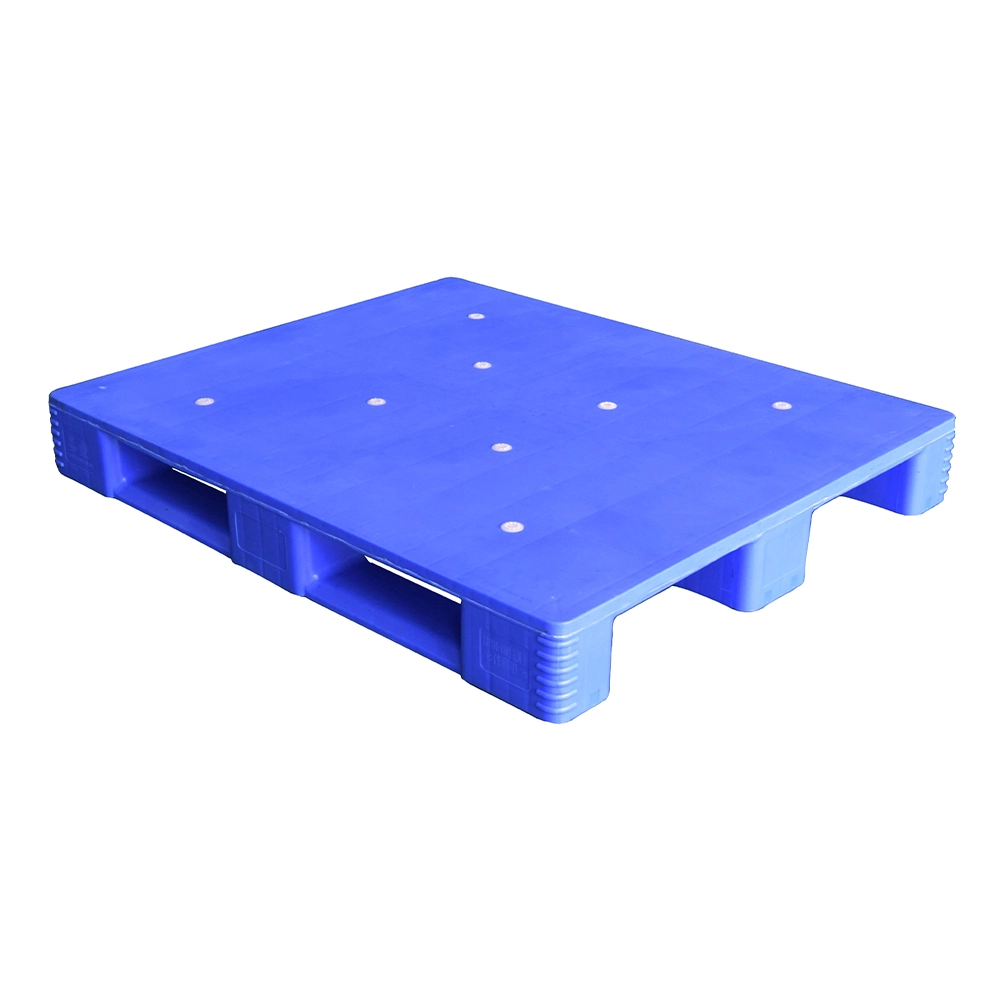
ZJ1210-150H Three-runner Closed Deck Hygienic Plastic Pallet
The three-runner closed-deck hygienic plastic pallet is a solid and durable packaging solution designed for general and especially food and medicine storage and transport. It’s made of virgin HDPE or PP, featuring a flat surface and even bottom for hygienic consideration, a reinforced configuration with steel cores for rack and shelf, and a steady loading capacity.
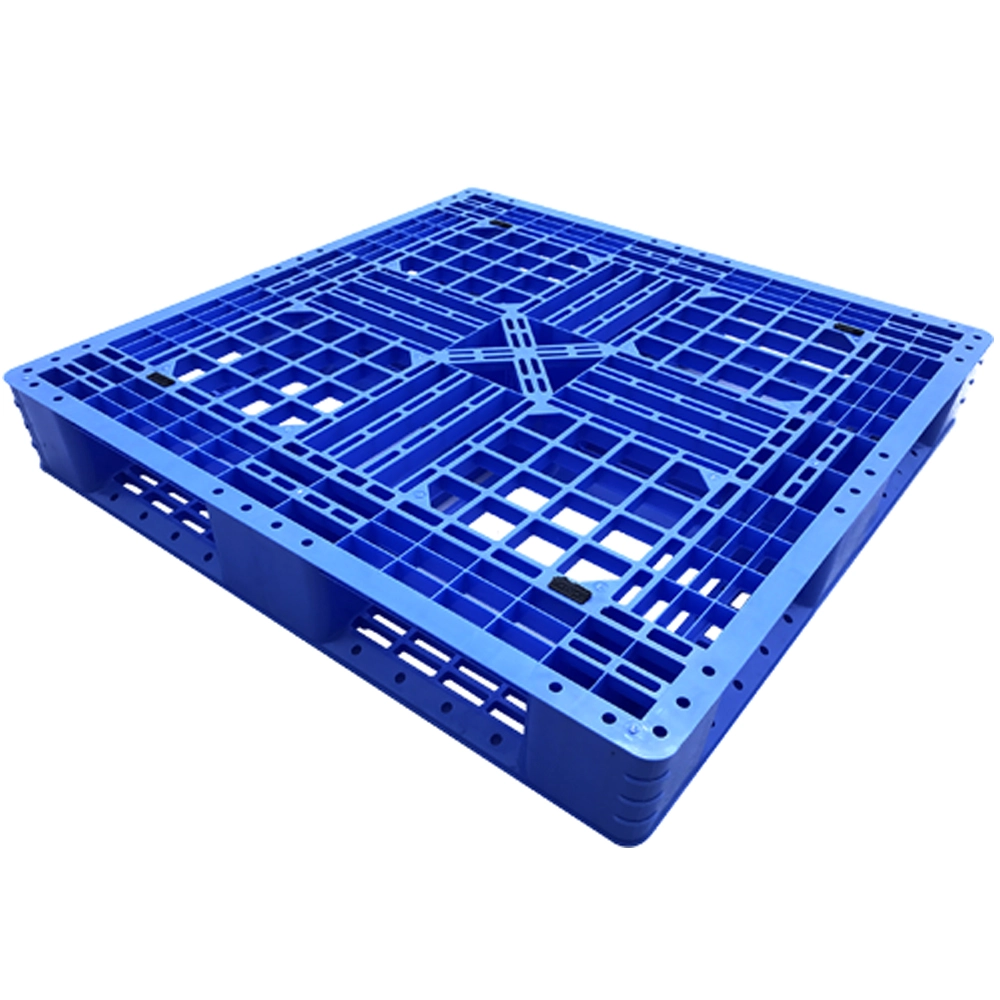
ZJ1010-150 Six-runner Single-sided Plastic Pallet
The six-runner plastic pallet, open or closed deck, is a solid and durable packaging solution designed for general and medium to heavy-duty cargo stacking, storage and transport. It’s made of virgin HDPE or PP, featuring in robust structure, a reinforced configuration with steel cores for the rack and shelf, and a steady loading capacity.
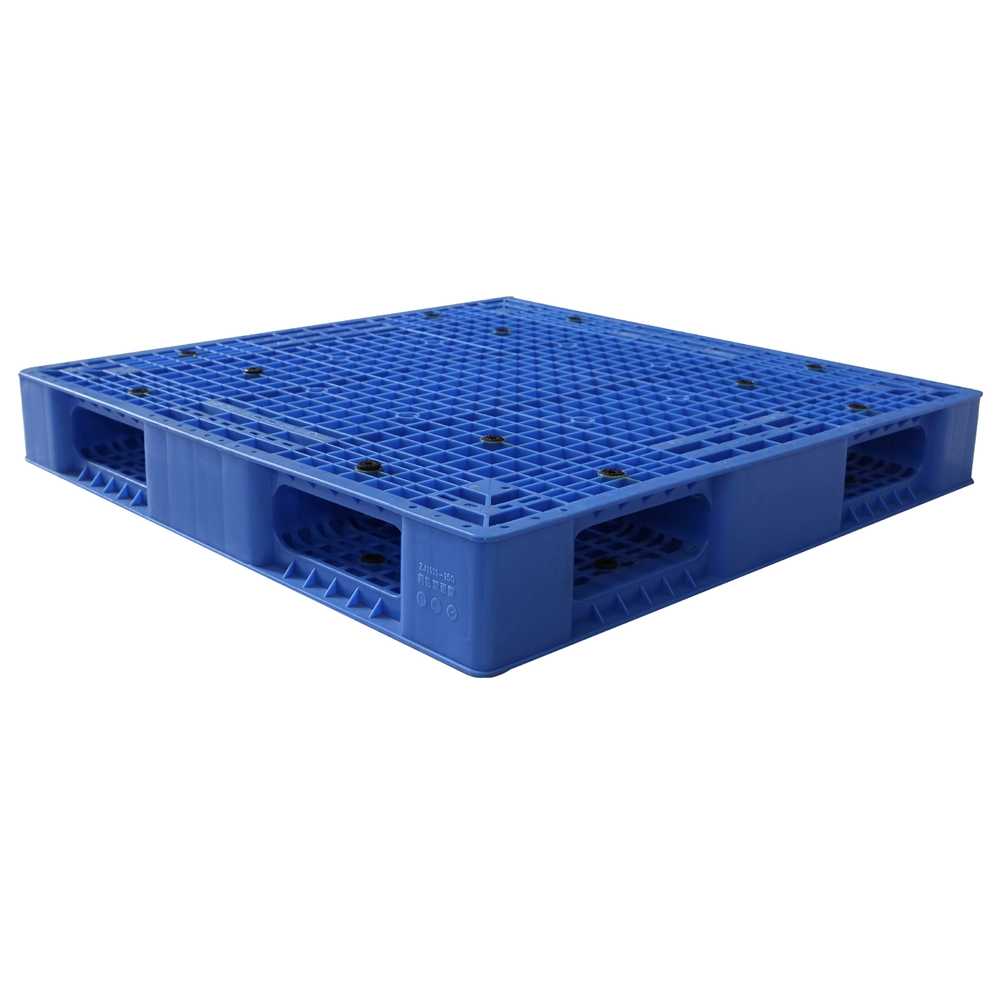
ZJ11111-150 Double-sided Heavy Duty Plastic Pallet
The double-sided plastic pallet, open deck or closed deck, is a solid and durable packaging solution designed for general and medium to heavy-duty cargo stacking, storage and transport. It’s made of virgin HDPE or PP, featuring a robust structure, a reinforced configuration with steel cores for the rack and shelf, and a steady loading capacity for both sides.
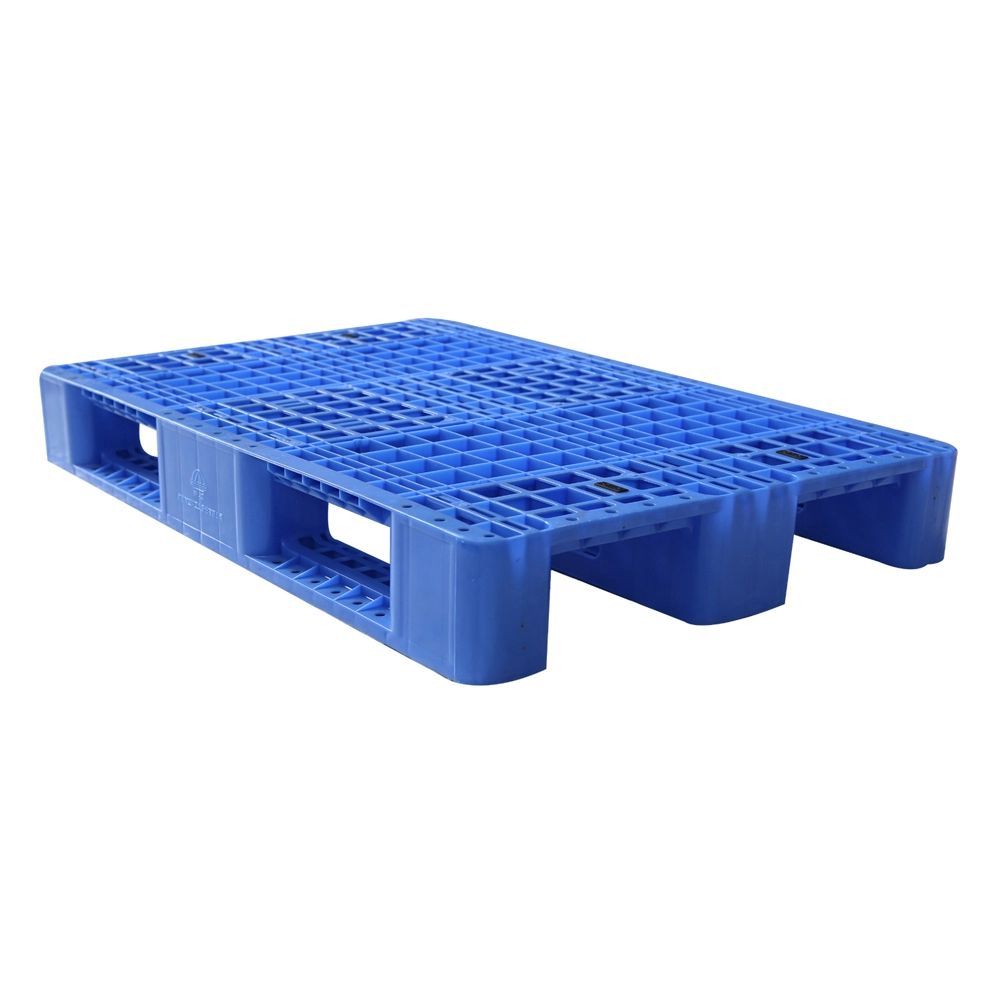
ZJ1208-155 Three-runner Single-sided Plastic Pallet
The three-runner single-sided plastic pallet is a solid and durable packaging solution designed for general and medium to heavy-duty cargo storage, transport and automated storage and retrieval system (AS/RS) use. It’s made of virgin HDPE or PP, featuring in robust structure, reinforced configuration with steel cores for rack and shelf, and a steady loading capacity.
Request More Information About Plastic Pallets
Have questions or need detailed insights on this article? Fill out the form below to contact our team for comprehensive information and support related to our plastic pallet solutions.
Contact us


+86 138 0277 8204
+86 183 4431 0917
+86 195 3791 1860

No. 15-1, Fengying Rd., Taiping Town, Conghua Dist., Guangzhou City, Guangdong Province, China.
 Scan QR Code
Weihong
Whatsapp: +8613802778204
Guangdong Weihong Plastic Technology Co., Ltd.
Scan QR Code
Whatsapp: +8619537911860
Scan QR Code
Guangdong Weihong Plastics Technology Company Ltd.