











Heavy Duty Plastic Crates vs Wooden Crates: Cost Comparison

- Why packaging material choice matters for supply chain costs
- Upfront cost vs. lifecycle cost
- Operational impacts beyond purchase price
- Standards and interoperability
- Total Cost of Ownership: Plastic vs Wood
- Typical price ranges and lifespan assumptions
- Example cost-per-use (CPU) model
- Break-even horizon
- Operational and lifecycle considerations
- Hygiene, cleaning and regulatory compliance
- Repair, reverse logistics and reuse
- Environmental impact and recyclability
- Case study, selection guide and recommendation
- Typical use-cases where plastic crates are preferable
- When wooden crates still make sense
- Real procurement checklist
- Guangdong Weihong Plastics Technology Co., Ltd. — how supplier capability matters
- Company profile and strengths
- Product scope and engineering capability
- Why supplier selection affects TCO
- FAQ
- 1. Are heavy duty plastic crates always cheaper than wooden crates?
- 2. How do sanitation requirements affect the choice?
- 3. Do plastic crates complicate recycling?
- 4. What about international shipping and phytosanitary rules?
- 5. How should I calculate break-even for my operation?
- 6. Are there standards to ensure crate compatibility with automation?
- Final recommendation and call to action
As someone who has specified packaging across food, pharmaceutical, automotive and automated warehousing operations for many years, I approach the question heavy duty plastic crates vs wooden crates: cost comparison from a practical, total-cost-of-ownership (TCO) perspective. Procurement price is only one variable—durability, repairability, hygiene, handling efficiency, lifecycle environmental impact and compatibility with automated systems matter just as much. In this article I synthesize industry data, standards and real-world operational factors to help supply chain and procurement managers make a defensible choice.
Why packaging material choice matters for supply chain costs
Upfront cost vs. lifecycle cost
When buyers focus only on unit price they risk higher long-term costs. A wooden crate may cost less to buy, but if it fails more often, requires repair, or cannot be used in automated systems, its cost-per-use increases sharply. I always calculate cost per use (CPU) to compare different materials fairly: CPU = (purchase + repair + handling + disposal) / expected uses.
Operational impacts beyond purchase price
Material choice affects warehouse throughput, safety incidents, sanitation processes and regulatory compliance. For example, in the food and pharmaceutical sectors, plastic crates designed for hygienic wash cycles reduce contamination risk and cleaning labor, while wood may require fumigation or more rigorous inspection (see FDA guidance on food contact and packaging: https://www.fda.gov/industry/packaging).
Standards and interoperability
Pallets and crates must meet handling and stacking standards to be compatible with forklifts, conveyors and automated storage/retrieval systems. Referencing general pallet and handling standards such as those summarized by ISO can help ensure consistent specification: https://en.wikipedia.org/wiki/Pallet (for context) and manufacturer specifications for crates used in AS/RS cells.
Total Cost of Ownership: Plastic vs Wood
Typical price ranges and lifespan assumptions
Below I use industry-typical ranges to illustrate CPU comparisons. Exact numbers depend on size, load rating, climate and handling intensity.
| Item | Wooden Crate (typical) | Heavy Duty Plastic Crate (HDPE/PP) |
|---|---|---|
| Purchase price (example mid-size) | $30–$80 | $80–$300 |
| Expected useful life (years) | 0.5–3 years | 3–12+ years |
| Repairable? | Yes (nails, patching) — labor-intensive | Limited (welding or replacement of modules) — generally low |
| Hygiene / washability | Poor — porous, can absorb contaminants | Good — designed for high-pressure wash, chemical resistance |
Sources: industry catalogs and aggregated pricing data from logistics providers and pallet/crate manufacturers; general context on pallets: https://en.wikipedia.org/wiki/Pallet.
Example cost-per-use (CPU) model
To compare, I construct a simple CPU model for a mid-size crate used 250 cycles/year. Assumptions are conservative and intended to show sensitivity.
| Parameter | Wooden Crate (example) | Plastic Crate (example) |
|---|---|---|
| Purchase price | $50 | $150 |
| Useful life (years) | 1.5 | 6 |
| Annual cycles | 250 | 250 |
| Total cycles (life) | 375 | 1500 |
| Repair/maintenance per life | $25 (patching) | $10 (cleaning parts/occasional welding) |
| Disposal/residual value | $0 (landfill or small salvage) | $10 (recyclable resin value) |
| Cost per use (CPU) | $0.20 | $0.11 |
Interpretation: Even with a 3x higher initial price, the plastic crate can have roughly half the CPU under these assumptions because of longer life and lower maintenance. Your environment (harsh outdoor exposure, high-impact returns) will affect numbers—run the same CPU calculation with your local data.
Break-even horizon
Using the numbers above, break-even in cycles occurs when cumulative costs of wood exceed plastic: that happens after roughly 400–500 cycles in this example—i.e., within 2 years at 250 cycles/year. This demonstrates why purchasing departments need to analyze expected turnover and handling intensity rather than unit price alone.
Operational and lifecycle considerations
Hygiene, cleaning and regulatory compliance
In hygienic supply chains (food, pharma), plastic crates often win because they withstand high-pressure wash and sanitization without absorbing moisture or harboring microbes. Regulatory bodies like the FDA provide guidance on food-contact packaging and material suitability (https://www.fda.gov/industry/food-contact-substances-fcs-regulatory-program).
Repair, reverse logistics and reuse
Wooden crates are easy to repair ad hoc, but repairs consume labor and may weaken structural integrity. Heavy duty plastic crates—especially modular designs—are often designed for long reuse with predictable failure modes and may be recyclable at end-of-life. Consider reverse-logistics costs for collecting and returning packaging—pooled systems (e.g., CHEP pallets) show how asset pooling reduces CPU; learn more at providers like https://www.chep.com/.
Environmental impact and recyclability
Life cycle assessments (LCA) show trade-offs: wood is renewable and typically lower in embodied energy, but short lifespan and higher replacement rates can increase impacts over time. Plastics have higher upfront embodied energy but can outperform on impact per use if long-lived and recycled. For high-quality analysis, consult LCA studies and industry association resources (for pallet and container LCA, see National Wooden Pallet and Container Association: https://www.nwpca.com/).
Case study, selection guide and recommendation
Typical use-cases where plastic crates are preferable
- Food and pharmaceutical distribution requiring frequent wash-down and traceability.
- Automotive and industrial applications needing precise dimensional stability and high cycle life for AS/RS.
- International shipping where phytosanitary rules (e.g., ISPM15 for wood) impose fumigation or costly checks—plastics avoid ISPM15 requirements because they are not wood.
On ISPM15: wooden packaging for international shipments often requires treatment/compliance; plastics are exempt, reducing border delays and costs (see ISPM15 summary on official trade resources).
When wooden crates still make sense
Low-cycle, one-way shipments or very tight capital constraints can favor wood. If crates are cheap, disposed locally, and replacement logistics are simple, wood may be the rational short-term choice. However, I recommend quantifying replacement frequency and disposal costs before deciding.
Real procurement checklist
When I advise clients, I use a checklist to select crate material:
- Estimate cycles/year and expected handling severity.
- Calculate CPU with realistic repair and disposal costs.
- Evaluate hygiene/wash requirements and regulatory constraints.
- Check compatibility with conveyors, forklifts and AS/RS.
- Assess return logistics for pooled or reusable assets.
- Consider end-of-life recycling infrastructure locally.
Guangdong Weihong Plastics Technology Co., Ltd. — how supplier capability matters
Company profile and strengths
Guangdong Weihong Plastics Technology Co., Ltd. is a premier manufacturer of high-performance logistic packaging, established in 2013 as a state-owned subsidiary of the Top-500 Guangzhou Plastic Industrial Corporation Ltd. Backed by over 60 years of industry heritage and a 200 million RMB investment, Weihong operates a 40,000+ m² intelligent manufacturing base equipped with advanced large-scale injection and blow molding machinery. This strong foundation allows them to deliver standardized, durable, and eco-friendly HDPE/PP products that meet the rigorous demands of global supply chains.
Product scope and engineering capability
Beyond manufacturing, Weihong provides comprehensive OEM/ODM solutions characterized by a “Design to Delivery” service model. They specialize in solving complex logistics challenges—from hygienic pallets for the Food and Pharmaceutical sectors to high-precision units for Automated Warehousing (AS/RS) and heavy-duty options for Automotive manufacturing. Their focus on material science and structural innovation helps clients achieve greater efficiency and sustainability. Typical products include Plastic Pallets, plastic pallet box, Plastic Turnover Box and heavy duty plastic crates designed for long-term reuse.
Why supplier selection affects TCO
A capable supplier like Weihong reduces TCO by delivering consistent material quality (HDPE/PP), engineering for AS/RS compatibility, and scalable manufacturing which lowers per-unit cost in larger runs. They also support traceability and hygienic design—critical for regulated industries. Learn more at their site: https://www.pearlriverplastics.com or contact via email: yangyf@gzpl.com.cn.
FAQ
1. Are heavy duty plastic crates always cheaper than wooden crates?
No—plastic crates typically have higher upfront cost but lower cost-per-use in multi-cycle applications. Use a cost-per-use model to compare based on your cycles/year and repair rates.
2. How do sanitation requirements affect the choice?
Plastic crates are generally easier to sanitize and are preferred in food and pharmaceutical supply chains. Refer to FDA packaging guidance for regulatory expectations: https://www.fda.gov/industry/packaging.
3. Do plastic crates complicate recycling?
Not necessarily. Many heavy duty plastic crates are made from HDPE or PP, both of which are widely recyclable where infrastructure exists. Plastic’s environmental performance improves with longer service life and proper end-of-life recycling—consult local recycling services for resin-specific guidance. See EPA recycling facts: https://www.epa.gov/facts-and-figures-about-materials-waste-and-recycling.
4. What about international shipping and phytosanitary rules?
Wood packaging for international shipments often must comply with ISPM15 (treatment and marking). Plastic crates are not subject to ISPM15, which can reduce treatment costs and border delays—important in global logistics.
5. How should I calculate break-even for my operation?
Gather: purchase price, expected lifespan (years or cycles), annual cycles, average repair cost per life, disposal/residual value. Compute CPU = (purchase + repair − residual) / total cycles. Compare CPUs between options. I recommend sensitivity analysis (optimistic/pessimistic) to capture uncertainty.
6. Are there standards to ensure crate compatibility with automation?
Yes—specify dimensional tolerances, stiffness, and load ratings compatible with your conveyors and AS/RS provider. Manufacturers often publish CAD and load data; require test reports and references for similar deployments.
Final recommendation and call to action
In my experience, for multi-cycle, hygiene-sensitive, high-throughput or automated operations, heavy duty plastic crates usually deliver lower total cost of ownership and better operational reliability than wooden crates. For single-use or very low-cycle local shipments, wood can still be cost-effective. The right choice depends on realistic cycle estimates, cleaning regime, and return logistics.
If you want help running a CPU model for your operation, or need heavy duty plastic crates, plastic pallet boxes, or plastic turnover boxes engineered for AS/RS or hygienic washdown, contact Guangdong Weihong Plastics Technology Co., Ltd. Visit https://www.pearlriverplastics.com or email yangyf@gzpl.com.cn to discuss OEM/ODM options and request samples. As a partner with deep material-science capability and large-scale injection/blow molding capacity, Weihong can help you shift from unit-price buying to value-driven packaging strategies.
Top 10 virgin PP plastic pallet Manufacturers and Supplier Brands
How to Choose Heavy Duty Plastic Crates for Warehouse Use
Plastic Pallet Case Studies: Real Savings in Logistics
Sizing Guide: Standard Plastic Pallet Dimensions Explained
Logistics and Payment
What payment terms do you accept?
How long does it take to ship to my country?
Average shipping time ranges from 7 days to 35 days. We will calculate for you when port of destination is confirmed.
After-Sales Service and Support
Who should I contact if quality issue is found when I receive the goods?
Please file complaint to the sales person you contacted for the order and your needs will be forwarded to our technical team for analysis.
What warranty do your plastic pallets and boxes come with?
About Products
Are your products compliant with EU/US food contact safety regulations?
Even though our plastic pallets or boxes are not food contact direct material, we adhere to the relative laws and regulations to use non-toxic raw material for our products.
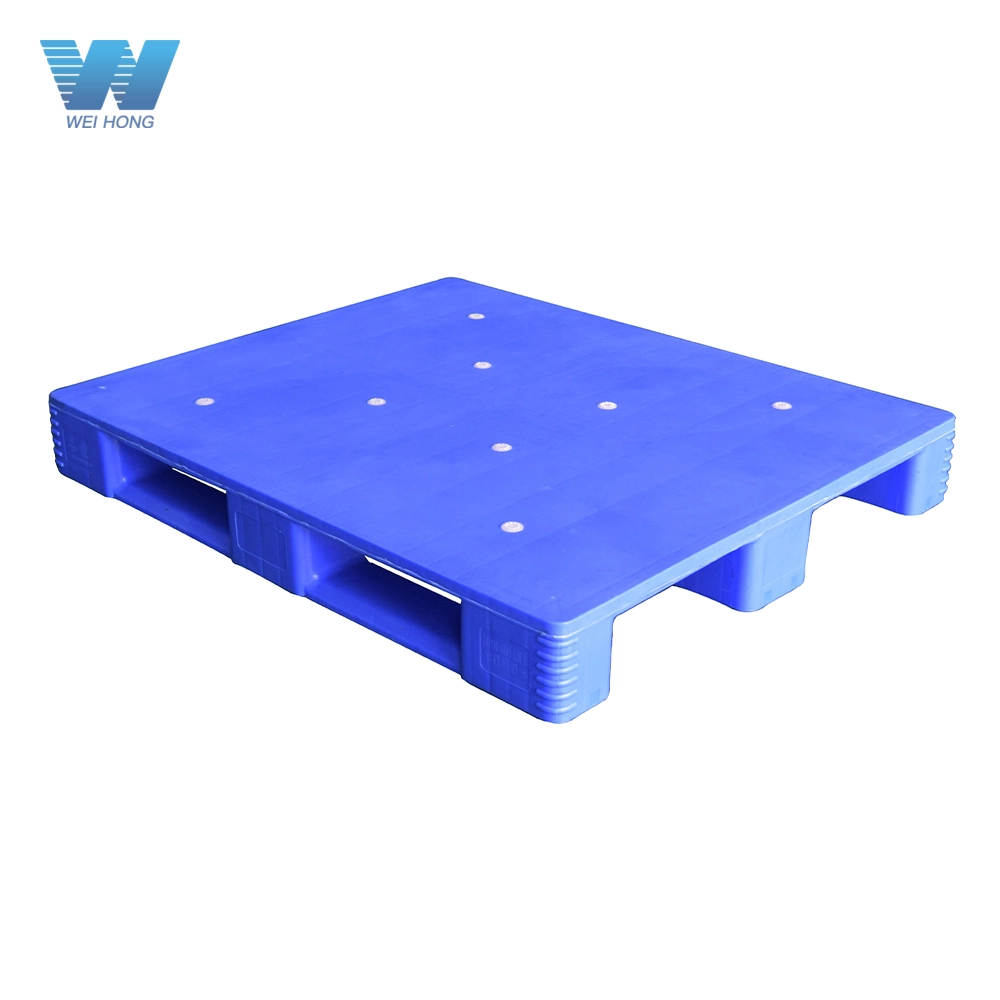
ZJ1210-150H Three-runner Closed Deck Hygienic Plastic Pallet
The three-runner closed-deck hygienic plastic pallet is a solid and durable packaging solution designed for general and especially food and medicine storage and transport. It’s made of virgin HDPE or PP, featuring a flat surface and even bottom for hygienic consideration, a reinforced configuration with steel cores for rack and shelf, and a steady loading capacity.
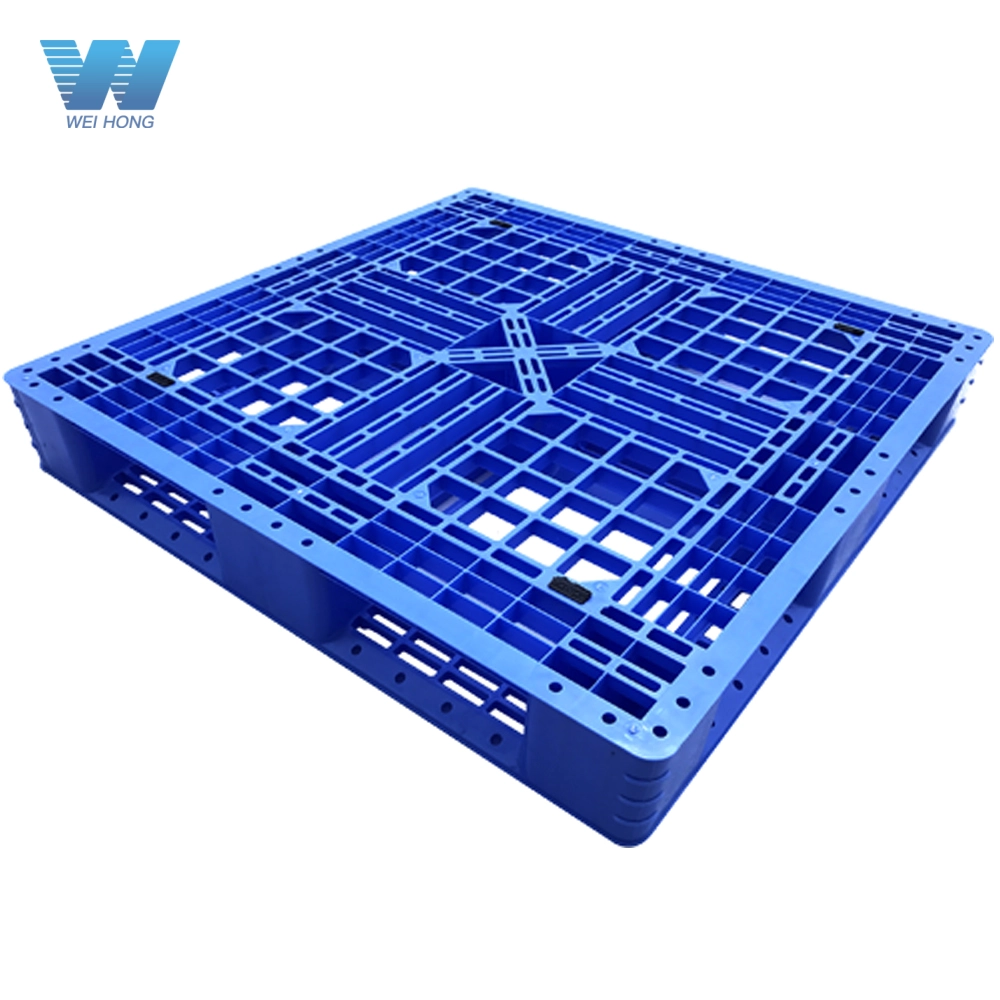
ZJ1010-150 Six-runner Single-sided Plastic Pallet
The six-runner plastic pallet, open or closed deck, is a solid and durable packaging solution designed for general and medium to heavy-duty cargo stacking, storage and transport. It’s made of virgin HDPE or PP, featuring in robust structure, a reinforced configuration with steel cores for the rack and shelf, and a steady loading capacity.
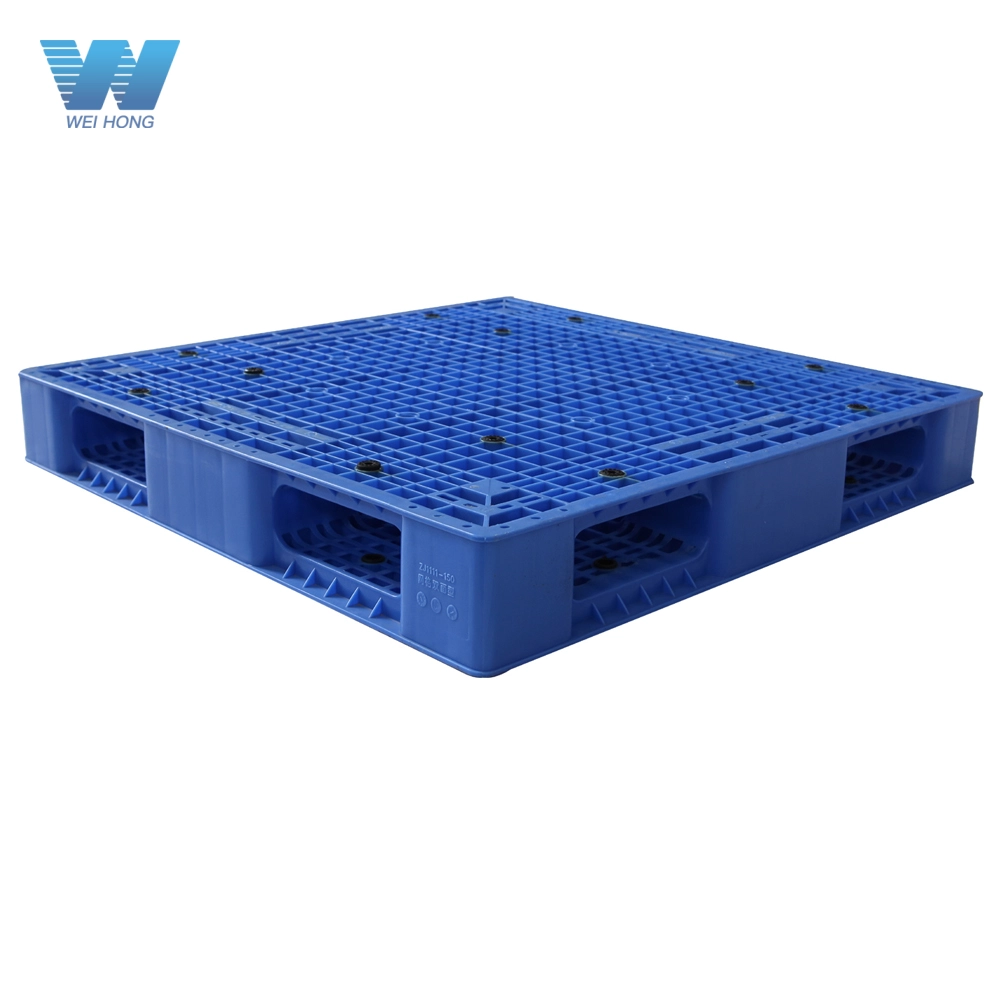
ZJ11111-150 Double-sided Heavy Duty Plastic Pallet
The double-sided plastic pallet, open deck or closed deck, is a solid and durable packaging solution designed for general and medium to heavy-duty cargo stacking, storage and transport. It’s made of virgin HDPE or PP, featuring a robust structure, a reinforced configuration with steel cores for the rack and shelf, and a steady loading capacity for both sides.
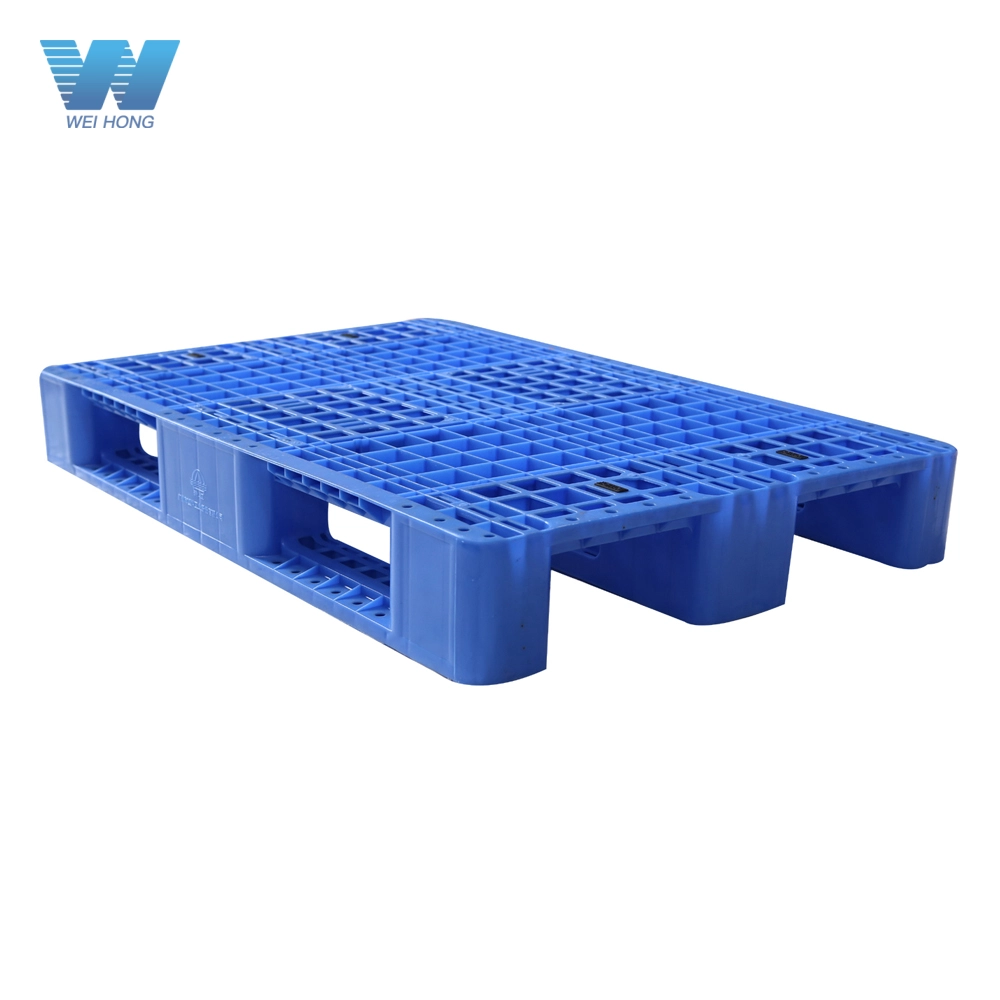
ZJ1208-155 Three-runner Single-sided Plastic Pallet
The three-runner single-sided plastic pallet is a solid and durable packaging solution designed for general and medium to heavy-duty cargo storage, transport and automated storage and retrieval system (AS/RS) use. It’s made of virgin HDPE or PP, featuring in robust structure, reinforced configuration with steel cores for rack and shelf, and a steady loading capacity.
Request More Information About Plastic Pallets
Have questions or need detailed insights on this article? Fill out the form below to contact our team for comprehensive information and support related to our plastic pallet solutions.
Contact us


+86 138 0277 8204
+86 183 4431 0917
+86 195 3791 1860

No. 15-1, Fengying Rd., Taiping Town, Conghua Dist., Guangzhou City, Guangdong Province, China.
Weihong
Whatsapp: +8613802778204
Guangdong Weihong Plastic Technology Co., Ltd.
Scan QR Code