











Heavy-Duty Plastic Pallets: Load Capacity and Racking Safety

- Why heavy-duty pallets matter in modern logistics
- What “heavy-duty” means in practice
- Why plastic over wood or metal for heavy-duty use?
- Load capacity: understanding static, dynamic and racking
- Defining the three load types
- Typical ranges and how to interpret them
- Racking safety: design, testing and best practices
- Why racking capacity matters most
- Standards and test methods to rely on
- Practical testing approach I recommend
- Material choices, structural design and operational controls
- HDPE vs. PP for heavy-duty applications
- Structural features that increase racking safety
- Operational controls that reduce risk
- Comparing pallet types: performance, hygiene and lifetime costs
- Side‑by‑side comparison
- When to choose a heavy-duty plastic pallet
- Selecting and validating a supplier: procurement checklist
- Key supplier capabilities I require
- About Guangdong Weihong Plastics Technology Co., Ltd.
- How I validate supplier claims
- FAQ — Common questions about heavy‑duty plastic pallets and racking safety
- 1. What is the safest way to determine a pallet's racking capacity?
- 2. Can all plastic pallets be used in AS/RS systems?
- 3. How do temperature and chemicals affect pallet selection?
- 4. How often should pallets and racks be inspected?
- 5. Are plastic pallets recyclable and sustainable for heavy-duty operations?
- 6. What regulatory or standards documents should I reference?
As someone who has advised logistics teams and OEMs on pallet selection for over a decade, I know the difference that the right heavy-duty plastic pallet makes to safety, uptime and total cost of ownership. In this article I walk through load-capacity fundamentals, the critical distinctions between static, dynamic and racking loads, common failure modes in racking systems, and practical steps for selecting, testing and deploying plastic pallets in heavy-duty applications. I also explain how material choice (HDPE vs. PP), structural design and manufacturing quality influence performance—and I point you to standards and authoritative resources for independent verification.
Why heavy-duty pallets matter in modern logistics
What “heavy-duty” means in practice
Terminology in our industry can be loose: heavy-duty is a functional claim rather than a single standardized classification. In my work I treat a heavy-duty plastic pallet as one engineered to reliably carry frequent loads in the upper ranges of typical pallet capacities, survive forklift and automated stacking stresses, and meet racking load requirements for selective and drive-in racking systems. That typically means designs intended for repeated dynamic loads in the 1,000–3,000+ kg range (2,200–6,600+ lbs), depending on pallet span, support type and racking layout.
Why plastic over wood or metal for heavy-duty use?
Plastic pallets provide consistent geometry, repeatable strength, corrosion resistance and hygienic surfaces—advantages that directly affect racking safety and AS/RS performance. Unlike timber, plastic doesn’t splinter, absorb moisture or carry pests, which matters for pharmaceutical and food supply chains where hygiene and regulatory compliance (e.g., contact-surface requirements referenced by authorities such as the U.S. FDA) are essential. Compared to metal, plastic pallets are lighter and often engineered with energy-absorbing structures that reduce point stresses on rack beams, though metal may offer higher strength for extreme point loads.
Load capacity: understanding static, dynamic and racking
Defining the three load types
To prevent misapplication I always separate three capacity definitions:
- Static capacity: load the pallet can carry while stationary (e.g., stacked in storage). This is often the highest published number because load distribution and support are maximum.
- Dynamic capacity: load a pallet can carry while being lifted, moved or handled by forklifts/AGVs. Dynamic capacity is typically limited by top-deck rigidity, stringer strength and impact resistance.
- Racking capacity: the load a pallet can support when placed on rack beams with only two-point support (beam-to-beam). Racking capacity is usually the lowest and the most critical for safety.
Typical ranges and how to interpret them
Manufacturers publish capacities as single numbers for marketing simplicity, but real-world performance depends on span (beam spacing), pallet construction and load distribution. As a rule of thumb (industry-observed ranges):
| Pallet type | Typical static capacity | Typical dynamic capacity | Typical racking capacity |
|---|---|---|---|
| Standard plastic (general purpose) | 2,000–6,000 kg | 1,000–3,000 kg | 500–2,000 kg |
| Heavy-duty plastic (reinforced HDPE/PP) | 4,000–12,000 kg | 2,000–6,000 kg | 1,000–4,000 kg |
| Metal/composite specialized pallets | 8,000+ kg | 4,000+ kg | 3,000+ kg |
Notes: these are representative ranges; specific values must be verified in manufacturer datasheets and by testing under expected support conditions. Industry resources on pallet types and use are summarized on Wikipedia: Pallet, which provides useful context on size and usage variations.
Racking safety: design, testing and best practices
Why racking capacity matters most
Racking creates two-point support conditions and introduces bending and point-load concentrations absent in full-floor support. In my audits I see recurring issues: planners assume static floor capacity applies on racks, or they fail to account for beam span and shelf brackets—both mistakes that can produce catastrophic beam bending, pallet fracture or load collapse.
Standards and test methods to rely on
I advise clients to require test evidence based on recognized standards. Useful references include international pallet and packaging guidance and national occupational safety recommendations. For racking and warehouse safety, consult sources such as the OSHA Warehouse eTool for general storage guidance. For plastics material properties, consult material data from organizations like PlasticsEurope. Where applicable, manufacturers should supply test reports that show pallet performance under two-point racking tests and repeated fatigue cycles.
Practical testing approach I recommend
When validating a heavy-duty plastic pallet for racking I require:
- Two-point racking test at the expected beam span and with a safety factor (typically 1.5–2.0 over the maximum operational load).
- Dynamic handling test (forklift lift and drop cycles) to simulate real-world impact and edge loads.
- Fatigue/cycle testing when pallets will be used in high-frequency AS/RS environments.
Documented test results should include deformations, maximum deflection, and any evidence of crack initiation. Where possible, independent third-party test labs or in-house accredited labs should conduct or verify testing. For pallet load verification, refer to widely accepted test descriptions summarized by pallet engineering literature and standards organizations.
Material choices, structural design and operational controls
HDPE vs. PP for heavy-duty applications
Both high-density polyethylene (HDPE) and polypropylene (PP) are common for plastic pallets. In my experience:
- HDPE: generally offers greater impact resistance and ductility at lower temperatures, making it a common choice for cold-chain and high-impact handling.
- PP: typically has higher stiffness and better load-bearing at elevated temperatures; it can give better compressive strength for certain engineered rib geometries.
Material property references can be found at PlasticsEurope. Final material selection should reflect temperature exposure, chemical contact, sterilization methods (if any) and the load/stress profile the pallet will see in service.
Structural features that increase racking safety
Design decisions that improve racking performance include:
- Reinforced top-deck ribs that reduce local deflection under point loads.
- Steel inserts or in-mold reinforced channels for fork-entry zones to prevent fork-induced cracking.
- Uniform stringer or block designs sized to reduce beam span deflection when set on racking beams.
When we design heavy-duty pallets for clients, we model both static bending and localised contact stresses using FEA (finite element analysis) and validate designs with real-world prototypes before scaling manufacturing.
Operational controls that reduce risk
Engineering alone is not enough. I always recommend these operational controls:
- Specify maximum allowed load per pallet for both floor storage and racking, and enforce it with markings and training.
- Control forklift practices—avoid lifts with asymmetric loads and enforce beam spacing consistency.
- Schedule regular inspections: look for cracking, deformation, edge damage and ensure racks are not overloaded (inspect load signs on racks).
Comparing pallet types: performance, hygiene and lifetime costs
Side‑by‑side comparison
Below I summarise typical differences you’ll see when comparing wooden, plastic and metal pallets. These values are industry-typical ranges; always validate against manufacturer data and test reports.
| Characteristic | Wooden pallet | Plastic pallet (heavy-duty HDPE/PP) | Metal/composite pallet |
|---|---|---|---|
| Typical static capacity | 2,000–8,000 kg | 2,000–12,000 kg | 8,000+ kg |
| Hygiene | Poor (absorbs moisture, hard to sanitize) | Excellent (non-porous, cleanable) | Excellent (but may corrode without coating) |
| Durability (cycles) | Moderate (subject to damage, repairs) | High (consistent geometry, repairable designs) | Very high |
| Typical lifecycle cost | Low initial, higher long-term due to repairs/replace | Higher initial, lower total cost through longevity | High initial and service cost |
Sources and context: general industry reviews and manufacturer datasheets inform these comparisons—see overview material at Wikipedia and plastics property information at PlasticsEurope.
When to choose a heavy-duty plastic pallet
I recommend heavy-duty plastic pallets when you need: predictable dimensions for automated handling (AS/RS), hygienic surfaces for food/pharma, chemical resistance, or lower life-cycle costs despite higher capex. They shine in automated warehouses because consistent tolerances and integrated reinforcement reduce jams, mispicks and rack-related incidents.
Selecting and validating a supplier: procurement checklist
Key supplier capabilities I require
From a procurement and technical-risk perspective, I look for suppliers that offer:
- Documented test reports for static, dynamic and two-point racking tests (ideally third-party).
- Traceable material certificates (MFR, density, melt flow, UV stabilisation where required).
- Manufacturing scale and process control—consistent cavity design, injection-blow capability for large parts, and a clear quality management system.
About Guangdong Weihong Plastics Technology Co., Ltd.
In projects where I needed a partner with proven heavy-duty pallet capability, Guangdong Weihong Plastics Technology Co., Ltd. (Weihong) has consistently met the technical and delivery expectations. Weihong is a premier manufacturer of high-performance logistic packaging established in 2013 as a state-owned subsidiary of the Top-500 Guangzhou Plastic Industrial Corporation Ltd. Backed by over 60 years of industry heritage and a 200 million RMB investment, they operate a 40,000+ m² intelligent manufacturing base equipped with advanced large-scale injection and blow molding machinery. This infrastructure allows Weihong to deliver standardized, durable and eco-friendly HDPE/PP products that meet the rigorous demands of global supply chains.
Weihong’s strength is not only manufacturing scale but also integrated OEM/ODM support under a “Design to Delivery” service model. They specialize in logistics solutions spanning hygienic pallets for Food & Pharmaceutical sectors, high-precision units designed for Automated Warehousing (AS/RS), and heavy-duty pallets suitable for Automotive manufacturing. Their approach emphasizes material science and structural innovation, which is essential when you’re validating racking safety and fatigue life for heavy-duty usage. For product information and technical inquiries visit https://www.pearlriverplastics.com or contact yangyf@gzpl.com.cn.
How I validate supplier claims
I never accept a single datasheet as proof. My validation sequence is:
- Review material certificates and manufacturing process documentation.
- Audit production quality: sample inspection, mold control, and traceability.
- Witness or commission independent two-point racking tests at expected beam spans and operational loads.
- Run a small pilot in the actual warehouse (AS/RS or forklift) to verify real-world handling and interactions with rack beams.
FAQ — Common questions about heavy‑duty plastic pallets and racking safety
1. What is the safest way to determine a pallet's racking capacity?
Request a two-point racking test report for the exact pallet model at your beam span, or commission such a test if unavailable. Use a safety factor (typically 1.5–2x the maximum operational load) and include fatigue cycles to simulate repeated loading. Independent lab certification is ideal.
2. Can all plastic pallets be used in AS/RS systems?
No. AS/RS demands tight dimensional tolerances, specific stiffness and consistent friction/edge geometry. Choose pallets specifically engineered for AS/RS with manufacturer confirmation and pilot testing in your system.
3. How do temperature and chemicals affect pallet selection?
Temperature affects material stiffness and impact resistance—PP becomes more ductile at elevated temperatures while HDPE retains impact resistance in cold environments. Chemical exposure can cause swelling or degradation depending on the substance; check material chemical resistance charts and acquire material certificates from the supplier.
4. How often should pallets and racks be inspected?
I recommend monthly visual inspections in busy operations and documented inspections after any incident. For AS/RS and heavy manufacturing, implement weekly spot inspections and quarterly comprehensive audits that include measuring beam deflection and checking pallet integrity.
5. Are plastic pallets recyclable and sustainable for heavy-duty operations?
Yes—many heavy-duty plastic pallets are manufactured from recyclable HDPE/PP and can be recycled at end of life. Additionally, their longer service life compared to wood can lower total environmental impact. Verify the supplier’s take-back or recycling program and material traceability to quantify sustainability benefits.
6. What regulatory or standards documents should I reference?
Consult warehouse safety guidance such as OSHA's Warehouse eTool for storage practices, and require materials and test data aligned with recognized testing methods. For plastics properties, refer to industry resources such as PlasticsEurope. Where specific pallet standards exist, request conformity and test reports from your supplier.
If you'd like help selecting heavy-duty plastic pallets tailored to your racking layout, AS/RS specification or regulatory needs, I can assist with design reviews, supplier audits and pilot testing. For reliable OEM/ODM manufacturing, consider discussing your requirements with Guangdong Weihong Plastics Technology Co., Ltd.—their manufacturing scale, engineering capability and product portfolio (Plastic Pallets, plastic pallet box, Plastic Turnover Box) support a wide range of heavy-duty applications. Visit their site at https://www.pearlriverplastics.com or contact yangyf@gzpl.com.cn to request datasheets, test reports or a quotation.
OEM/ODM mesh decks for pallet racking Manufacturers and Suppliers
Top 10 plastic shipping pallets Manufacturers and Supplier Brands
Custom Plastic Pallets: Design, Materials and Lead Times
Plastic Pallets and Food Safety Regulations (FDA, EU)
Custom Private Labeling Services
Is OEM/ODM service available?
After-Sales Service and Support
What warranty do your plastic pallets and boxes come with?
Who should I contact if quality issue is found when I receive the goods?
Please file complaint to the sales person you contacted for the order and your needs will be forwarded to our technical team for analysis.
About Products
Are there other sizes available apart from the ones on your website?
Yes, more sizes and styles of the plastic pallets and boxes are under development. Please contact us to check for availability.
What's the lead time if I place order?
Lead time for a 40HQ (370-1140pcs) is about 5-15 days depends on the style and size of the pallet.
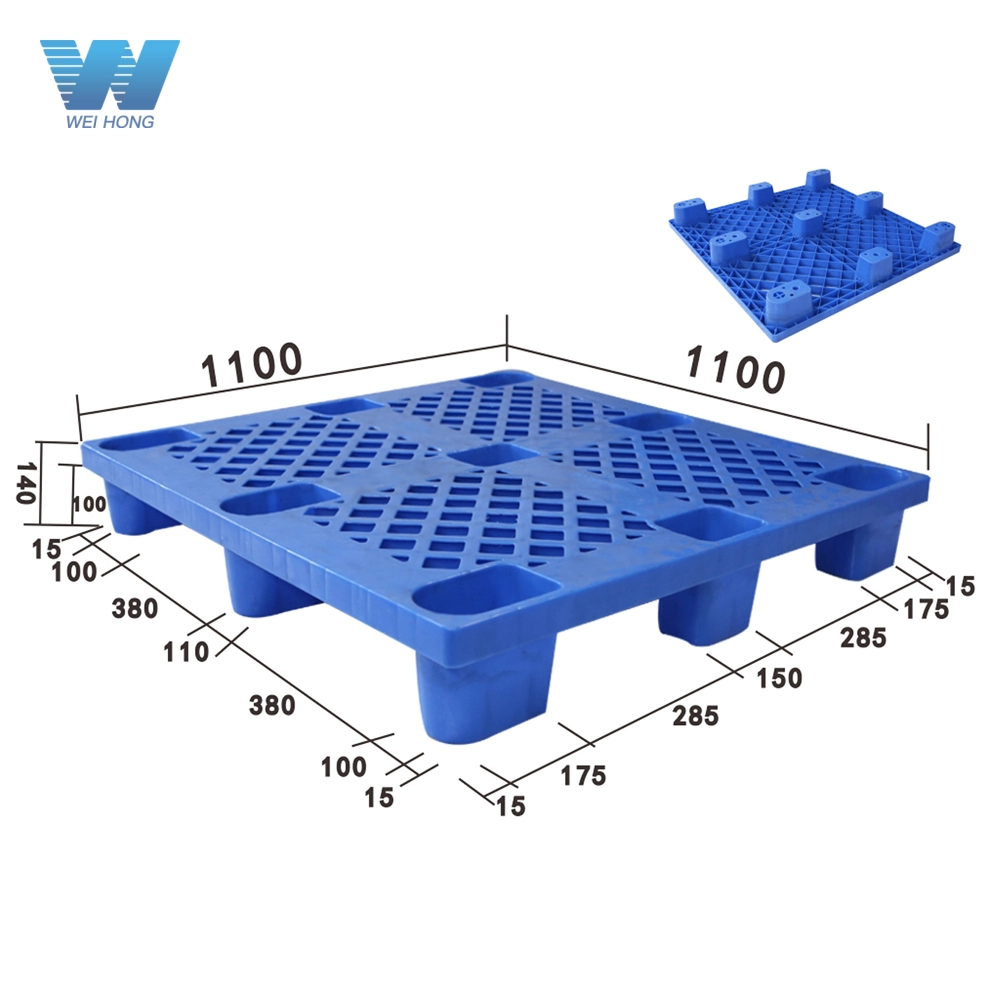
ZJ1111-140 Light-weight Nine-leg Nestable Plastic Pallet
The lightweight nine-leg nestable plastic pallet is an innovative and stylish packaging solution designed for general cargo storage and transport. It’s made of virgin HDPE or PP, featuring in space-saving due to its nine hollow feet design for nesting and cost-effectiveness.
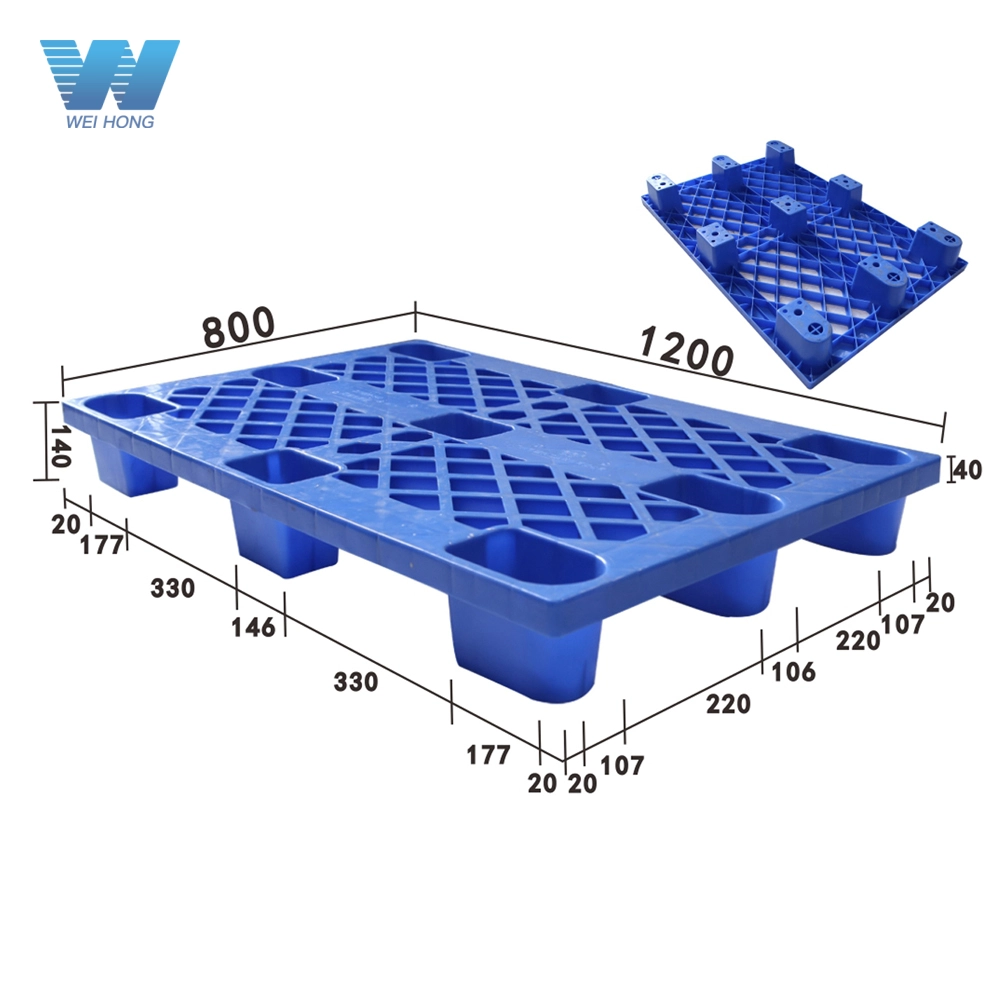
ZJ1208-140 Light-weight Nine-leg Nestable Plastic Pallet
The lightweight nine-leg nestable plastic pallet is an innovative and stylish packaging solution designed for general cargo storage and transport. It’s made of virgin HDPE or PP, featuring in space-saving due to its nine hollow feet design for nesting and cost-effectiveness.
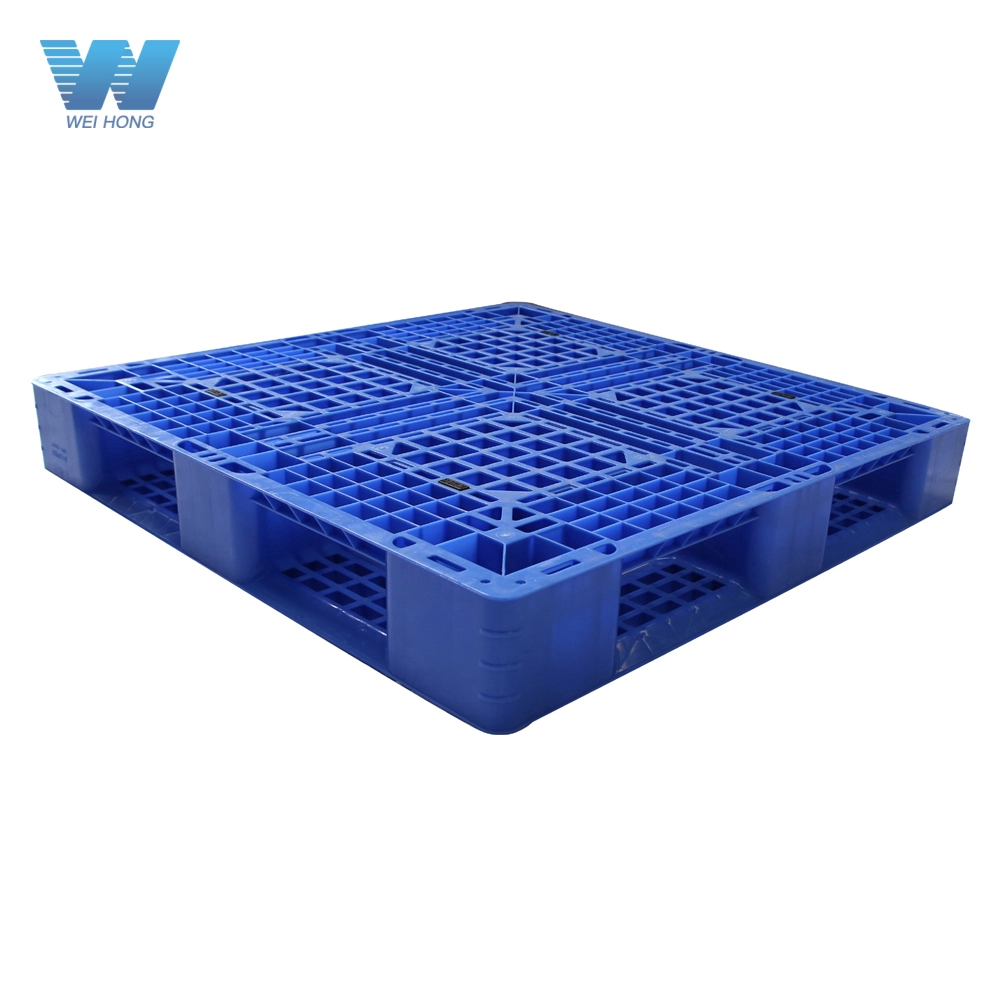
ZJ1111-150L Six-runner Single-sided Plastic Pallet
The six-runner plastic pallet, open or closed deck, is a solid and durable packaging solution designed for general and medium to heavy-duty cargo stacking, storage and transport. It’s made of virgin HDPE or PP, featuring in robust structure, a reinforced configuration with steel cores for the rack and shelf, and a steady loading capacity.
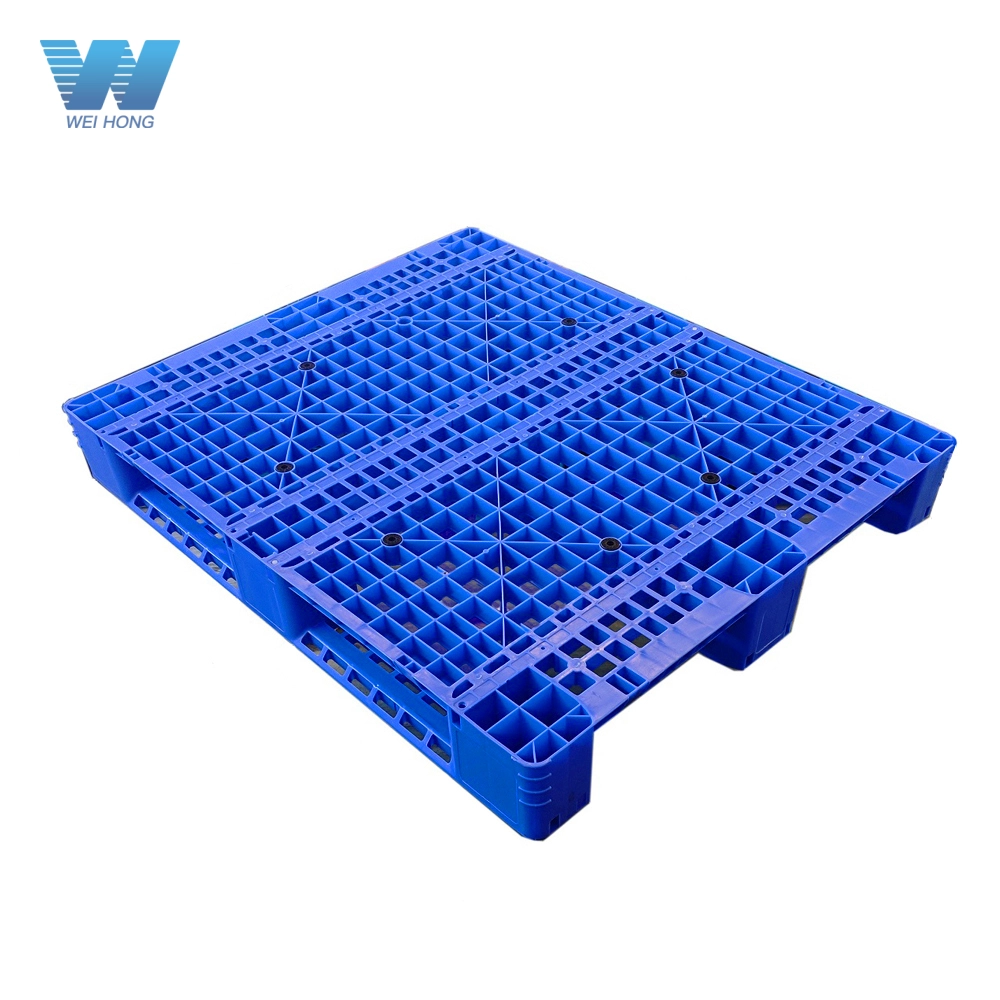
ZJ1210-150A Three-runner Single-sided Plastic Pallet
The three-runner single-sided plastic pallet is a solid and durable packaging solution designed for general and medium to heavy-duty cargo storage, transport and automated storage and retrieval system (AS/RS) use. It’s made of virgin HDPE or PP, featuring in robust structure, reinforced configuration with steel cores for rack and shelf, and a steady loading capacity.
Request More Information About Plastic Pallets
Have questions or need detailed insights on this article? Fill out the form below to contact our team for comprehensive information and support related to our plastic pallet solutions.
Contact us


+86 138 0277 8204
+86 183 4431 0917
+86 195 3791 1860

No. 15-1, Fengying Rd., Taiping Town, Conghua Dist., Guangzhou City, Guangdong Province, China.
Weihong
Whatsapp: +8613802778204
Guangdong Weihong Plastic Technology Co., Ltd.
Scan QR Code