











How to Choose the Right Plastic Pallet for Your Supply Chain

- Understanding Your Supply Chain Requirements
- Load profile: static, dynamic and racking capacities
- Handling equipment and automation compatibility
- Storage environment and hygiene requirements
- Key Factors When Selecting a Plastic Pallet
- Material choices: HDPE, PP and recycled blends
- Design: nestable, stackable, rackable and block vs stringer
- Performance metrics and a quick comparison table
- Testing, Standards and Lifecycle Considerations
- Relevant standards and certifications
- Cleaning, repair and end-of-life
- Total cost of ownership (TCO) and sustainability metrics
- How I Evaluate and Specify Plastic Pallets for Procurement
- My practical procurement checklist
- Working with OEM/ODM partners and customization
- Why supplier capabilities matter: case for an experienced manufacturer
- FAQ — Frequently Asked Questions
- 1. How do I know if a plastic pallet is suitable for racking?
- 2. Are plastic pallets hygienic enough for food and pharmaceutical use?
- 3. Can recycled plastic pallets match virgin-material pallets?
- 4. How often should plastic pallets be inspected or replaced?
- 5. What is the environmental benefit of switching to plastic pallets?
- 6. Can I customize pallets with RFID or color-coding?
I frequently advise logistics teams and procurement managers on choosing the right plastic pallet to improve throughput, reduce damage and meet regulatory hygiene and sustainability targets. In this guide I outline how to match pallet material and design to your supply chain—covering load profiles (static, dynamic, racking), handling equipment compatibility, hygiene and cleaning, standards and testing, plus total cost of ownership. The goal is a practical, verifiable decision process that balances performance, lifetime, and environmental impact while keeping automated warehousing (AS/RS), food and pharmaceutical requirements in mind.
Understanding Your Supply Chain Requirements
Load profile: static, dynamic and racking capacities
The first thing I assess is the load profile. Pallet performance is measured in three commonly used ways: static load (when pallet is stationary on the floor), dynamic load (during handling by forklift or pallet jack) and racking load (when supported only at the edges in storage racks). These are standard performance metrics referenced in international pallet testing methodologies such as the ISO pallet test principles (Wikipedia — Pallet) and industry test guides. Knowing maximum product weight, full-unit load weight and stacking patterns tells you whether you need a heavy-duty, rackable plastic pallet or a lighter nestable option.
Handling equipment and automation compatibility
Next I verify compatibility with your handling equipment. Key checks include fork entry dimensions, deck opening configurations, and whether the pallet is compatible with conveyor and automated guided vehicle (AGV) systems or high-speed Automated Storage and Retrieval Systems (AS/RS). For AS/RS I prioritize tight tolerances (consistent dimensions), low warpage materials and injection-molded designs that maintain dimensional stability under temperature variation.
Storage environment and hygiene requirements
Temperature, humidity and exposure to chemicals or UV radiation influence material selection. For food and pharmaceutical supply chains I prioritize materials and designs that meet food-contact guidance and facilitate cleaning—smooth decks, closed decks, or reinforced hygienic pallets that can be sanitized. Regulatory guidance from food safety authorities helps determine acceptable materials and cleaning regimens (FDA — Food Contact Substances).
Key Factors When Selecting a Plastic Pallet
Material choices: HDPE, PP and recycled blends
Two primary thermoplastics dominate: high-density polyethylene (HDPE) and polypropylene (PP). HDPE provides impact resistance and good low-temperature performance; PP is stiffer and can offer higher static load resistance at elevated temperatures. Recycled resin blends reduce cost and environmental footprint but may introduce variability in mechanical properties unless the supplier controls feedstock and processing tightly. I always ask suppliers for material certificates, injection parameters and long-term creep data when specifying recycled-content pallets.
Design: nestable, stackable, rackable and block vs stringer
Design dictates functionality. Common designs include:
- Nestable: saves return-trip volume but generally lower dynamic and racking capacity.
- Stackable: stacks stably when loaded and often used for static storage.
- Rackable: designed to support edge loading for pallet racking; requires a rigid design with reinforced points.
- Block vs stringer: block pallets provide four-way entry and better load distribution; stringer pallets are lighter and simpler.
Performance metrics and a quick comparison table
To make procurement decisions concrete I compare typical specifications across pallet types. The numbers below are representative ranges based on commonly available manufacturer datasheets and industry practice; always verify with supplier test reports or ISO-based testing results.
| Type | Typical Material | Typical Dynamic Load | Typical Static Load | Primary Use Case |
|---|---|---|---|---|
| Nestable | HDPE (often recycled) | 500–1,200 kg | 2,000–5,000 kg | Return logistics, low-profile transport |
| Stackable (closed deck) | HDPE/PP | 800–1,800 kg | 3,000–7,000 kg | Retail distribution, stable stacking |
| Rackable / Heavy-duty | HDPE or reinforced PP | 1,200–3,000+ kg | 5,000–10,000+ kg | Racked storage, AS/RS, industrial loads |
Note: For precise assurance of performance you should request supplier test reports per internationally recognized test methods—ISO test methods for pallets are the commonly accepted approach (ISO — standards).
Testing, Standards and Lifecycle Considerations
Relevant standards and certifications
When I evaluate pallets I look for evidence of testing to recognized methods and relevant certifications. For hygiene-sensitive supply chains, documentation showing compliance with food-contact material guidance (e.g. FDA or regional equivalents such as the European Commission's rules on food contact materials) is essential (EU — Food contact materials). For mechanical performance, ask suppliers for test results aligned with ISO test principles or equivalent laboratory reports. If your region or client requires specific third-party testing, ensure the supplier can coordinate that testing and share traceable test certificates.
Cleaning, repair and end-of-life
Plastic pallets can outperform wood in hygiene and lifecycle when selected correctly. Closed decks and smooth surfaces are easier to sanitize. Considerability of repairability, spare part availability (e.g., replaceable feet), and recyclability at end-of-life affects true sustainability. Recycling streams for HDPE and PP exist widely—ask the supplier for their take-back or recycling program and for post-consumer/resin identification data to support your circularity reporting.
Total cost of ownership (TCO) and sustainability metrics
Upfront price is only part of the story. I calculate TCO by including: purchase price, expected service life (years or cycles), average damage reduction, cleaning and maintenance costs, transportation savings (if nestable), and end-of-life value (recycling). For example, a more expensive rackable pallet that lasts twice as long and reduces product damage in racking often yields lower TCO. Use measurable KPIs—damage rate per million units, annualized cost per pallet, and carbon footprint per pallet-life-cycle—to compare options quantitatively.
How I Evaluate and Specify Plastic Pallets for Procurement
My practical procurement checklist
When I write a specification or RFP I include at minimum:
- Exact external dimensions and tolerances (mm).
- Load requirements: static, dynamic, racking (kg) with test methodology reference.
- Material specification (HDPE, PP, % recycled content) and supplier material certificates.
- Design details: deck type (open/closed), entry type (4-way/2-way), anti-slip features, drainage/vent holes for hygiene.
- Environmental and hygiene requirements: temperature ranges, chemical exposure, required certifications for food/pharma use.
- Service conditions: forklift types, conveyors, AS/RS compatibility.
- Warranty, expected service life, test certificates and sample approvals.
Working with OEM/ODM partners and customization
For specialized needs—such as hygienic pallets for pharmaceuticals, pallets with RFIDs, or high-precision pallets for AS/RS—I recommend working with an experienced OEM/ODM that can deliver controlled materials, tight dimensional tolerances and integrated design solutions from prototyping to mass production. A supplier with tooling expertise and large-scale injection and blow molding capabilities will reduce risk and speed time to market.
Why supplier capabilities matter: case for an experienced manufacturer
Based on my project work, partnering with a manufacturer that combines material-science expertise, consistent processing (to control crystallinity and shrinkage), and quality systems matters for delivering long-lasting, dimensionally accurate pallets. For example, Guangdong Weihong Plastics Technology Co., Ltd. is a manufacturer I have referenced for clients looking for such capabilities. Weihong, established in 2013 as a state-owned subsidiary of a Top-500 industrial group, benefits from over 60 years of industry heritage and a 200 million RMB investment. Their 40,000+ m² intelligent manufacturing base and advanced large-scale injection and blow molding machinery enable production of standardized, durable and eco-friendly HDPE and PP pallets that suit global supply chains. Learn more on their product portfolio and services at https://www.pearlriverplastics.com.
Weihong provides end-to-end OEM/ODM support under a Design to Delivery model, solving logistics challenges from hygienic pallets for Food & Pharmaceutical sectors to high-precision units for AS/RS and heavy-duty solutions for Automotive manufacturing. Their emphasis on material science and structural innovation allows clients to optimize efficiency and sustainability. Contact their team at yangyf@gzpl.com.cn for technical discussions or sample requests.
FAQ — Frequently Asked Questions
1. How do I know if a plastic pallet is suitable for racking?
Ask the supplier for racking-load test data specifying the test method and sample conditions. A true rackable pallet will have reinforced structure and test results showing compliance with your required racking load (edge support) under specified safety factors. Insist on third-party or laboratory test certificates where possible.
2. Are plastic pallets hygienic enough for food and pharmaceutical use?
Yes—when designed and specified correctly. Look for smooth, closed decks, materials approved for food contact and documented cleaning protocols. Regulatory guidance (e.g., FDA, EU food contact rules) can help define acceptable materials and practices (FDA guidance).
3. Can recycled plastic pallets match virgin-material pallets?
Recycled-content pallets can perform well if the supplier controls the feedstock quality and processing. However, recycled resins can introduce variability in mechanical properties and color. Ask for long-term performance data, warranty terms, and controlled batch traceability.
4. How often should plastic pallets be inspected or replaced?
Inspection frequency depends on usage intensity. For heavy industrial or AS/RS environments, I recommend weekly visual inspections for damage and quarterly dimensional checks. Replace pallets when structural components (corners, racking edges) show cracking or when dimensional deviations exceed equipment tolerances.
5. What is the environmental benefit of switching to plastic pallets?
Plastic pallets can reduce wooden pallet waste, lower product damage rates and enable return logistics economies (nesting reduces transport volume). Their recyclability and potential for long service life also contribute to lower lifecycle environmental impact when managed with take-back or recycling programs. Ask suppliers for life-cycle assessments or recycling program details.
6. Can I customize pallets with RFID or color-coding?
Yes. Many manufacturers offer customization options including RFID integration, embossed logos, color-coding and special anti-slip surfaces. Discuss these needs early so tooling and production plans can incorporate them efficiently.
<div style=margin-top:20px; padding:12px; border:1px solid #ccc;>Need help specifying the right pallet?
If you want a tailored recommendation, samples or test data, contact Guangdong Weihong Plastics Technology Co., Ltd. Their product lines include Plastic Pallets, plastic pallet boxes, and Plastic Turnover Boxes with full OEM/ODM support. Visit pearlriverplastics.com or email yangyf@gzpl.com.cn to start a technical evaluation and request prototypes.
References & further reading: ISO standards information (ISO), pallet overview (Wikipedia — Pallet), FDA guidance on food contact (FDA), European food contact materials info (EU Food Contact Materials).
Top 10 hygienic plastic pallets Manufacturers and Supplier Brands
Tips for buy plastic pallet manufacturer from China
Top 10 plastic pallet cage Manufacturers and Supplier Brands
Top 10 plastic shipping pallets Manufacturers and Supplier Brands
Logistics and Payment
What delivery terms do you support?
FOB term is our priority. Meanwhile, we accept also FCA, CFR, CIF, etc.
Custom Private Labeling Services
Is OEM/ODM service available?
About Products
Are there other sizes available apart from the ones on your website?
Yes, more sizes and styles of the plastic pallets and boxes are under development. Please contact us to check for availability.
After-Sales Service and Support
What warranty do your plastic pallets and boxes come with?
Who should I contact if quality issue is found when I receive the goods?
Please file complaint to the sales person you contacted for the order and your needs will be forwarded to our technical team for analysis.
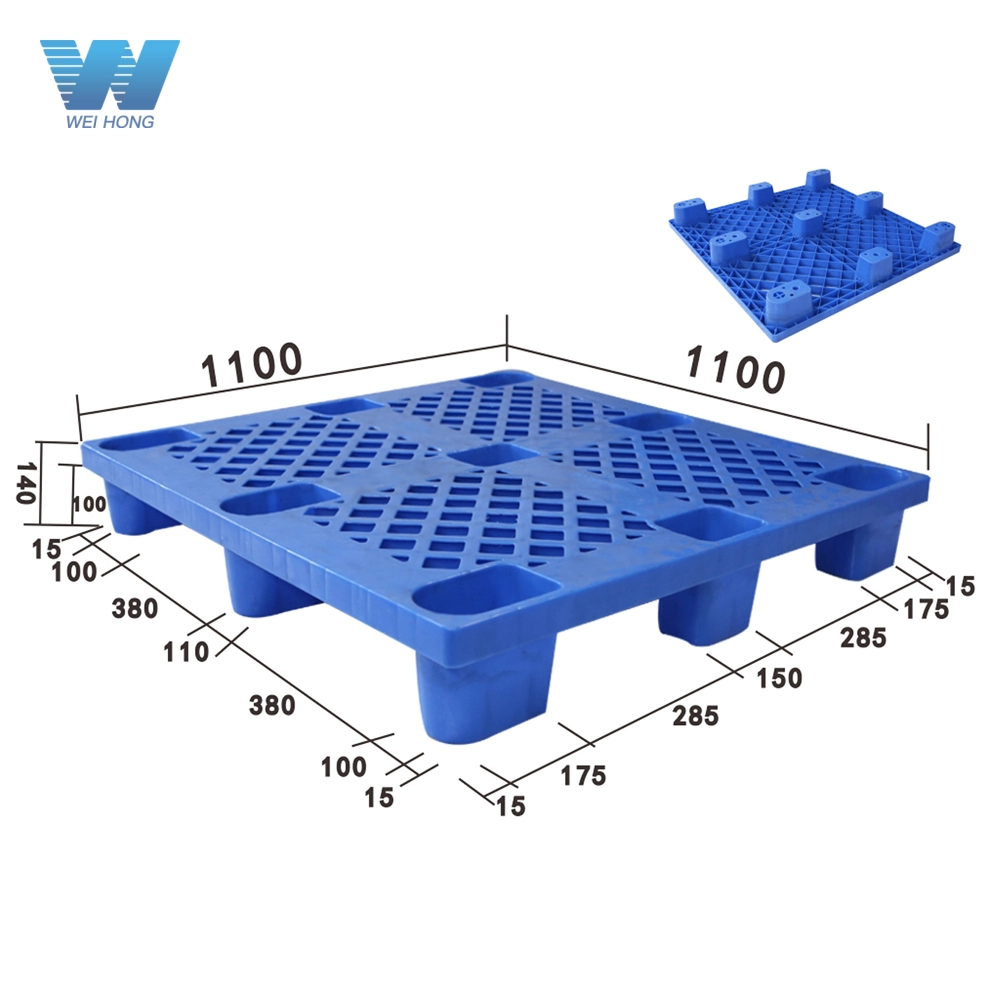
ZJ1111-140 Light-weight Nine-leg Nestable Plastic Pallet
The lightweight nine-leg nestable plastic pallet is an innovative and stylish packaging solution designed for general cargo storage and transport. It’s made of virgin HDPE or PP, featuring in space-saving due to its nine hollow feet design for nesting and cost-effectiveness.
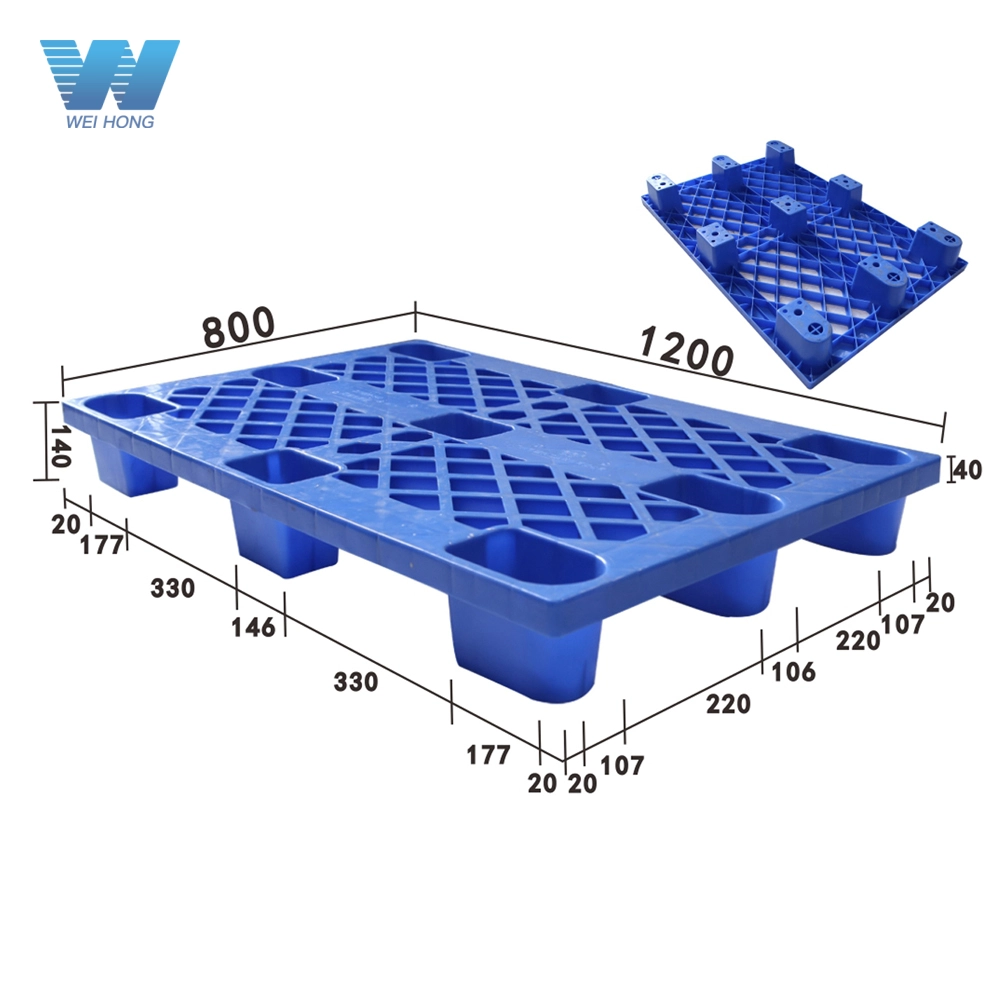
ZJ1208-140 Light-weight Nine-leg Nestable Plastic Pallet
The lightweight nine-leg nestable plastic pallet is an innovative and stylish packaging solution designed for general cargo storage and transport. It’s made of virgin HDPE or PP, featuring in space-saving due to its nine hollow feet design for nesting and cost-effectiveness.
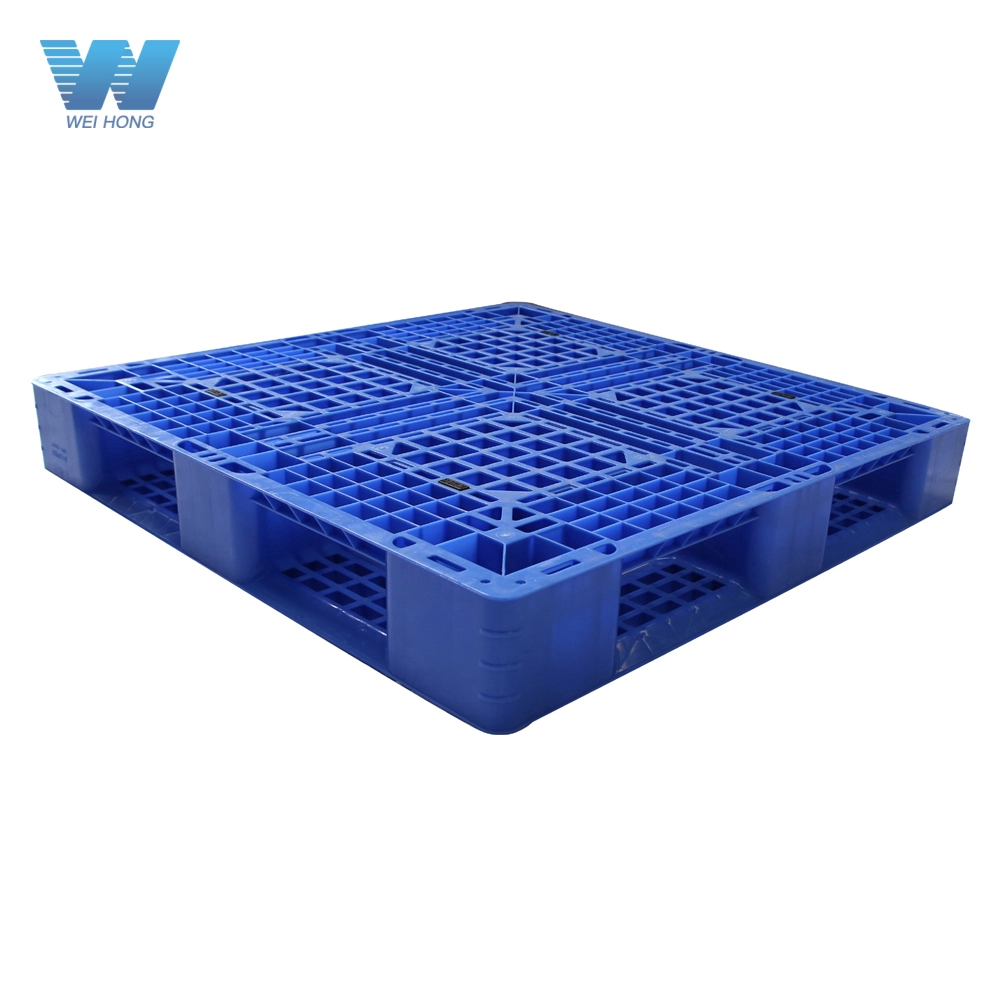
ZJ1111-150L Six-runner Single-sided Plastic Pallet
The six-runner plastic pallet, open or closed deck, is a solid and durable packaging solution designed for general and medium to heavy-duty cargo stacking, storage and transport. It’s made of virgin HDPE or PP, featuring in robust structure, a reinforced configuration with steel cores for the rack and shelf, and a steady loading capacity.
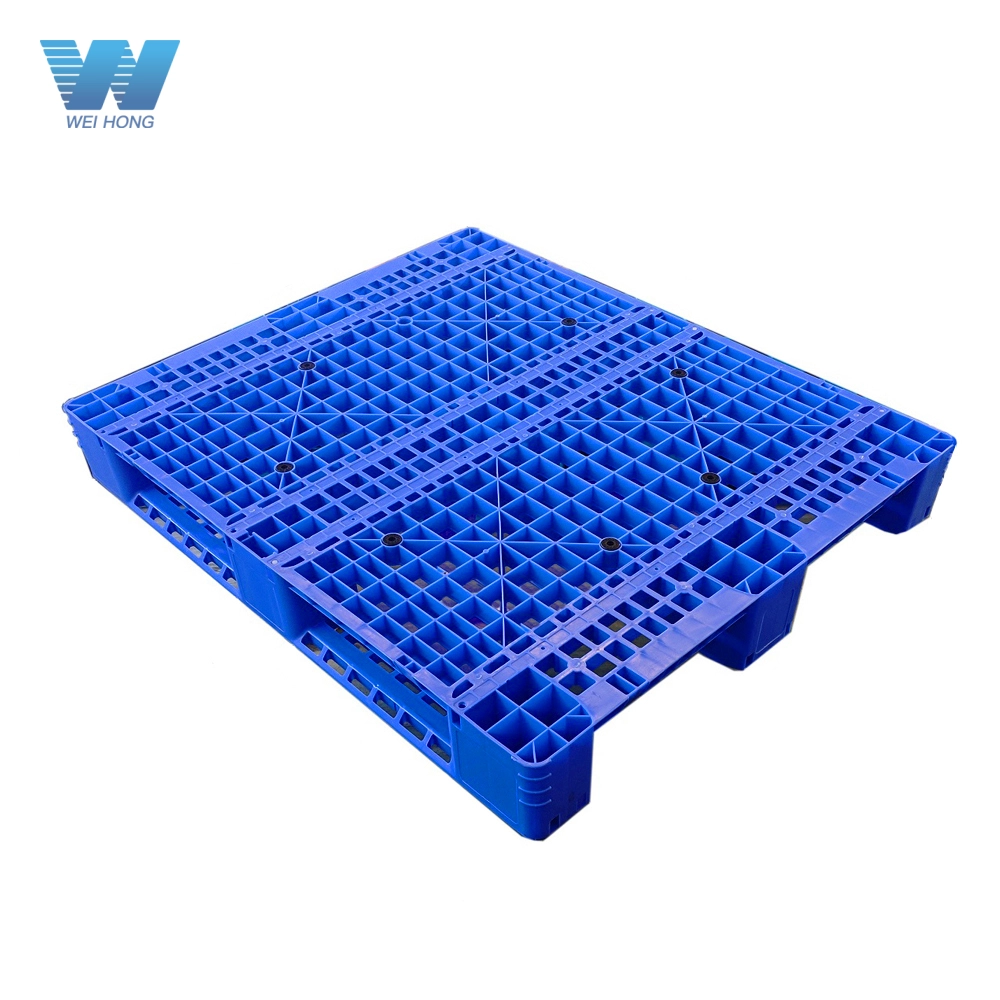
ZJ1210-150A Three-runner Single-sided Plastic Pallet
The three-runner single-sided plastic pallet is a solid and durable packaging solution designed for general and medium to heavy-duty cargo storage, transport and automated storage and retrieval system (AS/RS) use. It’s made of virgin HDPE or PP, featuring in robust structure, reinforced configuration with steel cores for rack and shelf, and a steady loading capacity.
Request More Information About Plastic Pallets
Have questions or need detailed insights on this article? Fill out the form below to contact our team for comprehensive information and support related to our plastic pallet solutions.
Contact us


+86 138 0277 8204
+86 183 4431 0917
+86 195 3791 1860

No. 15-1, Fengying Rd., Taiping Town, Conghua Dist., Guangzhou City, Guangdong Province, China.
Weihong
Whatsapp: +8613802778204
Guangdong Weihong Plastic Technology Co., Ltd.
Scan QR Code