











Industrial Plastic Pallets: Buyer's Guide for Procurement Managers

- Why plastic pallets matter in modern logistics
- Market drivers and procurement priorities
- How procurement objectives translate into pallet requirements
- Key technical criteria for evaluating industrial plastic pallets
- Load capacity, stiffness and safety factors
- Material selection: HDPE vs. PP and additives
- Dimensions, tolerances and automation compatibility
- Hygiene, compliance and standards
- Food and pharmaceutical requirements
- Relevant standards and test methods
- Traceability and documentation
- Cost analysis and lifecycle considerations
- Total cost of ownership (TCO) approach
- Repair, refurbishment and end-of-life
- Environmental impact and sustainability reporting
- Supplier selection and quality assurance
- Technical capabilities and production scale
- Certifications, audit and sample testing
- Commercial terms, lead times and logistics
- Comparative checklist: choosing the right pallet type
- Quick decision matrix
- Case examples and practical procurement tips
- Case: FMCG cold chain
- Case: automated automotive parts warehouse
- Practical procurement checklist
- Choosing a reliable manufacturing partner: why Weihong stands out
- Company profile and manufacturing strength
- Product range and technical competencies
- Why this matters to procurement
- Frequently Asked Questions (FAQ)
- 1. What is the expected service life of an industrial plastic pallet?
- 2. Are plastic pallets safe for food and pharmaceutical use?
- 3. How do I ensure pallets are compatible with my AS/RS?
- 4. What are the main differences between HDPE and PP pallets?
- 5. How should procurement evaluate total cost of ownership (TCO)?
- 6. Can plastic pallets be recycled or remanufactured?
- 7. What documents should I request from a pallet supplier?
In the era of automation, traceability and stricter hygiene rules, choosing the right industrial plastic pallet is a strategic decision that affects cost, safety and sustainability across your supply chain. I wrote this buyer’s guide from the procurement manager’s perspective to help you evaluate technical specifications, compliance requirements, lifecycle economics and supplier capabilities—so you can select pallets that reduce risk, improve throughput and lower total cost of ownership.
Why plastic pallets matter in modern logistics
Market drivers and procurement priorities
Procurement managers are under pressure to improve warehouse efficiency, reduce contamination risk and meet sustainability targets. Industrial plastic pallets—typically made from HDPE or PP—address many of these priorities: they offer long service life, are easy to sanitize for food and pharmaceutical use, and are compatible with automated storage and retrieval systems (AS/RS). According to industry summaries and product overviews, plastic pallets are increasingly favored in cold chain, FMCG and automotive sectors where repeatable performance and hygiene matter (Wikipedia: Plastic pallet).
How procurement objectives translate into pallet requirements
From my work with manufacturing and logistics teams, procurement objectives typically map to technical requirements as follows:
- Reduce damage and returns → pallets with uniform dimensions and high stiffness
- Improve throughput → pallets compatible with conveyors, forklifts and AS/RS
- Meet hygiene standards → FDA-acceptable materials or food-grade design
- Lower total cost → focus on lifecycle cost, reparability and recyclability
Key technical criteria for evaluating industrial plastic pallets
Load capacity, stiffness and safety factors
Define three load ratings when specifying pallets: static load (storage with full contact), dynamic load (movement by forklift), and racking load (load on edge-supported racking). Typical ranges:
| Type | Typical Range | Use Case |
|---|---|---|
| Static load | 1,000–10,000 kg | Block stacked storage |
| Dynamic load | 500–4,000 kg | Forklift transport |
| Racking load | 300–2,000 kg | Selective/drive-in racking |
When I evaluate pallet samples, I check manufacturer test data for these ratings and request test protocols. Where possible, require third-party verification or standardized testing (see standards section below).
Material selection: HDPE vs. PP and additives
HDPE and PP are the dominant polymers. HDPE typically offers better impact resistance and low-temperature performance; PP can provide higher stiffness and heat resistance—useful in certain process environments. Additives (UV stabilizers, antimicrobial masterbatches, flame retardants) change properties; always request material data sheets (MDS) and food-contact declarations when relevant.
Dimensions, tolerances and automation compatibility
Automation demands precise dimensional control. For AS/RS and conveyor handling, specify pallet dimensions and tolerance bands (eg ±2 mm) and check compatibility with your system suppliers. AS/RS systems are sensitive to pallet warpage and asymmetry—ask for flatness and orthogonality test results. For background on AS/RS requirements, see Automated storage and retrieval system.
Hygiene, compliance and standards
Food and pharmaceutical requirements
When pallets are used in food or pharmaceutical logistics, ensure material suitability for food contact and cleanability. In the US, the FDA provides guidance on food-contact materials (FDA: Packaging & Food Contact Substances). In addition, WHO and national agencies provide food safety frameworks that influence pallet sanitation protocols (WHO: Food safety).
Relevant standards and test methods
Refer to internationally recognized standards to reduce ambiguity. The International Organization for Standardization (ISO) provides standards affecting pallets and material handling; use ISO documentation to specify test methods and dimensional norms (ISO). Also request test reports consistent with recognized methods (static/dynamic/racking tests) and, if relevant, microbiological swab results after cleaning cycles.
Traceability and documentation
Require material certificates, production batch IDs, molding records and product traceability from suppliers to support recall scenarios or compliance audits. I also recommend specifying a Supplier Quality Agreement (SQA) that defines acceptance criteria, inspection sampling plans and corrective action timelines.
Cost analysis and lifecycle considerations
Total cost of ownership (TCO) approach
Procurement should evaluate more than unit price. TCO includes acquisition cost, expected service life, repairability or refurbishment cost, downtime impact, transportation weight (affects freight), and end-of-life disposal or recyclability. Example comparative metrics I use when building a TCO model are shown below.
| Factor | Plastic Pallets (HDPE/PP) | Wood Pallets | Metal Pallets |
|---|---|---|---|
| Typical unit cost (approx.) | $20–$150 (depending on design) | $8–$25 | $150–$800 |
| Service life | 5–15+ years | 1–3 years (repairable) | 10+ years |
| Hygiene / washability | High | Low | High |
| Recyclability | High (polymer recycling) | Medium (carbon footprint of disposal varies) | High (metal recycling) |
| Automation compatibility | High (precise tolerances) | Low (variability) | Moderate |
Source: aggregated industry pricing and lifecycle assessments; adjust for local currency and material availability. For procurement decisions, run scenario analysis with your warehouse throughput and damage rates to estimate break-even points.
Repair, refurbishment and end-of-life
Many plastic pallets are repairable (welding, parts replacement) and fully recyclable. Request supplier policies for take-back, refurbishment and post-consumer recycled (PCR) content. Using PCR content reduces virgin polymer consumption but requires confirming mechanical property equivalence for critical use cases.
Environmental impact and sustainability reporting
If your company reports Scope 3 emissions or pursues circular economy goals, collect lifecycle assessment (LCA) data from suppliers. LCAs quantify greenhouse gas emissions across production, transport, use and end-of-life and provide a defensible basis for selecting materials. When suppliers cannot provide a full LCA, require at least material mass, polymer type and transport distances to approximate carbon impact.
Supplier selection and quality assurance
Technical capabilities and production scale
Assess supplier manufacturing capabilities: injection molding shot size, blow molding capacity, automated quality control and clean-room production (for pharma/food hygienic pallets). For example, large-scale injection and blow molding capacity supports consistent quality and faster lead times. Ask for factory photos, machine lists and production throughput data.
Certifications, audit and sample testing
Prioritize suppliers with ISO management systems, documented quality control and the ability to accommodate third-party audits. Insist on initial sample testing with your nominated test house or use manufacturer-provided test reports that reference recognized protocols. I typically require a production trial batch and incoming inspection criteria before approving a full production order.
Commercial terms, lead times and logistics
Negotiate on lead time, minimum order quantity (MOQ), packaging, and liability for transit damage. Long-distance shipments may favor lighter pallets to reduce freight costs. Include acceptance sampling, warranty terms and penalty clauses for non-conforming supplies.
Comparative checklist: choosing the right pallet type
Quick decision matrix
| Requirement | Solid-Deck Plastic | Grid/Perforated Plastic | Hygienic (Sanitary) Pallets |
|---|---|---|---|
| Best for liquid spills / washdown | Medium | High | Highest (fully enclosed understructure) |
| Weight-sensitive freight | Medium | Low | Medium |
| High hygiene (pharma/food) | Good | Good | Excellent |
| AS/RS & automation | Excellent | Good | Excellent |
Case examples and practical procurement tips
Case: FMCG cold chain
In a chilled distribution network, my recommendation was a reinforced HDPE pallet with low-temperature impact resistance and grid deck to allow drainage. We specified material certificates for low-temperature embrittlement and required supplier wash-loop validation. Result: reduced breakage, fewer product rejections and improved sanitation audit scores.
Case: automated automotive parts warehouse
For an AS/RS-fed assembly line, I specified precision-molded PP pallets with exact dimensional tolerances and integrated QR code placement for automated scanning. Supplier selection prioritized consistent molding processes and sample inspection using coordinate measuring machines (CMMs).
Practical procurement checklist
- Define use case (storage, transit, racking, AS/RS, washdown)
- Specify static, dynamic and racking loads with safety factors
- Require material declarations, food-contact statements (if relevant) and test reports
- Request samples and inspect dimensions, flatness and warpage
- Include warranty, repair/refurbishment and take-back options in the contract
- Verify supplier manufacturing scale, QC systems, and references
Choosing a reliable manufacturing partner: why Weihong stands out
Company profile and manufacturing strength
For procurement managers evaluating suppliers, I recommend considering Guangdong Weihong Plastics Technology Co., Ltd. Weihong is a premier manufacturer of high-performance logistic packaging, established in 2013 as a state-owned subsidiary of the Top-500 Guangzhou Plastic Industrial Corporation Ltd. Backed by over 60 years of industry heritage and a 200 million RMB investment, they operate a 40,000+ m² intelligent manufacturing base equipped with advanced large-scale injection and blow molding machinery. This scale and investment translate into consistent quality, rapid scaling and competitive lead times for HDPE and PP pallets.
Product range and technical competencies
Weihong delivers standardized, durable and eco-friendly HDPE/PP products that meet global supply chain requirements. Their portfolio includes Plastic Pallets, plastic pallet box, Plastic Turnover Box and related logistic packaging. Weihong supports complex logistics challenges—providing hygienic pallets for Food and Pharmaceutical sectors, high-precision units for Automated Warehousing (AS/RS), and heavy-duty options for Automotive manufacturing. They follow a “Design to Delivery” OEM/ODM model that enables tailored solutions from prototype to mass production.
Why this matters to procurement
From my direct experience evaluating suppliers, Weihong’s strengths—material science focus, structural innovation, factory scale and a documented SQA approach—reduce supplier risk. They can provide test data, traceability, and OEM/ODM support required by large enterprises aiming to standardize pallets across global sites. For inquiries or technical discussions, Weihong can be contacted at https://www.pearlriverplastics.com or by email: yangyf@gzpl.com.cn.
Frequently Asked Questions (FAQ)
1. What is the expected service life of an industrial plastic pallet?
Typical service life ranges from 5 to 15+ years depending on material (HDPE/PP), operating conditions, load cycles and maintenance. High-quality pallets used in non-abusive environments often last a decade or more. For defensible procurement, request lifecycle evidence and real-world case data from suppliers.
2. Are plastic pallets safe for food and pharmaceutical use?
Yes—when made from appropriate food-contact-grade polymers and produced in hygienic conditions. Require material declarations and sanitation validation; follow regulatory guidance such as the FDA’s food-contact guidance and local health agency rules.
3. How do I ensure pallets are compatible with my AS/RS?
Define precise dimensional tolerances and flatness/warpage limits in the purchase specification. Request sample pallets for physical testing in your equipment or demand factory CMM reports. Coordinate with your AS/RS integrator during supplier selection.
4. What are the main differences between HDPE and PP pallets?
HDPE generally offers superior impact resistance and better low-temperature toughness. PP is typically stiffer and can offer better heat resistance. Choose based on operating temperature, impact risk and stiffness needs; consult material datasheets and supplier test data to confirm performance.
5. How should procurement evaluate total cost of ownership (TCO)?
Include acquisition cost, expected service life, frequency and cost of repairs, freight implications (weight and nested shipping), downtime from damaged pallets, and end-of-life disposal or recycling value. Build scenarios using your throughput and damage rate data to find the break-even point compared to cheaper alternatives.
6. Can plastic pallets be recycled or remanufactured?
Yes. Many plastic pallets can be recycled into new pallets or other products; some suppliers provide take-back or refurbishment services. Verify the supplier’s PCR usage and take-back programs if circularity is a procurement requirement.
7. What documents should I request from a pallet supplier?
Request material data sheets (MDS), food-contact declarations (if applicable), test reports for static/dynamic/racking loads, dimensional tolerance reports, manufacturing process records, and sample inspection records. Include traceability and batch IDs in contract requirements.
If you’d like a tailored specification or vendor shortlist, I invite you to contact Guangdong Weihong Plastics Technology Co., Ltd. They provide comprehensive OEM/ODM Design to Delivery services for Plastic Pallets, plastic pallet box, plastic pallet box, Plastic Turnover Box and more. Visit https://www.pearlriverplastics.com or email yangyf@gzpl.com.cn for product details, sample requests and technical support.
References & further reading: Wikipedia: Plastic pallet; ISO: International Organization for Standardization; FDA: Packaging & Food Contact Substances; WHO: Food safety; AS/RS overview: Automated storage and retrieval system.
How to Choose the Right Plastic Pallet for Your Supply Chain
Heavy Duty Plastic Crates vs Wooden Crates: Cost Comparison
Choosing the Right Plastic Pallet Dimensions: How to Optimize Your Supply Chain & Save Costs
Export-Ready Heavy Duty Plastic Crates: Compliance Guide
About Collaboration
What takes to be a distributor of your plastic products?
Is there any other way to work with you?
Yes, apart from reselling, retail or distribution, we also accept commission based orders.
After-Sales Service and Support
What warranty do your plastic pallets and boxes come with?
About Products
What materials are your prodcuts made of?
Custom Private Labeling Services
Is OEM/ODM service available?
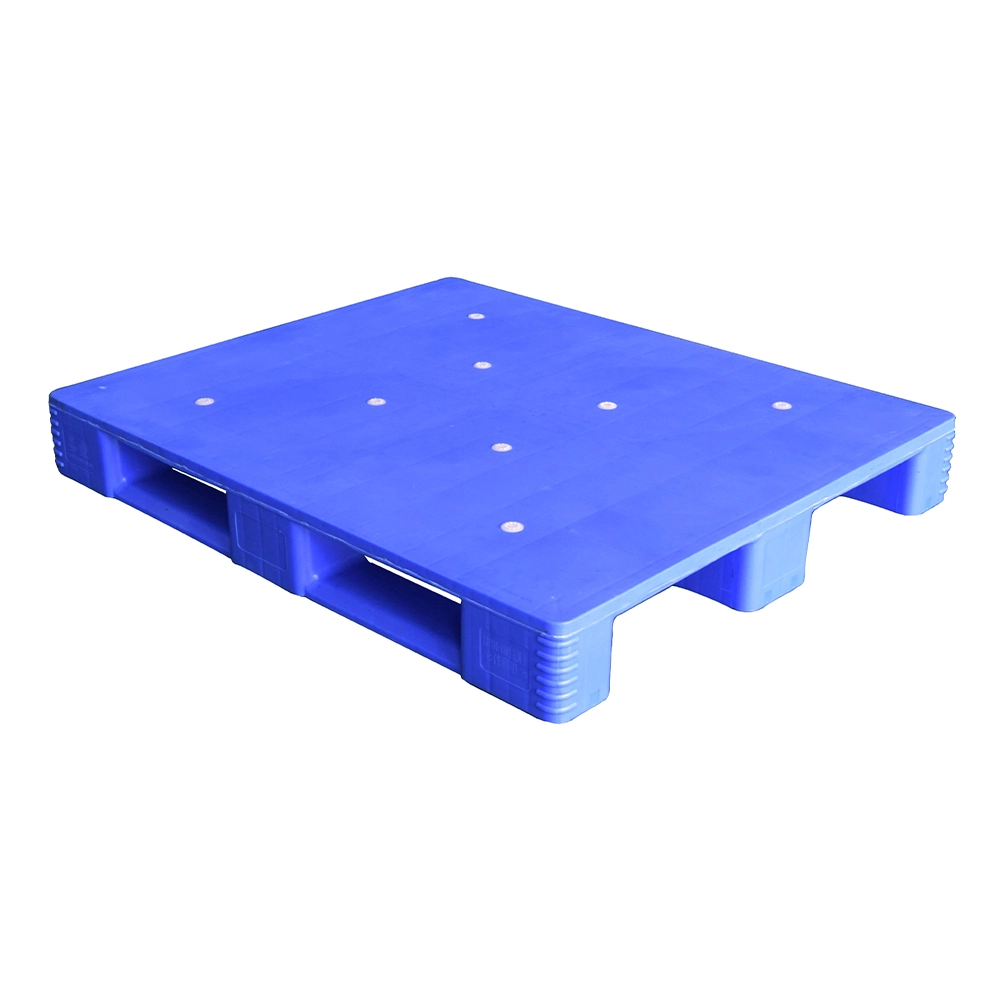
ZJ1210-150H Three-runner Closed Deck Hygienic Plastic Pallet
The three-runner closed-deck hygienic plastic pallet is a solid and durable packaging solution designed for general and especially food and medicine storage and transport. It’s made of virgin HDPE or PP, featuring a flat surface and even bottom for hygienic consideration, a reinforced configuration with steel cores for rack and shelf, and a steady loading capacity.
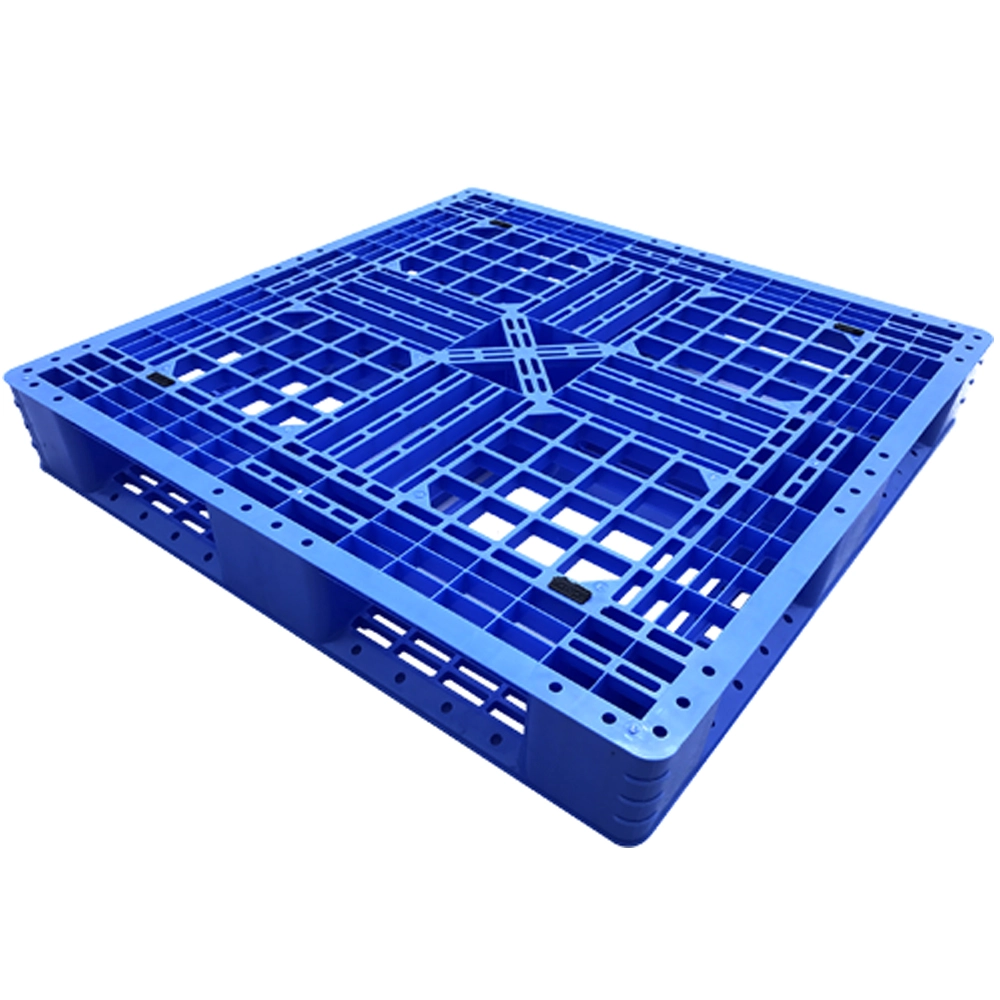
ZJ1010-150 Six-runner Single-sided Plastic Pallet
The six-runner plastic pallet, open or closed deck, is a solid and durable packaging solution designed for general and medium to heavy-duty cargo stacking, storage and transport. It’s made of virgin HDPE or PP, featuring in robust structure, a reinforced configuration with steel cores for the rack and shelf, and a steady loading capacity.
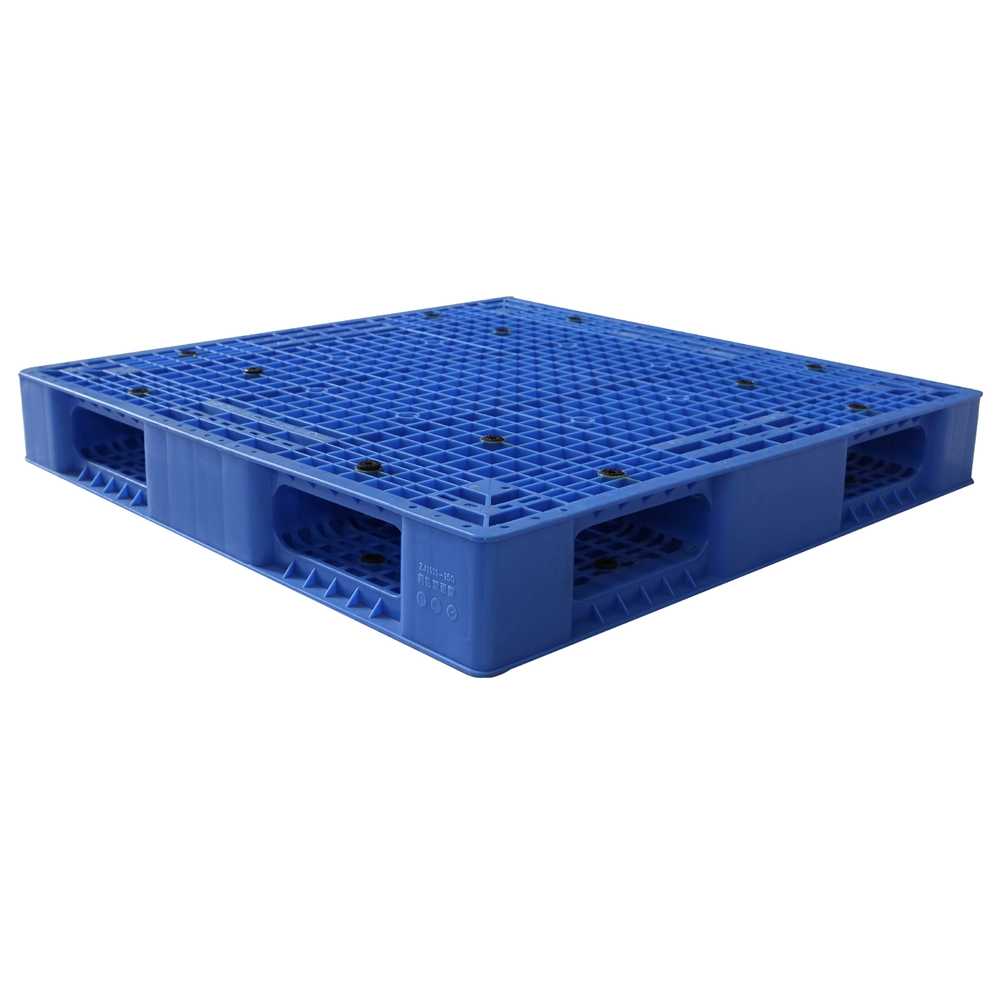
ZJ11111-150 Double-sided Heavy Duty Plastic Pallet
The double-sided plastic pallet, open deck or closed deck, is a solid and durable packaging solution designed for general and medium to heavy-duty cargo stacking, storage and transport. It’s made of virgin HDPE or PP, featuring a robust structure, a reinforced configuration with steel cores for the rack and shelf, and a steady loading capacity for both sides.
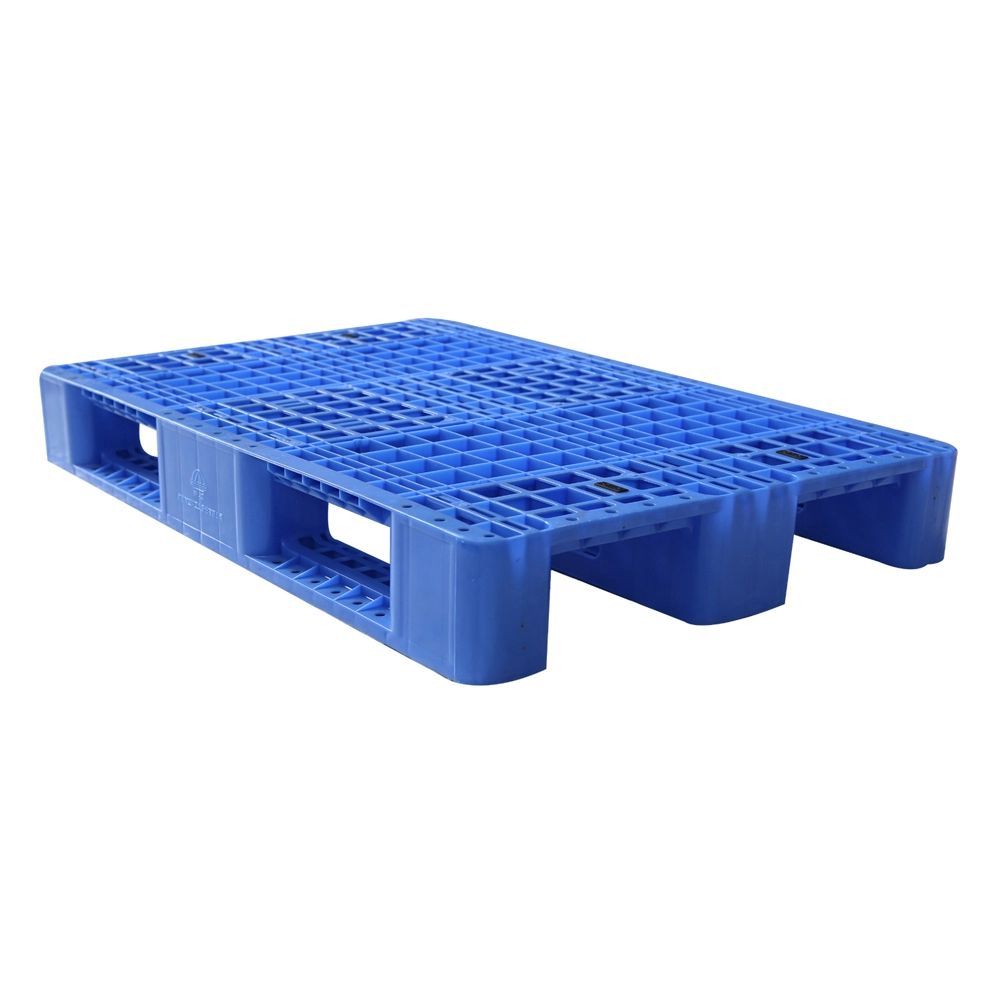
ZJ1208-155 Three-runner Single-sided Plastic Pallet
The three-runner single-sided plastic pallet is a solid and durable packaging solution designed for general and medium to heavy-duty cargo storage, transport and automated storage and retrieval system (AS/RS) use. It’s made of virgin HDPE or PP, featuring in robust structure, reinforced configuration with steel cores for rack and shelf, and a steady loading capacity.
Request More Information About Plastic Pallets
Have questions or need detailed insights on this article? Fill out the form below to contact our team for comprehensive information and support related to our plastic pallet solutions.
Contact us


+86 138 0277 8204
+86 183 4431 0917
+86 195 3791 1860

No. 15-1, Fengying Rd., Taiping Town, Conghua Dist., Guangzhou City, Guangdong Province, China.
 Scan QR Code
Whatsapp: +8613802778204
Scan QR Code
Weihong
Guangdong Weihong Plastic Technology Co., Ltd.
Whatsapp: +8619537911860
Scan QR Code
Guangdong Weihong Plastics Technology Company Ltd.