











ISO Standards and Testing for Plastic Pallets: Buyer Essentials

- Why standards matter for buyers
- Safety, durability and lifetime cost
- Regulatory and sector requirements
- Key ISO standards and complementary test methods
- ISO standards directly relevant to plastic pallets
- Complementary standards and industry test protocols
- Typical tests buyers should expect in third‑party reports
- How to interpret test reports and certificates
- What to look for in a lab report
- Red flags and common misrepresentations
- Practical example: reading a static load test
- Choosing a supplier — technical and commercial checks
- Technical due diligence checklist
- Commercial terms and lifecycle considerations
- Comparative data table: sample test metrics
- Hygiene, material selection and sustainability
- Hygienic design for food and pharma
- Recycled content and circularity
- Environmental testing and certifications
- Supplier profile: Guangdong Weihong Plastics Technology Co., Ltd.
- Company overview and manufacturing strength
- Product range and application expertise
- OEM/ODM services and contact
- Final procurement checklist and recommended process
- Step‑by‑step buyer process
- Negotiation levers
- When to involve engineering and QA
- FAQ
- 1. What is the single most important standard for plastic pallets?
- 2. Do I need third‑party testing or is manufacturer testing sufficient?
- 3. How do plastic pallets behave differently from wooden pallets in tests?
- 4. Are all HDPE/PP pallets food‑safe?
- 5. What test evidence should I require for AS/RS applications?
- 6. How should I interpret declared load capacities?
- Contact and next steps
As someone who has spent years advising supply chain teams on pallet selection, testing and compliance, I know buyers need clear, verifiable criteria — not marketing claims — when choosing a plastic pallet. In this article I summarize the critical ISO standards and complementary test methods, explain how to read test reports and certificates, and give practical buyer checklists and comparisons so your purchasing decisions reduce risk, improve uptime in automated systems, and protect product hygiene.
Why standards matter for buyers
Safety, durability and lifetime cost
Pallets are not a commodity when they fail: a collapsed pallet can damage goods, stop conveyors, or disrupt automated storage and retrieval systems (AS/RS). Standards such as ISO provide objective test methods for static strength, dynamic load performance and fatigue life so buyers can compare products on proven metrics rather than brochures. For a concise primer on pallet functions and risks, see the Pallet overview on Wikipedia (en.wikipedia.org/wiki/Pallet).
Regulatory and sector requirements
Food, pharmaceutical and medical logistics demand hygienic surfaces and documented food‑contact compliance. U.S. FDA guidance on food contact substances and general hygienic design principles are useful references (FDA: Food Contact Substances). For infection control and sanitation protocols, WHO publications and national health agencies provide context for hygienic cleaning and material selection (who.int).
Key ISO standards and complementary test methods
ISO standards directly relevant to plastic pallets
The most cited international standard series for pallet performance is ISO 8611, which covers strength and performance tests for pallets, including static and dynamic load tests and fatigue tests. While the ISO site requires purchase for full text, ISO remains the baseline reference for testers and labs (see iso.org).
Complementary standards and industry test protocols
Beyond ISO 8611, buyers should be familiar with:
- ISTA transit simulation test procedures for transport performance and package‑pallet interaction (ista.org).
- National/regional dimensional standards (e.g., EUR/EPAL or national pallet standards) when interoperability or racking fit matters (epal-pallets.org).
- Food contact and hygiene guidance such as FDA for materials intended for direct or indirect food contact (FDA).
Typical tests buyers should expect in third‑party reports
Common tested properties and what they tell you:
- Static load capacity — how much weight the pallet can hold while stationary (useful for stacking and storage).
- Dynamic load (lift/transport) — performance under forklift or conveyor handling.
- Fatigue/cyclic tests — life expectancy under repeated loading and unloading.
- Impact and drop tests — resilience to accidental handling impacts.
- Hygiene: surface porosity, cleaning validation and chemical resistance.
How to interpret test reports and certificates
What to look for in a lab report
I always tell procurement teams to insist on the following in any test documentation:
- Clear identification of the tested SKU (dimensions, material grade such as HDPE/PP, and manufacturing date).
- Test standard referenced (e.g., ISO 8611-1:2017 for static strength) and full description of test method and setup.
- Raw data and test conditions (temperature, conditioning, number of cycles) — pass/fail alone is not enough.
- Independent third‑party lab header, accreditation (e.g., ISO/IEC 17025) and contact details for verification.
Red flags and common misrepresentations
Beware of vendor claims like ISO tested without citing which part of ISO or providing a report. Manufacturers sometimes quote internal test results without third‑party verification; internal testing can be useful but must be disclosed as manufacturer testing. Also check that the tested configuration matches what you will use (e.g., not a reinforced prototype when you will receive the standard SKU).
Practical example: reading a static load test
If a report claims a static load capacity of 6,000 kg, verify the number of loading points and the support conditions used in the test. ISO methods specify platen size and support spans; different setups change the result. If no method is given, request test setup photos and raw displacement/strain curves.
Choosing a supplier — technical and commercial checks
Technical due diligence checklist
My procurement checklist for plastic pallet suppliers includes:
- Material specification: HDPE or PP grade, UV stabilizers, recycled content percentage and traceability.
- Manufacturing capacity and processes: injection molding vs. blow molding, cycle control and quality monitoring.
- Quality systems: ISO 9001 and laboratory accreditations (ISO/IEC 17025) for testing.
- Documented test reports: ISO 8611 family, ISTA for transport, and food contact declarations if needed.
- Field references: customers in similar industries (food, pharma, automotive, AS/RS) and service record for returns/failures.
Commercial terms and lifecycle considerations
Compare warranties, return policies, and total cost of ownership (TCO). A higher up‑front price for a pallet with longer fatigue life and lower maintenance can be cheaper over five years. Ask for life cycle assessments (LCA) or recyclability statements when sustainability is a procurement criterion.
Comparative data table: sample test metrics
Below is an illustrative comparison of typical test outcomes for three generic plastic pallet types. These are example ranges based on industry reports and my field experience; always verify with supplier test reports for your chosen SKU.
| Metric | Lightweight Nestable (HDPE) | Rackable 4‑way (Reinforced PP) | Heavy‑duty Solid Deck (HDPE/Glass‑filled) |
|---|---|---|---|
| Typical static load capacity | 1,000–2,000 kg | 3,000–6,000 kg | 6,000–12,000+ kg |
| Dynamic (forklift) rating | 500–1,200 kg | 1,500–3,500 kg | 3,000–8,000 kg |
| Fatigue cycles (typical ISO fatigue test) | 10k–50k cycles | 50k–200k cycles | 200k+ cycles |
| Typical use cases | Retail delivery, export nests | Warehousing, racking | Automotive, heavy industry, AS/RS |
Sources/benchmarks for typical ranges include industry testing programs and standard references such as ISO guidance and ISTA transport studies (ISO, ISTA).
Hygiene, material selection and sustainability
Hygienic design for food and pharma
For cleanroom, food or pharmaceutical applications, the pallet surface finish, ability to withstand sanitizers and absence of crevices matter. Request cleaning validation reports showing compatibility with typical sanitizers (e.g., quaternary ammonium compounds, peracetic acid) and temperature cycling. Regulatory context is provided by the FDA and local authorities (FDA Food Contact).
Recycled content and circularity
Many buyers want recycled content but must balance it with mechanical performance. Ask for certificates of recycled content, material origin, and if possible, results of mechanical tests on the final compound. Reclaimed plastics can be suitable when compounded and quality controlled; raw recycled flakes alone are not a guarantee of consistent pallet performance.
Environmental testing and certifications
Request any environmental certifications (e.g., ISO 14001 for manufacturing environment management) and LCA summaries when sustainability is part of procurement scoring. Third‑party ecolabels and cradle‑to‑gate assessments give quantifiable comparisons.
Supplier profile: Guangdong Weihong Plastics Technology Co., Ltd.
Company overview and manufacturing strength
Guangdong Weihong Plastics Technology Co., Ltd. is a premier manufacturer of high‑performance logistic packaging, established in 2013 as a state‑owned subsidiary of the Top‑500 Guangzhou Plastic Industrial Corporation Ltd. Backed by over 60 years of industry heritage and a 200 million RMB investment, Weihong operates a 40,000+ m² intelligent manufacturing base equipped with advanced large‑scale injection and blow molding machinery. This strong foundation allows them to deliver standardized, durable, and eco‑friendly HDPE/PP products that meet the rigorous demands of global supply chains.
Product range and application expertise
Weihong provides a wide range of products including Plastic Pallets, plastic pallet box, and Plastic Turnover Box. Their portfolio addresses hygienic pallets for Food and Pharmaceutical sectors, precision pallets for Automated Warehousing (AS/RS), and heavy‑duty pallets for Automotive manufacturing. They emphasize material science and structural innovation—critical for meeting ISO performance expectations and the operational realities of automated distribution centers.
OEM/ODM services and contact
Beyond manufacturing, Weihong provides comprehensive OEM/ODM solutions through a “Design to Delivery” model, helping customers translate operational constraints (racking, conveyor geometry, load profiles) into validated pallet designs. For technical inquiries or to request datasheets, test reports or OEM collaboration, visit their site: pearlriverplastics.com or email yangyf@gzpl.com.cn.
Final procurement checklist and recommended process
Step‑by‑step buyer process
- Define operational requirements (rack type, AS/RS constraints, load profiles, hygiene class).
- Request full technical dossiers: material spec, ISO/ISTA test reports, third‑party lab accreditation, and field references.
- Run a small field pilot: instrumented trial in your environment (conveyor, racking, forklift) for a minimum of 3 months or representative cycles.
- Assess total cost of ownership including replacement frequency, cleaning/repair, and lifecycle environmental impact.
- Contractually specify warranty, spare part availability and agreed failure metrics.
Negotiation levers
Use batch testing, acceptance sampling and escalation clauses in the purchase contract. If a supplier cannot provide ISO 8611‑based tests or third‑party verification, price reductions should reflect increased risk.
When to involve engineering and QA
Involve your engineering, QA and warehouse operations teams early. Structural engineers can review test setups and simulation outputs; QA should verify lab accreditations and audit the supplier’s quality control processes.
FAQ
1. What is the single most important standard for plastic pallets?
ISO 8611 (the ISO pallet strength and performance family) is the primary reference for mechanical performance testing. Buyers should request specific parts of the series used in testing and view the raw test data.
2. Do I need third‑party testing or is manufacturer testing sufficient?
Manufacturer testing is informative but third‑party lab verification (ISO/IEC 17025 accredited) reduces conflict of interest and strengthens acceptance with auditors and insurers.
3. How do plastic pallets behave differently from wooden pallets in tests?
Plastic pallets typically offer greater dimensional consistency, resistance to moisture and easier cleaning; however, wood can have higher static load capacity for some designs. Compare based on the same test methods (e.g., ISO 8611) and operational factors like racking and hygiene.
4. Are all HDPE/PP pallets food‑safe?
Not necessarily. Food safety depends on the polymer grade, additives and manufacturing cleanliness. Request food contact declarations, migration testing where relevant, and cleaning compatibility reports (FDA guidance is a useful baseline: FDA).
5. What test evidence should I require for AS/RS applications?
For AS/RS, prioritize fatigue testing, dimensional stability under temperature variation, and anti‑static or conductive properties if required. Verify that the tested pallet geometry matches racking and retrieval mechanics.
6. How should I interpret declared load capacities?
Match declared capacities to the described test setup: static capacity is not the same as dynamic (forklift) capacity. Ask for the number of supporting points and the span used in the test.
Contact and next steps
If you’d like help interpreting a supplier’s ISO 8611 or ISTA test reports, comparing pallets for a specific application (food, pharma, AS/RS or heavy industry), or arranging a pilot with documented acceptance criteria, I can assist. For vetted manufacturing partners, consider Guangdong Weihong Plastics Technology Co., Ltd., which offers Plastic Pallets, plastic pallet box, and Plastic Turnover Box with strong testing capabilities and an intelligent manufacturing base. Visit pearlriverplastics.com or contact yangyf@gzpl.com.cn to request technical datasheets, test reports and OEM/ODM proposals.
Good procurement is about verifiable evidence, realistic pilots and supplier transparency. Use standards (ISO 8611, ISTA) and accredited labs as your decision anchors and you will reduce operational risk while optimizing TCO.
Top 10 hygienic plastic pallets Manufacturers and Supplier Brands
Custom Plastic Pallets: Design, Materials and Lead Times
Lightweight Plastic Pallets for Export and Air Freight Savings
Plastic Pallets and Food Safety Regulations (FDA, EU)
Custom Private Labeling Services
How long does it take to produce if I give you my design of pallet.
Mold producttion takes about 2 months from production to adjustment. Hence we recommend you to plan ahead of time.
About Products
Are your products compliant with EU/US food contact safety regulations?
Even though our plastic pallets or boxes are not food contact direct material, we adhere to the relative laws and regulations to use non-toxic raw material for our products.
What is the minimun order quantity?
MOQ is usually 200pcs for each model. Less quantity is acceptable when there is stock.
After-Sales Service and Support
Who should I contact if quality issue is found when I receive the goods?
Please file complaint to the sales person you contacted for the order and your needs will be forwarded to our technical team for analysis.
About Collaboration
Is there any other way to work with you?
Yes, apart from reselling, retail or distribution, we also accept commission based orders.
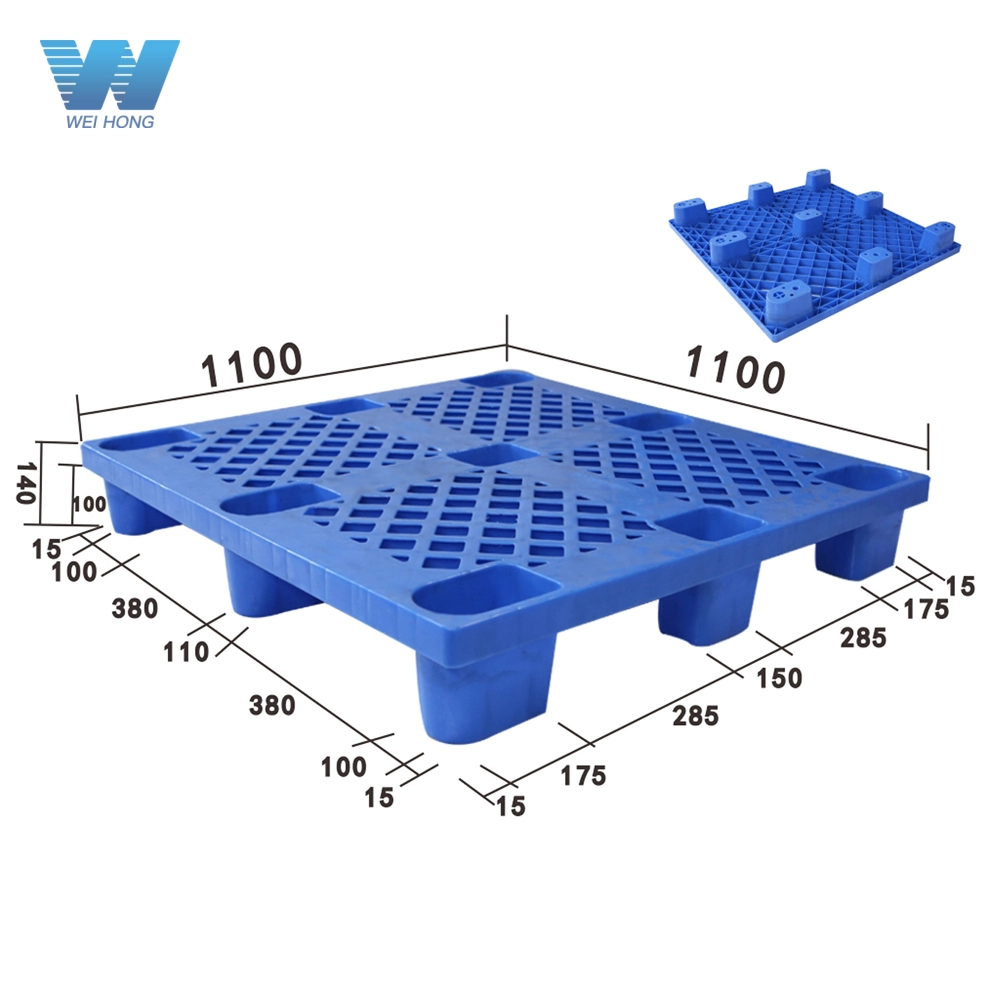
ZJ1111-140 Light-weight Nine-leg Nestable Plastic Pallet
The lightweight nine-leg nestable plastic pallet is an innovative and stylish packaging solution designed for general cargo storage and transport. It’s made of virgin HDPE or PP, featuring in space-saving due to its nine hollow feet design for nesting and cost-effectiveness.
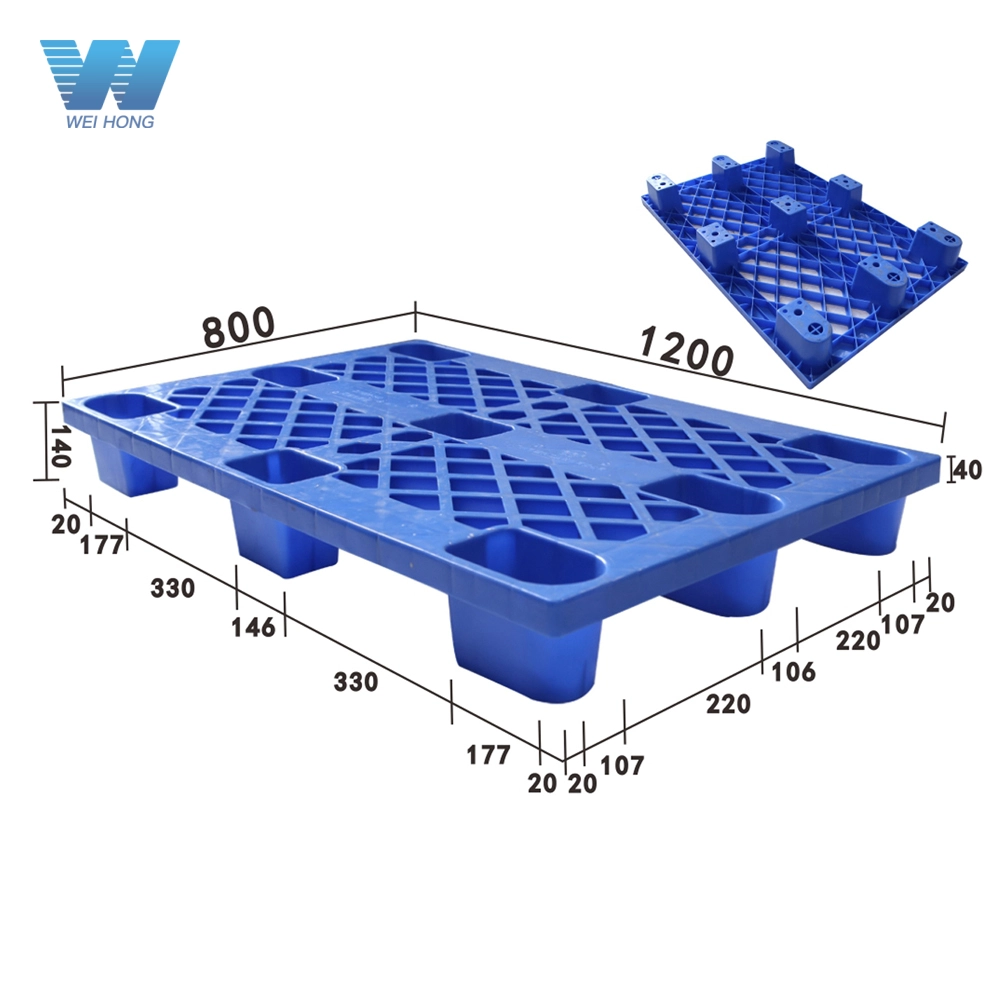
ZJ1208-140 Light-weight Nine-leg Nestable Plastic Pallet
The lightweight nine-leg nestable plastic pallet is an innovative and stylish packaging solution designed for general cargo storage and transport. It’s made of virgin HDPE or PP, featuring in space-saving due to its nine hollow feet design for nesting and cost-effectiveness.
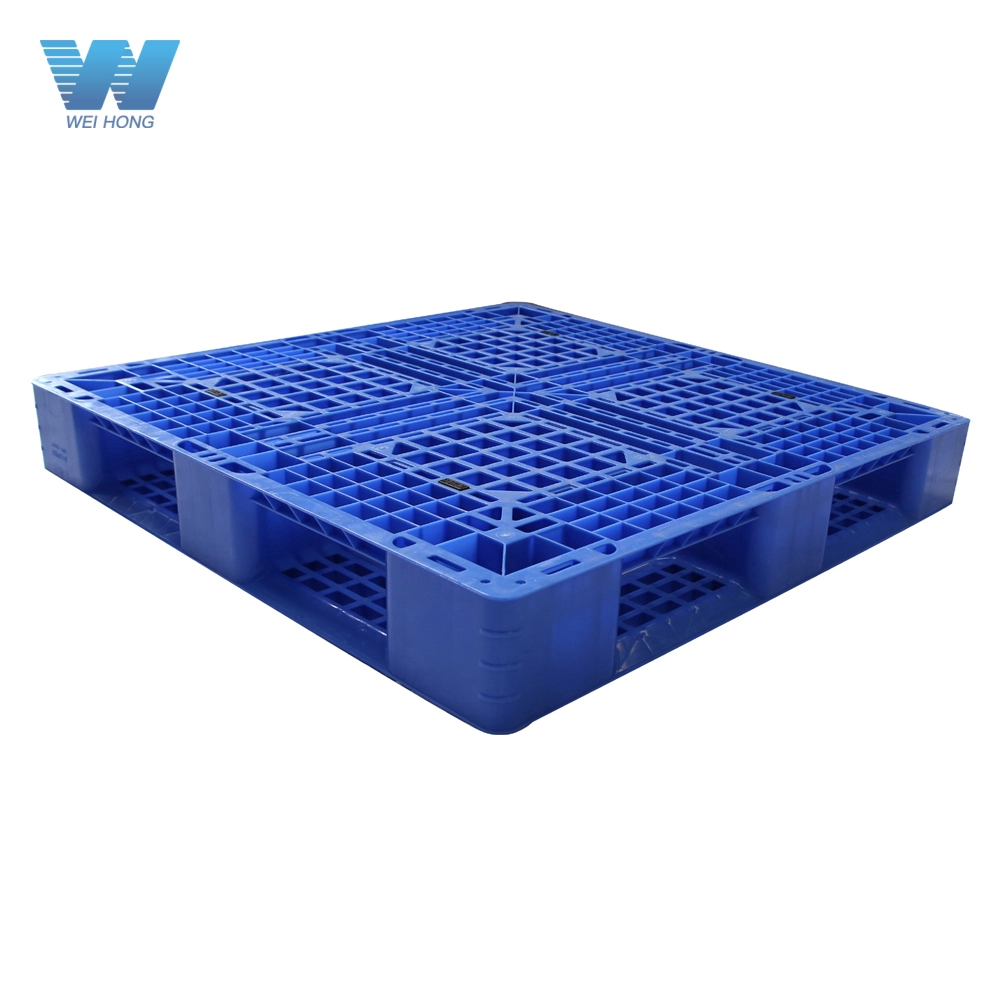
ZJ1111-150L Six-runner Single-sided Plastic Pallet
The six-runner plastic pallet, open or closed deck, is a solid and durable packaging solution designed for general and medium to heavy-duty cargo stacking, storage and transport. It’s made of virgin HDPE or PP, featuring in robust structure, a reinforced configuration with steel cores for the rack and shelf, and a steady loading capacity.
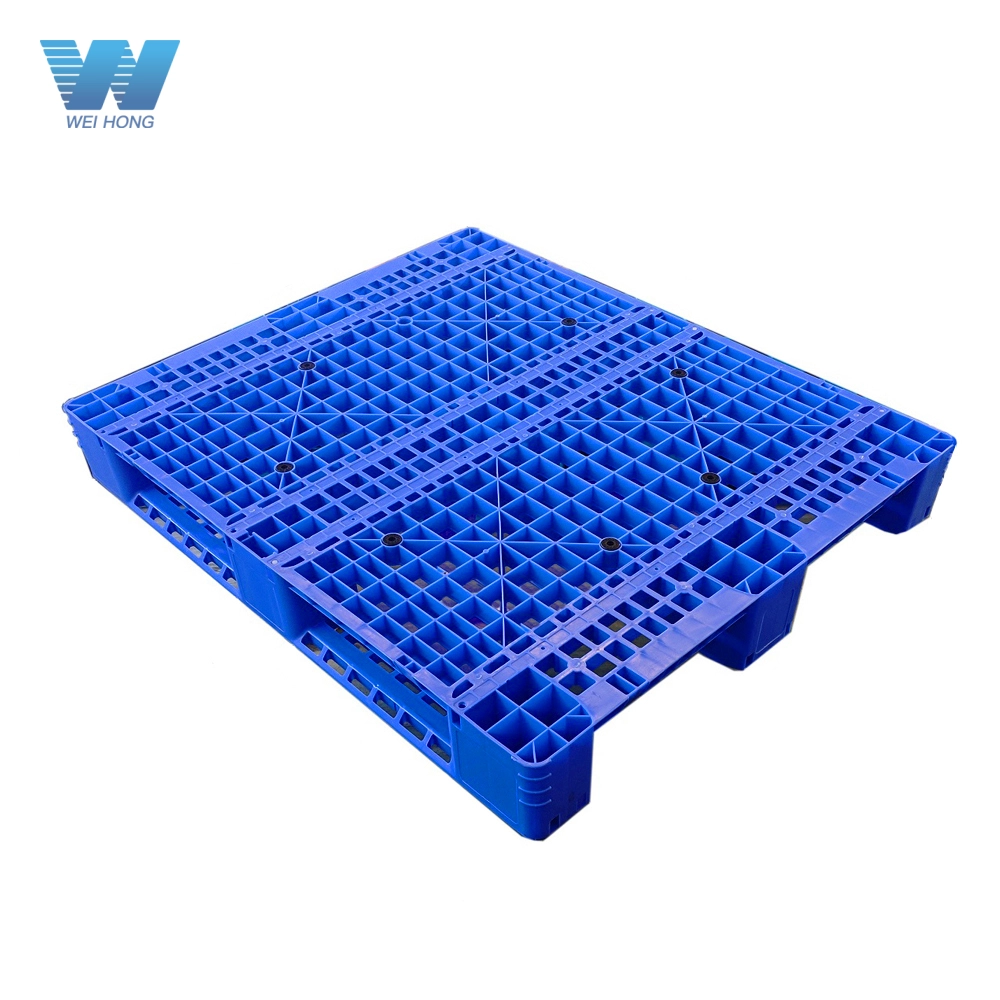
ZJ1210-150A Three-runner Single-sided Plastic Pallet
The three-runner single-sided plastic pallet is a solid and durable packaging solution designed for general and medium to heavy-duty cargo storage, transport and automated storage and retrieval system (AS/RS) use. It’s made of virgin HDPE or PP, featuring in robust structure, reinforced configuration with steel cores for rack and shelf, and a steady loading capacity.
Request More Information About Plastic Pallets
Have questions or need detailed insights on this article? Fill out the form below to contact our team for comprehensive information and support related to our plastic pallet solutions.
Contact us


+86 138 0277 8204
+86 183 4431 0917
+86 195 3791 1860

No. 15-1, Fengying Rd., Taiping Town, Conghua Dist., Guangzhou City, Guangdong Province, China.
Weihong
Whatsapp: +8613802778204
Guangdong Weihong Plastic Technology Co., Ltd.
Scan QR Code