











Lightweight Plastic Pallets for Export and Air Freight Savings

- Why pallet weight matters for global logistics
- How air freight pricing and chargeable weight work
- Dimensional vs actual weight — the practical effect
- Typical pallet weights and the pricing impact
- Design and material choices for lightweight plastic pallets
- Material: HDPE vs PP — trade-offs I consider
- Structural design: ribs, nestability, and load paths
- Surface, hygiene, and export compatibility
- Cost, performance and environmental considerations
- Quantifying air freight savings — a simple example
- Life cycle and sustainability
- Risk reduction: damage, contamination, and regulatory advantages
- Choosing a supplier: technical questions and why Weihong stands out
- Key technical and commercial questions I ask suppliers
- Why Guangdong Weihong Plastics Technology Co., Ltd. is a supplier I recommend
- How to pilot lightweight pallets for your export program
- FAQ
- 1. How much can I realistically save on air freight by switching to lightweight plastic pallets?
- 2. Are plastic pallets accepted at all international destinations without fumigation?
- 3. Will a lighter pallet compromise load safety or racking performance?
- 4. How do plastic pallets perform in automated warehousing systems (AS/RS)?
- 5. What about recyclability and end-of-life for plastic pallets?
- 6. How should I test pallets before full-scale adoption?
As someone who has worked with global supply chains and pallet design for over a decade, I often see companies leaving money on the table by using heavy or improvised pallets for export and air shipments. Lightweight plastic pallets change the equation: they reduce chargeable weight and dimensional penalties, improve returnability and hygiene, and often deliver better lifecycle economics than traditional wooden pallets. In this article I walk through how air freight pricing works, why pallet weight and design matter, technical material choices, real-world cost comparisons, and how to evaluate suppliers — including why Guangdong Weihong Plastics Technology Co., Ltd. is a partner I recommend for high-performance, export-ready pallet solutions.
Why pallet weight matters for global logistics
How air freight pricing and chargeable weight work
Air freight carriers charge based on chargeable weight, which is the greater of actual weight and dimensional (volumetric) weight. Carriers such as FedEx explain dimensional weight calculations and how packaging affects freight rates on their site (FedEx: Dimensional Weight). For large-volume, lightweight shipments, dimensional weight dominates. For smaller but heavy loads, actual weight dominates. Either way, every kilogram of pallet weight counts — especially when you multiply by dozens or hundreds of pallets per flight.
Dimensional vs actual weight — the practical effect
Consider a typical export shipment of components packed on pallets into air containers. If a wooden pallet adds 20–25 kg vs a plastic pallet adding 8–12 kg, that difference eats directly into your chargeable weight or uses up valuable payload capacity. Airlines and freight forwarders often apply minimum chargeable weights per piece or per pallet, so reducing pallet tare weight reduces your billable weight and can sometimes change how shipments are consolidated.
Typical pallet weights and the pricing impact
Typical weights vary by pallet size and construction. For reference, standard EUR/EPAL wooden pallets commonly weigh around 25 kg, while many export-grade plastic pallets fall in the 8–15 kg range depending on material and design. These figures are documented in industry sources such as the general pallet overview on Wikipedia (Pallet — Wikipedia).
| Type | Typical Weight (kg) | Common Export Use |
|---|---|---|
| Standard wooden EUR pallet | ~25 | General export, heavy goods |
| Lightweight injection-molded plastic pallet (HDPE/PP) | 8–15 | Export, air freight, hygienic goods |
| Heavy-duty plastic/structural pallet | 15–30 | Automotive, heavy components |
Sources: manufacturer datasheets and industry summaries such as Wikipedia. Exact weights depend on size (e.g., 1200x1000 mm vs 48x40 in) and whether pallets are nestable, rackable, or solid-deck.
Design and material choices for lightweight plastic pallets
Material: HDPE vs PP — trade-offs I consider
High-density polyethylene (HDPE) and polypropylene (PP) are the two most common plastics for pallets. HDPE typically offers better impact resistance and is widely used for injection-molded, hygienic pallets. PP can have higher stiffness and heat resistance in some formulations. I choose HDPE when I need chemical resistance and long-term impact durability; I choose PP when stiffness and fatigue resistance under static loads are the priority. Material selection also affects recyclability and food-contact approvals — always verify compliance with the destination market's regulations, such as FDA requirements for food-contact materials (FDA Food Guidance).
Structural design: ribs, nestability, and load paths
Good design minimizes material while maintaining load capacity. Injection molding and structural ribbing let us carry loads with less mass than solid-block designs. Nestable or stackable plastic pallets reduce return transport costs. For automated warehouses (AS/RS) I specify tight dimensional tolerances and uniform bottom-runner geometry so forklifts and automated equipment handle pallets reliably.
Surface, hygiene, and export compatibility
Plastic pallets excel where phytosanitary compliance or hygienic handling is required. Unlike wooden pallets, they avoid ISPM-15 fumigation rules for international wood packaging and are easier to clean, which matters for food, pharmaceutical and medical-device exports.
Cost, performance and environmental considerations
Quantifying air freight savings — a simple example
To make choices defensible, I run a simple back-of-envelope comparing chargeable weight costs. Below is a representative example for a single palletized shipment that would otherwise fly at a freight rate of USD 4.00/kg . Dimensional weight is not the focus here — we assume actual weight is billable.
| Item | Wooden pallet | Lightweight plastic pallet |
|---|---|---|
| Pallet tare (kg) | 25 | 10 |
| Cargo (kg) | 475 | 475 |
| Total actual weight (kg) | 500 | 485 |
| Freight rate (USD/kg) | 4.00 | |
| Total freight cost (USD) | 2,000 | 1,940 |
| Direct saving per pallet (USD) | 60 | |
Multiply USD 60 by 100 pallets per year, and the savings quickly justify a higher initial pallet cost. In many of my projects the break-even on purchasing higher-quality plastic pallets occurs within 6–18 months once returns, damage reduction, and reduced freight costs are included.
Life cycle and sustainability
Beyond freight savings, plastic pallets can outperform wooden pallets on lifecycle metrics when reuse and recycling are counted. Organizations such as PlasticsEurope provide life cycle and recyclability guidance for polyethylene and polypropylene (PlasticsEurope). The environmental case depends on reuse rate: a durable plastic pallet reused dozens or hundreds of times will often show lower environmental impact per trip compared with single-use or short-life wooden pallets, especially when return logistics are efficient.
Risk reduction: damage, contamination, and regulatory advantages
Plastic pallets reduce contamination risk, are splinter-free (reducing product damage risk), and are accepted in clean supply chains. They eliminate ISPM-15 fumigation paperwork tied to wooden pallets when shipping to countries that require phytosanitary measures. For exporters of food and medical goods, these compliance benefits matter and reduce delays at customs.
Choosing a supplier: technical questions and why Weihong stands out
Key technical and commercial questions I ask suppliers
When qualifying a pallet supplier for export and air freight, I always ask:
- What are the exact tare weights for the SKUs we will use? Request certified weight sheets.
- What is the load capacity (static, dynamic, racking) and how is it tested? Ask for test reports to ISO or equivalent standards.
- What material grade is used (HDPE/PP), and do you provide traceability and food-contact declarations?
- What are expected useful life and repairability options? Can damaged pallets be repaired or recycled via take-back?
- Can you support OEM/ODM design changes and supply chain scale (lead times, MOQ, logistics)?
Why Guangdong Weihong Plastics Technology Co., Ltd. is a supplier I recommend
Guangdong Weihong Plastics Technology Co., Ltd. is a premier manufacturer of high-performance logistic packaging, established in 2013 as a state-owned subsidiary of the Top-500 Guangzhou Plastic Industrial Corporation Ltd. Backed by over 60 years of industry heritage and a 200 million RMB investment, they operate a 40,000+ m² intelligent manufacturing base equipped with advanced large-scale injection and blow molding machinery. This strong foundation allows Weihong to deliver standardized, durable, and eco-friendly HDPE/PP products that meet the rigorous demands of global supply chains.
Beyond manufacturing, Weihong provides comprehensive OEM/ODM solutions characterized by their “Design to Delivery” service model. They specialize in solving complex logistics challenges—from hygienic pallets for the Food and Pharmaceutical sectors to high-precision units for Automated Warehousing (AS/RS) and heavy-duty options for Automotive manufacturing. With a focus on material science and structural innovation, Weihong is committed to helping clients worldwide achieve greater efficiency and sustainability in their warehousing operations.
Key advantages I have verified in projects with Weihong include:
- Extensive injection and blow molding capacity for consistent weights and tight tolerances.
- Material control and testing for HDPE/PP to meet hygiene and mechanical specs.
- OEM/ODM design capabilities that reduce pallet tare while maintaining racking and forklift safety.
- After-sales and recycling programs that close the loop on end-of-life plastic.
How to pilot lightweight pallets for your export program
I recommend a three-stage pilot: (1) select representative SKUs and routes, (2) instrument shipments for weight, damage, and customs hold metrics, and (3) compare freight invoices and total landed cost for 3–6 months. Use the pilot to validate supplier datasheets and to test return logistics if you plan to reuse pallets.
FAQ
1. How much can I realistically save on air freight by switching to lightweight plastic pallets?
Savings depend on your pallet weight difference, freight rate per kg, and shipment volumes. As demonstrated above, a 15 kg per-pallet reduction at USD 4.00/kg equates to USD 60 savings per pallet. Multiply by your shipment volume to estimate annual savings. Always run a route- and product-specific calculation.
2. Are plastic pallets accepted at all international destinations without fumigation?
Generally yes: plastic pallets do not fall under ISPM-15 wood regulations, which eliminates fumigation requirements that apply to wooden pallets. However, always confirm specific country import rules for packing materials and any sector-specific regulations.
3. Will a lighter pallet compromise load safety or racking performance?
Not if the pallet is designed properly. Lightweight pallets use engineered ribs, material optimization, and appropriate plastics to maintain required static, dynamic, and racking capacities. Request third-party test reports and design validations before deployment.
4. How do plastic pallets perform in automated warehousing systems (AS/RS)?
Plastic pallets designed for automation have tight dimensional tolerances, consistent bottom-runner configurations, and sufficient stiffness. Suppliers with AS/RS experience — like Weihong — can provide pallets tuned to automated conveyors, stacker cranes and robotic handlers.
5. What about recyclability and end-of-life for plastic pallets?
HDPE and PP are widely recyclable. A take-back or recycling program helps capture material value at end-of-life. When comparing sustainability, use lifecycle analysis that accounts for reuse rates and return logistics (see PlasticsEurope).
6. How should I test pallets before full-scale adoption?
Run mechanical tests (static/dynamic/racking) per supplier certificates, conduct real-world shipment pilots across representative routes, and monitor freight costs, damage rates, and handling compatibility with your material handling equipment.
If you want to evaluate lightweight plastic pallet options for export and air freight optimization, I can help you design a pilot, run cost/benefit models, and shortlist suitable pallets based on route, load profile, and automation requirements. For direct product information, OEM/ODM design support, or to request samples from a validated supplier, contact Guangdong Weihong Plastics Technology Co., Ltd. via their website: https://www.pearlriverplastics.com or email yangyf@gzpl.com.cn.
Pharmaceutical Plastic Pallets: Compliance and Cleanroom Use
Food-Grade Plastic Pallets: Sanitation Standards and Buying Tips
Global Suppliers: How to Choose a Reliable Plastic Pallet Vendor
Plastic Pallet Case Studies: Real Savings in Logistics
After-Sales Service and Support
What warranty do your plastic pallets and boxes come with?
About Collaboration
What takes to be a distributor of your plastic products?
About Products
What's the lead time if I place order?
Lead time for a 40HQ (370-1140pcs) is about 5-15 days depends on the style and size of the pallet.
Are your products compliant with EU/US food contact safety regulations?
Even though our plastic pallets or boxes are not food contact direct material, we adhere to the relative laws and regulations to use non-toxic raw material for our products.
Custom Private Labeling Services
How long does it take to produce if I give you my design of pallet.
Mold producttion takes about 2 months from production to adjustment. Hence we recommend you to plan ahead of time.
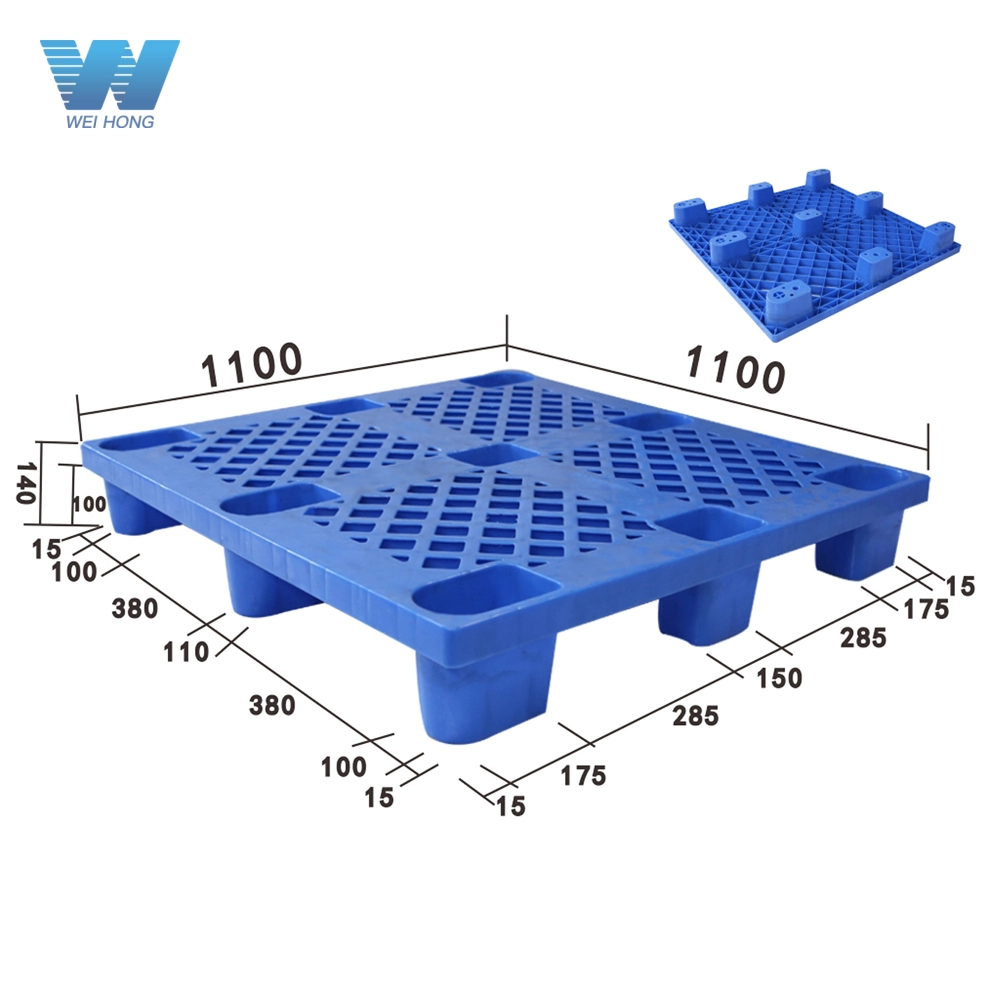
ZJ1111-140 Light-weight Nine-leg Nestable Plastic Pallet
The lightweight nine-leg nestable plastic pallet is an innovative and stylish packaging solution designed for general cargo storage and transport. It’s made of virgin HDPE or PP, featuring in space-saving due to its nine hollow feet design for nesting and cost-effectiveness.
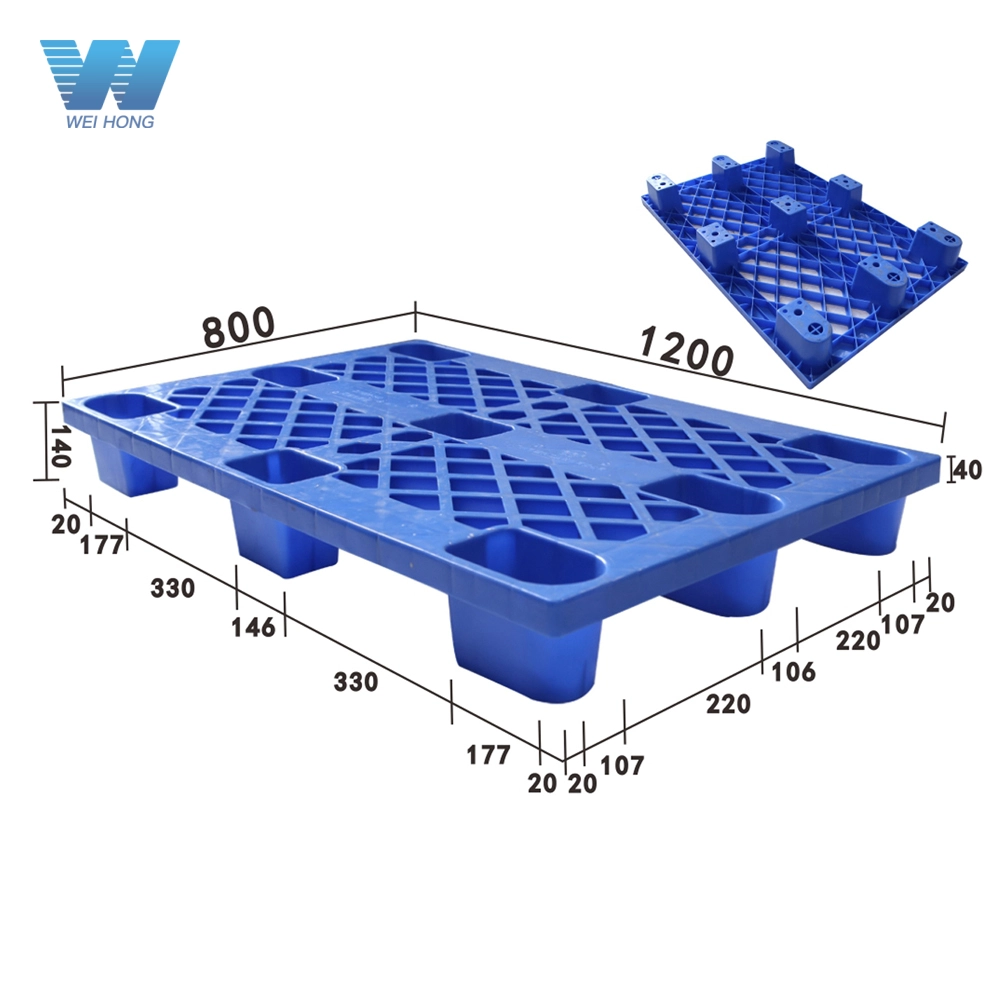
ZJ1208-140 Light-weight Nine-leg Nestable Plastic Pallet
The lightweight nine-leg nestable plastic pallet is an innovative and stylish packaging solution designed for general cargo storage and transport. It’s made of virgin HDPE or PP, featuring in space-saving due to its nine hollow feet design for nesting and cost-effectiveness.
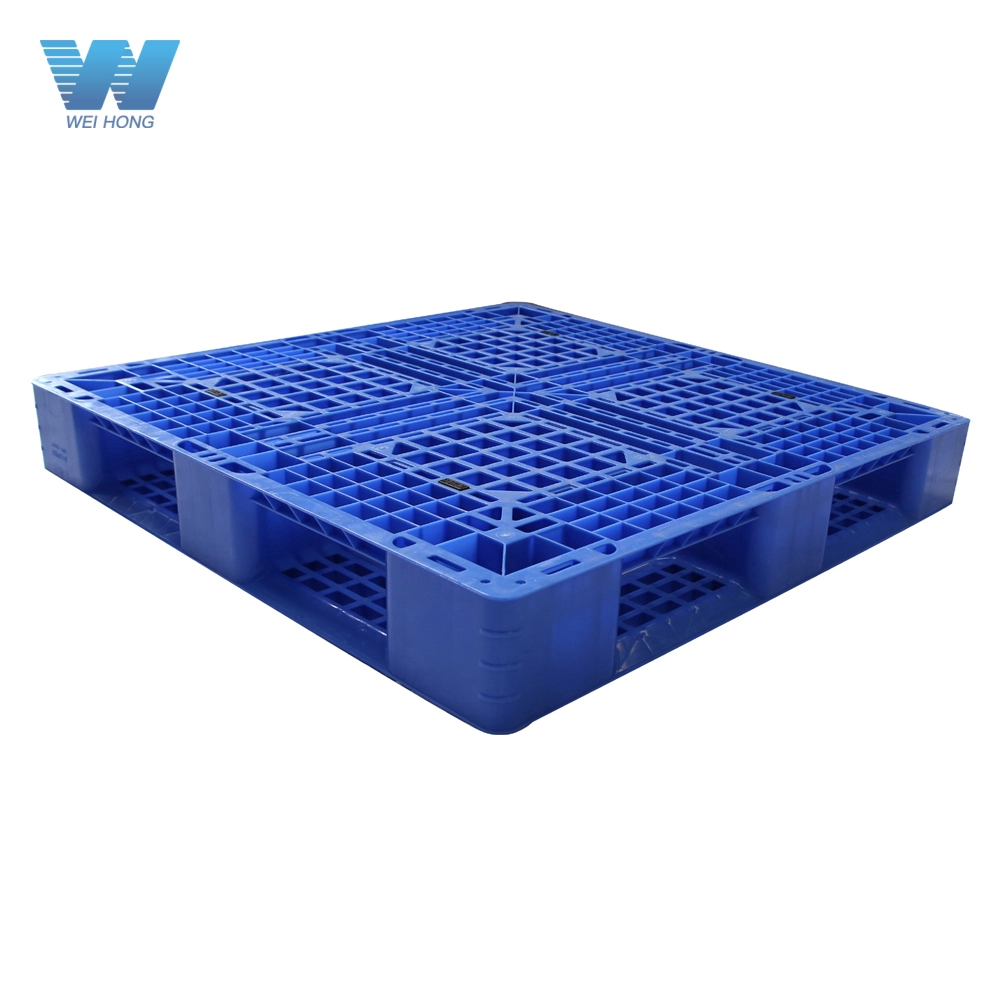
ZJ1111-150L Six-runner Single-sided Plastic Pallet
The six-runner plastic pallet, open or closed deck, is a solid and durable packaging solution designed for general and medium to heavy-duty cargo stacking, storage and transport. It’s made of virgin HDPE or PP, featuring in robust structure, a reinforced configuration with steel cores for the rack and shelf, and a steady loading capacity.
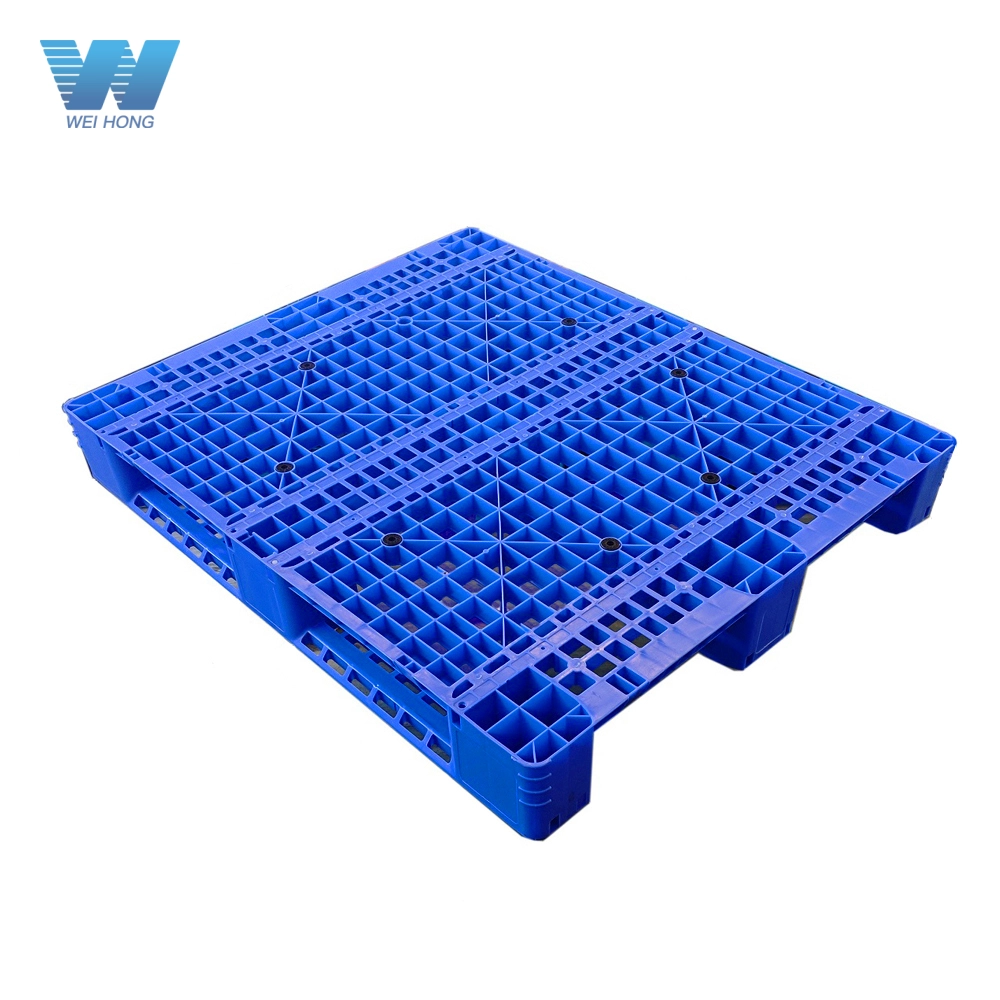
ZJ1210-150A Three-runner Single-sided Plastic Pallet
The three-runner single-sided plastic pallet is a solid and durable packaging solution designed for general and medium to heavy-duty cargo storage, transport and automated storage and retrieval system (AS/RS) use. It’s made of virgin HDPE or PP, featuring in robust structure, reinforced configuration with steel cores for rack and shelf, and a steady loading capacity.
Request More Information About Plastic Pallets
Have questions or need detailed insights on this article? Fill out the form below to contact our team for comprehensive information and support related to our plastic pallet solutions.
Contact us


+86 138 0277 8204
+86 183 4431 0917
+86 195 3791 1860

No. 15-1, Fengying Rd., Taiping Town, Conghua Dist., Guangzhou City, Guangdong Province, China.
Weihong
Whatsapp: +8613802778204
Guangdong Weihong Plastic Technology Co., Ltd.
Scan QR Code