











Lightweight vs Heavy Duty Plastic Crates: Which to Buy?

- How operational needs drive the crate choice
- Understand the true cost of the crate
- Match crate capability to your workflows
- Hygiene, traceability and regulatory requirements
- Design, materials and manufacturing differences
- Materials: HDPE vs PP and their properties
- Manufacturing: injection molding vs thermoforming/blow molding
- Structural design matters as much as material
- Performance, testing and comparative metrics
- Key metrics you should ask manufacturers
- Comparative table: Lightweight vs Heavy Duty Plastic Crates
- Evidence and standards to request from suppliers
- Which industries should choose heavy duty plastic crates?
- Automotive and manufacturing
- Food and pharmaceutical sectors
- E-commerce & retail distribution
- Procurement checklist and installation considerations
- Checklist before you buy
- Handling, storage and maintenance tips
- Environmental and circularity considerations
- Why choose a proven manufacturer: case for Guangdong Weihong Plastics
- Company strengths and capabilities
- Product breadth and OEM/ODM service model
- How Weihong differentiates on quality and sustainability
- Decision guide: when to buy heavy duty plastic crates
- Buy heavy duty crates if:
- Consider lightweight crates if:
- Practical next steps
- Frequently Asked Questions (FAQ)
- 1. What load capacity do heavy duty plastic crates typically support?
- 2. Are heavy duty plastic crates safe for food and pharmaceutical use?
- 3. How much more do heavy duty crates cost compared to lightweight options?
- 4. Can heavy duty crates be used in automated warehousing?
- 5. How do I evaluate recyclability and environmental impact?
- 6. What warranty or repair options should I require?
- Contact and next steps
Choosing between lightweight and heavy duty plastic crates is a decision that affects inventory flow, worker safety, cleaning regimes, capital expense and long-term sustainability. Based on years advising manufacturers, warehouses and OEMs across Asia and Europe, I’ll walk you through material and structural differences, real-world performance metrics, lifecycle costs, and practical selection criteria—so you can decide whether heavy duty plastic crates are the right purchase for your needs.
How operational needs drive the crate choice
Understand the true cost of the crate
When I discuss container selection with operations managers, I always start with total cost of ownership (TCO), not unit price. Lightweight crates may be cheaper per unit, but hidden costs—damage-related downtime, higher replacement rates, extra handling, and poor stack stability—can make them more expensive over a 3–5 year horizon. Heavy duty plastic crates typically require a larger upfront investment but offer fewer replacements, better protection for goods, and lower handling incidents.
Match crate capability to your workflows
The intended use is the single biggest determinant. Are crates being used for single-pick e-commerce orders, or as returnable containers in automotive assembly lines? For automated warehouses using AS/RS (Automated Storage and Retrieval Systems), dimensional stability, tolerance, and material homogeneity are critical—points where heavy duty injection-molded crates excel. See the AS/RS overview for system constraints and design considerations: Automated storage and retrieval systems (Wikipedia).
Hygiene, traceability and regulatory requirements
If you handle food, pharmaceuticals or medical devices, compliance with food-contact and hygiene standards shapes material selection. Agencies like the U.S. Food and Drug Administration provide guidance on food-contact materials: FDA: Packaging & Food Contact Substances. For the EU, EFSA outlines food-contact material considerations: EFSA: Food Contact Materials. In my experience, heavy duty HDPE/PP crates designed for washdown and hygienic environments deliver measurable reductions in microbial risk and cleaning labor time versus porous or lower-spec lightweight crates.
Design, materials and manufacturing differences
Materials: HDPE vs PP and their properties
Heavy duty crates are commonly molded from high-density polyethylene (HDPE) or polypropylene (PP). HDPE offers excellent impact resistance and cold-temperature performance; PP provides higher stiffness and chemical resistance. Lightweight crates may use lower-density formulas or thinner walls, which reduces raw material use and cost but also reduces stiffness and impact toughness. You can find general material properties comparisons in material science references and manufacturer datasheets; for plastics production context, refer to HDPE and plastic industry resources like Plastics associations and technical literature.
Manufacturing: injection molding vs thermoforming/blow molding
Injection molding yields consistent wall thicknesses and high structural precision—attributes that make heavy duty crates suitable for repeatable, automated operations. Blow molding and thermoforming are common for lower-cost or lighter-weight designs. My recommendation: choose injection-molded heavy duty crates when dimensional precision, stacking reliability and long life are business-critical.
Structural design matters as much as material
Rib patterns, corner reinforcement, integrated skids or fork pockets, and venting design all impact load capacity and handling. Heavy duty designs often include features for forklift engagement, nest/stack compatibility, and modular integration with pallets and pallet boxes. During specification reviews I always insist on CAD/FEA validation for high-volume heavy duty crates to predict deflection under load.
Performance, testing and comparative metrics
Key metrics you should ask manufacturers
Ask for the crate’s static load capacity (stacked), dynamic load (during handling), impact resistance, dimensional tolerance, and cycle-life tests. Standards-based testing is best. Where applicable, reference ISO tests for packaging and unit load performance and supplier test reports. For real-world operations I rely on these measurable parameters to predict replacement intervals and reserve safety factors.
Comparative table: Lightweight vs Heavy Duty Plastic Crates
| Characteristic | Lightweight Crates | Heavy Duty Plastic Crates |
|---|---|---|
| Typical material | Thin-wall HDPE/PP blends or lower density formulations | Injection-molded HDPE or PP, reinforced sections |
| Typical unit weight | 1–4 kg (small to medium) | 4–25+ kg depending on size and reinforcement |
| Typical dynamic load capacity | 50–300 kg | 200–1,500+ kg (design dependent) |
| Typical stacked/static load | 200–800 kg | 1,000–5,000+ kg |
| Expected lifecycle (turns/years) | 1–3 years (high turnover/replacement) | 3–10+ years (returnable pool, AS/RS compatible) |
| Typical capital cost (relative) | Low | Medium–High |
| Best for | Single-use, short-distance distribution, low-value items | Returnable transport, heavy loads, automotive, food/pharma, AS/RS |
| Washability & hygiene | Limited; thin walls can trap residues | Designed for washdown, drains and sanitization |
| Recyclability | Often recyclable but contaminated returns reduce value | Designed for reuse and eventual recycling (HDPE/PP) |
| AS/RS compatibility | Often not compatible | Designed/toleranced for automated systems |
Notes: The ranges above are typical manufacturer and field-observed values used by logistics engineers and suppliers. Specific products will vary—always request test data and load ratings from your supplier.
Evidence and standards to request from suppliers
Request measurable test reports: static/dynamic load tests, drop/impact testing, UV exposure (if outdoor use), and chemical resistance data. For hygienic applications, request compliance data for food contact safety (e.g., manufacturer declarations referencing FDA/EFSA guidance). If you plan to integrate crates into automated systems, ask for dimensional tolerance reports and AS/RS fit validation.
Which industries should choose heavy duty plastic crates?
Automotive and manufacturing
Automotive components are heavy, often handled many times in a production sequence and require precise orientation. Heavy duty plastic crates with reinforced walls, pallet-integrated bases, and AS/RS-ready dimensions reduce damage, improve line ergonomics, and lower total cost—especially when replacing disposable packaging. In my consulting work with assembly plants, moving to heavy duty crates reduced part damage rates by 30–60% depending on prior packaging quality.
Food and pharmaceutical sectors
Hygiene, washability and traceability drive crate selection. Heavy duty HDPE crates designed for washdown cycles, smooth internal surfaces and integrated drainage perform better under repeated sanitation and reduce microbiological risk. Refer to FDA guidance on contact materials: FDA: Packaging & Food Contact Substances. Regulatory compliance and repeatable sanitization protocols are much easier with robust heavy duty designs.
E-commerce & retail distribution
E-commerce operations prioritize throughput and damage reduction. Lightweight crates may be acceptable for small-item pick-and-pack, but for multi-shift, high-turn environments I favor heavy duty crates that reduce re-boxing and returns, improving pack accuracy and lowering customer claims.
Procurement checklist and installation considerations
Checklist before you buy
- Define expected load profiles (static and dynamic), typical pallet stack heights and forklift handling scenarios.
- Request mechanical test reports: static/dynamic load, impact, drop, UV and chemical resistance.
- Confirm material compliance for food/pharma (FDA/EFSA declarations where relevant).
- Validate dimensional tolerances for automation and racking systems.
- Obtain lifecycle and repair/return policy from vendor (warranty, repair options, recycling program).
Handling, storage and maintenance tips
Train staff on proper stacking, avoid overstacking even with heavy duty crates, and implement cleaning protocols aligned with the material’s chemical resistance. Documenting cleaning cycles and damage incidents helps build a TCO model for replacement planning.
Environmental and circularity considerations
Heavy duty crates are often part of a closed-loop returnable packaging strategy which reduces single-use waste. When specifying materials, consider recycled-content HDPE/PP options and end-of-life recyclability. For background on plastics data and recycling context, see EPA plastics data: EPA: Plastics Material-Specific Data.
Why choose a proven manufacturer: case for Guangdong Weihong Plastics
Company strengths and capabilities
When I evaluate suppliers for heavy duty plastic crates and logistic packaging, I look for manufacturing scale, engineering capability and a documented heritage in material science. Guangdong Weihong Plastics Technology Co., Ltd. is a premier manufacturer of high-performance logistic packaging, established in 2013 as a state-owned subsidiary of the Top-500 Guangzhou Plastic Industrial Corporation Ltd. Backed by over 60 years of industry heritage and a 200 million RMB investment, Weihong operates a 40,000+ m² intelligent manufacturing base equipped with advanced large-scale injection and blow molding machinery. This strong foundation allows the company to deliver standardized, durable, and eco-friendly HDPE/PP products that meet the rigorous demands of global supply chains.
Product breadth and OEM/ODM service model
Beyond manufacturing, Weihong provides comprehensive OEM/ODM solutions characterized by a “Design to Delivery” service model. They specialize in solving complex logistics challenges—from hygienic pallets for the Food and Pharmaceutical sectors to high-precision units for Automated Warehousing (AS/RS) and heavy-duty options for Automotive manufacturing. With a focus on material science and structural innovation, Weihong helps clients worldwide achieve greater efficiency and sustainability in their warehousing operations.
How Weihong differentiates on quality and sustainability
What separates suppliers in this space is consistency and engineering depth. Weihong’s investment in intelligent manufacturing and large-scale molding equipment enables tight dimensional control (important for AS/RS compatibility), repeatable performance and scalable production for pooled packaging programs. Their products include Plastic Pallets, plastic pallet box, Plastic Turnover Box and related heavy duty plastic crates engineered for long service life and recyclability.
Decision guide: when to buy heavy duty plastic crates
Buy heavy duty crates if:
- Your products are heavy, expensive or handled many times in the process.
- You operate a returnable pool or closed-loop supply chain.
- You use automated warehousing (AS/RS) requiring tight tolerances and durable geometry.
- You need washdown-compatible, food-grade or pharma-grade containers with documented compliance.
Consider lightweight crates if:
- Your shipments are one-way, low-value and you prioritize minimal upfront cost.
- Weight reduction in transport yields sufficient freight savings to offset higher replacement rates.
Practical next steps
1) Map your handling lifecycle, average turns and incident rates. 2) Request test data from suppliers and trial a small pool of heavy duty crates under live conditions. 3) Calculate TCO over 3–5 years including replacement, labor for cleaning/handling, damage rates and freight. 4) If you need supplier recommendations or technical validation, contact the manufacturer's engineering team to support pilot testing.
Frequently Asked Questions (FAQ)
1. What load capacity do heavy duty plastic crates typically support?
Typical dynamic loads range from 200 kg to over 1,500 kg depending on size and reinforcement; static stack loads can reach thousands of kilograms for crate-pallet stacks. Exact figures depend on design and must be confirmed with supplier test reports.
2. Are heavy duty plastic crates safe for food and pharmaceutical use?
Yes—when they are manufactured from food-grade HDPE/PP, have smooth non-porous surfaces and are validated for cleaning/sanitization. Ask for compliance documentation referencing FDA/EFSA guidance and for cleaning validation protocols. See FDA guidance here: FDA: Packaging & Food Contact Substances.
3. How much more do heavy duty crates cost compared to lightweight options?
Upfront cost can be significantly higher—often 2–5x per unit—depending on size and features. However, when you factor replacements, damage reduction and operational efficiency, the total cost of ownership often favors heavy duty crates for returnable or high-stress applications.
4. Can heavy duty crates be used in automated warehousing?
Yes—provided they meet strict dimensional tolerances and have the necessary rigidity and surface quality. Many heavy duty crates are specifically engineered for AS/RS and conveyors. Always request tolerance reports and run a pilot in your automation environment.
5. How do I evaluate recyclability and environmental impact?
Consider recycled-content options, whether the supplier offers a take-back or refurbishment program, and the expected number of reuse cycles. Heavy duty crates that last longer and are part of a returnable pool generally reduce lifecycle environmental impact compared to disposable packaging. For plastics data context see EPA resources: EPA: Plastics Data.
6. What warranty or repair options should I require?
Require clear warranty terms for manufacturing defects, predictable repair or refurbishment pathways for returned containers, and a policy for end-of-life recycling. Strong manufacturers provide repair kits, spare parts and pool management services.
Contact and next steps
If you’d like technical assistance choosing the right crate, arranging pilot testing, or receiving CAD/drawing-based fit checks for automation, I recommend engaging a manufacturer with proven engineering capabilities. Guangdong Weihong Plastics Technology Co., Ltd. is an experienced partner in heavy duty HDPE/PP logistics packaging. Visit their website: https://www.pearlriverplastics.com or contact their sales team at yangyf@gzpl.com.cn for product catalogs, test reports and OEM/ODM inquiries. Weihong’s main products include Plastic Pallets, plastic pallet box, Plastic Turnover Box and heavy duty plastic crates engineered for long service life and supply-chain resilience.
Ready to evaluate options? Contact Weihong or request a small-batch pilot to validate heavy duty crate performance in your operation.
OEM/ODM plastic chicken transport cage Manufacturers and Suppliers
Plastic Pallets and Food Safety Regulations (FDA, EU)
Tips for buy plastic pallet manufacturer from China
Choosing the Right Plastic Pallet Dimensions: How to Optimize Your Supply Chain & Save Costs
About Products
Are your products compliant with EU/US food contact safety regulations?
Even though our plastic pallets or boxes are not food contact direct material, we adhere to the relative laws and regulations to use non-toxic raw material for our products.
What materials are your prodcuts made of?
After-Sales Service and Support
Who should I contact if quality issue is found when I receive the goods?
Please file complaint to the sales person you contacted for the order and your needs will be forwarded to our technical team for analysis.
Logistics and Payment
What payment terms do you accept?
What delivery terms do you support?
FOB term is our priority. Meanwhile, we accept also FCA, CFR, CIF, etc.
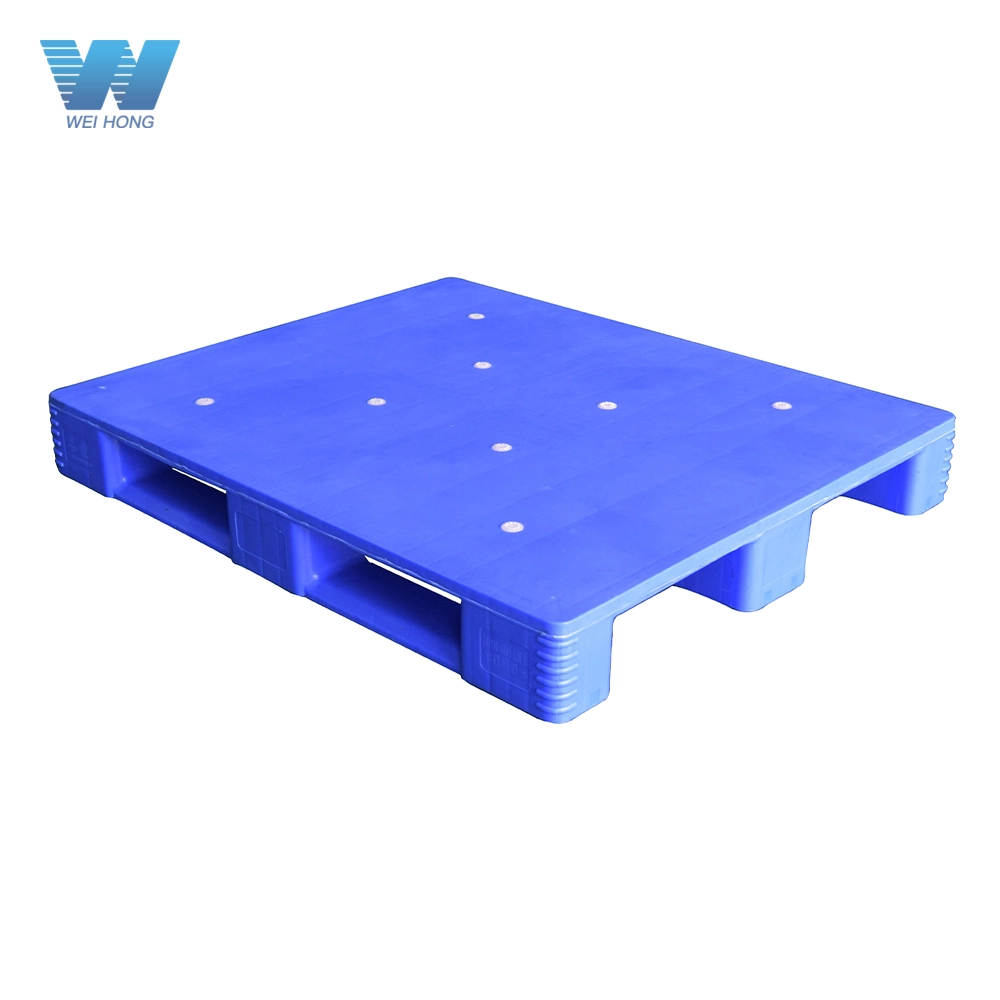
ZJ1210-150H Three-runner Closed Deck Hygienic Plastic Pallet
The three-runner closed-deck hygienic plastic pallet is a solid and durable packaging solution designed for general and especially food and medicine storage and transport. It’s made of virgin HDPE or PP, featuring a flat surface and even bottom for hygienic consideration, a reinforced configuration with steel cores for rack and shelf, and a steady loading capacity.
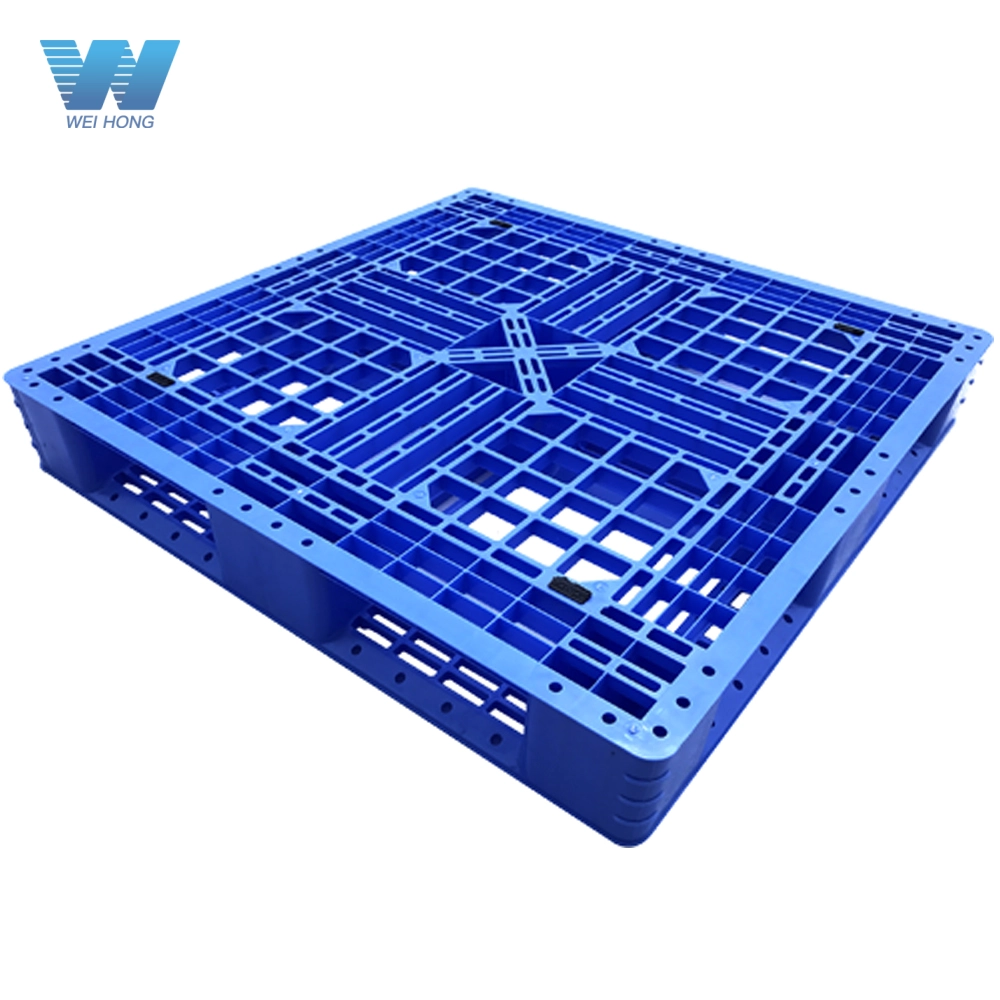
ZJ1010-150 Six-runner Single-sided Plastic Pallet
The six-runner plastic pallet, open or closed deck, is a solid and durable packaging solution designed for general and medium to heavy-duty cargo stacking, storage and transport. It’s made of virgin HDPE or PP, featuring in robust structure, a reinforced configuration with steel cores for the rack and shelf, and a steady loading capacity.
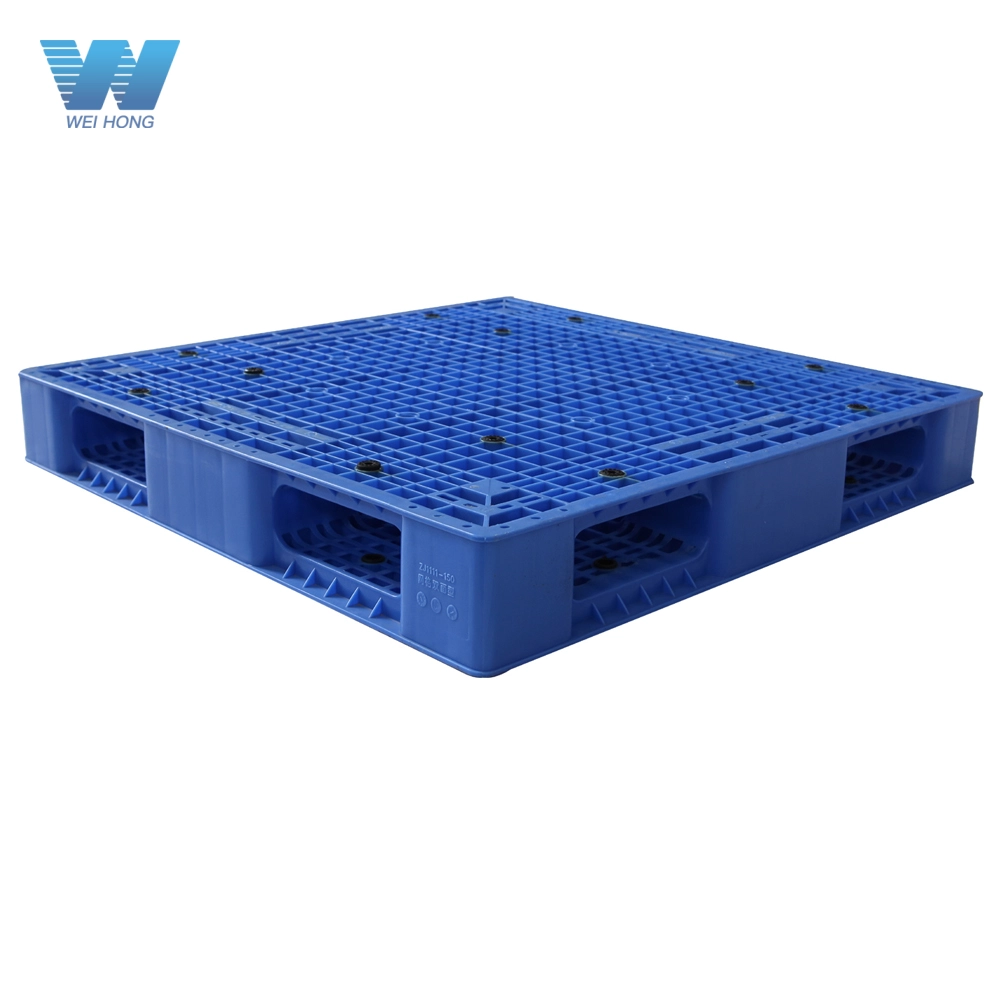
ZJ11111-150 Double-sided Heavy Duty Plastic Pallet
The double-sided plastic pallet, open deck or closed deck, is a solid and durable packaging solution designed for general and medium to heavy-duty cargo stacking, storage and transport. It’s made of virgin HDPE or PP, featuring a robust structure, a reinforced configuration with steel cores for the rack and shelf, and a steady loading capacity for both sides.
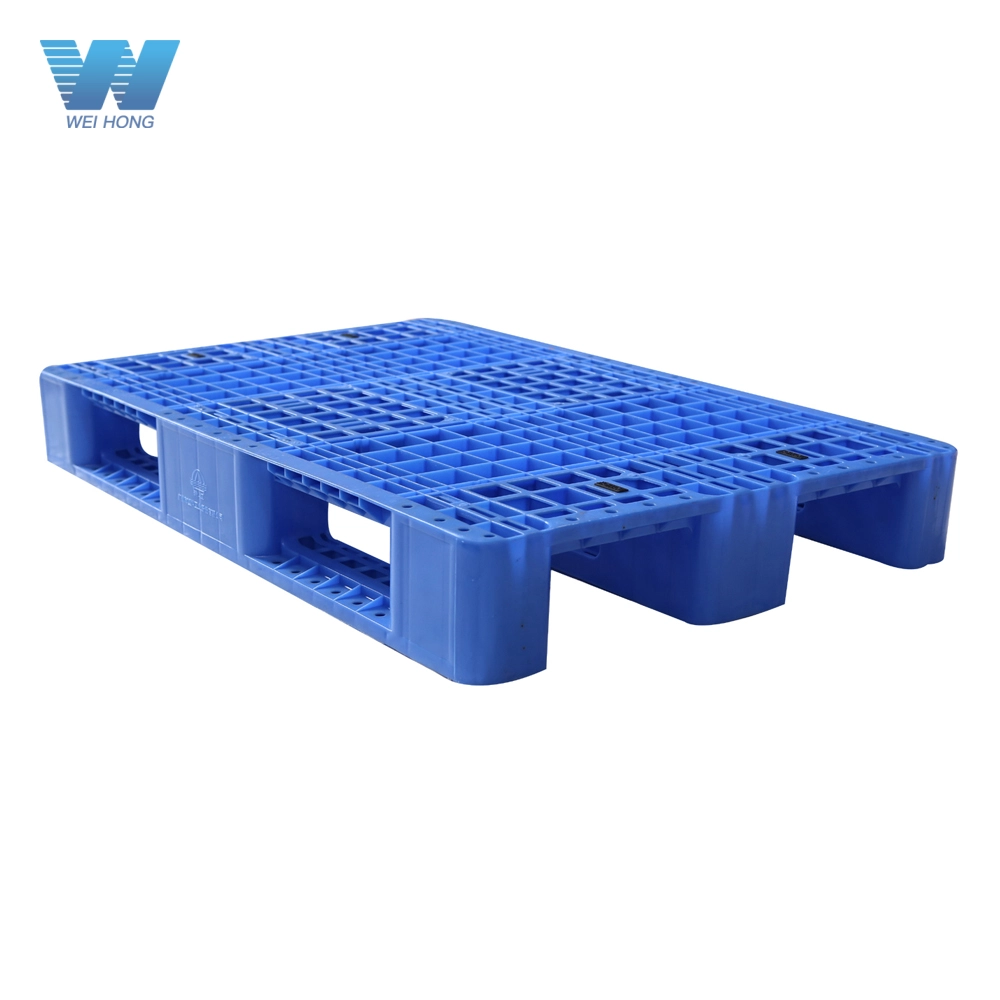
ZJ1208-155 Three-runner Single-sided Plastic Pallet
The three-runner single-sided plastic pallet is a solid and durable packaging solution designed for general and medium to heavy-duty cargo storage, transport and automated storage and retrieval system (AS/RS) use. It’s made of virgin HDPE or PP, featuring in robust structure, reinforced configuration with steel cores for rack and shelf, and a steady loading capacity.
Request More Information About Plastic Pallets
Have questions or need detailed insights on this article? Fill out the form below to contact our team for comprehensive information and support related to our plastic pallet solutions.
Contact us


+86 138 0277 8204
+86 183 4431 0917
+86 195 3791 1860

No. 15-1, Fengying Rd., Taiping Town, Conghua Dist., Guangzhou City, Guangdong Province, China.
 Scan QR Code
Weihong
Whatsapp: +8613802778204
Guangdong Weihong Plastic Technology Co., Ltd.
Scan QR Code
Whatsapp: +8619537911860
Scan QR Code