











OEM/ODM mesh decks for pallet racking Manufacturers and Suppliers

- Industry trends in warehouse safety and efficiency
- Automation, density and demand for consistent decking
- Regulatory and safety drivers
- OEM/ODM mesh decks for pallet racking: design, materials, and benefits
- Mesh deck types and material choices
- Performance, safety and fire-suppression compatibility
- Benefits of OEM/ODM customization
- Choosing a manufacturer or supplier: what to ask and how the OEM/ODM process works
- Essential certifications and testing to request
- Prototyping, tooling, and lead times
- Costs, MOQs and lifecycle considerations
- Case studies, performance comparisons and Weihong’s OEM/ODM capabilities
- Comparative performance table
- Weihong’s manufacturing advantages for OEM/ODM mesh decks
- Example OEM/ODM workflows
- Conclusion and procurement checklist
- Relevant references and industry guidance
- Frequently asked questions
- Q: Can plastic mesh decks replace steel in heavy-duty racking?
- Q: Are polymer mesh decks compatible with AS/RS systems?
- Q: How do mesh decks affect fire suppression systems?
- Q: What lead time should I expect for custom OEM/ODM mesh decks?
- Q: How can I validate a supplier’s claims?
Guangdong Weihong Plastics Technology Co., Ltd., based in Guangzhou, China, provides OEM/ODM mesh decks for pallet racking used in global warehouses, automated storage (AS/RS), food and pharmaceutical environments. This article details the technical differences between steel and polymer mesh decks, performance data, regulatory and hygienic considerations for food-contact and pharmaceutical applications, and a practical supplier checklist to help procurement teams choose the right mesh decks for their regional compliance and operational needs.
Industry trends in warehouse safety and efficiency
Automation, density and demand for consistent decking
Modern warehouses are trending toward higher density storage and automation. Automated Storage and Retrieval Systems (AS/RS) and high-rise pallet racking place tighter tolerances on pallet support and entry/exit clearances. Mesh decks for pallet racking play a critical role because they provide consistent support across the pallet footprint, reduce risk of product migration, and enable fire suppression systems to function efficiently.
Regulatory and safety drivers
Regulatory pressure around workplace safety and food/pharma hygiene is increasing investment in engineered storage solutions. Guidance on rack safety and materials handling from authorities such as the U.S. Occupational Safety and Health Administration (OSHA) and industry best practices highlight the need for properly designed and maintained deck systems (see OSHA guidance on materials handling https://www.osha.gov/). Additionally, quality management frameworks like ISO 9001 reinforce manufacturers’ responsibility to consistently produce decks that meet specification (ISO 9001).
OEM/ODM mesh decks for pallet racking: design, materials, and benefits
Mesh deck types and material choices
Mesh decks are commonly available as steel wire mesh, perforated steel, and polymer (HDPE/PP) mesh panels. Each option has trade-offs:
- Steel wire mesh decks: high load capacity and widely used in general warehousing. Often galvanized for corrosion resistance.
- Perforated steel decks: heavier gauge, higher point-load resistance—common for heavy-duty industrial storage.
- Polymer mesh decks (HDPE/PP): increasingly adopted for hygienic environments (food/pharma) and for use in automated systems where reduced weight, contamination resistance and low friction may be advantageous.
For food and pharmaceutical applications, consult regulatory guidance on food contact materials; the U.S. Food and Drug Administration provides an overview of food contact substance regulation (FDA – Food Contact Substances).
Performance, safety and fire-suppression compatibility
Mesh decks affect how sprinkler systems operate. Open-mesh designs allow water distribution during a fire event, while solid decks can block flow. Most industrial sprinkler design standards assume open decking or defined void allowances; this is why many facilities prefer open-wire or perforated decks for pallet racking. When specifying mesh decks for pallet racking in a sprinklered facility, coordinate with fire protection engineers and reference local codes and NFPA guidance.
Benefits of OEM/ODM customization
OEM/ODM partnerships allow you to optimize decking for specific use-cases: tailored load ratings, integration with AS/RS shuttle systems, antimicrobial additives for hygiene, and color/branding for logistics flows. For suppliers with plastic manufacturing capabilities, like Guangdong Weihong Plastics Technology Co., Ltd., plastic mesh decks can be engineered for precise tolerance, UV and chemical resistance, and consistent mass production via injection molding or other polymer processes.
Choosing a manufacturer or supplier: what to ask and how the OEM/ODM process works
Essential certifications and testing to request
When evaluating suppliers, request evidence of quality systems (ISO 9001), test reports for load capacity and fatigue, surface treatment certificates (e.g., galvanizing standards) and—when applicable—food-contact compliance. Manufacturers should provide test data from recognized labs or internal test rigs showing static and dynamic load ratings, deflection under load, and cycle-life where relevant.
Prototyping, tooling, and lead times
Clarify the prototyping route: 3D-print or CNC mock-ups for steel decks; molded prototypes for polymer decks. Tooling lead times can be a major component of OEM/ODM schedules—metal press tooling or polymer injection molds may take several weeks to months. Agree on milestones: design review, sample approval, pilot run, production start. Guangdong Weihong’s intelligent manufacturing base (40,000+ m²) and large-scale molding equipment support rapid iteration and scalable production.
Costs, MOQs and lifecycle considerations
Understand total cost of ownership (TCO): initial price, expected lifespan, maintenance and replacement intervals, and environmental disposal/recycling. Steel decks often present higher upfront strength for heavy loads but may require corrosion protection; polymer decks can be lighter and corrosion-free but may have lower point-load resistance depending on formulation and reinforcement. Request lifetime projections and warranty terms.
Case studies, performance comparisons and Weihong’s OEM/ODM capabilities
Comparative performance table
| Deck Type | Typical Load Capacity (per deck) | Hygiene / Food-Contact | Corrosion Resistance | Typical Applications |
|---|---|---|---|---|
| Steel Wire Mesh Deck | ~1,000–6,000 lbs (450–2,700 kg) | Moderate (easier when galvanized/coated) | Good when galvanized or painted | General warehousing, light-to-medium pallets, sprinklered racking |
| Perforated Steel Deck | ~2,000–8,000 lbs (900–3,600 kg) | Moderate (requires proper cleaning/coating) | Good with protective finishes | Heavy-duty storage, point-loaded items |
| Plastic Mesh Deck (HDPE/PP) | ~500–3,000 lbs (225–1,360 kg) | High (inert, chemical resistant; possible antimicrobial additives) | Excellent (inherent corrosion resistance) | Food & pharma warehousing, AS/RS compatibility, contamination-sensitive environments |
Note: values above are typical ranges. Exact capacities depend on panel thickness, reinforcement, span between beams and attachment method. Always validate with supplier test data and in-situ load analysis.
Weihong’s manufacturing advantages for OEM/ODM mesh decks
Guangdong Weihong Plastics Technology Co., Ltd. is a state-owned subsidiary with >60 years of parent-group heritage and a dedicated 40,000+ m² manufacturing base. Weihong’s strengths relevant to OEM/ODM mesh decks include:
- Advanced injection and blow molding equipment for high-precision polymer components, enabling consistent HDPE/PP mesh decks suitable for hygienic applications and AS/RS systems;
- “Design to Delivery” service model—concept, engineering, prototyping, testing and mass production under one supplier;
- Material science focus: ability to develop custom polymer formulations for load-bearing, flame-retardant or antimicrobial properties;
- Quality & sustainability: standardized production and eco-friendly material selection aligned with global supply chain demands. More about Weihong: https://www.pearlriverplastics.com.
Example OEM/ODM workflows
A typical OEM/ODM project for a custom mesh deck often follows these phases:
- Requirement capture & site survey (load, span, compatibility with beam profile, sprinkler coverage).
- Preliminary design and finite element analysis (FEA) to define thickness/reinforcement.
- Prototype production and mechanical testing (static/dynamic load, deflection).
- Pilot run for fit-check with racks and pallets; iterate as needed.
- Mass production with agreed QA checkpoints and certification deliverables.
Conclusion and procurement checklist
Choosing the right mesh decks for pallet racking requires balancing load performance, hygiene, compatibility with sprinklers and AS/RS, lifecycle costs and sustainability. OEM/ODM partnerships offer the flexibility to engineer decks that precisely meet operational and regulatory needs. For contamination-sensitive environments, polymer mesh decks made from HDPE or PP are an attractive option due to their corrosion resistance and cleanability. For very high load demands, engineered steel solutions remain the standard.
Procurement checklist for mesh decks:
- Confirm static/dynamic load ratings and provide design safety factors.
- Request material and surface-treatment certificates; for food/pharma ask for food-contact approvals or formulation data.
- Verify fire-suppression compatibility and local code compliance.
- Ask for prototype testing, sample delivery and pilot-run inspection.
- Clarify lead times, MOQ, warranty and end-of-life recycling/disposal options.
Relevant references and industry guidance
Further reading and authoritative resources:
- Pallet racking overview (Wikipedia) – https://en.wikipedia.org/wiki/Pallet_rack
- OSHA – materials handling and storage guidance – https://www.osha.gov/
- ISO 9001 – Quality management systems – https://www.iso.org/iso-9001-quality-management.
- FDA – Food Contact Substances (overview) – https://www.fda.gov/food/packaging-food-contact-substances-fcs/overview-food-contact-substances-fcs
Frequently asked questions
Q: Can plastic mesh decks replace steel in heavy-duty racking?
A: Not always. Plastic (HDPE/PP) mesh decks provide excellent corrosion resistance, hygiene and weight savings but typically have lower point-load strength compared to heavy-gauge steel. For very heavy, point-loaded items, engineered steel decks or reinforced polymer designs may be required. Work with suppliers to review FEA and test data relative to your maximum expected loads.
Q: Are polymer mesh decks compatible with AS/RS systems?
A: Yes—polymer decks can be optimized for AS/RS, offering tight tolerances, low variation between parts and reduced weight. Weihong’s production capabilities make it possible to produce consistent panels with precise dimensions for automated systems. Validate friction, wear and electrical properties with the AS/RS integrator.
Q: How do mesh decks affect fire suppression systems?
A: Open mesh allows sprinkler water to pass through, which is preferable in many sprinklered installations. Solid decks may block water distribution and could require design exceptions or alternate fire protection strategies. Coordinate decking choice with fire safety engineers and local code officials.
Q: What lead time should I expect for custom OEM/ODM mesh decks?
A: Lead times vary: design and prototyping can take 2–8 weeks depending on complexity; tooling and initial production runs often range from 6–16 weeks. Suppliers with integrated design and manufacturing capabilities can shorten timelines. Discuss milestones and sample delivery dates upfront.
Q: How can I validate a supplier’s claims?
A: Ask for documented test reports (static/dynamic load tests), references from similar projects, factory audits, ISO certifications and material data sheets. For food or pharma applications, request food-contact documentation or third-party verification where applicable.
For tailored OEM/ODM solutions for mesh decks for pallet racking, Guangdong Weihong Plastics Technology Co., Ltd. combines deep polymer expertise with large-scale manufacturing to deliver engineered, hygienic and durable decking solutions. Contact Weihong at yangyf@gzpl.com.cn or visit https://www.pearlriverplastics.com to discuss your project.
Plastic Pallets for Automated Warehouses and AS/RS Systems
Heavy-Duty Plastic Pallets: Load Capacity and Racking Safety
Plastic Pallet Recycling and Sustainability: ROI for Buyers
Top 10 plastic industrial pallet Manufacturers and Supplier Brands
After-Sales Service and Support
Who should I contact if quality issue is found when I receive the goods?
Please file complaint to the sales person you contacted for the order and your needs will be forwarded to our technical team for analysis.
About Products
What is the minimun order quantity?
MOQ is usually 200pcs for each model. Less quantity is acceptable when there is stock.
Are your products compliant with EU/US food contact safety regulations?
Even though our plastic pallets or boxes are not food contact direct material, we adhere to the relative laws and regulations to use non-toxic raw material for our products.
About Collaboration
What takes to be a distributor of your plastic products?
Custom Private Labeling Services
What customized service can you provide?
We provide mold design, logo printing (silk screen printing or embossing), customized color and formula for our plastic products.
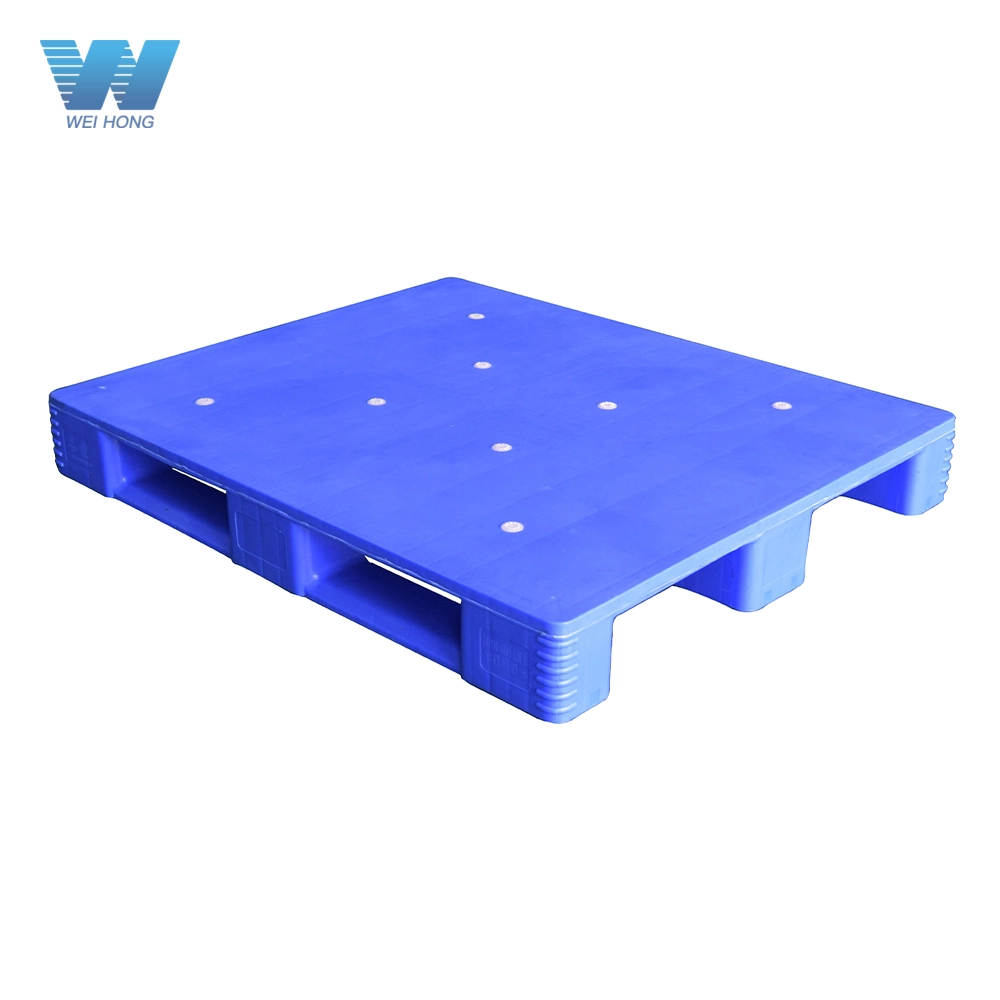
ZJ1210-150H Three-runner Closed Deck Hygienic Plastic Pallet
The three-runner closed-deck hygienic plastic pallet is a solid and durable packaging solution designed for general and especially food and medicine storage and transport. It’s made of virgin HDPE or PP, featuring a flat surface and even bottom for hygienic consideration, a reinforced configuration with steel cores for rack and shelf, and a steady loading capacity.
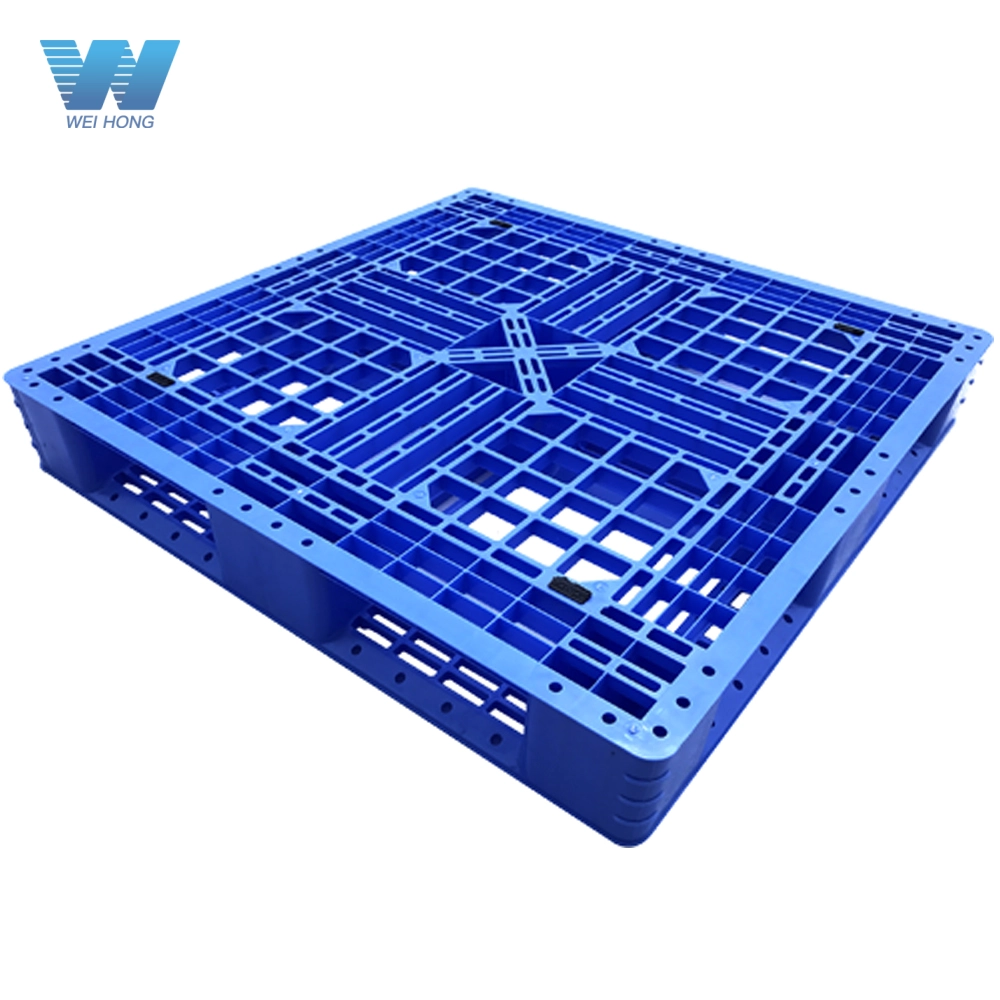
ZJ1010-150 Six-runner Single-sided Plastic Pallet
The six-runner plastic pallet, open or closed deck, is a solid and durable packaging solution designed for general and medium to heavy-duty cargo stacking, storage and transport. It’s made of virgin HDPE or PP, featuring in robust structure, a reinforced configuration with steel cores for the rack and shelf, and a steady loading capacity.
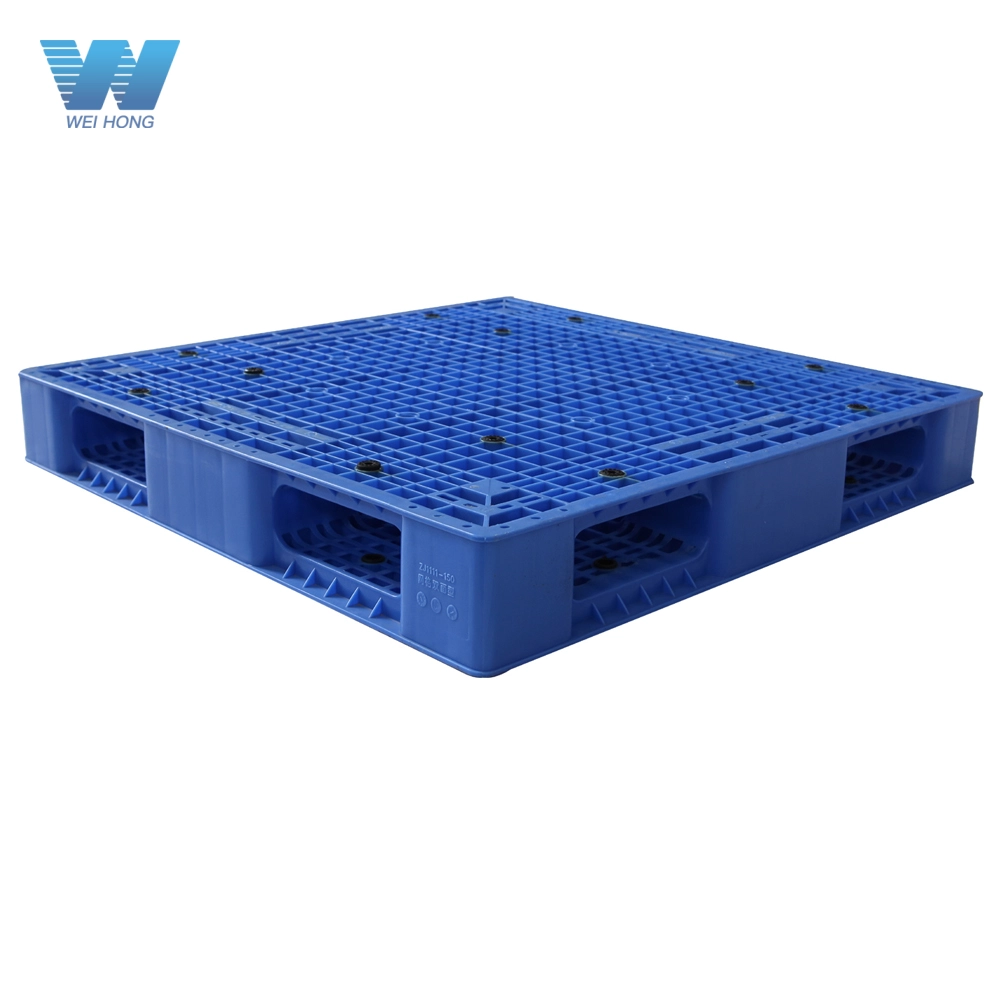
ZJ11111-150 Double-sided Heavy Duty Plastic Pallet
The double-sided plastic pallet, open deck or closed deck, is a solid and durable packaging solution designed for general and medium to heavy-duty cargo stacking, storage and transport. It’s made of virgin HDPE or PP, featuring a robust structure, a reinforced configuration with steel cores for the rack and shelf, and a steady loading capacity for both sides.
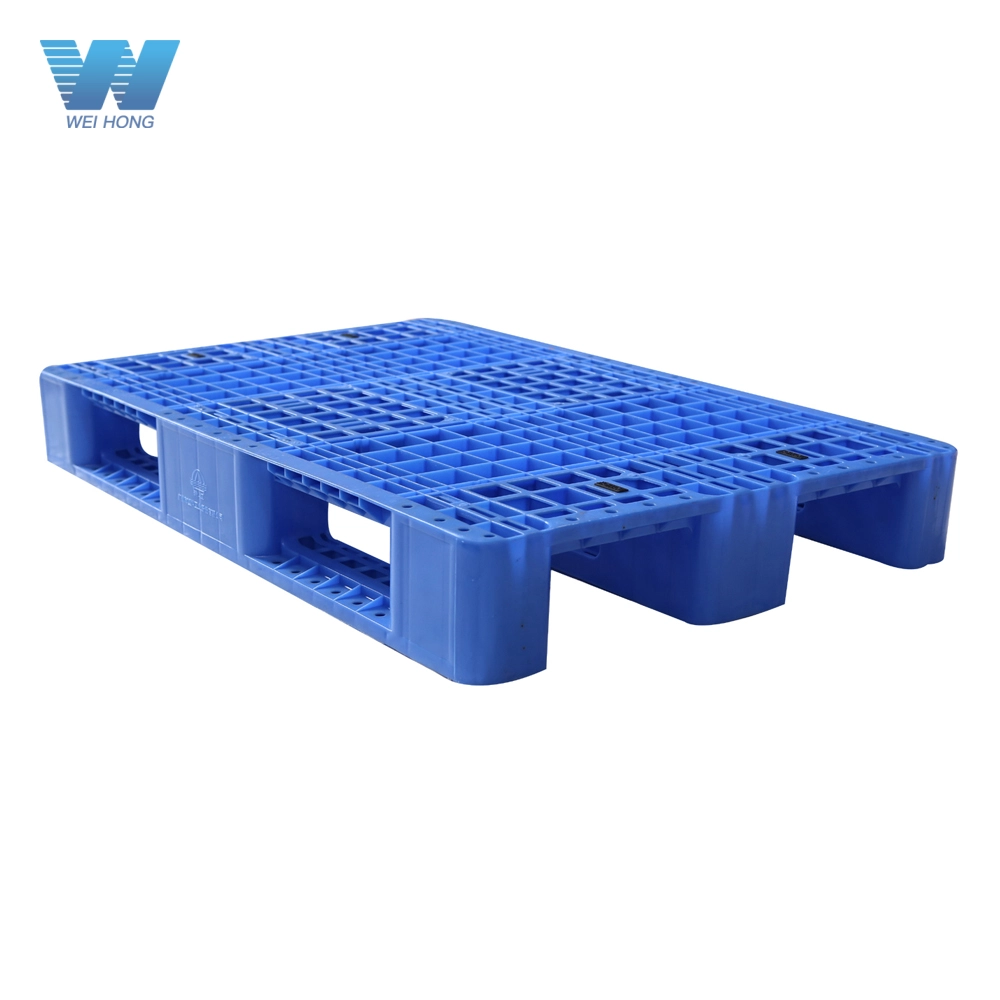
ZJ1208-155 Three-runner Single-sided Plastic Pallet
The three-runner single-sided plastic pallet is a solid and durable packaging solution designed for general and medium to heavy-duty cargo storage, transport and automated storage and retrieval system (AS/RS) use. It’s made of virgin HDPE or PP, featuring in robust structure, reinforced configuration with steel cores for rack and shelf, and a steady loading capacity.
Request More Information About Plastic Pallets
Have questions or need detailed insights on this article? Fill out the form below to contact our team for comprehensive information and support related to our plastic pallet solutions.
Contact us


+86 138 0277 8204
+86 183 4431 0917
+86 195 3791 1860

No. 15-1, Fengying Rd., Taiping Town, Conghua Dist., Guangzhou City, Guangdong Province, China.
Weihong
Whatsapp: +8613802778204
Guangdong Weihong Plastic Technology Co., Ltd.
Scan QR Code