










OEM/ODM plastic nesting boxes Manufacturers and Suppliers

- Why nesting boxes matter in modern logistics
- Key operational benefits
- Nesting versus stackable and foldable designs
- Industries that benefit most
- OEM/ODM considerations for plastic nesting boxes
- Design-to-Delivery: What OEM/ODM should include
- Material selection: HDPE vs PP (and additives)
- Regulatory and hygienic considerations
- Manufacturing capabilities & quality control at Guangdong Weihong
- Production assets and scale
- Quality systems and testing
- Customization: from ESD to hygienic finishes
- How to choose the right manufacturer and next steps
- Key questions to ask potential suppliers
- Cost, lead-time and volume comparison (typical ranges)
- Environmental lifecycle and circularity
- Conclusion
- Frequently Asked Questions (FAQ)
- 1. What are plastic nesting boxes used for?
- 2. Can nesting boxes be used in automated storage and retrieval systems (AS/RS)?
- 3. Are plastic nesting boxes food-safe?
- 4. How should I evaluate suppliers for an OEM/ODM program?
- 5. Where can I get samples and discuss custom designs?
OEM/ODM plastic nesting boxes are essential returnable packaging for efficient, space-saving supply chains—from automotive and electronics to food and pharmaceuticals. This guide helps procurement managers, logistics engineers and product designers evaluate materials, hygiene and compliance (e.g., food-contact rules), design for automated warehousing (AS/RS), and supplier capabilities. It also outlines how Guangdong Weihong Plastics Technology Co., Ltd.'s 40,000+ m² intelligent base and Design-to-Delivery OEM/ODM model solve complex logistics needs worldwide.
Why nesting boxes matter in modern logistics
Key operational benefits
Plastic nesting boxes reduce return-trip volume by nesting inside each other when empty, cutting backhaul costs and saving warehouse space. Compared with single-use packaging, reusable nesting containers lower total cost of ownership (TCO) over multiple cycles, reduce waste, and standardize handling for automated systems. They are especially valuable where reverse logistics and multiple handling steps are routine.
Nesting versus stackable and foldable designs
Nesting, stackable and foldable crates each solve different problems. Nesting boxes optimize empty-space transport; stackable crates maximize loaded storage density; foldable crates prioritize compact return volume with a hinge or collapsible side. Selecting the right style depends on empty-return frequency, payload, and automation requirements.
Industries that benefit most
Common sectors that rely on plastic nesting boxes include: automotive components (kitting and line-side delivery), electronics (ESD-safe variants), food & beverage and pharmaceuticals (hygienic, food-contact-compliant materials), retail distribution centers, and third-party logistics (3PL) providers using pooled returnable packaging pools.
OEM/ODM considerations for plastic nesting boxes
Design-to-Delivery: What OEM/ODM should include
A professional OEM/ODM partner delivers more than a mold. A full Design-to-Delivery service covers concept engineering, structural analysis (drop, stack, nest-clearance), materials selection, mold design & trial runs, pilot production, regulatory testing, serial manufacture, packaging and logistics. Vendors that provide iterative prototyping and finite element analysis (FEA) testing can accelerate validation for AS/RS and automated conveyors.
Material selection: HDPE vs PP (and additives)
High-density polyethylene (HDPE) and polypropylene (PP) are the most common thermoplastics for nesting boxes. Key differences:
| Property | HDPE | PP |
|---|---|---|
| Density | ≈ 0.93–0.97 g/cm³ | ≈ 0.90–0.91 g/cm³ |
| Melting point | ≈ 120–130°C | ≈ 160–170°C |
| Chemical resistance | Excellent to many chemicals | Good to very good; higher heat resistance |
| Typical uses | Durable boxes, impact resistance, food-grade variants | Rigid designs, heat-tolerant, electrostatic dissipative (ESD) options |
Sources: information on HDPE and PP properties are summarized in materials references such as HDPE (Wikipedia) and Polypropylene (Wikipedia).
Regulatory and hygienic considerations
Food, beverage and pharmaceutical customers must ensure materials and manufacturing processes meet relevant food-contact regulations. For the EU, Regulation (EU) No 10/2011 covers plastic materials intended to come into contact with food. In the US, FDA guidance on polymers and food contact should be followed. OEM partners should support validation and provide certificate-of-compliance documentation, traceability, and clean-room production if required.
Manufacturing capabilities & quality control at Guangdong Weihong
Production assets and scale
Guangdong Weihong Plastics Technology Co., Ltd., established in 2013 as a state-owned subsidiary of Guangzhou Plastic Industrial Corporation Ltd., operates a >40,000 m² intelligent manufacturing base and benefits from four decades of upstream experience in large-scale injection and blow molding. Supported by a 200 million RMB investment and a 60+ year industry heritage at the parent company level, Weihong can handle high-cavity molds, large-volume injection shots, and multi-station automation—critical for consistent OEM/ODM runs.
Quality systems and testing
Reliable nesting box suppliers implement incoming-material checks, in-process monitoring (mold temperature, shot weight), dimensional CMM inspections, and performance tests (stacking, drop, vibration, nest-fit). Weihong’s intelligent base enables traceable production runs and SPC (statistical process control) practices to maintain tolerance across thousands of units—ensuring consistency for AS/RS integration and automated pick-and-place equipment.
Customization: from ESD to hygienic finishes
OEM/ODM manufacturers offer custom color coding, RFID or barcode embedding, ESD-safe additives, antimicrobial masterbatches, and special surface textures for grip or washability. For pharmaceutical and food-grade boxes, smooth, crevice-free designs facilitate CIP (clean-in-place) or manual sanitization; RFID slots and ISO-compliant labeling can be pre-molded to speed warehouse onboarding.
How to choose the right manufacturer and next steps
Key questions to ask potential suppliers
- Can you provide complete Design-to-Delivery services including prototyping and mold management?
- What are your cavity capacities, cycle times, and annual production throughput?
- Do you supply certificates for materials and comply with food-contact/medical standards?
- Can you support AS/RS and conveyor integration with exact dimensional tolerances?
- What is your sample and trial schedule, and how are tooling costs managed?
Cost, lead-time and volume comparison (typical ranges)
| Stage | Low-volume (pilot) | Medium-volume | High-volume (serial) |
|---|---|---|---|
| Tooling cost | USD 8k–30k (simple molds) | USD 30k–80k | USD 80k–200k+ (multi-cavity/high-precision) |
| Unit cost (approx.) | USD 4–12 | USD 2–7 | USD 1–5 |
| Typical lead time | 4–8 weeks | 8–16 weeks | 12–26 weeks |
Notes: values vary by complexity, material, and surface finish; OEM models like Guangdong Weihong help optimize tooling and production to reduce per-unit cost at scale.
Environmental lifecycle and circularity
Designing for reuse and recyclability reduces lifecycle environmental impact. HDPE and PP are widely recyclable; using mono-material construction (single resin type) simplifies end-of-life processing. Suppliers should provide guidance on repairability, part replacement, and how to integrate R-PET or PCR content where appropriate. An OEM partner with established manufacturing and material knowledge can help balance recyclability with durability for long service life.
Conclusion
Plastic nesting boxes deliver measurable savings in transport, storage and handling when matched to application requirements. An effective OEM/ODM partner offers not just molds and parts but a full Design-to-Delivery capability: materials engineering, regulatory compliance, automated-manufacturing expertise and quality systems. Guangdong Weihong Plastics Technology Co., Ltd. brings large-scale injection and blow molding capacity, traceable quality control and tailored solutions for AS/RS, food & pharma hygiene, and heavy-duty industrial needs—making it a strong candidate when sourcing custom nesting boxes.
Frequently Asked Questions (FAQ)
1. What are plastic nesting boxes used for?
They are used for reusable transport and storage where empty-return efficiency matters—common in automotive, electronics, retail distribution, food & beverage, and 3PL operations.
2. Can nesting boxes be used in automated storage and retrieval systems (AS/RS)?
Yes—AS/RS compatibility requires tight dimensional control, appropriate lead-in/out features, and consistent mass/center-of-gravity specifications. OEM suppliers can design AS/RS-ready base and rim geometries to ensure reliable automated handling; see general AS/RS concepts in resources like Automated storage and retrieval system (Wikipedia).
3. Are plastic nesting boxes food-safe?
They can be—if manufactured from food-contact-compliant resins and processed under hygienic conditions. Documentation for compliance with regulations such as EU Regulation 10/2011 or relevant FDA guidance should be provided by the supplier.
4. How should I evaluate suppliers for an OEM/ODM program?
Request evidence of prototyping capability, production capacity, process controls, material certifications, testing protocols, and client references. A supplier that offers Design-to-Delivery reduces coordination overhead and shortens time-to-market.
5. Where can I get samples and discuss custom designs?
Contact Guangdong Weihong Plastics Technology Co., Ltd. for sample requests, design consultations and quotes. Email yangyf@gzpl.com.cn or visit pearlriverplastics.com for product examples and capability details.
For custom OEM/ODM nesting box solutions built for AS/RS, food or industrial use, contact Guangdong Weihong at yangyf@gzpl.com.cn to start a Design-to-Delivery project.
References:
Heavy-Duty Plastic Pallets: Load Capacity and Racking Safety
Top 10 plastic caged reinforced pallets Manufacturers and Supplier Brands
Top 10 plastic shipping pallets Manufacturers and Supplier Brands
ISO Standards and Testing for Plastic Pallets: Buyer Essentials
About Products
What is the minimun order quantity?
MOQ is usually 200pcs for each model. Less quantity is acceptable when there is stock.
Are there other sizes available apart from the ones on your website?
Yes, more sizes and styles of the plastic pallets and boxes are under development. Please contact us to check for availability.
After-Sales Service and Support
What warranty do your plastic pallets and boxes come with?
Who should I contact if quality issue is found when I receive the goods?
Please file complaint to the sales person you contacted for the order and your needs will be forwarded to our technical team for analysis.
Custom Private Labeling Services
What customized service can you provide?
We provide mold design, logo printing (silk screen printing or embossing), customized color and formula for our plastic products.
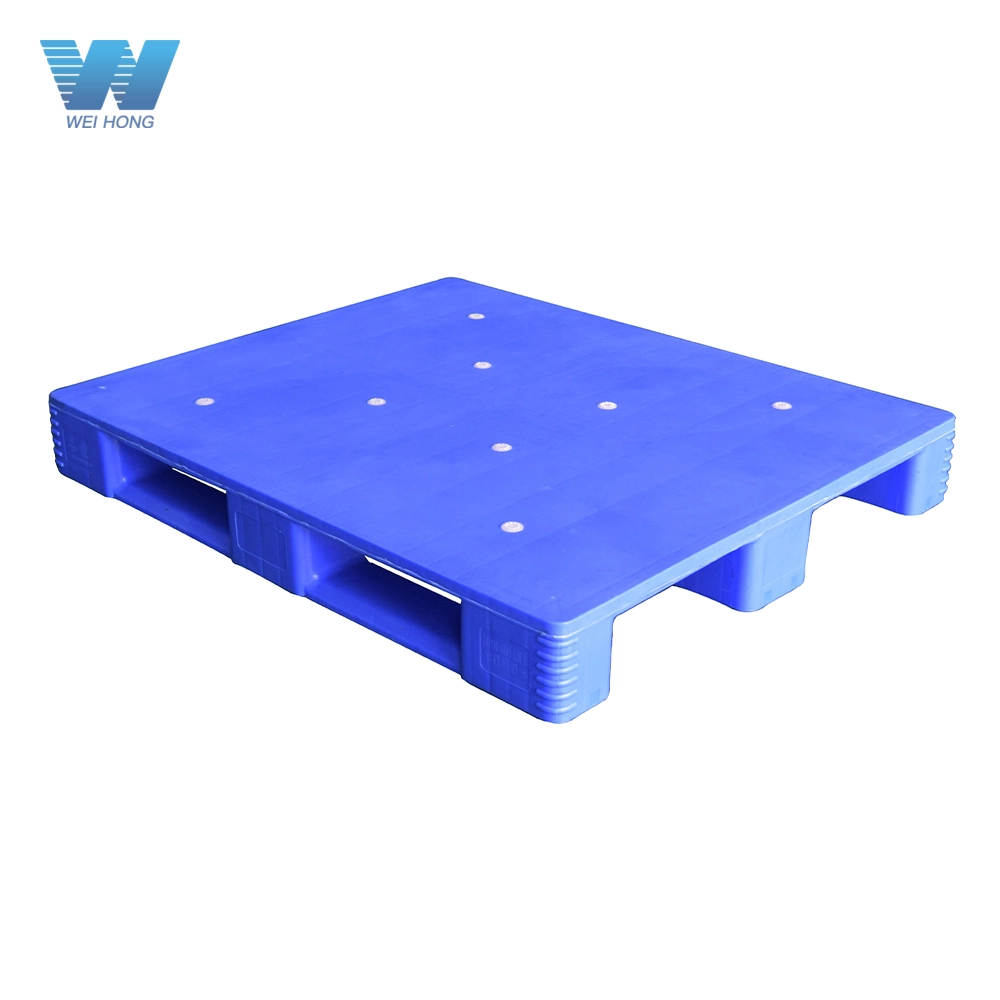
ZJ1210-150H Three-runner Closed Deck Hygienic Plastic Pallet
The three-runner closed-deck hygienic plastic pallet is a solid and durable packaging solution designed for general and especially food and medicine storage and transport. It’s made of virgin HDPE or PP, featuring a flat surface and even bottom for hygienic consideration, a reinforced configuration with steel cores for rack and shelf, and a steady loading capacity.
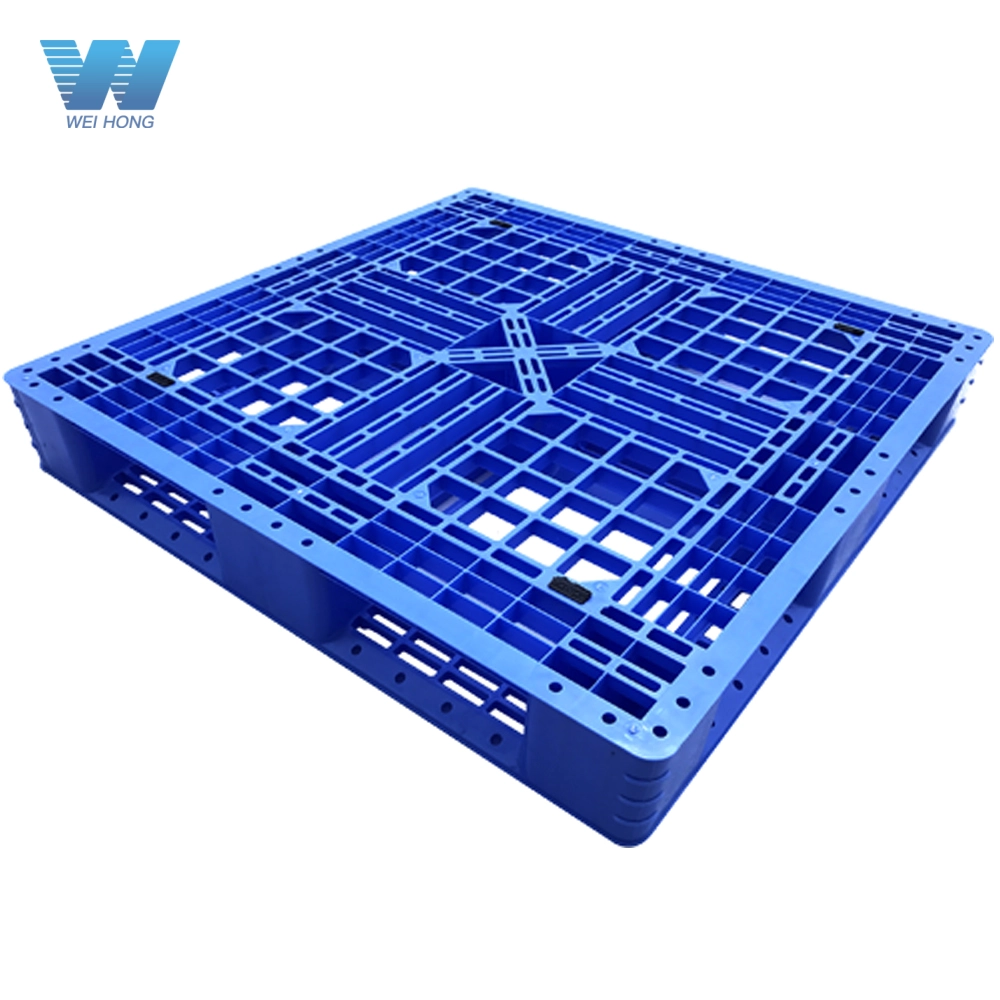
ZJ1010-150 Six-runner Single-sided Plastic Pallet
The six-runner plastic pallet, open or closed deck, is a solid and durable packaging solution designed for general and medium to heavy-duty cargo stacking, storage and transport. It’s made of virgin HDPE or PP, featuring in robust structure, a reinforced configuration with steel cores for the rack and shelf, and a steady loading capacity.
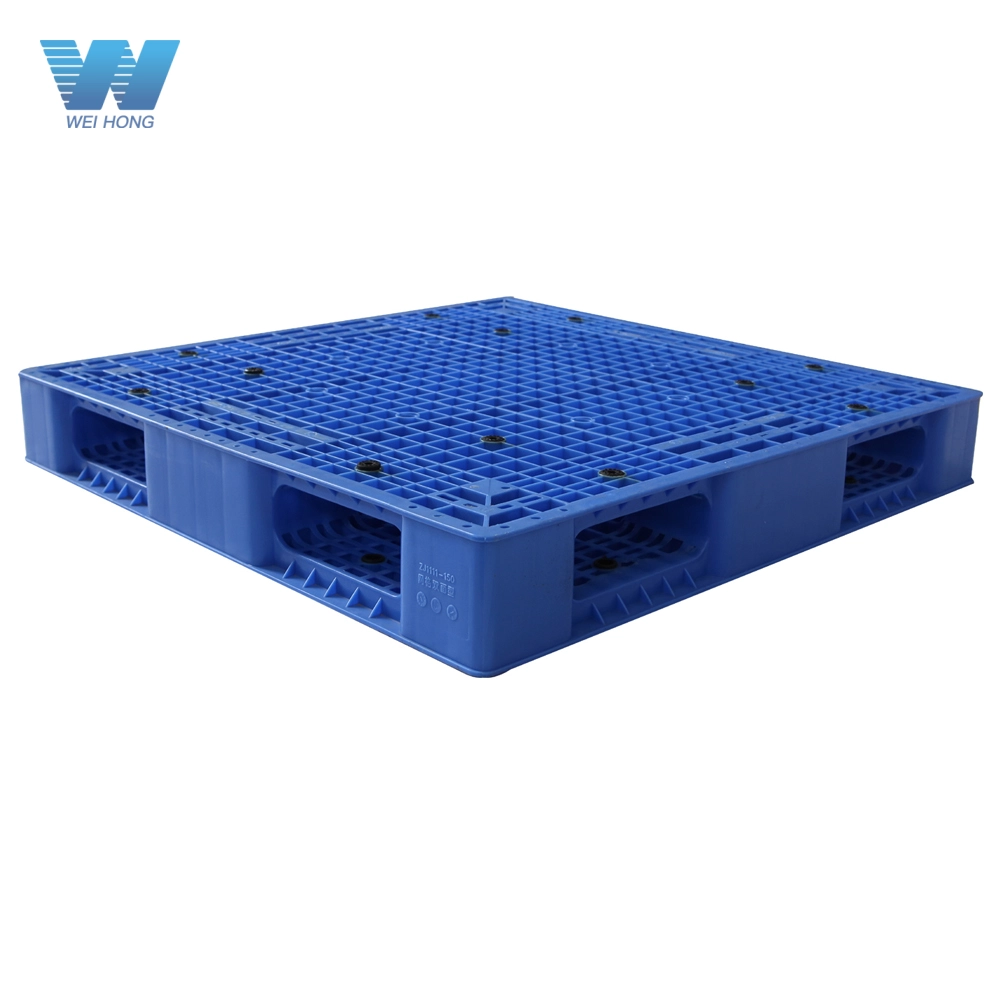
ZJ11111-150 Double-sided Heavy Duty Plastic Pallet
The double-sided plastic pallet, open deck or closed deck, is a solid and durable packaging solution designed for general and medium to heavy-duty cargo stacking, storage and transport. It’s made of virgin HDPE or PP, featuring a robust structure, a reinforced configuration with steel cores for the rack and shelf, and a steady loading capacity for both sides.
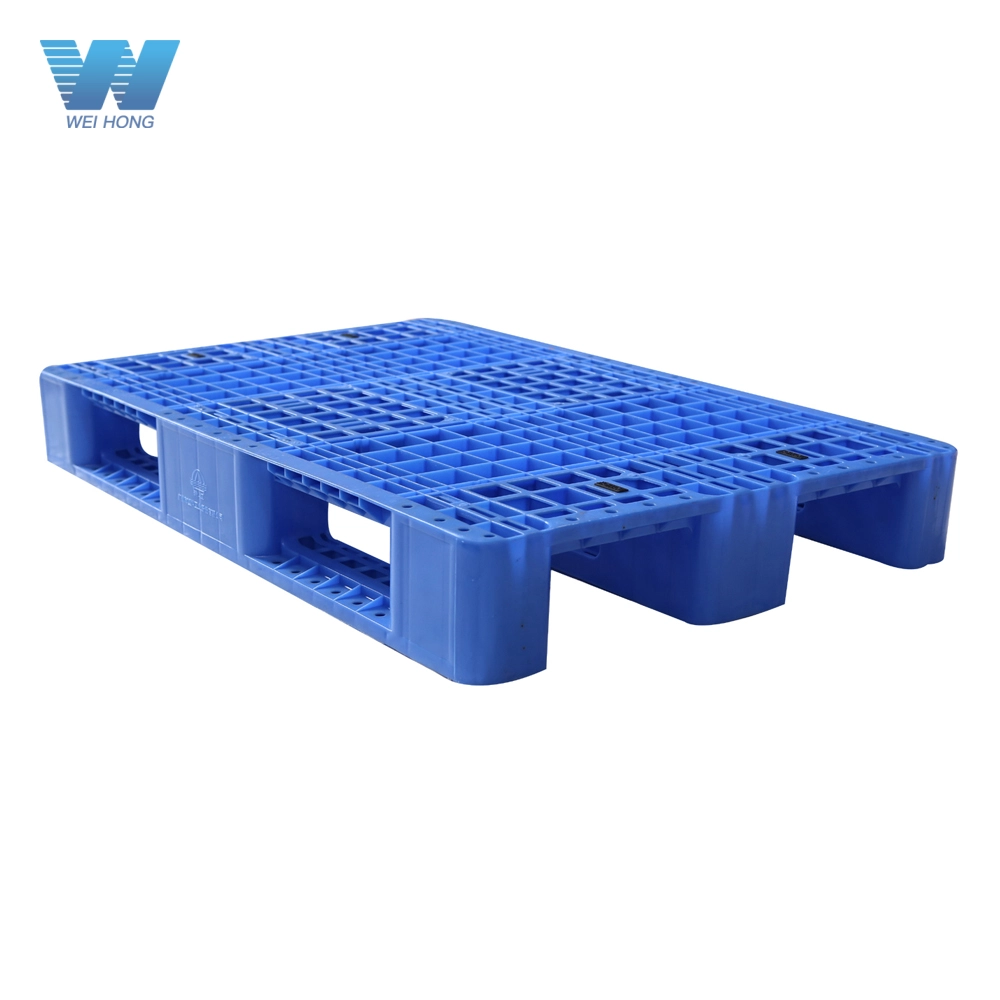
ZJ1208-155 Three-runner Single-sided Plastic Pallet
The three-runner single-sided plastic pallet is a solid and durable packaging solution designed for general and medium to heavy-duty cargo storage, transport and automated storage and retrieval system (AS/RS) use. It’s made of virgin HDPE or PP, featuring in robust structure, reinforced configuration with steel cores for rack and shelf, and a steady loading capacity.
Request More Information About Plastic Pallets
Have questions or need detailed insights on this article? Fill out the form below to contact our team for comprehensive information and support related to our plastic pallet solutions.
Contact us


+86 138 0277 8204
+86 183 4431 0917
+86 195 3791 1860

No. 15-1, Fengying Rd., Taiping Town, Conghua Dist., Guangzhou City, Guangdong Province, China.
Weihong
Whatsapp: +8613802778204
Guangdong Weihong Plastic Technology Co., Ltd.
Scan QR Code