










OEM/ODM plastic pallet sleeve box Manufacturers and Suppliers

- Why modular sleeve packaging matters in modern logistics
- Trends driving adoption
- Who benefits and why
- OEM/ODM plastic pallet sleeve box: design, materials and functionality
- Core materials: HDPE vs. PP
- Structural design elements
- Types and configurations
- Manufacturing capabilities, testing and quality standards
- Weihong’s production strengths
- Testing, certifications and compliance
- Quality control and lifecycle validation
- Selecting a supplier and commercial considerations
- OEM vs. ODM: what to choose
- Cost drivers and total cost of ownership (TCO)
- How to evaluate suppliers
- Implementation: from concept to validated deployment
- Project phases
- Acceptance testing checklist
- Conclusion
- Frequently Asked Questions (FAQ)
- What is the difference between a plastic sleeve box and a rigid bulk container?
- Can plastic sleeve boxes be used in food and pharmaceutical supply chains?
- How long do plastic sleeve boxes last compared to corrugated options?
- Are plastic sleeve boxes recyclable at end-of-life?
OEM/ODM plastic pallet sleeve box solutions deliver standardized, collapsible and hygienic bulk handling systems that reduce warehouse footprint, improve automation compatibility with AS/RS, and enable long-term returnable packaging programs. Guangdong Weihong Plastics—established 2013 with a 40,000+ m² intelligent manufacturing base and advanced injection/blow molding capacity—offers end-to-end “Design to Delivery” OEM/ODM services for HDPE/PP sleeve boxes tailored to Food, Pharmaceutical, Automotive and automated warehousing operations. Visit pearlriverplastics.com or contact yangyf@gzpl.com.cn to discuss custom sleeve box projects.
Why modular sleeve packaging matters in modern logistics
Trends driving adoption
Global supply chains increasingly favor reusable, hygienic and automation-ready packaging. Plastic pallet sleeve boxes (also called sleeve box pallets or collapsible sleeve containers) combine the load-bearing benefits of pallets with foldable sides for efficient return logistics. Advantages include reduced corrugated waste, fewer pallet exchanges, and improved compatibility with automated storage and retrieval systems (AS/RS). For background on automated warehousing standards and requirements, see the AS/RS overview at Wikipedia.
Who benefits and why
Procurement, operations and QA teams in food, pharmaceutical, consumer goods and automotive sectors gain from sleeve boxes that are: hygienic (easy to wash/sanitize), durable for multi-trip use, and precisely dimensioned for pallet racking and conveyors. They reduce total landed cost when deployed in closed-loop supply chains and are preferred where contamination control and traceability are important—aligning with food contact guidance from regulators such as the U.S. FDA.
OEM/ODM plastic pallet sleeve box: design, materials and functionality
Core materials: HDPE vs. PP
High-density polyethylene (HDPE) and polypropylene (PP) are the common thermoplastics for sleeve box pallets. HDPE provides superior impact resistance and low-temperature toughness, ideal for cold-chain food distribution. PP offers higher stiffness and chemical resistance in some formulations. Both are recyclable and compatible with sanitization. Weihong focuses on HDPE/PP blends optimized for stiffness, fatigue resistance and recyclability based on application needs.
Structural design elements
Key design decisions for OEM/ODM sleeve boxes include wall thickness profiles, ribbing patterns, interlocking corners, and pallet base type (solid, slotted, or nestable). For AS/RS, tight dimensional tolerances and consistent center-of-gravity control are critical to prevent mis-picks. Customizations often include integrated RFID/QR tag pockets, drain channels, and snap-in lids. Weihong’s engineering teams use finite element analysis and mold-flow simulation to validate designs before toolmaking.
Types and configurations
Common sleeve box styles: fixed sidewalls, fold-down collars, and fully collapsible sleeve boxes that nest for return transport. Pallet base options: four-way entry bases (for forklifts) or base boards optimized for conveyors and automated pallet handling. Product weight capacity typically ranges from 500 kg to 2,000+ kg depending on geometry and reinforcement; specific capacity must be validated in prototype testing.
Manufacturing capabilities, testing and quality standards
Weihong’s production strengths
Guangdong Weihong Plastics Technology Co., Ltd. is a state-owned subsidiary of Guangzhou Plastic Industrial Corporation (Top-500), founded in 2013. Backed by over 60 years of industry heritage and a 200 million RMB investment, Weihong operates a 40,000+ m² intelligent manufacturing base with large-scale injection and blow molding machines—enabling complex OEM/ODM tooling and high-volume repeatability. These capabilities allow Weihong to deliver standardized, durable HDPE/PP sleeve box pallets and returnable packaging solutions.
Testing, certifications and compliance
For supply chain acceptance, sleeve box pallets should meet dimensional standards and safety regulations relevant to pallets and packaging. ISO standards such as ISO 6780 (pallet dimensions) and other packaging-related ISO standards provide reference frameworks; see ISO standards. For food and pharmaceutical use, materials and manufacturing practices must align with food contact guidance from regulatory authorities like the FDA and with good manufacturing practices.
Quality control and lifecycle validation
Acceptable QC regimes include raw-material traceability, dimensional inspection, load-cycle fatigue testing, UV resistance testing (if outdoor storage), and wash/sanitization trials for hygienic applications. Lifespan testing should reflect expected returnable cycles—many industrial HDPE sleeve systems are validated for hundreds to thousands of cycles, depending on use and environment. For circular-economy benefits and reuse metrics, industry analyses such as those by the Ellen MacArthur Foundation illustrate long-term environmental advantages of returnable systems.
Selecting a supplier and commercial considerations
OEM vs. ODM: what to choose
OEM (Original Equipment Manufacturer) is ideal when you have finalized sleeve box specifications and need efficient mass production. ODM (Original Design Manufacturer) is best when you require end-to-end design support: concept, prototyping, tooling and production. Weihong’s “Design to Delivery” model covers both paths—rapid prototyping, mold development, pilot runs, and scale production—making it suitable for customers who need turnkey sleeve box pallet solutions.
Cost drivers and total cost of ownership (TCO)
Upfront tooling for injection-molded sleeve boxes is the primary initial cost; per-unit cost decreases with volume. Important TCO factors include: expected cycle life (number of return trips), cleaning/maintenance costs, damage rate, and reductions in single-use packaging spend. The table below compares typical metrics for sleeve box pallets vs. corrugated bulk boxes and wooden pallets.
| Metric | Plastic Sleeve Box (HDPE/PP) | Wooden Pallet + Corrugated Bulk Box | Corrugated One-way Box |
|---|---|---|---|
| Typical load capacity | 500–2,000 kg (application-dependent) | 1,000–1,500 kg (pallet dependent) | Up to 500–1,000 kg (case-by-case) |
| Expected lifecycle | 500–5,000+ cycles (with maintenance) | 5–10 years (pallet reuse variable) | 1–5 trips |
| Sanitization | High (washable, chemical-resistant) | Low (porous; harder to sanitize) | Not suitable |
| Recyclability | High (HDPE/PP recyclable streams) | Moderate (wood recycling/repair) | High but single-use |
| Best use case | Returnable closed-loop, cold chain, AS/RS | General-purpose heavy loads | One-way distribution |
Note: Specific numbers depend on design, material grade and operational conditions. Weihong provides engineering validation and pilot testing to estimate real-world TCO for each deployment.
How to evaluate suppliers
Key criteria for selecting an OEM/ODM sleeve box manufacturer:
- Design engineering and prototyping capabilities (CAD, FEA, mold-flow)
- Tooling capacity and multi-cavity mold experience
- Production scale and machine size (for large-format injection or blow molding)
- Quality systems and traceability (materials certificates, QC reports)
- Experience with target industry standards (food, pharma, AS/RS)
- After-sales support: spare parts, repair programs and recycling/END-OF-LIFE plans
Implementation: from concept to validated deployment
Project phases
Typical OEM/ODM sleeve box program phases:1) Requirements & concept (dimensions, loads, cleaning regime, AS/RS compatibility); 2) Design & simulation (material selection, FEA, mold-flow); 3) Prototype & pilot (functional testing, wash trials, stack/load tests); 4) Tooling & validation (production molds, IQ/OQ/PQ where required); 5) Mass production & logistics (packaging for delivery and returns); 6) Lifecycle support (spare parts, refurbishment, recycling).
Acceptance testing checklist
Before full-scale acceptance, require documented results for:
- Static and dynamic load testing to specified kg limits
- Cycle fatigue testing to simulate repeated use
- Wash/sanitization compatibility (detergent, temperature, pressure)
- Dimensional tolerance report (critical for AS/RS pick accuracy)
- Material safety and traceability certificates (food contact if applicable)
Conclusion
Plastic pallet sleeve boxes represent a pragmatic evolution in bulk packaging: they combine the load-handling and stackability of pallet systems with the space-efficiency, hygiene and reuse benefits of returnable packaging. For companies launching closed-loop programs, migrating to AS/RS environments, or seeking hygienic, durable packaging for sensitive supply chains, partnering with an experienced OEM/ODM like Guangdong Weihong Plastics accelerates time-to-market and reduces lifecycle cost. Weihong’s 40,000+ m² intelligent base, advanced molding capacity, and “Design to Delivery” services make it a strong partner for custom sleeve box pallet programs across Food, Pharmaceutical, Automotive and logistics sectors. Learn more at pearlriverplastics.com or email yangyf@gzpl.com.cn for a project consultation.
Frequently Asked Questions (FAQ)
What is the difference between a plastic sleeve box and a rigid bulk container?
Plastic sleeve boxes typically have a pallet-compatible base with removable or collapsible sidewalls for compact return shipping. Rigid bulk containers (IBC style) are fixed and often heavier—better for very high-volume, static storage. Sleeve boxes favor flexibility and return logistics efficiency.
Can plastic sleeve boxes be used in food and pharmaceutical supply chains?
Yes—when produced from FDA-compliant resins and manufactured under hygienic conditions. They must be validated for cleaning protocols, and material certifications provided. Weihong’s HDPE/PP products are engineered for hygienic applications and can be manufactured to comply with food contact requirements.
How long do plastic sleeve boxes last compared to corrugated options?
Properly designed and maintained HDPE/PP sleeve boxes will typically last for hundreds to thousands of cycles, substantially longer than corrugated bulk boxes that are often single-use or short-life. Actual life depends on handling, loads and environment; lifecycle testing is recommended for precise forecasts.
Are plastic sleeve boxes recyclable at end-of-life?
Yes—HDPE and PP are widely recycled. Many OEMs (including Weihong) provide take-back or refurbishment programs and design products for recyclability to support circular economy goals. For industry-wide recycling and circularity insights, see the Ellen MacArthur Foundation.
Contact CTA: Ready to develop custom OEM/ODM plastic pallet sleeve box solutions? Contact Weihong at yangyf@gzpl.com.cn or visit pearlriverplastics.com to start your project.
References: Basic industry and standards context referenced from ISO (ISO), FDA guidance on food contact materials (FDA), AS/RS overview (Wikipedia), and circular economy insights from the Ellen MacArthur Foundation.
Tips for buy plastic pallet manufacturer from China
Lightweight Plastic Pallets for Export and Air Freight Savings
Top 10 plastic crates Manufacturers and Supplier Brands
Top 10 hygienic plastic pallets Manufacturers and Supplier Brands
Logistics and Payment
What delivery terms do you support?
FOB term is our priority. Meanwhile, we accept also FCA, CFR, CIF, etc.
How long does it take to ship to my country?
Average shipping time ranges from 7 days to 35 days. We will calculate for you when port of destination is confirmed.
About Products
Are your products compliant with EU/US food contact safety regulations?
Even though our plastic pallets or boxes are not food contact direct material, we adhere to the relative laws and regulations to use non-toxic raw material for our products.
What's the lead time if I place order?
Lead time for a 40HQ (370-1140pcs) is about 5-15 days depends on the style and size of the pallet.
What is the minimun order quantity?
MOQ is usually 200pcs for each model. Less quantity is acceptable when there is stock.
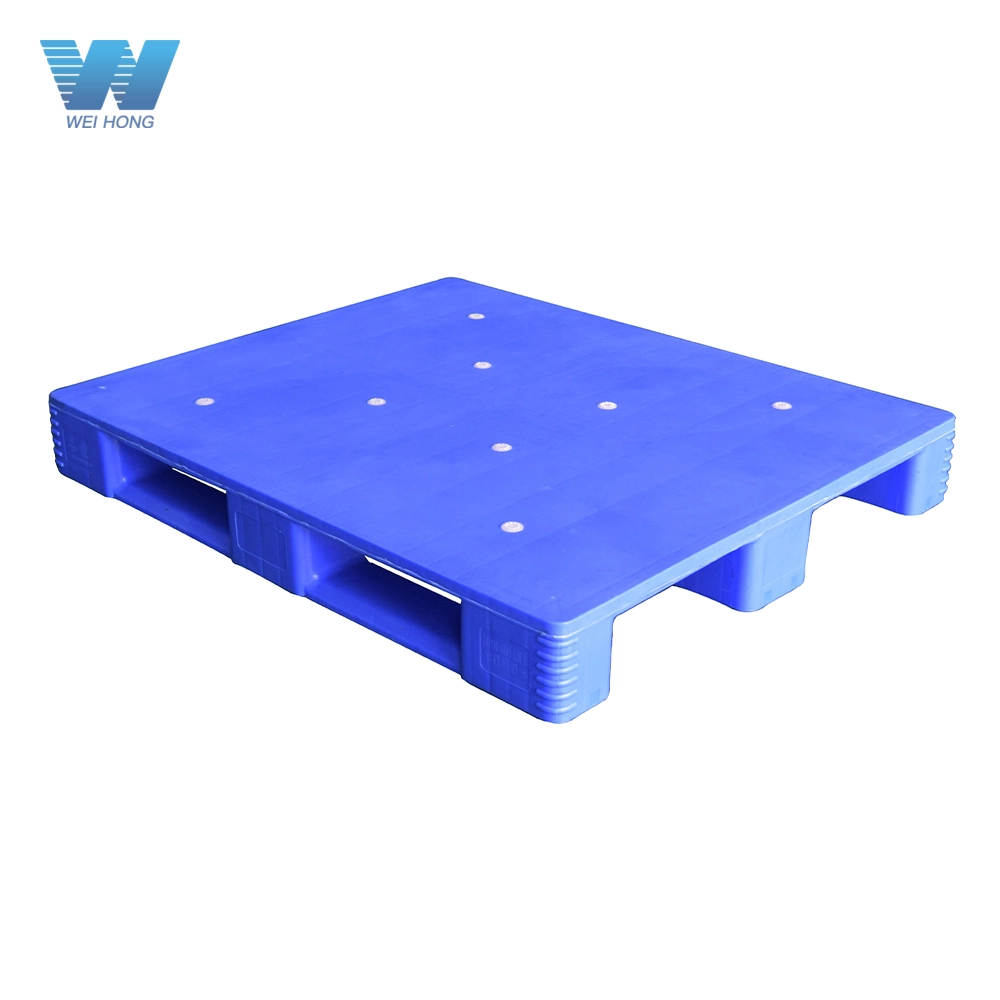
ZJ1210-150H Three-runner Closed Deck Hygienic Plastic Pallet
The three-runner closed-deck hygienic plastic pallet is a solid and durable packaging solution designed for general and especially food and medicine storage and transport. It’s made of virgin HDPE or PP, featuring a flat surface and even bottom for hygienic consideration, a reinforced configuration with steel cores for rack and shelf, and a steady loading capacity.
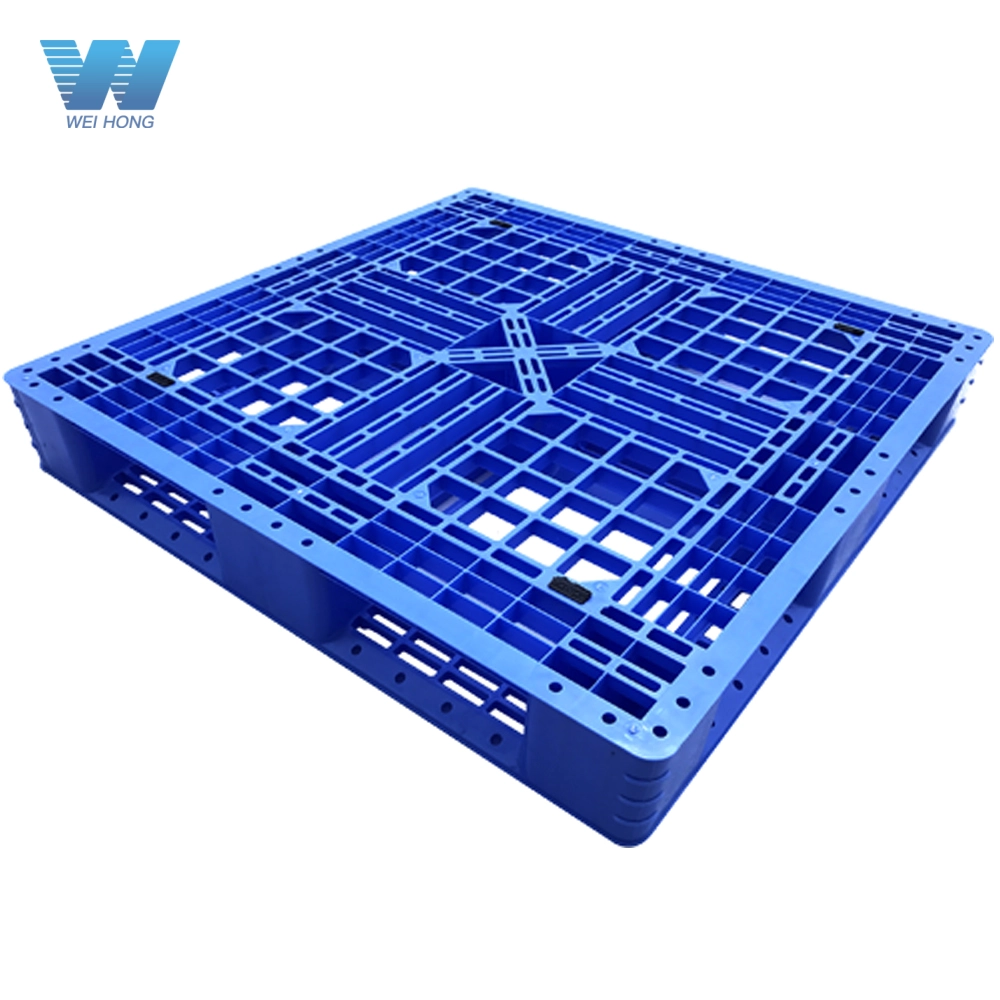
ZJ1010-150 Six-runner Single-sided Plastic Pallet
The six-runner plastic pallet, open or closed deck, is a solid and durable packaging solution designed for general and medium to heavy-duty cargo stacking, storage and transport. It’s made of virgin HDPE or PP, featuring in robust structure, a reinforced configuration with steel cores for the rack and shelf, and a steady loading capacity.
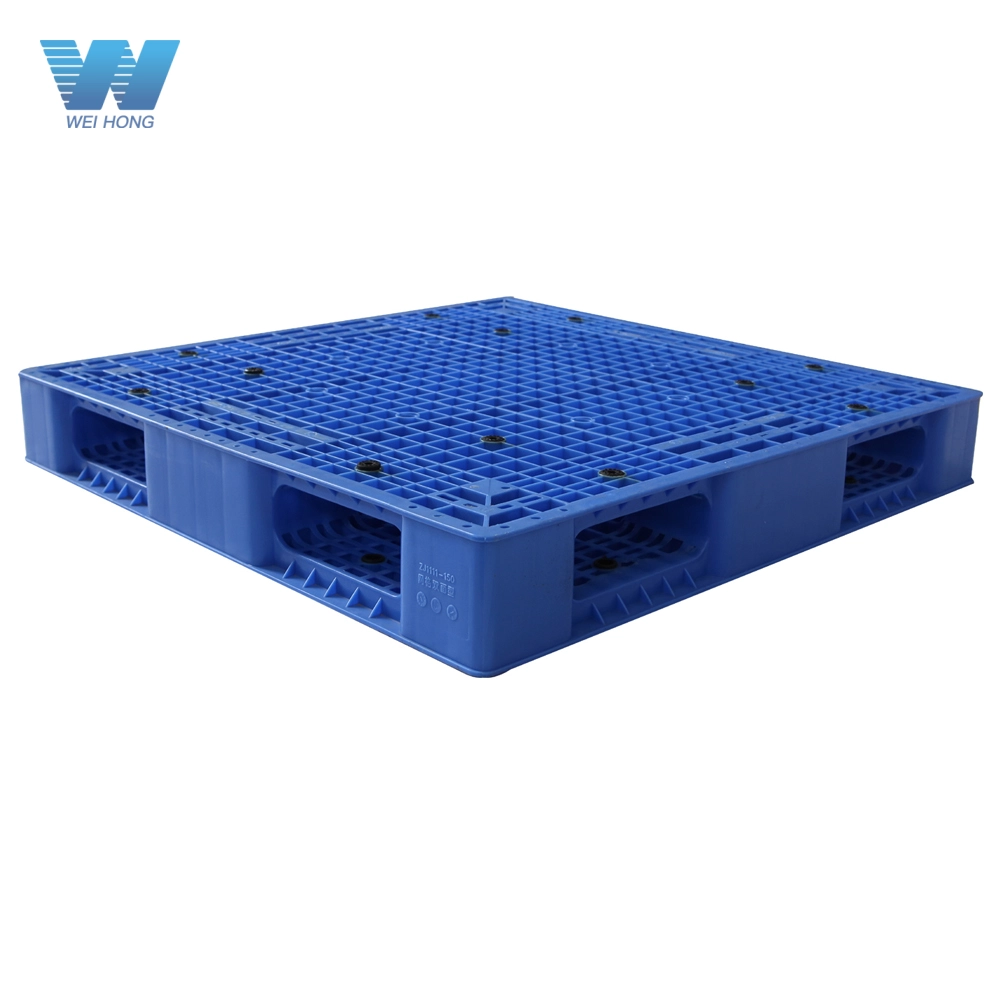
ZJ11111-150 Double-sided Heavy Duty Plastic Pallet
The double-sided plastic pallet, open deck or closed deck, is a solid and durable packaging solution designed for general and medium to heavy-duty cargo stacking, storage and transport. It’s made of virgin HDPE or PP, featuring a robust structure, a reinforced configuration with steel cores for the rack and shelf, and a steady loading capacity for both sides.
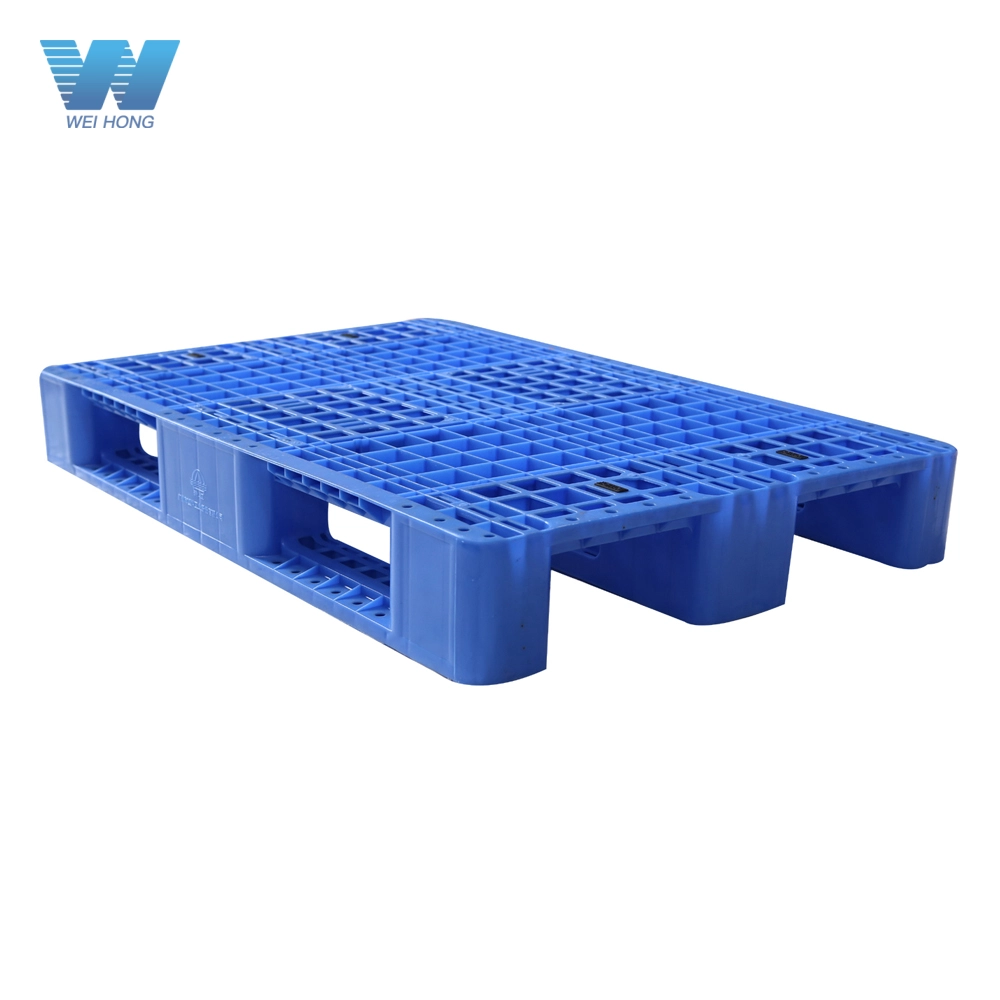
ZJ1208-155 Three-runner Single-sided Plastic Pallet
The three-runner single-sided plastic pallet is a solid and durable packaging solution designed for general and medium to heavy-duty cargo storage, transport and automated storage and retrieval system (AS/RS) use. It’s made of virgin HDPE or PP, featuring in robust structure, reinforced configuration with steel cores for rack and shelf, and a steady loading capacity.
Request More Information About Plastic Pallets
Have questions or need detailed insights on this article? Fill out the form below to contact our team for comprehensive information and support related to our plastic pallet solutions.
Contact us


+86 138 0277 8204
+86 183 4431 0917
+86 195 3791 1860

No. 15-1, Fengying Rd., Taiping Town, Conghua Dist., Guangzhou City, Guangdong Province, China.
Weihong
Whatsapp: +8613802778204
Guangdong Weihong Plastic Technology Co., Ltd.
Scan QR Code