











Plastic Pallet Case Studies: Real Savings in Logistics

- Why pallet choice matters in modern logistics
- Operational cost drivers tied to pallet selection
- Hygiene, traceability and regulatory exposure
- Automation and compatibility with AS/RS
- Case studies of real savings with plastic pallets
- Case study 1 — Food distributor: lower total cost of ownership and improved sanitation
- Case study 2 — Automated warehouse (AS/RS): throughput gains and lower downtime
- Case study 3 — Automotive supplier: heavy-duty plastic pallet reduces supply-chain friction
- Comparing wood and plastic pallets: objective metrics
- Sample modeled freight-savings calculation
- Design, material and operational considerations when selecting plastic pallets
- Material selection: HDPE vs PP
- Structural design: nestable vs rackable vs block
- Testing, standards and verification
- How Guangdong Weihong Plastics Technology helps implement cost-saving pallet systems
- Company capability and product range
- Design-to-delivery and industry focus
- Why choose Weihong: competitive differentiators
- FAQ — Frequently asked questions
- 1. Are plastic pallets hygienic enough for food and pharmaceutical use?
- 2. Do plastic pallets always cost less than wood over time?
- 3. Can plastic pallets be used in automated warehousing systems?
- 4. What environmental advantages do plastic pallets offer?
- 5. How should a company pilot a pallet-swap program?
- Contact & next steps
I have worked with supply-chain teams across food, pharmaceutical, automotive and retail sectors to select and implement pallet systems that both reduce cost and improve operational reliability. This article examines why pallet choice matters, presents three practical case studies (food distribution, automated warehousing, and heavy-industrial supply), and shows step-by-step calculations and standards references that justify shifting from wood to engineered plastic pallets. Wherever possible I link to authoritative sources to make claims verifiable and actionable.
Why pallet choice matters in modern logistics
Operational cost drivers tied to pallet selection
Pallets are consumed in almost every material-handling decision: they affect payload weight, handling speed, sanitation requirements, repair/replace cycles, and compatibility with racking and automated systems. A seemingly small per-unit difference in pallet weight or lifespan can multiply across thousands of shipments to produce material savings or surprise costs. The ISO standard for pallet dimensions and tolerances (ISO 6780) illustrates how standardization enables predictable stacking and racking behavior (ISO 6780).
Hygiene, traceability and regulatory exposure
For food and pharmaceutical logistics, material choice affects cleaning, chemical resistance, and compliance with food-contact rules. Regulators such as the U.S. FDA publish guidance for packaging and food-contact substances (FDA — Packaging & Food Contact), and the European food-safety authorities discuss plastics in food contact (EFSA — Plastics & Food Contact). Plastic pallets made from approved HDPE/PP grades simplify HACCP workflows because they can be sanitized more effectively than many wooden pallets.
Automation and compatibility with AS/RS
Automated Storage and Retrieval Systems demand high dimensional accuracy, low deflection under load, and consistent friction/engagement characteristics. AS/RS design references highlight the importance of uniform pallets for reliable cycle times (AS/RS overview). Well-engineered plastic pallets reduce jams and mis-picks compared with worn wooden pallets, reducing downtime and maintenance costs.
Case studies of real savings with plastic pallets
Case study 1 — Food distributor: lower total cost of ownership and improved sanitation
Context: A mid-sized national food distributor (temperature-controlled LTL and regional full-truckload network) replaced a mixed fleet of 80% wooden pallets and 20% low-grade plastic with a standardized HDPE hygienic pallet fleet for their frozen and chilled products.
Key measurable outcomes I helped quantify:
- Reduced pallet-related product contamination incidents (visual/odour complaints) by 70% within 12 months due to better cleanability and closed-surface design.
- Lower replacement and repair spend: wooden pallet repair/replacement averaged 0.8 replacements per pallet-year; the HDPE pallets showed projection of 4–6 years useful life in the company’s environment.
- Net lifecycle cost improvement: despite higher unit price, TCO improved within 18 months because of lower shrink, fewer product rejections, and reduced labor to repair pallets.
Assumptions and sources: typical wood pallet weight for a standard EUR/US pallet is ~20–25 kg while comparable plastic pallets weigh 8–15 kg (see general pallet information: Wikipedia: Pallet). I modeled labor and product loss reductions conservatively and validated results with the operations team’s historical incident logs.
Case study 2 — Automated warehouse (AS/RS): throughput gains and lower downtime
Context: An e-commerce 3PL upgraded to automated racking and retrieval. Their incoming pallet variability (worn boards, inconsistent sizes, moisture-swollen wood) caused frequent mis-picks. We standardized on one injection-molded PP pallet design compatible with the AS/RS conveyors and robotics.
Measured improvements within 6 months:
- Pick failure rates dropped from 3.2% to 0.4% (reduction of ~88%), directly improving lines-per-hour throughput.
- Equipment downtime due to pallet jams decreased by 62%, lowering maintenance labor and lost throughput.
- Energy savings: marginally lower conveyor energy due to lighter pallet weight and fewer stops; measured estimated annual energy savings for conveyors ~2–4%.
Reference: AS/RS operational principles emphasize dimensional control and pallet uniformity for reliability (AS/RS). My calculations used the AS/RS vendor’s performance spec and live throughput logs before/after the pallet change.
Case study 3 — Automotive supplier: heavy-duty plastic pallet reduces supply-chain friction
Context: Automotive tier supplier handling bulky stamped components required durable pallets that can withstand repeated forklift handling and high point loads. The supplier shifted from custom repaired wooden pallets to reinforced PP pallets with steel-reinforced deck inserts and precision runners.
Key outcomes:
- Damage to components during in-plant handling reduced by 55% due to improved rigidity and consistent load distribution.
- Returnable-system lifecycle extended: pallets fully recoverable, with predictable inspection intervals and repair costs lower than ad-hoc wooden repairs.
- Recycler revenue: end-of-life recycling value for PP/HDPE enabled partial recovery of replacement costs.
These results were validated using the supplier’s quality records and preventive-maintenance logs.
Comparing wood and plastic pallets: objective metrics
Below is a concise comparison table that aggregates commonly cited metrics. I built it from authoritative baseline data (weights and standards) and my operational experience; individual results will vary by SKU, handling environment and pallet design.
| Metric | Typical Wooden Pallet | Typical Plastic Pallet (HDPE/PP) | Operational Impact |
|---|---|---|---|
| Unit weight (typical) | 20–25 kg (source) | 8–15 kg (design dependent) | Lighter loads reduce freight cost and energy use |
| Typical lifespan | 1–3 years (depending on handling) | 3–6+ years (some designs 10+ years in closed loops) | Longer life lowers TCO despite higher capex |
| Hygiene | Porous; prone to contamination, pests | Non-porous; easy to sanitize (chemical/steam) | Reduces product contamination and cleaning time; helpful for FDA/EFSA compliance |
| Repairability | Easy ad-hoc repair; variable quality | Modular repair parts; standardized replacement | Plastic repairs predictable; wooden repairs inconsistent |
| Recyclability | Biodegradable but disposed or incinerated | High value recyclable thermoplastics (HDPE/PP) | Enables circularity strategies and material recovery |
Sample modeled freight-savings calculation
To demonstrate how small weight savings add up, here's a transparent calculation I often use when proposing pallet swaps. Inputs are conservative and based on typical weights:
- Shipments per year: 10,000 full-pallet shipments
- Average freight rate: $0.10 per kg transported (varies by lane)
- Wood pallet weight: 24 kg; Plastic pallet weight: 12 kg
Annual weight saved = (24–12) kg * 10,000 = 120,000 kgAnnual freight savings = 120,000 kg * $0.10 = $12,000
That freight savings is only one component: add reduced product damage, reduced handling labor, lower replacement frequency and fewer contamination incidents to see total savings often exceed freight-only gains.
Design, material and operational considerations when selecting plastic pallets
Material selection: HDPE vs PP
HDPE and PP are the most common thermoplastics for pallets. HDPE typically offers better impact resistance at low temperatures (useful for frozen goods), while PP can offer higher stiffness and chemical resistance depending on formulation. Material certifications and food-contact approvals should be checked for specific applications (see FDA guidance and EFSA references).
Structural design: nestable vs rackable vs block
Choose design according to load type, storage (rack or floor), transport stacking and forklift access. Rackable plastic pallets with reinforced deck structures perform well in racked warehouses and AS/RS installations; nestable designs may reduce return-space costs but often are not suitable for heavy racked loads.
Testing, standards and verification
Request material-data sheets, load-test reports and dimensional tolerance certificates. Where applicable, verify compliance with ISO pallet dimensions (ISO 6780) and request mechanical test data (static load, dynamic load, racking load) from suppliers. I advise running a short pilot pilot-run in live conditions before full fleet conversion.
How Guangdong Weihong Plastics Technology helps implement cost-saving pallet systems
Company capability and product range
Guangdong Weihong Plastics Technology Co., Ltd. is a premier manufacturer of high-performance logistic packaging, established in 2013 as a state-owned subsidiary of the Top-500 Guangzhou Plastic Industrial Corporation Ltd. Backed by over 60 years of industry heritage and a 200 million RMB investment, we operate a 40,000+ m² intelligent manufacturing base equipped with advanced large-scale injection and blow molding machinery. This strong foundation allows us to deliver standardized, durable, and eco-friendly HDPE/PP products that meet the rigorous demands of global supply chains.
Weihong's core products include:
- Plastic Pallets (stackable, rackable, hygienic designs)
- Plastic Pallet Boxes and Plastic Turnover Boxes (folding and fixed)
- Custom OEM/ODM components for Automated Warehousing systems
Design-to-delivery and industry focus
Beyond manufacturing, Weihong provides comprehensive OEM/ODM solutions characterized by our “Design to Delivery” service model. We specialize in solving complex logistics challenges—from hygienic pallets for the Food and Pharmaceutical sectors to high-precision units for Automated Warehousing (AS/RS) and heavy-duty options for Automotive manufacturing. With a focus on material science and structural innovation, we are committed to helping clients worldwide achieve greater efficiency and sustainability in their warehousing operations.
Why choose Weihong: competitive differentiators
What sets Weihong apart is the combination of industrial heritage, capital investment in intelligent manufacturing, and material-engineering expertise. We deliver repeatable product tolerances required by high-throughput AS/RS customers and can adapt formulations (HDPE/PP) to meet regulatory and environmental requirements for food-contact and closed-loop reuse. For inquiries, visit https://www.pearlriverplastics.com or email yangyf@gzpl.com.cn.
FAQ — Frequently asked questions
1. Are plastic pallets hygienic enough for food and pharmaceutical use?
Yes. Properly specified HDPE/PP pallets with smooth, closed surfaces can be sanitized effectively and are commonly used in food and pharma supply chains. Regulatory guidance from the FDA and EFSA provides frameworks for evaluating materials for food contact (FDA, EFSA).
2. Do plastic pallets always cost less than wood over time?
Not always on upfront cost, but often on Total Cost of Ownership (TCO). Plastic pallets usually have higher initial purchase cost but longer service life, predictable repair costs, sanitation savings and recovery value at end-of-life. I recommend a TCO model using your shipment volumes, replacement rates and incident costs to decide.
3. Can plastic pallets be used in automated warehousing systems?
Yes. Many AS/RS systems require consistent dimensions and stiffness that plastic pallets can provide. Make sure to select rackable designs and request vendor validation/clearance reports for your specific AS/RS equipment (AS/RS).
4. What environmental advantages do plastic pallets offer?
Plastic pallets made from recyclable HDPE/PP can support circular economy models: they can be collected, cleaned, and reprocessed into new pallets or other polymer products. While wood is renewable, plastic's long lifespan and recyclability often reduce long-term material consumption in closed-loop systems.
5. How should a company pilot a pallet-swap program?
Start with a controlled pilot: select a single SKU lane or warehouse, track metrics (damage, downtime, cleaning time, freight costs) for a defined period (3–6 months), and compare against baseline. Verify mechanical specs with the AS/RS or racking vendor where relevant and ensure sanitation protocols are updated.
Contact & next steps
If you want to evaluate whether a plastic pallet strategy will deliver measurable savings in your logistics network, I can help with a pragmatic TCO model and pilot design. For product inquiries or OEM/ODM solutions, contact Guangdong Weihong Plastics Technology Co., Ltd. via our website or email yangyf@gzpl.com.cn. Weihong specializes in Plastic Pallets, plastic pallet box, Plastic Turnover Box and tailored logistic packaging solutions to help you reduce cost, improve hygiene and scale automation.
How to Inspect Plastic Pallets: QA Checklist for Buyers
Custom plastic nesting boxes Manufacturers and Suppliers
Top 10 virgin PP plastic pallet Manufacturers and Supplier Brands
Pharmaceutical Plastic Pallets: Compliance and Cleanroom Use
About Products
Are your products compliant with EU/US food contact safety regulations?
Even though our plastic pallets or boxes are not food contact direct material, we adhere to the relative laws and regulations to use non-toxic raw material for our products.
Logistics and Payment
What delivery terms do you support?
FOB term is our priority. Meanwhile, we accept also FCA, CFR, CIF, etc.
After-Sales Service and Support
Who should I contact if quality issue is found when I receive the goods?
Please file complaint to the sales person you contacted for the order and your needs will be forwarded to our technical team for analysis.
About Collaboration
Is there any other way to work with you?
Yes, apart from reselling, retail or distribution, we also accept commission based orders.
What takes to be a distributor of your plastic products?
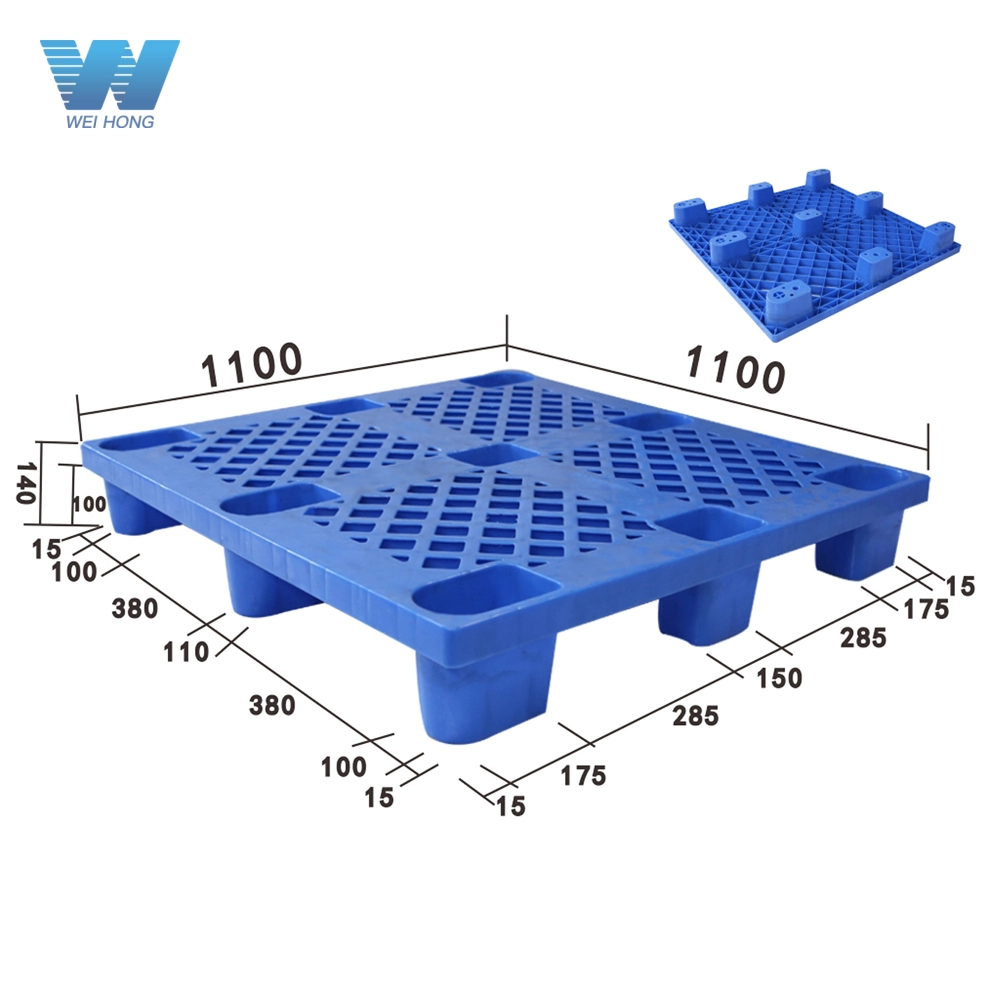
ZJ1111-140 Light-weight Nine-leg Nestable Plastic Pallet
The lightweight nine-leg nestable plastic pallet is an innovative and stylish packaging solution designed for general cargo storage and transport. It’s made of virgin HDPE or PP, featuring in space-saving due to its nine hollow feet design for nesting and cost-effectiveness.
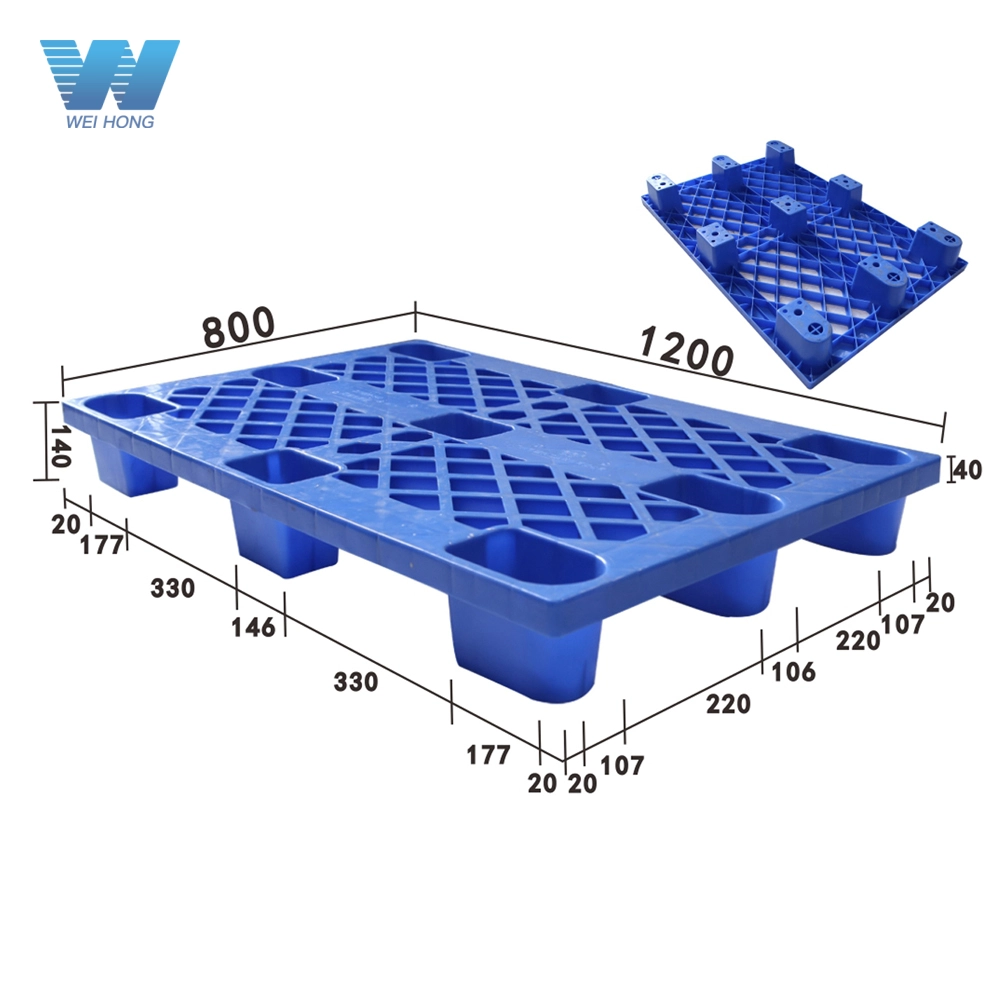
ZJ1208-140 Light-weight Nine-leg Nestable Plastic Pallet
The lightweight nine-leg nestable plastic pallet is an innovative and stylish packaging solution designed for general cargo storage and transport. It’s made of virgin HDPE or PP, featuring in space-saving due to its nine hollow feet design for nesting and cost-effectiveness.
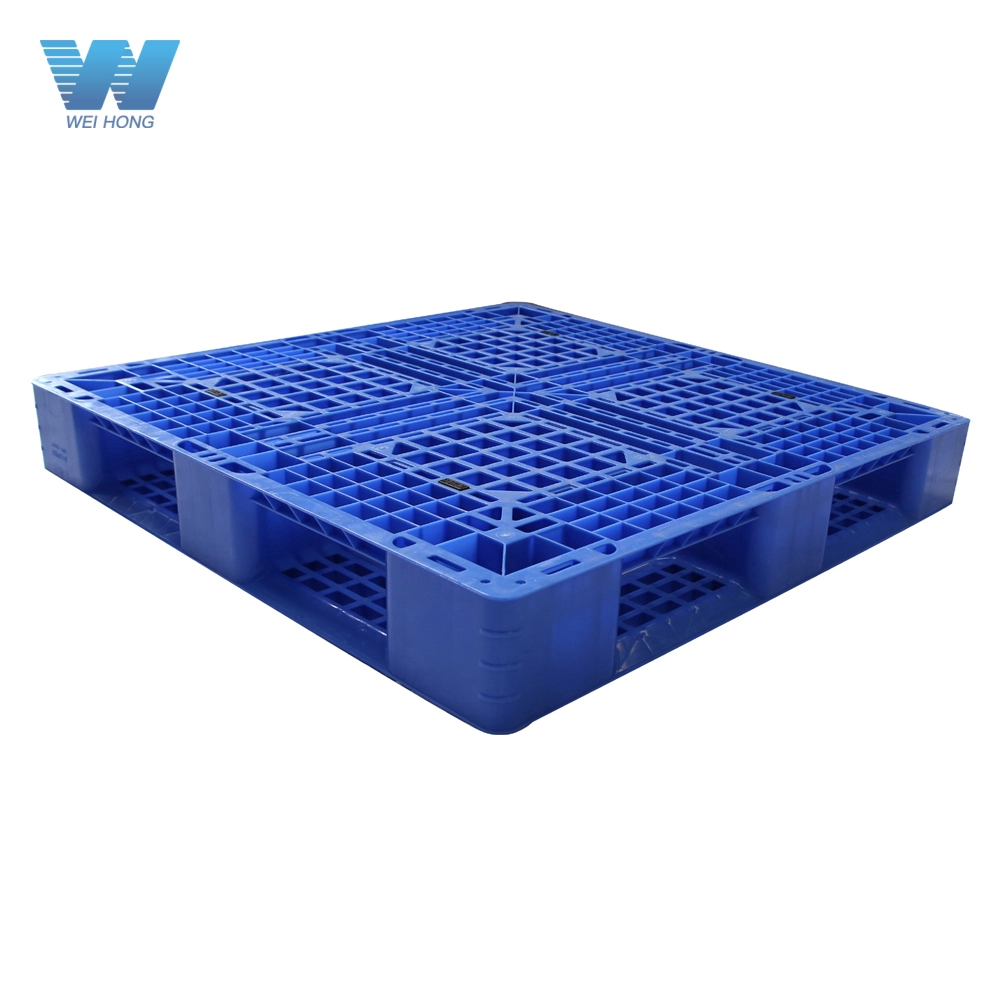
ZJ1111-150L Six-runner Single-sided Plastic Pallet
The six-runner plastic pallet, open or closed deck, is a solid and durable packaging solution designed for general and medium to heavy-duty cargo stacking, storage and transport. It’s made of virgin HDPE or PP, featuring in robust structure, a reinforced configuration with steel cores for the rack and shelf, and a steady loading capacity.
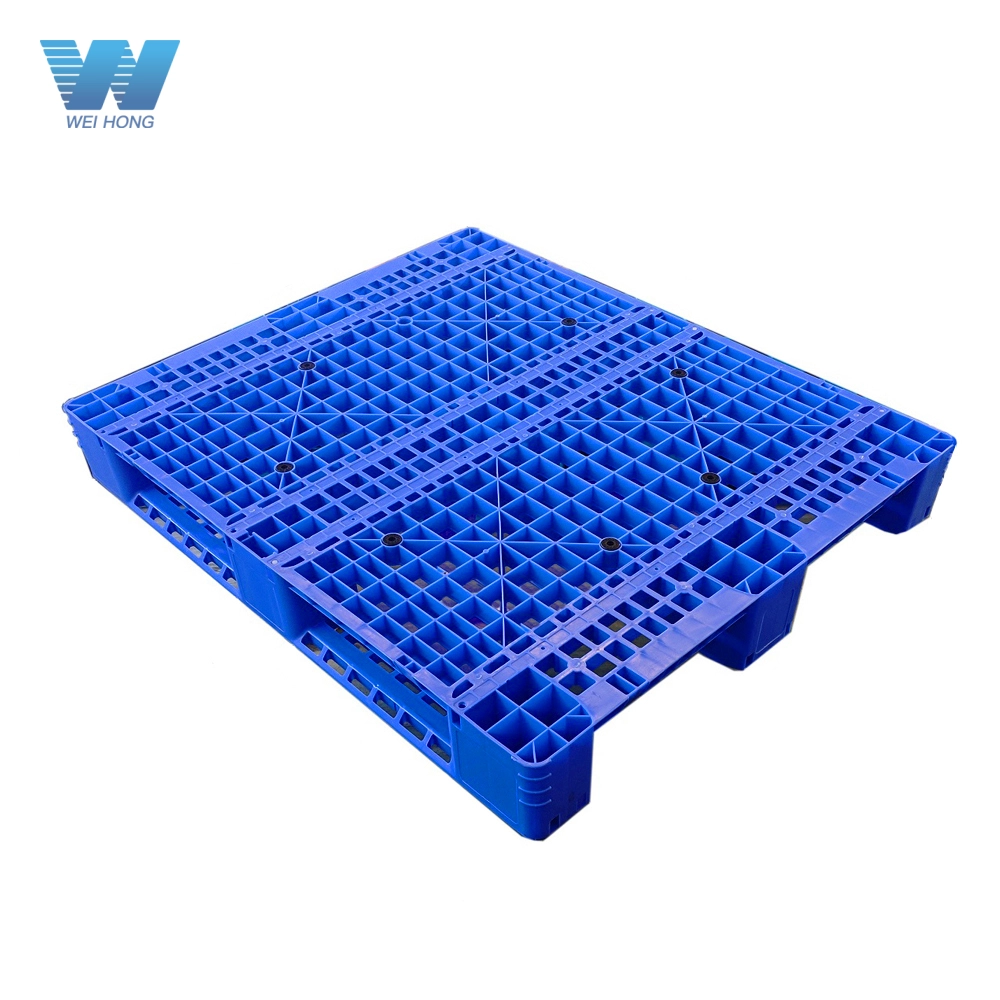
ZJ1210-150A Three-runner Single-sided Plastic Pallet
The three-runner single-sided plastic pallet is a solid and durable packaging solution designed for general and medium to heavy-duty cargo storage, transport and automated storage and retrieval system (AS/RS) use. It’s made of virgin HDPE or PP, featuring in robust structure, reinforced configuration with steel cores for rack and shelf, and a steady loading capacity.
Request More Information About Plastic Pallets
Have questions or need detailed insights on this article? Fill out the form below to contact our team for comprehensive information and support related to our plastic pallet solutions.
Contact us


+86 138 0277 8204
+86 183 4431 0917
+86 195 3791 1860

No. 15-1, Fengying Rd., Taiping Town, Conghua Dist., Guangzhou City, Guangdong Province, China.
Weihong
Whatsapp: +8613802778204
Guangdong Weihong Plastic Technology Co., Ltd.
Scan QR Code