











Plastic Pallet vs Wooden Pallet: Cost, Hygiene, and Durability

- Choosing the right pallet for your supply chain
- Defining the : what users need to know
- How I approach pallet selection
- Standards and regulatory context to watch
- Cost comparison: upfront price vs lifecycle economics
- Upfront acquisition cost
- Repair, maintenance, and replacement frequency
- Freight, handling, and storage cost impacts
- Hygiene and regulatory considerations
- Hygiene differences and cleaning
- Food contact and sanitation standards
- Phytosanitary and export rules
- Durability, performance, and lifecycle impacts
- Mechanical durability and racking performance
- Environmental and end-of-life considerations
- Quantifying durability: practical benchmarks
- Decision framework: which pallet should you choose?
- If your priority is hygiene and regulatory simplicity
- If your priority is lowest upfront cost and local repairability
- If your priority is automation and dimensional consistency
- Real-world examples and references
- When I recommend plastic pallets
- When wood still makes sense
- Authoritative resources I use
- About the supplier: Guangdong Weihong Plastics Technology Co., Ltd.
- Frequently asked questions (FAQ)
- 1. Are plastic pallets always more cost-effective than wooden pallets?
- 2. Do plastic pallets require special approvals for food contact?
- 3. How do wooden pallets affect export requirements?
- 4. Can plastic pallets be recycled?
- 5. Are plastic pallets suitable for automated warehouses (AS/RS)?
- 6. How should I evaluate pallet suppliers?
When buyers search for plastic pallet they want clear, actionable answers: will a plastic pallet reduce my costs over time, improve hygiene for food or pharma, and withstand the rigors of my warehousing or automated systems? Drawing on years in logistics packaging design and product selection, I compare plastic and wooden pallets across three critical dimensions—cost, hygiene, and durability—so you can choose the right platform for your supply chain, backed by standards, regulatory context, and real-world tradeoffs.
Choosing the right pallet for your supply chain
Defining the : what users need to know
When users search for plastic pallet, they usually want to understand practical differences versus wooden pallets: upfront and lifecycle cost, maintenance and cleaning requirements, regulatory compliance for cross-border shipments and food contact, and expected service life under specific handling conditions (manual, forklift, AS/RS). I focus on those decision drivers and include references to international standards so claims are verifiable.
How I approach pallet selection
I evaluate pallets using a total-cost-of-ownership (TCO) lens rather than unit price alone. That includes initial purchase, repair/maintenance, cleaning and sanitation, shipping constraints (weight impacts freight costs), lifecycle and recyclability, and compliance costs such as heat-treatment or fumigation for wooden pallets per ISPM 15. See the ISPM 15 requirement overview from the International Plant Protection Convention (IPPC): ISPM 15 (IPPC).
Standards and regulatory context to watch
Key references I use when advising clients include pallet performance and safety standards (ISO), international wood packaging phytosanitary rules (ISPM 15 / APHIS), and food-contact regulations when pallets are used in food and pharma (EU food contact rules, FDA pathways). For formal norms see ISO packaging and unit load standards: ISO standards, and EU guidance on materials in contact with food: European Commission - Food Contact Materials.
Cost comparison: upfront price vs lifecycle economics
Upfront acquisition cost
In almost every market I work in, wooden pallets have a lower unit price than plastic pallets. That makes wood attractive for projects with limited capital or one-way shipments. Plastic pallet models (HDPE/PP) require higher initial investment because of injection or blow-molding tooling and higher material cost. However, price multiples vary by design and load class—some heavy-duty plastic pallets can cost several times a basic stringer or block wooden pallet.
Repair, maintenance, and replacement frequency
Wooden pallets are easy and inexpensive to repair locally, which lowers short-term refresh costs. But wooden pallets tend to accumulate damage and splinters and may need replacement more frequently depending on handling intensity. Plastic pallets are often repair-resistant (they rarely break into reusable components), but many designs offer long service life and sometimes lower lifecycle repair logistics (no exchange of broken wood slats, no nails).
Freight, handling, and storage cost impacts
Because plastic pallets are often lighter per unit for comparable static performance, they can reduce freight costs per palletized unit in weight-sensitive modes (e.g., air freight). Conversely, heavier molded plastic pallets that are engineered for high stiffness may weigh more than basic wooden pallets—so you must consider specific model weights and your shipping mix when estimating cost impacts.
| Factor | Wooden Pallet | Plastic Pallet |
|---|---|---|
| Upfront unit cost | Lower | Higher |
| Repairability | High (local repairs) | Low (replace or specialized repair) |
| Service life (typical) | 1–5 years (depends on use) | 5–15+ years (depending on design & use) |
| Impact on freight costs | Variable (often favorable) | Variable (can be lighter or heavier by design) |
Note: Exact costs depend on country, pallet specification (racking vs ground-stackable vs refrigerated), and quantity. When I build business cases I always calculate TCO over a 3–7 year horizon to capture the replacement and sanitation costs that matter most to food, pharma, and high-throughput distribution centers.
Hygiene and regulatory considerations
Hygiene differences and cleaning
Plastic pallets have a clear hygiene advantage in many contexts. Non-porous HDPE or polypropylene surfaces are easier to clean and disinfect than wood, which is porous and can harbor moisture, mold, and microbes if not properly dried and treated. For facilities with strict contamination control (food, pharma, medical devices), plastic pallets reduce the risk vector and simplify sanitation protocols.
Food contact and sanitation standards
If pallets will contact food or operate in clean areas, you must check food-contact compliance for materials. In the EU, plastic materials used for food contact fall under EU food-contact legislation—more information from the European Commission: EU - Food Contact Materials. In the U.S., the FDA maintains guidance on food-contact substances and appropriate approvals depending on polymer and additives. Always request material declarations and test reports from suppliers.
Phytosanitary and export rules
Wooden pallets used in international trade frequently require compliance with ISPM 15 (heat-treatment or fumigation) to prevent pest movement; plastic pallets are exempt from ISPM 15 because they are not woody material. For exporters I often recommend plastic pallets to simplify customs and phytosanitary paperwork—see ISPM 15 information from the IPPC: ISPM 15 (IPPC) and USDA/APHIS guidance on wood packaging: APHIS - ISPM 15.
Durability, performance, and lifecycle impacts
Mechanical durability and racking performance
Plastic pallets—when designed for the application—offer consistent dimensional stability, resistance to moisture, and engineered stiffness for racking and automated storage and retrieval systems (AS/RS). Wooden pallets can vary in quality and stiffness depending on species and construction. For automated warehousing I usually specify plastic pallets specifically engineered for AS/RS with tight dimensional tolerances.
Environmental and end-of-life considerations
From an environmental perspective, the picture is nuanced. Wooden pallets are made from a renewable resource and are often repaired, reclaimed, and recycled into wood products or biomass. Plastic pallets are recyclable but require appropriate collection and reprocessing streams. A full life-cycle assessment (LCA) is needed to compare impacts in a specific supply chain; general studies show that long-lived plastic pallets can be competitive in environmental footprint when service life and reuse cycles are considered.
Quantifying durability: practical benchmarks
In my field tests and consulting projects, I've seen the following practical ranges (depend on handling intensity):
- Wooden pallets: 1–5 years in industrial distribution; frequent localized repair extends life.
- Plastic pallets: 5–15+ years for molded HDPE/PP pallets used in closed-loop systems or low-abuse environments.
These are general benchmarks; always validate with supplier performance data and warranty terms. For pallet performance and testing guidance, consult ISO packaging standards: ISO standards.
Decision framework: which pallet should you choose?
If your priority is hygiene and regulatory simplicity
Choose plastic pallets when you need easy cleaning, lower microbial carryover risk, or to avoid ISPM 15 treatment paperwork for exports. Food processors and pharmaceutical distributors commonly select plastic pallets or hygienic pallet designs (vented, smooth surfaces) to meet sanitation targets and simplify audits.
If your priority is lowest upfront cost and local repairability
Choose wooden pallets for one-way shipments, ad hoc local distribution, or when your business model tolerates higher replacement frequency and you benefit from local pallet repair services. Wooden pallets remain dominant in many domestic logistics markets due to cost and convenience.
If your priority is automation and dimensional consistency
Choose engineered plastic pallets when tight tolerances, consistent bearing surfaces, and long-term dimensional stability are required for conveyors, robotics, or AS/RS. Many plastic pallets are designed specifically for racking and automated systems.
| Criteria | Plastic Pallet (HDPE/PP) | Wooden Pallet |
|---|---|---|
| Typical upfront cost | Higher (molded or assembled) | Lower (single-use friendly) |
| Hygiene & cleaning | Non-porous, easy to sanitize | Porous, can retain moisture/microbes |
| Export compliance | Exempt from ISPM 15 | Subject to ISPM 15 treatment/fumigation |
| Durability | Longer life; consistent performance | Variable; repairable but shorter lifespan |
| Recyclability | Recyclable with proper stream | Biodegradable/repairable/reused |
Real-world examples and references
When I recommend plastic pallets
In practice I recommend plastic pallets for: closed-loop food distribution, pharmaceutical warehouses, high-throughput e-commerce fulfilment with sanitization requirements, and global exporters who want to avoid wood-heat-treatment paperwork. The combination of hygiene, dimensional stability, and lower contamination risk is decisive.
When wood still makes sense
Wood remains relevant for domestic, low-value, or one-way transport markets and for companies prioritizing lowest upfront cost or local repair infrastructure. Many pallet pooling systems (rental pools) still use wooden pallets because of standardized dimensions and established reverse-logistics networks such as EPAL: EPAL.
Authoritative resources I use
For standards and regulatory checks I typically consult:
- IPPC / ISPM 15 phytosanitary rules: ISPM 15
- EU guidance on food contact materials: EU Food Contact Materials
- Pallet general information and materials overview (Wikipedia): Pallet (Wikipedia)
- USDA/APHIS ISPM 15 information (wood packaging & export): APHIS - ISPM 15
- ISO standards on packaging and unit loads: ISO
- CDC guidance on environmental cleaning and disinfection (relevant for sanitation protocols): CDC - Environmental Infection Control
About the supplier: Guangdong Weihong Plastics Technology Co., Ltd.
As a consultant I also evaluate supplier capability because material science, tooling, and manufacturing scale determine whether a plastic pallet meets performance and cost promises. Guangdong Weihong Plastics Technology Co., Ltd. is a premier manufacturer of high-performance logistic packaging. Established in 2013 as a state-owned subsidiary of the Top-500 Guangzhou Plastic Industrial Corporation Ltd., Weihong is backed by over 60 years of industry heritage and a 200 million RMB investment. They operate a 40,000+ m² intelligent manufacturing base equipped with advanced large-scale injection and blow molding machinery—enabling high-volume, standardized, and durable HDPE/PP products that serve global supply chains.
Weihong's core capabilities include comprehensive OEM/ODM solutions under a Design to Delivery service model that solves complex logistics challenges—ranging from hygienic pallets for Food and Pharmaceutical sectors to high-precision units for Automated Warehousing (AS/RS) and heavy-duty options for Automotive manufacturing. Their engineering emphasis on material science and structural innovation helps clients achieve efficiency and sustainability in warehousing operations.
Primary product offerings include: Plastic Pallets, plastic pallet box, Plastic Turnover Box and other high-performance logistic packaging solutions. Learn more at https://www.pearlriverplastics.com or contact their sales team at yangyf@gzpl.com.cn.
Frequently asked questions (FAQ)
1. Are plastic pallets always more cost-effective than wooden pallets?
Not always. Plastic pallets have higher upfront cost but typically a longer service life and lower sanitation-related costs. You should calculate total cost of ownership (TCO) over the expected lifecycle and include freight, repair, sanitation, and disposal or recycling costs to determine cost-effectiveness for your specific use case.
2. Do plastic pallets require special approvals for food contact?
Plastic pallet materials must comply with relevant food-contact regulations if they will contact primary food products or be used in direct-food handling zones. In the EU, check EU food-contact regulations; in the US, check FDA guidance and material clearances. Request material declarations and migration test reports from suppliers.
3. How do wooden pallets affect export requirements?
Wooden pallets often require ISPM 15 treatment (heat treatment or fumigation) for international shipments to prevent pest spread. Plastic pallets are typically exempt from ISPM 15, simplifying export compliance. See ISPM 15 information here: ISPM 15.
4. Can plastic pallets be recycled?
Yes—many plastic pallets are recyclable (HDPE, PP). Recycling requires an established collection and reprocessing stream. Some manufacturers use recycled content in production and offer take-back programs—ask suppliers for their circularity and end-of-life options.
5. Are plastic pallets suitable for automated warehouses (AS/RS)?
Yes. Many plastic pallets are engineered with tight dimensional tolerances and high stiffness specifically for AS/RS systems. When I advise clients on automation projects, I prioritize plastic pallet designs tested for dynamic racking loads and conveyor/robot compatibility.
6. How should I evaluate pallet suppliers?
Ask for technical data sheets, material compliance certificates, test reports (static/dynamic load tests), warranty terms, and references from similar customers. For plastics, request details on polymer grade (HDPE/PP), UV stabilizers, and recyclability. For complex projects, seek OEM/ODM design support and sample validation before full deployment.
If you’d like help selecting the right pallet for your operations, evaluating TCO, or sourcing hygienic/automated-system-ready pallets, contact Guangdong Weihong Plastics Technology Co., Ltd. They provide turnkey solutions from design to delivery. Visit https://www.pearlriverplastics.com or email yangyf@gzpl.com.cn to discuss specifications, samples, and OEM/ODM options.
Top 10 plastic shipping pallets Manufacturers and Supplier Brands
Tips for buy plastic pallet manufacturer from China
Plastic Pallet Buyer’s Guide: Types, Uses, and Costs
Pharmaceutical Plastic Pallets: Compliance and Cleanroom Use
About Collaboration
Do you have exclusive distributor in my country?
We currently have one or two exclusive distributors. Please tell me to where you would like to import out plastic pallets and boxes to check for it.
Is there any other way to work with you?
Yes, apart from reselling, retail or distribution, we also accept commission based orders.
What takes to be a distributor of your plastic products?
Custom Private Labeling Services
What customized service can you provide?
We provide mold design, logo printing (silk screen printing or embossing), customized color and formula for our plastic products.
Logistics and Payment
What delivery terms do you support?
FOB term is our priority. Meanwhile, we accept also FCA, CFR, CIF, etc.
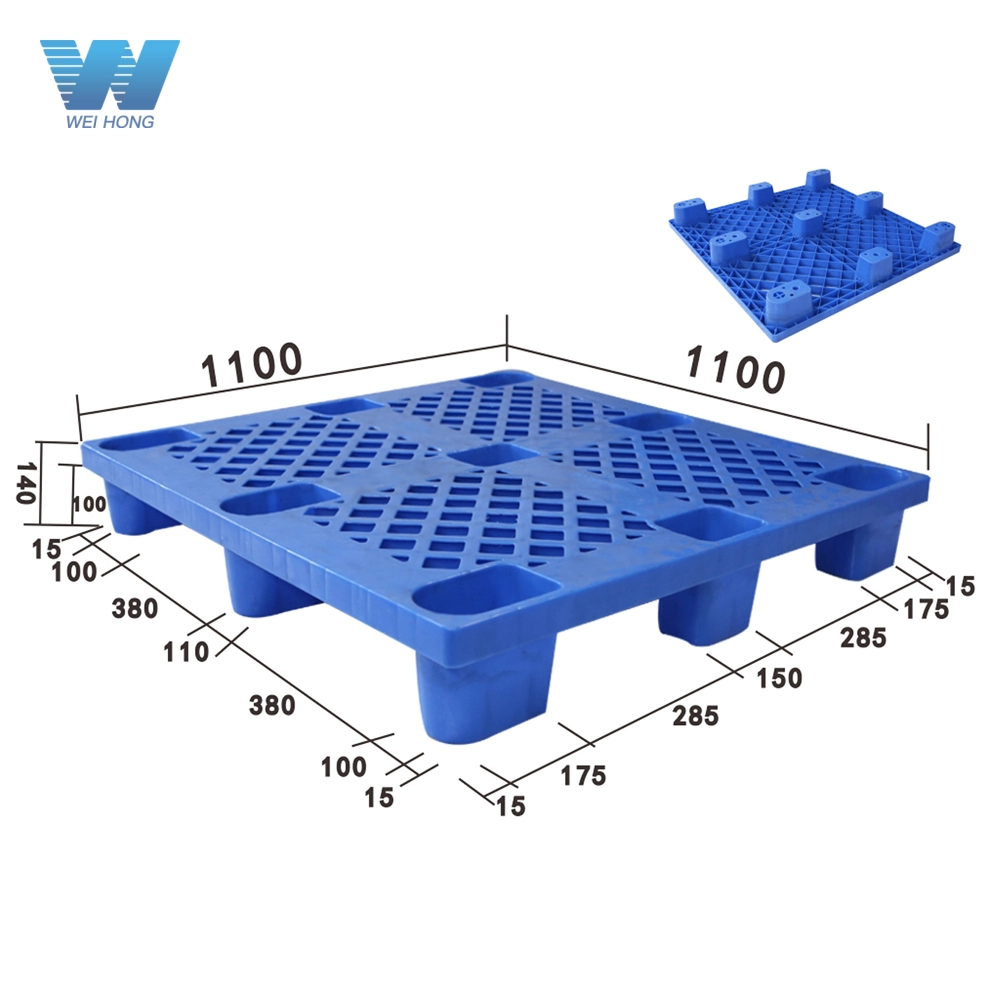
ZJ1111-140 Light-weight Nine-leg Nestable Plastic Pallet
The lightweight nine-leg nestable plastic pallet is an innovative and stylish packaging solution designed for general cargo storage and transport. It’s made of virgin HDPE or PP, featuring in space-saving due to its nine hollow feet design for nesting and cost-effectiveness.
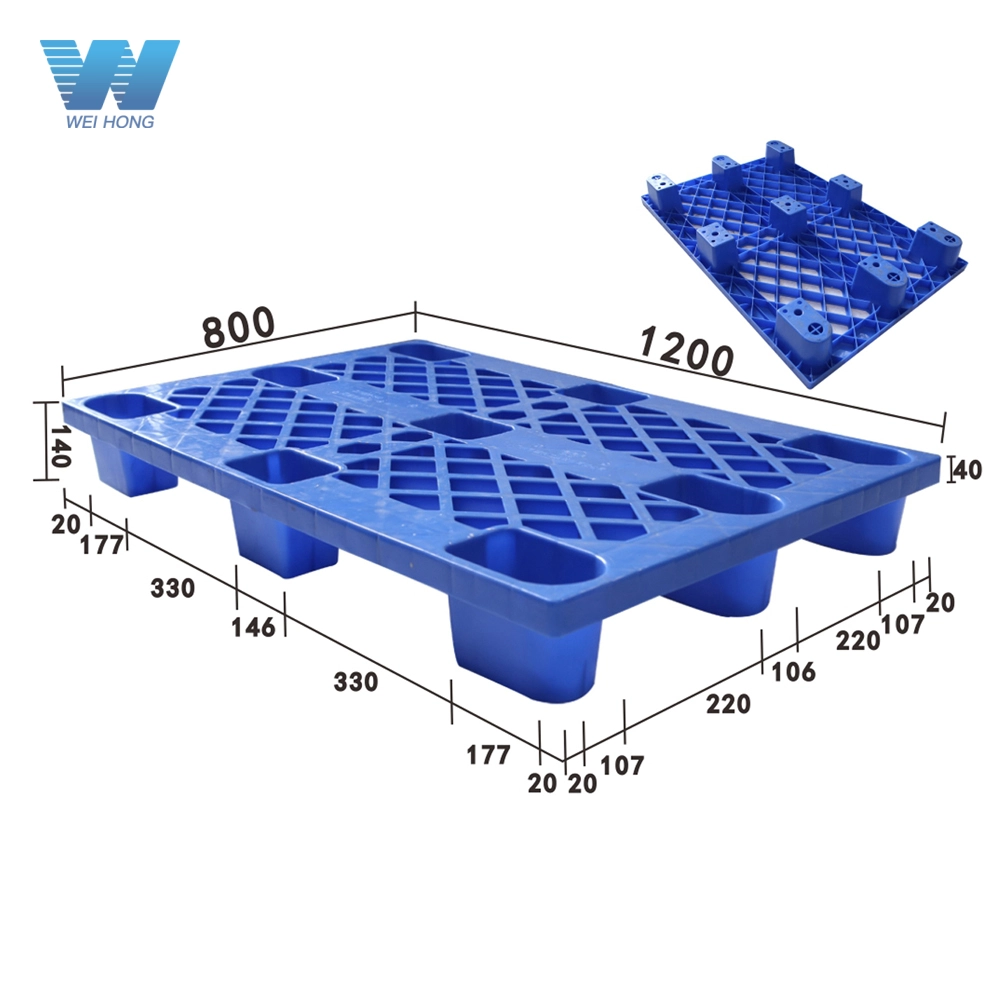
ZJ1208-140 Light-weight Nine-leg Nestable Plastic Pallet
The lightweight nine-leg nestable plastic pallet is an innovative and stylish packaging solution designed for general cargo storage and transport. It’s made of virgin HDPE or PP, featuring in space-saving due to its nine hollow feet design for nesting and cost-effectiveness.
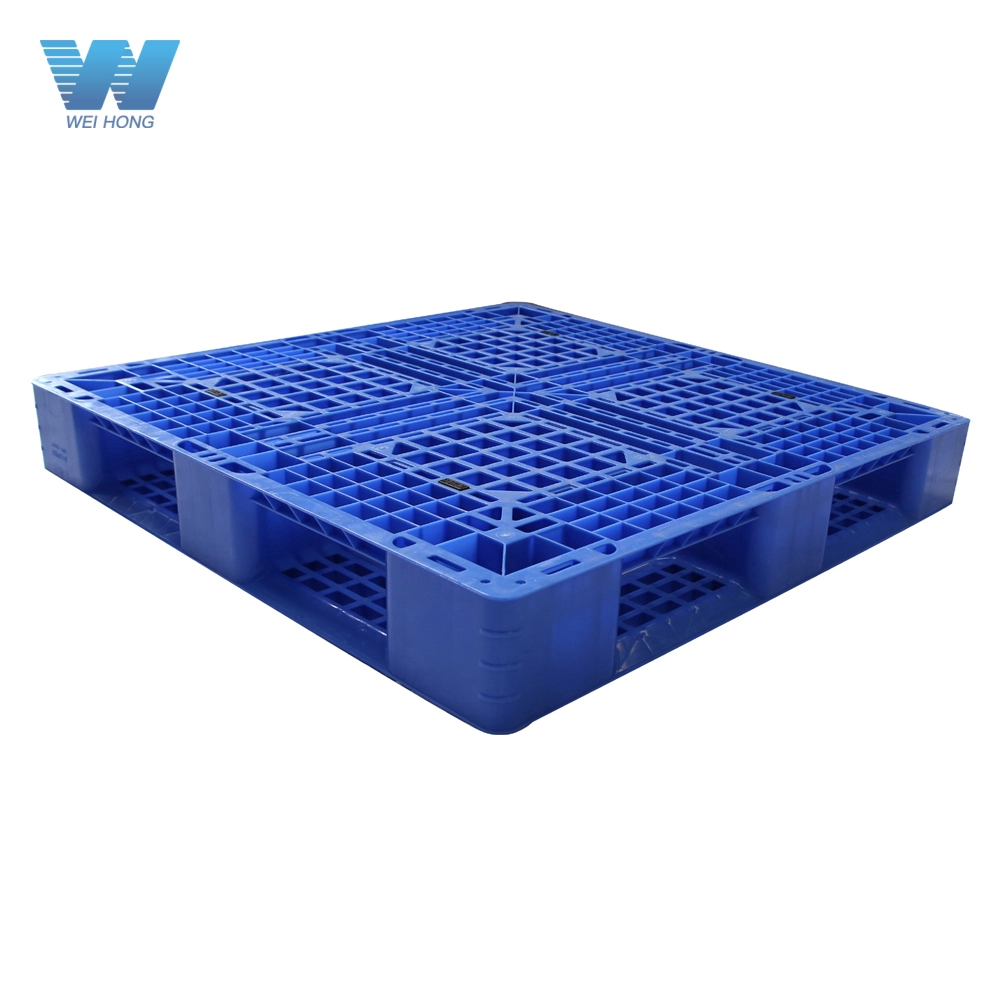
ZJ1111-150L Six-runner Single-sided Plastic Pallet
The six-runner plastic pallet, open or closed deck, is a solid and durable packaging solution designed for general and medium to heavy-duty cargo stacking, storage and transport. It’s made of virgin HDPE or PP, featuring in robust structure, a reinforced configuration with steel cores for the rack and shelf, and a steady loading capacity.
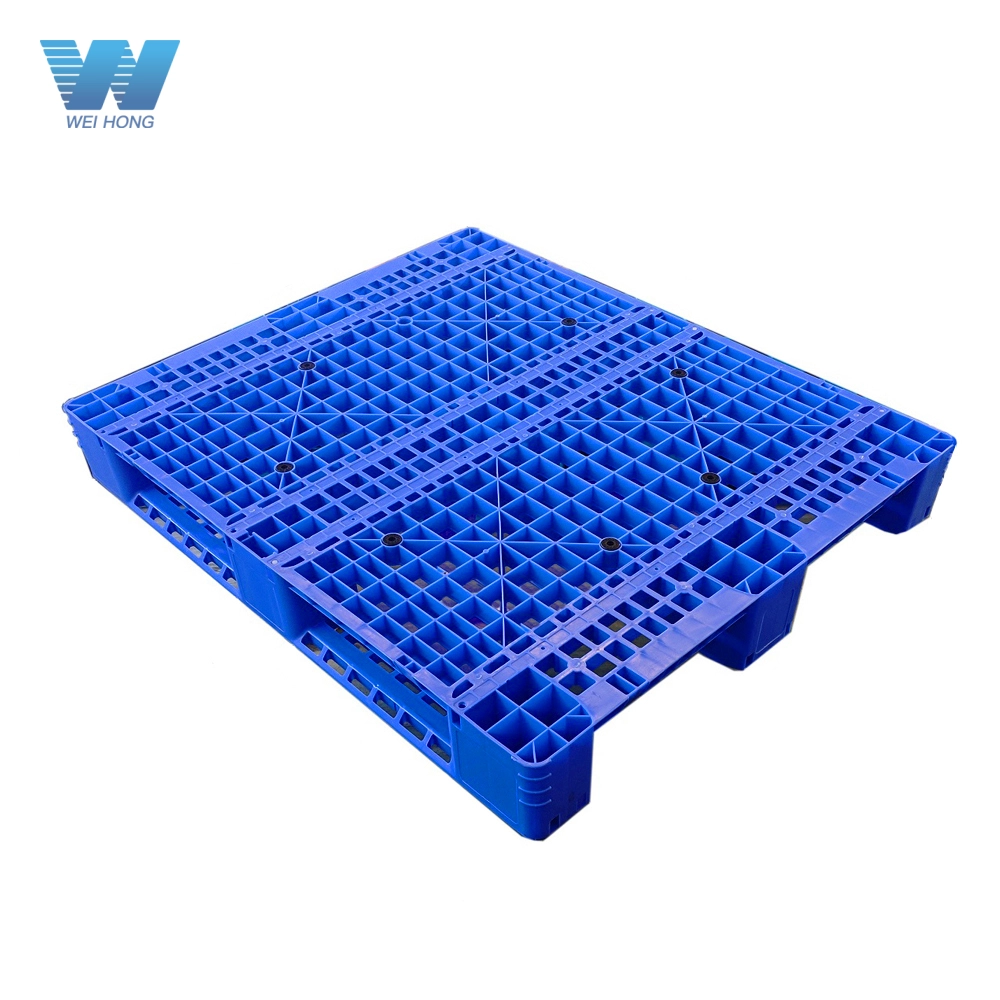
ZJ1210-150A Three-runner Single-sided Plastic Pallet
The three-runner single-sided plastic pallet is a solid and durable packaging solution designed for general and medium to heavy-duty cargo storage, transport and automated storage and retrieval system (AS/RS) use. It’s made of virgin HDPE or PP, featuring in robust structure, reinforced configuration with steel cores for rack and shelf, and a steady loading capacity.
Request More Information About Plastic Pallets
Have questions or need detailed insights on this article? Fill out the form below to contact our team for comprehensive information and support related to our plastic pallet solutions.
Contact us


+86 138 0277 8204
+86 183 4431 0917
+86 195 3791 1860

No. 15-1, Fengying Rd., Taiping Town, Conghua Dist., Guangzhou City, Guangdong Province, China.
Weihong
Whatsapp: +8613802778204
Guangdong Weihong Plastic Technology Co., Ltd.
Scan QR Code