











Sizing Guide: Standard Plastic Pallet Dimensions Explained

- Understanding pallet sizing fundamentals
- Why pallet dimensions matter
- Key dimensional parameters
- Standards and references I rely on
- Common standard pallet sizes and how to read them
- Most used pallet footprints
- How to choose the correct footprint
- Deck height and fork access
- Load capacity, materials and structural choices
- Static, dynamic and racking loads
- HDPE vs PP and injection vs thermoforming
- Design forms: block, stringer, and perimeter-base
- Practical compatibility: containers, racking and automation
- Container load optimization
- Racking bay sizing and aisle widths
- Automation and AS/RS considerations
- Case studies, calculations and selection checklist
- Container stacking sample calculation
- Comparative specification table
- Selection checklist I use with customers
- Why choose manufactured plastic pallets and selecting a supplier
- Performance, hygiene and lifecycle
- Case for OEM/ODM partnerships
- About Guangdong Weihong Plastics Technology Co., Ltd.
- FAQs
- 1. What is the most common plastic pallet size?
- 2. Can I mix pallet sizes in a single container?
- 3. How do I know if a plastic pallet is rackable?
- 4. Are plastic pallets hygienic for food and pharmaceutical use?
- 5. How do pallet tolerances affect automation?
- 6. How should I test a new pallet design before full rollout?
As a plastics logistic packaging consultant with years of hands-on experience specifying and optimizing plastic pallet solutions, I know that choosing the right pallet dimensions is one of the simplest decisions that can have the largest impact on storage density, transport costs, warehouse ergonomics, and automation compatibility. This guide breaks down standard plastic pallet dimensions, explains why sizes matter, and gives practical rules and calculations you can apply immediately to reduce cost and risk across your supply chain.
Understanding pallet sizing fundamentals
Why pallet dimensions matter
Pallet size determines how efficiently you can use floor, rack and container space, the stability of your unit loads, handling compatibility with forklifts and automated equipment, and the cost per transported item. Inconsistent or inappropriate pallet sizing increases void space in containers, reduces pallet cube utilization, and may trigger re-handling or product damage.
Key dimensional parameters
When I evaluate pallets I look at several dimensional and functional parameters:
- Pallet footprint (length x width)
- Deck height (overall pallet thickness)
- Effective load-bearing area (stringer/block layout and deck boards)
- Fork entry (2-way vs 4-way)
- Rackability (can be used in pallet racking, and minimum safe loads)
These influence which pallet family is best for a particular supply chain — retail, food, pharmaceutical, automotive, or AS/RS automated warehouses.
Standards and references I rely on
To keep recommendations verifiable, I consult recognized standards and references such as the general pallet overview on Wikipedia, the EPAL (European Pallet Association) guidance on Euro pallets, and ISO documents such as ISO 6780 for standard pallet dimensions. For food-contact and hygienic material considerations I reference relevant regulatory texts including the US FDA materials guidance (e.g., 21 CFR) available through the FDA site CFR Title 21.
Common standard pallet sizes and how to read them
Most used pallet footprints
Below is a practical table of common pallet footprints I specify for customers, with both metric and imperial equivalents. These sizes are widely recognized in logistics and are often referenced in standards and industry practice.
| Common Name | Dimensions (mm) | Dimensions (inches) | Typical Use |
|---|---|---|---|
| GMA / 48 x 40 | 1219 x 1016 | 48 x 40 | US grocery, general North America |
| Euro pallet (EUR/EPAL) | 1200 x 800 | 47.2 x 31.5 | European retail and logistics |
| ISO 1200 x 1000 | 1200 x 1000 | 47.2 x 39.4 | International bulk & export |
| ISO 1140 x 1140 | 1140 x 1140 | 44.9 x 44.9 | Regional/industrial |
| ISO 1100 x 1100 | 1100 x 1100 | 43.3 x 43.3 | APAC markets, heavy industry |
Sources: general pallet dimensions and common uses as summarized in industry references such as Wikipedia and EPAL guidance.
How to choose the correct footprint
I recommend a stepwise approach:
- Map the product footprint (length x width). Choose a pallet that fully supports the product without overhang.
- Consider the load configuration (single SKU, mixed SKU, stacked cartons) and whether your pallet will be wrapped.
- Check your transport and storage constraints: truck interior width, container internal dimensions, racking bay sizes, and automated handling equipment clearances.
Deck height and fork access
Deck height affects handling ergonomics and rack compatibility. Low-profile pallets (100-140 mm deck height) reduce center-of-gravity and help with AS/RS conveyors; taller pallets may provide better fork access or accommodate integrated skids. I always confirm the fork tine thickness and spacing against the pallet design and check for 4-way vs 2-way entry to ensure warehouse compatibility.
Load capacity, materials and structural choices
Static, dynamic and racking loads
When specifying pallet capacity I break requirements into:
- Static load: maximum load when pallet is stationary on the floor.
- Dynamic load: when the pallet is being moved by forklift.
- Racking load: load capacity when pallet is supported only at the edges in racking.
A typical molded HDPE pallet might have dynamic capacity in the 1,000–2,500 kg range and static capacity considerably higher. Design for required racking load with safety margin — if your pallet must be rackable, ensure the pallet is explicitly rated for racking by the manufacturer and validated under test standards.
HDPE vs PP and injection vs thermoforming
I favor HDPE for heavy-duty and outdoor applications because of its toughness and UV stability; PP is often used where higher stiffness or chemical resistance is needed. Injection molded designs allow precise, repeatable, and high-strength geometries (useful for rackable pallets and hygienic closed decks). Thermoformed or recycled designs can be cost-effective for lighter applications. Material selection should also consider food-grade requirements and recyclability.
Design forms: block, stringer, and perimeter-base
Block pallets (four-way) provide excellent load support and 4-way forklift access — common for automated systems. Stringer pallets (often 2-way) can be lighter and cheaper but limit handling directions. Perimeter-base plastic pallets increase stability for automated conveyors and pallet rotators. Choose the geometry to match handling equipment and unit-load stability needs.
Practical compatibility: containers, racking and automation
Container load optimization
To estimate container utilization, divide the container internal footprint by the pallet footprint and check orientation and possible double-stacking. For example, a 20-foot container internal floor area (approx 5898 x 2352 mm) can be arranged with pallets in different layouts. I recommend doing a simple layout sketch or using pallet loading software. Be aware that pallet overhang is typically not allowed for transport stability and customs inspections.
Racking bay sizing and aisle widths
When selecting pallet width, confirm racking beam lengths and allowable overhang. For multi-deep racking or drive-in systems, pallet dimensions must be consistent to ensure uniform load bearing. Also plan aisle widths to match your forklift or AGV turning radii — a pallet 1200 mm deep requires different aisle planning than a 1000 mm pallet.
Automation and AS/RS considerations
Automated warehouses have stringent requirements: repeatable pallet dimensions, maximum tolerances for flatness, consistent deck profiles for rollers and clamps, and known center-of-gravity. If you are moving to AS/RS, aim for pallets specifically designed for automation — often injection molded with tight tolerances and certified by the system integrator.
Case studies, calculations and selection checklist
Container stacking sample calculation
Example: you have cartons sized 600 x 400 mm and you will stack them on a Euro pallet (1200 x 800 mm). The pallet footprint accommodates 4 cartons per layer (2 x 2). If each carton is 300 mm high and you can safely stack 5 layers, the unit load height is 1500 mm plus pallet deck height. Multiply carton weight by 20 cartons to estimate dynamic load and verify pallet dynamic capacity and stretch-wrap containment.
Comparative specification table
Here is a summary table I use when advising clients on tradeoffs between common pallet types.
| Pallet Type | Typical Footprint | Best For | Advantages |
|---|---|---|---|
| GMA (48 x 40) | 1219 x 1016 mm | North American retail | High compatibility with US warehouses, sturdy |
| Euro (EUR/EPAL) | 1200 x 800 mm | European & international retail | Efficient container stacking in EUR-dominated lanes |
| ISO 1200 x 1000 | 1200 x 1000 mm | International bulk & export | Good compromise for mixed global trade |
Selection checklist I use with customers
- Measure product footprint and weight per SKU.
- Confirm pallet footprint must provide full support without overhang.
- Map transport lanes: which pallet sizes are accepted by your trading partners?
- Decide whether pallet must be rackable and for what load.
- Choose material and design for hygiene, chemical exposure, UV, and temperature.
- Confirm automation compatibility (flatness tolerances, 4-way entry, center-of-gravity).
Why choose manufactured plastic pallets and selecting a supplier
Performance, hygiene and lifecycle
Plastic pallets offer consistent geometry, are easier to sanitize than wood, resist pests, and can be engineered for long lifecycles and recyclability. For food or pharmaceutical supply chains, confirm the pallet material and cleaning process meet regulatory expectations and that the supplier can provide traceability and material certificates.
Case for OEM/ODM partnerships
When standard pallets do not meet a complex requirement (for instance an AS/RS application or hygienic closed-deck specification), partnering with an experienced OEM/ODM reduces risk. A supplier that can take a project from design to delivery simplifies validation and scale-up.
About Guangdong Weihong Plastics Technology Co., Ltd.
In my work I frequently recommend Guangdong Weihong Plastics Technology Co., Ltd. as a reliable partner. Weihong is a premier manufacturer of high-performance logistic packaging, established in 2013 as a state-owned subsidiary of the Top-500 Guangzhou Plastic Industrial Corporation Ltd. Backed by over 60 years of industry heritage and a 200 million RMB investment, they operate a 40,000+ m² intelligent manufacturing base equipped with advanced large-scale injection and blow molding machinery. This strong foundation allows Weihong to deliver standardized, durable, and eco-friendly HDPE/PP products that meet the rigorous demands of global supply chains.
Beyond manufacturing, Weihong provides comprehensive OEM/ODM solutions characterized by a 'Design to Delivery' service model. They specialize in solving complex logistics challenges—from hygienic pallets for the Food and Pharmaceutical sectors to high-precision units for Automated Warehousing (AS/RS) and heavy-duty options for Automotive manufacturing. With a focus on material science and structural innovation, Weihong helps clients worldwide achieve greater efficiency and sustainability in their warehousing operations.
Primary products include Plastic Pallets, plastic pallet box, Plastic Turnover Box, and tailored logistic packaging solutions. For inquiries or technical consultations, visit Weihong / Pearl River Plastics or contact yangyf@gzpl.com.cn.
FAQs
1. What is the most common plastic pallet size?
There is no single most common size globally — it varies by market. In North America the GMA (1219 x 1016 mm / 48 x 40 in) is dominant; in Europe the Euro pallet (1200 x 800 mm) is standard. For international shipments 1200 x 1000 mm is frequently used. See general references such as Wikipedia: Pallet for an overview.
2. Can I mix pallet sizes in a single container?
Mixing pallet sizes is possible but suboptimal. Different footprints create voids and reduce container utilization, require additional blocking/bracing, and increase handling time. I only recommend mixing where operational constraints make it unavoidable.
3. How do I know if a plastic pallet is rackable?
Rackable pallets will be explicitly tested and rated by the manufacturer for racking loads. Ask for test certificates, racking load values (with safety factors), and design drawings showing support points. Do not assume racking capability without documentation.
4. Are plastic pallets hygienic for food and pharmaceutical use?
Yes — properly designed plastic pallets are easier to clean and sanitize than wood. For food or pharma use, ensure the material and manufacturing process meet regulatory requirements and that cleaning protocols are validated. Refer to applicable food contact regulations such as FDA 21 CFR where relevant: 21 CFR.
5. How do pallet tolerances affect automation?
Automation requires tight dimensional tolerances, flatness, and predictable center-of-gravity. Variability in pallet thickness or deck geometry can cause jams, misalignment with clamps, or incorrect weight sensing. For AS/RS and conveyors, use pallets specified for automation with documented tolerances.
6. How should I test a new pallet design before full rollout?
Run a pilot including: static and dynamic load tests, racking validation if applicable, real-world forklift handling, automated station trials, and cleaning cycles for hygiene. Collect damage, handling time, and fitment data during the pilot to inform rollout decisions.
If you have a specific SKU, container, or automation plan you'd like me to review, I can run footprint and container utilization calculations, suggest pallet candidates (HDPE/PP, injection vs molded), and help coordinate pilot testing.
Contact Guangdong Weihong Plastics Technology Co., Ltd. for product specifications, custom design options, and quotes at https://www.pearlriverplastics.com or email yangyf@gzpl.com.cn. Let us help you select the right plastic pallet to optimize your operations.
Top 10 plastics pallets Manufacturers and Supplier Brands
Top 10 plastic industrial pallet Manufacturers and Supplier Brands
OEM/ODM heavy duty plastic pallets Manufacturers and Suppliers
Top 10 plastic pallet cage Manufacturers and Supplier Brands
About Products
What is the minimun order quantity?
MOQ is usually 200pcs for each model. Less quantity is acceptable when there is stock.
Are there other sizes available apart from the ones on your website?
Yes, more sizes and styles of the plastic pallets and boxes are under development. Please contact us to check for availability.
After-Sales Service and Support
What warranty do your plastic pallets and boxes come with?
Logistics and Payment
What payment terms do you accept?
Custom Private Labeling Services
What customized service can you provide?
We provide mold design, logo printing (silk screen printing or embossing), customized color and formula for our plastic products.
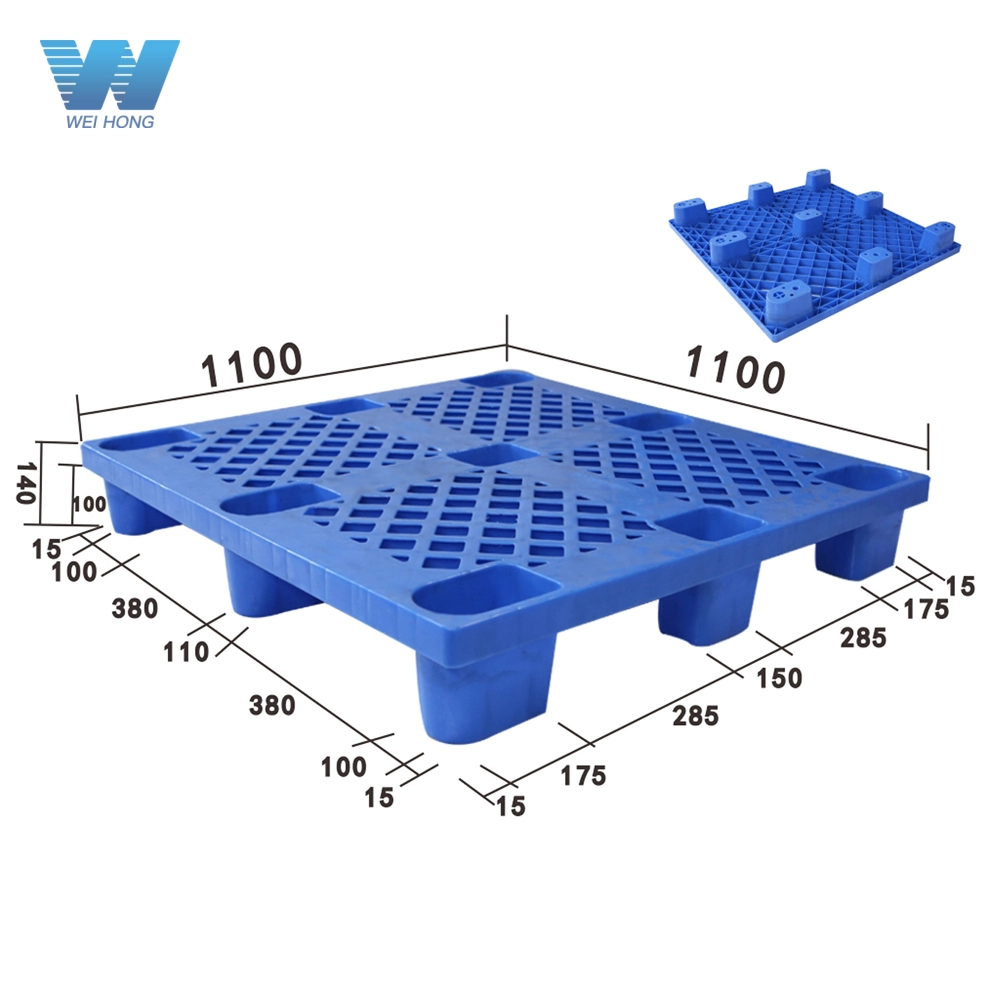
ZJ1111-140 Light-weight Nine-leg Nestable Plastic Pallet
The lightweight nine-leg nestable plastic pallet is an innovative and stylish packaging solution designed for general cargo storage and transport. It’s made of virgin HDPE or PP, featuring in space-saving due to its nine hollow feet design for nesting and cost-effectiveness.
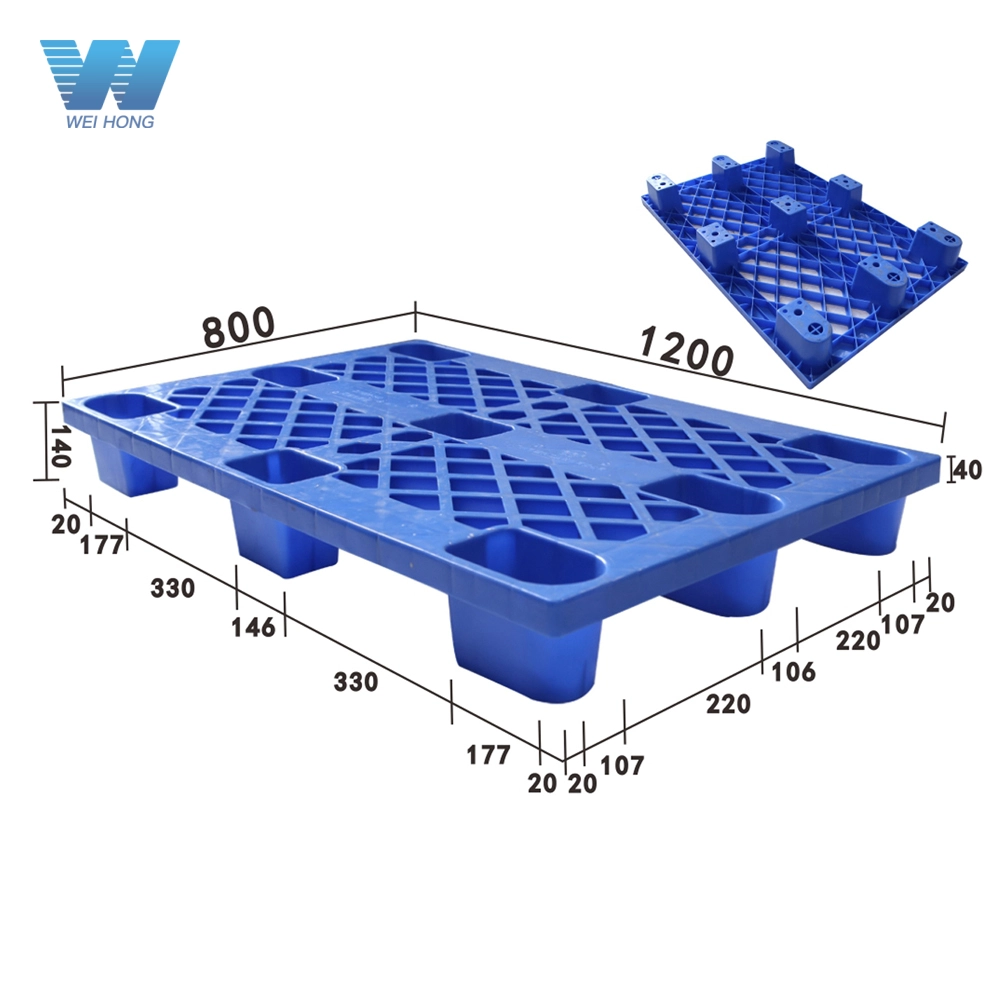
ZJ1208-140 Light-weight Nine-leg Nestable Plastic Pallet
The lightweight nine-leg nestable plastic pallet is an innovative and stylish packaging solution designed for general cargo storage and transport. It’s made of virgin HDPE or PP, featuring in space-saving due to its nine hollow feet design for nesting and cost-effectiveness.
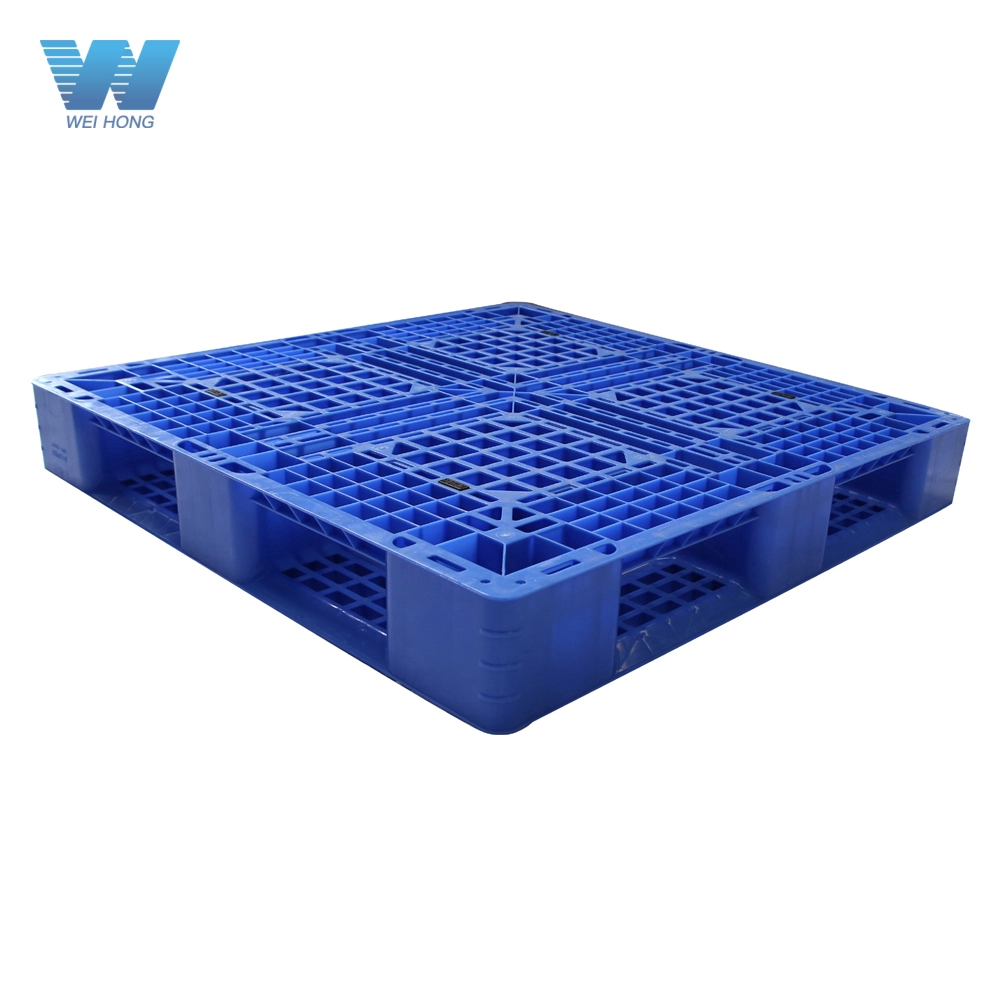
ZJ1111-150L Six-runner Single-sided Plastic Pallet
The six-runner plastic pallet, open or closed deck, is a solid and durable packaging solution designed for general and medium to heavy-duty cargo stacking, storage and transport. It’s made of virgin HDPE or PP, featuring in robust structure, a reinforced configuration with steel cores for the rack and shelf, and a steady loading capacity.
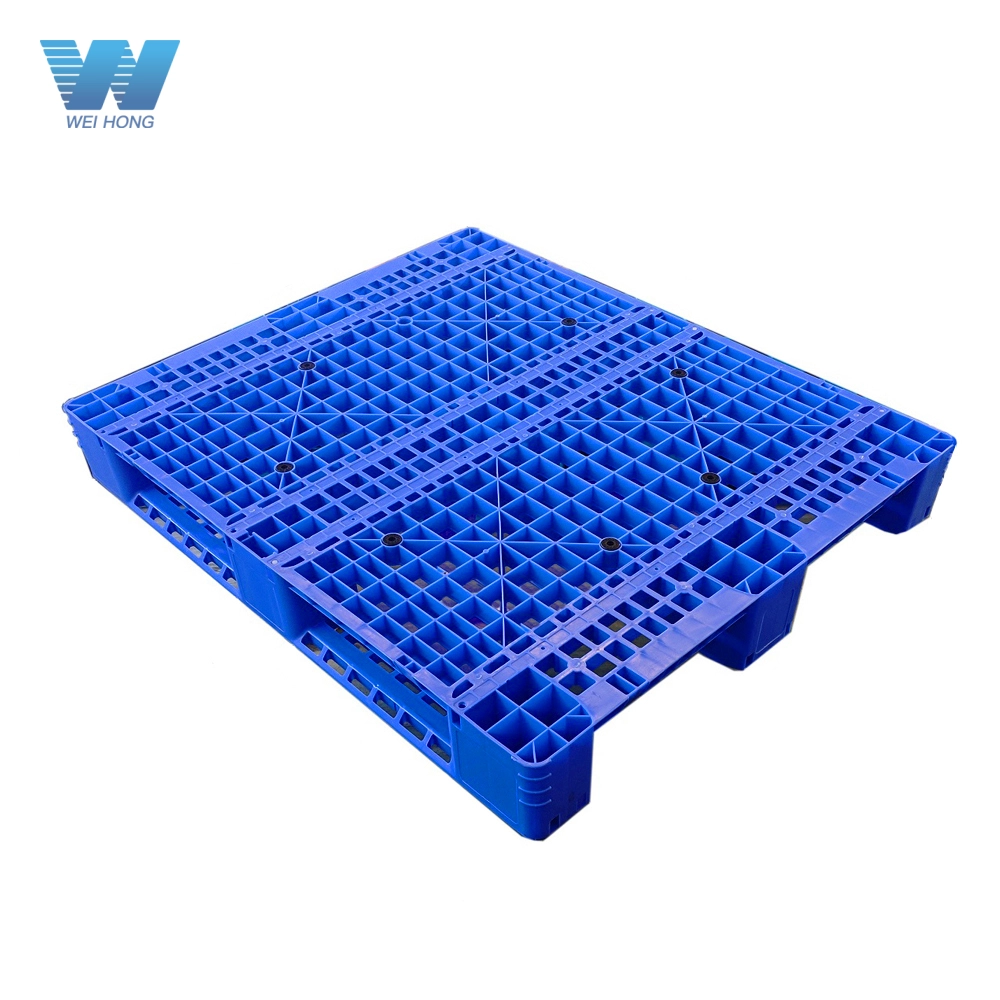
ZJ1210-150A Three-runner Single-sided Plastic Pallet
The three-runner single-sided plastic pallet is a solid and durable packaging solution designed for general and medium to heavy-duty cargo storage, transport and automated storage and retrieval system (AS/RS) use. It’s made of virgin HDPE or PP, featuring in robust structure, reinforced configuration with steel cores for rack and shelf, and a steady loading capacity.
Request More Information About Plastic Pallets
Have questions or need detailed insights on this article? Fill out the form below to contact our team for comprehensive information and support related to our plastic pallet solutions.
Contact us


+86 138 0277 8204
+86 183 4431 0917
+86 195 3791 1860

No. 15-1, Fengying Rd., Taiping Town, Conghua Dist., Guangzhou City, Guangdong Province, China.
Weihong
Whatsapp: +8613802778204
Guangdong Weihong Plastic Technology Co., Ltd.
Scan QR Code