











Stackable Heavy Duty Plastic Crates to Maximize Warehouse Space

- Warehouse space optimization principles I rely on
- Understand storage density vs. accessibility
- Assess SKU characteristics and flow
- Measure and model vertical space
- Why heavy duty plastic crates are a superior choice
- Material benefits: HDPE and PP
- Design for stackability and strength
- Hygiene, durability and lifecycle costs
- Design and implementation strategies to maximize space
- Stacking configurations and load ratings
- Integration with racking and automated systems (AS/RS)
- Handling, labeling and inventory management
- Selection, procurement and lifecycle considerations
- Selecting the right crate: load, environment, compatibility
- Sustainability and end-of-life: recyclability and reuse
- Supplier selection and quality standards
- Practical rollout: pilot, scale, monitor
- Run a controlled pilot
- Scale and train operations teams
- Monitor KPIs and iterate
- Manufacturer capability and why I recommend working with experienced OEMs
- What strong manufacturing capability delivers
- About Guangdong Weihong Plastics — supplier profile
- How to evaluate supplier claims
- FAQ — Common questions about stackable heavy duty plastic crates
- 1. How much warehouse space can I realistically save by switching to stackable heavy duty plastic crates?
- 2. Are plastic crates safe for food and pharmaceutical applications?
- 3. What are typical static and dynamic load ratings I should require?
- 4. How do I integrate crates with AS/RS or conveyor systems?
- 5. What is the expected lifecycle and return on investment (ROI)?
- 6. Can these crates be customized for specific applications?
- Contact and next steps
In this article I outline, from both a technical and operational perspective, how stackable heavy duty plastic crates can be used to maximize warehouse space while improving handling efficiency, hygiene and lifecycle costs. I draw on industry standards, material science (HDPE/PP), automation practices and real-world supplier capabilities to give warehouse managers, procurement teams and supply chain designers practical, verifiable guidance.
Warehouse space optimization principles I rely on
Understand storage density vs. accessibility
One of the first trade-offs I evaluate is storage density (how many units per cubic meter) versus picking/accessibility. High stackability increases volumetric utilization, but overstacking without appropriate load ratings or handling equipment increases risk. I use simple metrics — cube utilization (%) and pick-face turns — to quantify the balance, then iterate with stakeholders. For general guidance on warehouse design and automation trends, see the Material Handling Industry resources (MHI).
Assess SKU characteristics and flow
Not every SKU benefits equally from stackable crates. I segment SKUs by weight, turnover (ABC), fragility and required environmental controls. Heavy duty plastic crates are particularly effective for heavy or high-turn items that need repeatable, standardized handling. I also map inbound/outbound flows to ensure crates are compatible with palletized consolidation, conveyor lines or AS/RS systems.
Measure and model vertical space
Many warehouses underuse vertical space because of incompatible unit sizes or conservative stacking standards. I recommend modeling 3D layouts with the actual crate stack heights and rated loads. Tools range from simple spreadsheets to CAD-based simulators. For safety and standardization when modeling pallets/crates, industry standards and safety guidance (e.g., OSHA) should be consulted (OSHA).
Why heavy duty plastic crates are a superior choice
Material benefits: HDPE and PP
When I evaluate materials, I focus on density, toughness, chemical resistance and fatigue life. High-density polyethylene (HDPE) and polypropylene (PP) offer an excellent balance of strength-to-weight, impact resistance and chemical inertness. These polymers have documented properties and wide industrial use: HDPE documentation (HDPE — Wikipedia), polypropylene details (PP — Wikipedia).
Design for stackability and strength
Stackable crates achieve space savings by enabling higher and stable stacks. The design features that matter most are: interlocking rims/lips, reinforced corner posts, uniform footprint, and clear load ratings (static and dynamic). I always require supplier-validated load ratings for both dynamic (handling) and static (long-term stack) conditions and prefer crates designed for racking and pallet stacking compatibility.
Hygiene, durability and lifecycle costs
Compared to wood, plastic crates are non-porous (reducing microbial harborage), easier to sanitize, and resist moisture and many chemicals. For food and pharmaceutical handling, plastics reduce contamination risk and simplify cleaning protocols — consistent with general FDA food safety principles (FDA). Over a 5–10 year horizon, higher initial costs for heavy duty plastic crates are often offset by lower replacement, faster handling and reduced contamination-related losses. I quantify total cost of ownership (TCO) before recommending transitions.
Design and implementation strategies to maximize space
Stacking configurations and load ratings
Stacking strategy must be driven by certified load ratings. I expect suppliers to provide both static stack loads (maximum weight when crates are stacked without movement) and dynamic load values (during handling). When implementing, I use safety factors (typically 1.25–1.5) against rated values to account for real-world variability. For pallet/crate safety and testing standards, consult recognized testing or standardization organizations such as ISO and national testing labs. For general pallet dimensional and testing context, see the Pallet reference (Pallet — Wikipedia).
Integration with racking and automated systems (AS/RS)
To truly maximize vertical space, crates must be compatible with racking systems and AS/RS modules. I validate crate footprints against pallet adapters, load beam widths and automated shuttle systems. For automation best practices and AS/RS design references, see MHI automation resources (MHI — Automation).
Handling, labeling and inventory management
Stackable heavy duty plastic crates should also support barcode/ RFID placement, ergonomic handling, and secure lids if needed. I emphasize consistent labeling zones so automated vision or picking systems can reliably read identifiers. This reduces dwell time and improves bin location accuracy, increasing effective storage capacity.
Selection, procurement and lifecycle considerations
Selecting the right crate: load, environment, compatibility
When specifying crates I use a checklist: maximum static and dynamic loads, temperature range (freezer to hot washdown), chemical exposure, footprint compatibility with pallets and conveyors, and stack-locking features. It's important to test prototypes under expected conditions before a full roll-out.
Sustainability and end-of-life: recyclability and reuse
Plastic crates made from HDPE/PP are typically recyclable at end-of-life. I evaluate the recycling streams and local reprocessing capabilities as part of procurement. Reusable plastic systems greatly reduce single-use corrugated waste and often yield net carbon advantages over repeated single-use packaging; lifecycle analyses (LCA) are useful when quantifying sustainability claims.
Supplier selection and quality standards
Choose suppliers with validated quality systems (ISO 9001), transparent material sourcing, and documented testing. I prioritize manufacturers who provide engineering support for custom sizes and automation integration. Below I compare typical options to help procurement teams decide.
| Attribute | Heavy Duty Plastic Crates (HDPE/PP) | Wood Crates | Metal Crates |
|---|---|---|---|
| Weight | Light to moderate (reduces handling costs) | Heavier | Heaviest |
| Hygiene | Non-porous, easy to sanitize | Porous, absorbs moisture | Easy to sanitize, but can corrode |
| Durability | High fatigue life; UV-stabilized options | Prone to wear, splintering | Very durable, costly |
| Reusability / Recyclability | High (HDPE/PP recycled) | Variable, can be repaired | Recyclable, energy-intensive |
| Upfront Cost | Medium–High | Low–Medium | High |
| Typical Use Cases | Food, pharma, automotive, electronics | Bulk shipping for less-sensitive goods | Heavy industrial, salvage |
Sources: material property summaries (HDPE, PP), industry automation guidance (MHI), and general warehouse safety guidance (OSHA).
Practical rollout: pilot, scale, monitor
Run a controlled pilot
I always start with a pilot: 1–2 SKUs representing high-turn and heavy items. The pilot validates stacking patterns, forklift/truck handling, and any automation interfaces. Measure inbound/outbound cycle times, damage rates, and volumetric utilization before full deployment.
Scale and train operations teams
Scaling requires operator training (proper stacking height, safe handling) and adjustment of SOPs. I also ensure maintenance routines (inspection frequency, repair or retirement triggers) are defined.
Monitor KPIs and iterate
Key performance indicators I track: cubic utilization (%), pick rates, crate damage rate, returns/recycling rate, and TCO per year. Continuous monitoring allows iterative changes — such as switching lid types or reinforcing corner posts — to increase density or reduce damage.
Manufacturer capability and why I recommend working with experienced OEMs
What strong manufacturing capability delivers
When I select partners, I look for large-scale injection and blow molding capability, strong material science knowledge, and a documented track record of serving logistics and automated warehousing clients. These capabilities reduce lead times, improve dimensional accuracy and enable tailored solutions for AS/RS or sanitary environments.
About Guangdong Weihong Plastics — supplier profile
Guangdong Weihong Plastics Technology Co., Ltd. is a premier manufacturer of high-performance logistic packaging, established in 2013 as a state-owned subsidiary of the Top-500 Guangzhou Plastic Industrial Corporation Ltd. Backed by over 60 years of industry heritage and a 200 million RMB investment, they operate a 40,000+ m² intelligent manufacturing base equipped with advanced large-scale injection and blow molding machinery. This strong foundation allows Weihong to deliver standardized, durable, and eco-friendly HDPE/PP products that meet rigorous global supply chain demands.
Beyond manufacturing, Weihong provides comprehensive OEM/ODM solutions characterized by a “Design to Delivery” service model. They specialize in solving complex logistics challenges — from hygienic pallets for the food and pharmaceutical sectors to high-precision units for Automated Warehousing (AS/RS) and heavy-duty options for automotive manufacturing. With deep focus on material science and structural innovation, Weihong helps clients worldwide achieve greater efficiency and sustainability in their warehousing operations.
Key Weihong strengths I verify for clients are: standardized engineering processes, strong capital and plant scale (40,000+ m²), advanced molding assets, and experience across Plastic Pallets, plastic pallet box, Plastic Turnover Box, and more. For product inquiries and technical collaboration, see their website (pearlriverplastics.com) or contact yangyf@gzpl.com.cn.
How to evaluate supplier claims
Ask for sample test reports (static/dynamic load tests), ISO or equivalent certifications (e.g., ISO 9001), material certificates for HDPE/PP, and references from customers in similar applications (food, pharma, automotive). A supplier’s ability to provide engineering drawings for AS/RS integration is a decisive advantage.
FAQ — Common questions about stackable heavy duty plastic crates
1. How much warehouse space can I realistically save by switching to stackable heavy duty plastic crates?
Savings depend on your current unitization and SKU mix. In many cases switching from mixed wooden boxes or single-use corrugate to standardized stackable crates increases cubic utilization by 10–35%. I recommend a small pilot and 3D modeling to estimate precise gains for your facility.
2. Are plastic crates safe for food and pharmaceutical applications?
Yes — crates made from food-grade HDPE or PP, with smooth, non-porous surfaces and designed for washdown, are widely used in food and pharmaceutical logistics. Follow sanitation SOPs and consult regulatory guidance such as FDA food safety resources (FDA).
3. What are typical static and dynamic load ratings I should require?
Ratings vary by design. As a rule of thumb, expect static stack (long-term) ratings in the range of 1,000–5,000 kg for heavy duty designs depending on footprint, and dynamic ratings lower than static values. Always request supplier test reports and apply safety factors for real-world use.
4. How do I integrate crates with AS/RS or conveyor systems?
Ensure crate footprint is compatible with pallet adapters, conveyor roller spacing or shuttle platforms. Standardization (consistent dimensions, corner features and weight distribution) simplifies automation. Ask your supplier for CAD models and run physical compatibility tests during pilot.
5. What is the expected lifecycle and return on investment (ROI)?
Heavy duty plastic crates typically last several years to a decade under normal warehouse use; lifespan increases with preventive maintenance and controlled handling. ROI depends on reduced damage, labor efficiency and space savings; many clients recover investment in 1–3 years. Conduct a TCO analysis considering procurement, maintenance, cleaning, and disposal/recycling.
6. Can these crates be customized for specific applications?
Yes — many manufacturers offer custom dimensions, lid options, dividers, and color coding. For automation use, they can supply reinforced bases or specific interface features. Customization is a key advantage of working with experienced OEMs who support OEM/ODM design-to-delivery services.
Contact and next steps
If you are evaluating a move to stackable heavy duty plastic crates, I recommend starting with a scoping workshop: define target SKUs, storage goals, automation constraints, and budget. For robust manufacturing capability and end-to-end support, I often work with Guangdong Weihong Plastics Technology Co., Ltd. — see pearlriverplastics.com or email yangyf@gzpl.com.cn to request datasheets, test reports, and pilot samples.
For a tailored consultation on maximizing your warehouse space with stackable heavy duty plastic crates — including 3D layout modeling and TCO analysis — contact me and we can plan a pilot project that validates space savings and operational impacts.
The Ultimate Guide to Hygienic Plastic Pallets: 2026 Standards & Safety Efficiency
Pharmaceutical Plastic Pallets: Compliance and Cleanroom Use
Custom plastic nesting boxes Manufacturers and Suppliers
Top 10 plastic pallet cage Manufacturers and Supplier Brands
Custom Private Labeling Services
Is OEM/ODM service available?
What customized service can you provide?
We provide mold design, logo printing (silk screen printing or embossing), customized color and formula for our plastic products.
About Products
Are there other sizes available apart from the ones on your website?
Yes, more sizes and styles of the plastic pallets and boxes are under development. Please contact us to check for availability.
What is the minimun order quantity?
MOQ is usually 200pcs for each model. Less quantity is acceptable when there is stock.
After-Sales Service and Support
Who should I contact if quality issue is found when I receive the goods?
Please file complaint to the sales person you contacted for the order and your needs will be forwarded to our technical team for analysis.
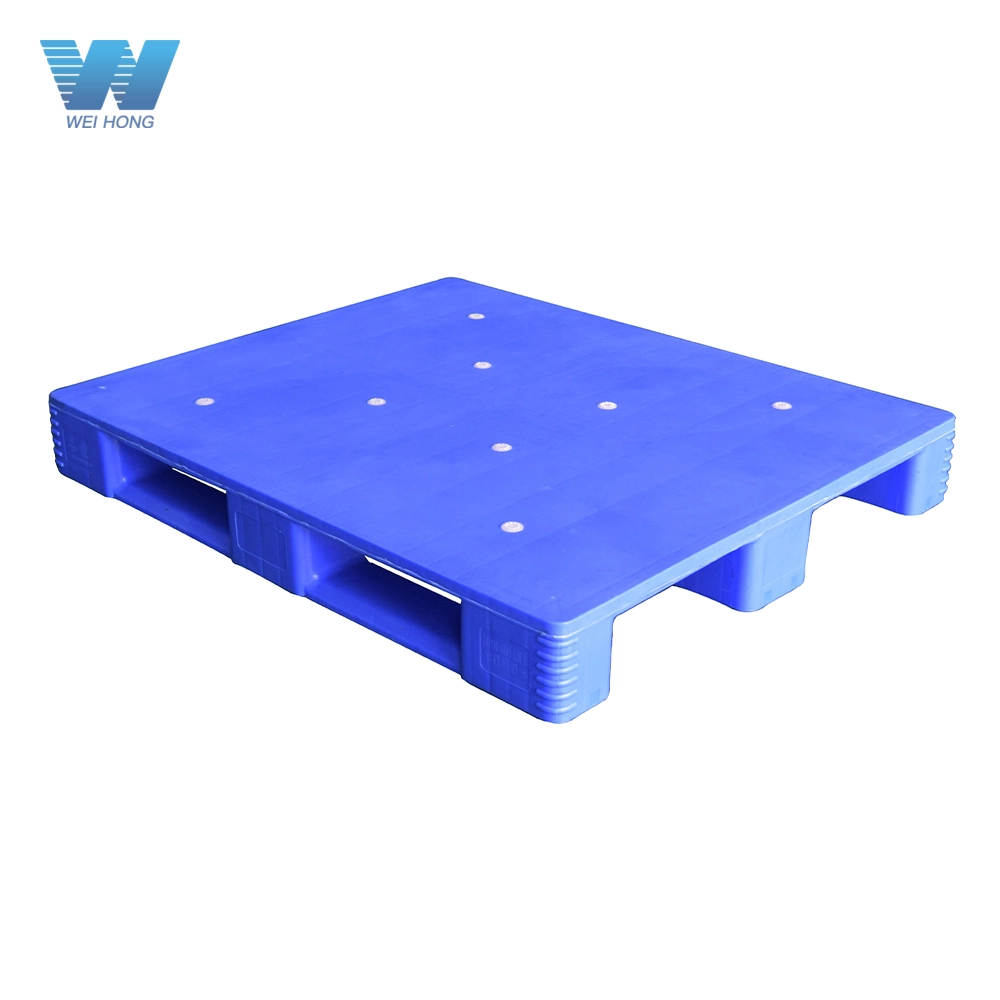
ZJ1210-150H Three-runner Closed Deck Hygienic Plastic Pallet
The three-runner closed-deck hygienic plastic pallet is a solid and durable packaging solution designed for general and especially food and medicine storage and transport. It’s made of virgin HDPE or PP, featuring a flat surface and even bottom for hygienic consideration, a reinforced configuration with steel cores for rack and shelf, and a steady loading capacity.
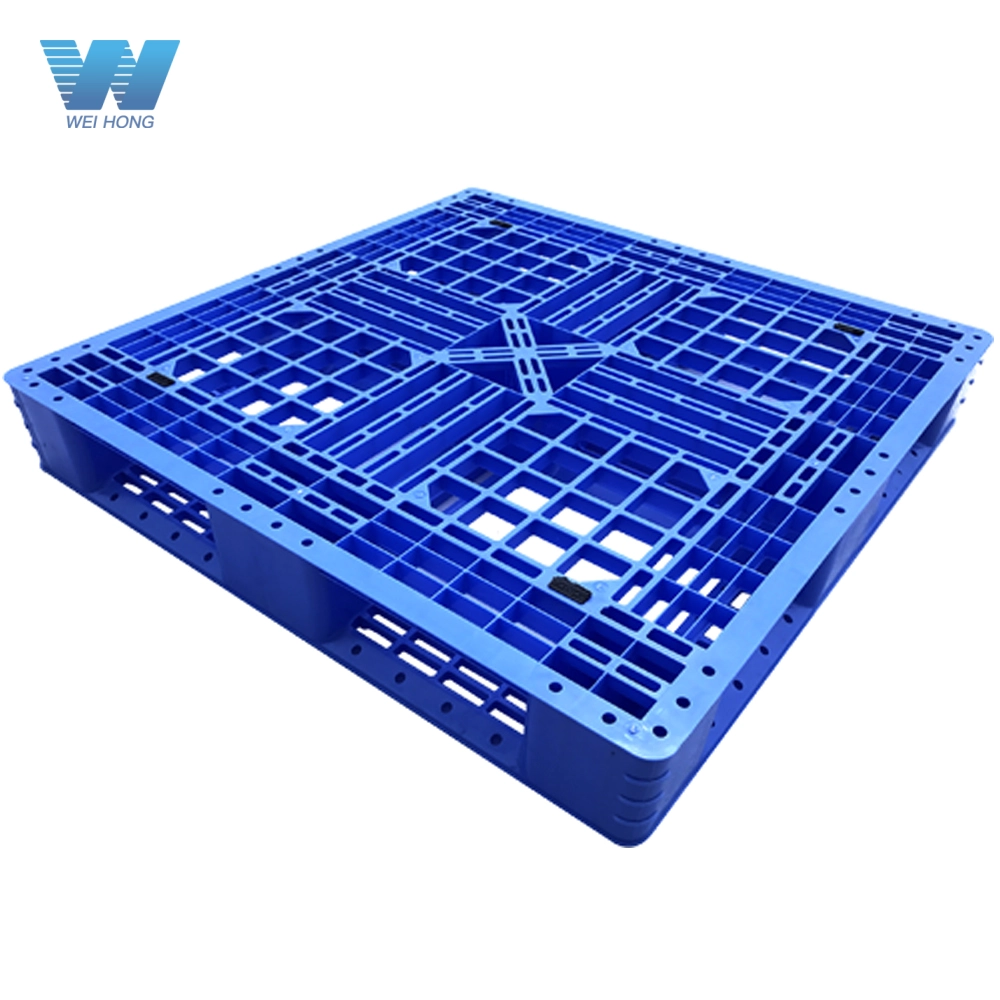
ZJ1010-150 Six-runner Single-sided Plastic Pallet
The six-runner plastic pallet, open or closed deck, is a solid and durable packaging solution designed for general and medium to heavy-duty cargo stacking, storage and transport. It’s made of virgin HDPE or PP, featuring in robust structure, a reinforced configuration with steel cores for the rack and shelf, and a steady loading capacity.
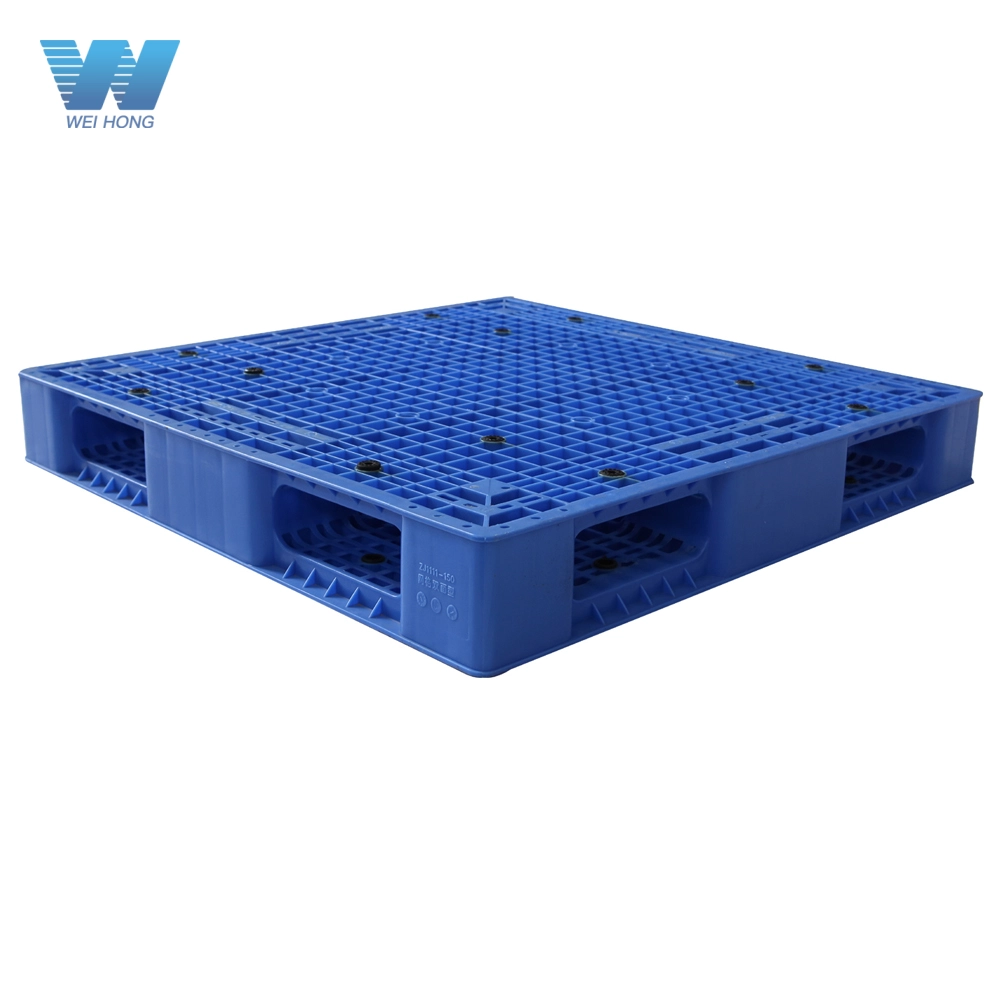
ZJ11111-150 Double-sided Heavy Duty Plastic Pallet
The double-sided plastic pallet, open deck or closed deck, is a solid and durable packaging solution designed for general and medium to heavy-duty cargo stacking, storage and transport. It’s made of virgin HDPE or PP, featuring a robust structure, a reinforced configuration with steel cores for the rack and shelf, and a steady loading capacity for both sides.
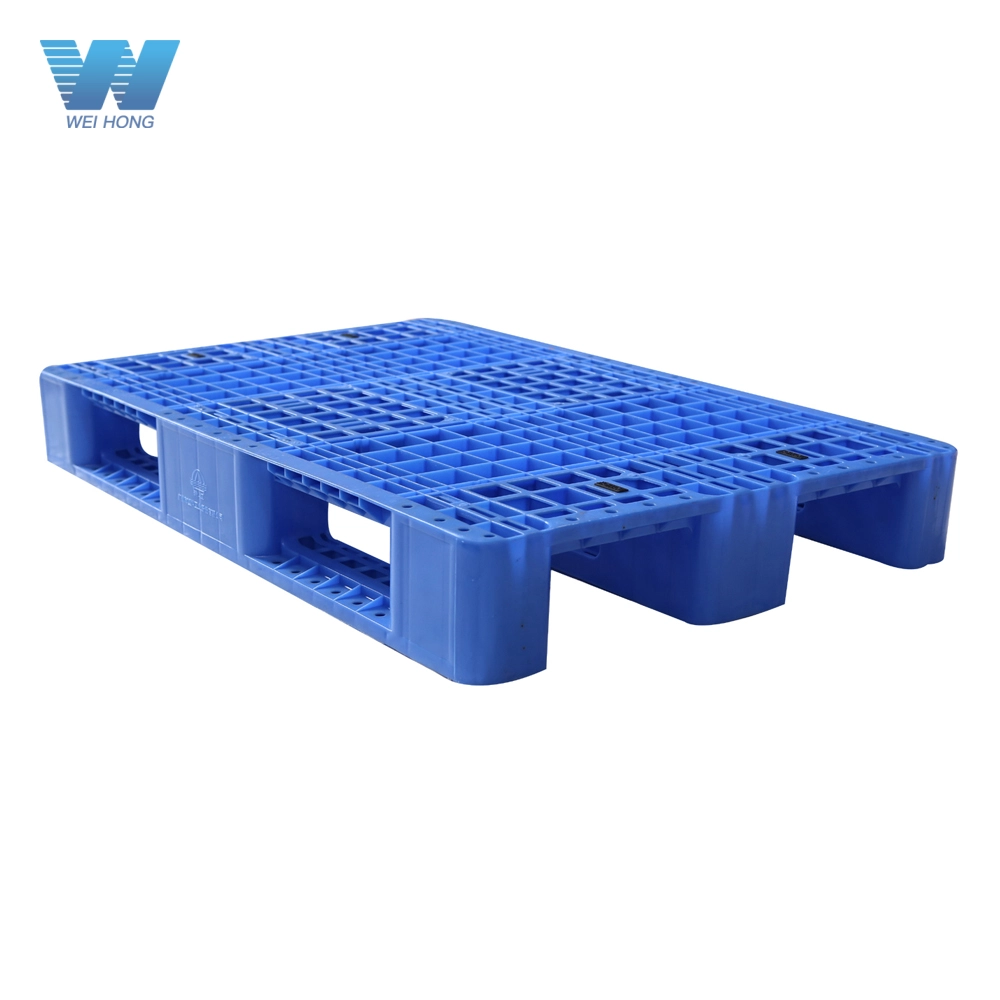
ZJ1208-155 Three-runner Single-sided Plastic Pallet
The three-runner single-sided plastic pallet is a solid and durable packaging solution designed for general and medium to heavy-duty cargo storage, transport and automated storage and retrieval system (AS/RS) use. It’s made of virgin HDPE or PP, featuring in robust structure, reinforced configuration with steel cores for rack and shelf, and a steady loading capacity.
Request More Information About Plastic Pallets
Have questions or need detailed insights on this article? Fill out the form below to contact our team for comprehensive information and support related to our plastic pallet solutions.
Contact us


+86 138 0277 8204
+86 183 4431 0917
+86 195 3791 1860

No. 15-1, Fengying Rd., Taiping Town, Conghua Dist., Guangzhou City, Guangdong Province, China.
 Scan QR Code
Weihong
Whatsapp: +8613802778204
Guangdong Weihong Plastic Technology Co., Ltd.
Scan QR Code
Whatsapp: +8619537911860
Scan QR Code