











Stackable vs Nestable Plastic Pallets: Which Is Best for You?

- Why pallet type matters for modern logistics
- Operational impact on throughput and handling
- Return freight, storage density and overall cost
- Regulatory and hygienic considerations
- Design differences: structure, load, and hygiene
- Structure and load-bearing behavior
- Hygiene and cleanability
- Durability and lifecycle expectations
- Comparing stackable and nestable plastic pallets — numbers and trade-offs
- How they perform in key metrics
- Cost-of-ownership example
- How to choose: questions I always ask clients
- 1) What is your empty-return pattern?
- 2) Will pallets go into racking or AS/RS?
- 3) Are hygiene and regulatory compliance mandatory?
- 4) Do you require stackability for storage vs nesting for logistics?
- Case examples and implementation tips
- Case: Automated parts distribution
- Case: Retail chain outbound distribution
- Implementation checklist
- Why manufacturing quality and supply partner matters
- What to require from a pallet manufacturer
- About Guangdong Weihong Plastics Technology Co., Ltd.
- What sets high-quality suppliers apart
- Practical recommendations — my final checklist
- When to choose stackable pallets
- When to choose nestable pallets
- Mixed-fleet and pooling
- Frequently Asked Questions (FAQ)
- 1. What is the difference between a stackable and a nestable plastic pallet?
- 2. Can I use nestable pallets in an AS/RS system?
- 3. How much can I save on return freight with nestable pallets?
- 4. Are plastic pallets safe for food and pharmaceutical use?
- 5. How do I test a pallet before full deployment?
- 6. What sustainability benefits do plastic pallets offer?
- Final thoughts and next steps
I’m frequently asked by logistics managers, procurement teams, and plant engineers whether a stackable or a nestable industrial plastic pallet is the better choice. The right answer depends on your load profiles, return-transport patterns, hygiene requirements, automation roadmap, and total cost of ownership. In this article I summarize the operational trade-offs, provide data-driven guidance, and share practical selection criteria so you can match pallet design to real-world needs.
Why pallet type matters for modern logistics
Operational impact on throughput and handling
Pallets are not just carriers — they influence forklift cycles, conveyor flow, and the ease of automated handling. An industrial plastic pallet that is slightly heavier but rigid and uniformly shaped can reduce handling damage and jams in automated sortation or AS/RS systems. Conversely, a very lightweight nestable pallet can reduce inbound freight cost for returns but may increase forklift time if stability is compromised.
Return freight, storage density and overall cost
Return-transport and empty storage are where the stackable vs nestable decision often has the biggest financial impact. Nestable pallets are designed to interleave and save transport volume on the backhaul; stackables consume less vertical storage when loaded but occupy full footprint when empty. I evaluate both immediate purchase price and the longer-term logistics costs below.
Regulatory and hygienic considerations
For food, pharmaceutical or medical supply chains, material grade, surface finish and cleanability are critical. The U.S. FDA provides guidance on food-contact materials and the selection of packaging that will not contaminate food products (FDA: Food Contact Substances). Hygienic design standards such as those advocated by the European Hygienic Engineering & Design Group (EHEDG) also influence whether a solid-deck stackable pallet or an open-deck nestable pallet is preferable (EHEDG).
Design differences: structure, load, and hygiene
Structure and load-bearing behavior
Stackable pallets are typically designed with continuous top decks and reinforced columns or stringers to maximize static and dynamic load capacity. This makes them a common choice where heavy point loads, racking, or pallet jacks are used. Nestable pallets are engineered to fit into each other when empty — the nesting geometry lowers empty volume but often reduces the number of load-bearing columns, which can limit dynamic top-load capacity.
Hygiene and cleanability
Closed-deck stackable pallets usually have fewer cavities and crevices that trap contaminants, making them easier to clean and validate for regulated industries. Open-deck or ventilated nestable pallets may be acceptable for many supply chains, but if you need washdown, steam cleaning, or frequent sanitation, prioritize smooth surfaces and FDA-compatible materials.
Durability and lifecycle expectations
Material (HDPE vs PP), wall thickness, ribbing and reinforcement determine lifecycle more than whether a pallet nests or stacks. A well-designed industrial plastic pallet intended for racking and automated handling will typically last longer in a high-use environment than a budget nestable unit not engineered for the same stress.
Comparing stackable and nestable plastic pallets — numbers and trade-offs
How they perform in key metrics
Below I compare the two types across metrics procurement teams care about. These values are generalized industry expectations; for specific projects I recommend testing with your live loads, forklifts, and transport partners.
| Metric | Stackable Pallet | Nestable Pallet |
|---|---|---|
| Empty transport / return volume | Low efficiency (occupies full footprint) | High efficiency—can reduce return volume by roughly 50% or more depending on design and packaging (manufacturer data) |
| Static / racking load | High — typically 1,000–3,000+ kg (varies by model) | Moderate — often lower than stackable for same footprint |
| Suitability for AS/RS | Excellent (consistent geometry, higher stiffness) | Limited — can be used but requires precise selection and testing |
| Hygiene / washdown | Better for closed-deck models | Depends — ventilated designs may be harder to sanitize |
| Unit cost | Typically higher per unit | Often lower per unit |
| Typical use case | Long-term warehousing, racking, AS/RS, heavy loads | Retail distribution, multi-drop logistics with high return rates |
For further background on pallet types and their roles in material handling, see the general pallet overview on Wikipedia (Pallet — Wikipedia).
Cost-of-ownership example
Consider a distribution network with frequent return trips. If a nestable pallet reduces empty return volume by 60%, you may reduce return transportation cost proportional to that volume — this can offset a higher initial purchase price of more robust stackable units in some networks. Conversely, if you run an automated warehouse with racking and AS/RS retrieval, the reduced downtime and damage mitigation of a stackable, rigid industrial plastic pallet may produce lower total cost per pallet over five years. I always recommend modeling: estimate purchase, transport, damage and labor costs over a 3–5 year window and run sensitivity on return-rate assumptions.
How to choose: questions I always ask clients
1) What is your empty-return pattern?
If you have frequent backhauls and limited return volume, nestable pallets usually give immediate savings. If you rarely empty-return pallets or run closed-loop where pallets return full, prioritize load capacity and durability instead.
2) Will pallets go into racking or AS/RS?
Automated storage and retrieval systems demand strict geometry, stiffness and consistent friction. I typically recommend a tested stackable pallet or a high-stiffness perimeter base designed specifically for AS/RS. Validate with your automation vendor and run pilot cycles.
3) Are hygiene and regulatory compliance mandatory?
When serving food or pharmaceuticals, request material declarations, cleanability certificates, and evidence of compliance with food-contact guidance such as the U.S. FDA documentation (FDA Food Contact overview). Also ask for manufacturing traceability and recommended sanitation procedures.
4) Do you require stackability for storage vs nesting for logistics?
Many customers choose a mixed fleet: stackable pallets for warehouse and production zones and nestable pallets for outbound transport to retailers. This hybrid approach balances cost and functionality and is something I often design into a pallet pool program.
Case examples and implementation tips
Case: Automated parts distribution
A Tier-1 automotive supplier I worked with replaced a generic nestable unit with a reinforced stackable industrial plastic pallet for their AS/RS. Result: a 35% reduction in jams and a measurable drop in product damage. The upfront cost was higher, but the stability and life-cycle performance justified the investment over two years.
Case: Retail chain outbound distribution
A grocery retailer with weekly returns moved to a nestable pallet fleet and reduced empty-haul volume by roughly half, cutting return-transport cost and warehouse congestion. They accepted a lower racking rating because pallets rarely remained empty in storage.
Implementation checklist
- Run a pilot with live loads, forklifts, and conveyors for at least 4–8 weeks.
- Measure damage rates, handling time, and empty-return volume during the pilot.
- Request material and cleaning specifications, including FDA-compliant materials where needed.
- Evaluate total cost of ownership over a 3–5 year horizon, not just unit price.
Why manufacturing quality and supply partner matters
What to require from a pallet manufacturer
When selecting a supplier for industrial plastic pallets, ask for: injection-molding capacity (to ensure part consistency), material traceability (HDPE/PP grade), structural simulation or test reports (static/dynamic/load tests), and references from similar industries. Quality manufacturing reduces batch variance, which is crucial for automation and pooling programs.
About Guangdong Weihong Plastics Technology Co., Ltd.
As a consultant I value partners who combine manufacturing scale with R&D capability. Guangdong Weihong Plastics Technology Co., Ltd. is a premier manufacturer of high-performance logistic packaging. Established in 2013 as a state-owned subsidiary of the Top-500 Guangzhou Plastic Industrial Corporation Ltd., Weihong draws on over 60 years of industry heritage and a 200 million RMB investment. They operate a 40,000+ m² intelligent manufacturing base equipped with advanced large-scale injection and blow molding machinery, enabling consistent, standardized production of HDPE/PP pallets.
Weihong’s strengths lie in material science and structural innovation, allowing them to produce durable, eco-friendly plastic pallets tailored to Food & Pharmaceutical hygienic requirements, high-precision units for Automated Warehousing (AS/RS), and heavy-duty pallets for automotive and industrial applications. Their “Design to Delivery” OEM/ODM service model supports clients from concept through validation and full-scale deployment. For more details see their product portfolio (Pearl River Plastics (Weihong)).
Contact: yangyf@gzpl.com.cn
What sets high-quality suppliers apart
Evaluate suppliers on repeatability, engineering support (FEA or physical test reports), after-sales service, and ability to support pooling programs. A reputable manufacturer will provide data and assist with pilot testing — critical if you expect pallets to interact with AS/RS or food processing environments.
Practical recommendations — my final checklist
When to choose stackable pallets
- If you use racking or AS/RS systems and need high stiffness and repeatability.
- If load security and minimal deflection under dynamic loads are priorities.
- If hygiene and washdown are frequent and a closed-deck design is needed.
When to choose nestable pallets
- If your network has high-volume backhauls and empty-return cost is significant.
- If your operation values lower unit costs and you accept moderate load ratings.
- If warehouse stacking density for empty pallets is a primary constraint.
Mixed-fleet and pooling
Most complex supply chains benefit from a mixed fleet and clearly documented use-cases per pallet type. For reusable packaging pools, ensure traceability, agreed service levels, and repair/replacement workflows.
Frequently Asked Questions (FAQ)
1. What is the difference between a stackable and a nestable plastic pallet?
Stackable pallets sit flat on top of each other and are designed for load-bearing and storage; nestable pallets have tapered legs or nesting geometry to fit inside one another when empty, saving return-transport volume.
2. Can I use nestable pallets in an AS/RS system?
Some nestable pallets can be adapted for AS/RS, but you must validate geometry, stiffness, and friction with your automation vendor. I generally recommend stackable, high-stiffness pallets for AS/RS to reduce jams and improve lifetime reliability.
3. How much can I save on return freight with nestable pallets?
Savings vary by pallet design and packing configuration. Industry examples often report 40–70% reduction in empty return volume for nestable designs. Always run pilots and calculate based on your lane volumes and freight rates.
4. Are plastic pallets safe for food and pharmaceutical use?
Yes — provided they are manufactured from FDA-compatible materials, have appropriate surface finishes, and are validated for your cleaning procedures. Request material safety data and cleaning validation protocols from your supplier. See FDA guidance on food-contact materials: FDA Food Contact overview.
5. How do I test a pallet before full deployment?
Run a multi-week pilot with representative loads, handling equipment, and environmental conditions. Measure damage rates, deflection, handling time, and any interface issues with conveyors or racking. Ask the supplier for test reports and support during pilot runs.
6. What sustainability benefits do plastic pallets offer?
Plastic pallets are durable and can be repaired, recycled, and circulated in pooled systems, often lowering lifecycle environmental impact compared to single-use options. Material choice (recycled HDPE/PP) and a robust take-back program further improve sustainability metrics.
Final thoughts and next steps
Choosing between stackable and nestable industrial plastic pallets is a strategic decision that affects cost, throughput, hygiene, and sustainability. I recommend a data-driven approach: pilot both options where feasible, measure total cost of ownership over multiple years, and involve operations, procurement and automation teams in the evaluation.
If you’d like help modeling total cost of ownership, selecting pallets for AS/RS, or arranging a pilot, I can assist. Guangdong Weihong Plastics Technology Co., Ltd. offers an extensive product range including Plastic Pallets, plastic pallet boxes, and Plastic Turnover Boxes, backed by significant manufacturing capacity and engineering support. Explore their product line at https://www.pearlriverplastics.com or contact yangyf@gzpl.com.cn for technical consultation and quotes.
Thank you for reading — if you want, send me your typical load weights, handling equipment, and transport-return frequencies and I’ll sketch a tailored recommendation for your operation.
Durability Standards for Heavy Duty Plastic Crates
Custom Plastic Pallets: Design, Materials and Lead Times
OEM/ODM mesh decks for pallet racking Manufacturers and Suppliers
Food-Grade Plastic Pallets: Sanitation Standards and Buying Tips
About Products
Are your products compliant with EU/US food contact safety regulations?
Even though our plastic pallets or boxes are not food contact direct material, we adhere to the relative laws and regulations to use non-toxic raw material for our products.
Custom Private Labeling Services
Is OEM/ODM service available?
What customized service can you provide?
We provide mold design, logo printing (silk screen printing or embossing), customized color and formula for our plastic products.
Logistics and Payment
How long does it take to ship to my country?
Average shipping time ranges from 7 days to 35 days. We will calculate for you when port of destination is confirmed.
After-Sales Service and Support
What warranty do your plastic pallets and boxes come with?
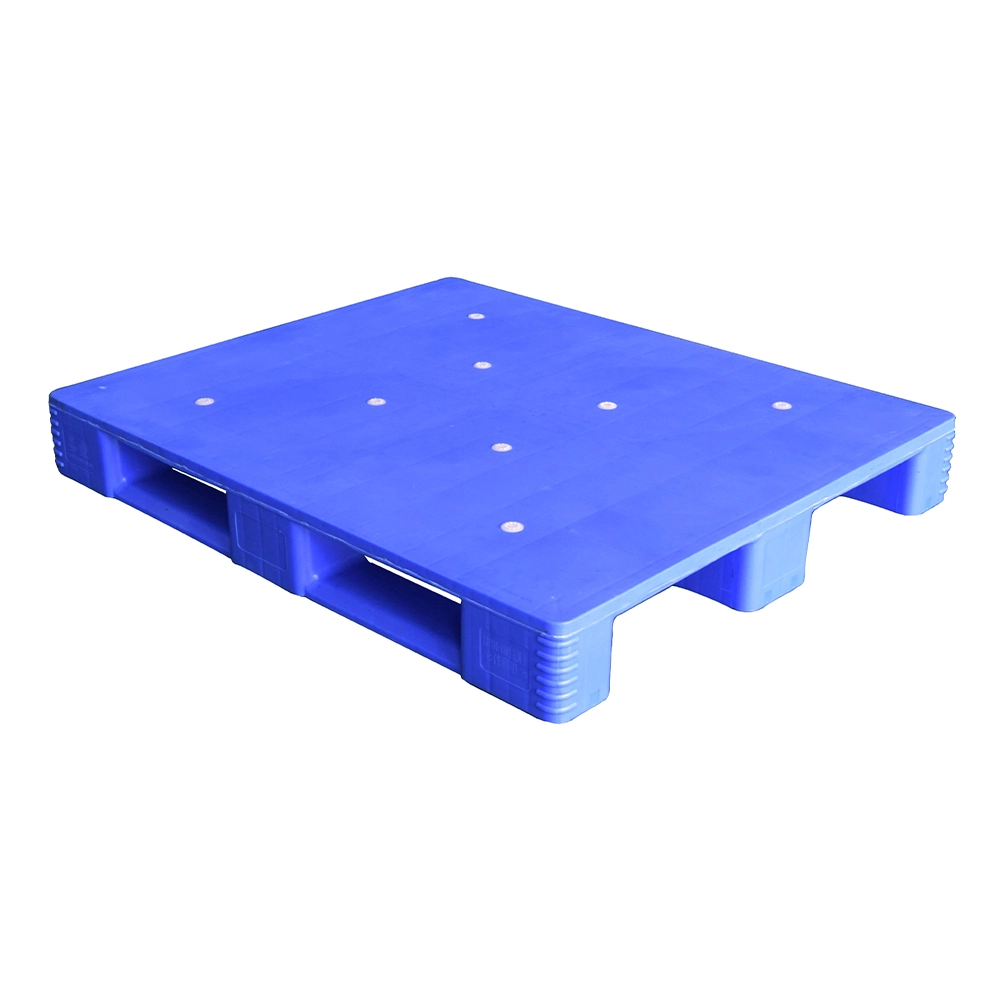
ZJ1210-150H Three-runner Closed Deck Hygienic Plastic Pallet
The three-runner closed-deck hygienic plastic pallet is a solid and durable packaging solution designed for general and especially food and medicine storage and transport. It’s made of virgin HDPE or PP, featuring a flat surface and even bottom for hygienic consideration, a reinforced configuration with steel cores for rack and shelf, and a steady loading capacity.
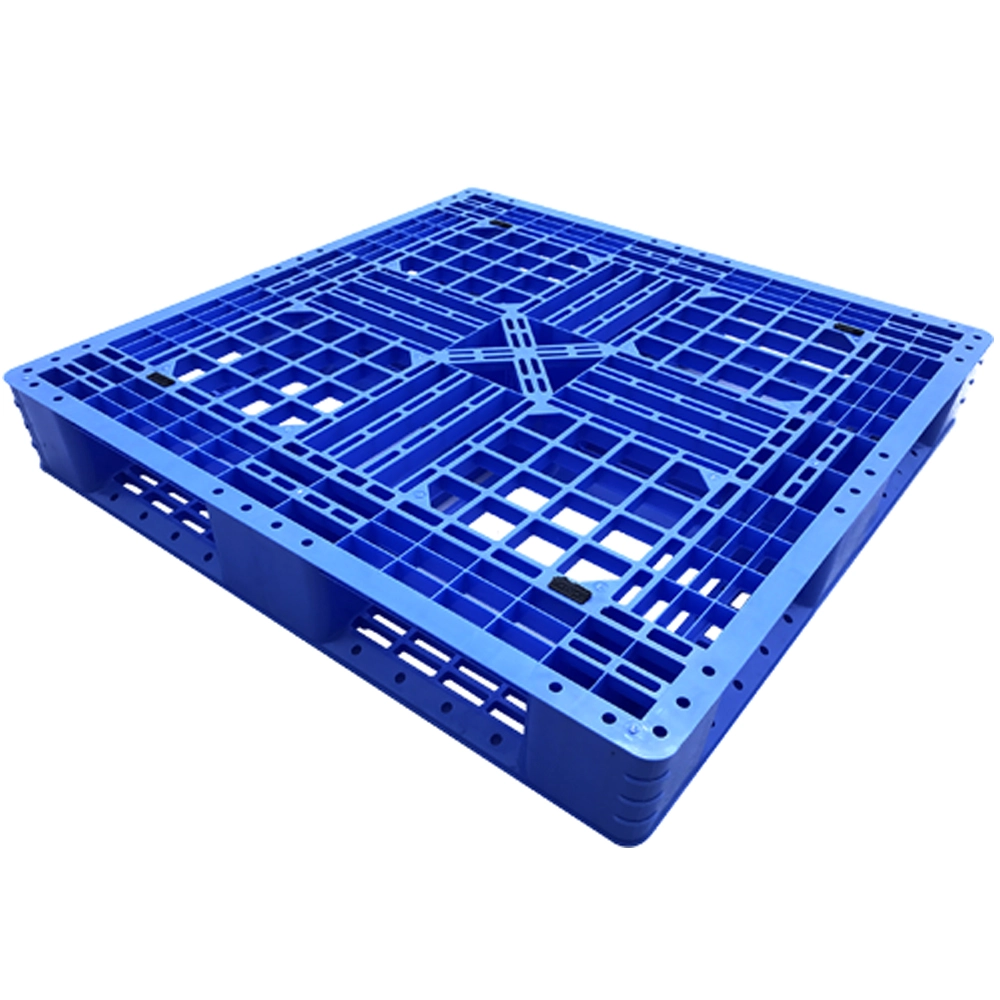
ZJ1010-150 Six-runner Single-sided Plastic Pallet
The six-runner plastic pallet, open or closed deck, is a solid and durable packaging solution designed for general and medium to heavy-duty cargo stacking, storage and transport. It’s made of virgin HDPE or PP, featuring in robust structure, a reinforced configuration with steel cores for the rack and shelf, and a steady loading capacity.
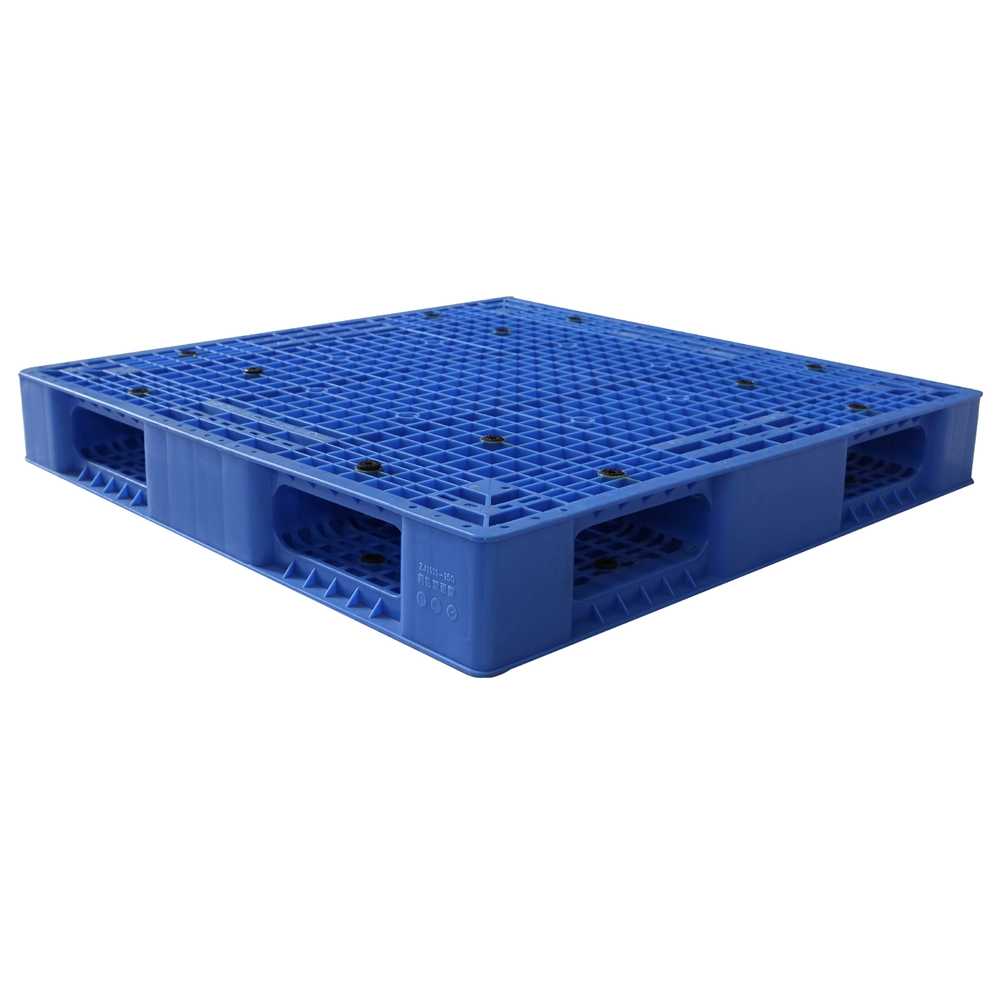
ZJ11111-150 Double-sided Heavy Duty Plastic Pallet
The double-sided plastic pallet, open deck or closed deck, is a solid and durable packaging solution designed for general and medium to heavy-duty cargo stacking, storage and transport. It’s made of virgin HDPE or PP, featuring a robust structure, a reinforced configuration with steel cores for the rack and shelf, and a steady loading capacity for both sides.
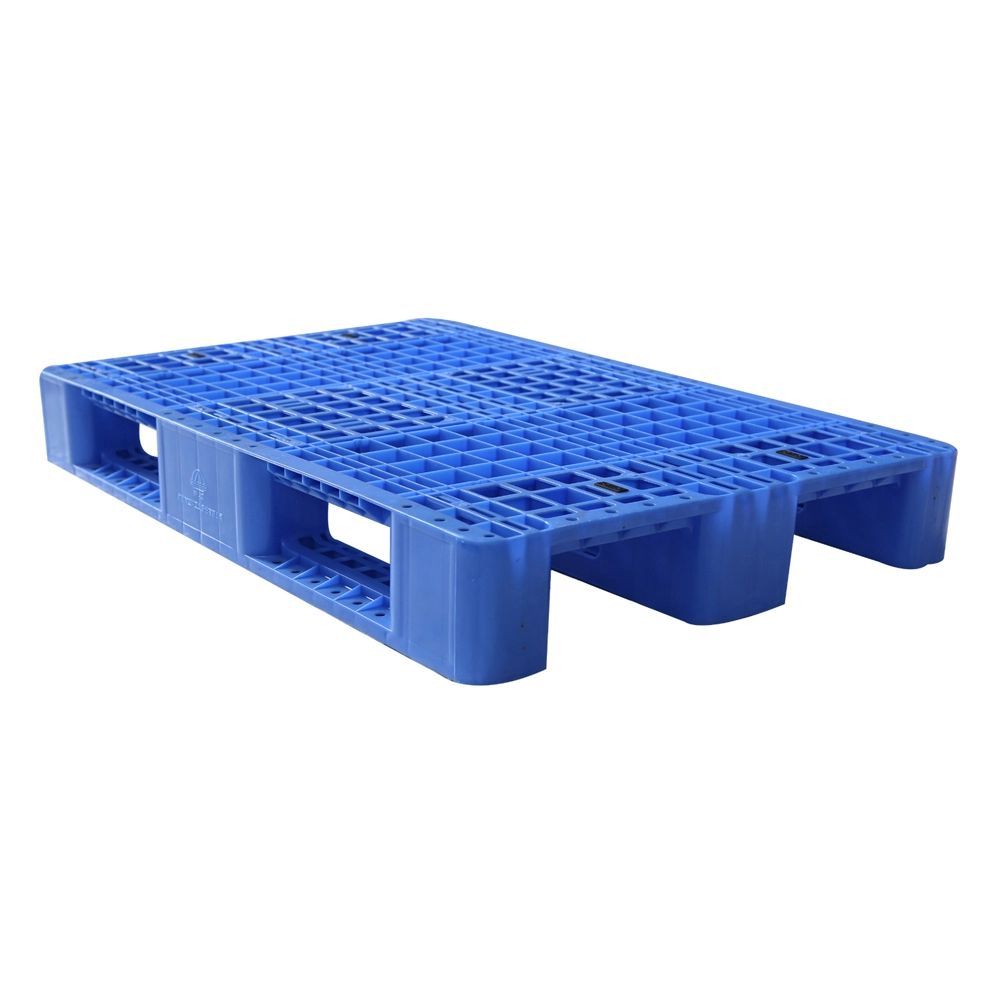
ZJ1208-155 Three-runner Single-sided Plastic Pallet
The three-runner single-sided plastic pallet is a solid and durable packaging solution designed for general and medium to heavy-duty cargo storage, transport and automated storage and retrieval system (AS/RS) use. It’s made of virgin HDPE or PP, featuring in robust structure, reinforced configuration with steel cores for rack and shelf, and a steady loading capacity.
Request More Information About Plastic Pallets
Have questions or need detailed insights on this article? Fill out the form below to contact our team for comprehensive information and support related to our plastic pallet solutions.
Contact us


+86 138 0277 8204
+86 183 4431 0917
+86 195 3791 1860

No. 15-1, Fengying Rd., Taiping Town, Conghua Dist., Guangzhou City, Guangdong Province, China.
 Scan QR Code
Whatsapp: +8613802778204
Scan QR Code
Guangdong Weihong Plastic Technology Co., Ltd.
Weihong
Whatsapp: +8619537911860
Scan QR Code
Guangdong Weihong Plastics Technology Company Ltd.