











Plastic Pallet Manufacturer: The Complete Guide to Choosing the Right Partner
Everything procurement managers, supply chain directors, and logistics engineers need to know — from material science to OEM customization — when selecting a plastic pallet manufacturer in today's global market.

- 1. Why the Right Plastic Pallet Manufacturer Matters
- 2. Global Plastic Pallet Market: 2026 Snapshot
- 3. Types of Plastic Pallets and When to Use Each
- 4. Materials Decoded: HDPE vs. PP vs. Recycled Resin
- 5. Manufacturing Processes: Injection Molding vs. Structural Foam
- 6. Eight Critical Criteria for Evaluating a Plastic Pallet Manufacturer
- 7. Industry-Specific Pallet Requirements
- 8. Automation & Smart Logistics Compatibility
- 9. Sustainability: The Green Case for Plastic Pallets
- 10. OEM & Custom Plastic Pallet Manufacturing: What's Possible
- 11. Why Pearl River Plastics (Weihong) Stands Out as Your Plastic Pallet Manufacturing Partner
- 12. Buyer's Checklist: 25-Point Plastic Pallet Manufacturer Evaluation
- 13. Frequently Asked Questions About Plastic Pallet Manufacturers
- 14. Conclusion: Making the Right Choice in a Complex Market
- Ready to Find Your Perfect Pallet Solution?
1. Why the Right Plastic Pallet Manufacturer Matters
A pallet is often the last thing supply chain professionals think about — until it fails. A warped deck collapses a racking bay. A non-food-grade material triggers a product recall. An incompatible footprint jams an automated conveyor line. Suddenly, the €0.40-per-trip cost difference between a quality manufacturer and a low-cost alternative feels very small compared to the operational fallout.
Choosing the right plastic pallet manufacturer is a strategic procurement decision that cascades into warehouse efficiency, product protection, regulatory compliance, and total logistics cost. This guide gives you the comprehensive framework to make that decision with confidence.
2. Global Plastic Pallet Market: 2026 Snapshot
The global plastic pallet market is experiencing robust expansion, driven by three converging forces: the explosive growth of warehouse automation, increasingly stringent food-safety regulations, and rising corporate sustainability commitments.
Key Market Drivers in 2026
- E-commerce acceleration: High-velocity fulfillment centers demand pallets with consistent dimensional tolerances that automated sorters and conveyors can handle at speed.
- Cold-chain expansion: The post-pandemic pharmaceutical and fresh-food cold-chain boom favors plastic pallets that resist moisture and temperature cycling without degrading.
- Regulatory pressure: The EU's new Packaging and Packaging Waste Regulation (PPWR) and expanded FDA hygiene guidelines are pushing food and pharmaceutical manufacturers away from wood toward plastic alternatives.
- Sustainability mandates: Corporate net-zero targets favor long-life, recyclable, and recycled-content plastic pallets over single-use wood options subject to ISPM-15 treatment.
3. Types of Plastic Pallets and When to Use Each
Not all plastic pallets are created equal. A sophisticated manufacturer will offer a diverse product range precisely because different applications demand radically different pallet architectures.
| Pallet Type | Structure | Best Application | Typical Static Load | Key Advantage |
|---|---|---|---|---|
| 9-Leg (Nestable) | Open-deck, 9-foot design | Export, light manufacturing, nesting storage | 2,000–4,000 kg | Nests 4:1, saves 75% return freight |
| 3-Runner (Rackable) | 3 solid beams underneath | Selective racking, forklift-heavy operations | 3,000–6,000 kg | 4-way forklift entry, rack-compatible |
| Double-Face | Top + bottom deck | Heavy racking, push-back systems | 5,000–10,000 kg | Maximum rigidity, reversible use |
| Flat-Deck Hygienic | Closed, smooth surface | Food, pharma, cleanroom environments | 2,000–4,000 kg | No crevices, wash-down compatible |
| Anti-Spill / Containment | Raised lip perimeter | Chemical, hazmat, liquid-drum storage | 2,000–3,000 kg | Spill containment, EPA/OSHA compliant |
| Pallet Cage / Box Pallet | Pallet base + collapsible walls | Cold-chain, automotive parts, retail | 1,000–2,500 kg | Secure, stackable, folds flat |
| AS/RS Automation Pallet | Precision-molded, tight tolerance | Automated warehouses, AGV, conveyor lines | 1,500–3,000 kg | Dimensional accuracy ±2 mm |
4. Materials Decoded: HDPE vs. PP vs. Recycled Resin
Material selection is arguably the most important technical decision in plastic pallet specification. The three primary materials each carry distinct trade-offs.
High-Density Polyethylene (HDPE)
HDPE is the workhorse of the plastic pallet industry and the preferred material for demanding applications. Its dense molecular structure delivers exceptional impact resistance even at sub-zero temperatures, making it the go-to material for cold-chain logistics, pharmaceutical environments, and heavy industrial use.
- Temperature range: –40°C to +80°C
- Chemical resistance: Excellent (acids, bases, solvents)
- FDA/food-grade compliance: Achievable with virgin-grade resin
- Recyclability: 100% recyclable at end-of-life
- Typical density: 0.94–0.97 g/cm³
Polypropylene (PP)
PP offers a lighter weight alternative that is often more cost-effective for moderate-duty applications. It provides good chemical resistance and a higher melting point than HDPE, making it preferable in environments with regular hot-water wash-down cycles (above 60°C).
- Temperature range: –10°C to +120°C
- Lighter than HDPE by approximately 8–10%
- Higher stiffness-to-weight ratio at room temperature
- More brittle than HDPE at low temperatures
Recycled / Co-mingled Resin
Quality manufacturers increasingly offer recycled-content pallets using post-industrial or post-consumer recycled HDPE or PP. When sourced from certified recycling streams, these pallets meet mechanical performance parity with virgin-resin products at 15–25% lower cost and significantly reduced carbon footprint.
5. Manufacturing Processes: Injection Molding vs. Structural Foam
The manufacturing process determines the pallet's structural integrity, dimensional consistency, surface finish, and ultimately its suitability for automation.
Injection Molding (IM)
Injection molding is the gold standard for high-performance plastic pallets. Molten resin is injected under high pressure (500–4,000 tons clamping force) into precision steel molds, producing pallets with consistent wall thickness, tight dimensional tolerances, and superior structural integrity.
- Dimensional tolerance: ±1–2 mm across the full pallet footprint
- Surface finish: Smooth, consistent — ideal for automated conveyor systems
- Load performance: Best-in-class static and dynamic ratings
- Initial tooling cost: Higher (custom molds), but amortized quickly at scale
- Best for: Automation-compatible, heavy-duty, food-grade, custom OEM applications
Structural Foam Molding
Structural foam uses a blowing agent to create a cellular core within a solid skin, reducing weight by 20–30% at some sacrifice to load capacity and dimensional precision. It offers lower tooling costs and faster cycle times, making it economical for standard-spec pallets at lower production volumes.
- Weight reduction: Significant, beneficial for manual handling
- Dimensional tolerance: Wider variance than injection molding
- Load performance: Moderate — less suited for heavy racking applications
- Best for: Light-duty export pallets, cost-sensitive applications
6. Eight Critical Criteria for Evaluating a Plastic Pallet Manufacturer
With hundreds of plastic pallet manufacturers operating globally — concentrated heavily in China, the United States, and Germany — the real differentiation lies in eight key evaluation dimensions.
① Manufacturing Scale & Equipment
A credible plastic pallet manufacturer requires substantial capital investment. Evaluate the number and tonnage of injection molding machines — pallet production typically requires 1,000–4,000-ton presses. Larger facilities indicate stability, capacity to scale, and the ability to maintain consistent quality across large orders.
What to ask: "What is your monthly pallet production capacity? How many injection molding machines do you operate, and what are their tonnage specifications?"
② Quality Control Systems
Quality control must be embedded at every production stage, not just final inspection. Look for manufacturers with on-site material testing labs (melt flow index, impact strength, tensile testing), dimensional QC stations at each press, and documented defect rate tracking. ISO 9001 certification provides a minimum baseline but does not substitute for on-site due diligence.
③ Material Traceability & Compliance
For regulated industries (food, pharma, chemicals), material traceability is non-negotiable. The manufacturer must be able to provide resin certificates of conformance showing the molecular grade, source, and absence of prohibited additives. For food-contact applications, look for FDA 21 CFR compliance documentation and EU Regulation 10/2011 compliance for European markets.
④ Custom & OEM/ODM Capability
Standard-size pallets are increasingly insufficient as automated logistics facilities design systems around specific pallet geometries. A capable manufacturer should offer full OEM/ODM services: CAD design collaboration, in-house mold fabrication or management, prototype testing, and production ramp-up — all under one roof.
⑤ Export Experience & International Certifications
A manufacturer serving global buyers must understand export logistics: container loading optimization, export packing standards, and documentation for customs clearance. International certifications (ISO, REACH, RoHS) and experience with major global buyers indicate readiness for international partnerships.
⑥ Lead Times & Supply Reliability
Evaluate not just quoted lead times but the manufacturer's raw material inventory strategy and supply chain resilience. During the 2021–2024 resin supply disruptions, manufacturers with 60–90 day raw material buffers continued shipping while those reliant on spot-market resin experienced months-long delays.
⑦ After-Sales Support & Technical Service
Plastic pallet procurement is rarely a one-time transaction. Evaluate the manufacturer's capacity to provide ongoing technical support: reorder management, replacement part availability, end-of-life recycling programs, and responsive account management across time zones.
⑧ Sustainability Credentials
With ESG reporting now mandatory for publicly listed companies and increasingly expected by tier-1 retailers, your pallet manufacturer's sustainability profile is part of your own supply chain story. Look for ISO 14001 certification, verified recycled-content options, documented carbon footprint per pallet, and end-of-life take-back programs.
7. Industry-Specific Pallet Requirements
Different industries impose radically different performance, hygiene, and regulatory requirements on their pallet specifications.
Food & Beverage
The food industry demands the highest hygienic standards. Pallets must use FDA-compliant, food-grade virgin resin; feature closed-deck surfaces that eliminate harboring points for bacteria, moisture, and pests; and withstand repeated hot-water (up to 82°C) and chemical sanitization without structural degradation. Color coding (typically white for food zones) aids visual hygiene management.
Pharmaceutical & Healthcare
Pharma facilities operating under Good Manufacturing Practice (GMP) and Good Distribution Practice (GDP) guidelines require pallets that can be validated for cleanroom use, are compatible with automated track-and-trace systems (RFID or barcode integration), and leave no material residue. Anti-static properties may also be required for active pharmaceutical ingredient (API) handling.
Chemical & Hazardous Materials
Containment pallets with raised-lip designs are mandatory for liquid drum storage under EPA Spill Prevention, Control, and Countermeasure (SPCC) requirements and OSHA 29 CFR 1910.106. Materials must be chemically resistant to the specific stored substances — HDPE offers broad resistance across acids, bases, and alcohols.
Automotive Manufacturing
Automotive just-in-time (JIT) supply chains demand dimensional precision, electrostatic discharge (ESD) protection for sensitive electronic components, and compatibility with robotic handling systems. Anti-static plastic pallets made with carbon-fiber-loaded or conductive resin compounds are standard in Tier-1 automotive supplier facilities.
Cold Chain & Refrigerated Logistics
Cold-chain operations from –25°C frozen storage to +10°C refrigerated distribution require materials that maintain impact resistance at low temperatures without becoming brittle. HDPE significantly outperforms PP in sub-zero environments. Nestable designs minimize "dead volume" in temperature-controlled trailers and refrigerated containers.
E-Commerce & Fulfillment
High-velocity fulfillment centers processing thousands of SKUs per hour need pallets that move smoothly through conveyors and sorters at speeds up to 200 m/min. The dimensional precision of injection-molded plastic pallets prevents jamming and sensor misreads that create costly line stoppages.
8. Automation & Smart Logistics Compatibility
The single biggest driver of plastic pallet adoption over the past decade has been the explosive growth of warehouse automation. By 2026, an estimated 65% of new large-format distribution centers are specifying automated storage and retrieval systems (AS/RS), autonomous mobile robots (AMR), or AGV conveyor integrations — all of which place precise demands on pallet specifications.
Dimensional Tolerance Requirements
Most AS/RS systems require pallets within ±3 mm of nominal length and width, and ±2 mm on height. Only injection-molded pallets routinely achieve these tolerances. Structural foam and roto-molded pallets introduce variances that trigger fault conditions and system shutdowns.
Surface Requirements for Conveyors
Belt and roller conveyors require smooth, consistent bottom surfaces with no protrusions, warp, or rough texture that could catch or damage conveyor components. Plastic pallets with anti-slip textured top decks and smooth undersides are purpose-designed for conveyor compatibility.
RFID & Barcode Integration
Modern supply chain visibility depends on pallet-level tracking. Leading plastic pallet manufacturers offer factory-embedded passive UHF RFID transponders (ISO 18000-63 / EPC Gen2 standard), integrated barcode label recesses, and QR code molding — enabling full lifecycle traceability without retrofitting.
AGV Forklift Compatibility
Autonomous forklifts operating with laser or vision-guided navigation systems require consistent, smooth pallet geometry for reliable load engagement. Plastic pallets outperform wood in AGV applications due to their dimensional consistency and absence of loose boards, protruding nails, or warping.
9. Sustainability: The Green Case for Plastic Pallets
The sustainability calculus of plastic pallets is often misunderstood. Critics focus on plastic's fossil-fuel origin; proponents point to its superior lifecycle performance. The data, when examined rigorously, makes a compelling case for plastic over wood in high-usage logistics environments.
Lifecycle Assessment: Plastic vs. Wood
| Factor | Plastic Pallet (HDPE, injection-molded) | Standard Wood Pallet |
|---|---|---|
| Average lifespan | 10–15 years | 3–5 years |
| Trips per lifecycle | 250–500+ | 30–50 |
| Repairability | Welding / hot-nail repair | Board replacement |
| End-of-life fate | 100% recyclable into new pallets | Landfill, incineration, or limited biomass use |
| ISPM-15 treatment required | No | Yes (methyl bromide or heat treatment) |
| Carbon footprint per trip | ~0.6 kg CO₂e/trip (500 trips) | ~2.1 kg CO₂e/trip (50 trips) |
Closed-Loop Recycling Programs
The most progressive plastic pallet manufacturers now offer end-of-life take-back programs, grinding retired pallets into resin pellets fed directly back into new pallet production. This closed-loop model eliminates plastic waste while reducing virgin resin consumption by 30–40% in a mature reverse logistics program.
Recycled Content Options
For buyers with corporate sustainability targets, manufacturers like Weihong offer pallet grades containing 30–100% post-industrial recycled HDPE or PP, meeting the same structural performance standards as virgin-resin products with a verified carbon footprint reduction of 35–55% compared to virgin equivalents.
10. OEM & Custom Plastic Pallet Manufacturing: What's Possible
One of the most significant advantages of working with a full-scale plastic pallet manufacturer over a distributor is access to comprehensive OEM and ODM customization services.
What Can Be Customized
- 📐
Dimensions & Footprint: From standard 1200×1000 mm to non-standard sizes optimized for specific conveyor, racking, or container configurations.
- ⚖️
Load Ratings: Engineer-specified static, dynamic, and racking load ratings based on actual application requirements.
- 🎨
Color & Branding: Any RAL or Pantone color for zone management or brand identity; molded-in logos and text.
- 📡
RFID / Tracking Integration: Factory-embedded RFID transponders or barcode label recesses for supply chain visibility.
- ⚡
Anti-static (ESD) Treatment: Carbon-loaded or permanently anti-static resin compounds for electronics and pharma applications.
- 🔒
Deck Pattern & Friction: Customized top-deck patterns for specific goods (anti-slip ribs, drainage channels, containment lips).
The OEM Process: From Concept to Production
A world-class OEM plastic pallet manufacturer will guide buyers through a structured development process:
- Requirements Workshop: Define load specifications, environmental conditions, automation interface dimensions, and regulatory requirements.
- CAD Design & Engineering: 3D model development with finite element analysis (FEA) to validate structural performance before tooling investment.
- Mold Fabrication: In-house or partnered precision steel mold manufacture, with design modification provisions built in.
- T1 Prototype & Testing: First-off-tool samples undergo load testing, dimensional verification, and application field trials.
- Production Validation (PPAP): Formal documentation of production process capability before mass production approval.
- Mass Production & QA: Full production run with in-line quality checks, batch certificates, and dimensional reports.
11. Why Pearl River Plastics (Weihong) Stands Out as Your Plastic Pallet Manufacturing Partner
Pearl River Plastics — operating under the Weihong brand (广东韦宏塑料科技有限公司) — represents a rare combination in the global plastic pallet market: the manufacturing scale of a large industrial producer combined with the engineering flexibility and service responsiveness of a specialist partner.
Manufacturing Excellence
Weihong operates 10+ high-tonnage injection molding machines (up to 4,000-ton clamping force) across its 40,000 m² Guangdong production base. Every press is equipped with automated robotic part removal and online quality monitoring, ensuring consistent production quality even during high-volume runs. The facility's smart manufacturing infrastructure enables real-time production data capture and quality traceability from resin batch to finished pallet.
Full OEM/ODM Service Capability
Unlike many manufacturers who offer only standard catalog products, Weihong has built its competitive advantage around comprehensive OEM and ODM capability. The company's engineering team works directly with procurement and logistics teams to develop custom pallet solutions — from initial requirements analysis through CAD design, prototype manufacturing, testing, and full production — with a single point of accountability throughout.
Automation-Ready Product Lines
Weihong's automation-compatible pallet series is engineered to meet the dimensional and surface quality specifications demanded by leading AS/RS system integrators and AGV manufacturers. Pallets in this series undergo CMM dimensional verification and surface quality audit before dispatch, with full dimensional reports provided as standard.
Industry-Specific Expertise
With an active customer portfolio spanning food & beverage, pharmaceutical, electronics, automotive, chemical, and cold-chain logistics, Weihong has developed deep application expertise across the industries with the most demanding pallet specifications. This translates into faster, more accurate OEM design cycles and fewer costly redesign loops.
Global Export Infrastructure
Serving customers in 30+ countries, Weihong has built logistics and documentation processes optimized for international procurement. Standard export capabilities include full certification documentation (ISO, REACH, RoHS, FDA compliance letters), container loading plans optimized for freight cost efficiency, and multilingual account support.
12. Buyer's Checklist: 25-Point Plastic Pallet Manufacturer Evaluation
Use this checklist when evaluating any plastic pallet manufacturer as a potential supply partner:
Manufacturing Capability
- Operates injection molding machines of appropriate tonnage (≥500T for pallets)
- Monthly production capacity sufficient for your forecast volume
- In-house mold design/fabrication or verifiable mold management capability
- On-site material testing laboratory (MFI, tensile, impact testing)
- Automated dimensional QC equipment (CMM or equivalent)
Quality & Compliance
- ISO 9001:2015 certification (current, scope covers pallet manufacturing)
- ISO 14001 certification (environmental management)
- Resin material certificates of conformance available on request
- FDA 21 CFR compliance documentation for food-contact applications
- REACH compliance documentation for EU market supply
- RoHS compliance documentation for electronics industry supply
Product Capability
- Offers both standard catalog and fully custom OEM/ODM pallets
- HDPE and PP material options available
- Recycled-content pallet options available with material traceability
- RFID / barcode integration capability
- Anti-static (ESD) pallet options available
- Automation/AS/RS compatible pallet range available
Commercial & Logistics
- Transparent pricing with no hidden tooling cost escalation clauses
- Sample provision policy (pre-order dimensional and load test samples)
- Clear lead time commitments with contractual penalty clauses available
- Export packing and container loading optimization
- Multi-currency invoicing and INCOTERMS flexibility
Sustainability & After-Sales
- End-of-life recycling/take-back program available
- Dedicated account manager with technical expertise
- References from customers in your industry available on request
- Responsive communication across your time zone
13. Frequently Asked Questions About Plastic Pallet Manufacturers
14. Conclusion: Making the Right Choice in a Complex Market
The plastic pallet market in 2026 is more sophisticated — and more stratified — than at any point in its history. The gap between commodity manufacturers and engineering-driven solution providers has never been wider, and the cost of choosing incorrectly has never been higher in a world of automated logistics, ESG accountability, and supply chain resilience mandates.
The right plastic pallet manufacturer is not necessarily the cheapest — it is the one whose manufacturing capability, product range, customization service, quality systems, and global logistics infrastructure are best aligned with your specific application requirements, growth trajectory, and values.
Whether you are replacing a legacy wood pallet program, engineering custom pallets for a new automated fulfillment center, or sourcing sustainable-content pallets to meet a corporate sustainability commitment, the eight evaluation criteria and 25-point checklist in this guide provide the framework to make that decision with rigor and confidence.
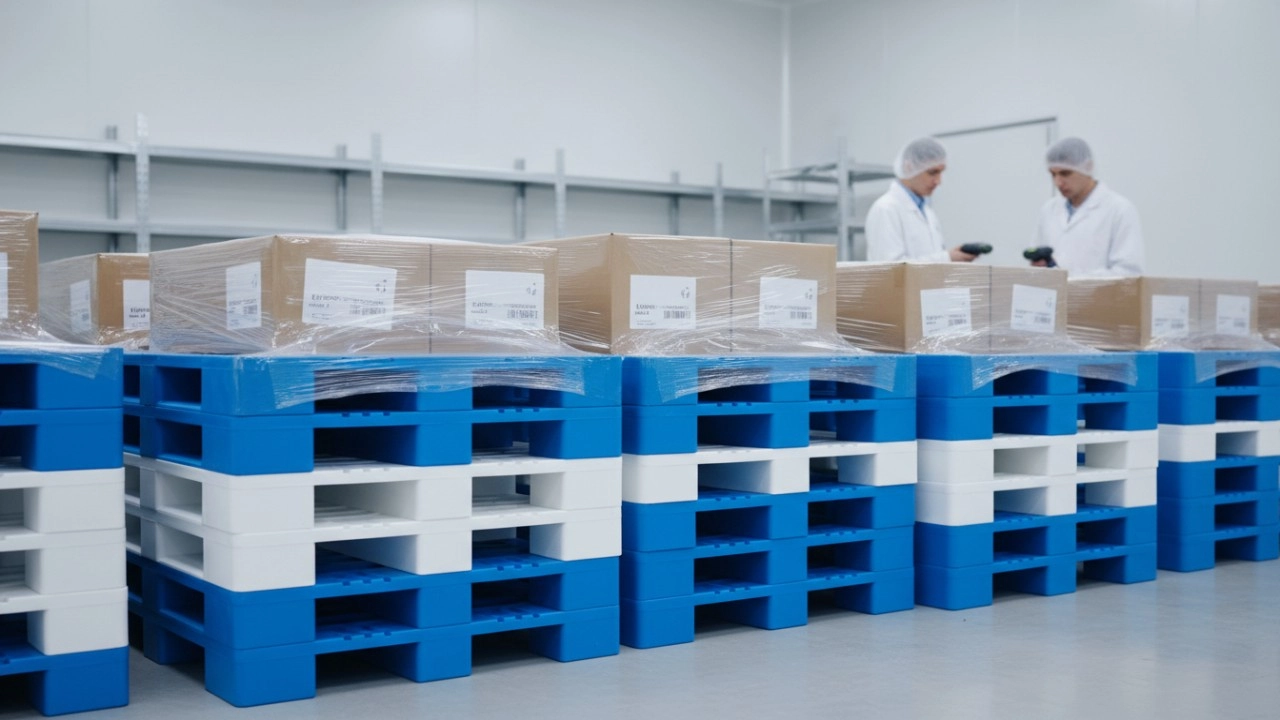
Plastic Pallet Manufacturer: The Complete Guide to Choosing the Right Partner
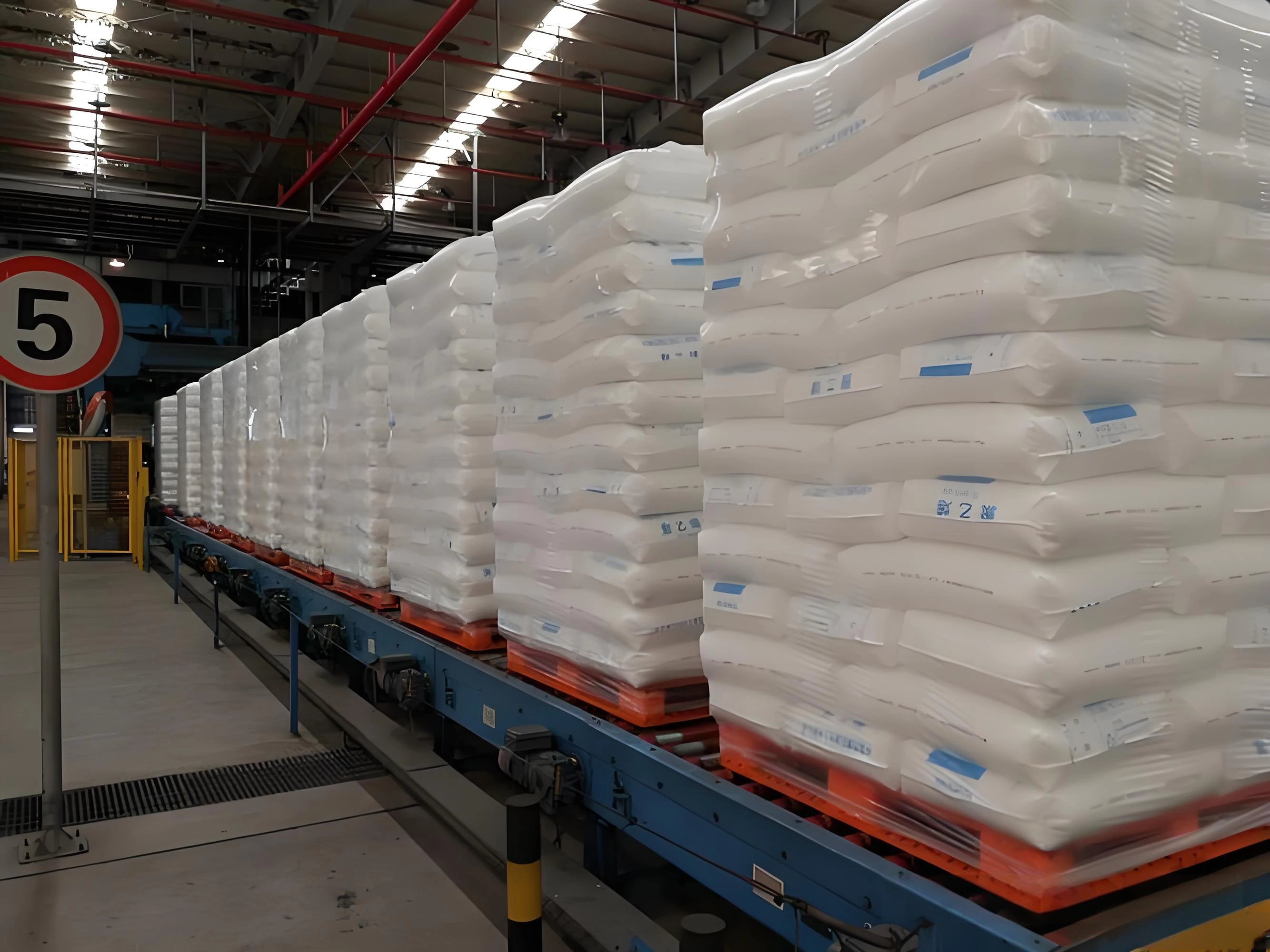
Who Needs Plastic Pallets? A Complete Guide for Modern Logistics and Warehousing
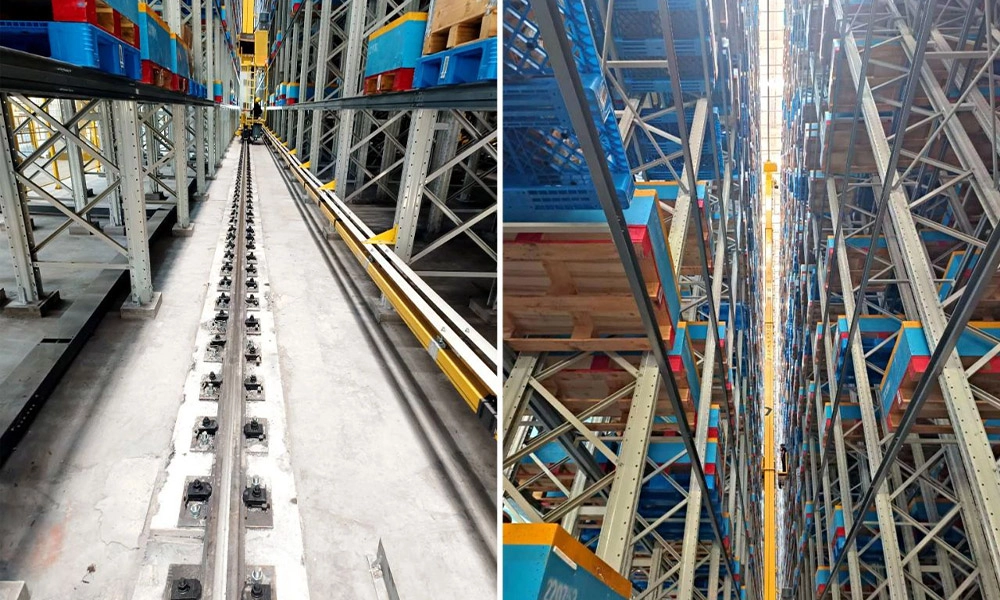
Can Plastic Pallets Be Used in Racking Systems? Complete Warehouse Guide
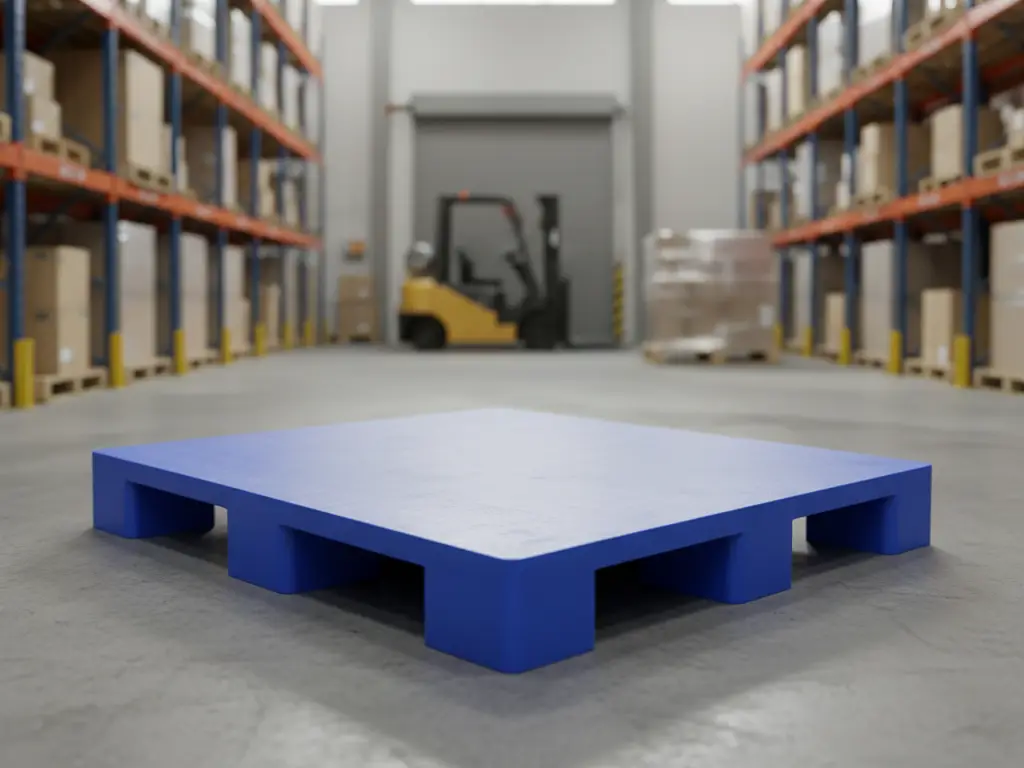
The Hidden Costs of Cheap Pallets: Maximizing ROI with a High-Quality Plastic Pallet
Custom Private Labeling Services
How long does it take to produce if I give you my design of pallet.
Mold producttion takes about 2 months from production to adjustment. Hence we recommend you to plan ahead of time.
About Products
What's the lead time if I place order?
Lead time for a 40HQ (370-1140pcs) is about 5-15 days depends on the style and size of the pallet.
After-Sales Service and Support
Who should I contact if quality issue is found when I receive the goods?
Please file complaint to the sales person you contacted for the order and your needs will be forwarded to our technical team for analysis.
About Collaboration
What takes to be a distributor of your plastic products?
Logistics and Payment
How long does it take to ship to my country?
Average shipping time ranges from 7 days to 35 days. We will calculate for you when port of destination is confirmed.
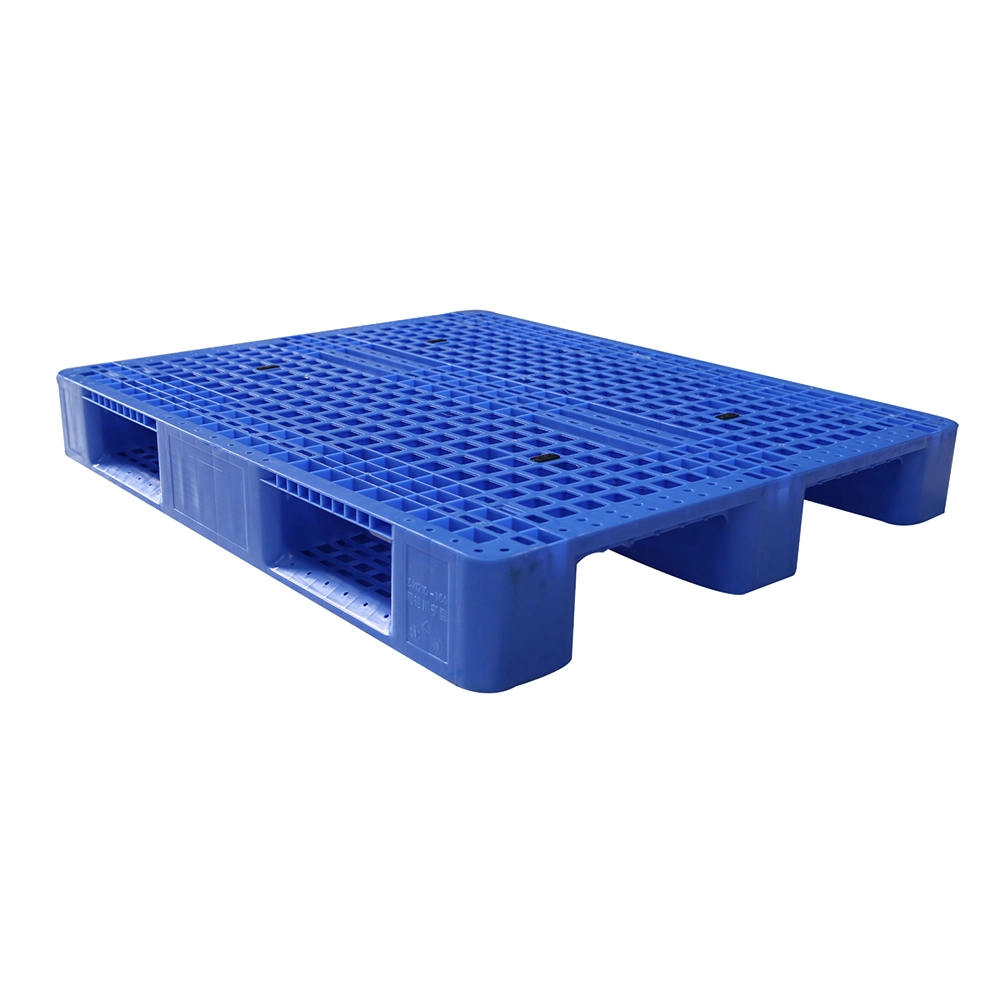
ZJ1210-150 Three-runner Single-sided Plastic Pallet
The three-runner single-sided plastic pallet is a solid and durable packaging solution designed for general and medium to heavy-duty cargo storage, transport and automated storage and retrieval system (AS/RS) use. It’s made of virgin HDPE or PP, featuring in robust structure, reinforced configuration with steel cores for rack and shelf, and a steady loading capacity.
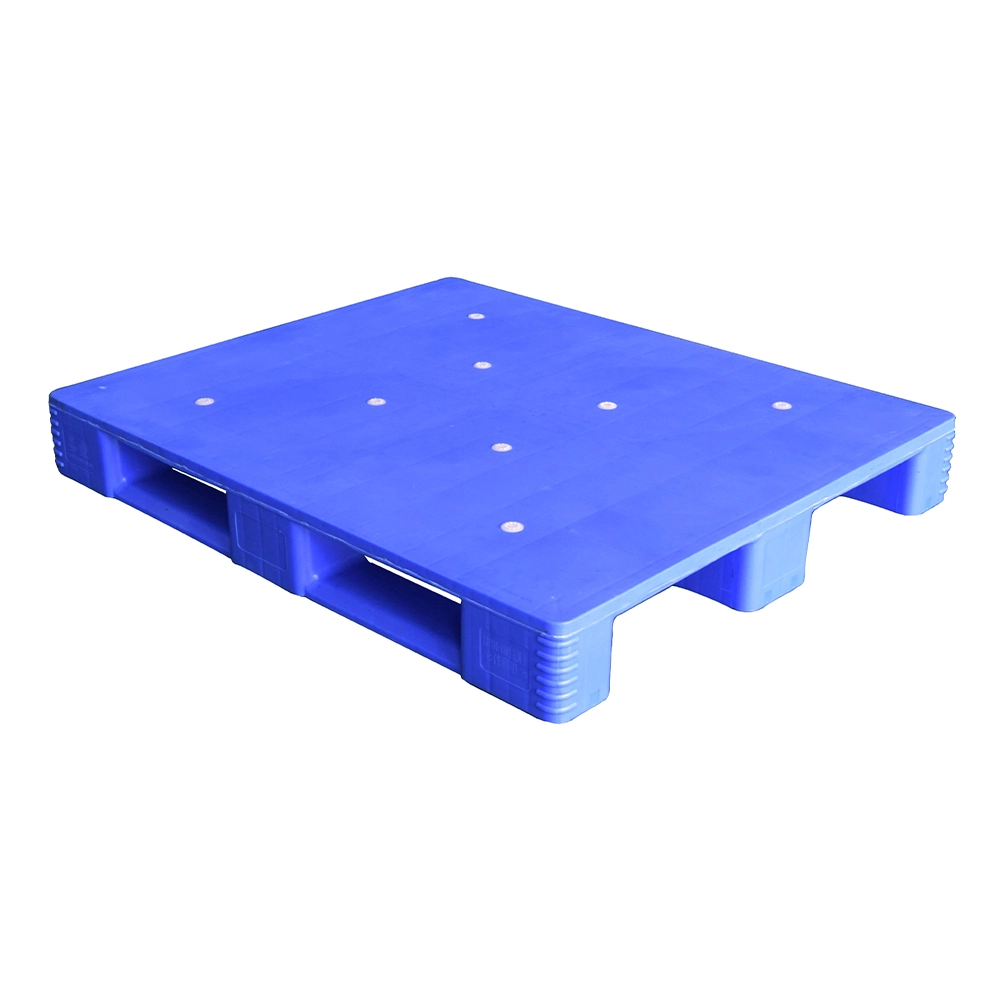
ZJ1210-150H Three-runner Closed Deck Hygienic Plastic Pallet
The three-runner closed-deck hygienic plastic pallet is a solid and durable packaging solution designed for general and especially food and medicine storage and transport. It’s made of virgin HDPE or PP, featuring a flat surface and even bottom for hygienic consideration, a reinforced configuration with steel cores for rack and shelf, and a steady loading capacity.
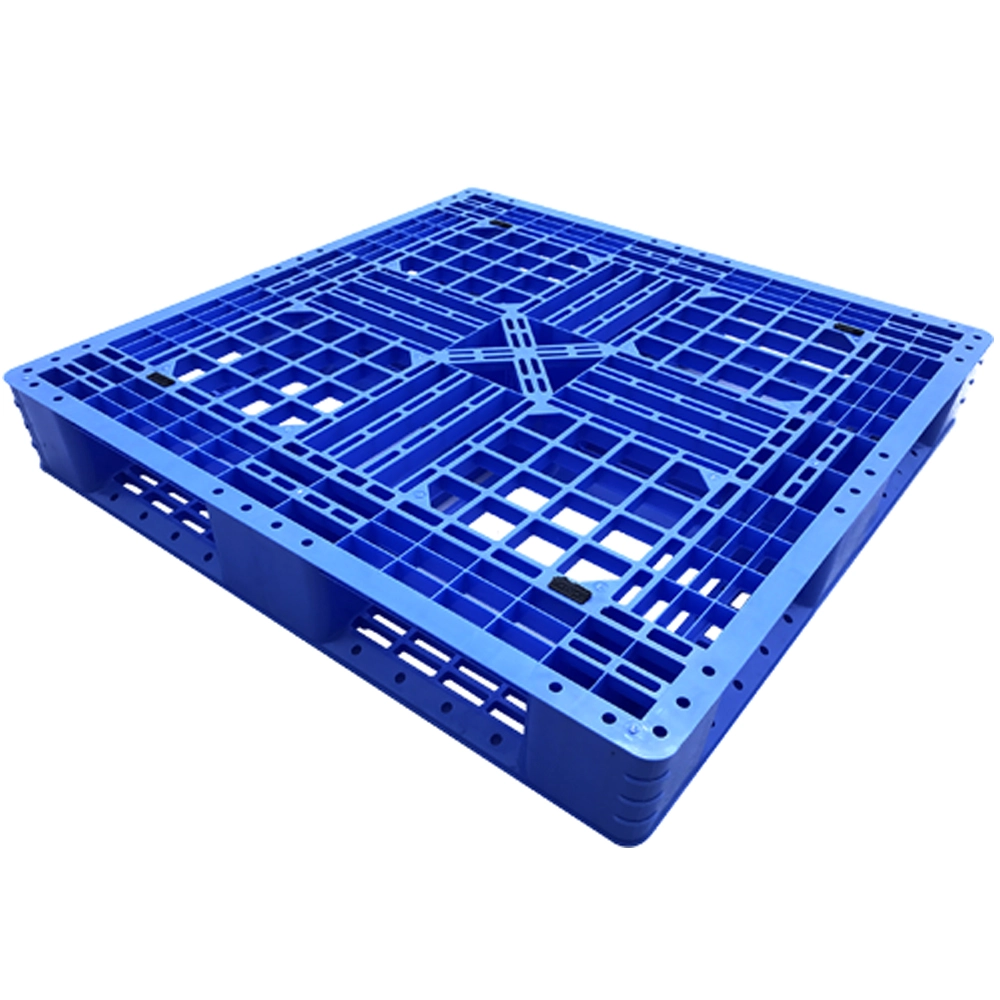
ZJ1010-150 Six-runner Single-sided Plastic Pallet
The six-runner plastic pallet, open or closed deck, is a solid and durable packaging solution designed for general and medium to heavy-duty cargo stacking, storage and transport. It’s made of virgin HDPE or PP, featuring in robust structure, a reinforced configuration with steel cores for the rack and shelf, and a steady loading capacity.
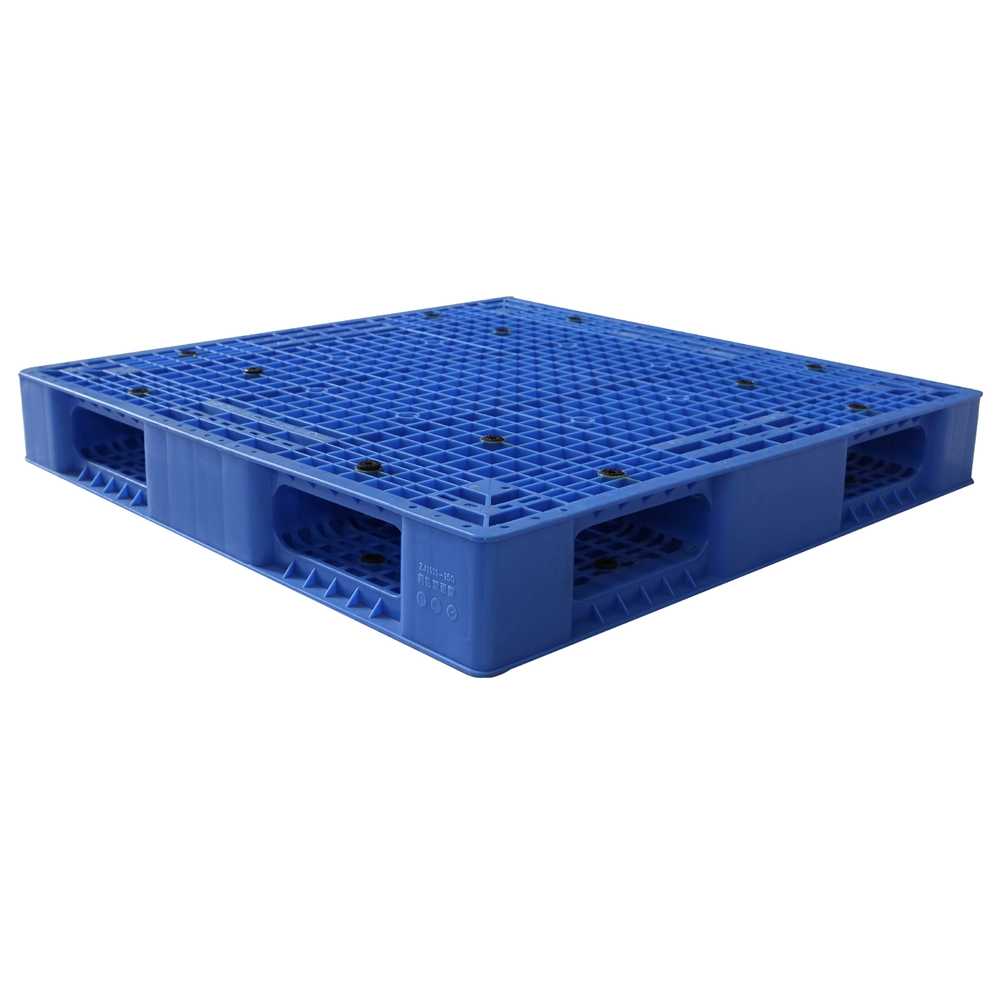
ZJ11111-150 Double-sided Heavy Duty Plastic Pallet
The double-sided plastic pallet, open deck or closed deck, is a solid and durable packaging solution designed for general and medium to heavy-duty cargo stacking, storage and transport. It’s made of virgin HDPE or PP, featuring a robust structure, a reinforced configuration with steel cores for the rack and shelf, and a steady loading capacity for both sides.
Request More Information About Plastic Pallets
Have questions or need detailed insights on this article? Fill out the form below to contact our team for comprehensive information and support related to our plastic pallet solutions.
Contact us


+86 138 0277 8204
+86 183 4431 0917
+86 195 3791 1860

No. 15-1, Fengying Rd., Taiping Town, Conghua Dist., Guangzhou City, Guangdong Province, China.
 Scan QR Code
Weihong
Whatsapp: +8613802778204
Guangdong Weihong Plastic Technology Co., Ltd.
Scan QR Code
Whatsapp: +8619537911860
Scan QR Code