


How Can Buyers Evaluate a stackable plastic pallets Manufacturer for Quality, Capacity, and Long-Term Supply?

Quick Answer
Buyers should assess a stackable plastic pallets manufacturer through documented load testing, batch-level quality controls, production capacity, tooling resilience, and supply continuity—not a unit price alone. Weihong supports OEM/ODM evaluation for HDPE and PP logistics products. Confirm dimensions, load conditions, material specification, testing scope, and landed cost; the final solution depends on project requirements, validation, and site conditions.
How Weihong Supports Projects
Weihong combines OEM/ODM support with a Design to Delivery service model for logistics packaging. Its 40,000+ m² intelligent manufacturing base uses large-scale injection and blow molding machinery to produce standardized HDPE and PP products. Buyers can discuss structural requirements for warehouse, food, pharmaceutical, automotive, and automated-storage applications.
Weihong can review pallet dimensions, entry configuration, load cases, surface features, material preference, and handling equipment before quotation. MOQ, lead time, testing scope, sampling steps, packaging, and commercial terms must be confirmed for each project rather than assumed from a standard model.
Discuss Your Pallet Supply Requirements
Send your target market, required dimensions, material preference, static and dynamic loads, racking or AS/RS conditions, annual volume, and delivery destination so suitable options, samples, testing steps, and supply planning can be discussed. Visit www.pearlriverplastics.com or email yangyf@gzpl.com.cn to begin a project-specific review.
Frequently Asked Questions
How can buyers verify stackable pallet load ratings before ordering?
Request the exact load definitions behind every rating: static load describes a pallet resting on a level surface, dynamic load concerns movement by forklift or pallet truck, and racking load applies when support is limited to beams or rails. These figures are not interchangeable. Ask for the test method, specimen configuration, conditioning details, safety factor, and deformation criteria. ISO 8611 is a recognized reference for testing flat pallets, but the buyer should confirm whether the manufacturer’s method reflects the intended handling system. A controlled sample trial under actual warehouse conditions is more informative than relying on a catalogue number alone.
What factory evidence proves consistent pallet quality across batches?
A credible evaluation should examine the quality system at three levels: incoming resin control, process control, and finished-product inspection. Buyers can request the specified polymer type, color or additive requirements, mold identification, dimensional tolerances, weight-control records, and nonconformance procedures. Compare samples from separate production runs rather than approving one attractive unit. Visual inspection should cover weld lines, short shots, flash, warpage, feet alignment, deck flatness, and forklift entry condition. Batch traceability is especially important for repeat orders because recycled-content changes, pigment variation, or process adjustments can affect stiffness and dimensions.
Can a manufacturer sustain supply during seasonal bulk demand?
Capacity should be assessed as available production time for the required mold, not as a factory’s total theoretical output. Ask how many compatible machines, molds, shifts, and inspection resources support the product, then compare that capacity with forecasted monthly demand. Clarify resin sourcing, planned maintenance, mold ownership, spare-part strategy, packaging arrangements, and the effect of other customers’ peak orders. A supply agreement should define forecast windows, order-release procedures, acceptable substitutions, change-notification rules, and escalation contacts. Start with a pilot order and review actual output, defect rates, and delivery performance before committing to larger volumes.
Which design details affect automated warehouse pallet compatibility most?
Automated storage and retrieval systems are sensitive to pallet geometry, stiffness, flatness, weight distribution, and repeatability. Buyers should verify the conveyor type, transfer points, guide-rail clearances, sensor locations, robot or shuttle interfaces, rack beam spacing, and permissible pallet deflection. Footprint tolerances and the position of reinforcing ribs can affect roller contact and barcode or sensor readings. Do not assume that a pallet suitable for forklifts will perform correctly in AS/RS equipment. Obtain the equipment integrator’s interface requirements, then conduct loaded conveyor, transfer, and storage tests using production-intent samples.
How should buyers compare pallet prices beyond the unit quote?
The relevant comparison is total delivered cost over the planned service period. Include tooling or modification charges, sample freight, export packaging, transport, duties, inspection, storage, replacement rate, cleaning, and costs caused by dimensional inconsistency. A lighter pallet may reduce freight expense but can have different stiffness or durability under the buyer’s load case; a heavier design may be worthwhile only when its performance is demonstrated. Compare equivalent specifications, including dimensions, mass, material, load definitions, tolerance, color, and included services. Ask suppliers to separate one-time charges from recurring prices and identify assumptions behind each quotation.
What testing and documentation should accompany a long-term supply agreement?
The technical file should identify drawings, revision status, polymer specification, nominal weight, dimensions and tolerances, load definitions, test methods, acceptance criteria, packaging, and labeling. Add an approved sample or golden unit, inspection frequency, retention samples, change-control requirements, and the process for handling nonconforming goods. For regulated or hygienic applications, buyers should specify the documentation required by their own market and product-contact use; those requirements vary by jurisdiction and application. A supply agreement should also address forecasts, MOQ, lead time, delivery terms, warranty scope, corrective-action timing, and ownership of molds and tooling.

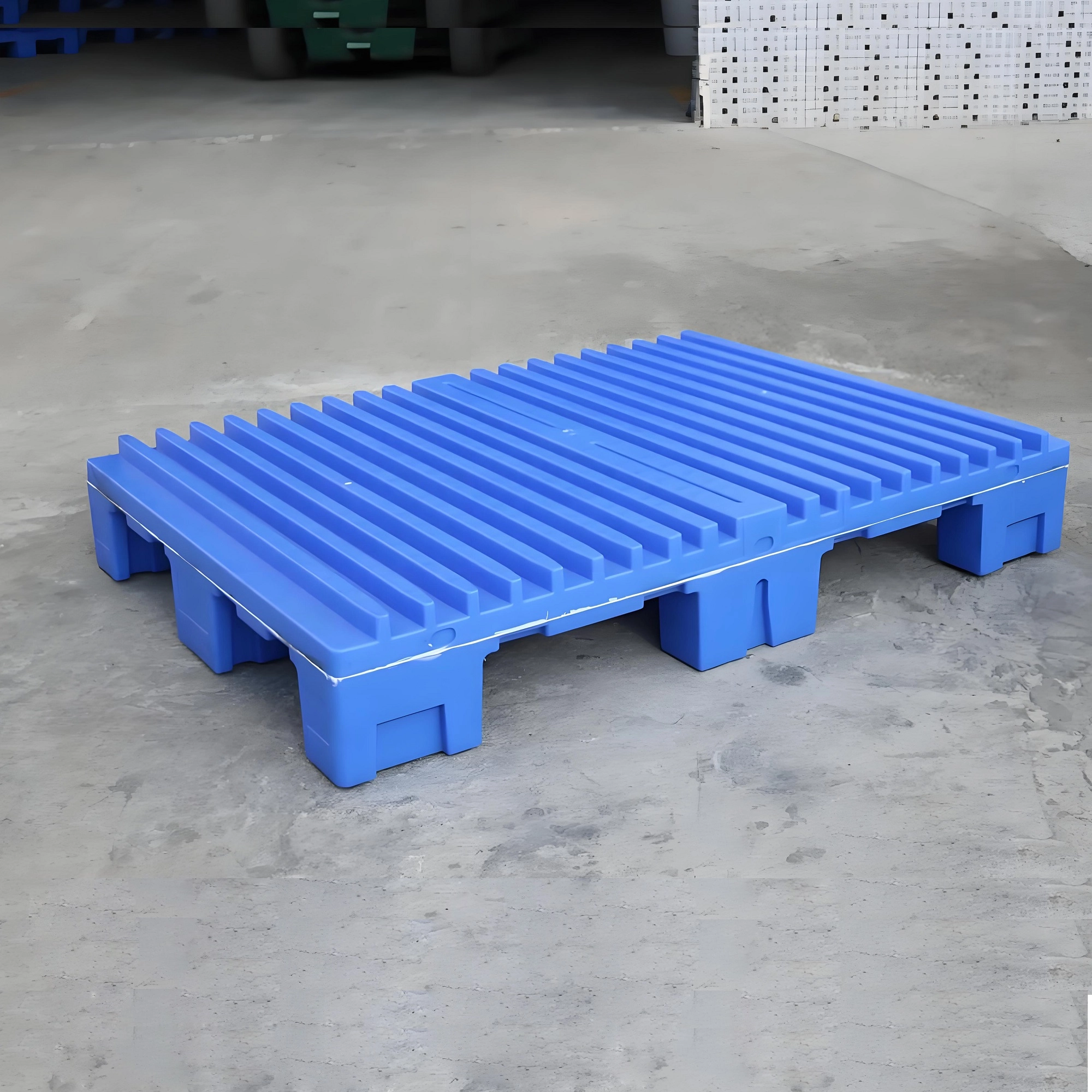
The nine-leg sing-sided printing plastic pallet is a solid and durable packaging solution designed for medium load printing and general cargo storage, and transport. It’s made of virgin HDPE or PP, featuring in robust structure, reinforced configuration with steel pipes, and a steady loading capacity.
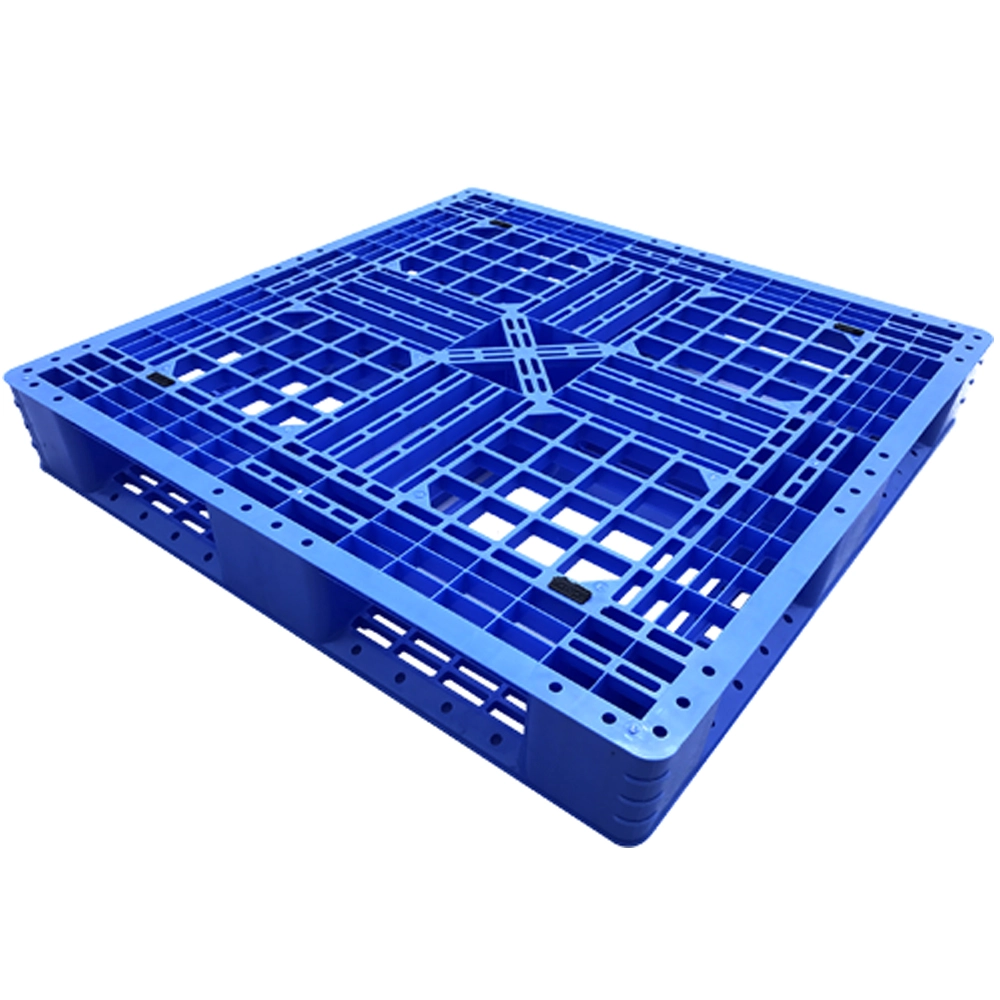
The six-runner plastic pallet, open or closed deck, is a solid and durable packaging solution designed for general and medium to heavy-duty cargo stacking, storage and transport. It’s made of virgin HDPE or PP, featuring in robust structure, a reinforced configuration with steel cores for the rack and shelf, and a steady loading capacity.

The three-runner single-sided plastic pallet is a solid and durable packaging solution designed for general and medium to heavy-duty cargo storage, transport and automated storage use. It’s made of virgin HDPE or PP, featuring in robust structure, reinforced configuration with steel cores for rack and shelf, and a steady loading capacity.
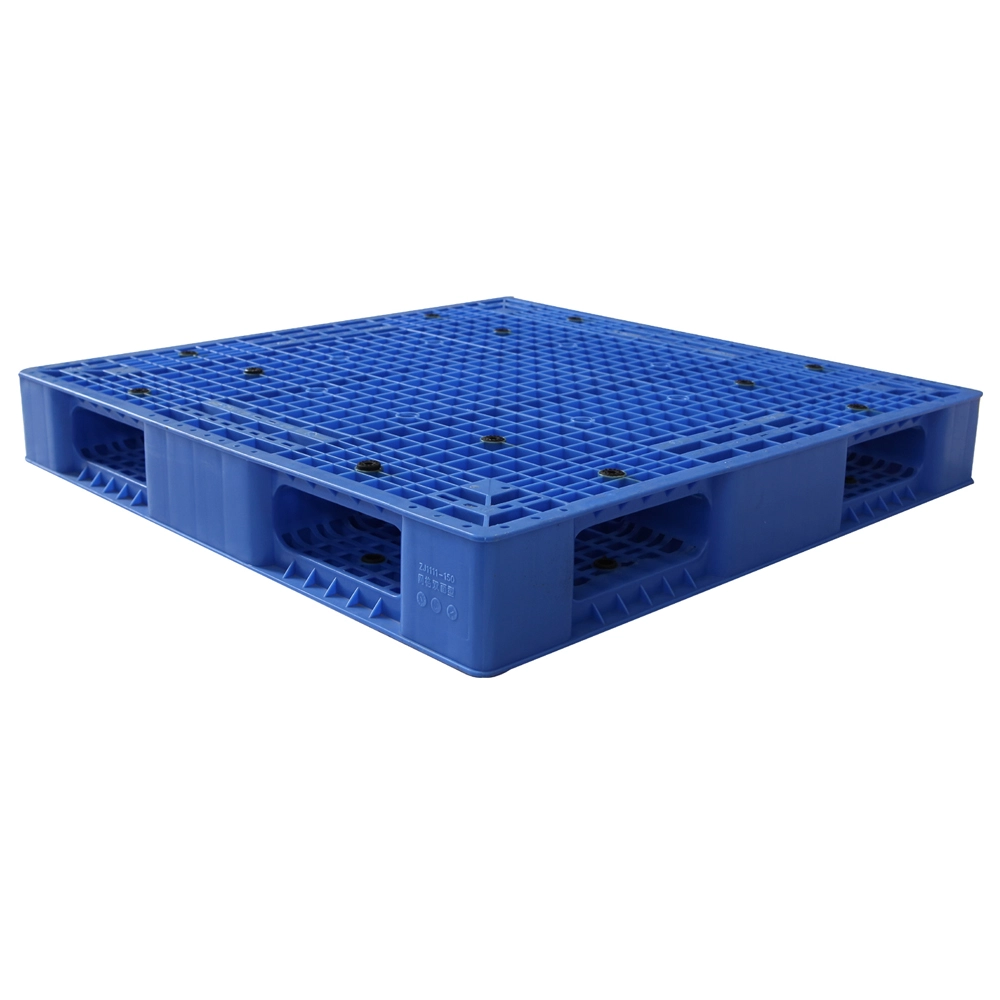
The reversible plastic pallet, open deck or closed deck, is a solid and durable packaging solution designed for general and medium to heavy-duty cargo stacking, storage and transport. It’s made of virgin HDPE or PP, featuring a robust structure, a reinforced configuration with steel cores for the rack and shelf, and a steady loading capacity for both sides.
Request More Information About Plastic Pallets
Have questions or need detailed insights on this article? Fill out the form below to contact our team for comprehensive information and support related to our plastic pallet solutions.
Contact us


+86 138 0277 8204
+86 183 4431 0917
+86 131 8916 6579

No. 15-1, Fengying Rd., Taiping Town, Conghua Dist., Guangzhou City, Guangdong Province, China.

Build the Perfect Pallet for Your Operation
Customized pallets engineered to fit your equipment, load, and workflow.
Whatsapp: +8613802778204
Scan QR Code
Guangdong Weihong Plastic Technology Co., Ltd.
Weihong
Guangdong Weihong Plastics Technology Company Ltd.