











Which heavy-duty plastic pallet size is right for my racking? | Insights by Weihong
- 1) My selective rack internal beam width is 1,100 mm. Which pallet footprint and lateral clearances should I use so pallets sit flat and can be handled safely?
- 2) My racking uses step-beams with 4-point support—what minimum block or stringer spacing on a plastic pallet will safely transfer weight into the beams?
- 3) I plan double-deep selective racking. What pallet width/depth and design features ensure safe handling and load stability in double-deep lanes?
- 4) What dimensional and material constraints should I consider for plastic pallets intended for cold-storage racking (-30°C to -40°C)?
- 5) How much deflection is acceptable for a heavy-duty plastic pallet sitting across rack beams under rated load?
- 6) For automated racking (AS/RS or conveyors), what size tolerances and pallet features do integrators usually require?
- 7) How do industry standard pallet sizes (GMA / EUR / ISO) influence racking layout and throughput decisions?
- Practical checklist before you order heavy-duty plastic pallets for racking
- Authoritative references and further reading
- Why choose Weihong for heavy-duty racking pallets
Which Heavy-Duty Plastic Pallet Size Is Right for My Racking? — Practical Q&A for Buyers
Choosing the correct heavy-duty plastic pallet size for racking is more than picking a standard footprint. You must match rack beam spacing, load ratings, forklift access, environmental conditions and (for automation) tight dimensional tolerances. Below are 7 specific, pain-point questions beginners frequently ask—each with practical answers, examples and references you can take to suppliers and system integrators.
1) My selective rack internal beam width is 1,100 mm. Which pallet footprint and lateral clearances should I use so pallets sit flat and can be handled safely?
Key rule: the pallet overall width must be less than the clear distance between the inside faces of the rack beams, leaving small lateral clearances so the pallet can be positioned without binding.
- Common pallet footprints to consider: 1,200 × 800 mm (Euro-style), 1,000 × 1,200 mm (ISO), and 1,219 × 1,016 mm (48 × 40, GMA). See ISO standard sizes for reference (ISO 6780) and GMA/industry sizing (GMA).
- If your clear beam width is 1,100 mm, a 1,200 mm-wide pallet will not fit. Choose a pallet footprint ≤ 1,070–1,090 mm to allow small side clearances (example: 1,100 mm beam internal − 10–30 mm total clearance = 1,070–1,090 mm usable pallet width).
- Practical guidance: allow about 5–15 mm clearance per side for manual placement and minor rack misalignments. For powered/shuttles or automation, ask your integrator for their required lateral clearance (often smaller and tighter).
Action: measure the inner beam width (not beam face-to-face) and subtract required clearances. If standard pallet widths don’t match, order a custom pallet or choose a standard that matches your rack bay width.
2) My racking uses step-beams with 4-point support—what minimum block or stringer spacing on a plastic pallet will safely transfer weight into the beams?
Racking that supports pallets at discrete contact points (step beams, cantilever supports, or rack-supported pallets) requires that pallet load-bearing points line up with beam locations and provide sufficient bearing area.
- For 4-point block-style pallets, the centerlines of the pallet blocks must sit directly on beam tops. Typical block dimensions provide multiple square centimeters of bearing area per contact point.
- If your beams are spaced so only the outermost pallet edges are supported, ensure the pallet has ribs, stringers or molded blocks that align with beam tops and are rated by the pallet manufacturer for rack use (rackable).
- Do not assume a pallet is rack-ready based on footprint alone. Request the pallet's rack support drawing and bearing area per support point from the manufacturer. The Rack Manufacturers Institute (RMI) and pallet designers expect load transfer to be through intended support points; mismatches cause local overstress and deformation (RMI).
Action: match pallet support-point geometry to beam locations and request manufacturer-supplied test data showing the pallet’s load capacity when supported at your beam spacing.
3) I plan double-deep selective racking. What pallet width/depth and design features ensure safe handling and load stability in double-deep lanes?
Double-deep racking increases aisle density but imposes handling constraints: reach truck reach, lateral clearances, and stability when one pallet is pulled out from behind another.
- Footprint: double-deep lanes often use the same pallet footprint as single-deep, but you must ensure the front and rear pallets align perfectly. Slight differences in pallet dimensions or deformation can jam the inner pallet.
- Sidewall/stacking features: use pallets with consistent, molded sidewalls or edge guides that keep loads centralized. If pallets stack, ensure stackable geometry is identical for both positions.
- Handling: for double-deep you may use guided rails or load backstops in the rack to prevent the inner pallet from shifting. Consult your reach-truck OEM for required tolerances for pulling inner pallets safely.
Action: specify identical part numbers for all pallets in double-deep lanes, hold tolerances to the tightest ± dimension the integrator requires, and request a handling simulation or on-site trial before full rollout.
4) What dimensional and material constraints should I consider for plastic pallets intended for cold-storage racking (-30°C to -40°C)?
Temperature affects polymer impact strength and stiffness. When racking in freezers you must select materials and designs rated for low temperatures.
- Material: HDPE is common; many HDPE grades are used in cold storage but grades and additives differ. Consult the pallet supplier for their low-temperature specification. Reference: HDPE material properties summary (HDPE).
- Geometry: colder temperatures increase brittleness—choose thicker ribbing, closed-deck designs or reinforced bases for rack use in sub-zero environments.
- Clearances and contraction: plastics will contract slightly in cold environments; ensure dimensional tolerances compensate if your racking tolerances are tight (automation especially).
Action: request a low-temperature performance certificate and, if possible, a physical trial in a cold bay before committing to large volumes.
5) How much deflection is acceptable for a heavy-duty plastic pallet sitting across rack beams under rated load?
There is no universal deflection number for all plastic pallets—acceptable deflection depends on the pallet design, rack support pattern and the load being carried. Two practical steps:
- Use the pallet manufacturer’s rated rackable capacity and their test reports showing deflection at rated load for the specific support spacing you will use.
- Where manufacturer data is not available, require a test: support the pallet on your beam spacing and apply the expected service load; measure mid-span deflection. As a rule of thumb, visible permanent deformation or cracking under expected service loads is unacceptable.
Standards for pallet dimensions are covered by ISO 6780 (ISO), but deflection/load tests are supplier-specific—don’t accept a pallet as rackable without manufacturer test data for your beam spacing and load case.
6) For automated racking (AS/RS or conveyors), what size tolerances and pallet features do integrators usually require?
Automated systems require tight dimensional consistency and controlled features for handling, gripping, and indexing.
- Tolerances: many integrators require narrow dimensional tolerances—commonly in the order of a few millimetres (for example, ±3–5 mm) for length/width and very tight height tolerances. Always confirm with your AS/RS integrator because requirements vary by system.
- Features: consistent corner radii, defined entry/exit faces, unambiguous lifting points and reliable anti-slip surfaces are important. Pallet warpage and inconsistent deck thickness are common causes of jams.
- Documentation: provide a detailed CAD model to the integrator and request sign-off before manufacturing. Insist on a pilot batch for on-site testing in the automation environment.
Action: ask the AS/RS vendor for their pallet specification sheet (clearances, allowed warpage, allowed height variation) and build your purchase contract around meeting those tolerances.
7) How do industry standard pallet sizes (GMA / EUR / ISO) influence racking layout and throughput decisions?
Using standard pallet footprints simplifies sourcing, stacking, and inter-facility flows—but the right standard depends on geography, load type and equipment.
- North America: the 48 × 40 (1,219 × 1,016 mm) GMA pallet is the de facto standard for many supply chains (GMA).
- Europe: the 1,200 × 800 mm Euro footprint (EPAL) is a common choice (EPAL).
- ISO standard sizes: the ISO listing of standard pallet footprints (ISO 6780) helps planners identify harmonized dimensions for international flows (ISO).
- Throughput implications: a non-standard pallet footprint can reduce load per rack bay or force custom racking. Standard sizes also ease contract manufacturing and off-the-shelf racking beam choices.
Action: choose a pallet footprint aligned with the dominant pallet used across your inbound/outbound supply chain, or have a clear plan and budget for custom racking if non-standard footprints are required.
Practical checklist before you order heavy-duty plastic pallets for racking
- Measure actual inner beam width and beam top thickness; confirm required lateral and longitudinal clearance with your forklift/shuttle vendor.
- Request manufacturer’s rackable load test for your intended beam spacing and support pattern (4-point, 3-runner, stringer, etc.).
- Confirm material temperature rating if used in cold storage and request low-temperature impact test if below −20°C.
- For automation, obtain the integrator’s pallet spec sheet (dimensional tolerances, weight spread, gripping features) and perform a pilot-run.
- Prefer proven standards where possible: 48 × 40 (1,219 × 1,016 mm), 1,200 × 800 mm (Euro), 1,000 × 1,200 mm (ISO) — but always verify fit in your rack bays.
Authoritative references and further reading
- ISO 6780 — Pallets for materials handling — Principal dimensions and tolerances: ISO 6780.
- GMA (Grocery Manufacturers Association) standardization on 48 × 40 pallets and supply-chain guidance: GMA.
- EPAL — commonly used Euro-pallet information (1,200 × 800 mm): EPAL.
- Rack Manufacturers Institute — rack design, safety and integration guidance: RMI.
- HDPE material information (useful for cold-storage suitability background): HDPE — Wikipedia.
Why choose Weihong for heavy-duty racking pallets
Weihong (Pearl River/Weihong product lines) offers practical advantages for buyers who need heavy-duty plastic pallets matched to racking:
- Custom sizing and tooling: Weihong can produce non-standard footprints and tight-tolerance runs suitable for AS/RS and double-deep racking.
- Design-for-rack expertise: ability to supply engineering drawings, rackable-load test data and 3D models so integrators can validate fit before production.
- Material options and cold-grade variants: Weihong can specify polymer formulations and reinforcements for freezer use and heavy static loads.
- After-sales support and pilot batches: short pilot runs and on-site trial support to validate pallet fit and handling in your racking prior to full deployment.
- Local contact and procurement ease via Pearl River Plastics — ordering, drawings and sample coordination streamline project timelines.
For spec sheets, CAD files or to arrange a pilot test in your racking, contact: yangyf@gzpl.com.cn or visit www.pearlriverplastics.com.
Choosing the right heavy-duty plastic pallet for racking takes measurable checks (beam clearances, support-point alignment, manufacturer rack tests) and coordination with material handlers or automation integrators. Use the checklist above, demand manufacturer test data for your exact beam spacing, and run a pilot batch whenever tolerances or automation are involved.
The Complete 2026 Guide to Choosing Plastic Pallets for Cold Storage Automated Warehouses

Why Do Plastic Pallets of the Same Size Vary So Much in Price? Core Reason: Material Costs Determine the Difference
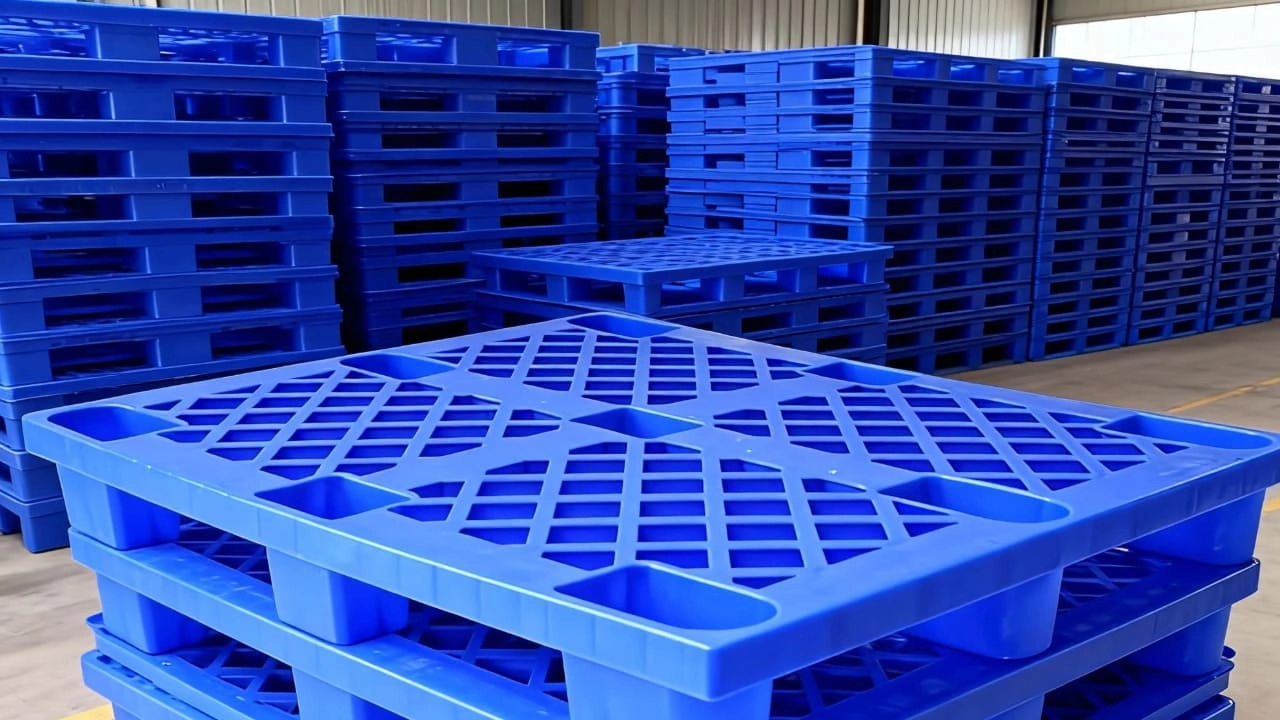
HDPE vs. PP Plastic Pallet: How to Choose the Right Material for Your Warehouse
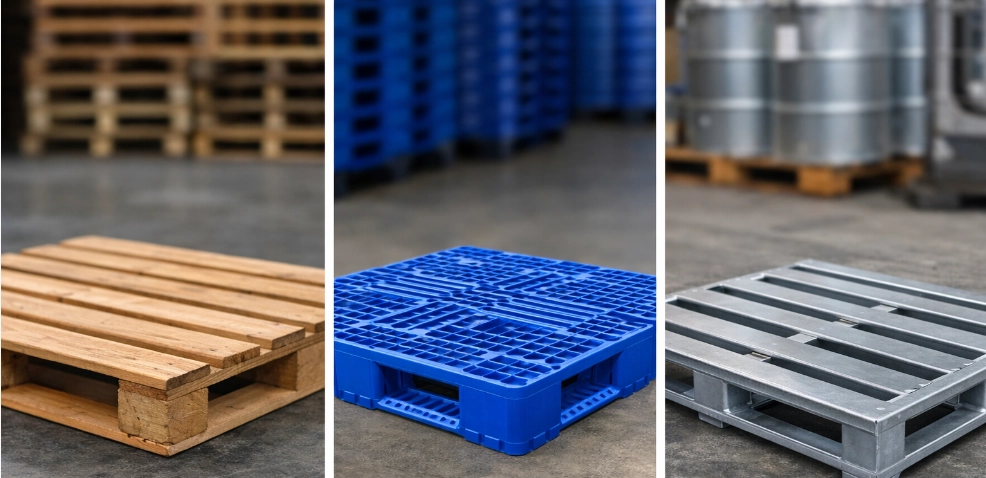
Wooden Pallets vs Plastic Pallets vs Metal Pallets — Which Is Better for Modern Logistics?
About Collaboration
Do you have exclusive distributor in my country?
We currently have one or two exclusive distributors. Please tell me to where you would like to import out plastic pallets and boxes to check for it.
About Products
What materials are your prodcuts made of?
What is the minimun order quantity?
MOQ is usually 200pcs for each model. Less quantity is acceptable when there is stock.
What's the lead time if I place order?
Lead time for a 40HQ (370-1140pcs) is about 5-15 days depends on the style and size of the pallet.
Custom Private Labeling Services
How long does it take to produce if I give you my design of pallet.
Mold producttion takes about 2 months from production to adjustment. Hence we recommend you to plan ahead of time.
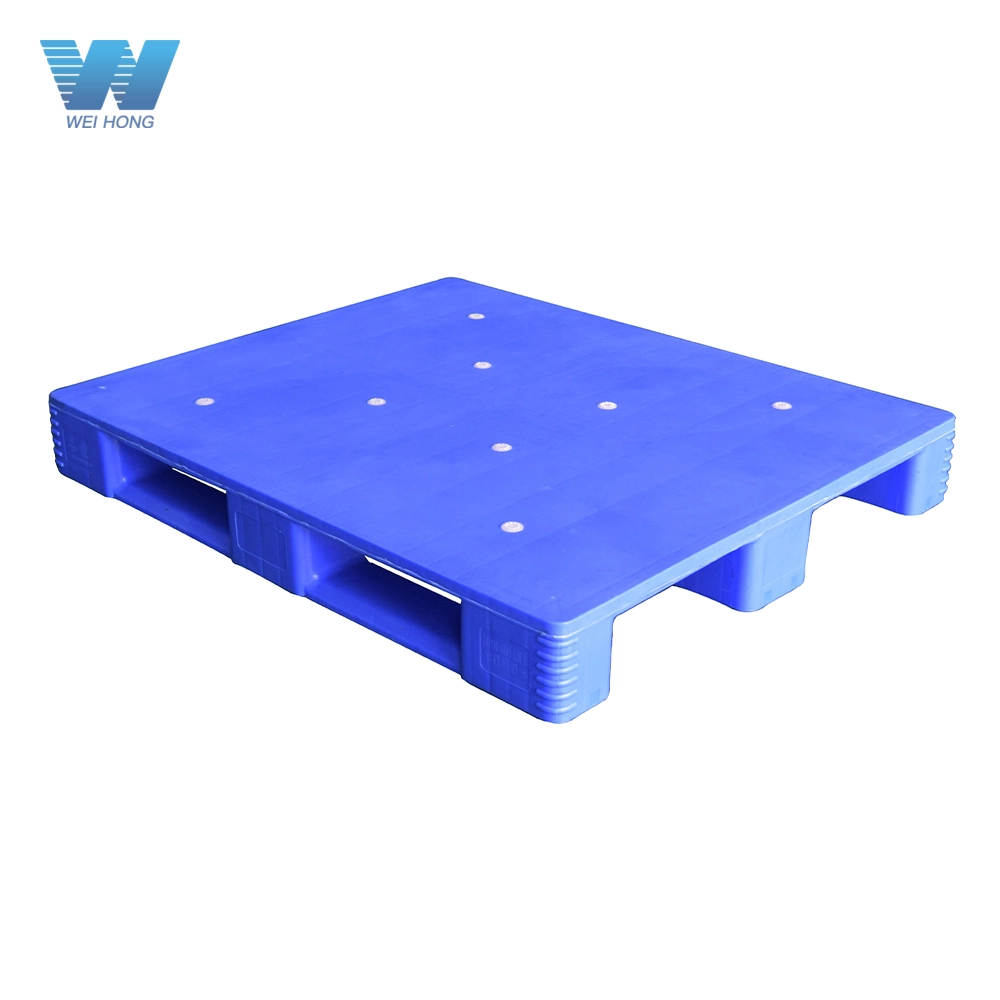
ZJ1210-150H Three-runner Closed Deck Hygienic Plastic Pallet
The three-runner closed-deck hygienic plastic pallet is a solid and durable packaging solution designed for general and especially food and medicine storage and transport. It’s made of virgin HDPE or PP, featuring a flat surface and even bottom for hygienic consideration, a reinforced configuration with steel cores for rack and shelf, and a steady loading capacity.
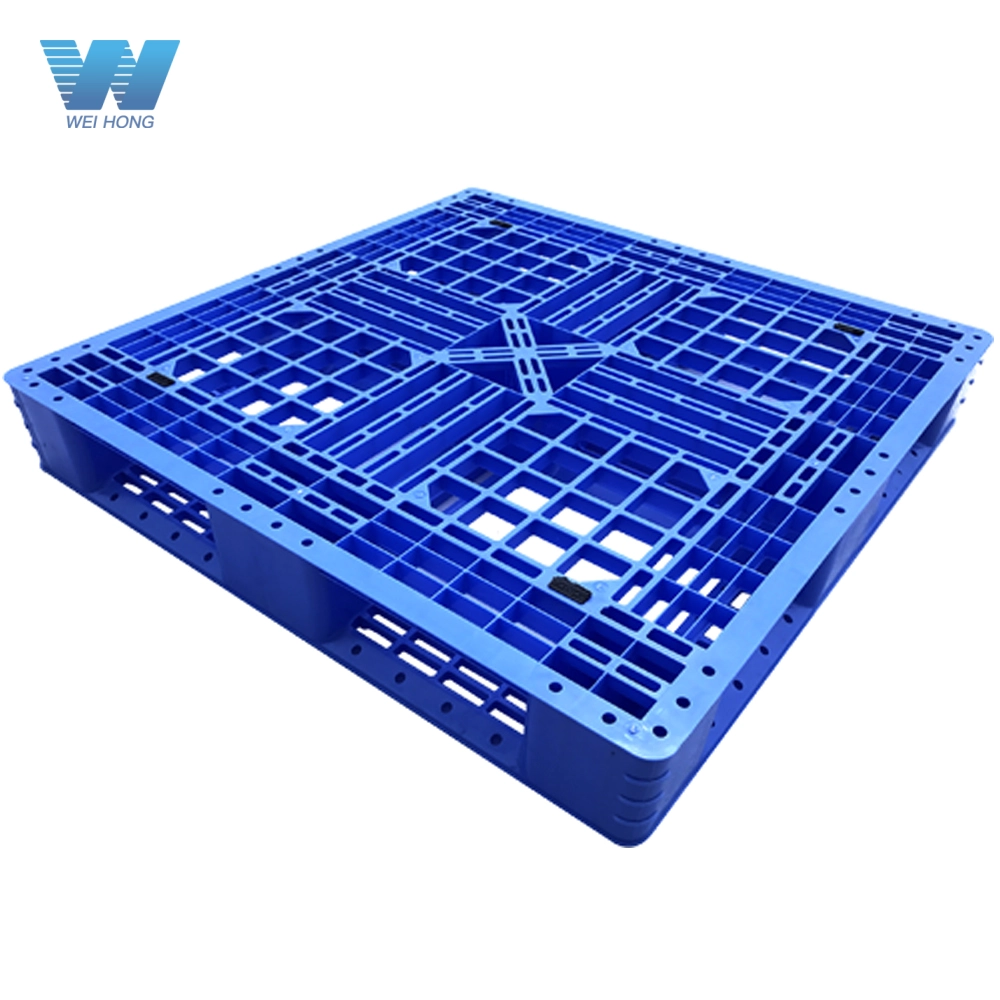
ZJ1010-150 Six-runner Single-sided Plastic Pallet
The six-runner plastic pallet, open or closed deck, is a solid and durable packaging solution designed for general and medium to heavy-duty cargo stacking, storage and transport. It’s made of virgin HDPE or PP, featuring in robust structure, a reinforced configuration with steel cores for the rack and shelf, and a steady loading capacity.
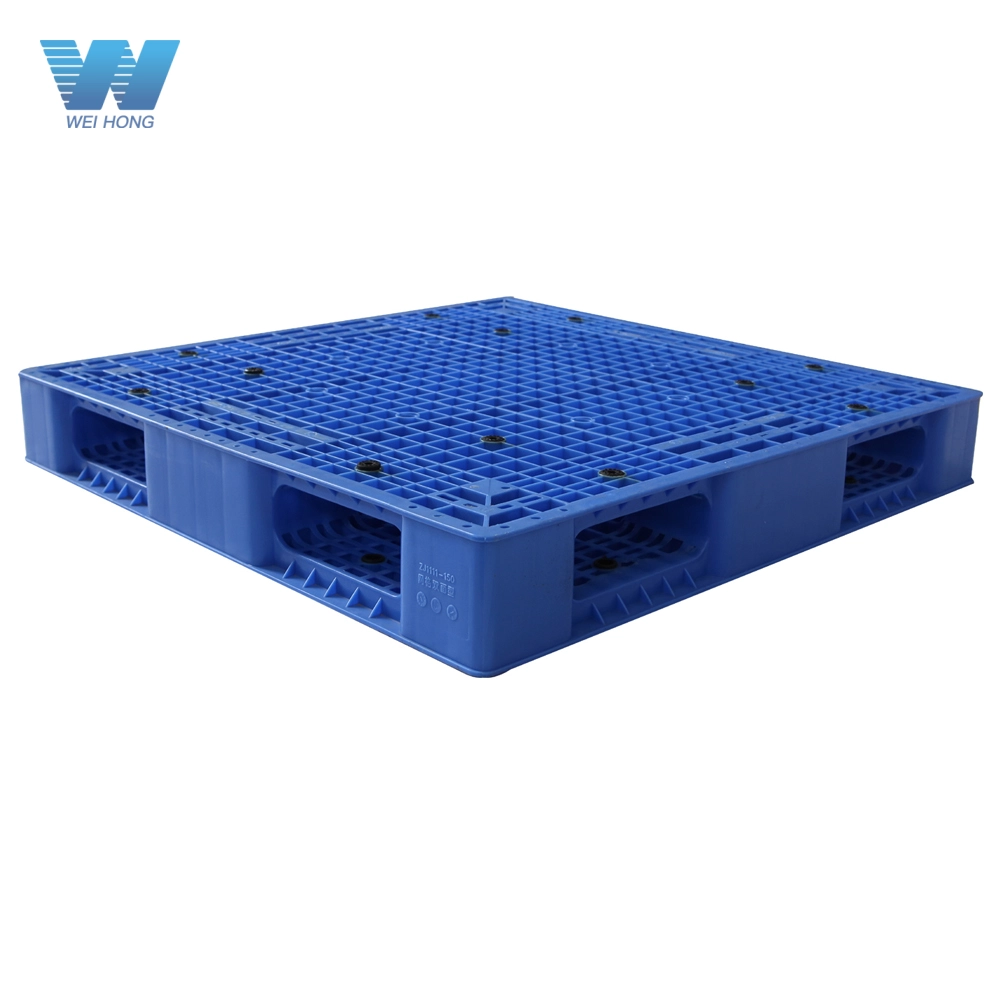
ZJ11111-150 Double-sided Heavy Duty Plastic Pallet
The double-sided plastic pallet, open deck or closed deck, is a solid and durable packaging solution designed for general and medium to heavy-duty cargo stacking, storage and transport. It’s made of virgin HDPE or PP, featuring a robust structure, a reinforced configuration with steel cores for the rack and shelf, and a steady loading capacity for both sides.
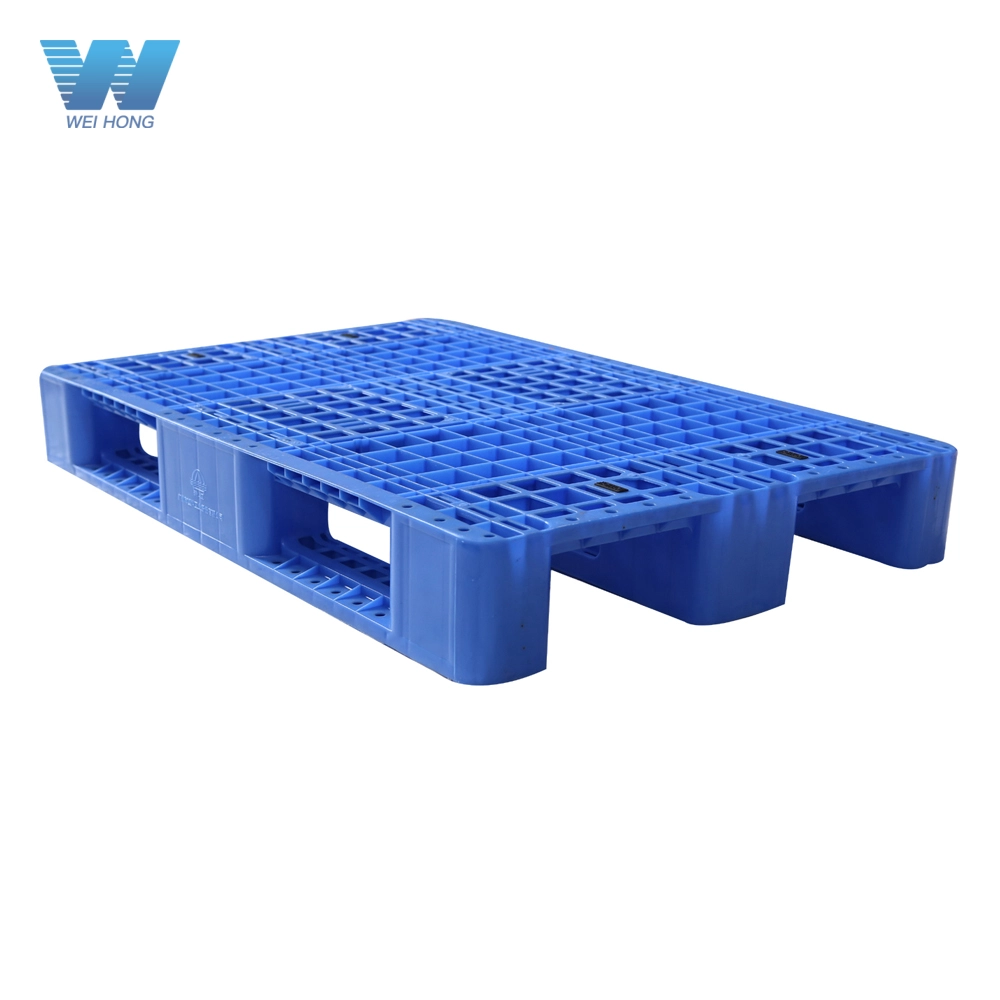
ZJ1208-155 Three-runner Single-sided Plastic Pallet
The three-runner single-sided plastic pallet is a solid and durable packaging solution designed for general and medium to heavy-duty cargo storage, transport and automated storage and retrieval system (AS/RS) use. It’s made of virgin HDPE or PP, featuring in robust structure, reinforced configuration with steel cores for rack and shelf, and a steady loading capacity.
Request More Information About Plastic Pallets
Have questions or need detailed insights on this article? Fill out the form below to contact our team for comprehensive information and support related to our plastic pallet solutions.
Contact us


+86 138 0277 8204
+86 183 4431 0917
+86 195 3791 1860

No. 15-1, Fengying Rd., Taiping Town, Conghua Dist., Guangzhou City, Guangdong Province, China.
Weihong
Whatsapp: +8613802778204
Guangdong Weihong Plastic Technology Co., Ltd.
Scan QR Code