










What is the minimum order quantity for plastic heavy pallets? | Insights by Weihong
- 1) What is the minimum order quantity for plastic heavy-duty pallets when custom tooling (injection mold) is required?
- 2) Can I order mixed small batches (different sizes/colors/specs) below standard MOQ and what extra costs should I expect?
- 3) How does pallet design (solid deck vs. grid deck vs. rackable heavy-duty) affect MOQ and tooling costs?
- 4) For food- or pharma-grade heavy plastic pallets, are there specific MOQ or certification considerations I should expect?
- 5) How do production methods (injection molding vs. thermoforming vs. rotational molding/roto) affect MOQ, lead time and unit price for heavy pallets?
- 6) What testing and validation should I demand before committing to a large MOQ for heavy pallets?
- 7) Cost- and risk-reduction strategies if my required quantity is below supplier MOQ?
- Quick checklist before placing a heavy-pallet order
- Why choose Weihong (Pearl River Plastics)?
Practical Answers: Minimum Order Quantity for Plastic Heavy Pallets (Buyer FAQ)
As a procurement professional or a small/medium importer, you need clear, practical guidance on minimum order quantities (MOQ) for heavy-duty plastic pallets. Below are 7 specific, pain-point driven questions beginners commonly ask — with evidence-based, actionable answers and links to authoritative resources.
1) What is the minimum order quantity for plastic heavy-duty pallets when custom tooling (injection mold) is required?
Answer: When a new injection mold is required for one-piece heavy-duty pallets, most manufacturers set MOQs to recover mold cost. Typical industry practice is a MOQ in the range of 500 to 1,500 units for a single new tool, depending on pallet complexity, size and material (HDPE vs. PP). For very large or highly engineered pallets (rackable, integrated runners, multi-layer reinforcement), MOQ often trends to the upper end (1,000+).
Why: Injection molds are capital-intensive (tooling can range from several thousand to tens of thousands of USD for complex heavy-duty pallet molds). Suppliers amortize that investment over the first production run, setting a MOQ that keeps per-unit cost viable.
Tip: If you need fewer than the supplier’s stated MOQ, options include agreeing to pay a higher per-unit price to amortize the mold faster, sharing mold cost with other buyers through co-investment, or requesting a smaller pilot run at a High Quality.
2) Can I order mixed small batches (different sizes/colors/specs) below standard MOQ and what extra costs should I expect?
Answer: Mixed small-batch orders are possible but come with High Quality charges. Expect surcharges for each variant because of set-up time, color changes, and inventory complexity. Typical extra costs include:
- Molding set-up fees: additional per-run set-up labor and machine time.
- Colorant and material change fees: cleaning and downtime between color/material changes.
- Higher per-unit price: suppliers price small-lot runs substantially higher than full-MOQ runs.
Practical approach: Consolidate to as few SKUs as possible, use neutral colors (black/grey) to avoid color-change fees, and ask suppliers for a small-sample or pilot program price sheet. For stock (standard) pallet models some manufacturers will accept orders down to 10–50 pieces per SKU; for custom heavy pallets expect the lower limit to be much higher.
3) How does pallet design (solid deck vs. grid deck vs. rackable heavy-duty) affect MOQ and tooling costs?
Answer: Design complexity directly drives tooling cost and therefore MOQ:
- Simple nestable or 2-way stackable designs (fewer ribs, simple geometry) — lower mold complexity and often lower MOQ (sometimes 200–500).
- Solid-deck or full-deck hygienic designs — require more detailed mold cavities and cooling channels; MOQ tends to be moderate (500+).
- Rackable heavy-duty pallets (engineered for 4-way racking, high static/dynamic loads) — the most complex tooling and reinforcement; MOQ commonly 1,000+.
Design trade-offs: If MOQ is a binding constraint, consider selecting a proven standard design or asking the supplier to adapt an existing mold rather than building a new one. That can dramatically reduce MOQ and unit cost.
4) For food- or pharma-grade heavy plastic pallets, are there specific MOQ or certification considerations I should expect?
Answer: Food- and pharma-grade applications impose material and testing requirements (traceable food-contact polymers, clean/smooth decks, washability) rather than a fixed MOQ. However, these requirements can increase costs and influence MOQ because suppliers must control raw materials, use dedicated molds or cleaning protocols, and may perform additional testing.
Regulatory context: Food-contact plastics in the U.S. are subject to FDA requirements for food-contact substances — see the FDA's guidance on packaging and food-contact materials for background and compliance pathways: FDA: Packaging & Food-Contact Substances. In practice, suppliers will ask for larger deposits or minimums to justify the administrative and QA overhead for certified runs.
Best practice: Ask for material declarations (e.g., FDA-compliant resin), third-party analysis or certificates of compliance, and sample wash/cleaning reports. Be prepared that suppliers may require MOQ increases or set-up fees to guarantee segregation and traceability.
5) How do production methods (injection molding vs. thermoforming vs. rotational molding/roto) affect MOQ, lead time and unit price for heavy pallets?
Answer: Production method affects tooling cost, MOQ, geometry constraints and unit economics:
- Injection molding: best for high-volume, complex or highly engineered pallets; high tooling cost → higher MOQs (commonly 500–1,500+); shortest cycle times and lower per-unit cost at scale.
- Thermoforming / vacuum forming: tooling cost and complexity lower than injection for certain flat-deck designs; MOQs can be lower (100–500) but geometry and strength options are limited.
- Rotational (roto) molding: useful for large hollow pallets or bins; molds are expensive but simpler in shape; typical MOQs vary widely (200–1,000) depending on size and supplier capacity.
- Compression molding (recycled plastic blends): tooling moderate; good for heavy-duty slab pallets; MOQs often mid-range (200–800).
Practical note: Choose the production method that matches your required performance and volume. If you need 100–300 heavy-duty pallets, thermoforming or compression-molded options may be more economical than commissioning an injection mold.
6) What testing and validation should I demand before committing to a large MOQ for heavy pallets?
Answer: For heavy-duty pallets, require documented mechanical testing and, if applicable, hygiene compliance. Key tests and documentation to request:
- Load capacity and deflection tests (static and dynamic) per your use case — ensure supplier shares test reports.
- Four-way racking test reports if pallets will be used in racking systems.
- Material certificates (resin grade, recycled content), and food-contact certificates for food/pharma use.
- Sample inspection: request physical samples for fit, strength, and washability checks before full production.
- Factory QC reports and photos of first-article inspections, and third-party testing where necessary.
Standards and references: While there is not a single global standard that covers every plastic pallet use-case, you can refer to pallet industry background and materials context for best practice in design and testing (see the general pallet overview on Wikipedia: Pallet). For phytosanitary concerns, plastic pallets are not regulated under ISPM15 the way wooden pallets are — see IPPC guidance: IPPC / ISPM standards.
7) Cost- and risk-reduction strategies if my required quantity is below supplier MOQ?
Answer: If your order quantity is below the supplier’s MOQ, consider these practical strategies:
- Buy standard stock models instead of custom designs — stock items frequently have much lower MOQ.
- Partner with other buyers (group purchase) or work with a sourcing agent to aggregate demand and meet MOQ.
- Negotiate cost-sharing for mold amortization with the supplier or commit to repeat orders with staggered delivery to reduce per-order MOQ impact.
- Pay for a pilot run at a High Quality to validate the design and then place larger scheduled orders.
- Consider alternative manufacturing methods (thermoforming, compression molding) that favor smaller runs.
Logistics tip: When negotiating, include delivery scheduling, inventory storage options, and payment terms (e.g., larger deposit to reserve production slots) as part of the deal to reduce supplier risk and secure a better price for sub-MOQ runs.
Quick checklist before placing a heavy-pallet order
- Confirm production method and expected MOQ range for your chosen design.
- Request material certificates and load-test reports relevant to your application.
- Ask for lead times, tooling costs and amortization plan in writing.
- Negotiate pilot runs, warranties, and payment terms to mitigate risk.
- Consider logistics & total landed cost (FOB vs CFR/CIF) when comparing MOQs.
Why choose Weihong (Pearl River Plastics)?
Weihong (Pearl River Plastics) combines experience in heavy-duty plastic pallet manufacturing with flexible production capabilities. Key advantages for buyers include:
- Multiple production methods available (allowing cost-effective options for both small and large runs).
- In-house tooling and engineering support to optimize design vs. MOQ trade-offs.
- Quality control processes and willingness to support pilot runs and pre-production testing.
- Export experience and logistic support to help buyers evaluate total landed cost.
Contact Weihong at www.pearlriverplastics.com or email yangyf@gzpl.com.cn to discuss your pallet design, MOQ constraints and sourcing options.
The Complete 2026 Guide to Choosing Plastic Pallets for Cold Storage Automated Warehouses
Why Do Plastic Pallets of the Same Size Vary So Much in Price? Core Reason: Material Costs Determine the Difference
HDPE vs. PP Plastic Pallet: How to Choose the Right Material for Your Warehouse
Wooden Pallets vs Plastic Pallets vs Metal Pallets — Which Is Better for Modern Logistics?
About Products
What materials are your prodcuts made of?
Are your products compliant with EU/US food contact safety regulations?
Even though our plastic pallets or boxes are not food contact direct material, we adhere to the relative laws and regulations to use non-toxic raw material for our products.
After-Sales Service and Support
Who should I contact if quality issue is found when I receive the goods?
Please file complaint to the sales person you contacted for the order and your needs will be forwarded to our technical team for analysis.
Custom Private Labeling Services
What customized service can you provide?
We provide mold design, logo printing (silk screen printing or embossing), customized color and formula for our plastic products.
Logistics and Payment
What delivery terms do you support?
FOB term is our priority. Meanwhile, we accept also FCA, CFR, CIF, etc.
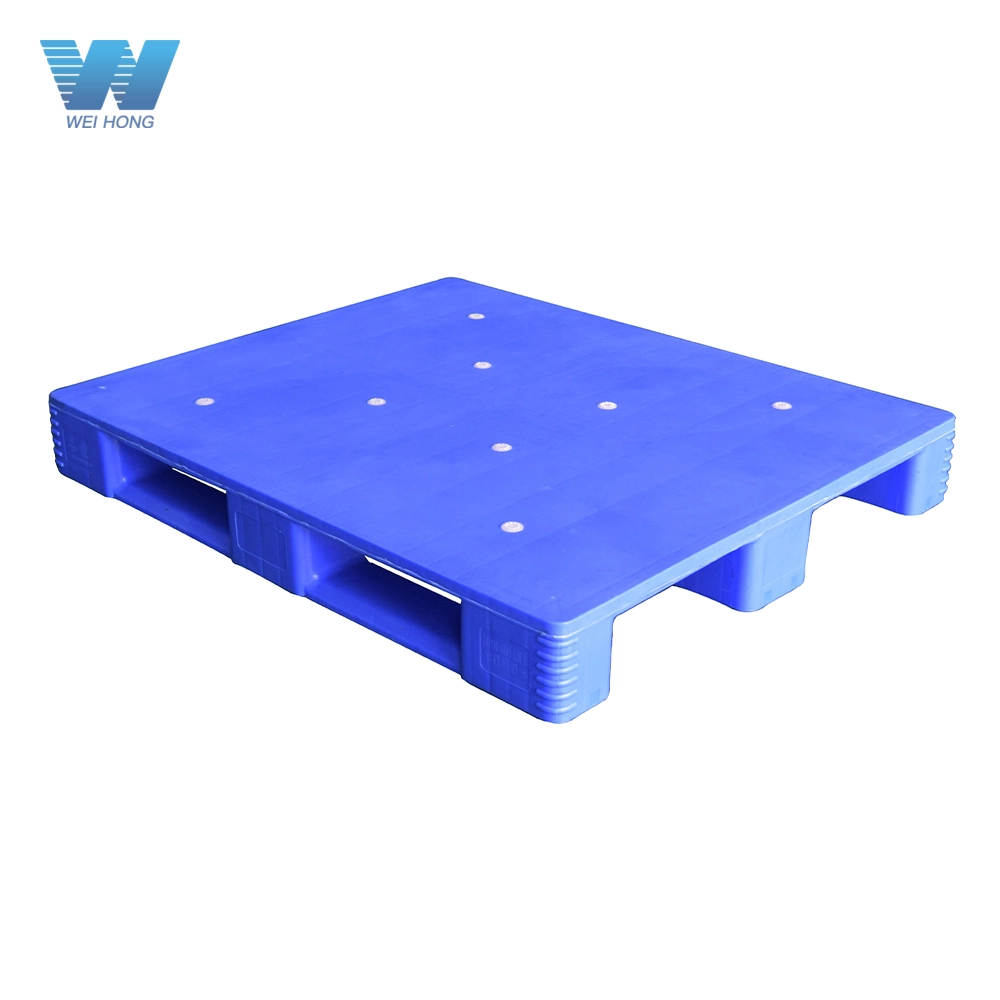
ZJ1210-150H Three-runner Closed Deck Hygienic Plastic Pallet
The three-runner closed-deck hygienic plastic pallet is a solid and durable packaging solution designed for general and especially food and medicine storage and transport. It’s made of virgin HDPE or PP, featuring a flat surface and even bottom for hygienic consideration, a reinforced configuration with steel cores for rack and shelf, and a steady loading capacity.
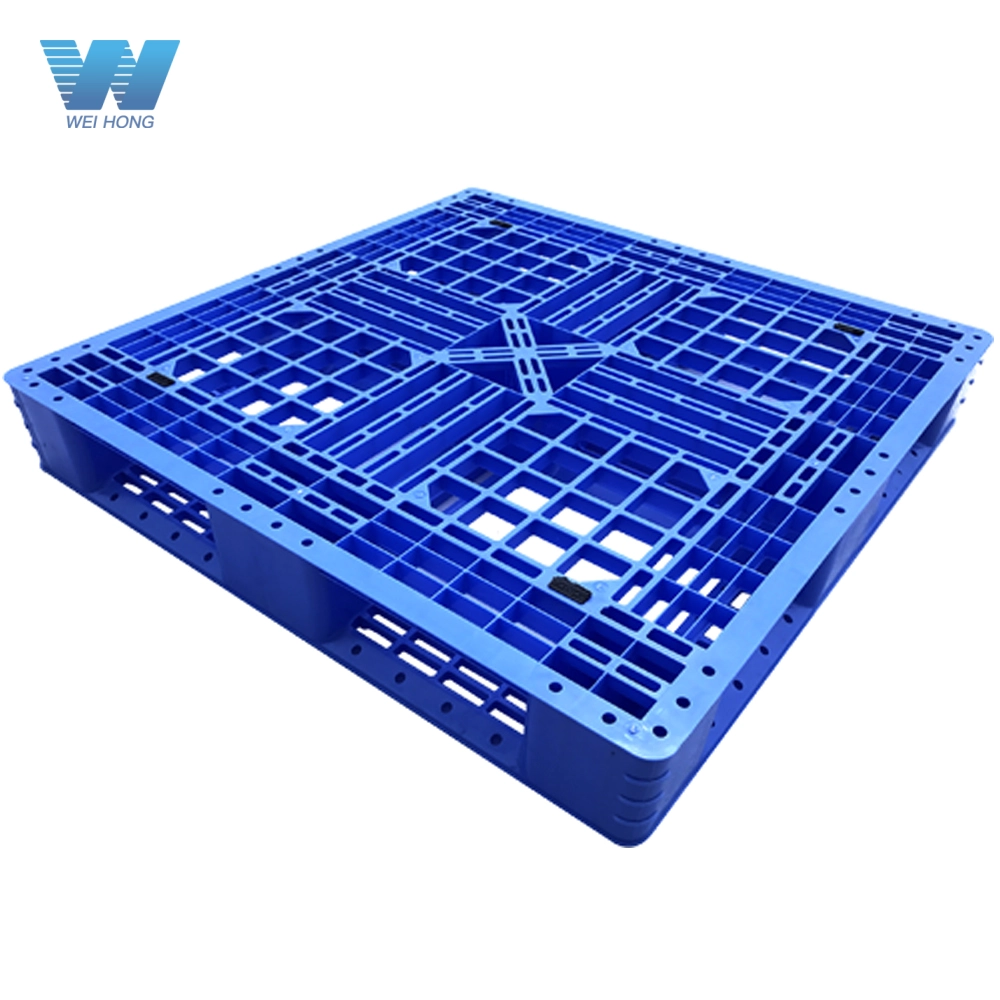
ZJ1010-150 Six-runner Single-sided Plastic Pallet
The six-runner plastic pallet, open or closed deck, is a solid and durable packaging solution designed for general and medium to heavy-duty cargo stacking, storage and transport. It’s made of virgin HDPE or PP, featuring in robust structure, a reinforced configuration with steel cores for the rack and shelf, and a steady loading capacity.
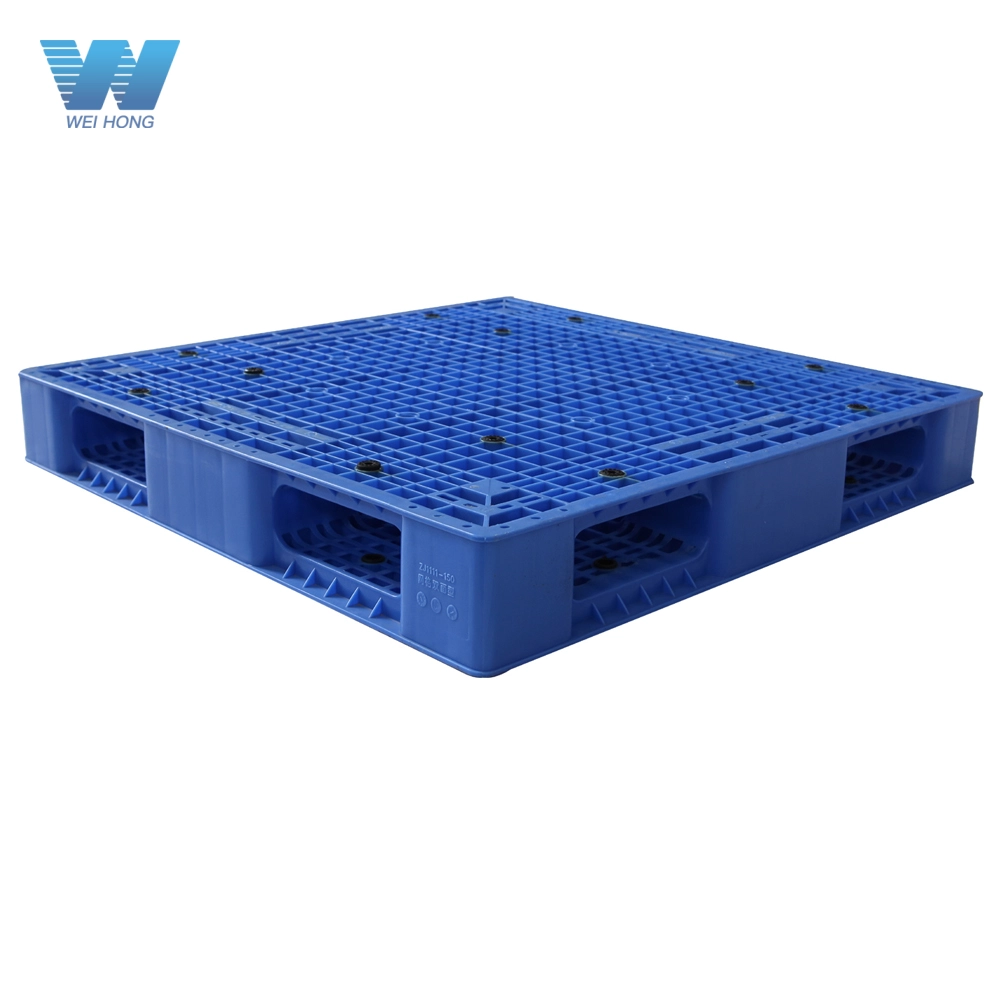
ZJ11111-150 Double-sided Heavy Duty Plastic Pallet
The double-sided plastic pallet, open deck or closed deck, is a solid and durable packaging solution designed for general and medium to heavy-duty cargo stacking, storage and transport. It’s made of virgin HDPE or PP, featuring a robust structure, a reinforced configuration with steel cores for the rack and shelf, and a steady loading capacity for both sides.
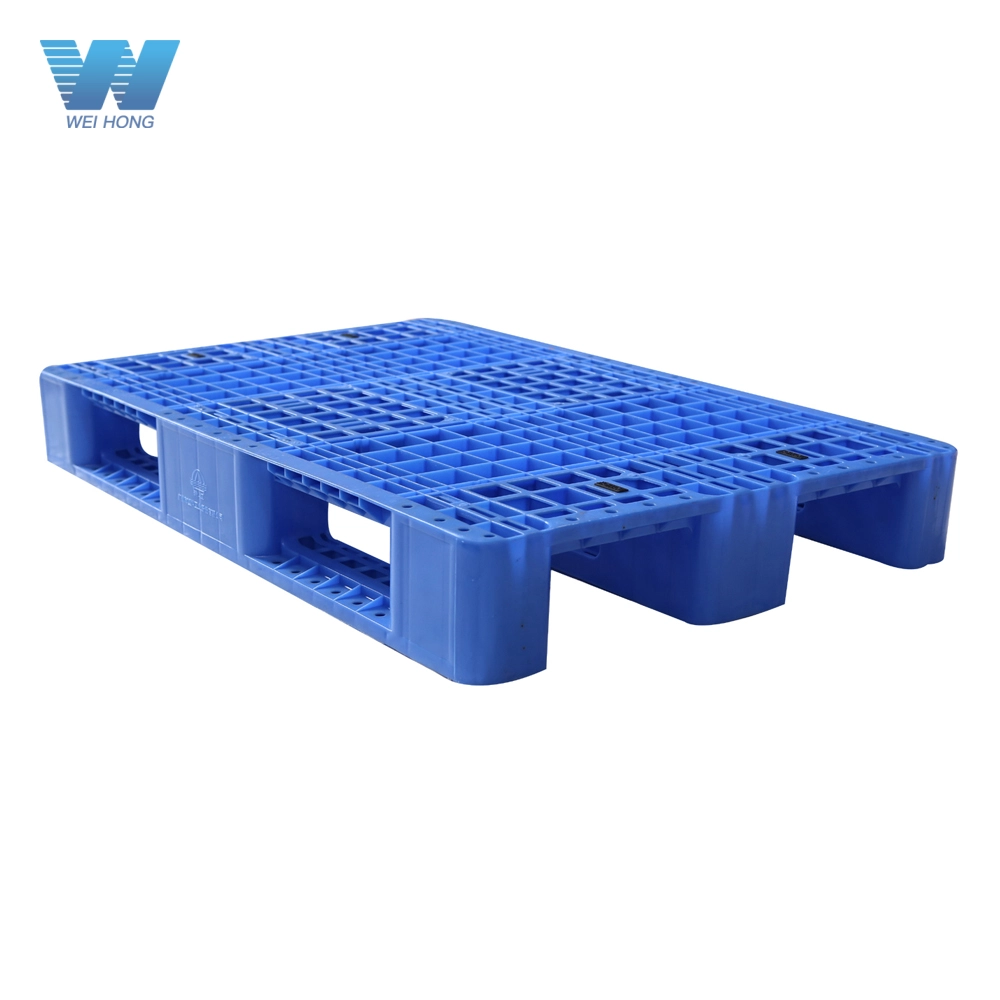
ZJ1208-155 Three-runner Single-sided Plastic Pallet
The three-runner single-sided plastic pallet is a solid and durable packaging solution designed for general and medium to heavy-duty cargo storage, transport and automated storage and retrieval system (AS/RS) use. It’s made of virgin HDPE or PP, featuring in robust structure, reinforced configuration with steel cores for rack and shelf, and a steady loading capacity.
Request More Information About Plastic Pallets
Have questions or need detailed insights on this article? Fill out the form below to contact our team for comprehensive information and support related to our plastic pallet solutions.
Contact us


+86 138 0277 8204
+86 183 4431 0917
+86 195 3791 1860

No. 15-1, Fengying Rd., Taiping Town, Conghua Dist., Guangzhou City, Guangdong Province, China.
Weihong
Whatsapp: +8613802778204
Guangdong Weihong Plastic Technology Co., Ltd.
Scan QR Code