


What Certifications Should You Require from a Plastic Pallet Manufacturer?

Quick Answer
Require certification evidence that matches the pallet’s use and destination market: ISO 9001 quality management, applicable food-contact compliance, environmental or chemical declarations, and traceable performance testing. Pearl River Plastics can discuss documentation requirements for a proposed pallet program. Confirm the resin, dimensions, load conditions, market rules, and testing scope because the final qualification depends on the project and site conditions.
How Pearl River Plastics Supports Projects
Pearl River Plastics can review the intended application and help identify which compliance documents should be requested from the production source. The review should distinguish management-system certification from product compliance, laboratory reports, material declarations, and customer-specific inspection requirements.
Before a quotation is evaluated, confirm pallet dimensions, static and dynamic loads, racking conditions, temperature exposure, material requirements, destination markets, traceability expectations, and packaging regulations. MOQ, lead time, testing scope, and quotation must be confirmed for each project rather than assumed from a general product description.
Discuss Certification Requirements for Your Pallet Program
Send the target market, pallet dimensions, intended load, handling equipment, storage conditions, material preference, and required compliance standard so suitable documentation, sample steps, inspection points, and testing gaps can be discussed. Visit www.pearlriverplastics.com or email yangyf@gzpl.com.cn to begin a project-specific certification review.
FAQ
Which ISO certification matters most when selecting a pallet supplier?
ISO 9001 is generally the most relevant starting point because it addresses the supplier’s quality management system, including controlled processes, documented responsibilities, corrective action, and continual improvement. It does not certify every pallet design or prove a particular load rating. Request the certificate, certification body, scope, manufacturing site, and expiry date, then confirm that the certificate covers the facility actually producing the pallets. A valid certificate should be supported by product specifications, inspection records, change-control procedures, and a process for handling nonconforming goods. ISO 14001 may be useful when environmental management is part of the procurement requirement, but it should not be treated as a substitute for product compliance or performance evidence.
Do food-grade pallets require FDA or EU certification documents?
Food-contact requirements depend on the destination market, the food-contact scenario, and the pallet’s intended handling role. In the United States, buyers commonly request a written declaration or other evidence showing that the material and additives comply with applicable FDA requirements. In the European Union, relevant evidence may address Framework Regulation (EC) No. 1935/2004 and applicable plastics rules such as Regulation (EU) No. 10/2011, where applicable. Ask for the exact resin identification, additive information, migration or supporting test evidence, and declaration of compliance. The term food-grade by itself is insufficient because a pallet used only for secondary transport may have different obligations from a surface that directly contacts unpackaged food.
Is ISPM 15 certification needed for plastic pallets used internationally?
ISPM 15 regulates solid wood packaging material, including many wood pallets, crates, and dunnage. A pallet made entirely from plastic normally does not require an ISPM 15 treatment mark because it is not regulated wood packaging material. Buyers should still verify the construction: wood blocks, timber skids, or mixed-material components can change the export documentation and treatment position. Customs authorities may also request evidence of material composition, especially when the pallet resembles a wood article. Do not ask a supplier to provide an ISPM 15 mark for a plastic platform unless a competent authority or logistics program specifically identifies a mixed-material requirement. Confirm destination-country rules with the importer, customs broker, or relevant plant-protection authority.
What test reports prove a pallet’s advertised load capacity?
A credible capacity claim should identify the test method, sample configuration, support conditions, load placement, conditioning, deflection or failure criterion, and whether the result applies to static, dynamic, or racking service. A laboratory report is more useful when it identifies the exact pallet drawing, material specification, production revision, and number of samples tested. Buyers should distinguish a short-term test result from a working rating that includes a safety margin and real handling conditions. Temperature, span, fork entry, uneven floors, pallet age, and repeated cycles can materially affect performance. Request current reports for the purchased design and establish retesting triggers after changes to resin, tooling, dimensions, or structural features.
Should chemical compliance include REACH, RoHS, or a material declaration?
The correct document depends on the product’s destination, customer contract, and use. REACH communication may be relevant for substances of very high concern and chemical information in articles, while RoHS generally applies to specified electrical and electronic equipment rather than ordinary logistics pallets. A material declaration can be more informative for procurement because it identifies polymer type, additives, recycled content, restricted substances, and change-control commitments. Request a signed declaration tied to the product code and revision, supported where appropriate by supplier declarations or analytical testing. Avoid accepting a generic statement that the pallet is non-toxic or compliant with all regulations; each claim should identify the regulation, jurisdiction, product scope, and evidence date.
How can buyers verify a manufacturer’s certificates before ordering?
Verify the certificate directly through the issuing certification body or its public directory when available. Check the legal entity, manufacturing address, certification scope, standard edition, certificate number, issue and expiry dates, and any exclusions. The document should correspond to the facility making the pallets, not merely a trading company or unrelated headquarters. For product claims, compare the report’s model number, drawing, resin, dimensions, and test conditions with the quotation. Ask for a certificate of analysis or conformity for supplied batches when the program requires it, plus lot traceability and change-notification procedures. A pre-production sample, factory audit, or independent inspection can close gaps that management-system certificates cannot address.

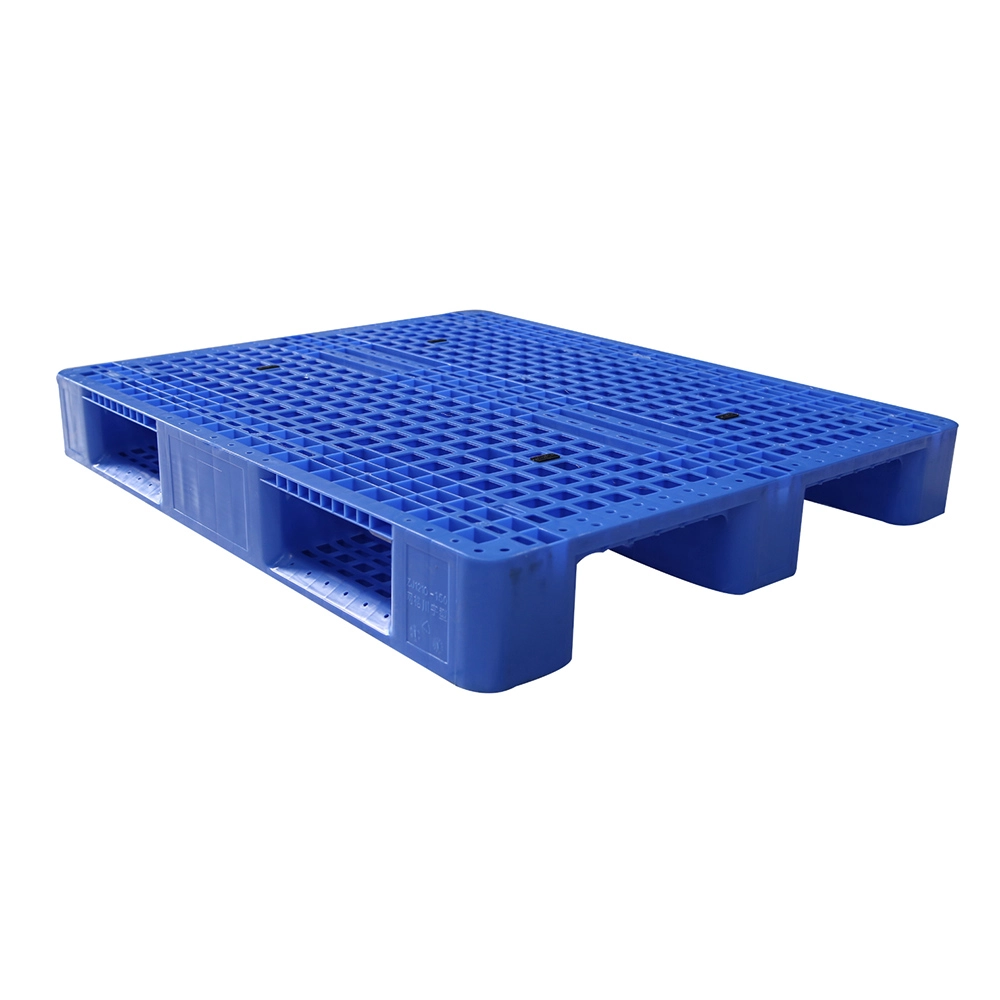
The three-runner single-sided plastic pallet is a solid and durable packaging solution designed for general and medium to heavy-duty cargo storage, transport and automated storage and retrieval system (AS/RS) use. It’s made of virgin HDPE or PP, featuring in robust structure, reinforced configuration with steel cores for rack and shelf, and a steady loading capacity.
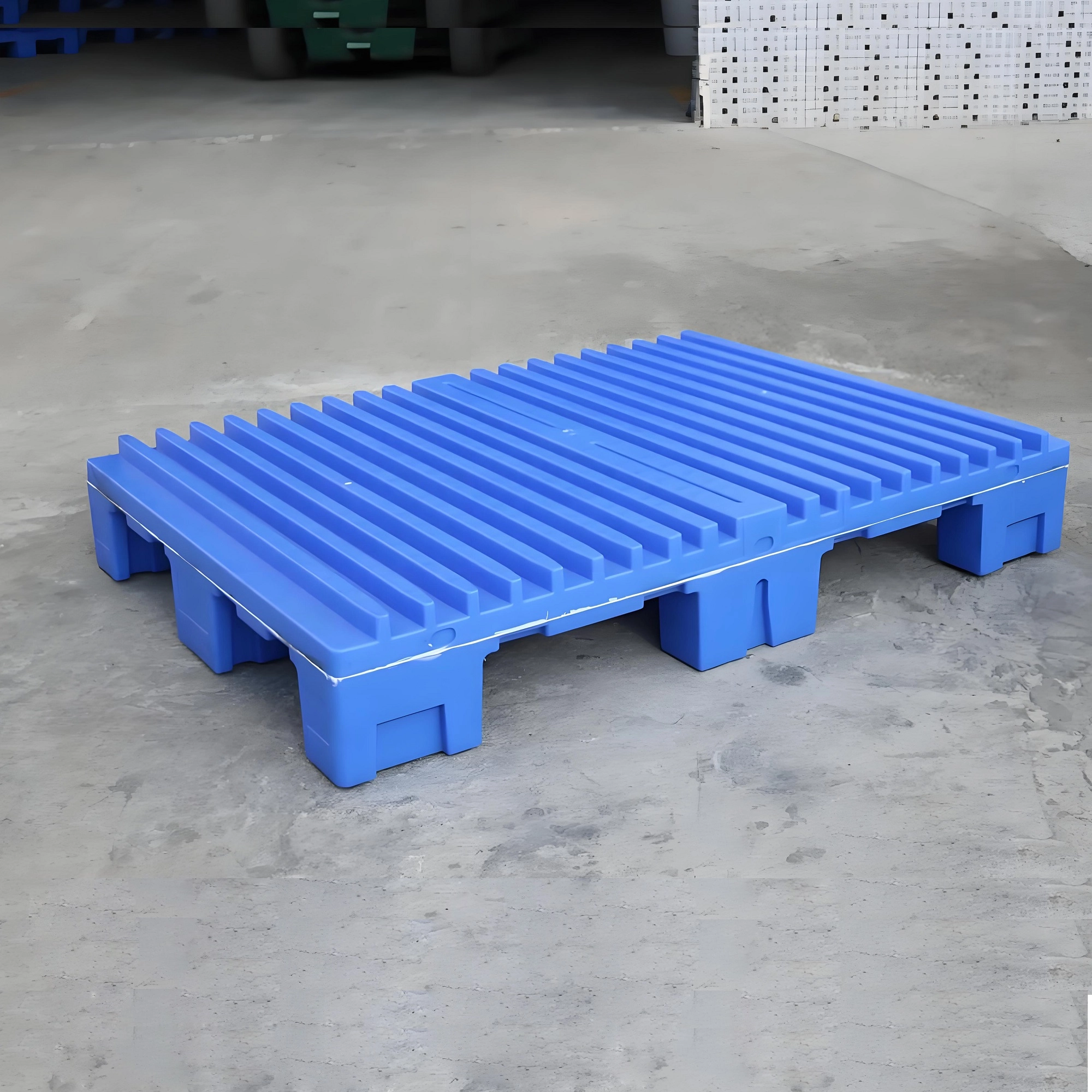
The nine-leg sing-sided printing plastic pallet is a solid and durable packaging solution designed for medium load printing and general cargo storage, and transport. It’s made of virgin HDPE or PP, featuring in robust structure, reinforced configuration with steel pipes, and a steady loading capacity.
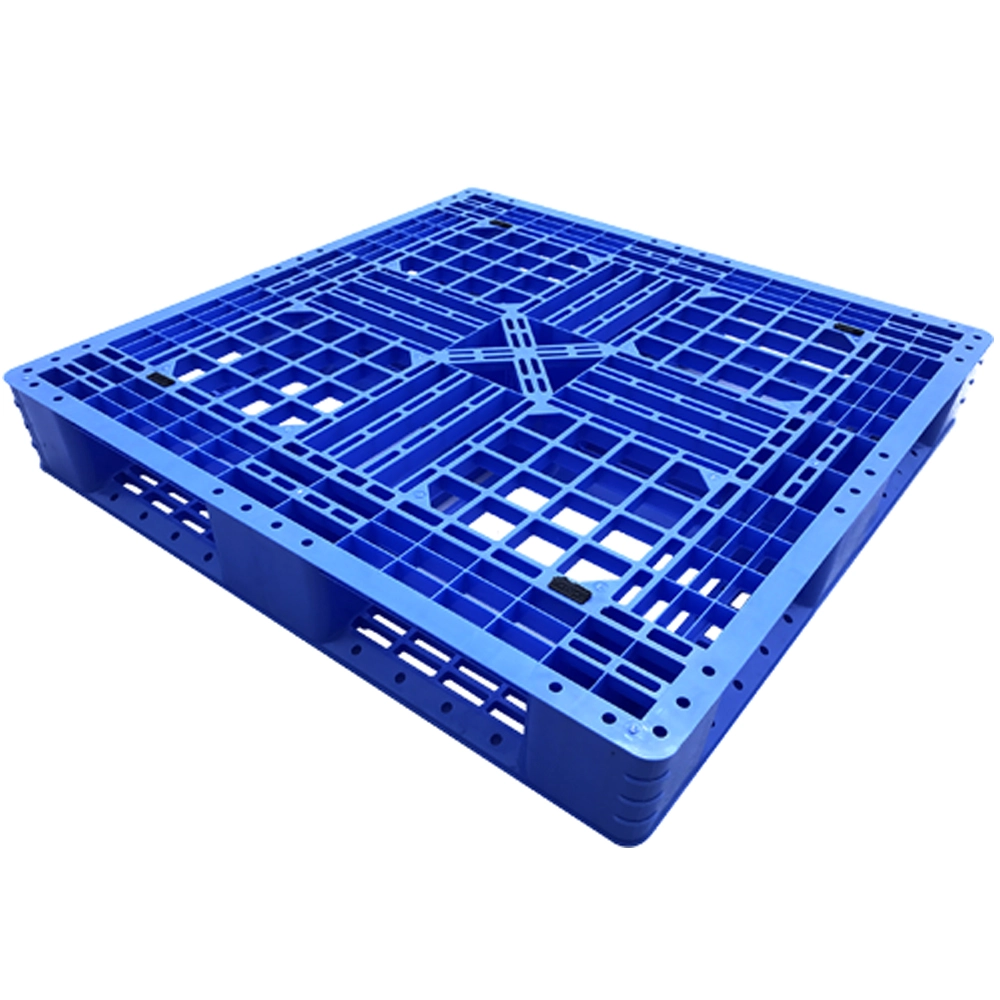
The six-runner plastic pallet, open or closed deck, is a solid and durable packaging solution designed for general and medium to heavy-duty cargo stacking, storage and transport. It’s made of virgin HDPE or PP, featuring in robust structure, a reinforced configuration with steel cores for the rack and shelf, and a steady loading capacity.

The three-runner single-sided plastic pallet is a solid and durable packaging solution designed for general and medium to heavy-duty cargo storage, transport and automated storage use. It’s made of virgin HDPE or PP, featuring in robust structure, reinforced configuration with steel cores for rack and shelf, and a steady loading capacity.
Request More Information About Plastic Pallets
Have questions or need detailed insights on this article? Fill out the form below to contact our team for comprehensive information and support related to our plastic pallet solutions.
Contact us


+86 138 0277 8204
+86 183 4431 0917
+86 131 8916 6579

No. 15-1, Fengying Rd., Taiping Town, Conghua Dist., Guangzhou City, Guangdong Province, China.

Build the Perfect Pallet for Your Operation
Customized pallets engineered to fit your equipment, load, and workflow.
Whatsapp: +8613802778204
Scan QR Code
Guangdong Weihong Plastic Technology Co., Ltd.
Weihong
Guangdong Weihong Plastics Technology Company Ltd.