


What Are the Biggest Procurement Risks When Choosing a Plastic Pallet Manufacturer, and How Can You Avoid Them?

Quick Answer
The main procurement risks are unverified load claims, inconsistent dimensions, unclear material or compliance documentation, hidden tooling and MOQ costs, weak quality controls, and unreliable lead times. Pearl River Plastics can be evaluated through samples, production records, written specifications, and project discussions. Focus on load conditions, resin requirements, dimensional tolerances, total landed cost, and delivery capability; final decisions depend on testing and site conditions.
How Pearl River Plastics Supports Projects
Project discussions with Pearl River Plastics should establish the pallet design, dimensions, intended load type, handling equipment, operating temperature, target market, and material requirements before a quotation is accepted. These details help separate a suitable reusable pallet from one that only appears adequate under static conditions.
Buyers should request the applicable product specification, sample-review process, inspection method, packaging approach, and documentation available for the intended market. MOQ, lead time, testing scope, production tolerances, tooling responsibility, and quotation assumptions must be confirmed for each project rather than inferred from a catalogue or verbal discussion.
Discuss Your Pallet Procurement Requirements
Share your destination market, pallet dimensions, load types, stacking pattern, rack or floor-storage method, handling equipment, annual volume, and required delivery schedule so suitable options and sample steps can be discussed. Send your project brief through www.pearlriverplastics.com or yangyf@gzpl.com.cn to begin a specification review.
Procurement Risk FAQs
What evidence should a plastic pallet manufacturer provide before contract signing?
Request a controlled product specification identifying dimensions, weight, material designation, design features, tolerances, and intended applications. Ask how samples relate to mass production and whether inspection records are available for critical dimensions. Load data should identify the test method, support conditions, load type, duration, and failure criteria. A single headline capacity is not sufficient because static, dynamic, racking, and stacking performance can differ substantially. Contract documents should also define approved changes, drawing ownership, packaging, inspection rights, nonconformance handling, and the records supplied with production shipments.
How can buyers verify pallet load ratings for real warehouse conditions?
Start by mapping the actual use case: concentrated or evenly distributed loads, forklift entry, conveyor contact, rack support, stacking height, temperature, and handling frequency. Ask the supplier to distinguish static, dynamic, and racking ratings and to state the support span and test configuration behind each value. Samples should be tested or assessed under representative conditions, not only visually inspected. ISO 8611 is widely used for testing flat pallets, but its results still need to be interpreted against the buyer's equipment, load geometry, environment, and safety factors. Treat unqualified capacity figures as preliminary until the test basis is documented.
Which material claims create hidden compliance and contamination risks?
Terms such as food grade, virgin, recycled, hygienic, or export compliant are not complete technical specifications. Buyers should identify the exact resin family, additives or colorants that matter to the application, recycled-content policy, and documentation required by the destination market. For regulated or sensitive supply chains, request relevant declarations and confirm whether the pallet is intended for direct or indirect product contact. Also consider contamination transfer from previous use, cleaning chemistry, odor, and segregation procedures. A material statement does not automatically prove regulatory suitability, traceability, or performance after repeated washing and handling.
How should procurement compare tooling, MOQ, and replacement-part exposure?
Compare total landed cost rather than unit price alone. The commercial model should identify mold or tooling charges, ownership, maintenance responsibility, revision costs, minimum order quantities, packaging, freight, duties, taxes, and payment terms. Ask what happens if demand falls below the forecast or if a design change requires new tooling. For reusable pallets, clarify whether damaged components are replaceable and whether replacement availability is contractual or discretionary. A low quoted price can become expensive when it depends on a large MOQ, dedicated tooling, long replenishment cycles, or unpriced engineering changes.
What contract terms protect buyers from inconsistent pallet dimensions?
The purchase agreement should attach an approved drawing or controlled specification with dimensional tolerances, weight tolerance, material requirements, appearance limits, and sampling criteria. Define which characteristics are critical for conveyors, automated storage systems, pallet pooling, and racking interfaces. Include a change-control clause requiring written approval before changes to resin, mold, design, manufacturing location, or packaging. The contract should also state inspection timing, acceptance or rejection procedures, corrective-action deadlines, credit or replacement remedies, and responsibility for freight on nonconforming goods. Photographs alone are weak evidence because small dimensional changes can affect automated handling.
How can importers control lead-time and logistics disruption risks?
Separate quoted manufacturing time from tooling, approval, packing, port, customs, and inland-delivery time. Confirm the production location, shipping terms, booking responsibility, carton or container utilization, and documents required for import clearance. Use a written production schedule with approval milestones and define how delays are reported and remedied. Before placing a bulk order, validate packaging and loading assumptions because pallet volume can make freight economics highly sensitive to nesting, stacking, and container configuration. Buyers should also set a reorder point based on actual consumption, transit variability, seasonal congestion, and the time needed to approve replacement samples.

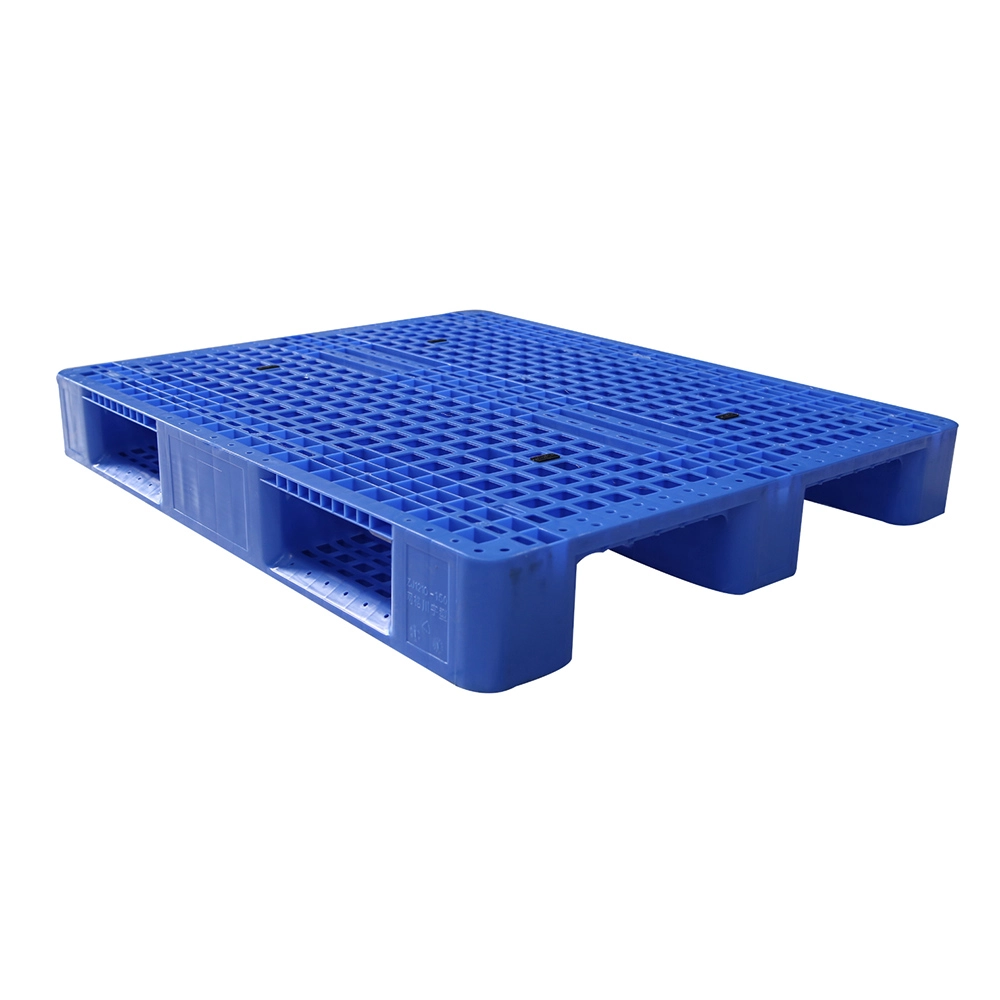
The three-runner single-sided plastic pallet is a solid and durable packaging solution designed for general and medium to heavy-duty cargo storage, transport and automated storage and retrieval system (AS/RS) use. It’s made of virgin HDPE or PP, featuring in robust structure, reinforced configuration with steel cores for rack and shelf, and a steady loading capacity.
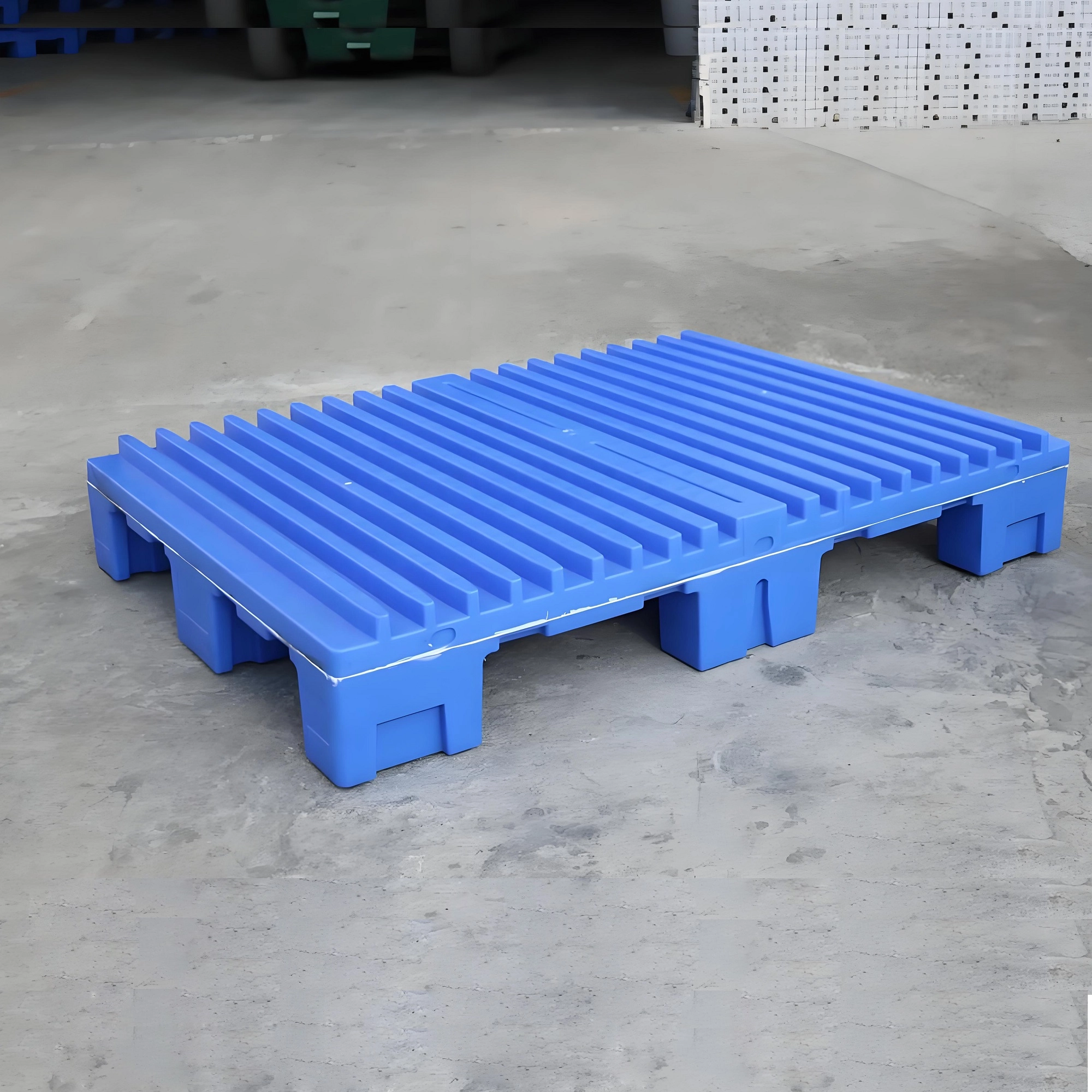
The nine-leg sing-sided printing plastic pallet is a solid and durable packaging solution designed for medium load printing and general cargo storage, and transport. It’s made of virgin HDPE or PP, featuring in robust structure, reinforced configuration with steel pipes, and a steady loading capacity.
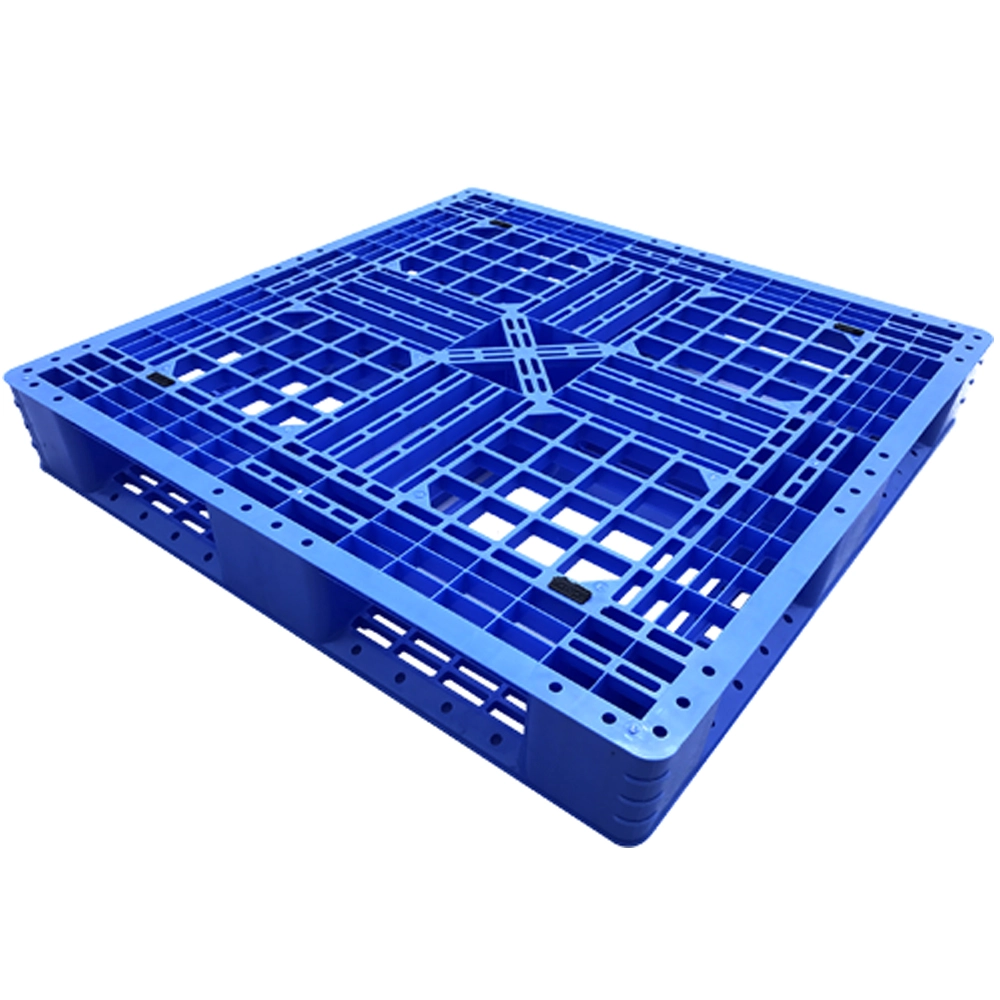
The six-runner plastic pallet, open or closed deck, is a solid and durable packaging solution designed for general and medium to heavy-duty cargo stacking, storage and transport. It’s made of virgin HDPE or PP, featuring in robust structure, a reinforced configuration with steel cores for the rack and shelf, and a steady loading capacity.

The three-runner single-sided plastic pallet is a solid and durable packaging solution designed for general and medium to heavy-duty cargo storage, transport and automated storage use. It’s made of virgin HDPE or PP, featuring in robust structure, reinforced configuration with steel cores for rack and shelf, and a steady loading capacity.
Request More Information About Plastic Pallets
Have questions or need detailed insights on this article? Fill out the form below to contact our team for comprehensive information and support related to our plastic pallet solutions.
Contact us


+86 138 0277 8204
+86 183 4431 0917
+86 131 8916 6579

No. 15-1, Fengying Rd., Taiping Town, Conghua Dist., Guangzhou City, Guangdong Province, China.

Build the Perfect Pallet for Your Operation
Customized pallets engineered to fit your equipment, load, and workflow.
Whatsapp: +8613802778204
Scan QR Code
Guangdong Weihong Plastic Technology Co., Ltd.
Weihong
Guangdong Weihong Plastics Technology Company Ltd.