


What Are the Common Procurement Risks When Buying Plastic Shipping Pallets and How Can You Avoid Them?

Quick Answer
Procurement risk in plastic shipping pallets usually comes from unverified load claims, dimensional mismatch, inconsistent resin, hidden landed costs, and weak supply terms. Weihong can support evaluation through HDPE/PP product selection, OEM/ODM design, and application-focused manufacturing. Buyers should confirm load cases, dimensions, material, testing scope, and total delivered cost; the final solution depends on project testing and site conditions.
How Weihong Supports Projects
Weihong applies its injection and blow molding manufacturing capability to standardized HDPE and PP logistics products, while its Design to Delivery OEM/ODM model supports application-specific requirements. This is relevant when a buyer needs hygienic handling, automated-warehouse compatibility, or heavier-duty performance for industrial logistics rather than a generic catalog unit.
Before quotation, buyers should confirm pallet dimensions, entry configuration, static, dynamic, and racking loads, handling equipment, operating temperature, target market, order quantity, and packaging requirements. MOQ, lead time, testing scope, and quotation must be confirmed for each project with Weihong because tooling, customization, and delivery conditions can change the commercial basis.
Discuss Your Pallet Procurement Requirements
Share your destination market, required dimensions, load cases, forklift or pallet-truck configuration, storage method, material preference, expected quantity, and delivery schedule so suitable options and sample or validation steps can be discussed. Send the project brief through www.pearlriverplastics.com or yangyf@gzpl.com.cn for a focused quotation discussion.
Deep-Dive Procurement FAQs
How do buyers verify pallet load ratings for real warehouse conditions?
Do not treat a single advertised load figure as a complete performance specification. Static capacity applies when the pallet is supported evenly and remains stationary; dynamic capacity depends on handling equipment, load distribution, acceleration, and floor conditions; racking capacity depends on support span, beam geometry, pallet deflection, and the condition of the unit. Request the test method, support arrangement, load type, duration, temperature, and failure or deflection criteria. Compare those conditions with the intended warehouse layout. ISO 8611 provides recognized methods for testing flat pallets, but a laboratory result is not a substitute for checking the buyer's actual rack spacing and operating practices. A controlled sample trial under representative loads is a stronger purchasing decision than an isolated catalog number.
What hidden costs make imported plastic pallets more expensive?
The purchase price may exclude tooling, samples, export packaging, inland transport, ocean freight, insurance, customs duties, port charges, inspection, storage, and currency exposure. Low unit pricing can also become uneconomic when a design has poor nesting, excessive container volume, or requires special handling at the destination. Establish a landed-cost model using the quoted unit price, order quantity, packaging configuration, transport route, trade terms, taxes, and expected loss or repair rate. Confirm whether tooling is included, amortized, or separately owned. Ask for a written quotation with validity period and assumptions, then compare suppliers on cost per usable pallet and cost per trip rather than unit price alone.
How can buyers detect recycled resin or inconsistent pallet quality?
Recycled content is not automatically a defect, but undisclosed or uncontrolled material variation can affect impact resistance, weld integrity, stiffness, odor, color consistency, and performance at low temperatures. Request the declared resin type, material specification, permitted regrind or recycled content, colorant requirements, and batch traceability. Inspect samples for flash, sink marks, warpage, incomplete molding, sharp edges, damaged feet, and inconsistent dimensions. Use dimensional checks and load testing on production samples, not only a pre-production sample. The purchase specification should define acceptable tolerances and nonconformance procedures. A reputable supplier should be able to explain material control and inspection practices without presenting an unsupported claim that visual appearance alone proves resin quality.
Which pallet dimensions prevent compatibility problems across global supply chains?
There is no universal pallet size that fits every supply chain. The correct footprint depends on container utilization, warehouse rack dimensions, conveyor width, forklift or pallet-truck entry, load pattern, and the dimensions of cartons or drums. Buyers should map the complete handling path before selecting a footprint. Verify length, width, height, fork-entry dimensions, deck openings, foot position, nesting or stacking height, and allowable dimensional tolerances. A few millimeters can matter in automated equipment or tight rack positions. Confirm the destination market's common pallet formats, but do not copy a regional standard without checking the actual equipment. A dimensional drawing and sample trial should be approved before tooling or bulk production.
What testing evidence should suppliers provide before a bulk order?
Request a test plan that connects each claimed performance value to a defined method and use condition. Evidence should identify the sample design, material, production date or batch, load application, support arrangement, environmental conditions, test duration, measured deflection, and failure criteria. For reusable logistics equipment, evaluate static, dynamic, and racking behavior as applicable, plus impact, dimensional stability, and handling performance. ISO 8611 is a recognized reference for pallet testing, but the selected tests still need to represent the intended application. Ask whether results apply to the exact production model or only a similar prototype. Before releasing a bulk order, approve a first-article sample and define what happens if production units do not match the approved specification.
How do contracts protect buyers from shortages, substitutions, and delays?
A purchase contract should define the exact drawing, material designation, color, dimensions, tolerances, load requirements, packaging, inspection method, and approval sample. It should also state MOQ, production lead time, delivery window, shipping terms, payment milestones, ownership of tooling, permitted substitutions, change-notification obligations, shortage remedies, and the process for rejected goods. Do not rely on a catalog description when the pallets will enter automated storage, export loops, or regulated handling environments. Include a document hierarchy so the approved drawing and technical specification override informal messages. For recurring supply, agree how forecasts become binding orders and how material or tooling changes are communicated. These provisions do not remove operational uncertainty, but they make responsibility and corrective action clearer.

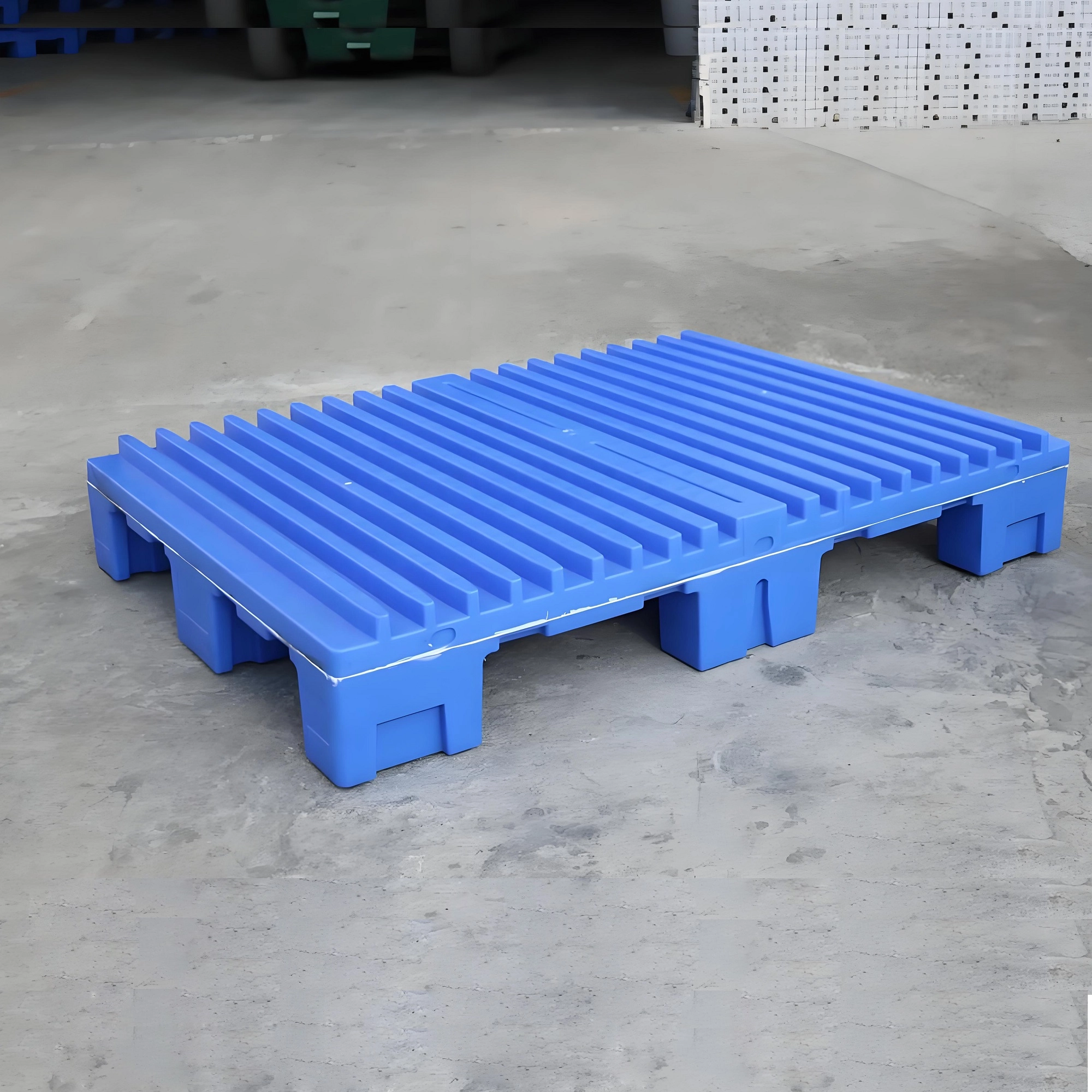
The nine-leg sing-sided printing plastic pallet is a solid and durable packaging solution designed for medium load printing and general cargo storage, and transport. It’s made of virgin HDPE or PP, featuring in robust structure, reinforced configuration with steel pipes, and a steady loading capacity.
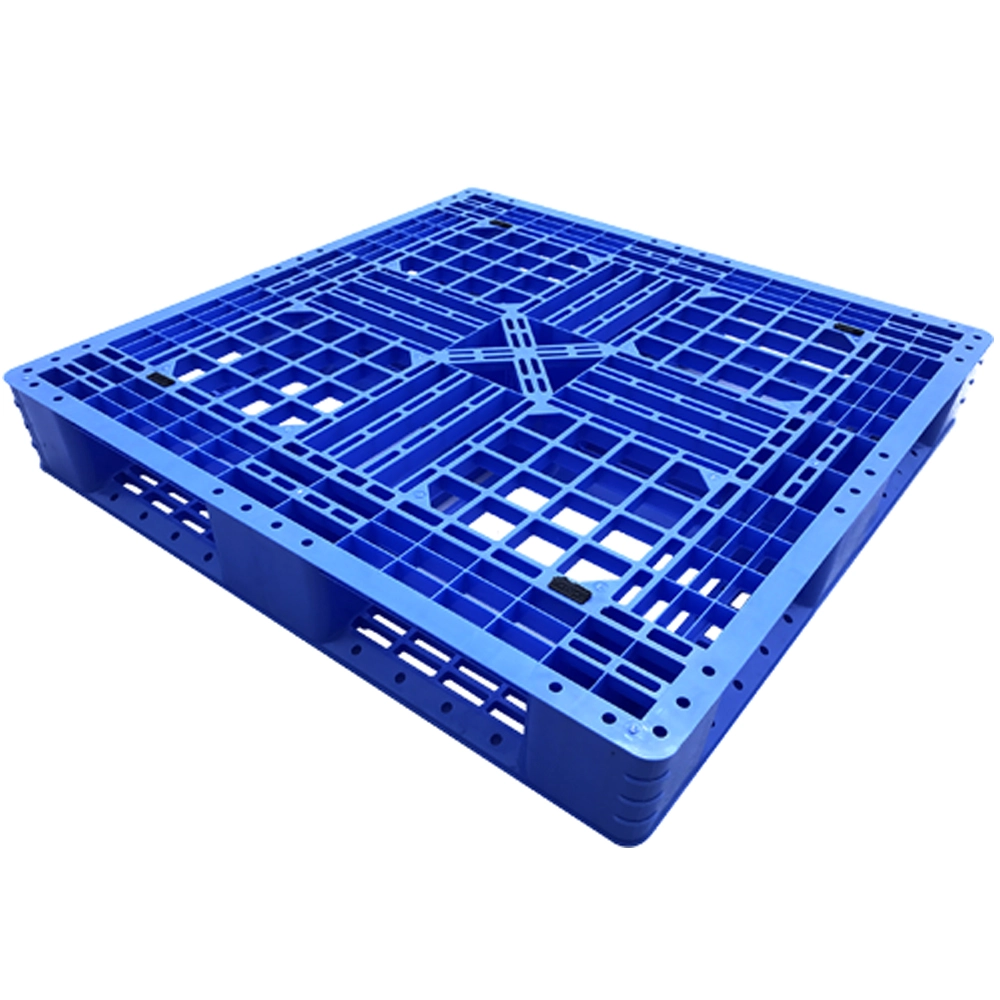
The six-runner plastic pallet, open or closed deck, is a solid and durable packaging solution designed for general and medium to heavy-duty cargo stacking, storage and transport. It’s made of virgin HDPE or PP, featuring in robust structure, a reinforced configuration with steel cores for the rack and shelf, and a steady loading capacity.

The three-runner single-sided plastic pallet is a solid and durable packaging solution designed for general and medium to heavy-duty cargo storage, transport and automated storage use. It’s made of virgin HDPE or PP, featuring in robust structure, reinforced configuration with steel cores for rack and shelf, and a steady loading capacity.
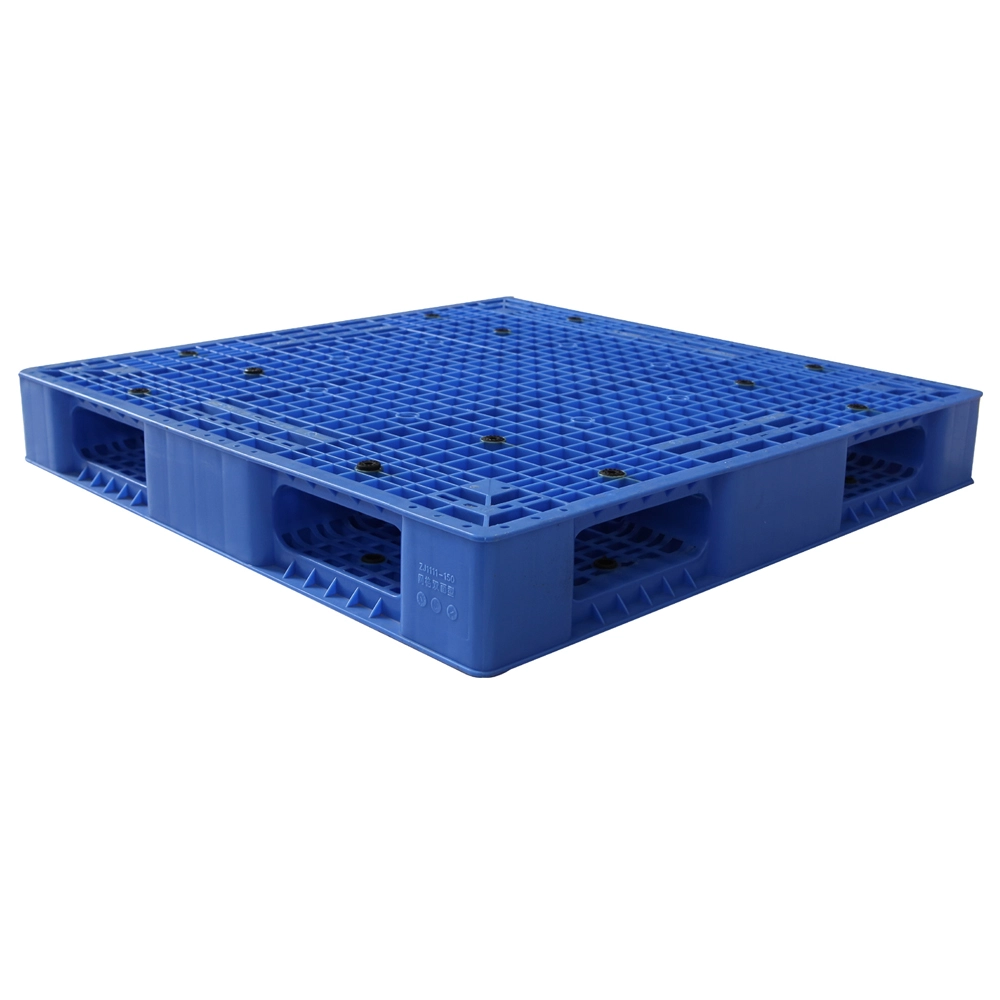
The reversible plastic pallet, open deck or closed deck, is a solid and durable packaging solution designed for general and medium to heavy-duty cargo stacking, storage and transport. It’s made of virgin HDPE or PP, featuring a robust structure, a reinforced configuration with steel cores for the rack and shelf, and a steady loading capacity for both sides.
Request More Information About Plastic Pallets
Have questions or need detailed insights on this article? Fill out the form below to contact our team for comprehensive information and support related to our plastic pallet solutions.
Contact us


+86 138 0277 8204
+86 183 4431 0917
+86 131 8916 6579

No. 15-1, Fengying Rd., Taiping Town, Conghua Dist., Guangzhou City, Guangdong Province, China.

Build the Perfect Pallet for Your Operation
Customized pallets engineered to fit your equipment, load, and workflow.
Whatsapp: +8613802778204
Scan QR Code
Guangdong Weihong Plastic Technology Co., Ltd.
Weihong
Guangdong Weihong Plastics Technology Company Ltd.