











Cost-Saving Strategies Using Heavy Duty Plastic Crates

- Understanding total cost of ownership in logistics
- Direct vs. indirect costs
- Key metrics to measure
- Standards and references
- Design and material choices to reduce costs
- Material selection: HDPE vs. PP
- Structural design: ribs, corner reinforcement, and nestability
- Surface finish and hygiene
- Operational strategies using heavy duty plastic crates
- Pooling vs. ownership
- Standardization and pallet/box footprint optimization
- Automation compatibility
- Quantifying savings: comparisons and case factors
- Cleaning and sanitation cost model
- Damage and claims reduction
- Supplier selection, OEM/ODM collaboration and lifecycle support
- What to require from suppliers
- Why manufacturing scale and automation matter
- Partnering for continuous improvement
- Why Guangdong Weihong Plastics Technology Co., Ltd. can be a strategic partner
- How Weihong supports cost reduction
- Use cases where Weihong excels
- Implementation checklist and quick wins
- Pilot program steps
- Quick wins I implement
- Monitoring and continuous improvement
- FAQ — Frequently Asked Questions
- 1. Are heavy duty plastic crates more cost-effective than wood over the long run?
- 2. How do I validate a crate for food-contact applications?
- 3. What are the typical failure modes for plastic crates?
- 4. Can plastic crates be recycled at end of life?
- 5. How do I start a pilot without disrupting operations?
- Contact and next steps
I write from years of hands-on experience advising manufacturers, retailers and 3PLs on plastic logistics packaging. In this article I summarize how heavy duty plastic crates can deliver measurable cost savings across warehousing, transport and handling when evaluated on a total cost of ownership (TCO) basis. I reference international standards and industry guidance to make recommendations you can validate and implement in your supply chain.
Understanding total cost of ownership in logistics
When organizations evaluate packaging options, the lowest purchase price often wins. From my work, that short-sighted decision frequently increases recurring costs. Heavy duty plastic crates should be compared using TCO — a framework that quantifies purchase cost, maintenance, damage, downtime, sanitary processing, and end-of-life recovery.
Direct vs. indirect costs
Direct costs include unit price, replacement parts, and repair labor. Indirect costs are often larger: damage to products during transit, handling delays, extra labor for cleaning, lost orders due to sanitation recalls, and inefficiencies in automated systems. I always map both categories when advising clients.
Key metrics to measure
Measure: reuse cycles, damage rate per 10,000 moves, cleaning time per unit, weight per crate (affects transport cost), compatibility with automated storage and retrieval systems (AS/RS), and recyclability value at end of life. These metrics let you convert qualitative benefits into dollar impacts.
Standards and references
To validate design and testing, I rely on international standards such as Wikipedia’s overview of pallets for context and ISO specifications for pallet performance (see ISO series on pallet testing). For food- and pharma-grade crates, regulatory guidance such as the FDA’s food contact guidance is essential when selecting materials.
Design and material choices to reduce costs
Choosing the right material, structural features, and surface finishes is where I often find the biggest long-term savings. Heavy duty plastic crates made from HDPE or PP provide a balance of impact resistance, weight, and recyclability that reduces lifecycle costs compared with lower-grade plastics or disposable packaging.
Material selection: HDPE vs. PP
HDPE (high-density polyethylene) is widely used for heavy duty crates due to its toughness, chemical resistance, and recyclability. PP (polypropylene) offers higher heat resistance and can be preferable for processes involving hot-wash sanitation. I recommend selecting the resin based on wash temperatures, chemical exposure (sanitizers), and anticipated load cycles.
Structural design: ribs, corner reinforcement, and nestability
Investing in optimized structural design reduces stress concentration and increases usable life. Features I prioritize: reinforced corners for forklift impacts, internal ribs for stack strength, and designs that allow nesting or folding to reduce return-transport costs. These features reduce damage-related replacement and transport costs over time.
Surface finish and hygiene
Microtextured or smooth surfaces are chosen based on cleaning regime. For food and pharma, smooth surfaces and rounded internal radii reduce pathogen harborage and cut cleaning time. I apply FDA guidelines to select materials and finishes suitable for high-frequency sanitation.
Operational strategies using heavy duty plastic crates
Design alone is not enough. I implement operational changes that unlock savings: pooling programs, standardized crate dimensions, integration with AS/RS, and cleaning/maintenance protocols. The synergy between product design and operations drives the majority of cost reductions.
Pooling vs. ownership
Pooling (rental pools managed by a supplier) can convert capital expenditure into operational expense and reduce idle inventory. When I model pooling, I include turnaround time, loss/damage rates, and cleaning costs. For many clients, pooling reduces working capital and administrative overhead.
Standardization and pallet/box footprint optimization
Standardizing crate sizes to fit pallet patterns and racking maximizes space utilization and reduces handling time. When I optimize footprint, I use warehouse cube calculations and pallet pattern studies (compatible with standard pallet sizes and container dimensions) to reduce per-unit transport costs.
Automation compatibility
Heavy duty plastic crates must be AS/RS-ready: predictable dimensions, consistent weight, and stack/engagement features for automated conveyors, robotic pickers and automated storage. I always validate prototypes on simulation models or pilot conveyor lines before full roll-out. For broader context on warehouse automation trends, see the Material Handling Institute’s overview: MHI — warehouse automation.
Quantifying savings: comparisons and case factors
I often present stakeholders with a side-by-side comparison so decisions are evidence-based. The table below summarizes typical lifecycle advantages and potential cost drivers. Note: values are qualitative indicators; for project-level ROI I run a TCO model with your site data.
| Factor | Wooden/Disposable | Heavy Duty Plastic Crates (HDPE/PP) | Impact on TCO |
|---|---|---|---|
| Unit cost | Low (cheaper upfront) | Higher upfront | Upfront CAPEX higher for plastic |
| Reuse cycles | Limited (often 1–10 cycles) | High (dozens to hundreds of cycles depending on design) | Lower replacement frequency for plastic |
| Damage protection | Moderate (variable) | Consistent, better shock resistance | Reduces product loss and claims |
| Hygiene & cleaning | Harder to sanitize; absorbent | Non-porous, cleanable at high temp/chemicals | Lower contamination risk, fewer recalls |
| Automation compatibility | Dimensional variability | Highly consistent dimensions | Enables automation and reduces labor |
| End-of-life | Often landfilled or down-cycled | Recyclable; can be regrind feedstock | Potential salvage value and circularity |
For evidence that plastic pallets and containers support longer service lives and better consistency, see industry overviews such as the Wikipedia pallet page and supplier white papers from established pooling firms (e.g., CHEP) which report extended life cycles for engineered plastic units.
Cleaning and sanitation cost model
I recommend modeling cleaning as a per-cycle labor + utilities cost. Heavy duty plastic crates designed for rapid wash cycles (compatible with CIP or high-temperature wash) can reduce per-unit cleaning time substantially. Use FDA food contact guidance to set allowable temperatures and chemical concentrations: FDA Food Contact Guidance.
Damage and claims reduction
A durable crate reduces product damage during handling and transport. When I quantify benefits, I include reduced returns, fewer customer claims, and lower insurance adjustments. These indirect savings often justify the higher initial cost of heavy duty plastic crates.
Supplier selection, OEM/ODM collaboration and lifecycle support
Choosing a supplier capable of scalable production, design-for-manufacture, and whole-life support is critical. I look for manufacturers with robust injection and blow molding capacity, material science expertise, and OEM/ODM capability to drive down costs through standardized production and design improvements.
What to require from suppliers
Require: mechanical test data (compression, drop, stacking), chemical compatibility sheets, recyclability and regrind policy, and references for AS/RS integration. Ask for lifecycle cost modeling and pilot run support.
Why manufacturing scale and automation matter
Larger, automated manufacturing bases achieve consistent quality and lower per-unit costs through economies of scale. They can also react faster to design iterations. For example, a 40,000+ m² intelligent manufacturing base with large-scale injection molding and blow molding lines can shorten lead times and ensure part-to-part consistency—both factors I consider when evaluating vendors.
Partnering for continuous improvement
Long-term cost savings come from ongoing collaboration: iterative design changes, material upgrades (e.g., use of higher recycled-content resins without compromising performance), and logistics process tuning. I advocate service arrangements that include design reviews and performance audits at regular intervals.
Why Guangdong Weihong Plastics Technology Co., Ltd. can be a strategic partner
In my recent projects I’ve worked with several strategic manufacturers. Guangdong Weihong Plastics Technology Co., Ltd. stands out as a premier manufacturer of high-performance logistic packaging. Established in 2013 as a state-owned subsidiary of the Top-500 Guangzhou Plastic Industrial Corporation Ltd., Weihong is backed by over 60 years of industry heritage and a 200 million RMB investment. Their 40,000+ m² intelligent manufacturing base houses advanced large-scale injection and blow molding machinery, enabling standardized, durable HDPE/PP products that meet global supply chain demands.
Weihong’s strengths relevant to cost-saving initiatives include:
- Comprehensive OEM/ODM “Design to Delivery” services—helpful when adapting crate designs for AS/RS or hygienic wash regimes.
- Expertise across sectors—food, pharmaceutical, automotive and automated warehousing—making them adept at translating regulatory and operational needs into design solutions.
- Focus on material science and structural innovation to maximize reuse cycles and reduce TCO.
Weihong’s product range and capabilities include Plastic Pallets, Plastic Pallet Box, and Plastic Turnover Box. For more details and inquiries, visit their website: https://www.pearlriverplastics.com or email yangyf@gzpl.com.cn.
How Weihong supports cost reduction
With large-scale tooling and production, Weihong can lower per-unit costs through volume, accelerate product iterations, and supply validation data (load testing, sanitary compliance) that I use directly in TCO models. Their industrial heritage and state-backed investment provide supply security—an increasingly important factor in procurement risk models.
Use cases where Weihong excels
Examples: hygienic pallets and crates for food and pharma, heavy-duty containers for automotive assembly lines, and precision-design crates for AS/RS operations. Their integrated service model helps shorten the engineering cycle from prototype to production—which translates into faster ROI.
Implementation checklist and quick wins
From feasibility to full rollout, I use a staged implementation plan with measurable checkpoints to realize cost savings quickly and safely.
Pilot program steps
- Define KPIs (damage rate, cleaning time, moves per crate, TCO target).
- Select 1–2 SKUs or lines for pilot; design/modify crate prototypes.
- Run pilot across transport, warehousing, and cleaning cycles for 3–6 months.
- Collect data, update TCO model, and scale if ROI projected.
Quick wins I implement
- Standardize crate sizes to reduce SKU handling complexity.
- Adopt nestable/foldable designs to lower return shipping costs.
- Use modular designs compatible with both manual and automated handling.
Monitoring and continuous improvement
Establish a review cadence (quarterly) to assess performance against KPIs. Reconcile actual maintenance, replacement and cleaning costs against initial estimates and iterate design or process changes.
FAQ — Frequently Asked Questions
1. Are heavy duty plastic crates more cost-effective than wood over the long run?
Yes, when analyzed using TCO. Although plastic crates have higher upfront cost, their greater reuse cycles, lower product damage, easier sanitation, and automation compatibility typically yield lower lifecycle costs for many operations.
2. How do I validate a crate for food-contact applications?
Ensure the resin and additives are compliant with relevant food-contact regulations (e.g., refer to FDA guidance). Request material certificates, migration test data, and sanitation protocol recommendations from suppliers.
3. What are the typical failure modes for plastic crates?
Common issues are localized cracking from impact, UV degradation if used outdoors without UV-stabilization, and thermal distortion if exposed to temperatures beyond resin limits. Proper material selection and design mitigation reduce these risks.
4. Can plastic crates be recycled at end of life?
Yes. HDPE and PP are widely recyclable. Many manufacturers, including larger suppliers, offer take-back, regrind, and closed-loop recycling programs to recover material value and reduce waste.
5. How do I start a pilot without disrupting operations?
Start with a small, controlled pilot on low-risk SKUs and run the pilot in parallel to current operations. I recommend defining KPIs in advance and using temporary labeling to track pilot crates separately.
Contact and next steps
If you’d like support building a TCO model, designing a pilot program, or sourcing heavy duty plastic crates, I can help you run the technical evaluation and supplier selection. For manufacturing and OEM/ODM solutions, Guangdong Weihong Plastics Technology Co., Ltd. is a proven partner offering Design-to-Delivery services and robust production capability. Visit https://www.pearlriverplastics.com or email yangyf@gzpl.com.cn to request product specs, pilot quotes, or technical drawings for Plastic Pallets, plastic pallet box, and Plastic Turnover Box.
Implementing heavy duty plastic crates is not a one-time procurement — it’s a design and operations investment. If you want, I can prepare a bespoke TCO analysis for your network with measurable ROI within 90 days.
The Ultimate Guide to Hygienic Plastic Pallets: 2026 Standards & Safety Efficiency
Sizing Guide: Standard Plastic Pallet Dimensions Explained
Plastic Pallets for Automated Warehouses and AS/RS Systems
Plastic Pallets and Food Safety Regulations (FDA, EU)
About Products
What is the minimun order quantity?
MOQ is usually 200pcs for each model. Less quantity is acceptable when there is stock.
What's the lead time if I place order?
Lead time for a 40HQ (370-1140pcs) is about 5-15 days depends on the style and size of the pallet.
Custom Private Labeling Services
Is OEM/ODM service available?
Logistics and Payment
What payment terms do you accept?
About Collaboration
Do you have exclusive distributor in my country?
We currently have one or two exclusive distributors. Please tell me to where you would like to import out plastic pallets and boxes to check for it.
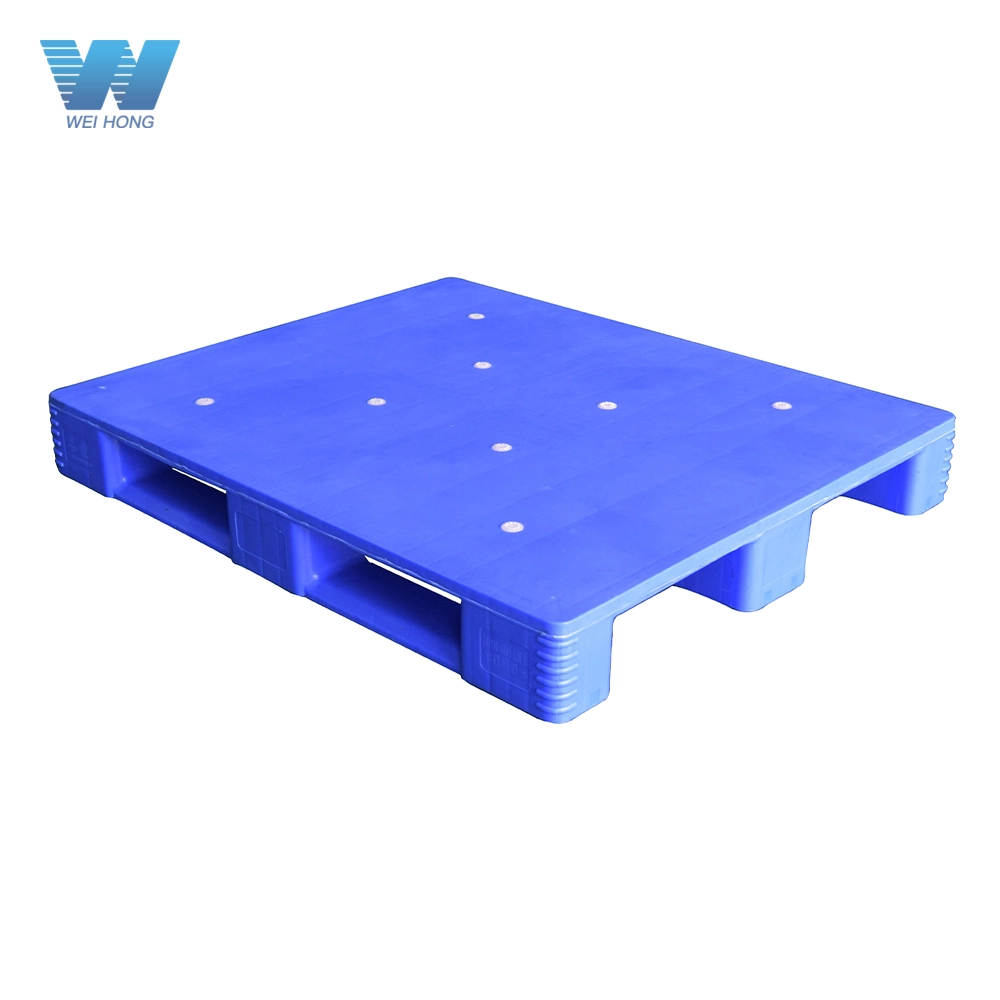
ZJ1210-150H Three-runner Closed Deck Hygienic Plastic Pallet
The three-runner closed-deck hygienic plastic pallet is a solid and durable packaging solution designed for general and especially food and medicine storage and transport. It’s made of virgin HDPE or PP, featuring a flat surface and even bottom for hygienic consideration, a reinforced configuration with steel cores for rack and shelf, and a steady loading capacity.
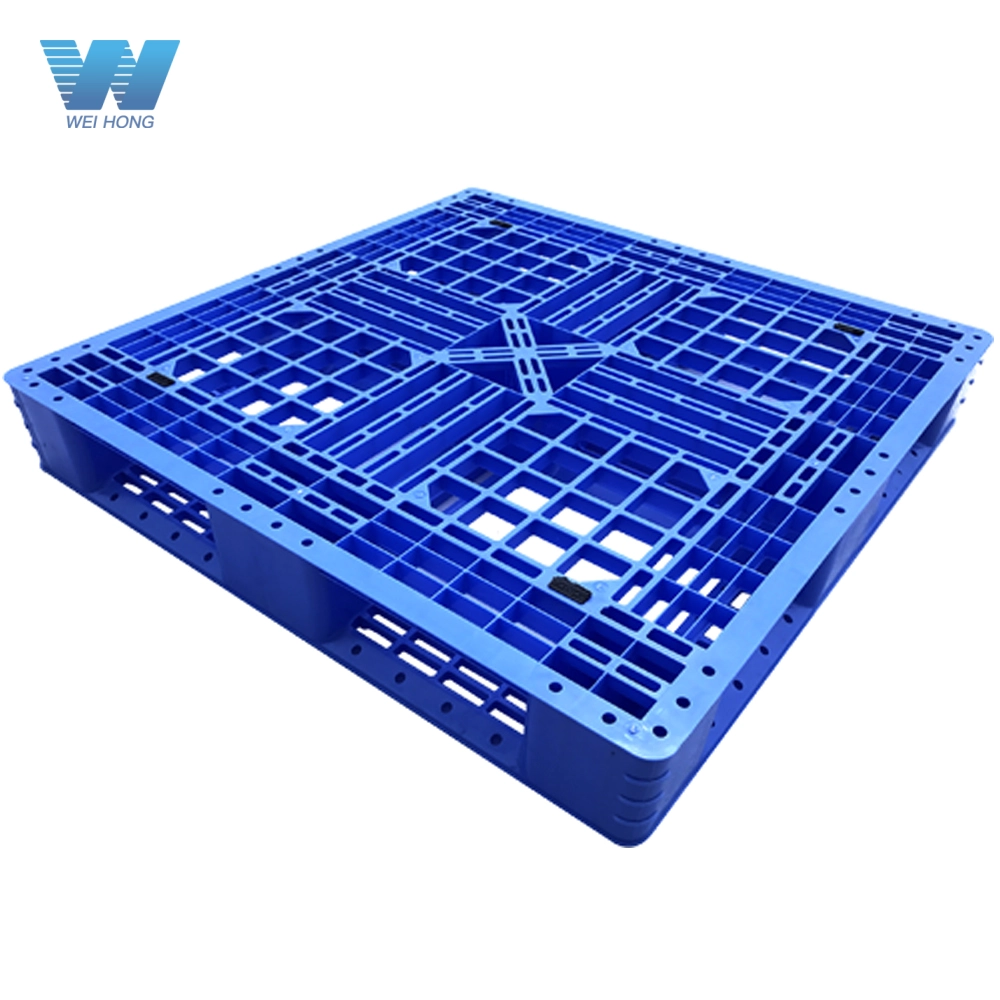
ZJ1010-150 Six-runner Single-sided Plastic Pallet
The six-runner plastic pallet, open or closed deck, is a solid and durable packaging solution designed for general and medium to heavy-duty cargo stacking, storage and transport. It’s made of virgin HDPE or PP, featuring in robust structure, a reinforced configuration with steel cores for the rack and shelf, and a steady loading capacity.
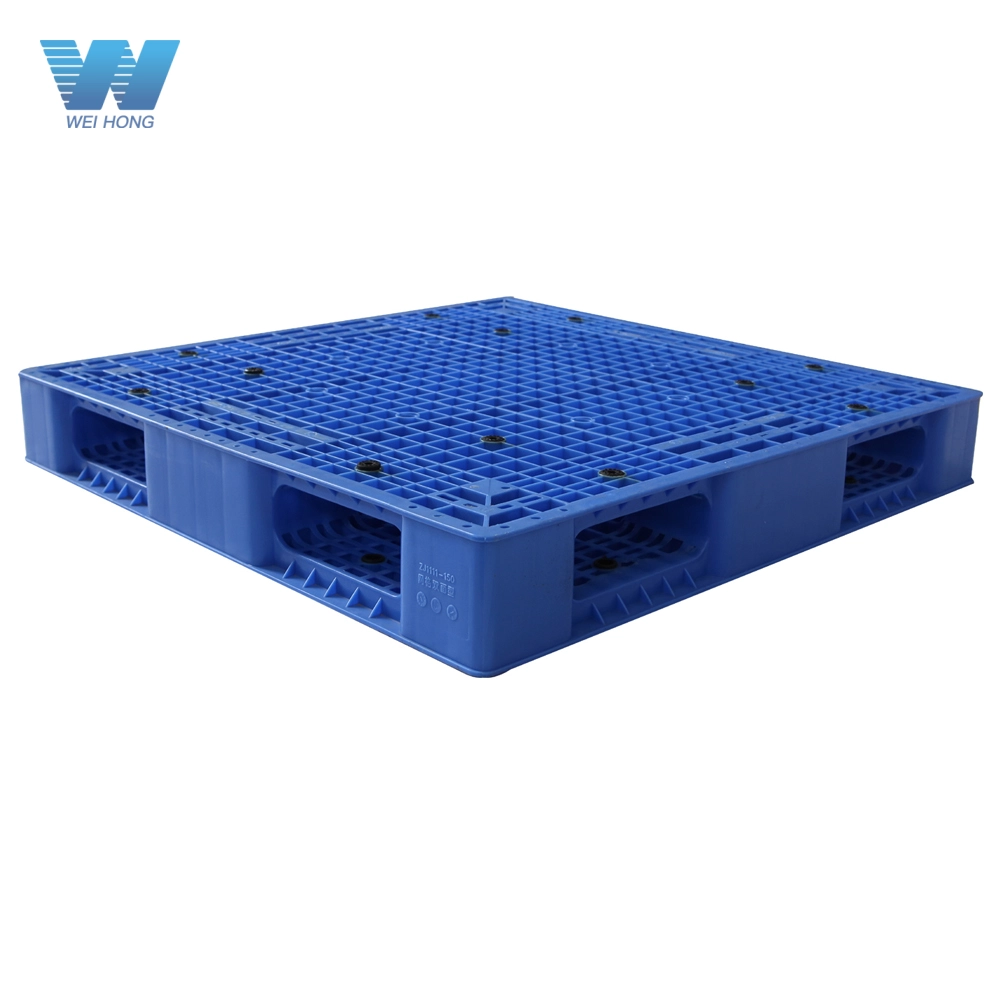
ZJ11111-150 Double-sided Heavy Duty Plastic Pallet
The double-sided plastic pallet, open deck or closed deck, is a solid and durable packaging solution designed for general and medium to heavy-duty cargo stacking, storage and transport. It’s made of virgin HDPE or PP, featuring a robust structure, a reinforced configuration with steel cores for the rack and shelf, and a steady loading capacity for both sides.
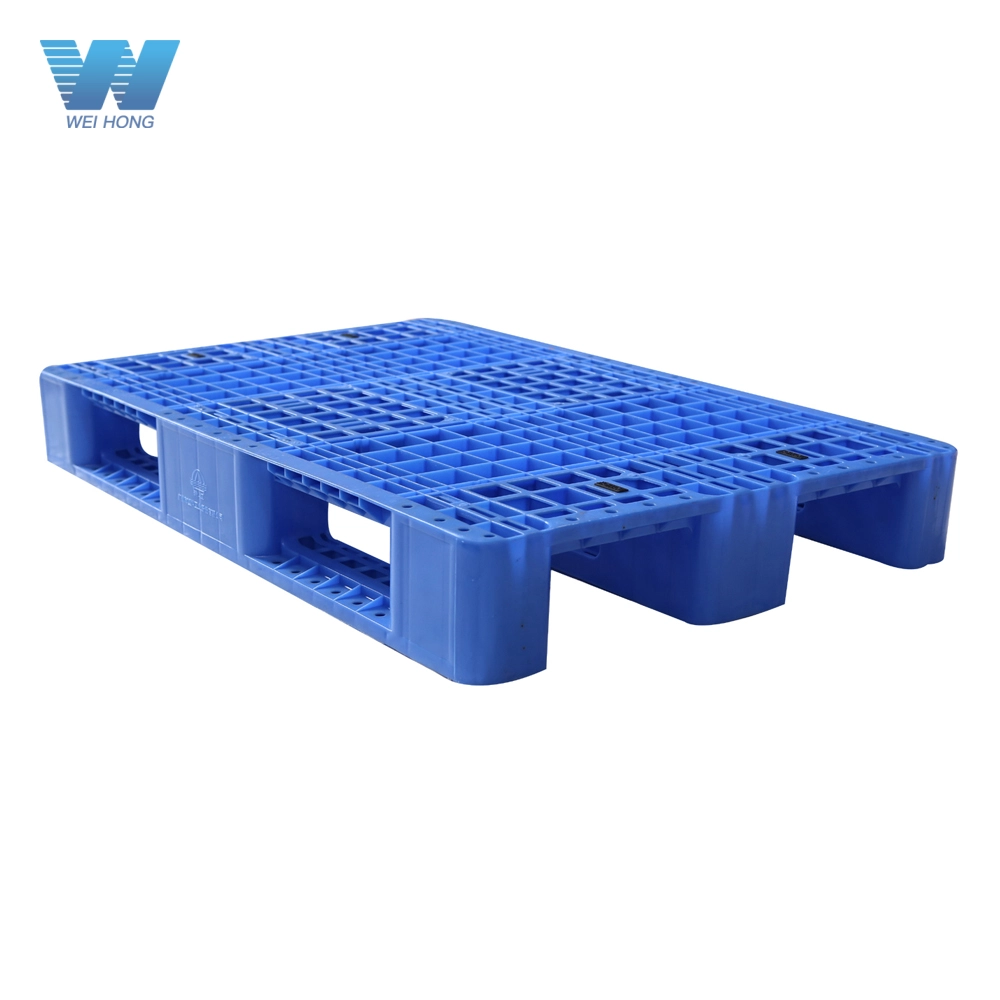
ZJ1208-155 Three-runner Single-sided Plastic Pallet
The three-runner single-sided plastic pallet is a solid and durable packaging solution designed for general and medium to heavy-duty cargo storage, transport and automated storage and retrieval system (AS/RS) use. It’s made of virgin HDPE or PP, featuring in robust structure, reinforced configuration with steel cores for rack and shelf, and a steady loading capacity.
Request More Information About Plastic Pallets
Have questions or need detailed insights on this article? Fill out the form below to contact our team for comprehensive information and support related to our plastic pallet solutions.
Contact us


+86 138 0277 8204
+86 183 4431 0917
+86 195 3791 1860

No. 15-1, Fengying Rd., Taiping Town, Conghua Dist., Guangzhou City, Guangdong Province, China.
 Scan QR Code
Weihong
Whatsapp: +8613802778204
Guangdong Weihong Plastic Technology Co., Ltd.
Scan QR Code
Whatsapp: +8619537911860
Scan QR Code